




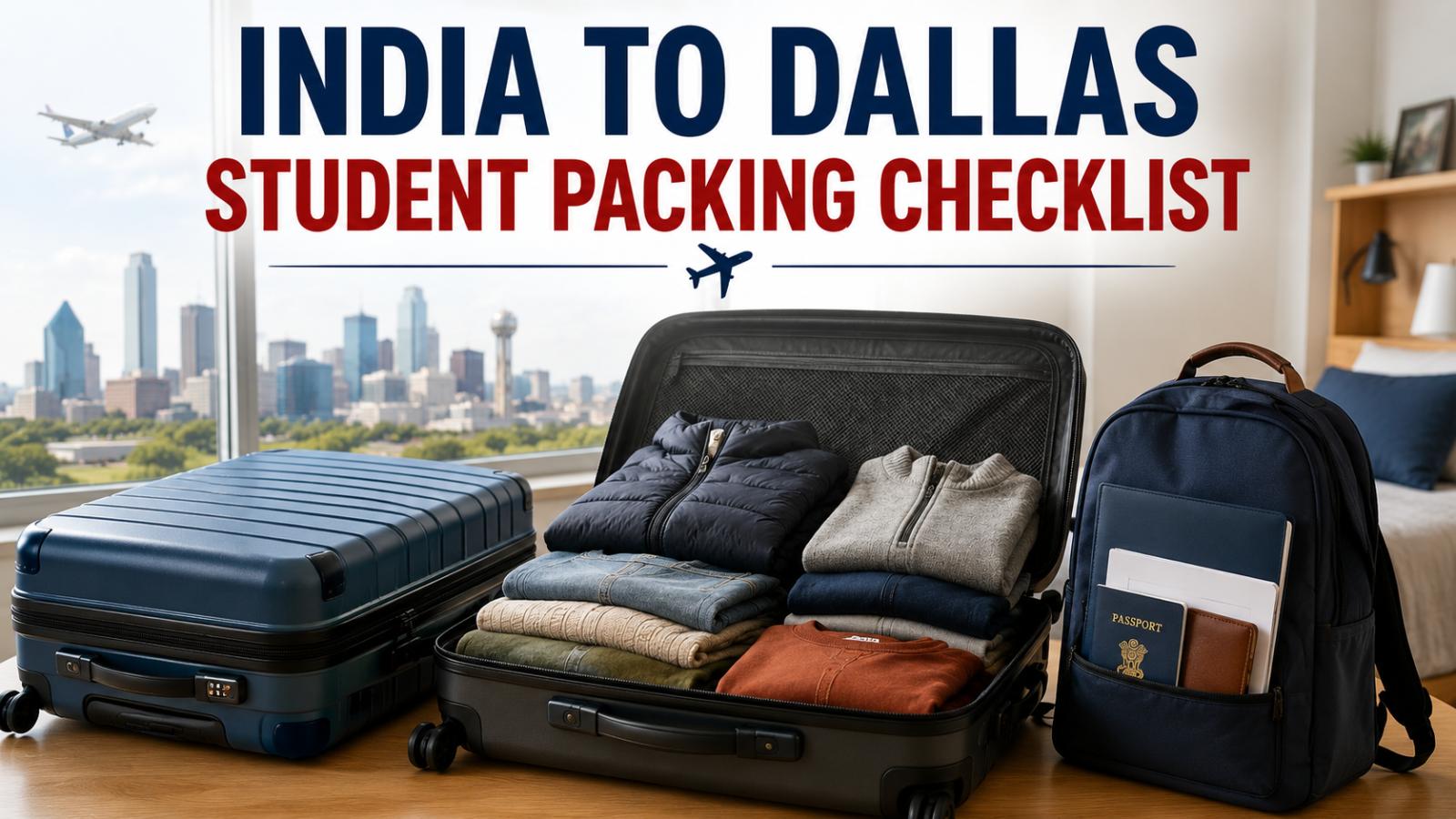
India to Dallas Student Packing Checklist
Traveling from India to Dallas for university is exciting, but packing for the first time can feel confusing. Many students worry about what to carry, what to avoid, how much grocery to pack and which items should go in cabin baggage. This guide gives a practical packing checklist for Indian students moving to Dallas. The goal is simple: carry what helps you during the first few weeks and buy heavy, common items after reaching the United States. Check Your Baggage
India to Dallas Student Packing Checklist
Traveling from India to Dallas for university is exciting, but packing for the first time can feel confusing. Many students worry about what to carry, what to avoid, how much grocery to pack and which items should go in cabin baggage. This guide gives a practical packing checklist for Indian students moving to Dallas. The goal is simple: carry what helps you during the first few weeks and buy heavy, common items after reaching the United States. Check Your Baggage
Indian Student Grocery Packing Guide for Dallas
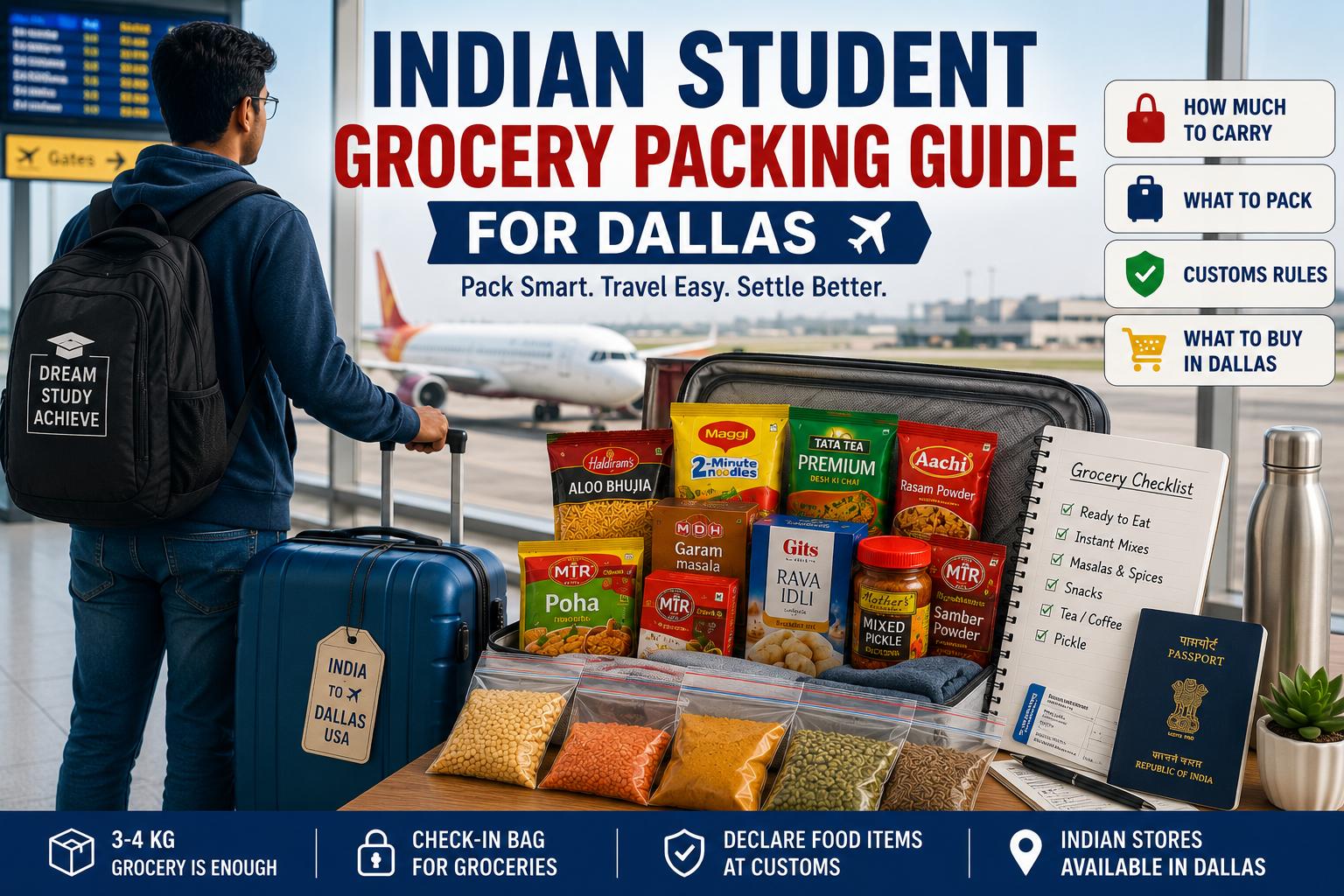
For Indian students traveling to Dallas for the first time, grocery packing can be confusing. Many students wonder whether they should carry rice, dal, atta, masalas, snacks, ready-to-eat packets or other food items from India. The simple answer is this: carry only a small grocery starter kit for the first one or two weeks. Dallas has a large Indian community and good Indian grocery availability, so students do not need to fill their luggage with food. For most students, grocery packing should be about first-week comfort, not long-term storage. How Much Grocery Should Indian Students Carry to Dallas? For most Indian students, 3 kg to 4 kg of groceries is enough. Even if a student has around 44 kg to 46 kg of check-in luggage, groceries should take only a small part of that space. The remaining luggage is more useful for clothes, winter wear, documents, medicines, laptop items, shoes and student essentials. A practical grocery weight plan looks like this: Spices and masalas: 500g to 700g Ready-to-eat food: 1 kg to 1.5 kg Instant mixes: 500g to 800g Snacks and biscuits: 500g to 800g Tea, coffee or small pickle: 300g to 500g Total ideal grocery weight: 2.5 kg to 3.5 kg Maximum suggested grocery weight: 4 kg Why Carry Groceries From India? Indian students should carry groceries mainly for convenience during the first few days after landing. After reaching Dallas, students may be busy with airport travel, housing setup, university formalities, SIM card, bank account work and transportation. During this time, a few ready-to-eat packets, instant mixes and familiar snacks can be helpful. Some students may also prefer carrying their favorite regional masalas, chutney powder, sambar powder, rasam powder or tea brand because the exact taste may not be immediately available near their apartment. However, students should not treat groceries as the main part of their luggage. Best Grocery Items to Carry From India Students should carry only sealed, branded and commercially packed food items. Good options include: Ready-to-eat vegetarian packets Carry 4 to 6 packets. These are useful during the first few days when cooking may not be possible. Instant breakfast mixes Carry 2 to 3 packets of poha, upma, idli mix, dosa mix or similar items. Small masala packets Carry limited quantities of turmeric powder, chilli powder, garam masala, sambar powder, rasam powder or biryani masala. Regional taste items Students can carry chutney powder, special spice mix or a favorite regional masala if it is properly sealed and labelled. Tea or coffee Carry one small pack if you prefer a specific Indian brand. Snacks Carry 3 to 5 small packets of biscuits, namkeen, khakhra, chikki or dry snacks for travel and the first week. Pickle Carry only one small sealed branded bottle if needed. Pack it carefully in check-in baggage to avoid leakage. What Not to Carry From India: Buy These in Dallas Instead Indian students traveling to Dallas should avoid carrying heavy daily groceries such as rice, dal, atta, oil, ghee, sugar and salt. These items are easily available in Indian grocery stores across the Dallas-Fort Worth area and can be bought after arrival. Carrying these items from India usually does not help much because they take up luggage space, add weight quickly and are not difficult to find in Dallas. A student’s check-in baggage is better used for clothes, winter wear, documents, medicines, personal items and first-week essentials. Students should also avoid carrying fresh fruits, fresh vegetables, curry leaves, coriander leaves, mint leaves, seeds, plants, soil, homemade pickles, homemade chutneys, meat products, egg-based food items and loose masala powders without original labels. These items may create problems during U.S. customs inspection. For regular cooking after arrival, students can buy rice, dal, atta, oil, ghee, vegetables, paneer, frozen chapati, dosa batter, snacks and larger masala packs from local Indian grocery stores in Dallas. The best approach is simple: carry only 3 kg to 4 kg of sealed, dry, branded food items from India and buy heavy regular groceries after reaching Dallas. Should Groceries Go in Check-In or Cabin Baggage? Students should keep almost all groceries in check-in baggage. Check-in baggage is better for: Masala powders Sambar powder Rasam powder Chutney powder Ready-to-eat packets Instant mixes Pickle bottles Tea or coffee Snacks in larger quantities Cabin baggage should carry only small travel snacks such as biscuits, dry fruits, chocolate, protein bars or one small namkeen packet. Avoid keeping pickle, chutney, liquid food, large masala packets or too many powders in cabin baggage. This can create extra security checking during travel. How to Pack Groceries Safely Students should keep grocery packing simple and clean. Use original sealed packets. Do not open and repack masalas into plain covers. Keep all food items together in one transparent plastic bag or pouch inside checked baggage. Double-wrap pickle or liquid-based items. Avoid glass bottles if possible. Keep food away from clothes. Do not carry anything that smells strongly or leaks easily. Keep total grocery weight below 4 kg. U.S. Customs Rule: Declare Food Items Students should declare all food items when entering the United States. If asked at the airport, students can clearly say: “I have sealed Indian dry spices, vegetarian ready-to-eat packets, tea and snacks. I am not carrying fresh fruits, vegetables, meat, seeds or plants.” Declaring food is safer than hiding it. If an officer decides that an item is not allowed, it may be removed, but proper declaration helps avoid bigger problems. What to Buy After Reaching Dallas After arrival, students can buy regular cooking items locally. See our guide to Indian grocery stores in Dallas-Fort Worth for nearby stores, timings and shopping options. After reaching Dallas, students can buy regular Indian groceries locally instead of carrying heavy items from India. Indian grocery stores in the Dallas-Fort Worth area usually sell daily cooking items, Indian snacks, masalas, frozen foods, fresh vegetables and other student-friendly groceries. After arrival, students can use local Indian grocery stores for regular purchases. For store options, read our guide to Indian grocery stores in Dallas-Fort Worth. Final Grocery Packing Checklist Carry from India: 4 to 6 ready-to-eat vegetarian packets 2 to 3 instant breakfast mixes Small masala packets Sambar powder or rasam powder Chutney powder or regional spice mix Tea or coffee A few snacks One small sealed pickle bottle, optional Keep grocery weight around 3 kg to 4 kg maximum. Final Advice for Indian Students Students planning their complete luggage can also read our full India to Dallas student packing checklist for documents, clothes, toiletries, medicines, cabin bag items and first-week essentials For Indian students traveling to Dallas, groceries should be a small comfort kit, not a major part of luggage. The smartest plan is to carry a few sealed food items for the first week and buy regular groceries after reaching Dallas. This keeps luggage lighter, reduces customs risk and gives students more space for important items. Students planning their complete luggage can also read our full India to Dallas student packing checklist.
Indian Student Grocery Packing Guide for Dallas
For Indian students traveling to Dallas for the first time, grocery packing can be confusing. Many students wonder whether they should carry rice, dal, atta, masalas, snacks, ready-to-eat packets or other food items from India. The simple answer is this: carry only a small grocery starter kit for the first one or two weeks. Dallas has a large Indian community and good Indian grocery availability, so students do not need to fill their luggage with food. For most students, grocery packing should be about first-week comfort, not long-term storage. How Much Grocery Should Indian Students Carry to Dallas? For most Indian students, 3 kg to 4 kg of groceries is enough. Even if a student has around 44 kg to 46 kg of check-in luggage, groceries should take only a small part of that space. The remaining luggage is more useful for clothes, winter wear, documents, medicines, laptop items, shoes and student essentials. A practical grocery weight plan looks like this: Spices and masalas: 500g to 700g Ready-to-eat food: 1 kg to 1.5 kg Instant mixes: 500g to 800g Snacks and biscuits: 500g to 800g Tea, coffee or small pickle: 300g to 500g Total ideal grocery weight: 2.5 kg to 3.5 kg Maximum suggested grocery weight: 4 kg Why Carry Groceries From India? Indian students should carry groceries mainly for convenience during the first few days after landing. After reaching Dallas, students may be busy with airport travel, housing setup, university formalities, SIM card, bank account work and transportation. During this time, a few ready-to-eat packets, instant mixes and familiar snacks can be helpful. Some students may also prefer carrying their favorite regional masalas, chutney powder, sambar powder, rasam powder or tea brand because the exact taste may not be immediately available near their apartment. However, students should not treat groceries as the main part of their luggage. Best Grocery Items to Carry From India Students should carry only sealed, branded and commercially packed food items. Good options include: Ready-to-eat vegetarian packets Carry 4 to 6 packets. These are useful during the first few days when cooking may not be possible. Instant breakfast mixes Carry 2 to 3 packets of poha, upma, idli mix, dosa mix or similar items. Small masala packets Carry limited quantities of turmeric powder, chilli powder, garam masala, sambar powder, rasam powder or biryani masala. Regional taste items Students can carry chutney powder, special spice mix or a favorite regional masala if it is properly sealed and labelled. Tea or coffee Carry one small pack if you prefer a specific Indian brand. Snacks Carry 3 to 5 small packets of biscuits, namkeen, khakhra, chikki or dry snacks for travel and the first week. Pickle Carry only one small sealed branded bottle if needed. Pack it carefully in check-in baggage to avoid leakage. What Not to Carry From India: Buy These in Dallas Instead Indian students traveling to Dallas should avoid carrying heavy daily groceries such as rice, dal, atta, oil, ghee, sugar and salt. These items are easily available in Indian grocery stores across the Dallas-Fort Worth area and can be bought after arrival. Carrying these items from India usually does not help much because they take up luggage space, add weight quickly and are not difficult to find in Dallas. A student’s check-in baggage is better used for clothes, winter wear, documents, medicines, personal items and first-week essentials. Students should also avoid carrying fresh fruits, fresh vegetables, curry leaves, coriander leaves, mint leaves, seeds, plants, soil, homemade pickles, homemade chutneys, meat products, egg-based food items and loose masala powders without original labels. These items may create problems during U.S. customs inspection. For regular cooking after arrival, students can buy rice, dal, atta, oil, ghee, vegetables, paneer, frozen chapati, dosa batter, snacks and larger masala packs from local Indian grocery stores in Dallas. The best approach is simple: carry only 3 kg to 4 kg of sealed, dry, branded food items from India and buy heavy regular groceries after reaching Dallas. Should Groceries Go in Check-In or Cabin Baggage? Students should keep almost all groceries in check-in baggage. Check-in baggage is better for: Masala powders Sambar powder Rasam powder Chutney powder Ready-to-eat packets Instant mixes Pickle bottles Tea or coffee Snacks in larger quantities Cabin baggage should carry only small travel snacks such as biscuits, dry fruits, chocolate, protein bars or one small namkeen packet. Avoid keeping pickle, chutney, liquid food, large masala packets or too many powders in cabin baggage. This can create extra security checking during travel. How to Pack Groceries Safely Students should keep grocery packing simple and clean. Use original sealed packets. Do not open and repack masalas into plain covers. Keep all food items together in one transparent plastic bag or pouch inside checked baggage. Double-wrap pickle or liquid-based items. Avoid glass bottles if possible. Keep food away from clothes. Do not carry anything that smells strongly or leaks easily. Keep total grocery weight below 4 kg. U.S. Customs Rule: Declare Food Items Students should declare all food items when entering the United States. If asked at the airport, students can clearly say: “I have sealed Indian dry spices, vegetarian ready-to-eat packets, tea and snacks. I am not carrying fresh fruits, vegetables, meat, seeds or plants.” Declaring food is safer than hiding it. If an officer decides that an item is not allowed, it may be removed, but proper declaration helps avoid bigger problems. What to Buy After Reaching Dallas After arrival, students can buy regular cooking items locally. See our guide to Indian grocery stores in Dallas-Fort Worth for nearby stores, timings and shopping options. After reaching Dallas, students can buy regular Indian groceries locally instead of carrying heavy items from India. Indian grocery stores in the Dallas-Fort Worth area usually sell daily cooking items, Indian snacks, masalas, frozen foods, fresh vegetables and other student-friendly groceries. After arrival, students can use local Indian grocery stores for regular purchases. For store options, read our guide to Indian grocery stores in Dallas-Fort Worth. Final Grocery Packing Checklist Carry from India: 4 to 6 ready-to-eat vegetarian packets 2 to 3 instant breakfast mixes Small masala packets Sambar powder or rasam powder Chutney powder or regional spice mix Tea or coffee A few snacks One small sealed pickle bottle, optional Keep grocery weight around 3 kg to 4 kg maximum. Final Advice for Indian Students Students planning their complete luggage can also read our full India to Dallas student packing checklist for documents, clothes, toiletries, medicines, cabin bag items and first-week essentials For Indian students traveling to Dallas, groceries should be a small comfort kit, not a major part of luggage. The smartest plan is to carry a few sealed food items for the first week and buy regular groceries after reaching Dallas. This keeps luggage lighter, reduces customs risk and gives students more space for important items. Students planning their complete luggage can also read our full India to Dallas student packing checklist.

Xi and Trump Summit at Beijing
Historic Summit Marks a New Phase for US-China Relations On Thursday, May 14, 2026, Chinese President Xi Jinping welcomed US President Donald Trump to Beijing for a high-stakes summit, marking a critical moment in the evolving relationship between the two global powers. Xi set the tone for the summit by stressing the importance of cooperation over confrontation, calling for a stable US-China relationship as a foundation for global stability. “A stable China-US relationship is a
Xi and Trump Summit at Beijing
Historic Summit Marks a New Phase for US-China Relations On Thursday, May 14, 2026, Chinese President Xi Jinping welcomed US President Donald Trump to Beijing for a high-stakes summit, marking a critical moment in the evolving relationship between the two global powers. Xi set the tone for the summit by stressing the importance of cooperation over confrontation, calling for a stable US-China relationship as a foundation for global stability. “A stable China-US relationship is a
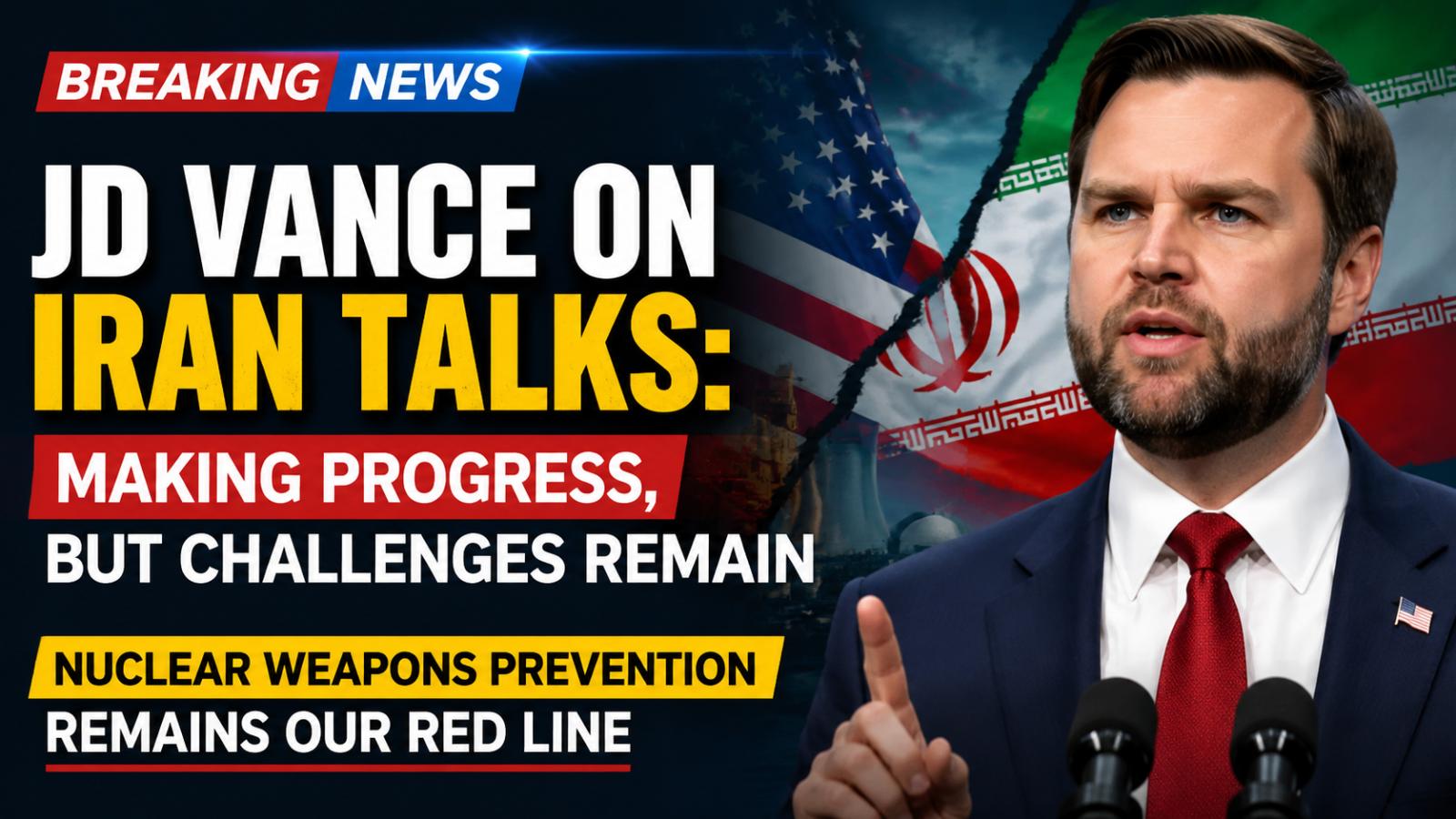
US Vice President JD Vance updates on Iran negotiations and challenges
On May 13, US Vice President JD Vance opened up about the ongoing negotiations with Iran and the hurdles the US has faced as these talks progress. While the US continues its diplomatic outreach to Tehran, Vance acknowledged the growing frustration due to unsatisfactory responses from the Iranian side. This has raised questions about whether a comprehensive deal is truly within reach. Diplomacy Amid Rising Tensions In a recent press briefing, Vance shed l
US Vice President JD Vance updates on Iran negotiations and challenges
On May 13, US Vice President JD Vance opened up about the ongoing negotiations with Iran and the hurdles the US has faced as these talks progress. While the US continues its diplomatic outreach to Tehran, Vance acknowledged the growing frustration due to unsatisfactory responses from the Iranian side. This has raised questions about whether a comprehensive deal is truly within reach. Diplomacy Amid Rising Tensions In a recent press briefing, Vance shed l
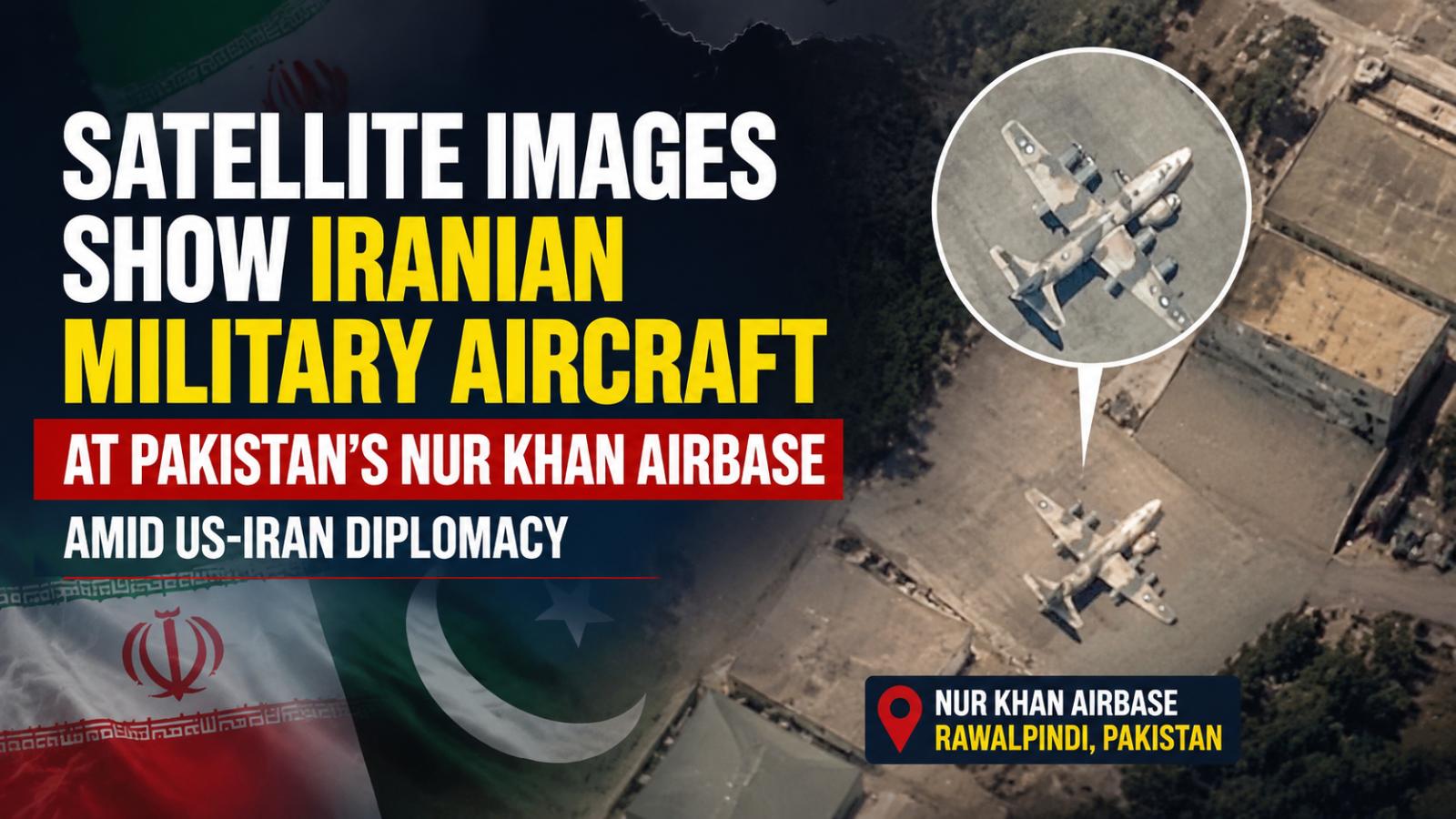
Satellite images fuel concerns over Pakistan's role in US-Iran diplomacy
Fresh satellite imagery has sparked renewed scrutiny over Pakistan's involvement in the ongoing US-Iran diplomatic talks, with reports suggesting that Islamabad may be housing at least one Iranian military aircraft at the strategically important Nur Khan Airbase, located near Islamabad. These developments come amid heightened tensions between Washington and Tehran, as Pakistan continues to position itself as a mediator between the two nations. The satellite images, which are believe
Satellite images fuel concerns over Pakistan's role in US-Iran diplomacy
Fresh satellite imagery has sparked renewed scrutiny over Pakistan's involvement in the ongoing US-Iran diplomatic talks, with reports suggesting that Islamabad may be housing at least one Iranian military aircraft at the strategically important Nur Khan Airbase, located near Islamabad. These developments come amid heightened tensions between Washington and Tehran, as Pakistan continues to position itself as a mediator between the two nations. The satellite images, which are believe
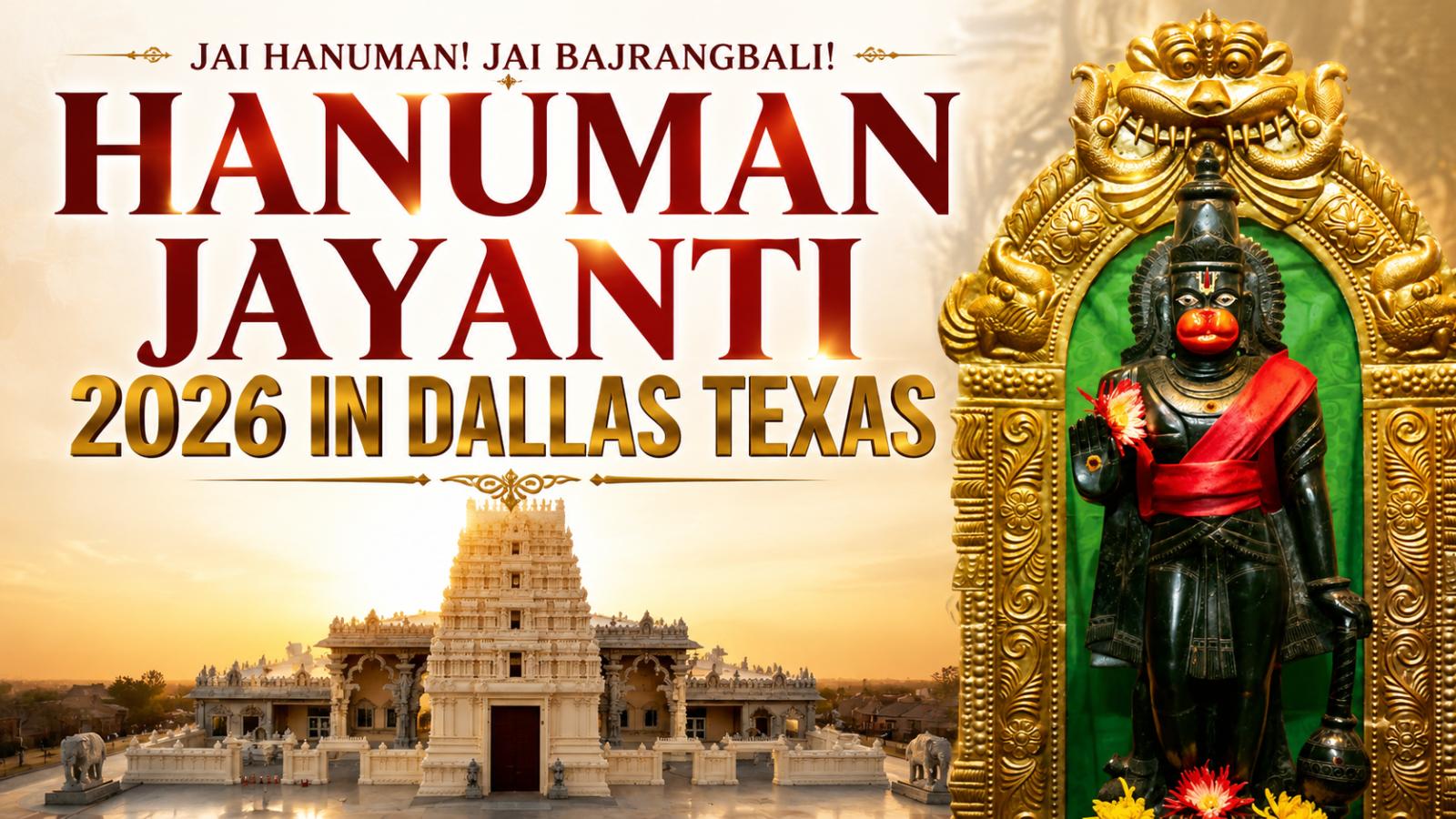
Hanuman Jayanti 2026 in Dallas Texas: Frisco Temple Announces Events
Devotees searching for “Hanuman Jayanti in Dallas Texas” or “when is Hanuman Jayanti in Dallas” are expected to gather in large numbers at Karya Siddhi Hanuman Temple as the temple announced grand Hanuman Jayanti 2026 celebrations in the Dallas-Fort Worth area. The Frisco-based Hindu temple, one of the most visited spiritual centers in Texas, will host multiple rituals and seva p
Hanuman Jayanti 2026 in Dallas Texas: Frisco Temple Announces Events
Devotees searching for “Hanuman Jayanti in Dallas Texas” or “when is Hanuman Jayanti in Dallas” are expected to gather in large numbers at Karya Siddhi Hanuman Temple as the temple announced grand Hanuman Jayanti 2026 celebrations in the Dallas-Fort Worth area. The Frisco-based Hindu temple, one of the most visited spiritual centers in Texas, will host multiple rituals and seva p

MetLife Stadium in East Rutherford Installs Natural Grass for World Cup 2026 FIFA Showpiece
MetLife Stadium Begins World Cup 2026 Grass Upgrade MetLife Stadium in East Rutherford is installing natural grass ahead of the FIFA World Cup 2026, a required move before the New Jersey venue hosts global soccer matches. The upgrade replaces the stadium’s artificial turf with a FIFA-compliant grass surface, giving players the natural pitch conditions required for World Cup games. Why FIFA Requires Natural Grass F
MetLife Stadium in East Rutherford Installs Natural Grass for World Cup 2026 FIFA Showpiece
MetLife Stadium Begins World Cup 2026 Grass Upgrade MetLife Stadium in East Rutherford is installing natural grass ahead of the FIFA World Cup 2026, a required move before the New Jersey venue hosts global soccer matches. The upgrade replaces the stadium’s artificial turf with a FIFA-compliant grass surface, giving players the natural pitch conditions required for World Cup games. Why FIFA Requires Natural Grass F

33-Year-Old Makes $192K/Month Negotiating Car Deals Remotely
A remote car negotiation service is helping buyers save over $6,000 per deal—and one 33-year-old is earning $192K per month doing it. His business answers a growing question: Can you hire someone to negotiate your car price? The answer is yes—and demand is booming. How the Remote Car Negotiation Service Works Launched in 2023, the entrepreneur began by negotiating deals for free to understand buyer pain points. Aft
33-Year-Old Makes $192K/Month Negotiating Car Deals Remotely
A remote car negotiation service is helping buyers save over $6,000 per deal—and one 33-year-old is earning $192K per month doing it. His business answers a growing question: Can you hire someone to negotiate your car price? The answer is yes—and demand is booming. How the Remote Car Negotiation Service Works Launched in 2023, the entrepreneur began by negotiating deals for free to understand buyer pain points. Aft
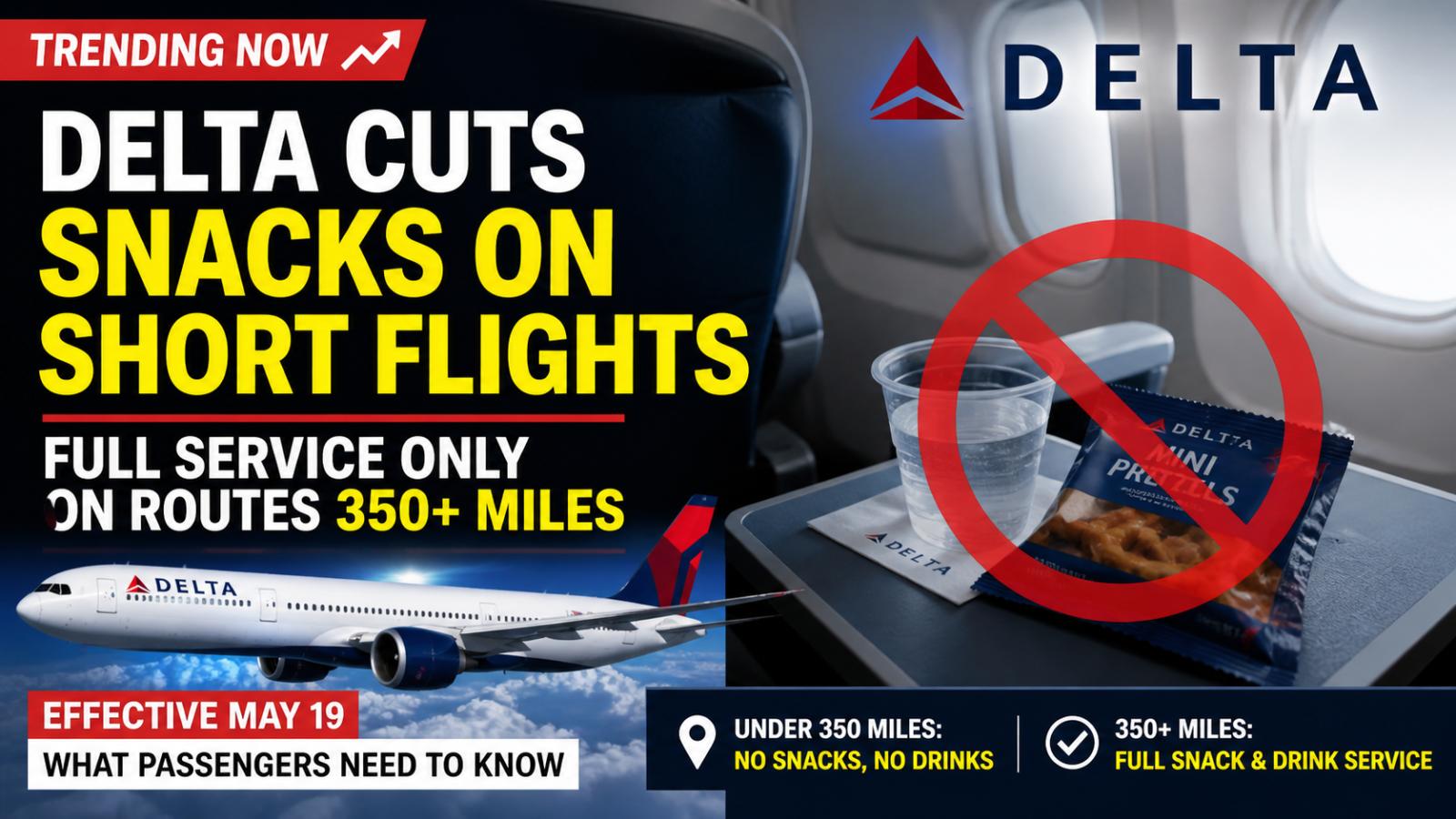
Delta Cuts Snacks on Short Flights, Upgrades Longer Routes From May 19
Delta Changes Snack Service on Short Flights Delta Air Lines will stop serving complimentary snacks and drinks on flights under 350 miles from May 19, affecting about 450 daily flights. The Delta snack service change applies to Main Cabin and Delta Comfort+ passengers, while Delta First customers will continue receiving full onboard service regardless of flight distance. What Passengers Will Get From May 19 Under the new Delt
Delta Cuts Snacks on Short Flights, Upgrades Longer Routes From May 19
Delta Changes Snack Service on Short Flights Delta Air Lines will stop serving complimentary snacks and drinks on flights under 350 miles from May 19, affecting about 450 daily flights. The Delta snack service change applies to Main Cabin and Delta Comfort+ passengers, while Delta First customers will continue receiving full onboard service regardless of flight distance. What Passengers Will Get From May 19 Under the new Delt

Keith Urban Tops Houston Freedom Over Texas 2026 July 4 Lineup
Keith Urban Houston July 4 Concert Confirmed Keith Urban will headline Houston’s Freedom Over Texas 2026 on Saturday, July 4, bringing a major country-music draw to Eleanor Tinsley Park for America’s 250th birthday celebration. City officials said the Independence Day event will run from 3 p.m. to 10 p.m., with live music, family activities and a fireworks finale expected to make it one of Houston’s biggest public gatherings of the year.
Keith Urban Tops Houston Freedom Over Texas 2026 July 4 Lineup
Keith Urban Houston July 4 Concert Confirmed Keith Urban will headline Houston’s Freedom Over Texas 2026 on Saturday, July 4, bringing a major country-music draw to Eleanor Tinsley Park for America’s 250th birthday celebration. City officials said the Independence Day event will run from 3 p.m. to 10 p.m., with live music, family activities and a fireworks finale expected to make it one of Houston’s biggest public gatherings of the year.
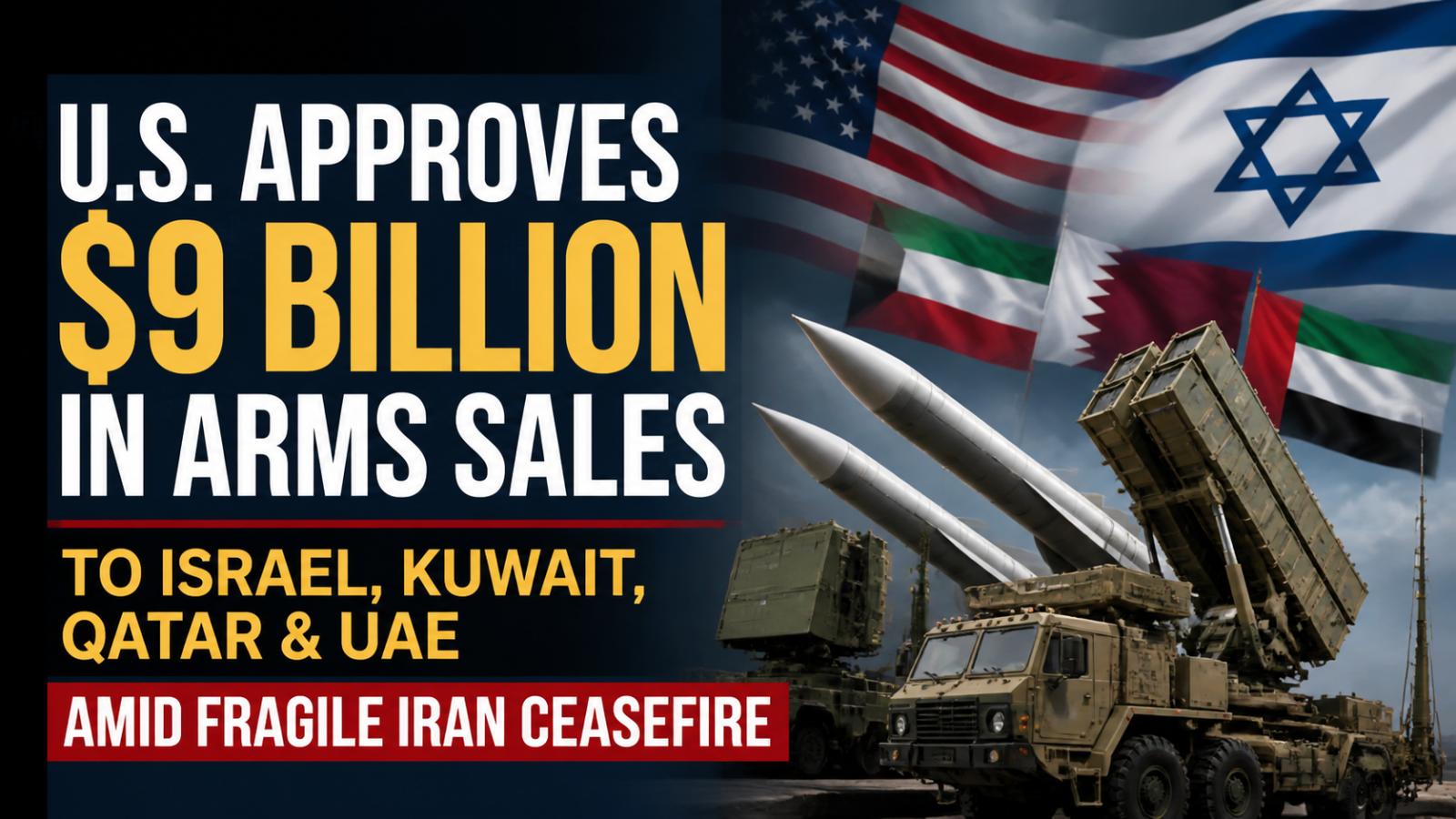
US fast-tracks $9 billion arms deals to Middle East allies
US Authorizes $9 Billion in Arms Sales to Middle East Allies The United States has authorized the expedited sale of arms to Israel, Kuwait, Qatar, and the UAE, totaling nearly $9 billion. This decision, approved by Secretary of State Marco Rubio, bypasses the standard congressional review process and is designed t
US fast-tracks $9 billion arms deals to Middle East allies
US Authorizes $9 Billion in Arms Sales to Middle East Allies The United States has authorized the expedited sale of arms to Israel, Kuwait, Qatar, and the UAE, totaling nearly $9 billion. This decision, approved by Secretary of State Marco Rubio, bypasses the standard congressional review process and is designed t
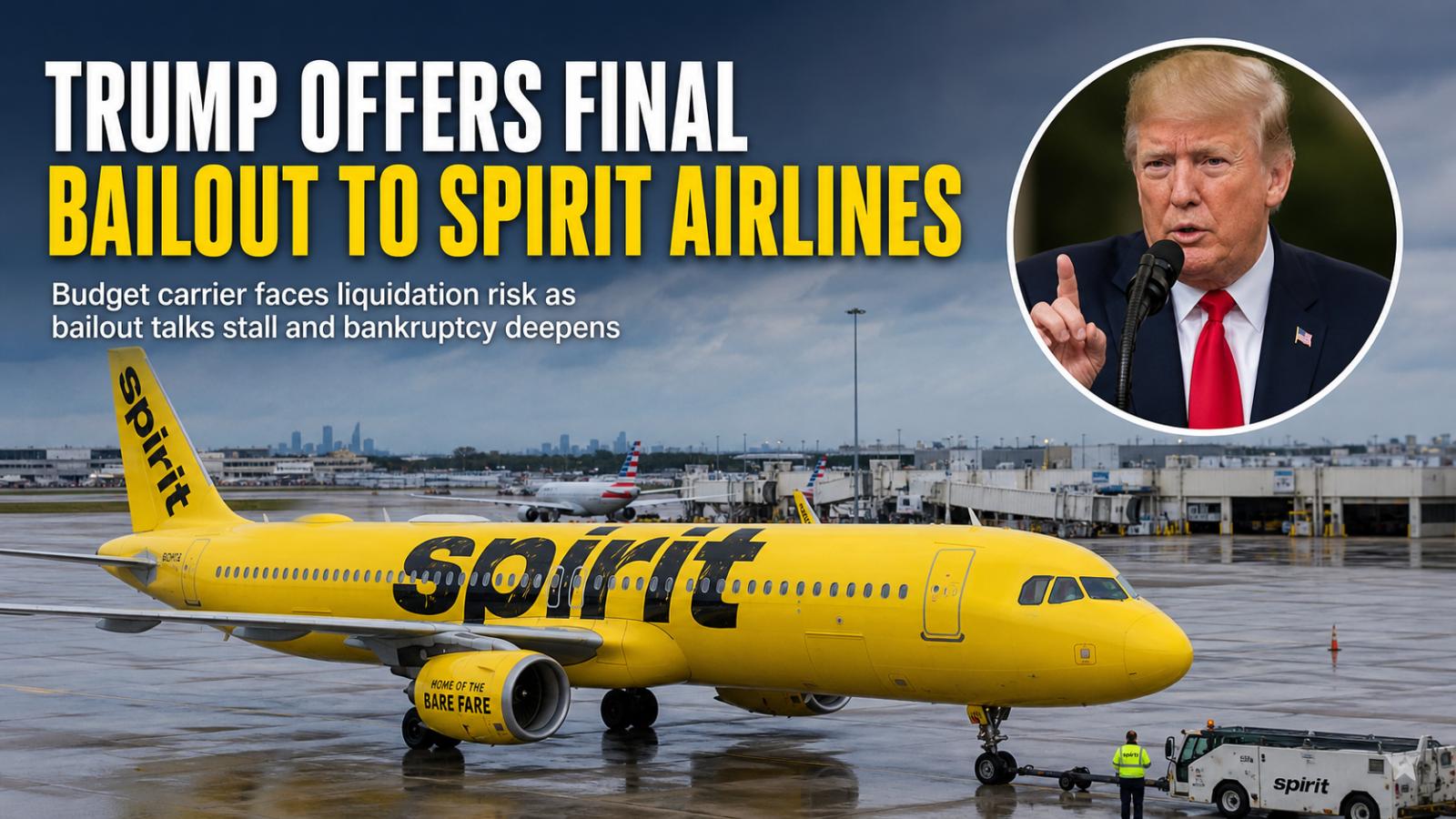
What is Trump’s final bailout plan for Spirit Airlines? It could prevent liquidation
President Donald Trump said on Friday, May 1, 2026, that his administration had delivered a “final” bailout proposal to Spirit Airlines as the budget airline faces the possibility of liquidation without immediate financial su
What is Trump’s final bailout plan for Spirit Airlines? It could prevent liquidation
President Donald Trump said on Friday, May 1, 2026, that his administration had delivered a “final” bailout proposal to Spirit Airlines as the budget airline faces the possibility of liquidation without immediate financial su

Security footage shows missed dog alerts before White House shooting
DOJ footage shows missed security dog alerts before shooting at WHCD A newly released video from the Justice Department has uncovered crucial details about the attempted shooting at the White House Correspondents' Dinner (WHCD). The footage reveals that a security dog alerted to Cole Tomas Allen’s presence twice, but these warnings went unnoticed, allowing the suspect to fire at a Secret Service officer before being detained. The video, shared by US Attorney Jeanine Pirro on social media platform X, shows Allen walking through the Hilton Hotel the night before the attack. In a chilling moment, the security dog reacts to Allen as he passes, signaling potential danger. However, despite these two distinct alerts, the handler fails to acknowledge the dog's warning, allowing Allen to continue his movement through the hotel. The footage captures the suspect armed with a shotgun, heading toward a security checkpoint where he shoots a Secret Service officer. The video highlights how Allen was moving through the hotel, appearing to “case the area” before the shooting. He can be seen walking through corridors and even passing through a gym in the hours before the more dramatic scene. The footage reveals Allen approaching the magnetometer checkpoint, where he charges past uniformed officers and agents, carrying a long-barrelled firearm. In a slow-motion clip of the video, a Secret Service agent fires three times at Allen, although police have confirmed that Allen was not shot. Instead, Allen was tackled and detained after a brief struggle with security personnel. The officer who was shot survived the attack, thanks to the protection provided by his ballistic vest. Pirro, in her statement, clarified that there is no evidence that friendly fire caused the shooting. She emphasized that the footage had already been provided to the US District Court for further legal action. Allen, a 31-year-old from California, has been charged with attempting to assassinate the president. If convicted, he faces up to life in prison. This latest video offers crucial insight into the incident, showing the missed warnings and the sequence of events that allowed the shooter to carry out the attack.
Security footage shows missed dog alerts before White House shooting
DOJ footage shows missed security dog alerts before shooting at WHCD A newly released video from the Justice Department has uncovered crucial details about the attempted shooting at the White House Correspondents' Dinner (WHCD). The footage reveals that a security dog alerted to Cole Tomas Allen’s presence twice, but these warnings went unnoticed, allowing the suspect to fire at a Secret Service officer before being detained. The video, shared by US Attorney Jeanine Pirro on social media platform X, shows Allen walking through the Hilton Hotel the night before the attack. In a chilling moment, the security dog reacts to Allen as he passes, signaling potential danger. However, despite these two distinct alerts, the handler fails to acknowledge the dog's warning, allowing Allen to continue his movement through the hotel. The footage captures the suspect armed with a shotgun, heading toward a security checkpoint where he shoots a Secret Service officer. The video highlights how Allen was moving through the hotel, appearing to “case the area” before the shooting. He can be seen walking through corridors and even passing through a gym in the hours before the more dramatic scene. The footage reveals Allen approaching the magnetometer checkpoint, where he charges past uniformed officers and agents, carrying a long-barrelled firearm. In a slow-motion clip of the video, a Secret Service agent fires three times at Allen, although police have confirmed that Allen was not shot. Instead, Allen was tackled and detained after a brief struggle with security personnel. The officer who was shot survived the attack, thanks to the protection provided by his ballistic vest. Pirro, in her statement, clarified that there is no evidence that friendly fire caused the shooting. She emphasized that the footage had already been provided to the US District Court for further legal action. Allen, a 31-year-old from California, has been charged with attempting to assassinate the president. If convicted, he faces up to life in prison. This latest video offers crucial insight into the incident, showing the missed warnings and the sequence of events that allowed the shooter to carry out the attack.

Texas Fuel Prices Jump, Squeezing Household Budgets
The numbers on gas station signs across Texas are rising fast—and for many drivers, so is the stress. What used to be a routine fill-up is now a moment of hesitation, as fuel costs eat deeper into already stretched budgets. High gas prices in Texas have surged in recent weeks, climbing from about $2.55 per gallon in early February to nearly $3.78. The sharp increase is being driven by global tensions that have disrupted oil supply routes, sending ripple effects through loca
Texas Fuel Prices Jump, Squeezing Household Budgets
The numbers on gas station signs across Texas are rising fast—and for many drivers, so is the stress. What used to be a routine fill-up is now a moment of hesitation, as fuel costs eat deeper into already stretched budgets. High gas prices in Texas have surged in recent weeks, climbing from about $2.55 per gallon in early February to nearly $3.78. The sharp increase is being driven by global tensions that have disrupted oil supply routes, sending ripple effects through loca
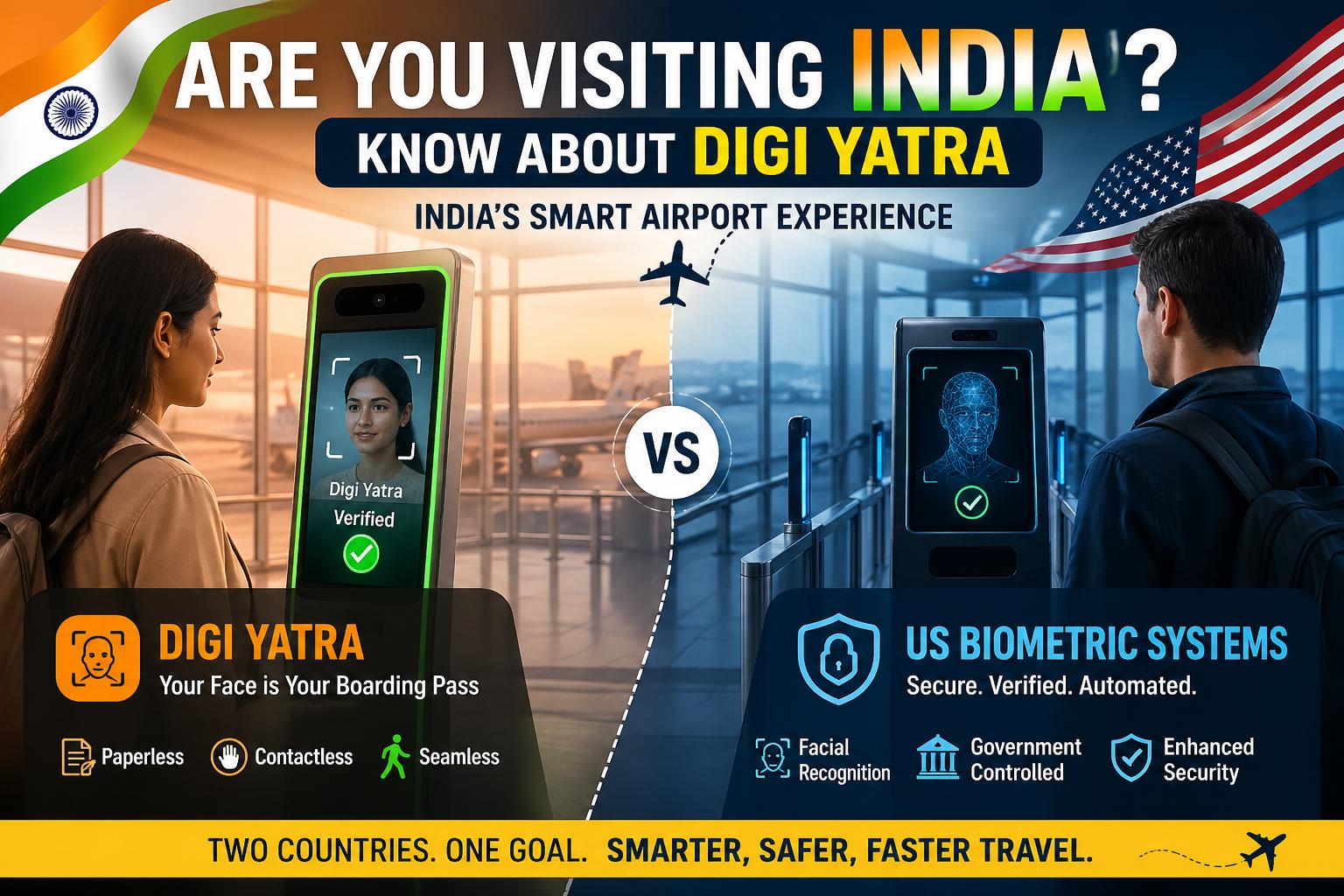
Are you visiting India? Digi Yatra could change your airport experience
Digi Yatra could change your airport experience India’s push toward seamless air travel is being led by Digi Yatra, a government-backed initiative that uses facial recognition to streamline passenger movement through airports. Developed under the Ministry of Civil Aviation, the system allows travelers to bypass repeated document checks by using biometric verification instead of physical boarding passes and identification. How Digi Yatra is transforming airport travel in India Digi Yatra enables passengers to create a digital identity through the Digi Yatra App by uploading ID credentials and flight details before arriving at the airport. Once enrolled, travelers can pass through entry gates, security checkpoints, and boarding areas using facial scans. The system is currently operational at major hubs such as Kempegowda International Airport and Indira Gandhi International Airport, with plans for wider adoption across the country. The initiative is voluntary and emphasizes speed, convenience, and reduced physical contact in crowded terminals. Biometric travel systems already in use across US airports In the United States, similar biometric technologies are already deployed, primarily for international travel. Agencies such as the Transportation Security Administration and U.S. Customs and Border Protection operate facial recognition systems that match a traveler’s live image with passport or visa databases. These systems are commonly used at immigration checkpoints and boarding gates for international flights, and in some cases at security screening through programs like TSA’s touchless identity verification. Unlike Digi Yatra, enrollment is not typically handled through a consumer-facing app, and the process is largely managed through government databases. Key differences between Digi Yatra and US biometric systems Feature Digi Yatra (India) United States Systems Control User-controlled via app Government-controlled databases Enrollment Voluntary, app-based Mostly automatic or backend Primary Use Domestic travel International travel focus Documents Replaced by facial ID Linked to passport/visa User Role Active participation required Passive participation Data Handling User uploads data Govt retrieves from records Experience Fully contactless journey Partial contactless process What global travelers should know about evolving airport technology As airports worldwide adopt digital identity solutions, the contrast between India’s Digi Yatra and US biometric programs highlights broader questions around privacy, convenience, and control. For US-based travelers heading to India, understanding how Digi Yatra works can help streamline the airport experience, while also offering insight into how biometric travel technology may continue to evolve globally.
Are you visiting India? Digi Yatra could change your airport experience
Digi Yatra could change your airport experience India’s push toward seamless air travel is being led by Digi Yatra, a government-backed initiative that uses facial recognition to streamline passenger movement through airports. Developed under the Ministry of Civil Aviation, the system allows travelers to bypass repeated document checks by using biometric verification instead of physical boarding passes and identification. How Digi Yatra is transforming airport travel in India Digi Yatra enables passengers to create a digital identity through the Digi Yatra App by uploading ID credentials and flight details before arriving at the airport. Once enrolled, travelers can pass through entry gates, security checkpoints, and boarding areas using facial scans. The system is currently operational at major hubs such as Kempegowda International Airport and Indira Gandhi International Airport, with plans for wider adoption across the country. The initiative is voluntary and emphasizes speed, convenience, and reduced physical contact in crowded terminals. Biometric travel systems already in use across US airports In the United States, similar biometric technologies are already deployed, primarily for international travel. Agencies such as the Transportation Security Administration and U.S. Customs and Border Protection operate facial recognition systems that match a traveler’s live image with passport or visa databases. These systems are commonly used at immigration checkpoints and boarding gates for international flights, and in some cases at security screening through programs like TSA’s touchless identity verification. Unlike Digi Yatra, enrollment is not typically handled through a consumer-facing app, and the process is largely managed through government databases. Key differences between Digi Yatra and US biometric systems Feature Digi Yatra (India) United States Systems Control User-controlled via app Government-controlled databases Enrollment Voluntary, app-based Mostly automatic or backend Primary Use Domestic travel International travel focus Documents Replaced by facial ID Linked to passport/visa User Role Active participation required Passive participation Data Handling User uploads data Govt retrieves from records Experience Fully contactless journey Partial contactless process What global travelers should know about evolving airport technology As airports worldwide adopt digital identity solutions, the contrast between India’s Digi Yatra and US biometric programs highlights broader questions around privacy, convenience, and control. For US-based travelers heading to India, understanding how Digi Yatra works can help streamline the airport experience, while also offering insight into how biometric travel technology may continue to evolve globally.

Regulators eye prediction markets after suspicious betting activity
Prediction markets, digital platforms that allow users to wager on future events, are drawing increasing scrutiny amid concerns over suspicious trading activity and the potential misuse of sensitive information. The issue has gained prominence following a case involving a US Army special forces soldier accused of leveraging classified intelligence to place bets linked to a mission targeting Venezuelan President Nicolas Maduro. What are prediction markets? Prediction markets such as Polymarket and Kalshi operate in a manner similar to gambling platforms, but instead of sports, they focus on real-world events. Users place wagers on outcomes ranging from political developments and economic shifts to weather patterns and online activity. Participants earn profits if their predictions are accurate, while platforms generate revenue through transaction fees. With millions of users globally, these platforms now facilitate billions of dollars in wagers across diverse subjects including elections, tariffs, and commodity prices. Are these markets legal? The legal status of prediction markets varies by region. Globally, many jurisdictions permit such platforms, but the regulatory framework in the United States remains complex. Polymarket had been restricted domestically for several years before resuming limited operations, while Kalshi operates under oversight from the Commodity Futures Trading Commission. Some users attempt to bypass restrictions through virtual private networks, raising additional compliance concerns. Unlike traditional bookmakers, these platforms position themselves as exchanges that enable trading rather than setting odds. Can prediction markets accurately forecast events? Research suggests that collective forecasting, often described as the “wisdom of crowds,” can provide valuable insights. By aggregating diverse opinions, prediction markets can sometimes outperform individual experts in anticipating political, economic, and global outcomes. What are the risks involved? Concerns have intensified regarding the potential use of insider information. In the recent case, the US soldier allegedly earned more than $400,000 by betting on outcomes tied to a military operation. Similar patterns have been observed before major geopolitical and entertainment events, where unusual betting activity accurately predicted outcomes. Such incidents have raised questions about whether privileged information is influencing market behavior. Regulatory response and growing oversight Authorities are responding to these developments with increased vigilance. Several US states have initiated measures to restrict or ban prediction markets, while platforms like Kalshi and Polymarket have introduced safeguards to prevent misuse. Kalshi has prohibited political candidates from betting on their own elections, and government agencies have cautioned officials against using insider knowledge for financial gain. A concept with historical roots Despite recent attention, prediction markets are not a new phenomenon. Early models such as the Iowa Electronic Markets, established in 1988, focused on political forecasting. In 2003, the Pentagon explored launching a platform to predict geopolitical events, including potential security threats, but the initiative was abandoned following public criticism. As scrutiny intensifies, the future of prediction markets will likely depend on how effectively regulators and platforms address concerns surrounding transparency, legality, and the ethical use of information.
Regulators eye prediction markets after suspicious betting activity
Prediction markets, digital platforms that allow users to wager on future events, are drawing increasing scrutiny amid concerns over suspicious trading activity and the potential misuse of sensitive information. The issue has gained prominence following a case involving a US Army special forces soldier accused of leveraging classified intelligence to place bets linked to a mission targeting Venezuelan President Nicolas Maduro. What are prediction markets? Prediction markets such as Polymarket and Kalshi operate in a manner similar to gambling platforms, but instead of sports, they focus on real-world events. Users place wagers on outcomes ranging from political developments and economic shifts to weather patterns and online activity. Participants earn profits if their predictions are accurate, while platforms generate revenue through transaction fees. With millions of users globally, these platforms now facilitate billions of dollars in wagers across diverse subjects including elections, tariffs, and commodity prices. Are these markets legal? The legal status of prediction markets varies by region. Globally, many jurisdictions permit such platforms, but the regulatory framework in the United States remains complex. Polymarket had been restricted domestically for several years before resuming limited operations, while Kalshi operates under oversight from the Commodity Futures Trading Commission. Some users attempt to bypass restrictions through virtual private networks, raising additional compliance concerns. Unlike traditional bookmakers, these platforms position themselves as exchanges that enable trading rather than setting odds. Can prediction markets accurately forecast events? Research suggests that collective forecasting, often described as the “wisdom of crowds,” can provide valuable insights. By aggregating diverse opinions, prediction markets can sometimes outperform individual experts in anticipating political, economic, and global outcomes. What are the risks involved? Concerns have intensified regarding the potential use of insider information. In the recent case, the US soldier allegedly earned more than $400,000 by betting on outcomes tied to a military operation. Similar patterns have been observed before major geopolitical and entertainment events, where unusual betting activity accurately predicted outcomes. Such incidents have raised questions about whether privileged information is influencing market behavior. Regulatory response and growing oversight Authorities are responding to these developments with increased vigilance. Several US states have initiated measures to restrict or ban prediction markets, while platforms like Kalshi and Polymarket have introduced safeguards to prevent misuse. Kalshi has prohibited political candidates from betting on their own elections, and government agencies have cautioned officials against using insider knowledge for financial gain. A concept with historical roots Despite recent attention, prediction markets are not a new phenomenon. Early models such as the Iowa Electronic Markets, established in 1988, focused on political forecasting. In 2003, the Pentagon explored launching a platform to predict geopolitical events, including potential security threats, but the initiative was abandoned following public criticism. As scrutiny intensifies, the future of prediction markets will likely depend on how effectively regulators and platforms address concerns surrounding transparency, legality, and the ethical use of information.

Federal Charges Filed in Case of Military Insider Trading and Crypto Bets
A United States Army soldier has been indicted on multiple federal charges after authorities alleged he used classified information tied to a covert military operation for personal financial gain. The case centers on claims that sensitive intelligence was exploited to place high-value prediction market bets before key developments became public. According to federal prosecutors, the accused, identified as Gannon Ken Van Dyke, was stationed in North Carolina and had access to restric
Federal Charges Filed in Case of Military Insider Trading and Crypto Bets
A United States Army soldier has been indicted on multiple federal charges after authorities alleged he used classified information tied to a covert military operation for personal financial gain. The case centers on claims that sensitive intelligence was exploited to place high-value prediction market bets before key developments became public. According to federal prosecutors, the accused, identified as Gannon Ken Van Dyke, was stationed in North Carolina and had access to restric
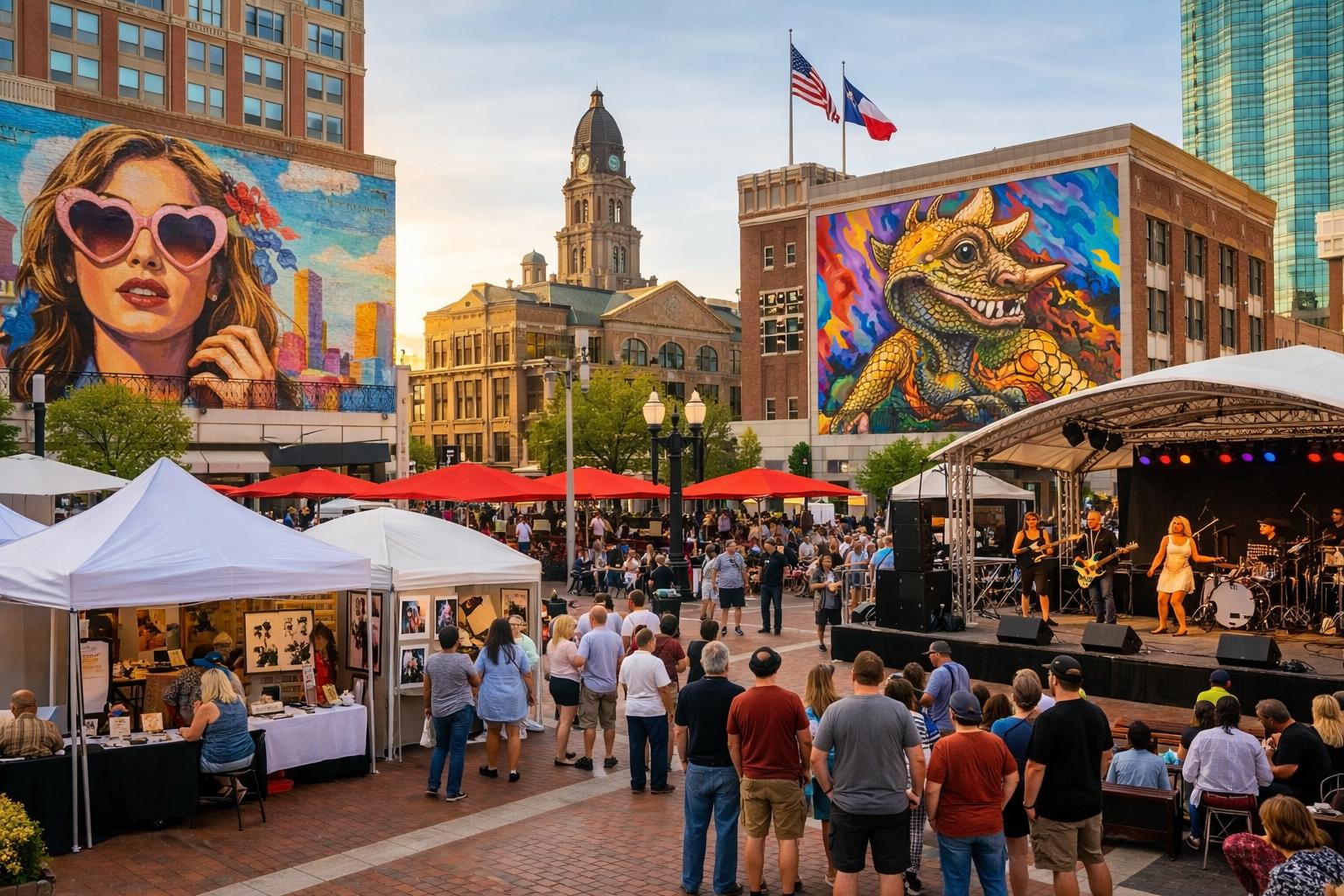
Fort Worth Art Fair returns with artists, music, and murals in Sundance Square
The Fort Worth Art Fair is returning for its fifth year, bringing a multi-day celebration of visual art and live music to Sundance Square in Fort Worth. The open-air event will feature more than 100 artists alongside a lineup of musical performances, offering visitors a walkable and immersive cultural experience in the city’s downtown district. Organizers say the fair will run for four con
Fort Worth Art Fair returns with artists, music, and murals in Sundance Square
The Fort Worth Art Fair is returning for its fifth year, bringing a multi-day celebration of visual art and live music to Sundance Square in Fort Worth. The open-air event will feature more than 100 artists alongside a lineup of musical performances, offering visitors a walkable and immersive cultural experience in the city’s downtown district. Organizers say the fair will run for four con

The U.S. and Japan: The Road to World War II and the Atomic Bombings
In 1945, the world was on the edge of significant change, driven by the destructive forces of war. The United States and Japan, two powerful nations, found themselves on a path of inevitable conflict, forever altering the course of history. Japan’s imperial ambitions across Asia and the Pacific created rising tensions with the U.S. and Western nations. The United States had long condemned Japan’s expansion, particularly its invasion of China and occupation of Fren
The U.S. and Japan: The Road to World War II and the Atomic Bombings
In 1945, the world was on the edge of significant change, driven by the destructive forces of war. The United States and Japan, two powerful nations, found themselves on a path of inevitable conflict, forever altering the course of history. Japan’s imperial ambitions across Asia and the Pacific created rising tensions with the U.S. and Western nations. The United States had long condemned Japan’s expansion, particularly its invasion of China and occupation of Fren
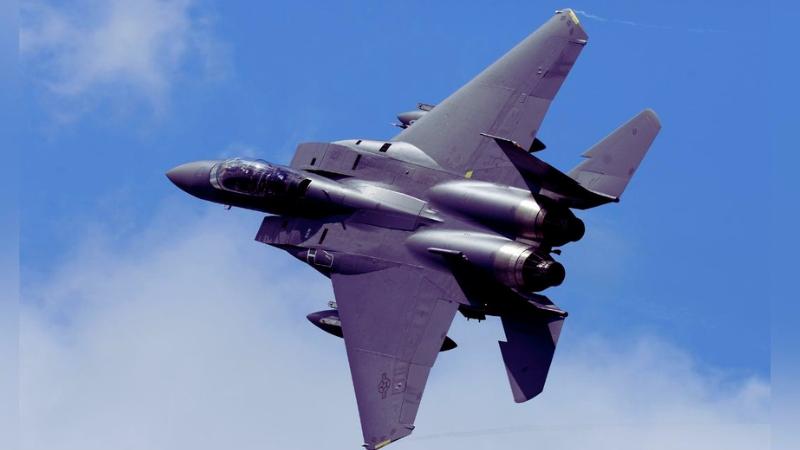
Trump Reveals US Pilot’s 3-Word Radio Message That Sparked Fears of Iranian Trap
US President Donald Trump recently revealed the three-word radio message sent by a US pilot trapped in Iran, which initially sparked fears of an Iranian trap. The pilot, a weapons system officer, had ejected from his downed F-15E Strike Eagle over southern Iran on April 3, 2026, during the ongoing conflict. After his aircraft was shot down, the first pilot was rescued, but the second remained missing, and both US and Iranian forces raced to locate him. During the search, Trump expla
Trump Reveals US Pilot’s 3-Word Radio Message That Sparked Fears of Iranian Trap
US President Donald Trump recently revealed the three-word radio message sent by a US pilot trapped in Iran, which initially sparked fears of an Iranian trap. The pilot, a weapons system officer, had ejected from his downed F-15E Strike Eagle over southern Iran on April 3, 2026, during the ongoing conflict. After his aircraft was shot down, the first pilot was rescued, but the second remained missing, and both US and Iranian forces raced to locate him. During the search, Trump expla