



NRI vs OCI Difference: Citizenship, Passport, Voting and Property Rules
NRI vs OCI Difference: What Indian-Origin Americans Should Know The main difference between NRI and OCI is citizenship. An NRI is an Indian citizen living outside India, while an OCI cardholder is a foreign citizen of Indian origin who gets special India-related benefits but not Indian citizenship. For Indian-origin Americans, this difference matters because it affects passport use, India travel, voting rights, property ownership, banking access and long
NRI vs OCI Difference: Citizenship, Passport, Voting and Property Rules
NRI vs OCI Difference: What Indian-Origin Americans Should Know The main difference between NRI and OCI is citizenship. An NRI is an Indian citizen living outside India, while an OCI cardholder is a foreign citizen of Indian origin who gets special India-related benefits but not Indian citizenship. For Indian-origin Americans, this difference matters because it affects passport use, India travel, voting rights, property ownership, banking access and long
Trump Invites Xi Jinping to the White House
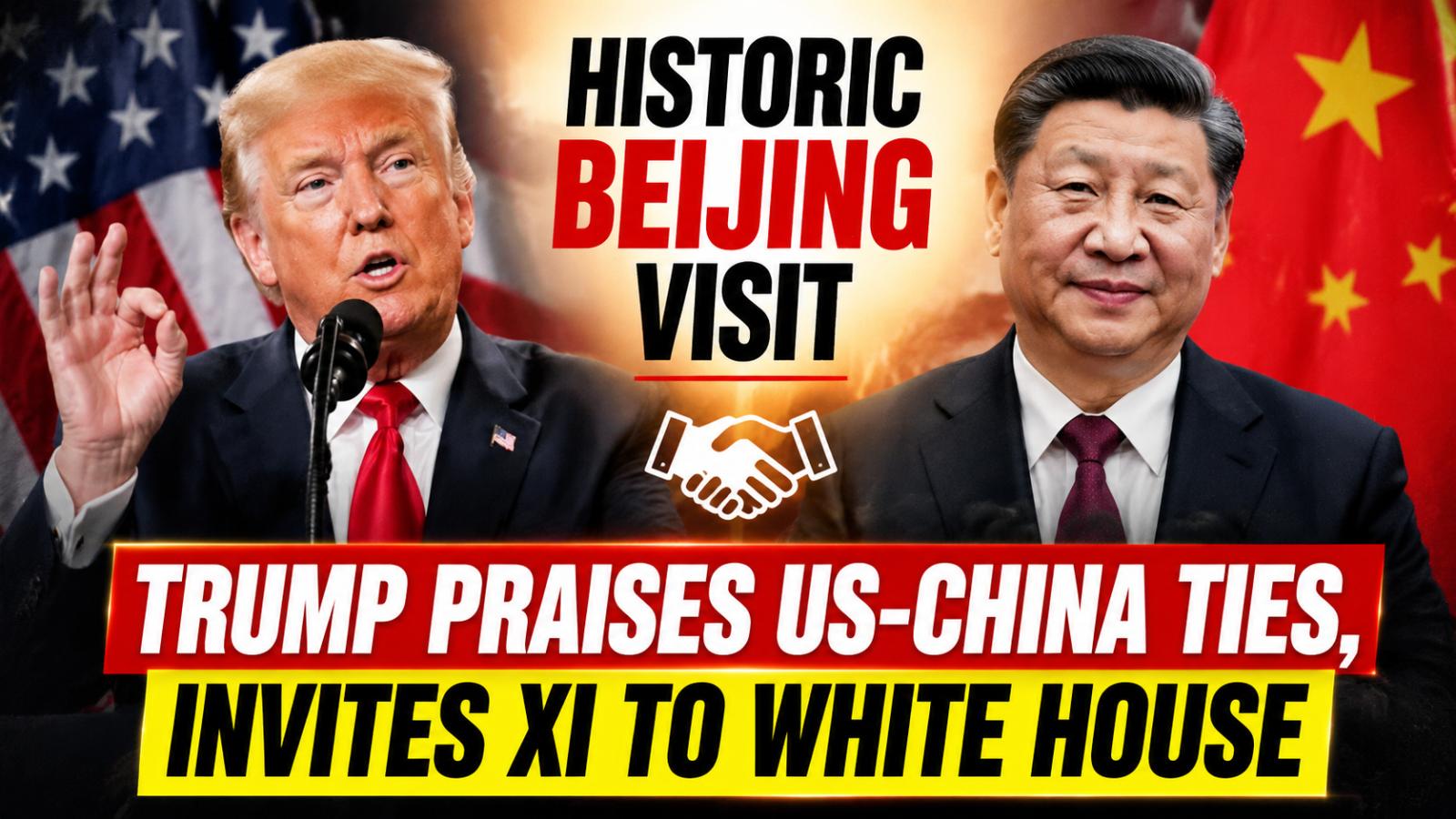
Trump's Historic Visit to Beijing During his address from Beijing, US President Donald Trump praised the enduring strength of the relationship between the United States and China, emphasizing the mutual respect that exists between the citizens of both nations. Trump expressed his gratitude for the "magnificent welcome" he received upon his arrival, acknowledging the warmth and hospitality extended to him during his historic visit. Trump and Xi Jinping As part
Trump Invites Xi Jinping to the White House
Trump's Historic Visit to Beijing During his address from Beijing, US President Donald Trump praised the enduring strength of the relationship between the United States and China, emphasizing the mutual respect that exists between the citizens of both nations. Trump expressed his gratitude for the "magnificent welcome" he received upon his arrival, acknowledging the warmth and hospitality extended to him during his historic visit. Trump and Xi Jinping As part
Trump’s Visit to China: A Grand Reception
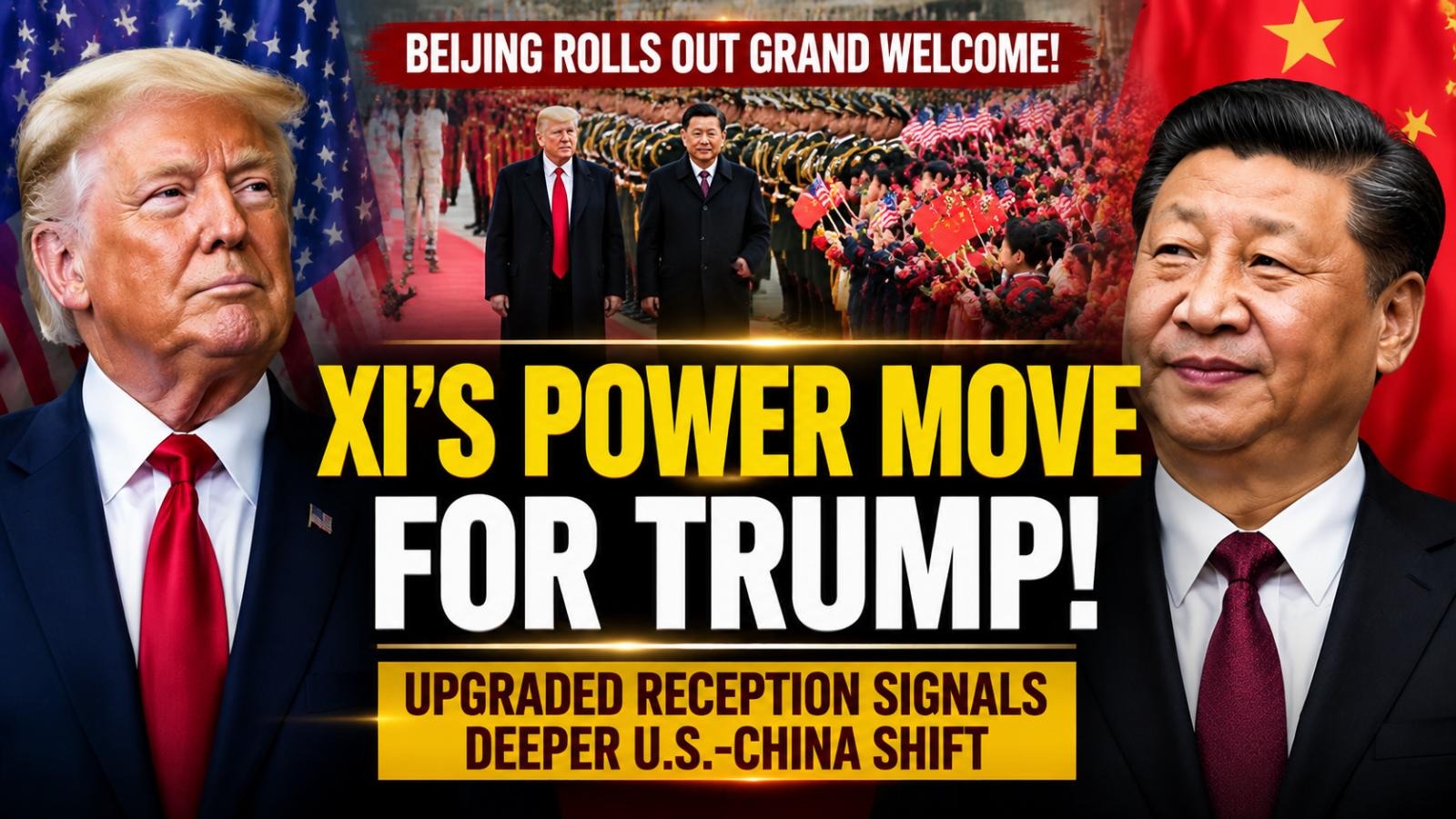
A Warmer Welcome for Trump Chinese President Xi Jinping’s diplomatic approach to Donald Trump’s recent visit to Beijing marked a clear shift in China-US relations. Unlike in 2017, when Trump was greeted by a lower-ranking official, this time China sent Vice President Han Zheng, along with both ambassadors and senior foreign affairs officials, signaling a significant elevation in the diplomatic reception. Isabelle Vladoiu, founder of the US Institute of Diplomacy and Human Righ
Trump’s Visit to China: A Grand Reception
A Warmer Welcome for Trump Chinese President Xi Jinping’s diplomatic approach to Donald Trump’s recent visit to Beijing marked a clear shift in China-US relations. Unlike in 2017, when Trump was greeted by a lower-ranking official, this time China sent Vice President Han Zheng, along with both ambassadors and senior foreign affairs officials, signaling a significant elevation in the diplomatic reception. Isabelle Vladoiu, founder of the US Institute of Diplomacy and Human Righ

Mamata Banerjee Appears in Court in Lawyer's Gown to Argue Post-Poll Violence Case
Mamata Banerjee appeared in the Calcutta High Court in a lawyer's gown to argue the post-poll violence case following TMC's defeat to BJP, as incidents of political violence continue in West Bengal. Mamata Banerjee, the former Chief Minister of West Bengal, appeared at the Calcutta High Court on Thursday dressed in a black lawyer’s gown, representing her commitment to addressing the ongoing case related to post-poll violence in the state. The violence came after the Trinamool Congress (TMC) suffered a historic defeat in the 2026 West Bengal Assembly elections, which saw the Bharatiya Janata Party (BJP) take control of the state. The case, filed by Shirshanya Bandopadhyay, son of senior TMC leader and advocate Kalyan Bandopadhyay, involves allegations of widespread attacks on political workers and damage to TMC party offices after the elections. Since the election results were declared on May 4, reports of violent incidents, including clashes, bomb attacks, and vandalism, have emerged across multiple districts in Bengal. Both the BJP and TMC have blamed each other for the unrest, which has escalated tensions in the state. Mamata Banerjee’s appearance in court was seen as a sign of her ongoing commitment to the people of Bengal, as the TMC’s official post stated. It emphasized her role in upholding justice, constitutional values, and standing firm against the political violence, regardless of her party’s loss. Her supporters argue that she continues to demonstrate resilience and compassion in confronting the challenges facing her state. The case remains under judicial review, as the political environment in West Bengal remains highly charged following the party's defeat. The tensions are further amplified by the high-profile killing of Chandranath Rath, a close aide to Chief Minister Suvendu Adhikari, which occurred on May 6, intensifying the public outcry over the violence and lawlessness in the state.
Mamata Banerjee Appears in Court in Lawyer's Gown to Argue Post-Poll Violence Case
Mamata Banerjee appeared in the Calcutta High Court in a lawyer's gown to argue the post-poll violence case following TMC's defeat to BJP, as incidents of political violence continue in West Bengal. Mamata Banerjee, the former Chief Minister of West Bengal, appeared at the Calcutta High Court on Thursday dressed in a black lawyer’s gown, representing her commitment to addressing the ongoing case related to post-poll violence in the state. The violence came after the Trinamool Congress (TMC) suffered a historic defeat in the 2026 West Bengal Assembly elections, which saw the Bharatiya Janata Party (BJP) take control of the state. The case, filed by Shirshanya Bandopadhyay, son of senior TMC leader and advocate Kalyan Bandopadhyay, involves allegations of widespread attacks on political workers and damage to TMC party offices after the elections. Since the election results were declared on May 4, reports of violent incidents, including clashes, bomb attacks, and vandalism, have emerged across multiple districts in Bengal. Both the BJP and TMC have blamed each other for the unrest, which has escalated tensions in the state. Mamata Banerjee’s appearance in court was seen as a sign of her ongoing commitment to the people of Bengal, as the TMC’s official post stated. It emphasized her role in upholding justice, constitutional values, and standing firm against the political violence, regardless of her party’s loss. Her supporters argue that she continues to demonstrate resilience and compassion in confronting the challenges facing her state. The case remains under judicial review, as the political environment in West Bengal remains highly charged following the party's defeat. The tensions are further amplified by the high-profile killing of Chandranath Rath, a close aide to Chief Minister Suvendu Adhikari, which occurred on May 6, intensifying the public outcry over the violence and lawlessness in the state.

Congress Names VD Satheesan as Kerala CM After 10 Days of Deliberations
After 10 days of deliberations, Congress has appointed VD Satheesan as Kerala's next Chief Minister, choosing the popular MLA over KC Venugopal and Ramesh Chennithala, following a landslide UDF victory in the 2026 Assembly elections. In a move that concludes 10 days of intense deliberations, the Congress party has named VD Satheesan as the next Chief Minister of Kerala following the United Democratic Front (UDF)’s victory in the 2026 Kerala Assembly elections. Satheesan’s appointment ends the speculation that had centered on senior leaders KC Venugopal and Ramesh Chennithala. Despite Venugopal’s strong support among the newly elected MLAs, Satheesan’s massive popularity among the masses, coupled with his strategic role in the party’s victory, made him the choice for the top post. The Congress leadership in Kerala had earlier hinted at appointing Satheesan as the CM due to his leadership in revitalizing the party after its heavy defeat in the 2021 elections. As Leader of the Opposition, Satheesan has been widely credited with uniting the Opposition and presenting a strong challenge to the ruling CPI(M)-led Left Democratic Front (LDF) government. His aggressive campaigning and alliance-building efforts played a crucial role in the UDF’s landslide victory, securing 102 seats. Venugopal, despite his backing among the majority of newly elected MLAs, accepted the high command’s decision graciously, emphasizing the party’s supremacy and reiterating his support for Satheesan. This smooth transition is seen as an attempt to quell factionalism within the Congress and present a united front ahead of the state’s political challenges. Satheesan’s journey in Kerala politics began with student activism, and he has been an integral part of the Congress for decades. As a six-time MLA from Paravur, Satheesan’s political career has been marked by his unwavering loyalty to the Congress and his ability to rally support even in challenging times. His rise within the party has positioned him as one of Kerala's most influential leaders, poised to steer the Congress-led UDF into a new era. The announcement of his appointment as CM comes after a wave of political tensions in the state, marked by the paper leak controversy in the NEET-UG 2026 exam and various issues surrounding the Left government. With Satheesan at the helm, Congress hopes to build on its recent success and make significant strides in addressing key governance concerns in Kerala.
Congress Names VD Satheesan as Kerala CM After 10 Days of Deliberations
After 10 days of deliberations, Congress has appointed VD Satheesan as Kerala's next Chief Minister, choosing the popular MLA over KC Venugopal and Ramesh Chennithala, following a landslide UDF victory in the 2026 Assembly elections. In a move that concludes 10 days of intense deliberations, the Congress party has named VD Satheesan as the next Chief Minister of Kerala following the United Democratic Front (UDF)’s victory in the 2026 Kerala Assembly elections. Satheesan’s appointment ends the speculation that had centered on senior leaders KC Venugopal and Ramesh Chennithala. Despite Venugopal’s strong support among the newly elected MLAs, Satheesan’s massive popularity among the masses, coupled with his strategic role in the party’s victory, made him the choice for the top post. The Congress leadership in Kerala had earlier hinted at appointing Satheesan as the CM due to his leadership in revitalizing the party after its heavy defeat in the 2021 elections. As Leader of the Opposition, Satheesan has been widely credited with uniting the Opposition and presenting a strong challenge to the ruling CPI(M)-led Left Democratic Front (LDF) government. His aggressive campaigning and alliance-building efforts played a crucial role in the UDF’s landslide victory, securing 102 seats. Venugopal, despite his backing among the majority of newly elected MLAs, accepted the high command’s decision graciously, emphasizing the party’s supremacy and reiterating his support for Satheesan. This smooth transition is seen as an attempt to quell factionalism within the Congress and present a united front ahead of the state’s political challenges. Satheesan’s journey in Kerala politics began with student activism, and he has been an integral part of the Congress for decades. As a six-time MLA from Paravur, Satheesan’s political career has been marked by his unwavering loyalty to the Congress and his ability to rally support even in challenging times. His rise within the party has positioned him as one of Kerala's most influential leaders, poised to steer the Congress-led UDF into a new era. The announcement of his appointment as CM comes after a wave of political tensions in the state, marked by the paper leak controversy in the NEET-UG 2026 exam and various issues surrounding the Left government. With Satheesan at the helm, Congress hopes to build on its recent success and make significant strides in addressing key governance concerns in Kerala.

Kavitha's Dismissive Response to Bandi Son Issue Sparks Controversy in Telangana Politics
Kalvakuntla Kavitha, a prominent figure in Telangana politics, has been working to solidify her political identity, recently launching the Telangana Rakshana Sena. However, her recent response to a sensitive issue involving Bandi Bhageerath, who has been named in a POCSO case and is reportedly absconding, has sparked controversy. When asked to comment on the matter, Kavitha's reaction was unexpected. She smiled and laughed at the question, suggesting that more focus should be placed
Kavitha's Dismissive Response to Bandi Son Issue Sparks Controversy in Telangana Politics
Kalvakuntla Kavitha, a prominent figure in Telangana politics, has been working to solidify her political identity, recently launching the Telangana Rakshana Sena. However, her recent response to a sensitive issue involving Bandi Bhageerath, who has been named in a POCSO case and is reportedly absconding, has sparked controversy. When asked to comment on the matter, Kavitha's reaction was unexpected. She smiled and laughed at the question, suggesting that more focus should be placed

Thoothukudi To Face Biggest Tasmac Closures Near Schools And Temples
Thoothukudi is likely to witness the highest number of Tasmac liquor shop closures in Tamil Nadu as authorities intensify action against outlets operating near schools, colleges, and places of worship. The move is part of stricter enforcement of liquor outlet rules aimed at improving school safety, reducing public inconvenience, and strengthening public welfare measures across the state. Officials in the Madurai region confirmed that several Tasmac outlets have already been identifi
Thoothukudi To Face Biggest Tasmac Closures Near Schools And Temples
Thoothukudi is likely to witness the highest number of Tasmac liquor shop closures in Tamil Nadu as authorities intensify action against outlets operating near schools, colleges, and places of worship. The move is part of stricter enforcement of liquor outlet rules aimed at improving school safety, reducing public inconvenience, and strengthening public welfare measures across the state. Officials in the Madurai region confirmed that several Tasmac outlets have already been identifi

Liquor Sales Banned for Those Below 21 in Tamil Nadu: Strict Action Announced by CM Vijay
The Tamil Nadu government, led by CM Vijay, has implemented a ban on liquor sales for individuals under 21, with strict action announced against violators. In a move aimed at reducing alcohol consumption among youth, the Tamil Nadu government has announced a strict ban on liquor sales for individuals under the age of 21. This comes as part of a wider initiative to crack down on alcohol accessibility, particularly near educational institutions and religious sites.
Liquor Sales Banned for Those Below 21 in Tamil Nadu: Strict Action Announced by CM Vijay
The Tamil Nadu government, led by CM Vijay, has implemented a ban on liquor sales for individuals under 21, with strict action announced against violators. In a move aimed at reducing alcohol consumption among youth, the Tamil Nadu government has announced a strict ban on liquor sales for individuals under the age of 21. This comes as part of a wider initiative to crack down on alcohol accessibility, particularly near educational institutions and religious sites.

Andhra Pradesh Leaders Chandrababu and Pawan Kalyan Lead Modi's Fuel Reduction Revolution
The government of Andhra Pradesh is aligning itself closely with the National Democratic Alliance (NDA) government at the centre, primarily driven by the strong support of leaders like Chandrababu Naidu and Pawan Kalyan for Prime Minister Narendra Modi. Recent political developments suggest that Andhra Pradesh is actively embracing Modi’s initiative aimed at reducing fuel consumption and promoting eco-friendly practices. In a significant move that echoes the Prime Minister's earli
Andhra Pradesh Leaders Chandrababu and Pawan Kalyan Lead Modi's Fuel Reduction Revolution
The government of Andhra Pradesh is aligning itself closely with the National Democratic Alliance (NDA) government at the centre, primarily driven by the strong support of leaders like Chandrababu Naidu and Pawan Kalyan for Prime Minister Narendra Modi. Recent political developments suggest that Andhra Pradesh is actively embracing Modi’s initiative aimed at reducing fuel consumption and promoting eco-friendly practices. In a significant move that echoes the Prime Minister's earli

Kerala Restricts Petrol And Diesel Sales Amid Fuel Supply Concerns
Motorists across Kerala are witnessing temporary fuel purchase restrictions as several petrol pumps introduce limits on petrol and diesel sales amid supply management concerns. The sudden move has sparked widespread discussion among vehicle owners, transport operators, and commercial users, especially after reports claimed that diesel purchases are now capped at 200 litres per customer while petrol purchases may be restricted to around ₹5,000 per person. Fuel station operators and
Kerala Restricts Petrol And Diesel Sales Amid Fuel Supply Concerns
Motorists across Kerala are witnessing temporary fuel purchase restrictions as several petrol pumps introduce limits on petrol and diesel sales amid supply management concerns. The sudden move has sparked widespread discussion among vehicle owners, transport operators, and commercial users, especially after reports claimed that diesel purchases are now capped at 200 litres per customer while petrol purchases may be restricted to around ₹5,000 per person. Fuel station operators and

Noida Workers Protest Case Sparks NSA Debate In UP
The Noida workers’ protest case intensified on May 14, 2026, exactly one month after violence broke out during labour demonstrations in the industrial hub on April 13. Uttar Pradesh Police invoked the stringent National Security Act (NSA) against Delhi University history graduate Aakriti Chaudhary, 25, and former journalist Satyam Verma, alleging their involvement in organising unrest, arson, and public disorder during the protests. Police claimed the violence was not spontaneous but part of a pre-planned operation carried out by an “organised syndicate of outsiders” linked to labour activist groups, an allegation strongly denied by the families of those arrested. The protests initially began over workers’ demands for better wages, overtime payments, and safer working conditions in Noida’s industrial sector before escalating into clashes and police action. Authorities registered 15 FIRs, detained nearly 1,200 people, and jailed around 60 accused under charges ranging from rioting to attempted murder. Police also sought a three-day custody of several accused, while the court scheduled the hearing for May 15. Along with Chaudhary and Verma, several students, labour activists, and workers from different states were arrested, including NIT graduates, research aspirants, and daily wage earners accused of supporting the demonstrations. Families of the accused alleged that many were targeted for supporting workers’ rights and labour movements. Chaudhary’s father defended her activism and questioned how she could be blamed for violence that allegedly occurred after she was detained. Friends and supporters of Verma highlighted his background in journalism, translation work, and social activism. Human rights groups, labour unions, and opposition leaders have meanwhile criticized the use of NSA in a labour protest case, raising concerns over freedom of expression, preventive detention laws, and the treatment of labour activists in India. The controversy has triggered nationwide political and legal debate over balancing public order with democratic rights during industrial unrest. Security has been tightened across sensitive industrial zones in Noida as investigations continue. Analysts believe the case could have long-term implications for labour movements, workers’ rights campaigns, and the future use of stringent security laws during protests across India.
Noida Workers Protest Case Sparks NSA Debate In UP
The Noida workers’ protest case intensified on May 14, 2026, exactly one month after violence broke out during labour demonstrations in the industrial hub on April 13. Uttar Pradesh Police invoked the stringent National Security Act (NSA) against Delhi University history graduate Aakriti Chaudhary, 25, and former journalist Satyam Verma, alleging their involvement in organising unrest, arson, and public disorder during the protests. Police claimed the violence was not spontaneous but part of a pre-planned operation carried out by an “organised syndicate of outsiders” linked to labour activist groups, an allegation strongly denied by the families of those arrested. The protests initially began over workers’ demands for better wages, overtime payments, and safer working conditions in Noida’s industrial sector before escalating into clashes and police action. Authorities registered 15 FIRs, detained nearly 1,200 people, and jailed around 60 accused under charges ranging from rioting to attempted murder. Police also sought a three-day custody of several accused, while the court scheduled the hearing for May 15. Along with Chaudhary and Verma, several students, labour activists, and workers from different states were arrested, including NIT graduates, research aspirants, and daily wage earners accused of supporting the demonstrations. Families of the accused alleged that many were targeted for supporting workers’ rights and labour movements. Chaudhary’s father defended her activism and questioned how she could be blamed for violence that allegedly occurred after she was detained. Friends and supporters of Verma highlighted his background in journalism, translation work, and social activism. Human rights groups, labour unions, and opposition leaders have meanwhile criticized the use of NSA in a labour protest case, raising concerns over freedom of expression, preventive detention laws, and the treatment of labour activists in India. The controversy has triggered nationwide political and legal debate over balancing public order with democratic rights during industrial unrest. Security has been tightened across sensitive industrial zones in Noida as investigations continue. Analysts believe the case could have long-term implications for labour movements, workers’ rights campaigns, and the future use of stringent security laws during protests across India.
US-China relations: Trump and Xi hold critical talks on trade, rare minerals, and Taiwan
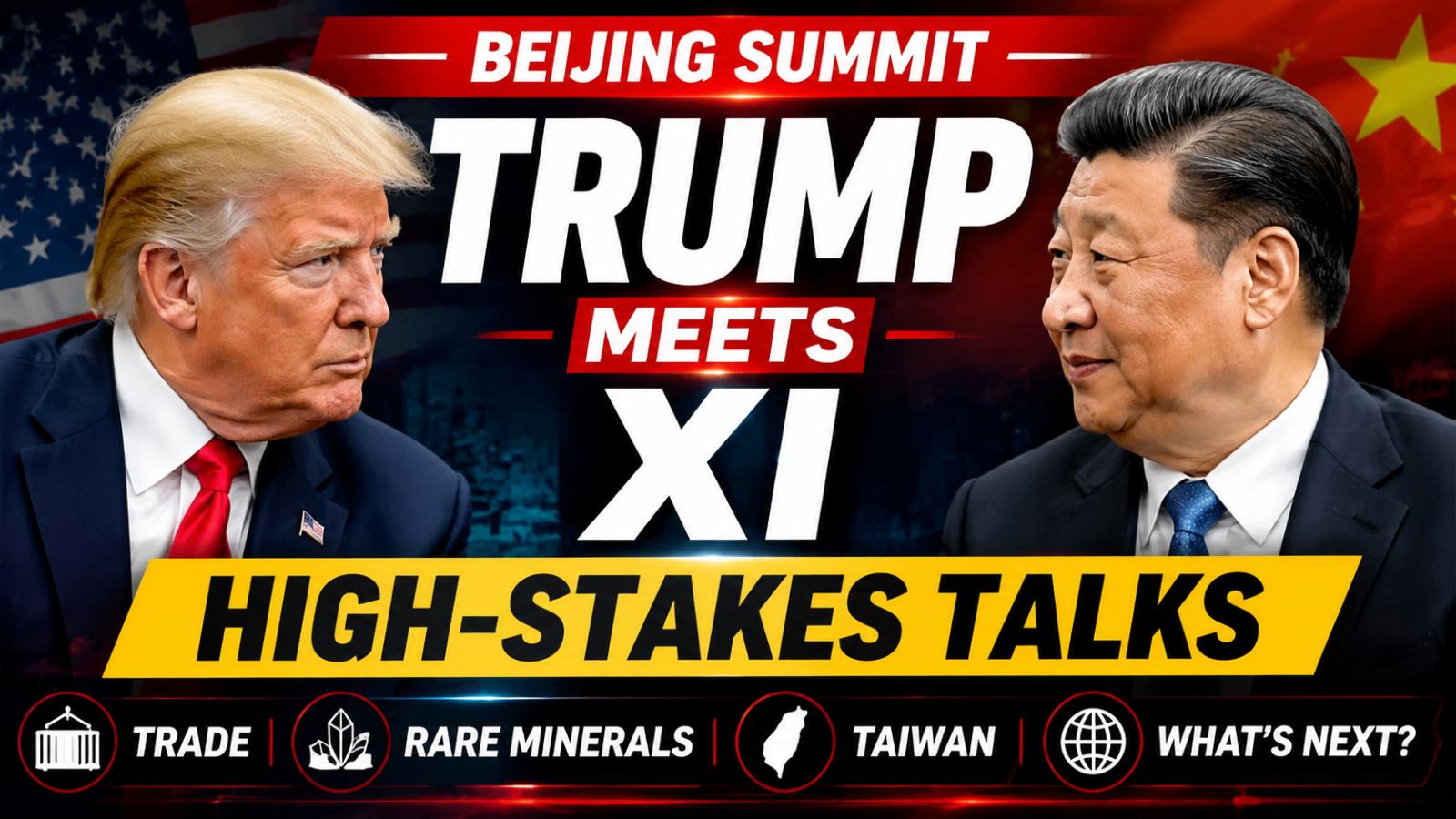
On May 14, 2026, a historic meeting unfolded in Beijing between U.S. President Donald Trump and Chinese President Xi Jinping. Hosted at the Great Hall of the People, the summit aimed to strengthen the ties between the two largest economies in the world. The opening moments were marked by a brief but firm handshake that lasted a solid 40 seconds, setting a serious but cordial tone for the discussions ahead. High-Level
US-China relations: Trump and Xi hold critical talks on trade, rare minerals, and Taiwan
On May 14, 2026, a historic meeting unfolded in Beijing between U.S. President Donald Trump and Chinese President Xi Jinping. Hosted at the Great Hall of the People, the summit aimed to strengthen the ties between the two largest economies in the world. The opening moments were marked by a brief but firm handshake that lasted a solid 40 seconds, setting a serious but cordial tone for the discussions ahead. High-Level

India-Russia political cooperation crucial in volatile global environment, says S Jaishankar
In a key diplomatic meeting this week, India's External Affairs Minister, S. Jaishankar, sat down with Russian Foreign Minister Sergey Lavrov to discuss the strengthening of ties between the two countries. As global uncertainties grow, the two leaders emphasized the growing importance of their political and economic cooperation. Jaishankar highlighted how vital it is for India and Russia to continue collaborating in these unpredictable times. This meeting comes just ahead of the BRI
India-Russia political cooperation crucial in volatile global environment, says S Jaishankar
In a key diplomatic meeting this week, India's External Affairs Minister, S. Jaishankar, sat down with Russian Foreign Minister Sergey Lavrov to discuss the strengthening of ties between the two countries. As global uncertainties grow, the two leaders emphasized the growing importance of their political and economic cooperation. Jaishankar highlighted how vital it is for India and Russia to continue collaborating in these unpredictable times. This meeting comes just ahead of the BRI
Xi and Trump Summit at Beijing
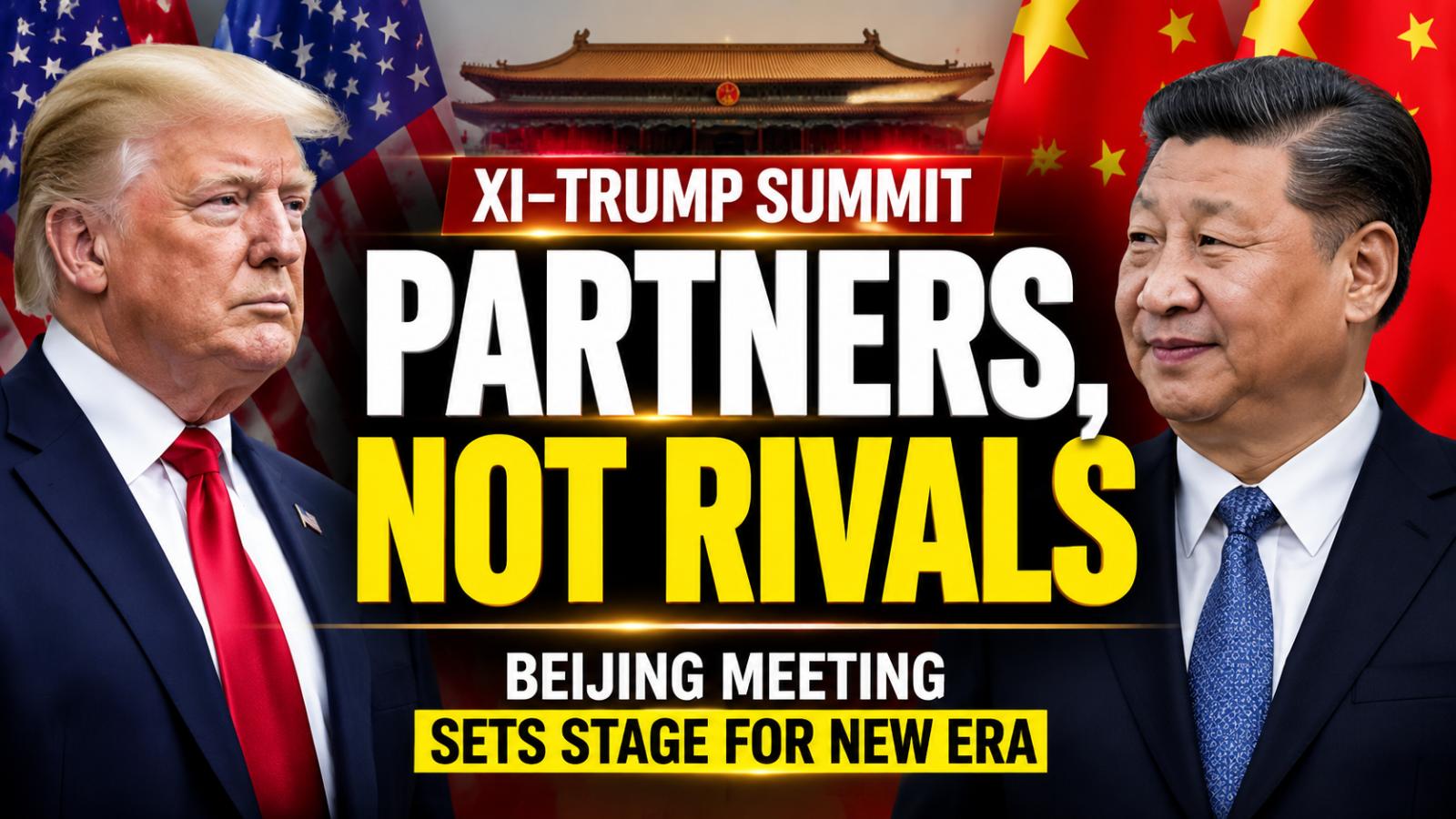
Historic Summit Marks a New Phase for US-China Relations On Thursday, May 14, 2026, Chinese President Xi Jinping welcomed US President Donald Trump to Beijing for a high-stakes summit, marking a critical moment in the evolving relationship between the two global powers. Xi set the tone for the summit by stressing the importance of cooperation over confrontation, calling for a stable US-China relationship as a foundation for global stability. “A stable China-US relationship is a
Xi and Trump Summit at Beijing
Historic Summit Marks a New Phase for US-China Relations On Thursday, May 14, 2026, Chinese President Xi Jinping welcomed US President Donald Trump to Beijing for a high-stakes summit, marking a critical moment in the evolving relationship between the two global powers. Xi set the tone for the summit by stressing the importance of cooperation over confrontation, calling for a stable US-China relationship as a foundation for global stability. “A stable China-US relationship is a
US-China Summit: Trump and Xi Discuss Trade, Taiwan, and Iran
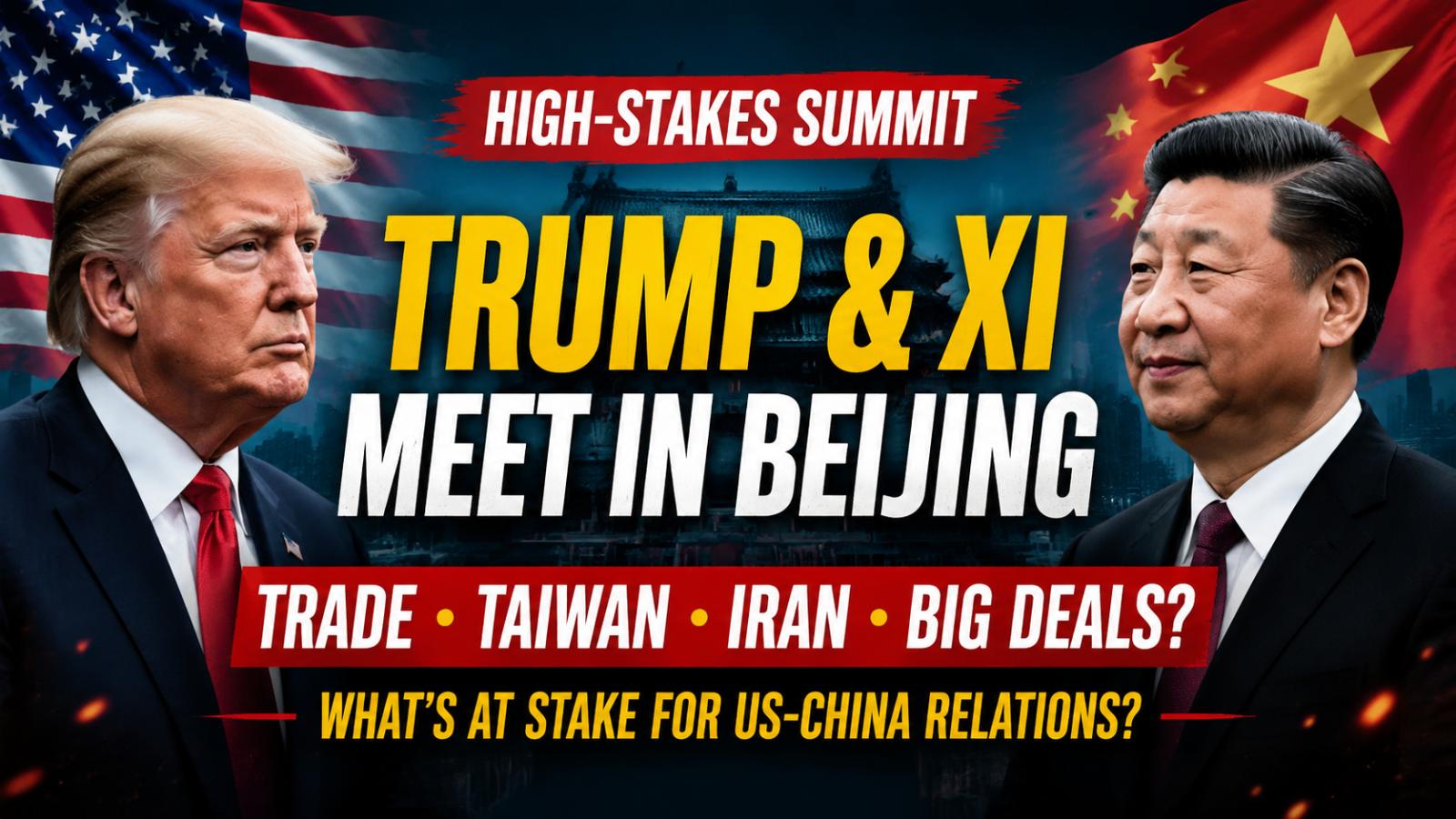
On May 14, US President Donald Trump will meet Chinese President Xi Jinping in Beijing for an important summit that could reshape the US-China relationship. This high-level meeting comes after years of trade disputes, rising tensions over Taiwan, and concerns about Iran’s nuclear ambitions. The two leaders are expected to tackle these critical issues head-on, with major global implications. This marks Trump’s first visit to China since 2017, and the atmosphere surrounding the trip is tense, yet optimistic. Alongside the president, top business leaders, including Nvidia’s Jensen Huang and Tesla’s Elon Musk, will be part of the delegation, emphasizing the US’s desire to push for commercial deals that strengthen trade ties with China. The summit is taking place against the backdrop of escalating tensions, including the ongoing trade war between the two powers, China’s rare earth restrictions, and the fierce competition in artificial intelligence (AI). Trade Tensions: A Fragile Truce One of the central issues on the table is trade. The US and China have been at odds for years, with both countries imposing tariffs on each other's goods. While last year saw a brief period of truce, many unresolved issues remain. President Trump is expected to press China for further trade reforms and better deals for American businesses, especially in the face of high tariffs and economic uncertainty.Both sides are aware that the trade dynamics have far-reaching consequences for the global economy, so finding common ground will be critical. Taiwan: A Stubborn Point of Contention Another major issue will be Taiwan, which has long been a flashpoint between the two nations. China views Taiwan as an inseparable part of its territory, while the US has shown strong support for the island’s autonomy. With tensions rising, especially after China increased military activity near Taiwan, the US's stance on Taiwan remains a key area of friction. Trump’s administration has been vocal about its support for Taiwan, and it remains to be seen how this will affect the overall talks. How the two leaders address this issue will set the tone for future interactions between the two countries, especially considering the delicate balance the US must strike between its relationship with China and its support for Taiwan. Iran: A Strategic Challenge Trump is also expected to address the situation in Iran, seeking China’s cooperation on curbing Iran’s nuclear ambitions. With China’s significant economic ties to Iran, Trump hopes Beijing can use its influence to help rein in Tehran’s nuclear program and reduce instability in the Middle East. China’s role in global diplomacy has been growing, and this summit could serve as a turning point for its involvement in international peace efforts. The Stakes of the Summit Both leaders face high stakes at this summit. Trump’s goal is clear: to secure deals that will benefit American businesses and address concerns about China’s rising influence in global trade and AI. For China, maintaining its geopolitical power while ensuring economic growth is paramount. Despite the challenging topics, both leaders know the importance of maintaining a functional relationship for global stability. As the summit unfolds, eyes will be on whether the two leaders can navigate their differences and strike a deal that addresses the critical issues of trade, Taiwan, and Iran. The outcome will not just shape US-China relations, but could influence global geopolitics for years to come. This meeting is more than just diplomacy; it's a chance to shape the future of international relations, with consequences that reach far beyond the negotiating table.
US-China Summit: Trump and Xi Discuss Trade, Taiwan, and Iran
On May 14, US President Donald Trump will meet Chinese President Xi Jinping in Beijing for an important summit that could reshape the US-China relationship. This high-level meeting comes after years of trade disputes, rising tensions over Taiwan, and concerns about Iran’s nuclear ambitions. The two leaders are expected to tackle these critical issues head-on, with major global implications. This marks Trump’s first visit to China since 2017, and the atmosphere surrounding the trip is tense, yet optimistic. Alongside the president, top business leaders, including Nvidia’s Jensen Huang and Tesla’s Elon Musk, will be part of the delegation, emphasizing the US’s desire to push for commercial deals that strengthen trade ties with China. The summit is taking place against the backdrop of escalating tensions, including the ongoing trade war between the two powers, China’s rare earth restrictions, and the fierce competition in artificial intelligence (AI). Trade Tensions: A Fragile Truce One of the central issues on the table is trade. The US and China have been at odds for years, with both countries imposing tariffs on each other's goods. While last year saw a brief period of truce, many unresolved issues remain. President Trump is expected to press China for further trade reforms and better deals for American businesses, especially in the face of high tariffs and economic uncertainty.Both sides are aware that the trade dynamics have far-reaching consequences for the global economy, so finding common ground will be critical. Taiwan: A Stubborn Point of Contention Another major issue will be Taiwan, which has long been a flashpoint between the two nations. China views Taiwan as an inseparable part of its territory, while the US has shown strong support for the island’s autonomy. With tensions rising, especially after China increased military activity near Taiwan, the US's stance on Taiwan remains a key area of friction. Trump’s administration has been vocal about its support for Taiwan, and it remains to be seen how this will affect the overall talks. How the two leaders address this issue will set the tone for future interactions between the two countries, especially considering the delicate balance the US must strike between its relationship with China and its support for Taiwan. Iran: A Strategic Challenge Trump is also expected to address the situation in Iran, seeking China’s cooperation on curbing Iran’s nuclear ambitions. With China’s significant economic ties to Iran, Trump hopes Beijing can use its influence to help rein in Tehran’s nuclear program and reduce instability in the Middle East. China’s role in global diplomacy has been growing, and this summit could serve as a turning point for its involvement in international peace efforts. The Stakes of the Summit Both leaders face high stakes at this summit. Trump’s goal is clear: to secure deals that will benefit American businesses and address concerns about China’s rising influence in global trade and AI. For China, maintaining its geopolitical power while ensuring economic growth is paramount. Despite the challenging topics, both leaders know the importance of maintaining a functional relationship for global stability. As the summit unfolds, eyes will be on whether the two leaders can navigate their differences and strike a deal that addresses the critical issues of trade, Taiwan, and Iran. The outcome will not just shape US-China relations, but could influence global geopolitics for years to come. This meeting is more than just diplomacy; it's a chance to shape the future of international relations, with consequences that reach far beyond the negotiating table.

Bay Area Billionaires Hold Four Spots in World’s Top 10 Richest People
Bay Area billionaires remain heavily represented among the world’s richest people, with Larry Page, Sergey Brin, Mark Zuckerberg and Jensen Huang listed among the global top 10. The concentration highlights Silicon Valley’s continued influence over artificial intelligence, digital advertising, social media, cloud computing and semiconductor technology. Larry Page Leads Bay Area Wealth Rankings Google co-founder Larry Page, who resides in Pa
Bay Area Billionaires Hold Four Spots in World’s Top 10 Richest People
Bay Area billionaires remain heavily represented among the world’s richest people, with Larry Page, Sergey Brin, Mark Zuckerberg and Jensen Huang listed among the global top 10. The concentration highlights Silicon Valley’s continued influence over artificial intelligence, digital advertising, social media, cloud computing and semiconductor technology. Larry Page Leads Bay Area Wealth Rankings Google co-founder Larry Page, who resides in Pa
Belleville Mayor Upset: Frank Velez Wins After Fire Backlash
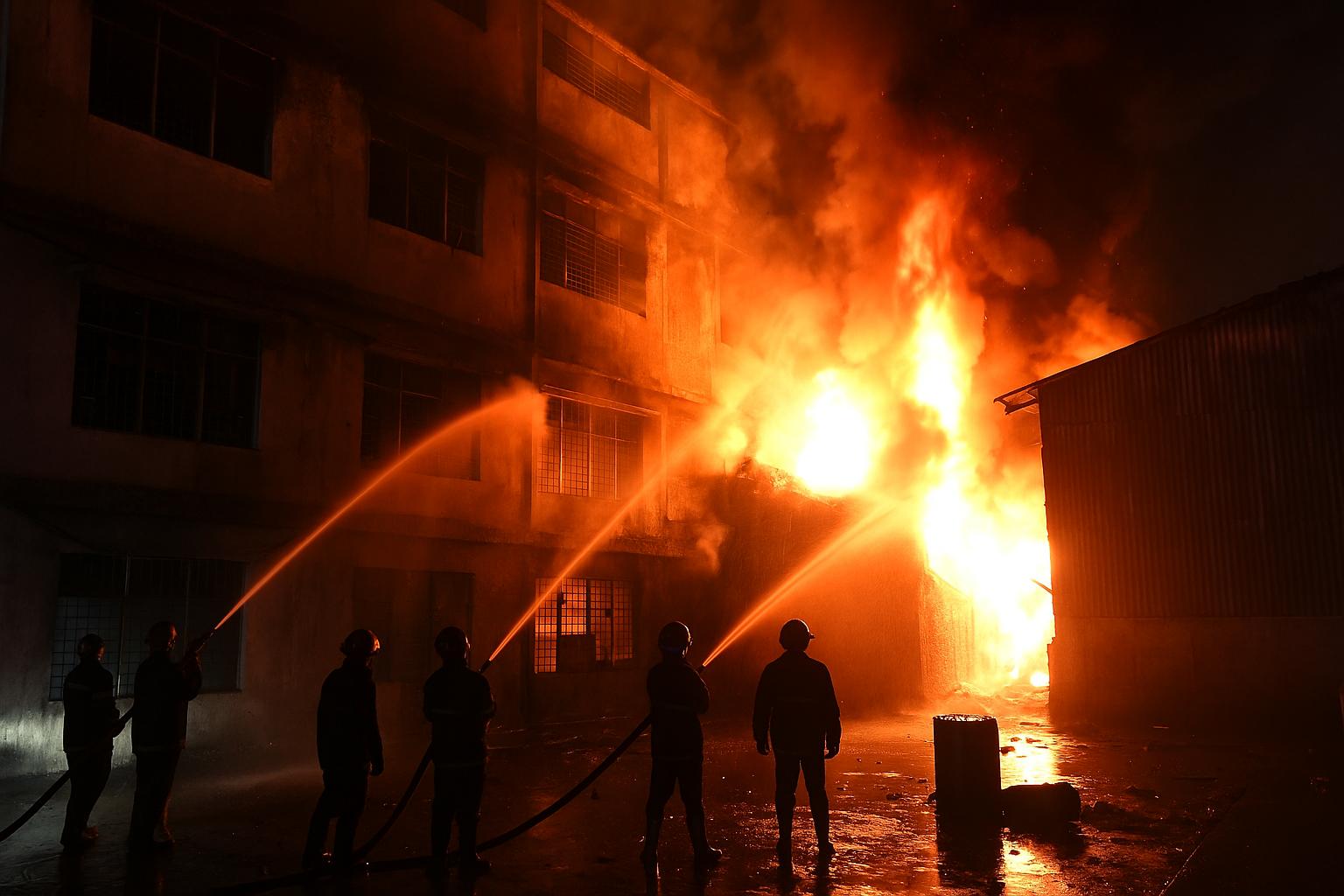
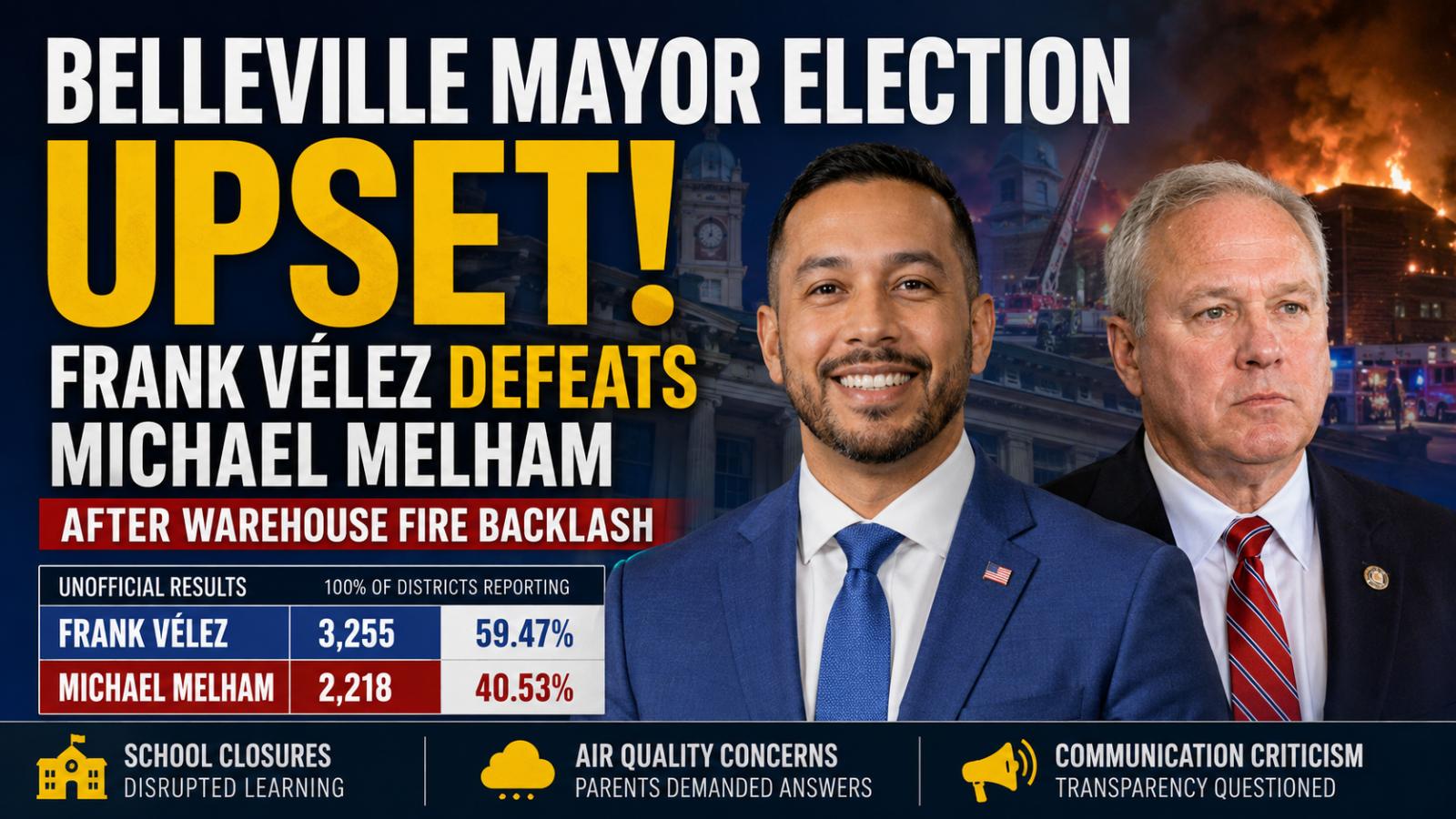
Belleville Mayor Election Results Frank Velez defeated incumbent Michael Melham in the Belleville mayor election, ending Melham’s bid for a third term after a race shaped by local trust, school safety and the town’s response to a major warehouse fire. Unofficial results from the Essex County Clerk’s Office for Tuesday, May 12, 2026, showed Velez with 3,255 votes, or 59.47%, while Melham received 2,218 votes, or 40.53%, with all districts reporting.
Belleville Mayor Upset: Frank Velez Wins After Fire Backlash
Belleville Mayor Election Results Frank Velez defeated incumbent Michael Melham in the Belleville mayor election, ending Melham’s bid for a third term after a race shaped by local trust, school safety and the town’s response to a major warehouse fire. Unofficial results from the Essex County Clerk’s Office for Tuesday, May 12, 2026, showed Velez with 3,255 votes, or 59.47%, while Melham received 2,218 votes, or 40.53%, with all districts reporting.
Nvidia CEO Joins Trump’s China Trip as AI Chip Stakes Rise
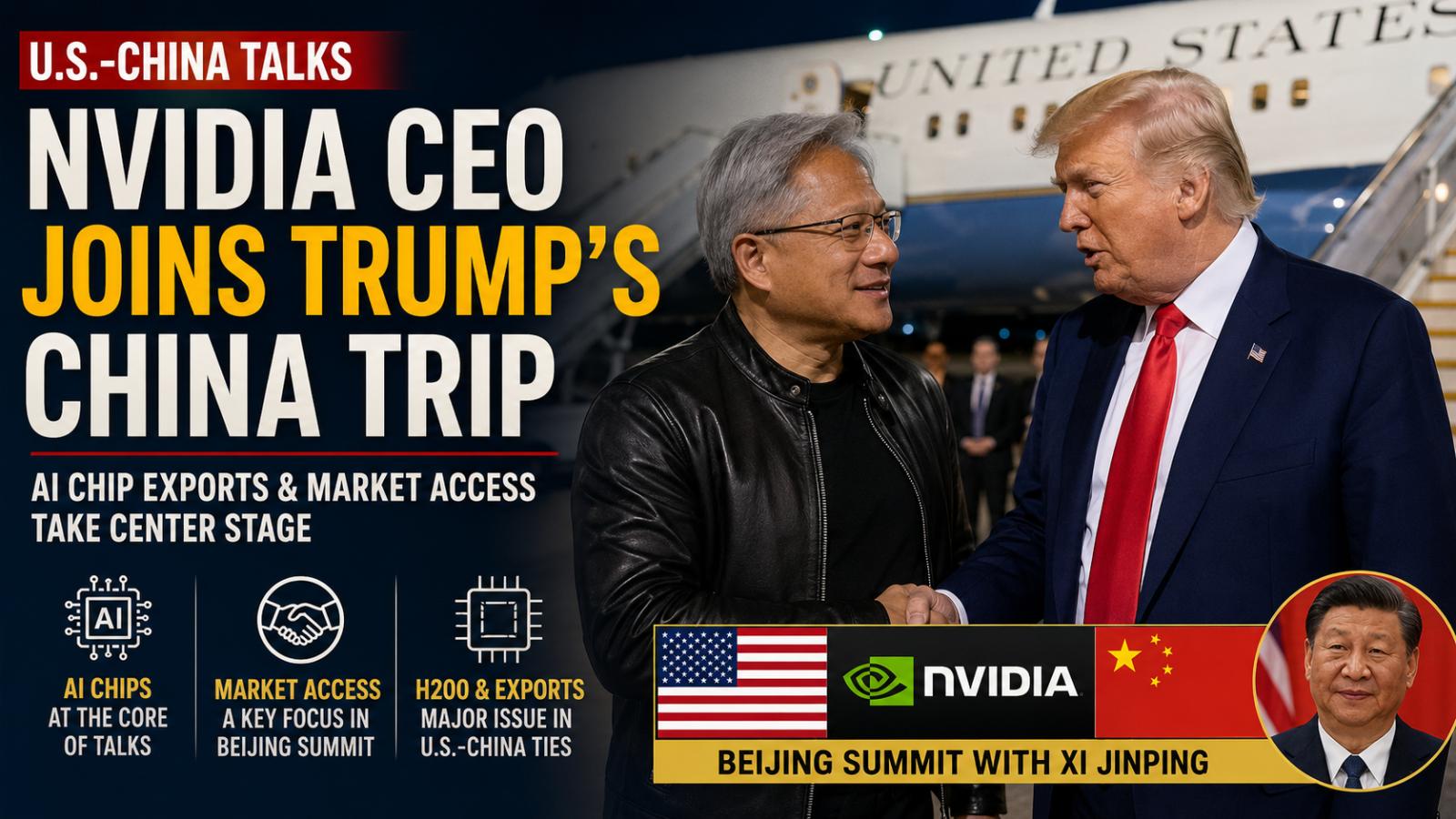
Nvidia CEO Jensen Huang joined President Donald Trump’s China trip on Wednesday, May 13, 2026, as AI chip exports and market access moved to the center of U.S.-China talks. His presence matters because Nvidia’s powerful GPUs sit at the heart of AI development, while U.S. export controls have limited high-end chip sales to China. Why Huang’s Role Matters Huang was added after earlier indications he was not in the U.S. business delegation,
Nvidia CEO Joins Trump’s China Trip as AI Chip Stakes Rise
Nvidia CEO Jensen Huang joined President Donald Trump’s China trip on Wednesday, May 13, 2026, as AI chip exports and market access moved to the center of U.S.-China talks. His presence matters because Nvidia’s powerful GPUs sit at the heart of AI development, while U.S. export controls have limited high-end chip sales to China. Why Huang’s Role Matters Huang was added after earlier indications he was not in the U.S. business delegation,
Trump-Xi Summit 2026: 6 Past Meetings That Explain US-China Tensions
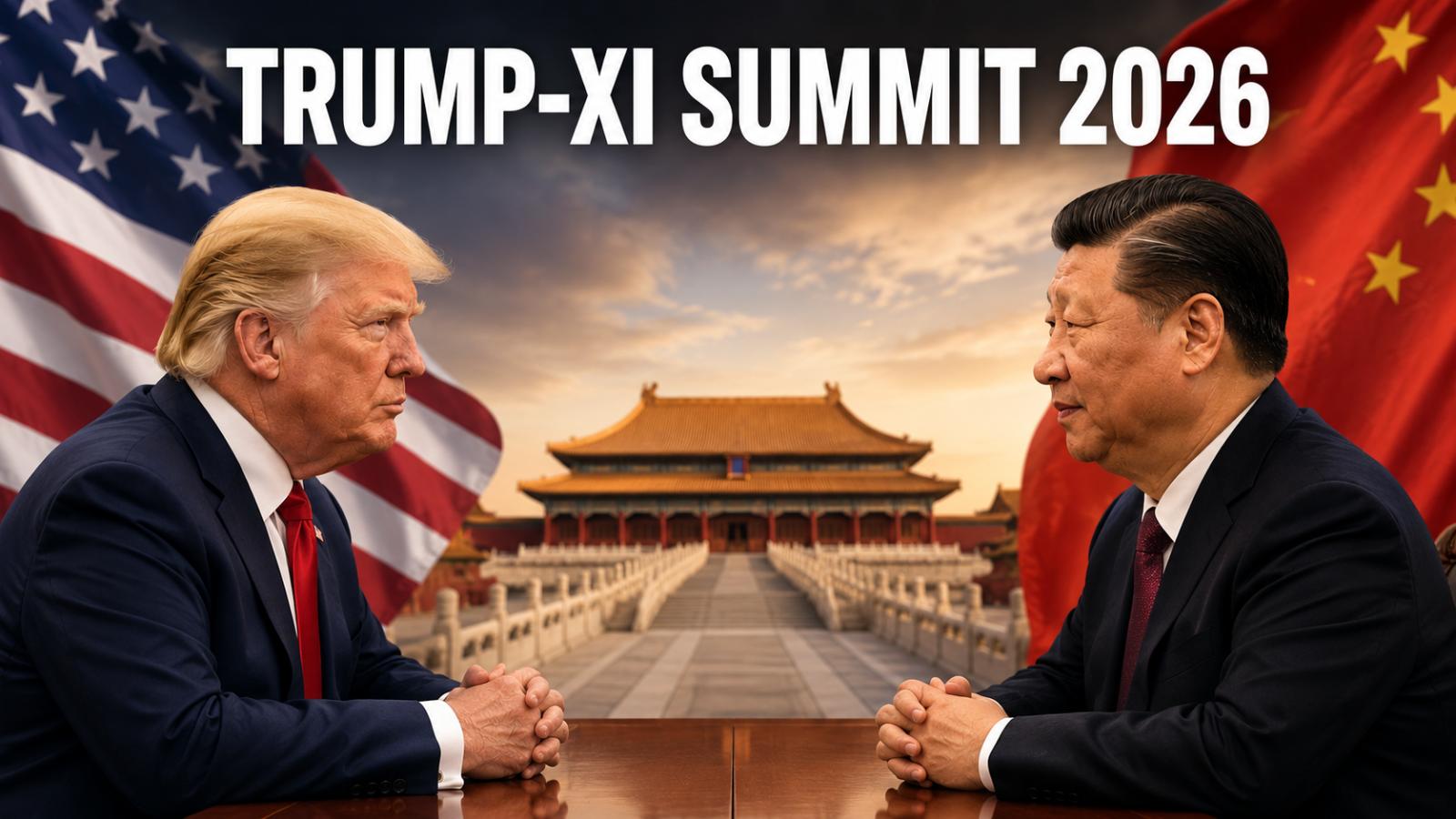
Trump-Xi Summit Puts US-China Tensions Back in Focus US President Donald Trump arrived in Beijing on Wednesday, May 13, 2026, for a high-stakes summit with Chinese President Xi Jinping, bringing tariffs, rare earth exports, AI chips, Taiwan and global security back to the center of US-China relations. The summit is expected to mark another major test for the world’s two largest economies after six previous Trump-Xi meetings shaped trade disputes, tariff pauses and fragile diplomatic resets since 2017. For Washington, the key questions include trade access, technology restrictions, agriculture purchases, Taiwan and supply-chain stability. For Beijing, the meeting is a chance to push back against US tariffs and technology controls while protecting China’s position in global trade. Why the Trump-Xi Summit Matters in 2026 The 2026 Trump-Xi summit matters because the issues are no longer limited to trade. The talks now include rare earth minerals, artificial intelligence, agriculture, Taiwan, nuclear concerns and broader geopolitical tensions. Reuters reported that Trump and Xi are expected to discuss trade, AI, agriculture, rare earths and global security issues during the summit period. Rare earth exports are especially important because China plays a major role in minerals used in defense systems, electric vehicles, electronics and clean-energy technology. Any movement on export controls could affect global supply chains and US manufacturers. AI chips are another major pressure point. Trump’s Beijing visit also drew attention because Nvidia CEO Jensen Huang joined the mission as US companies seek broader access to China’s technology market. Taiwan remains one of the most sensitive security issues. Beijing strongly opposes US arms sales to Taiwan, while Washington continues to maintain political and security ties with Taipei. AP reported that US arms sales to Taiwan are among the issues surrounding the summit. Trump-Xi Meetings Timeline Meeting Date Location Main Focus Why It Matters Now First Trump-Xi meeting Thursday, April 6, 2017 Mar-a-Lago, Florida Trade, diplomacy, North Korea Opened direct leader-level communication G20 meeting Saturday, July 8, 2017 Hamburg, Germany North Korea and economic ties Came before stronger US trade action Trump China visit Wednesday, November 8, 2017 to Friday, November 10, 2017 Beijing, China Business deals and trade imbalance Warm diplomacy did not stop tariff tensions G20 dinner Saturday, December 1, 2018 Buenos Aires, Argentina Tariffs, intellectual property and cyber concerns Opened temporary negotiations during the trade war Osaka G20 meeting Saturday, June 29, 2019 Osaka, Japan Tariff pause and farm purchases Restarted trade talks after escalation APEC meeting Thursday, October 30, 2025 Busan, South Korea Tariffs, rare earths and farm exports Created a temporary pause before the 2026 summit How Six Meetings Shaped US-China Relations Trump and Xi first met at Mar-a-Lago in Florida on Thursday, April 6, 2017. The meeting created a personal channel between the two leaders, but it did not resolve deeper US concerns over China’s trade practices, market access and industrial policy. Their second meeting came on Saturday, July 8, 2017, during the G20 summit in Hamburg, Germany. North Korea was a major topic, but trade tensions were already rising. Soon after, Washington moved toward stronger action over alleged Chinese intellectual property theft and unfair trade practices. Trump visited Beijing from Wednesday, November 8, 2017, to Friday, November 10, 2017. The visit included ceremonial events and business announcements, but the friendly tone did not prevent the two countries from moving toward a wider trade confrontation. By Saturday, December 1, 2018, when Trump and Xi met at the G20 summit in Buenos Aires, both countries had already imposed tariffs. The dinner opened temporary negotiations on trade imbalances, intellectual property and cyber concerns. The next major pause came at the G20 summit in Osaka on Saturday, June 29, 2019. Trump and Xi agreed to restart trade talks and delay new tariffs. China also pledged to buy more US agricultural goods. Their sixth meeting came after a six-year gap on Thursday, October 30, 2025, during the APEC summit in Busan, South Korea. That meeting helped create a temporary pause in parts of the trade dispute, including movement on tariffs, rare earth exports and US farm purchases. What the 2026 Trump-Xi Meeting Could Decide The Beijing summit could decide whether Washington and Beijing extend a period of limited stability or return to sharper confrontation. For the United States, the main goals include tariff relief, stronger export access for farmers, rare earth supply stability, technology safeguards and progress on broader security issues. American companies are also watching whether the talks create more space for business access in China. For China, the summit is about reducing pressure from tariffs and technology restrictions while showing that Beijing can negotiate from strength. Rare earths give China leverage, while its large consumer and technology market remains important for US companies. The six previous Trump-Xi meetings show a clear pattern: personal diplomacy can slow escalation, but it rarely solves the deeper disputes. Mar-a-Lago and Beijing created warmth but did not prevent the trade war. Buenos Aires and Osaka produced temporary pauses. Busan again showed that both sides could step back from escalation, but only for a limited period. That makes the 2026 summit more than another diplomatic event. It is a test of whether the United States and China can manage competition without allowing tariffs, AI chip restrictions, rare earth controls and Taiwan tensions to trigger another major crisis.
Trump-Xi Summit 2026: 6 Past Meetings That Explain US-China Tensions
Trump-Xi Summit Puts US-China Tensions Back in Focus US President Donald Trump arrived in Beijing on Wednesday, May 13, 2026, for a high-stakes summit with Chinese President Xi Jinping, bringing tariffs, rare earth exports, AI chips, Taiwan and global security back to the center of US-China relations. The summit is expected to mark another major test for the world’s two largest economies after six previous Trump-Xi meetings shaped trade disputes, tariff pauses and fragile diplomatic resets since 2017. For Washington, the key questions include trade access, technology restrictions, agriculture purchases, Taiwan and supply-chain stability. For Beijing, the meeting is a chance to push back against US tariffs and technology controls while protecting China’s position in global trade. Why the Trump-Xi Summit Matters in 2026 The 2026 Trump-Xi summit matters because the issues are no longer limited to trade. The talks now include rare earth minerals, artificial intelligence, agriculture, Taiwan, nuclear concerns and broader geopolitical tensions. Reuters reported that Trump and Xi are expected to discuss trade, AI, agriculture, rare earths and global security issues during the summit period. Rare earth exports are especially important because China plays a major role in minerals used in defense systems, electric vehicles, electronics and clean-energy technology. Any movement on export controls could affect global supply chains and US manufacturers. AI chips are another major pressure point. Trump’s Beijing visit also drew attention because Nvidia CEO Jensen Huang joined the mission as US companies seek broader access to China’s technology market. Taiwan remains one of the most sensitive security issues. Beijing strongly opposes US arms sales to Taiwan, while Washington continues to maintain political and security ties with Taipei. AP reported that US arms sales to Taiwan are among the issues surrounding the summit. Trump-Xi Meetings Timeline Meeting Date Location Main Focus Why It Matters Now First Trump-Xi meeting Thursday, April 6, 2017 Mar-a-Lago, Florida Trade, diplomacy, North Korea Opened direct leader-level communication G20 meeting Saturday, July 8, 2017 Hamburg, Germany North Korea and economic ties Came before stronger US trade action Trump China visit Wednesday, November 8, 2017 to Friday, November 10, 2017 Beijing, China Business deals and trade imbalance Warm diplomacy did not stop tariff tensions G20 dinner Saturday, December 1, 2018 Buenos Aires, Argentina Tariffs, intellectual property and cyber concerns Opened temporary negotiations during the trade war Osaka G20 meeting Saturday, June 29, 2019 Osaka, Japan Tariff pause and farm purchases Restarted trade talks after escalation APEC meeting Thursday, October 30, 2025 Busan, South Korea Tariffs, rare earths and farm exports Created a temporary pause before the 2026 summit How Six Meetings Shaped US-China Relations Trump and Xi first met at Mar-a-Lago in Florida on Thursday, April 6, 2017. The meeting created a personal channel between the two leaders, but it did not resolve deeper US concerns over China’s trade practices, market access and industrial policy. Their second meeting came on Saturday, July 8, 2017, during the G20 summit in Hamburg, Germany. North Korea was a major topic, but trade tensions were already rising. Soon after, Washington moved toward stronger action over alleged Chinese intellectual property theft and unfair trade practices. Trump visited Beijing from Wednesday, November 8, 2017, to Friday, November 10, 2017. The visit included ceremonial events and business announcements, but the friendly tone did not prevent the two countries from moving toward a wider trade confrontation. By Saturday, December 1, 2018, when Trump and Xi met at the G20 summit in Buenos Aires, both countries had already imposed tariffs. The dinner opened temporary negotiations on trade imbalances, intellectual property and cyber concerns. The next major pause came at the G20 summit in Osaka on Saturday, June 29, 2019. Trump and Xi agreed to restart trade talks and delay new tariffs. China also pledged to buy more US agricultural goods. Their sixth meeting came after a six-year gap on Thursday, October 30, 2025, during the APEC summit in Busan, South Korea. That meeting helped create a temporary pause in parts of the trade dispute, including movement on tariffs, rare earth exports and US farm purchases. What the 2026 Trump-Xi Meeting Could Decide The Beijing summit could decide whether Washington and Beijing extend a period of limited stability or return to sharper confrontation. For the United States, the main goals include tariff relief, stronger export access for farmers, rare earth supply stability, technology safeguards and progress on broader security issues. American companies are also watching whether the talks create more space for business access in China. For China, the summit is about reducing pressure from tariffs and technology restrictions while showing that Beijing can negotiate from strength. Rare earths give China leverage, while its large consumer and technology market remains important for US companies. The six previous Trump-Xi meetings show a clear pattern: personal diplomacy can slow escalation, but it rarely solves the deeper disputes. Mar-a-Lago and Beijing created warmth but did not prevent the trade war. Buenos Aires and Osaka produced temporary pauses. Busan again showed that both sides could step back from escalation, but only for a limited period. That makes the 2026 summit more than another diplomatic event. It is a test of whether the United States and China can manage competition without allowing tariffs, AI chip restrictions, rare earth controls and Taiwan tensions to trigger another major crisis.
Trump-Xi summit: Key issues, trade talks, and Iran conflict to be addressed
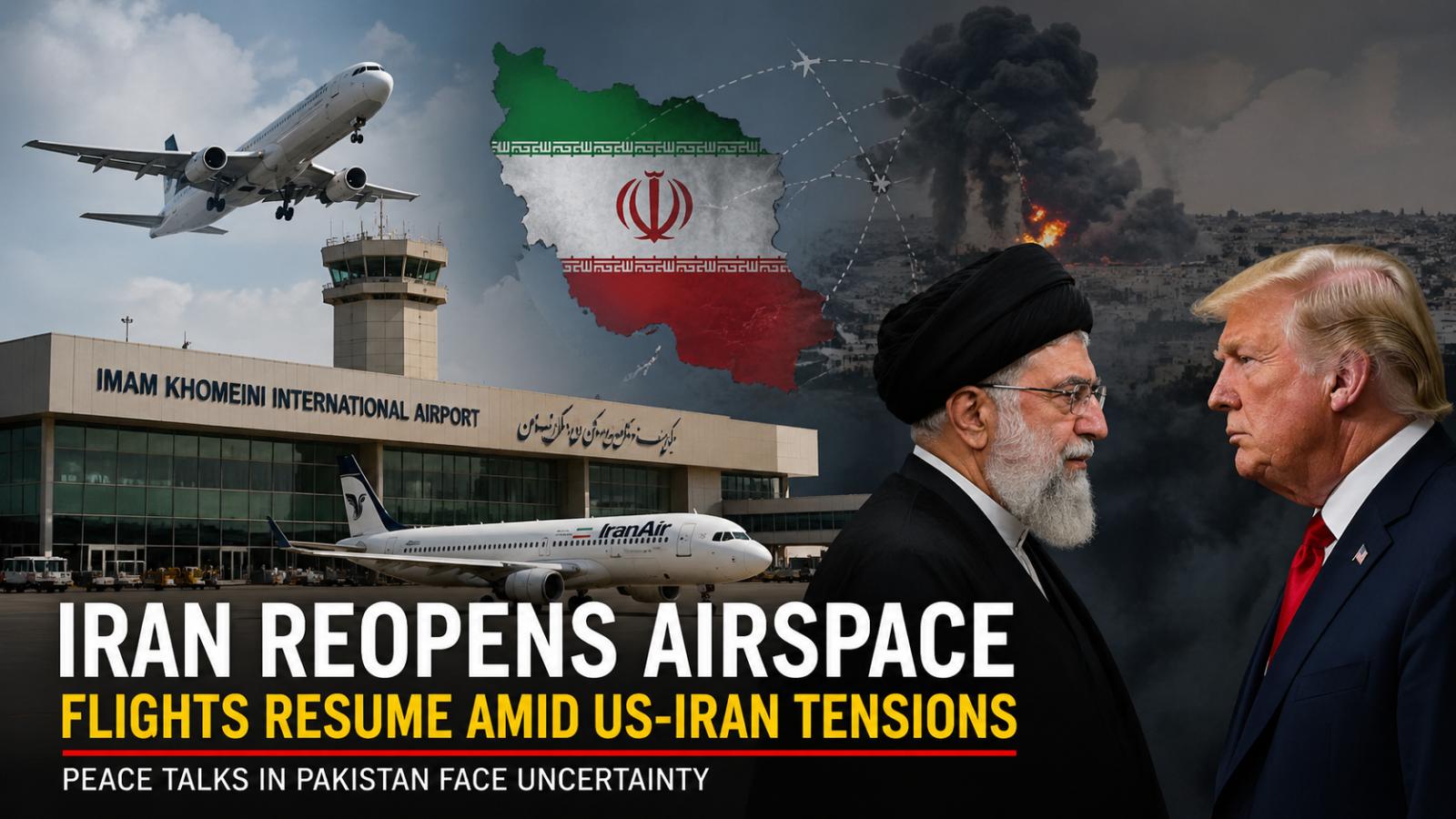
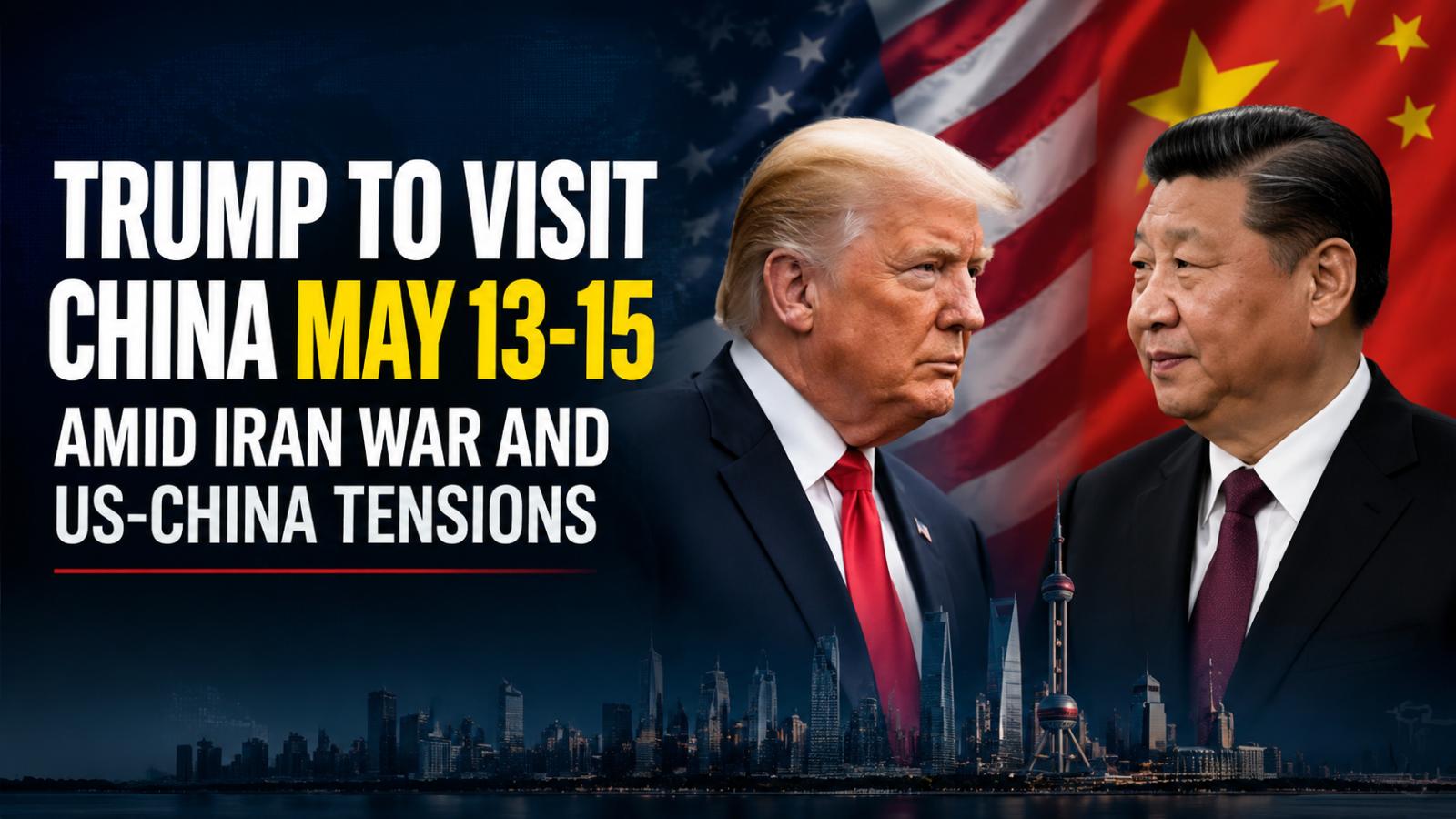
US President Donald Trump is set to visit China from May 13 to 15, marking the first visit to the country by an American president in nearly nine years. The invitation comes from Chinese President Xi Jinping amid growing tensions between the two nations over issues such as trade, technology, and defense. This visit comes at a critical time for global politics, with the ongoing Iran conflict impacting both economic stability and energy prices. The timing of Trump’s visit coincides with a volatile situation in the Strait of Hormuz, where a dual blockade has significantly disrupted global oil trade, driving up energy prices. These disruptions have the potential to harm global economic growth, as the Strait is a vital shipping route for the world’s oil supply. Trump’s administration has placed significant pressure on Iran over its nuclear program, and in recent remarks, he stated that the US would “finish the job” if Iran did not agree to the terms aimed at halting the conflict. While tensions remain high, the US continues to press for a diplomatic resolution to the situation, with President Trump asserting that Iran must meet specific demands regarding its nuclear ambitions. Despite these pressures, Trump maintains that the US does not need China’s assistance to resolve the issue, suggesting that the conflict could be settled with or without China’s involvement. Iran, for its part, has signaled its intention to pursue peace, with chief negotiator Mohammad Bagher Ghalibaf issuing an ultimatum to the US. According to Ghalibaf, Washington must accept Iran’s recent peace proposal or face further failure in negotiations. He emphasized that there was no alternative but to acknowledge the rights of the Iranian people as outlined in Tehran’s 14-point proposal. Beyond the Iran conflict, the upcoming Trump-Xi summit is expected to address several key issues affecting US-China relations. Trade discussions will likely focus on extending a temporary truce in the ongoing trade dispute, particularly concerning rare earth minerals. Both leaders are expected to explore agreements related to Boeing aircraft purchases, as well as expanding trade and investment ties. Additionally, China is anticipated to announce purchases in the US agricultural and energy sectors. Another significant topic of discussion will be Taiwan, with Xi expressing frustration over the US’s continued support for the island nation, which China claims as part of its territory. Trump’s administration has reiterated its commitment to Taiwan, despite escalating military activities in the region by China. The summit will also cover the rapid development of artificial intelligence (AI) in both countries, with US officials highlighting concerns about the potential military and economic implications of AI advancements. With both nations at the forefront of technological innovation, there is a growing need for open communication to avoid misunderstandings or potential conflicts arising from the use of AI. This high-stakes summit between the US and China is poised to shape the future of global trade, energy security, and technological development, with both sides seeking to manage their differences while addressing urgent geopolitical challenges. As the world watches, the outcome of these talks could have far-reaching implications for international relations.
Trump-Xi summit: Key issues, trade talks, and Iran conflict to be addressed
US President Donald Trump is set to visit China from May 13 to 15, marking the first visit to the country by an American president in nearly nine years. The invitation comes from Chinese President Xi Jinping amid growing tensions between the two nations over issues such as trade, technology, and defense. This visit comes at a critical time for global politics, with the ongoing Iran conflict impacting both economic stability and energy prices. The timing of Trump’s visit coincides with a volatile situation in the Strait of Hormuz, where a dual blockade has significantly disrupted global oil trade, driving up energy prices. These disruptions have the potential to harm global economic growth, as the Strait is a vital shipping route for the world’s oil supply. Trump’s administration has placed significant pressure on Iran over its nuclear program, and in recent remarks, he stated that the US would “finish the job” if Iran did not agree to the terms aimed at halting the conflict. While tensions remain high, the US continues to press for a diplomatic resolution to the situation, with President Trump asserting that Iran must meet specific demands regarding its nuclear ambitions. Despite these pressures, Trump maintains that the US does not need China’s assistance to resolve the issue, suggesting that the conflict could be settled with or without China’s involvement. Iran, for its part, has signaled its intention to pursue peace, with chief negotiator Mohammad Bagher Ghalibaf issuing an ultimatum to the US. According to Ghalibaf, Washington must accept Iran’s recent peace proposal or face further failure in negotiations. He emphasized that there was no alternative but to acknowledge the rights of the Iranian people as outlined in Tehran’s 14-point proposal. Beyond the Iran conflict, the upcoming Trump-Xi summit is expected to address several key issues affecting US-China relations. Trade discussions will likely focus on extending a temporary truce in the ongoing trade dispute, particularly concerning rare earth minerals. Both leaders are expected to explore agreements related to Boeing aircraft purchases, as well as expanding trade and investment ties. Additionally, China is anticipated to announce purchases in the US agricultural and energy sectors. Another significant topic of discussion will be Taiwan, with Xi expressing frustration over the US’s continued support for the island nation, which China claims as part of its territory. Trump’s administration has reiterated its commitment to Taiwan, despite escalating military activities in the region by China. The summit will also cover the rapid development of artificial intelligence (AI) in both countries, with US officials highlighting concerns about the potential military and economic implications of AI advancements. With both nations at the forefront of technological innovation, there is a growing need for open communication to avoid misunderstandings or potential conflicts arising from the use of AI. This high-stakes summit between the US and China is poised to shape the future of global trade, energy security, and technological development, with both sides seeking to manage their differences while addressing urgent geopolitical challenges. As the world watches, the outcome of these talks could have far-reaching implications for international relations.