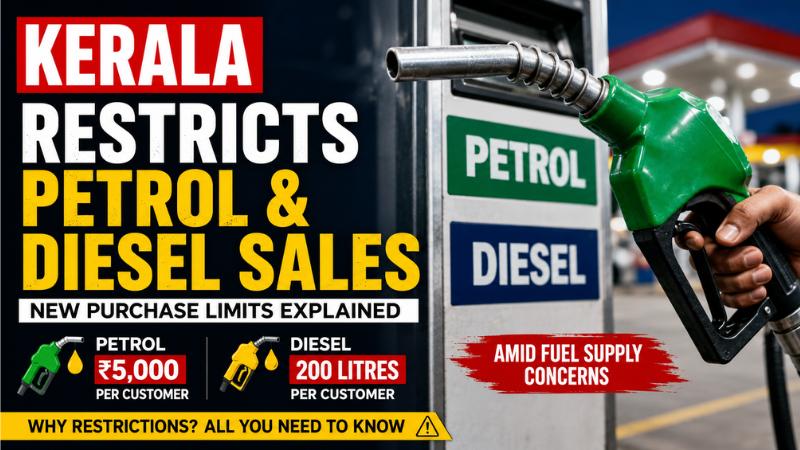
Motorists across Kerala are witnessing temporary fuel purchase restrictions as several petrol pumps introduce limits on petrol and diesel sales amid supply management concerns. The sudden move has sparked widespread discussion among vehicle owners, transport operators, and commercial users, especially after reports claimed that diesel purchases are now capped at 200 litres per customer while petrol purchases may be restricted to around ₹5,000 per person.
Fuel station operators and petroleum traders clarified that the restrictions are precautionary measures aimed at ensuring balanced fuel distribution and preventing panic buying. Officials associated with the Kerala State Petroleum Traders Association reportedly stated that the state is not facing a complete fuel shortage, but supply-chain adjustments and logistical pressure have forced dealers to regulate sales temporarily.
How Much Petrol And Diesel Can You Buy In Kerala Now?
According to reports circulating across the state:
- Petrol purchase limit: Around ₹5,000 per customer
- Diesel purchase limit: Maximum 200 litres per customer
- Restrictions mainly target bulk buyers and commercial fuel consumers
- Regular two-wheeler and car users are unlikely to face immediate difficulties
Kerala has nearly 2,500 petrol pumps that depend on continuous tanker supply from oil marketing companies. In major cities, some diesel outlets reportedly sell up to 10,000 litres daily, making supply balancing extremely important during periods of uncertainty.
Why Kerala Introduced Fuel Sales Restrictions
Petroleum traders say the temporary limits are linked to fuel supply management and not due to a nationwide fuel crisis. India continues to maintain adequate reserves of crude oil, LPG, and natural gas, according to industry officials. However, fluctuations in global oil prices, transportation scheduling challenges, and inventory management issues have reportedly increased pressure on fuel distributors.
Experts believe the restrictions are intended to prevent panic-driven bulk purchases that could disrupt fuel availability for ordinary consumers. Similar precautionary measures have occasionally been introduced in different regions during periods of supply uncertainty or high demand.
Despite the concerns, officials insist there is no need for panic buying. Most retail customers are expected to continue receiving fuel without major disruption, while authorities and oil companies closely monitor the situation.