#aigovernance
EU AI Act transparency rules take effect on August 2
The European Union reaches another major milestone in AI regulation on August 2, when key transparency obligations under the EU AI Act begin applying across the bloc. The changes affect AI providers and deployers serving the European market, introducing new disclosure requirements designed to improve trust and reduce deception while leaving some high-risk obligations for later implementation. Article 50 transparency rules begin
EU AI Act transparency rules take effect on August 2
The European Union reaches another major milestone in AI regulation on August 2, when key transparency obligations under the EU AI Act begin applying across the bloc. The changes affect AI providers and deployers serving the European market, introducing new disclosure requirements designed to improve trust and reduce deception while leaving some high-risk obligations for later implementation. Article 50 transparency rules begin
UN pushes global AI rules over safety risks
The United Nations has called for stronger global rules on artificial intelligence as concern grows over the speed at which AI systems are entering public life, business, education and security. UN Secretary-General António Guterres said governments cannot afford to wait until powerful AI tools create deeper social, political or military risks before agreeing on clear safeguards. Speaking ahead of the Global Dialogue on AI Governance in G
UN pushes global AI rules over safety risks
The United Nations has called for stronger global rules on artificial intelligence as concern grows over the speed at which AI systems are entering public life, business, education and security. UN Secretary-General António Guterres said governments cannot afford to wait until powerful AI tools create deeper social, political or military risks before agreeing on clear safeguards. Speaking ahead of the Global Dialogue on AI Governance in G
G7 summit 2026 highlights India’s global role
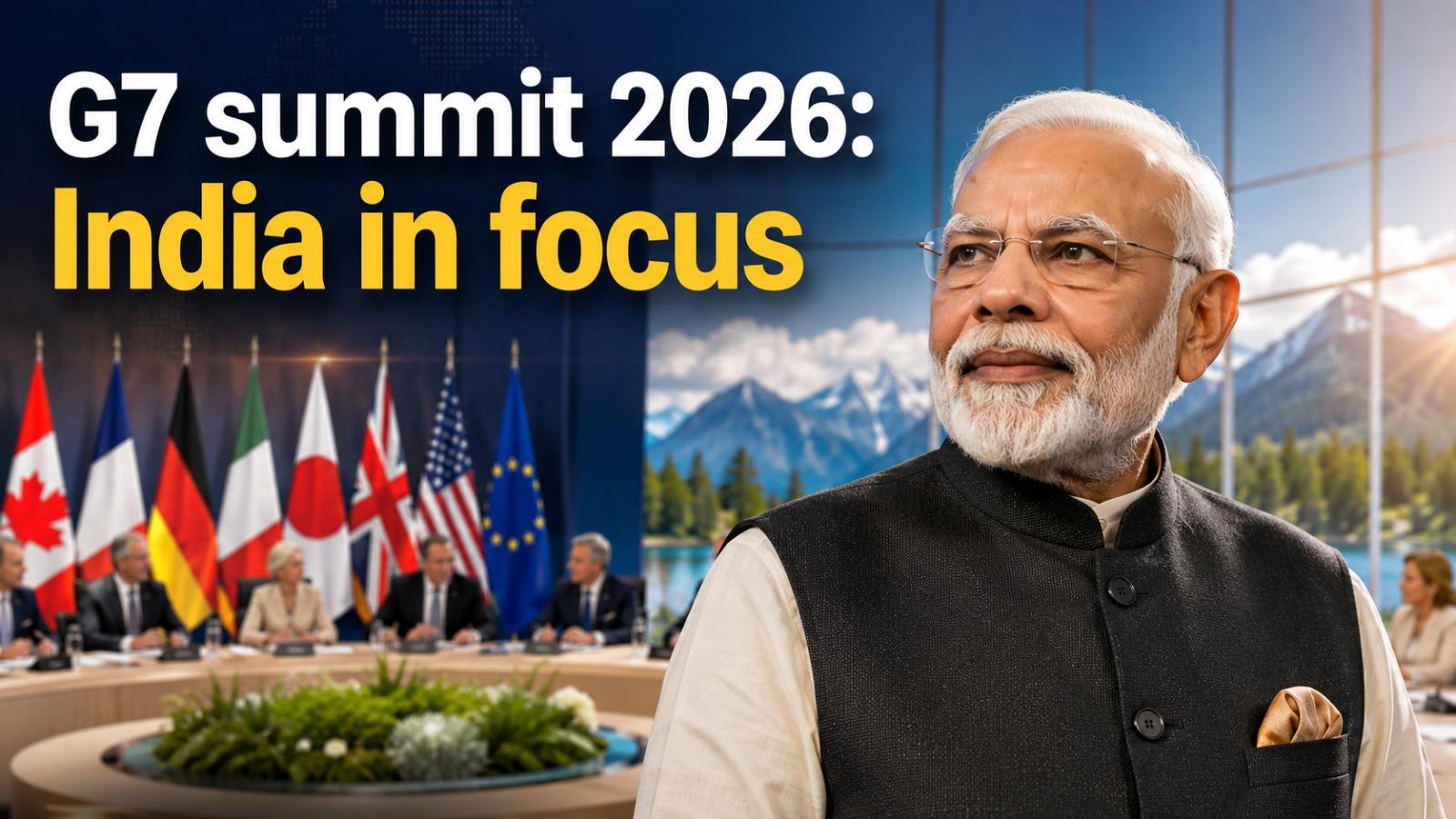
The G7 summit 2026 opened in Évian-les-Bains, France, with leaders gathering for discussions on global economic pressure, trade stability, artificial intelligence, energy security, climate action and geopolitical tensions. India’s participation has drawn major attention as Prime Minister Narendra Modi is expected to present New Delhi’s priorities before some of the world’s most influential economies. Although India is not a G7 membe
G7 summit 2026 highlights India’s global role
The G7 summit 2026 opened in Évian-les-Bains, France, with leaders gathering for discussions on global economic pressure, trade stability, artificial intelligence, energy security, climate action and geopolitical tensions. India’s participation has drawn major attention as Prime Minister Narendra Modi is expected to present New Delhi’s priorities before some of the world’s most influential economies. Although India is not a G7 membe
PM Modi Unveils MANAV Framework At AI Summit 2026, Calls For Inclusive AI For Global South
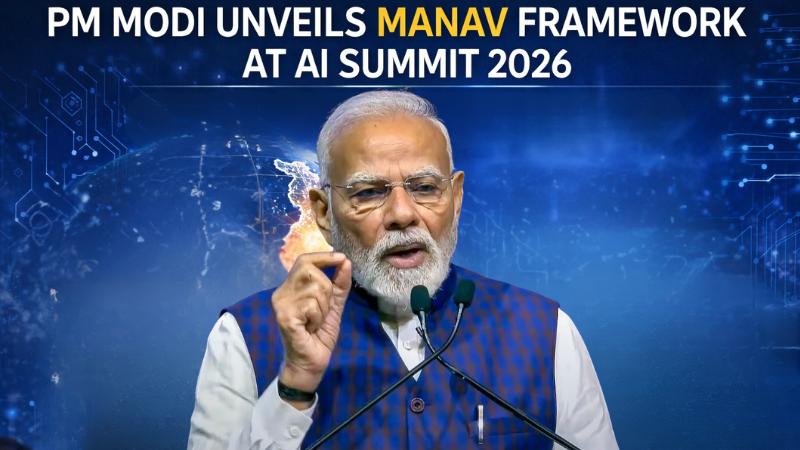
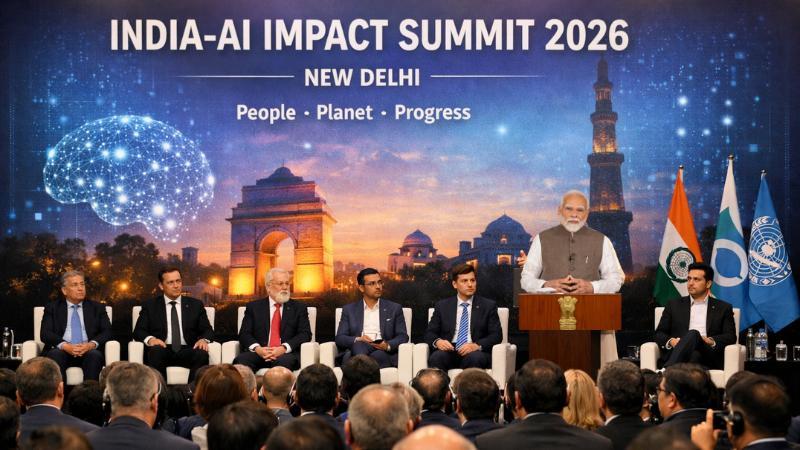
Prime Minister Narendra Modi presented India’s bold and human-centric vision for artificial intelligence at the India AI Impact Summit 2026 in New Delhi, calling for the democratisation of AI and introducing the MANAV framework to guide its ethical and inclusive development. Addressing global leaders, technology pioneers, and policymakers, the Prime Minister stressed that artificial intelligence must empower humanity rather than reduce people to mere data points. He highlighted the need to ensure that AI benefits everyone, particularly developing nations in the Global South, and does not remain concentrated in the hands of a few powerful entities. The MANAV framework, introduced as India’s roadmap for responsible AI governance, focuses on five core principles: Moral and Ethical Systems, Accountable Governance, National Data Sovereignty, Accessible and Inclusive Technology, and Valid and Legitimate AI systems. According to the Prime Minister, AI must operate within ethical boundaries, ensure transparency, protect national data rights, and remain accessible to all sections of society. He emphasized that AI should serve as a multiplier of human potential rather than a monopolistic force controlled by limited stakeholders. The framework aims to ensure that AI remains lawful, trustworthy, and beneficial to humanity while supporting innovation and growth. Prime Minister Modi described artificial intelligence as one of the most transformative technologies in human history, comparable to major breakthroughs such as the discovery of fire and the invention of communication systems. He noted that AI is evolving at an unprecedented pace, impacting industries, economies, and societies worldwide. He warned that without proper governance, AI could create disruption, but with the right direction, it can become a powerful solution to global challenges including healthcare, education, and economic development. The India AI Impact Summit 2026, which brought together over 200,000 participants and representatives from more than 100 countries, reflects India’s growing leadership role in shaping the future of AI. The event featured participation from major global technology leaders, innovators, and policymakers, highlighting India’s position as a key hub for AI innovation. The Prime Minister also praised young innovators and entrepreneurs, noting that the next generation is actively shaping the future of artificial intelligence despite early scepticism surrounding emerging technologies. Prime Minister Modi emphasized that India’s MANAV vision is designed not just for national development but for global benefit, particularly for countries in the Global South. He called on international leaders to work together to ensure that artificial intelligence remains inclusive, ethical, and aligned with human values. He reiterated that the ultimate goal of AI should be welfare for all and happiness for all, ensuring that technological progress strengthens societies rather than widening inequalities. The summit marks a significant milestone in India’s technological journey, positioning the country as a global advocate for responsible AI governance. With its focus on inclusivity, ethics, and accessibility, the MANAV framework represents a major step toward building a balanced and human-centric artificial intelligence ecosystem that can benefit people across the world.
PM Modi Unveils MANAV Framework At AI Summit 2026, Calls For Inclusive AI For Global South
Prime Minister Narendra Modi presented India’s bold and human-centric vision for artificial intelligence at the India AI Impact Summit 2026 in New Delhi, calling for the democratisation of AI and introducing the MANAV framework to guide its ethical and inclusive development. Addressing global leaders, technology pioneers, and policymakers, the Prime Minister stressed that artificial intelligence must empower humanity rather than reduce people to mere data points. He highlighted the need to ensure that AI benefits everyone, particularly developing nations in the Global South, and does not remain concentrated in the hands of a few powerful entities. The MANAV framework, introduced as India’s roadmap for responsible AI governance, focuses on five core principles: Moral and Ethical Systems, Accountable Governance, National Data Sovereignty, Accessible and Inclusive Technology, and Valid and Legitimate AI systems. According to the Prime Minister, AI must operate within ethical boundaries, ensure transparency, protect national data rights, and remain accessible to all sections of society. He emphasized that AI should serve as a multiplier of human potential rather than a monopolistic force controlled by limited stakeholders. The framework aims to ensure that AI remains lawful, trustworthy, and beneficial to humanity while supporting innovation and growth. Prime Minister Modi described artificial intelligence as one of the most transformative technologies in human history, comparable to major breakthroughs such as the discovery of fire and the invention of communication systems. He noted that AI is evolving at an unprecedented pace, impacting industries, economies, and societies worldwide. He warned that without proper governance, AI could create disruption, but with the right direction, it can become a powerful solution to global challenges including healthcare, education, and economic development. The India AI Impact Summit 2026, which brought together over 200,000 participants and representatives from more than 100 countries, reflects India’s growing leadership role in shaping the future of AI. The event featured participation from major global technology leaders, innovators, and policymakers, highlighting India’s position as a key hub for AI innovation. The Prime Minister also praised young innovators and entrepreneurs, noting that the next generation is actively shaping the future of artificial intelligence despite early scepticism surrounding emerging technologies. Prime Minister Modi emphasized that India’s MANAV vision is designed not just for national development but for global benefit, particularly for countries in the Global South. He called on international leaders to work together to ensure that artificial intelligence remains inclusive, ethical, and aligned with human values. He reiterated that the ultimate goal of AI should be welfare for all and happiness for all, ensuring that technological progress strengthens societies rather than widening inequalities. The summit marks a significant milestone in India’s technological journey, positioning the country as a global advocate for responsible AI governance. With its focus on inclusivity, ethics, and accessibility, the MANAV framework represents a major step toward building a balanced and human-centric artificial intelligence ecosystem that can benefit people across the world.
India to Host Global AI Impact Summit 2026 in New Delhi with World Leaders
New Delhi is set to host a major international gathering of technology executives, political leaders and policy experts as the India-AI Impact Summit 2026 begins in the national capital from February 16 to 20. The Ministry of External Affairs confirmed that delegations from more than 45 countries will attend the high-level event, positioning the summit as one of the largest global forums focused on artificial intelligence and digital policy. Among the notable participants is Antonio Guterres, the Secretary-General of the United Nations, along with senior officials from several international organisations. The presence of global leadership underscores the summit’s growing significance as countries seek to collaborate on the opportunities and challenges posed by rapidly advancing AI technologies. The summit’s framework is built around three central themes—People, Planet and Progress—reflecting India’s stated aim of shaping artificial intelligence governance that promotes inclusive growth, environmental sustainability and technological advancement. Officials said the agenda will focus on balancing innovation with responsibility, ensuring that digital transformation benefits both developing and developed economies. Several heads of state and government are scheduled to attend at the invitation of Prime Minister Narendra Modi. Leaders expected to participate include Tshering Tobgay of Bhutan, Luiz Inácio Lula da Silva of Brazil, Emmanuel Macron of France, Pedro Sánchez of Spain and Dick Schoof of the Netherlands, among others. Additional representation will come from vice presidents, crown princes and senior ministers, highlighting broad geographic participation across Europe, Latin America, Asia and Africa. Beyond government delegations, the event will draw prominent figures from the global technology sector. Executives expected to attend include Sundar Pichai of Google, Sam Altman of OpenAI, Jensen Huang of Nvidia, Demis Hassabis of DeepMind, Brad Smith of Microsoft and Cristiano Amon of Qualcomm. Their participation is expected to add industry insight into emerging AI trends, research and investment. According to officials, the summit will facilitate discussions on responsible AI governance, innovation ecosystems, digital public infrastructure and climate-conscious technology. Sessions are also planned on equitable access to emerging tools, reflecting concerns that technological gaps could widen inequalities between regions. Organisers have described the India-AI Impact Summit as a platform designed not only for dialogue but also for measurable outcomes. By encouraging collaboration between policymakers, startups and multinational firms, the event aims to generate partnerships and frameworks that support economic growth, social development and the sustainable use of artificial intelligence. With a strong international presence and a broad agenda, the summit is expected to reinforce India’s role as an influential player in shaping global AI policy while promoting cooperation on the future of the digital economy.
India to Host Global AI Impact Summit 2026 in New Delhi with World Leaders
New Delhi is set to host a major international gathering of technology executives, political leaders and policy experts as the India-AI Impact Summit 2026 begins in the national capital from February 16 to 20. The Ministry of External Affairs confirmed that delegations from more than 45 countries will attend the high-level event, positioning the summit as one of the largest global forums focused on artificial intelligence and digital policy. Among the notable participants is Antonio Guterres, the Secretary-General of the United Nations, along with senior officials from several international organisations. The presence of global leadership underscores the summit’s growing significance as countries seek to collaborate on the opportunities and challenges posed by rapidly advancing AI technologies. The summit’s framework is built around three central themes—People, Planet and Progress—reflecting India’s stated aim of shaping artificial intelligence governance that promotes inclusive growth, environmental sustainability and technological advancement. Officials said the agenda will focus on balancing innovation with responsibility, ensuring that digital transformation benefits both developing and developed economies. Several heads of state and government are scheduled to attend at the invitation of Prime Minister Narendra Modi. Leaders expected to participate include Tshering Tobgay of Bhutan, Luiz Inácio Lula da Silva of Brazil, Emmanuel Macron of France, Pedro Sánchez of Spain and Dick Schoof of the Netherlands, among others. Additional representation will come from vice presidents, crown princes and senior ministers, highlighting broad geographic participation across Europe, Latin America, Asia and Africa. Beyond government delegations, the event will draw prominent figures from the global technology sector. Executives expected to attend include Sundar Pichai of Google, Sam Altman of OpenAI, Jensen Huang of Nvidia, Demis Hassabis of DeepMind, Brad Smith of Microsoft and Cristiano Amon of Qualcomm. Their participation is expected to add industry insight into emerging AI trends, research and investment. According to officials, the summit will facilitate discussions on responsible AI governance, innovation ecosystems, digital public infrastructure and climate-conscious technology. Sessions are also planned on equitable access to emerging tools, reflecting concerns that technological gaps could widen inequalities between regions. Organisers have described the India-AI Impact Summit as a platform designed not only for dialogue but also for measurable outcomes. By encouraging collaboration between policymakers, startups and multinational firms, the event aims to generate partnerships and frameworks that support economic growth, social development and the sustainable use of artificial intelligence. With a strong international presence and a broad agenda, the summit is expected to reinforce India’s role as an influential player in shaping global AI policy while promoting cooperation on the future of the digital economy.