







Trump-Xi summit: Key issues, trade talks, and Iran conflict to be addressed
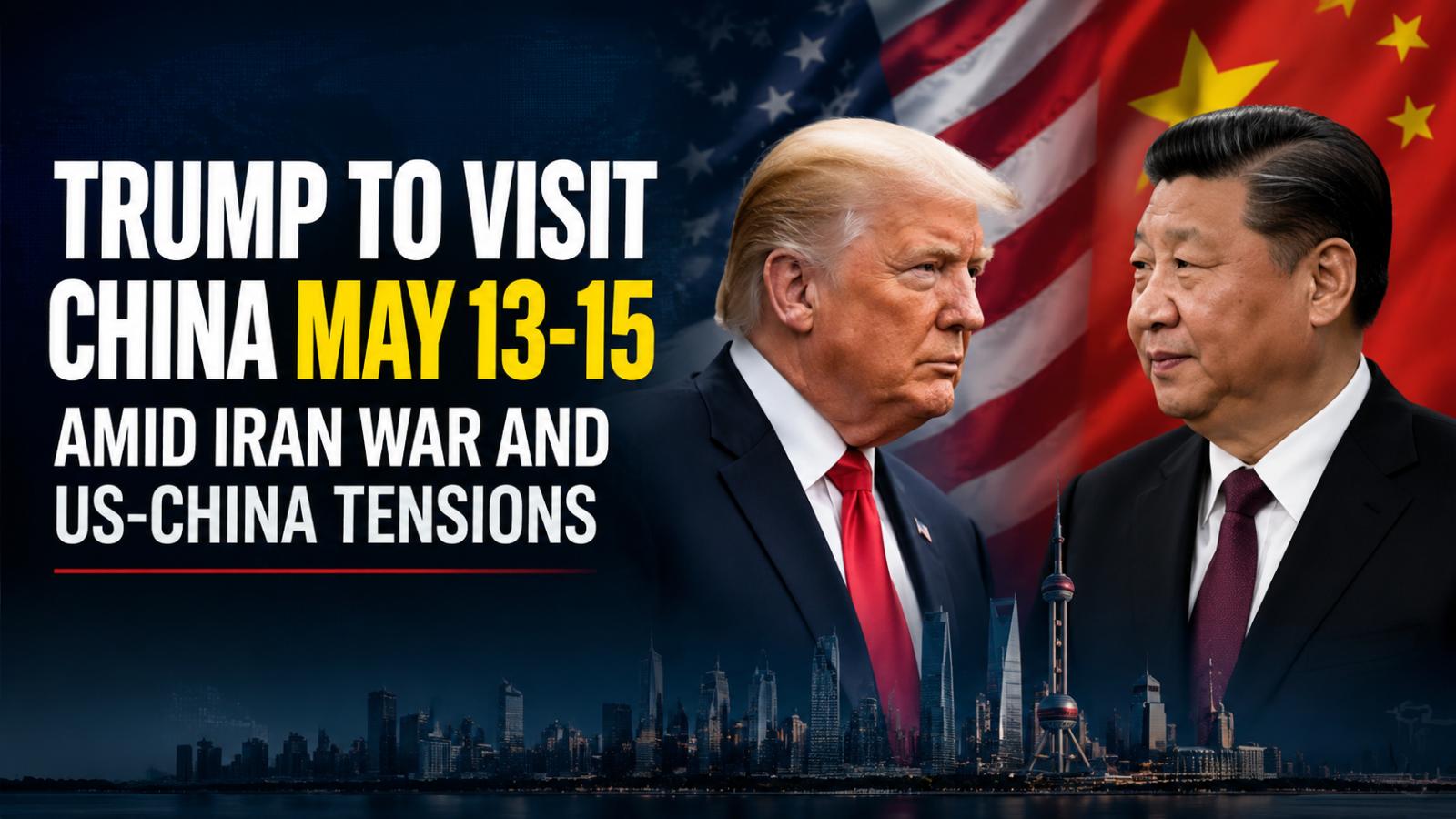
US President Donald Trump is set to visit China from May 13 to 15, marking the first visit to the country by an American president in nearly nine years. The invitation comes from Chinese President Xi Jinping amid growing tensions between the two nations over issues such as trade, technology, and defense. This visit comes at a critical time for global politics, with the ongoing Iran conflict impacting both economic stability and energy prices. The timing of Trump’s visit coincides with a volatile situation in the Strait of Hormuz, where a dual blockade has significantly disrupted global oil trade, driving up energy prices. These disruptions have the potential to harm global economic growth, as the Strait is a vital shipping route for the world’s oil supply. Trump’s administration has placed significant pressure on Iran over its nuclear program, and in recent remarks, he stated that the US would “finish the job” if Iran did not agree to the terms aimed at halting the conflict. While tensions remain high, the US continues to press for a diplomatic resolution to the situation, with President Trump asserting that Iran must meet specific demands regarding its nuclear ambitions. Despite these pressures, Trump maintains that the US does not need China’s assistance to resolve the issue, suggesting that the conflict could be settled with or without China’s involvement. Iran, for its part, has signaled its intention to pursue peace, with chief negotiator Mohammad Bagher Ghalibaf issuing an ultimatum to the US. According to Ghalibaf, Washington must accept Iran’s recent peace proposal or face further failure in negotiations. He emphasized that there was no alternative but to acknowledge the rights of the Iranian people as outlined in Tehran’s 14-point proposal. Beyond the Iran conflict, the upcoming Trump-Xi summit is expected to address several key issues affecting US-China relations. Trade discussions will likely focus on extending a temporary truce in the ongoing trade dispute, particularly concerning rare earth minerals. Both leaders are expected to explore agreements related to Boeing aircraft purchases, as well as expanding trade and investment ties. Additionally, China is anticipated to announce purchases in the US agricultural and energy sectors. Another significant topic of discussion will be Taiwan, with Xi expressing frustration over the US’s continued support for the island nation, which China claims as part of its territory. Trump’s administration has reiterated its commitment to Taiwan, despite escalating military activities in the region by China. The summit will also cover the rapid development of artificial intelligence (AI) in both countries, with US officials highlighting concerns about the potential military and economic implications of AI advancements. With both nations at the forefront of technological innovation, there is a growing need for open communication to avoid misunderstandings or potential conflicts arising from the use of AI. This high-stakes summit between the US and China is poised to shape the future of global trade, energy security, and technological development, with both sides seeking to manage their differences while addressing urgent geopolitical challenges. As the world watches, the outcome of these talks could have far-reaching implications for international relations.
Trump-Xi summit: Key issues, trade talks, and Iran conflict to be addressed
US President Donald Trump is set to visit China from May 13 to 15, marking the first visit to the country by an American president in nearly nine years. The invitation comes from Chinese President Xi Jinping amid growing tensions between the two nations over issues such as trade, technology, and defense. This visit comes at a critical time for global politics, with the ongoing Iran conflict impacting both economic stability and energy prices. The timing of Trump’s visit coincides with a volatile situation in the Strait of Hormuz, where a dual blockade has significantly disrupted global oil trade, driving up energy prices. These disruptions have the potential to harm global economic growth, as the Strait is a vital shipping route for the world’s oil supply. Trump’s administration has placed significant pressure on Iran over its nuclear program, and in recent remarks, he stated that the US would “finish the job” if Iran did not agree to the terms aimed at halting the conflict. While tensions remain high, the US continues to press for a diplomatic resolution to the situation, with President Trump asserting that Iran must meet specific demands regarding its nuclear ambitions. Despite these pressures, Trump maintains that the US does not need China’s assistance to resolve the issue, suggesting that the conflict could be settled with or without China’s involvement. Iran, for its part, has signaled its intention to pursue peace, with chief negotiator Mohammad Bagher Ghalibaf issuing an ultimatum to the US. According to Ghalibaf, Washington must accept Iran’s recent peace proposal or face further failure in negotiations. He emphasized that there was no alternative but to acknowledge the rights of the Iranian people as outlined in Tehran’s 14-point proposal. Beyond the Iran conflict, the upcoming Trump-Xi summit is expected to address several key issues affecting US-China relations. Trade discussions will likely focus on extending a temporary truce in the ongoing trade dispute, particularly concerning rare earth minerals. Both leaders are expected to explore agreements related to Boeing aircraft purchases, as well as expanding trade and investment ties. Additionally, China is anticipated to announce purchases in the US agricultural and energy sectors. Another significant topic of discussion will be Taiwan, with Xi expressing frustration over the US’s continued support for the island nation, which China claims as part of its territory. Trump’s administration has reiterated its commitment to Taiwan, despite escalating military activities in the region by China. The summit will also cover the rapid development of artificial intelligence (AI) in both countries, with US officials highlighting concerns about the potential military and economic implications of AI advancements. With both nations at the forefront of technological innovation, there is a growing need for open communication to avoid misunderstandings or potential conflicts arising from the use of AI. This high-stakes summit between the US and China is poised to shape the future of global trade, energy security, and technological development, with both sides seeking to manage their differences while addressing urgent geopolitical challenges. As the world watches, the outcome of these talks could have far-reaching implications for international relations.

Gold, Silver Imports to Cost More After Government Hikes Customs Duty to 15%
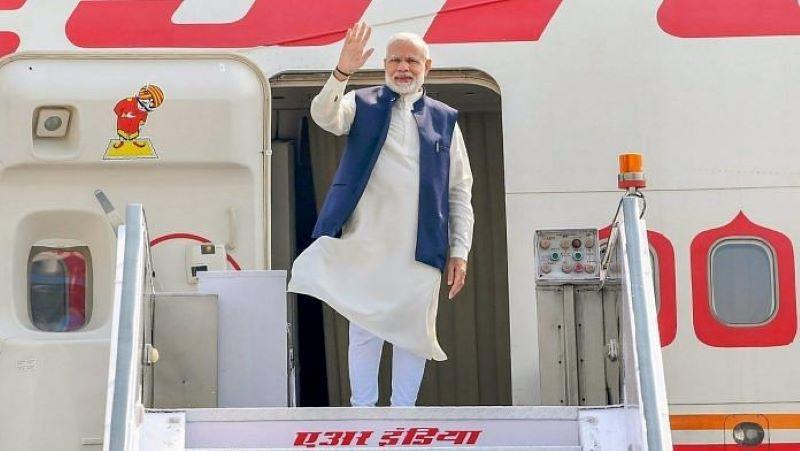
The Indian government has raised the import duties on gold and silver sharply, setting the new rates at 15% from the previous 6%. This move comes just days after Prime Minister Narendra Modi urged the public to avoid purchasing gold for the next year, in response to the growing economic strain caused by the Iran war and the pressure on India's foreign exchange reserves. The government's decision involves a 10% basic customs duty along with an additional 5% Agriculture Infrastructure
Gold, Silver Imports to Cost More After Government Hikes Customs Duty to 15%
The Indian government has raised the import duties on gold and silver sharply, setting the new rates at 15% from the previous 6%. This move comes just days after Prime Minister Narendra Modi urged the public to avoid purchasing gold for the next year, in response to the growing economic strain caused by the Iran war and the pressure on India's foreign exchange reserves. The government's decision involves a 10% basic customs duty along with an additional 5% Agriculture Infrastructure
Elon Musk’s Grok Loses Ground to ChatGPT and Claude
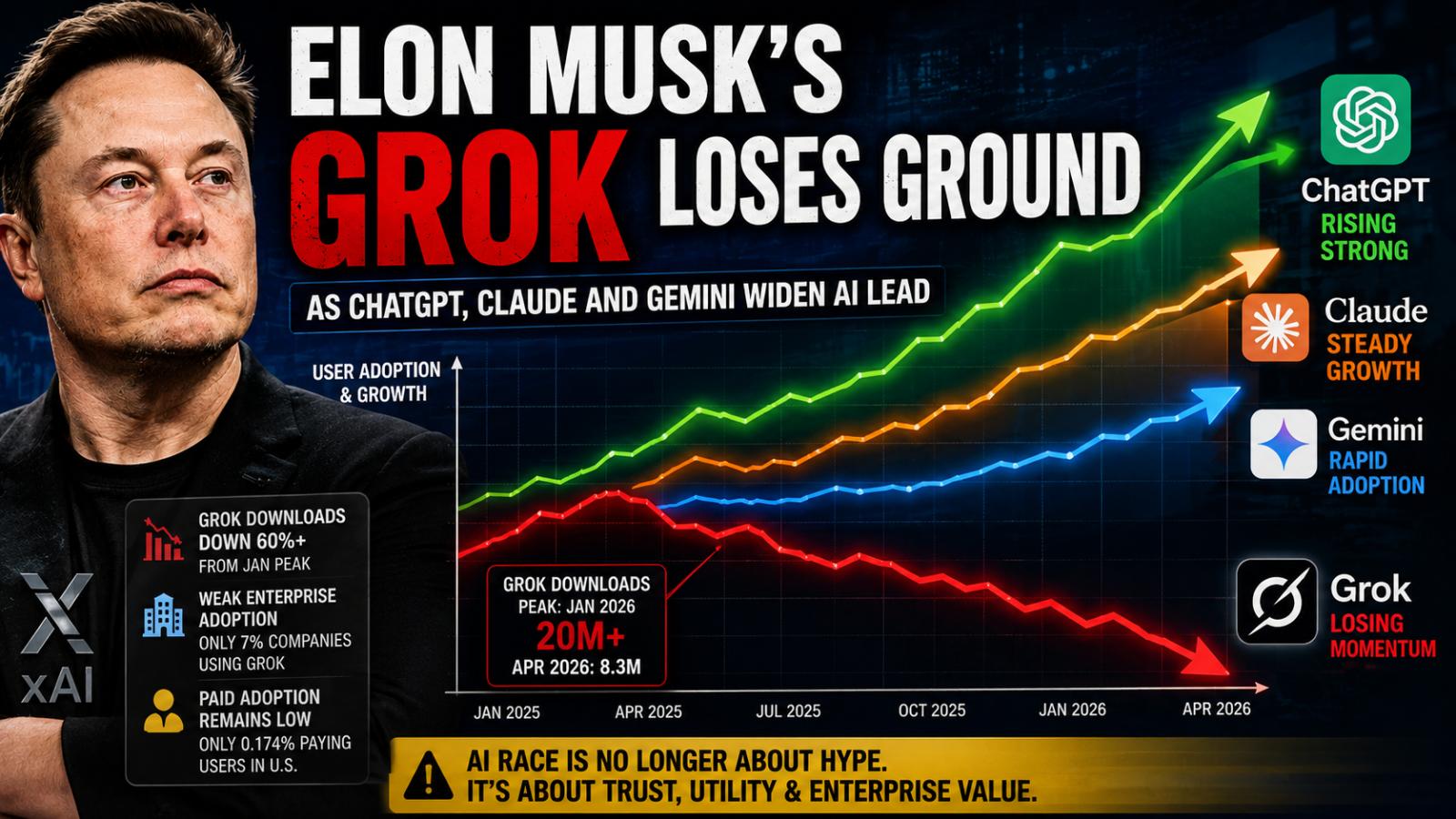
Grok AI is losing momentum as ChatGPT, Claude and Gemini gain stronger adoption among consumers, paying users and enterprise teams, according to industry data cited in recent market reports. The slowdown highlights a major shift in the AI race: viral attention is no longer enough. Users and businesses are increasingly choosing AI tools that offer reliability, workplace integration and consistent productivity value. Downloads Drop After Viral Surge
Elon Musk’s Grok Loses Ground to ChatGPT and Claude
Grok AI is losing momentum as ChatGPT, Claude and Gemini gain stronger adoption among consumers, paying users and enterprise teams, according to industry data cited in recent market reports. The slowdown highlights a major shift in the AI race: viral attention is no longer enough. Users and businesses are increasingly choosing AI tools that offer reliability, workplace integration and consistent productivity value. Downloads Drop After Viral Surge
Greg Abbott Courts Wall Street as Mamdani Backlash Hits NYC
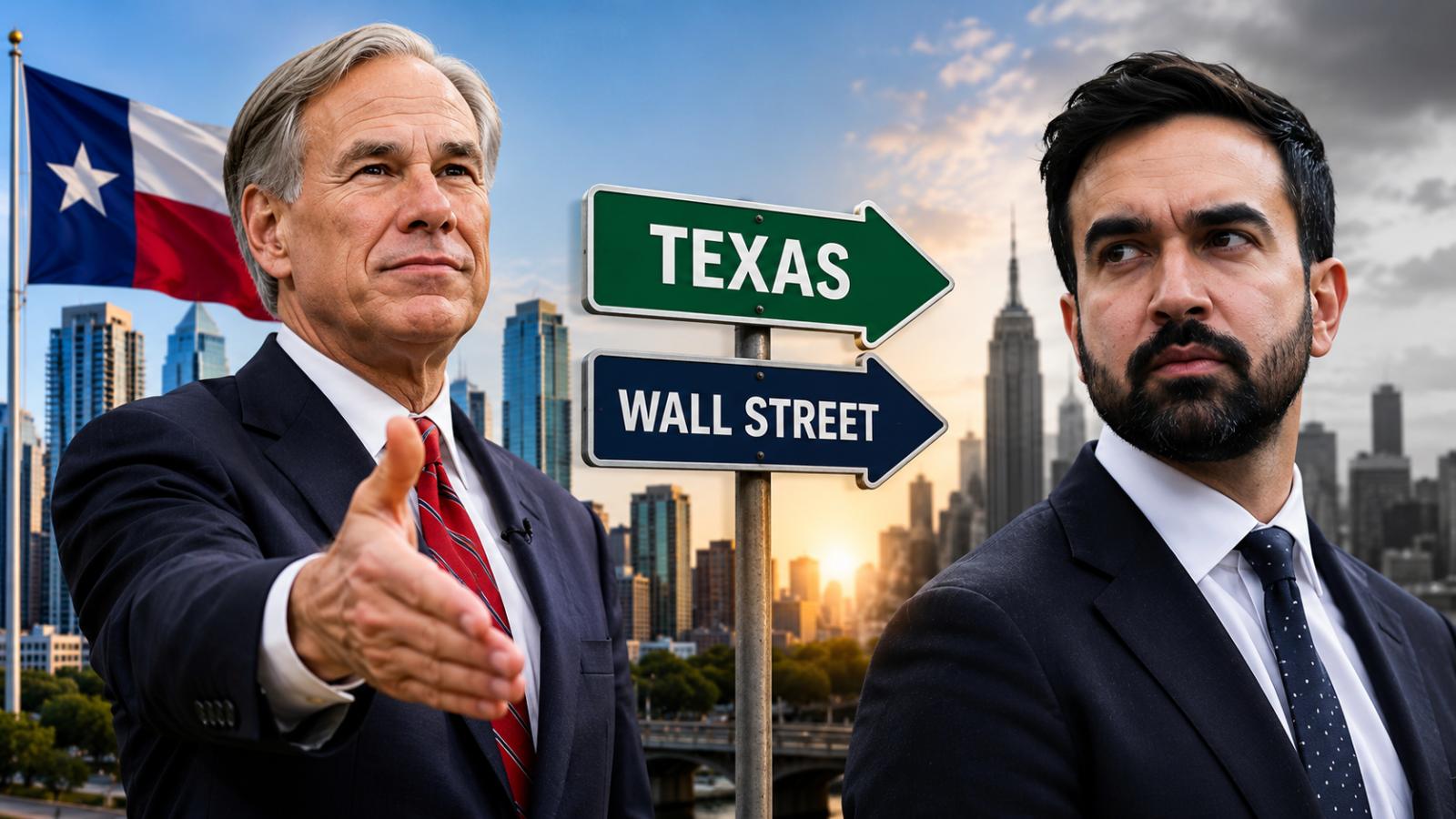
Texas Governor Greg Abbott is courting Wall Street firms as criticism grows over New York City Mayor Zohran Mamdani’s rhetoric toward wealthy business leaders and billionaire CEOs. The political clash has sharpened concerns about New York City’s business climate, especially among financial firms weighing taxes, regulation and long-term expansion plans. Texas Sells Low-Tax Business Climate Abbott’s office said Texas remains open to compani
Greg Abbott Courts Wall Street as Mamdani Backlash Hits NYC
Texas Governor Greg Abbott is courting Wall Street firms as criticism grows over New York City Mayor Zohran Mamdani’s rhetoric toward wealthy business leaders and billionaire CEOs. The political clash has sharpened concerns about New York City’s business climate, especially among financial firms weighing taxes, regulation and long-term expansion plans. Texas Sells Low-Tax Business Climate Abbott’s office said Texas remains open to compani

Modi’s Push for Green Energy Impacts Markets: EV Stocks Rise, Jewellery Stocks Fall
Prime Minister Narendra Modi recently emphasized the need to reduce dependency on petrol and diesel, advocating for sustainable practices and increased adoption of work-from-home models. He also suggested that consumers reconsider discretionary purchases, including gold, in the near term. Following the speech, the stock market reacted sharply. Shares
Modi’s Push for Green Energy Impacts Markets: EV Stocks Rise, Jewellery Stocks Fall
Prime Minister Narendra Modi recently emphasized the need to reduce dependency on petrol and diesel, advocating for sustainable practices and increased adoption of work-from-home models. He also suggested that consumers reconsider discretionary purchases, including gold, in the near term. Following the speech, the stock market reacted sharply. Shares

Apple $250M Siri AI Settlement: iPhone Users May Get Up to $95 — Who Qualifies?
Apple $250M Settlement: Who Could Get Paid? Apple has agreed to a $250 million settlement over claims it misled buyers about Siri AI and Apple Intelligence features. Eligible U.S. iPhone users may receive $25 to $95 per device if the deal gets court approval. Why Apple Is Facing Payout Claims The class-action lawsuit accused Apple of promoting advanced Siri AI features during the iPhone 16 launch cycle before some tools were
Apple $250M Siri AI Settlement: iPhone Users May Get Up to $95 — Who Qualifies?
Apple $250M Settlement: Who Could Get Paid? Apple has agreed to a $250 million settlement over claims it misled buyers about Siri AI and Apple Intelligence features. Eligible U.S. iPhone users may receive $25 to $95 per device if the deal gets court approval. Why Apple Is Facing Payout Claims The class-action lawsuit accused Apple of promoting advanced Siri AI features during the iPhone 16 launch cycle before some tools were

33-Year-Old Makes $192K/Month Negotiating Car Deals Remotely
A remote car negotiation service is helping buyers save over $6,000 per deal—and one 33-year-old is earning $192K per month doing it. His business answers a growing question: Can you hire someone to negotiate your car price? The answer is yes—and demand is booming. How the Remote Car Negotiation Service Works Launched in 2023, the entrepreneur began by negotiating deals for free to understand buyer pain points. Aft
33-Year-Old Makes $192K/Month Negotiating Car Deals Remotely
A remote car negotiation service is helping buyers save over $6,000 per deal—and one 33-year-old is earning $192K per month doing it. His business answers a growing question: Can you hire someone to negotiate your car price? The answer is yes—and demand is booming. How the Remote Car Negotiation Service Works Launched in 2023, the entrepreneur began by negotiating deals for free to understand buyer pain points. Aft

Anthropic Launches $1.5B Claude AI Venture With Wall Street Giants
Anthropic AI Services Venture Targets Enterprise Adoption Anthropic has launched a new AI services venture with Blackstone, Hellman & Friedman and Goldman Sachs to bring Claude deeper into business operations. The Wall Street-backed firm is designed to help mid-sized companies adopt enterprise AI faster, with reported funding expected to reach about $1.5 billion. Claude Moves Beyond Chatbots The new standalone company wil
Anthropic Launches $1.5B Claude AI Venture With Wall Street Giants
Anthropic AI Services Venture Targets Enterprise Adoption Anthropic has launched a new AI services venture with Blackstone, Hellman & Friedman and Goldman Sachs to bring Claude deeper into business operations. The Wall Street-backed firm is designed to help mid-sized companies adopt enterprise AI faster, with reported funding expected to reach about $1.5 billion. Claude Moves Beyond Chatbots The new standalone company wil

Operation Neptune Spear: Inside the raid that killed Osama bin Laden
The world’s most wanted man: Osama bin Laden On May 2, 2011, Osama bin Laden, the world’s most wanted terrorist, was killed in a CIA-led operation called Operation Neptune Spear. After nearly a decade of intensive intelligence work, Bin Laden’s hideout in Abbottabad, Pakistan, was pinpointed, marking a major victory in the war on terror. The mission, involving a covert night
Operation Neptune Spear: Inside the raid that killed Osama bin Laden
The world’s most wanted man: Osama bin Laden On May 2, 2011, Osama bin Laden, the world’s most wanted terrorist, was killed in a CIA-led operation called Operation Neptune Spear. After nearly a decade of intensive intelligence work, Bin Laden’s hideout in Abbottabad, Pakistan, was pinpointed, marking a major victory in the war on terror. The mission, involving a covert night
Could Alphabet overtake Nvidia as the most valuable company? Yes, analysts say it may happen soon
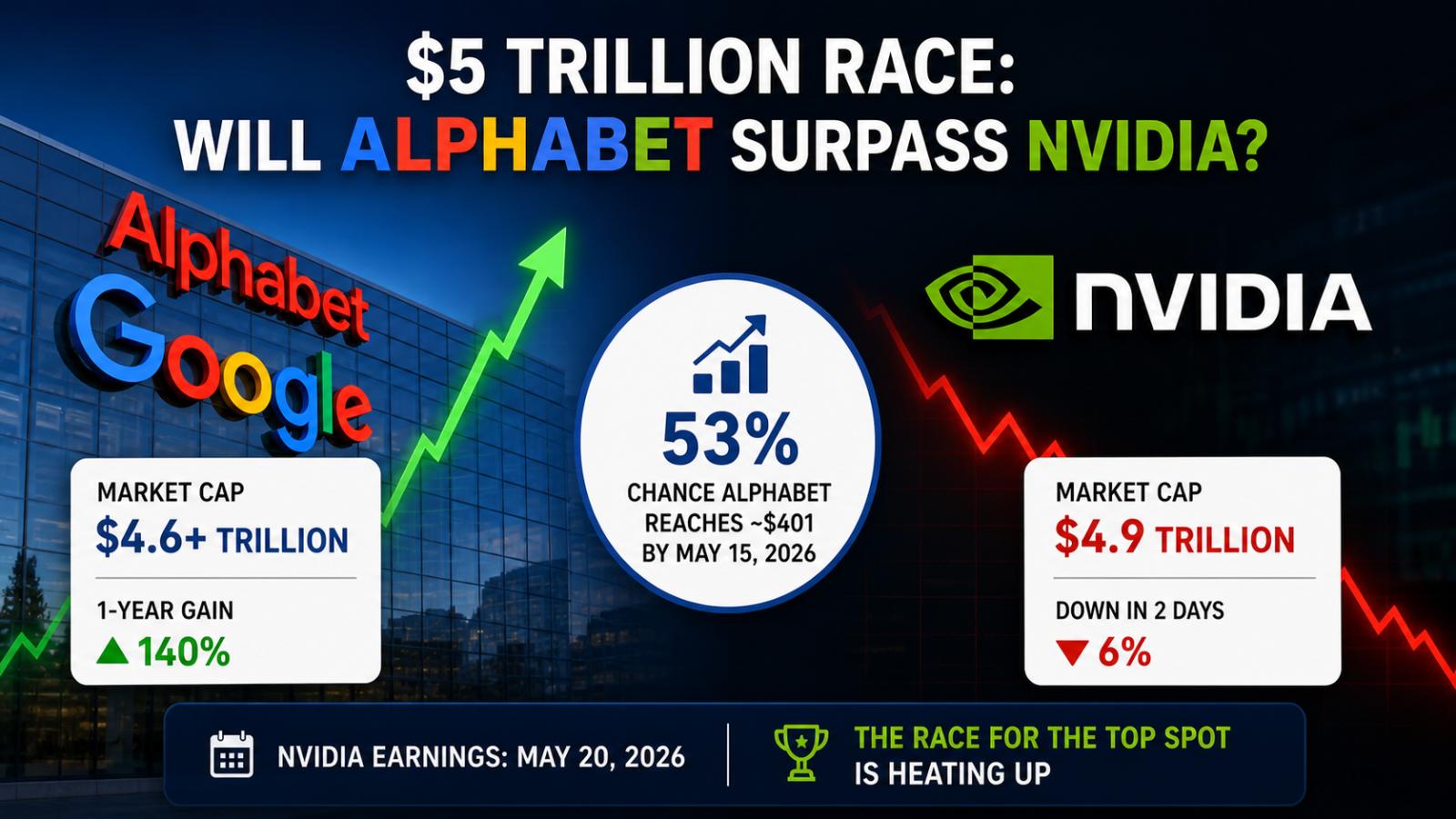
Shares of Alphabet are approaching a historic milestone, with the company nearing a $5 trillion valuation and potentially overtaking Nvidia as the world’s most valuable publicly traded firm. The surge comes after a strong rally in Alphabet’s stock, which climbed 10% on Thursday, extending its one-year gain to approximately 140% and pushing its market capitalization beyond $4.6 trillion. Strong earnings and cloud growth drive Alphabet’s surge The momentum follows a better-than-expected earnings report released on Wednesday, in which Alphabet exceeded analyst forecasts. A key highlight was its Google Cloud division, which generated more than $20 billion in revenue, reinforcing investor confidence in the company’s position within the artificial intelligence and cloud computing sectors. This performance has strengthened Alphabet’s standing among major AI-focused companies and boosted overall investor sentiment. Nvidia faces pressure amid partner concerns and stock decline Meanwhile, Nvidia, currently valued at under $4.9 trillion, has seen its stock decline by more than 6% over two trading sessions. The drop follows a report from The Wall Street Journal indicating that business partner OpenAI missed internal revenue and growth projections. The development has raised concerns about near-term demand and growth expectations in the AI ecosystem, impacting Nvidia’s market performance. Options market signals a potential shift in market leadership Options trading data suggests that Alphabet could soon close the valuation gap. For Alphabet to match Nvidia’s current market capitalization, its stock would need to rise by roughly 4%, reaching about $401 per share. Based on call option premiums around that level, traders estimate a 53% probability that Alphabet could reach that price before Thursday, May 15, 2026. Further projections indicate about a 30% chance that Alphabet will close above $400 on Friday, May 22, 2026, shortly after Nvidia’s upcoming earnings report scheduled for Tuesday, May 20, 2026. Notably, Nvidia’s stock has declined after four of its last five earnings announcements, adding uncertainty to its near-term outlook. Historical context as Alphabet eyes a return to the top Alphabet has previously held the top position among global companies, most recently in 2016 when it briefly surpassed Apple. A renewed rise to the top would mark a significant shift in market leadership, driven largely by advancements in artificial intelligence and cloud infrastructure. As both companies approach key earnings milestones, investors are closely watching whether Alphabet can capitalize on its momentum and reclaim the top spot in global market valuation. Alphabet has previously held the top position among global companies, most recently in 2016 when it briefly surpassed Apple. A renewed rise to the top would mark a significant shift in market leadership, driven largely by advancements in artificial intelligence and cloud infrastructure. As both companies approach key earnings milestones, investors are closely watching whether Alphabet can capitalize on its momentum and reclaim the top spot in global market valuation.
Could Alphabet overtake Nvidia as the most valuable company? Yes, analysts say it may happen soon
Shares of Alphabet are approaching a historic milestone, with the company nearing a $5 trillion valuation and potentially overtaking Nvidia as the world’s most valuable publicly traded firm. The surge comes after a strong rally in Alphabet’s stock, which climbed 10% on Thursday, extending its one-year gain to approximately 140% and pushing its market capitalization beyond $4.6 trillion. Strong earnings and cloud growth drive Alphabet’s surge The momentum follows a better-than-expected earnings report released on Wednesday, in which Alphabet exceeded analyst forecasts. A key highlight was its Google Cloud division, which generated more than $20 billion in revenue, reinforcing investor confidence in the company’s position within the artificial intelligence and cloud computing sectors. This performance has strengthened Alphabet’s standing among major AI-focused companies and boosted overall investor sentiment. Nvidia faces pressure amid partner concerns and stock decline Meanwhile, Nvidia, currently valued at under $4.9 trillion, has seen its stock decline by more than 6% over two trading sessions. The drop follows a report from The Wall Street Journal indicating that business partner OpenAI missed internal revenue and growth projections. The development has raised concerns about near-term demand and growth expectations in the AI ecosystem, impacting Nvidia’s market performance. Options market signals a potential shift in market leadership Options trading data suggests that Alphabet could soon close the valuation gap. For Alphabet to match Nvidia’s current market capitalization, its stock would need to rise by roughly 4%, reaching about $401 per share. Based on call option premiums around that level, traders estimate a 53% probability that Alphabet could reach that price before Thursday, May 15, 2026. Further projections indicate about a 30% chance that Alphabet will close above $400 on Friday, May 22, 2026, shortly after Nvidia’s upcoming earnings report scheduled for Tuesday, May 20, 2026. Notably, Nvidia’s stock has declined after four of its last five earnings announcements, adding uncertainty to its near-term outlook. Historical context as Alphabet eyes a return to the top Alphabet has previously held the top position among global companies, most recently in 2016 when it briefly surpassed Apple. A renewed rise to the top would mark a significant shift in market leadership, driven largely by advancements in artificial intelligence and cloud infrastructure. As both companies approach key earnings milestones, investors are closely watching whether Alphabet can capitalize on its momentum and reclaim the top spot in global market valuation. Alphabet has previously held the top position among global companies, most recently in 2016 when it briefly surpassed Apple. A renewed rise to the top would mark a significant shift in market leadership, driven largely by advancements in artificial intelligence and cloud infrastructure. As both companies approach key earnings milestones, investors are closely watching whether Alphabet can capitalize on its momentum and reclaim the top spot in global market valuation.
AI spending surge could top $1 trillion by 2027, analysts say
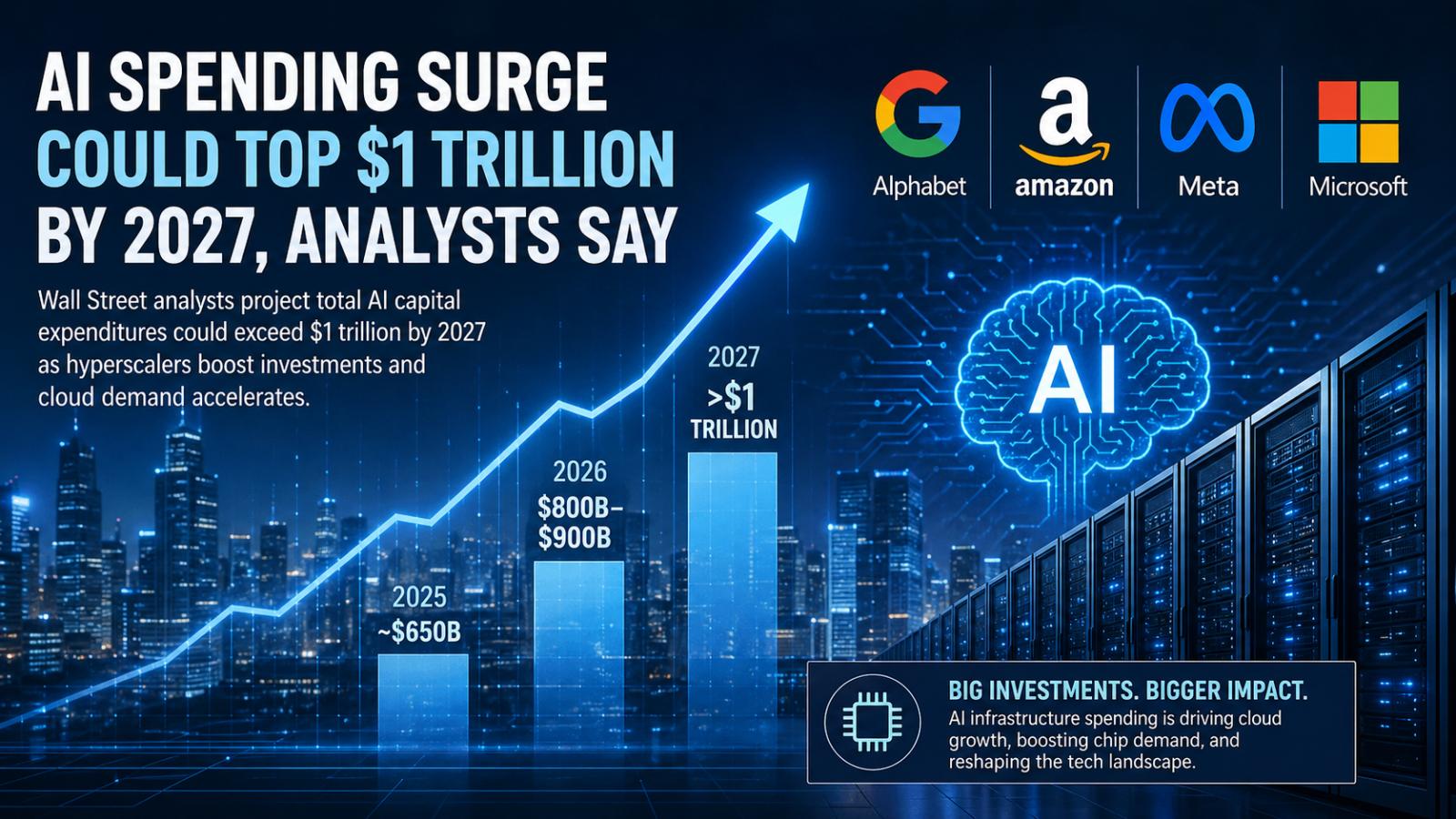
Wall Street analysts project AI spending could exceed $1 trillion by 2027 as major tech firms boost investments. Strong cloud demand and rising revenues support growth, though investor concerns remain over returns and rising infrastructure costs AI spending surge could top $1 trillion by 2027, analysts say is increasingly shaping expectations across the technology sector, as Wall Street analysts project unprecedented capital expenditures driven by artificial intelligence demand. Following recent tech earnings announcements on Wednesday, analysts at firms including Evercore and Bank of America estimate total AI-related capital spending could surpass $1 trillion by 2027, with 2026 projections already rising to between $800 billion and $900 billion. The surge reflects aggressive investment strategies by major technology companies, including Alphabet, Amazon, Meta, and Microsoft. According to analyst estimates, projected capital spending for 2026 includes approximately $200 billion from Amazon, $190 billion from Microsoft, $185 billion from Alphabet, and $135 billion from Meta, reflecting broad increases across the sector. Executives continue to signal confidence in long-term AI investments despite investor concerns about the scale of spending. Amazon CEO Andy Jassy emphasized the company’s commitment to infrastructure expansion, citing strong long-term returns. Similarly, Alphabet reported significant growth in its cloud segment, with revenue increasing sharply year over year, reinforcing expectations that AI-driven services are becoming a major revenue driver. Analysts note that while capital expenditures continue to rise, early signs of return on investment are emerging. Strong cloud demand, expanding contract backlogs, and increasing enterprise adoption of AI tools are contributing to revenue growth. Alphabet, in particular, has seen substantial backlog expansion tied to its cloud platform, with a large portion expected to convert into revenue over the next two years. However, not all companies are receiving equal investor confidence. Meta’s increased spending plans have raised concerns about near-term returns, particularly as its free cash flow has declined significantly compared to the previous year. CEO Mark Zuckerberg acknowledged higher infrastructure costs, including rising component prices, while maintaining confidence in the long-term value of AI investments. The rapid expansion of AI infrastructure is also benefiting semiconductor manufacturers and hardware suppliers. Companies such as Intel are seeing increased demand as AI workloads require a broader range of computing hardware beyond graphics processors. Analysts highlight growing demand for specialized chips and custom silicon solutions, suggesting that AI development could drive sustained growth across the semiconductor industry. Overall, analysts expect improving revenue and cash flow trends across the sector by 2026, supporting continued investment. While skepticism remains about the pace and scale of spending, the combination of strong demand, expanding cloud services, and technological advancements indicates that the AI-driven capital expenditure cycle is likely to continue shaping the global technology landscape.
AI spending surge could top $1 trillion by 2027, analysts say
Wall Street analysts project AI spending could exceed $1 trillion by 2027 as major tech firms boost investments. Strong cloud demand and rising revenues support growth, though investor concerns remain over returns and rising infrastructure costs AI spending surge could top $1 trillion by 2027, analysts say is increasingly shaping expectations across the technology sector, as Wall Street analysts project unprecedented capital expenditures driven by artificial intelligence demand. Following recent tech earnings announcements on Wednesday, analysts at firms including Evercore and Bank of America estimate total AI-related capital spending could surpass $1 trillion by 2027, with 2026 projections already rising to between $800 billion and $900 billion. The surge reflects aggressive investment strategies by major technology companies, including Alphabet, Amazon, Meta, and Microsoft. According to analyst estimates, projected capital spending for 2026 includes approximately $200 billion from Amazon, $190 billion from Microsoft, $185 billion from Alphabet, and $135 billion from Meta, reflecting broad increases across the sector. Executives continue to signal confidence in long-term AI investments despite investor concerns about the scale of spending. Amazon CEO Andy Jassy emphasized the company’s commitment to infrastructure expansion, citing strong long-term returns. Similarly, Alphabet reported significant growth in its cloud segment, with revenue increasing sharply year over year, reinforcing expectations that AI-driven services are becoming a major revenue driver. Analysts note that while capital expenditures continue to rise, early signs of return on investment are emerging. Strong cloud demand, expanding contract backlogs, and increasing enterprise adoption of AI tools are contributing to revenue growth. Alphabet, in particular, has seen substantial backlog expansion tied to its cloud platform, with a large portion expected to convert into revenue over the next two years. However, not all companies are receiving equal investor confidence. Meta’s increased spending plans have raised concerns about near-term returns, particularly as its free cash flow has declined significantly compared to the previous year. CEO Mark Zuckerberg acknowledged higher infrastructure costs, including rising component prices, while maintaining confidence in the long-term value of AI investments. The rapid expansion of AI infrastructure is also benefiting semiconductor manufacturers and hardware suppliers. Companies such as Intel are seeing increased demand as AI workloads require a broader range of computing hardware beyond graphics processors. Analysts highlight growing demand for specialized chips and custom silicon solutions, suggesting that AI development could drive sustained growth across the semiconductor industry. Overall, analysts expect improving revenue and cash flow trends across the sector by 2026, supporting continued investment. While skepticism remains about the pace and scale of spending, the combination of strong demand, expanding cloud services, and technological advancements indicates that the AI-driven capital expenditure cycle is likely to continue shaping the global technology landscape.

What do Apple options trades reveal? Mixed sentiment ahead of earnings
Apple’s stock may have remained largely flat over the past six months, but activity in the options market suggests traders are anticipating significant movement following its latest earnings report. Implied volatility points to a potential 3.5% swing in either direction, notably higher than the average 1.8% move seen after the company’s previous four quarterly earnings announcements. Options pricing reflects heightened expectations The increase in im
What do Apple options trades reveal? Mixed sentiment ahead of earnings
Apple’s stock may have remained largely flat over the past six months, but activity in the options market suggests traders are anticipating significant movement following its latest earnings report. Implied volatility points to a potential 3.5% swing in either direction, notably higher than the average 1.8% move seen after the company’s previous four quarterly earnings announcements. Options pricing reflects heightened expectations The increase in im

Pacific Café faces possible closure without buyer after decades of service
Historic Pacific Café may close as owners retire after 51 years. A well-known San Francisco seafood restaurant recognized for its classic menu and complimentary wine service may soon shut its doors as its longtime owners prepare to retire. Pacific Café, located on Geary Boulevard, has been listed for sale for $195,000, raising concerns about the future of the decades-old establishment if a buyer is not secured. Co-owners Frank Gundry and Ross Warren, who have operated the restaur
Pacific Café faces possible closure without buyer after decades of service
Historic Pacific Café may close as owners retire after 51 years. A well-known San Francisco seafood restaurant recognized for its classic menu and complimentary wine service may soon shut its doors as its longtime owners prepare to retire. Pacific Café, located on Geary Boulevard, has been listed for sale for $195,000, raising concerns about the future of the decades-old establishment if a buyer is not secured. Co-owners Frank Gundry and Ross Warren, who have operated the restaur

Why is Lammes Candies closing after 141 years? Texas chain cites economic pressures
Legacy Texas chocolatier begins winding down operations A historic Texas confectionery business, Lammes Candies, is closing its operations after more than a century in business, citing mounting economic pressures and changing market conditions. The Austin-based company confirmed it will begin an orderly wind-down process after evaluating long-term sustainability challenges affecting the retail and confectionery sectors in the United States. Store closures confirmed across Austin and nearby cities The company has already shut down its Round Rock location as of Thursday, April 24, though the year was not specified. Additional closures include stores in Hillside and Lakeline Mall. Its flagship store in Austin will remain open temporarily, but no official closing date has been announced, leaving customers uncertain about final operations. Economic pressures and market shifts drive decision Lammes Candies stated that “unprecedented economic pressures and current market conditions” led to the decision. The company emphasized that it had carefully assessed shifts in consumer behavior, rising operational costs, and broader challenges facing family-owned retail businesses before deciding to cease operations. A family legacy spanning generations Founded in 1878 by William Wirt Lamme as the Red Front Candy Factory in Austin, the business officially became Lammes Candies on Thursday, July 10, 1885. After a temporary loss of the company due to a gambling debt, founder David Turner Lamme Sr. reclaimed it, establishing a legacy that continued for five generations. The company became known for handcrafted sweets, including its signature Texas Chewie Pecan Praline introduced in 1892. Final operations and transition for employees The company said it will fulfill remaining orders while supporting employees during the transition period. Ownership described the decision as difficult, highlighting the brand’s deep connection to the local community and its long-standing customer base. Since 2004, the business has been operated by fifth-generation family members, marking the end of a significant chapter in Texas retail history.
Why is Lammes Candies closing after 141 years? Texas chain cites economic pressures
Legacy Texas chocolatier begins winding down operations A historic Texas confectionery business, Lammes Candies, is closing its operations after more than a century in business, citing mounting economic pressures and changing market conditions. The Austin-based company confirmed it will begin an orderly wind-down process after evaluating long-term sustainability challenges affecting the retail and confectionery sectors in the United States. Store closures confirmed across Austin and nearby cities The company has already shut down its Round Rock location as of Thursday, April 24, though the year was not specified. Additional closures include stores in Hillside and Lakeline Mall. Its flagship store in Austin will remain open temporarily, but no official closing date has been announced, leaving customers uncertain about final operations. Economic pressures and market shifts drive decision Lammes Candies stated that “unprecedented economic pressures and current market conditions” led to the decision. The company emphasized that it had carefully assessed shifts in consumer behavior, rising operational costs, and broader challenges facing family-owned retail businesses before deciding to cease operations. A family legacy spanning generations Founded in 1878 by William Wirt Lamme as the Red Front Candy Factory in Austin, the business officially became Lammes Candies on Thursday, July 10, 1885. After a temporary loss of the company due to a gambling debt, founder David Turner Lamme Sr. reclaimed it, establishing a legacy that continued for five generations. The company became known for handcrafted sweets, including its signature Texas Chewie Pecan Praline introduced in 1892. Final operations and transition for employees The company said it will fulfill remaining orders while supporting employees during the transition period. Ownership described the decision as difficult, highlighting the brand’s deep connection to the local community and its long-standing customer base. Since 2004, the business has been operated by fifth-generation family members, marking the end of a significant chapter in Texas retail history.

What is PayPal’s new structure? Venmo becomes standalone segment
PayPal’s Venmo spinoff signals strategic shift to boost growth PayPal’s Venmo spinoff signals strategic shift to boost growth as CEO Enrique Lores informed managers this week that the company is reorganizing its reporting structure, separating Venmo into its own standalone business segment. The move reflects a broader effort to streamline operations and sharpen focus across its fintech portfolio. New reporting structure creates three distinct business units Under the restructuring plan, Venmo will operate independently, allowing clearer performance tracking and potentially positioning it for a future sale. Two additional segments will be formed: a PayPal-branded unit serving merchants and consumers, and a payment services division that includes Braintree along with crypto-related operations. The company is also reportedly seeking a digital banking executive to lead the newly independent Venmo unit. Leadership transition and competitive pressures Lores, who previously led HP Inc. and assumed leadership of PayPal in March, is implementing these changes as the company faces mounting competition from Apple, Google, and Stripe in digital payments. He succeeded Alex Chriss, whose tenure saw a steep decline in PayPal’s stock value following its pandemic-era peak. Investor interest and restructuring implications The company’s declining valuation has drawn attention from potential buyers, including reported interest from Stripe in acquiring parts or all of the business. PayPal has also engaged financial advisers to prepare for possible takeover attempts or activist investor campaigns. Following reports of the restructuring, PayPal shares rose by approximately 3%. Workforce uncertainty and executive departures The restructuring comes amid uncertainty over potential workforce reductions. Earlier in 2026, managers had been tasked with planning a 15% reduction in headcount, though those plans remain unresolved after the leadership transition. At the same time, key executives including Diego Scotti and Michelle Gill are departing as their divisions are restructured or dissolved. PayPal is also establishing a new artificial intelligence transformation group led by Anshu Bhardwaj, formerly of Walmart, and creating a financial services unit under Scott Young of Goldman Sachs. The changes highlight the company’s push to modernize operations and regain momentum in a rapidly evolving digital payments market.
What is PayPal’s new structure? Venmo becomes standalone segment
PayPal’s Venmo spinoff signals strategic shift to boost growth PayPal’s Venmo spinoff signals strategic shift to boost growth as CEO Enrique Lores informed managers this week that the company is reorganizing its reporting structure, separating Venmo into its own standalone business segment. The move reflects a broader effort to streamline operations and sharpen focus across its fintech portfolio. New reporting structure creates three distinct business units Under the restructuring plan, Venmo will operate independently, allowing clearer performance tracking and potentially positioning it for a future sale. Two additional segments will be formed: a PayPal-branded unit serving merchants and consumers, and a payment services division that includes Braintree along with crypto-related operations. The company is also reportedly seeking a digital banking executive to lead the newly independent Venmo unit. Leadership transition and competitive pressures Lores, who previously led HP Inc. and assumed leadership of PayPal in March, is implementing these changes as the company faces mounting competition from Apple, Google, and Stripe in digital payments. He succeeded Alex Chriss, whose tenure saw a steep decline in PayPal’s stock value following its pandemic-era peak. Investor interest and restructuring implications The company’s declining valuation has drawn attention from potential buyers, including reported interest from Stripe in acquiring parts or all of the business. PayPal has also engaged financial advisers to prepare for possible takeover attempts or activist investor campaigns. Following reports of the restructuring, PayPal shares rose by approximately 3%. Workforce uncertainty and executive departures The restructuring comes amid uncertainty over potential workforce reductions. Earlier in 2026, managers had been tasked with planning a 15% reduction in headcount, though those plans remain unresolved after the leadership transition. At the same time, key executives including Diego Scotti and Michelle Gill are departing as their divisions are restructured or dissolved. PayPal is also establishing a new artificial intelligence transformation group led by Anshu Bhardwaj, formerly of Walmart, and creating a financial services unit under Scott Young of Goldman Sachs. The changes highlight the company’s push to modernize operations and regain momentum in a rapidly evolving digital payments market.

What defines JRD Tata’s legacy? A life of service over ownership
A life of service over ownership JRD Tata’s legacy offers a striking contrast to modern perceptions of wealth and leadership. As one of India’s most influential industrialists, he led the Tata Group for over five decades, yet chose to live in a rented residence rather than accumulate personal assets. His approach reflected a philosophy that prioritized responsibility, ethics, and long-term impact over visible displays of success. Leadership that expanded an industrial empire Under JRD Tata’s leadership, the Tata Group evolved into one of India’s most significant industrial conglomerates, spanning sectors such as steel, aviation, power, and chemicals. His tenure marked a period of sustained growth and modernization, contributing to the country’s economic development. Rather than focusing on personal gain, he emphasized institutional strength, innovation, and employee welfare, setting standards that influenced corporate governance across industries. Simplicity as a leadership principle JRD Tata’s personal lifestyle remained notably modest despite his professional stature. He lived in a rented bungalow in Mumbai for decades, demonstrating that leadership did not require material excess. His daily life reflected discipline and humility, reinforcing the idea that influence comes from actions and values rather than possessions. This approach continues to resonate in discussions about ethical leadership and sustainable success. Impact measured beyond wealth The scale of JRD Tata’s impact is reflected not only in business expansion but also in the opportunities created for thousands of employees and communities. His leadership helped build institutions that continue to operate globally, shaping industries and contributing to economic stability. For many observers, his legacy represents a model where success is defined by contribution rather than ownership. A lasting example for global audiences For audiences in the United States and beyond, JRD Taa’s story provides a broader perspective on leadership in a global context. His life underscores the importance of purpose-driven decision-making and challenges assumptions about the relationship between wealth and success. In an era where corporate influence is closely examined, his example remains relevant as a benchmark for integrity and long-term vision.
What defines JRD Tata’s legacy? A life of service over ownership
A life of service over ownership JRD Tata’s legacy offers a striking contrast to modern perceptions of wealth and leadership. As one of India’s most influential industrialists, he led the Tata Group for over five decades, yet chose to live in a rented residence rather than accumulate personal assets. His approach reflected a philosophy that prioritized responsibility, ethics, and long-term impact over visible displays of success. Leadership that expanded an industrial empire Under JRD Tata’s leadership, the Tata Group evolved into one of India’s most significant industrial conglomerates, spanning sectors such as steel, aviation, power, and chemicals. His tenure marked a period of sustained growth and modernization, contributing to the country’s economic development. Rather than focusing on personal gain, he emphasized institutional strength, innovation, and employee welfare, setting standards that influenced corporate governance across industries. Simplicity as a leadership principle JRD Tata’s personal lifestyle remained notably modest despite his professional stature. He lived in a rented bungalow in Mumbai for decades, demonstrating that leadership did not require material excess. His daily life reflected discipline and humility, reinforcing the idea that influence comes from actions and values rather than possessions. This approach continues to resonate in discussions about ethical leadership and sustainable success. Impact measured beyond wealth The scale of JRD Tata’s impact is reflected not only in business expansion but also in the opportunities created for thousands of employees and communities. His leadership helped build institutions that continue to operate globally, shaping industries and contributing to economic stability. For many observers, his legacy represents a model where success is defined by contribution rather than ownership. A lasting example for global audiences For audiences in the United States and beyond, JRD Taa’s story provides a broader perspective on leadership in a global context. His life underscores the importance of purpose-driven decision-making and challenges assumptions about the relationship between wealth and success. In an era where corporate influence is closely examined, his example remains relevant as a benchmark for integrity and long-term vision.

Bitcoin Hits $78,000 12-Week High: 3 Key Reasons Behind The Surge
On April 27, 2026, Bitcoin touched a 12-week high near $78,000, driven by institutional demand, global economic trends, and long-term investor confidence. Bitcoin has climbed to a 12-week high, hovering close to the $78,000 mark as of April 27, 2026, reflecting a steady and controlled u
Bitcoin Hits $78,000 12-Week High: 3 Key Reasons Behind The Surge
On April 27, 2026, Bitcoin touched a 12-week high near $78,000, driven by institutional demand, global economic trends, and long-term investor confidence. Bitcoin has climbed to a 12-week high, hovering close to the $78,000 mark as of April 27, 2026, reflecting a steady and controlled u
Why are AI firms hiring software executives? Talent shift accelerates enterprise push
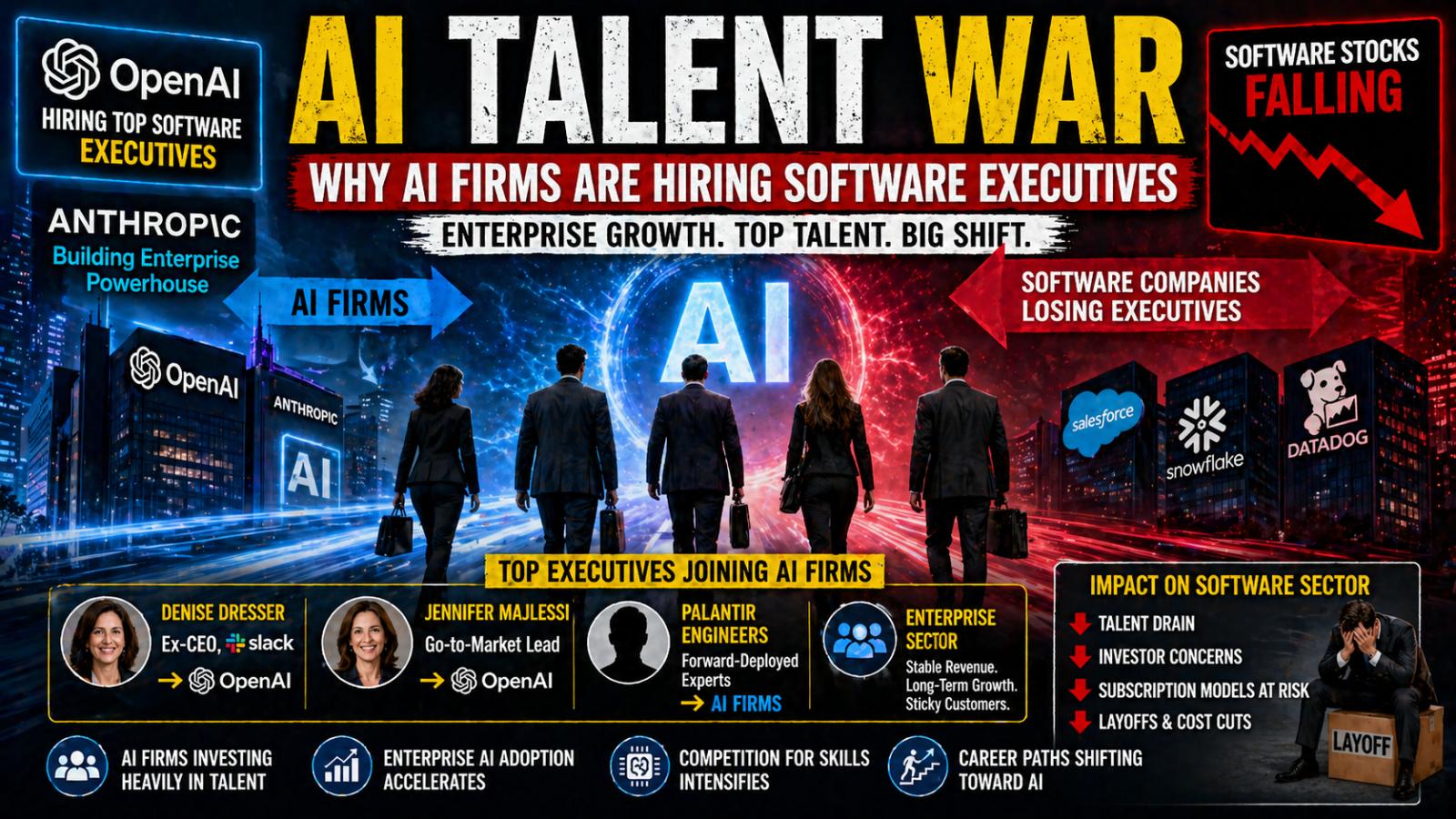
Why are AI firms hiring software executives? Talent shift accelerates enterprise push is becoming a defining question across the technology sector as artificial intelligence companies aggressively recruit senior leaders from traditional software firms, signaling a strategic shift toward enterprise growth and customer expansion. AI companies target enterprise expertise from software leaders Executives from companies including Salesforce, Snowflake, and Datadog have recently joined AI firms such as OpenAI and Anthropic, according to multiple industry sources. These hires are often driven by lucrative compensation packages and the ability to leverage long-standing corporate relationships in enterprise markets. Among the most prominent moves, Denise Dresser transitioned to OpenAI as chief revenue officer after previously serving as CEO of Slack under Salesforce. Jennifer Majlessi also joined OpenAI in a go-to-market leadership role, reflecting a broader trend of AI firms strengthening their sales and commercialization capabilities. Enterprise growth becomes central to AI business strategy The hiring surge highlights a shift in priorities for AI companies, where enterprise adoption is increasingly seen as a key revenue driver. Corporate clients tend to offer more stable, long-term contracts, making them a “sticky” and profitable segment. OpenAI has indicated that enterprise customers already account for roughly 40% of its business, with expectations to grow that share further. AI firms are also recruiting specialized talent such as forward-deployed engineers from Palantir Technologies, professionals known for implementing complex software solutions directly within client organizations. Software sector faces mounting pressure from AI disruption The talent migration comes at a challenging time for traditional software companies, which are already facing investor concerns about AI-driven disruption to subscription-based cloud models. Industry tracking funds have recorded significant declines, reflecting uncertainty about long-term competitiveness. At the same time, layoffs across major tech companies underscore a broader workforce transition. Firms like Oracle, Meta Platforms, and Microsoft have announced workforce reductions while reallocating resources toward AI initiatives. Workforce shifts reshape career paths in technology The evolving landscape is prompting professionals to reassess career trajectories, with many seeking roles aligned with AI innovation. However, integrating talent from traditional software firms into fast-paced AI environments can present challenges, particularly around culture and expectations for long working hours. Still, the movement of experienced executives into AI companies signals a broader structural shift in the tech industry, where enterprise-focused growth and advanced AI capabilities are rapidly redefining competitive dynamics.
Why are AI firms hiring software executives? Talent shift accelerates enterprise push
Why are AI firms hiring software executives? Talent shift accelerates enterprise push is becoming a defining question across the technology sector as artificial intelligence companies aggressively recruit senior leaders from traditional software firms, signaling a strategic shift toward enterprise growth and customer expansion. AI companies target enterprise expertise from software leaders Executives from companies including Salesforce, Snowflake, and Datadog have recently joined AI firms such as OpenAI and Anthropic, according to multiple industry sources. These hires are often driven by lucrative compensation packages and the ability to leverage long-standing corporate relationships in enterprise markets. Among the most prominent moves, Denise Dresser transitioned to OpenAI as chief revenue officer after previously serving as CEO of Slack under Salesforce. Jennifer Majlessi also joined OpenAI in a go-to-market leadership role, reflecting a broader trend of AI firms strengthening their sales and commercialization capabilities. Enterprise growth becomes central to AI business strategy The hiring surge highlights a shift in priorities for AI companies, where enterprise adoption is increasingly seen as a key revenue driver. Corporate clients tend to offer more stable, long-term contracts, making them a “sticky” and profitable segment. OpenAI has indicated that enterprise customers already account for roughly 40% of its business, with expectations to grow that share further. AI firms are also recruiting specialized talent such as forward-deployed engineers from Palantir Technologies, professionals known for implementing complex software solutions directly within client organizations. Software sector faces mounting pressure from AI disruption The talent migration comes at a challenging time for traditional software companies, which are already facing investor concerns about AI-driven disruption to subscription-based cloud models. Industry tracking funds have recorded significant declines, reflecting uncertainty about long-term competitiveness. At the same time, layoffs across major tech companies underscore a broader workforce transition. Firms like Oracle, Meta Platforms, and Microsoft have announced workforce reductions while reallocating resources toward AI initiatives. Workforce shifts reshape career paths in technology The evolving landscape is prompting professionals to reassess career trajectories, with many seeking roles aligned with AI innovation. However, integrating talent from traditional software firms into fast-paced AI environments can present challenges, particularly around culture and expectations for long working hours. Still, the movement of experienced executives into AI companies signals a broader structural shift in the tech industry, where enterprise-focused growth and advanced AI capabilities are rapidly redefining competitive dynamics.

Porsche exits Bugatti Rimac joint venture in strategic stake sale
Porsche sells its Bugatti Rimac stake, marking a full exit and shift toward core operations amid global market challenges. Porsche exits Bugatti Rimac joint venture in strategic stake sale — Porsche AG has agreed to sell its 45% stake in the Bugatti Rimac joint venture, marking a full withdrawal from the high-performance electric hypercar venture as it sharpens focus on
Porsche exits Bugatti Rimac joint venture in strategic stake sale
Porsche sells its Bugatti Rimac stake, marking a full exit and shift toward core operations amid global market challenges. Porsche exits Bugatti Rimac joint venture in strategic stake sale — Porsche AG has agreed to sell its 45% stake in the Bugatti Rimac joint venture, marking a full withdrawal from the high-performance electric hypercar venture as it sharpens focus on

What challenges is Tesla facing in India? Market hurdles limit EV expansion
What challenges is Tesla facing in India? Market hurdles limit EV expansion India has emerged as the weakest new market globally for Tesla Inc, underscoring the structural and policy challenges facing the automaker led by Elon Musk despite rising demand for electric vehicles in
What challenges is Tesla facing in India? Market hurdles limit EV expansion
What challenges is Tesla facing in India? Market hurdles limit EV expansion India has emerged as the weakest new market globally for Tesla Inc, underscoring the structural and policy challenges facing the automaker led by Elon Musk despite rising demand for electric vehicles in