#avic
China appears to unveil J-36 stealth fighter in PLA video
PLA video sparks stealth fighter speculation China has appeared to offer the first public glimpse of its long-rumoured J-36 sixth-generation stealth fighter after the People’s Liberation Army released a promotional video featuring what defence analysts believe is the advanced aircraft. The brief appearance has triggered widespread discussion about the progress of China’s next-generation military aviation programme, although no official co
China appears to unveil J-36 stealth fighter in PLA video
PLA video sparks stealth fighter speculation China has appeared to offer the first public glimpse of its long-rumoured J-36 sixth-generation stealth fighter after the People’s Liberation Army released a promotional video featuring what defence analysts believe is the advanced aircraft. The brief appearance has triggered widespread discussion about the progress of China’s next-generation military aviation programme, although no official co
Indian Space Startups Build NavIC Support Layer For Defence And Navigation
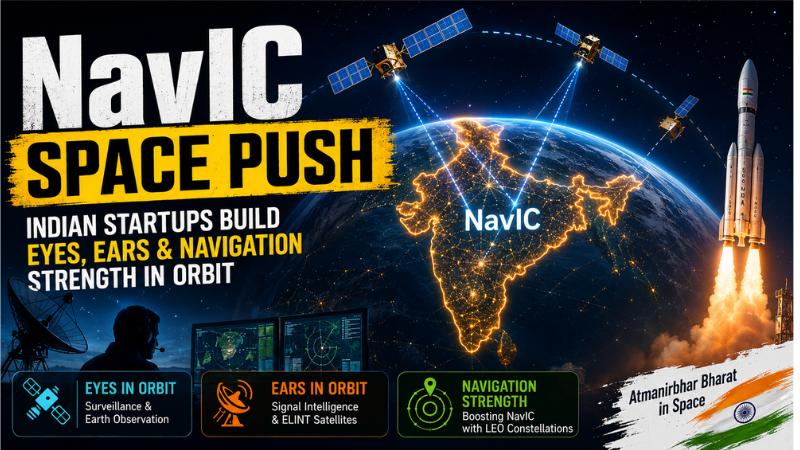
Indian Space Startups Strengthen NavIC Push With Eyes And Ears In Orbit India’s private space companies are no longer just supporting Isro — they are building satellites that could help the country watch borders, track signals, and strengthen NavIC. At the India Space Congress 2026 in New Delhi, several Indian firms showcased satellite technologies focused on surveillance, si
Indian Space Startups Build NavIC Support Layer For Defence And Navigation
Indian Space Startups Strengthen NavIC Push With Eyes And Ears In Orbit India’s private space companies are no longer just supporting Isro — they are building satellites that could help the country watch borders, track signals, and strengthen NavIC. At the India Space Congress 2026 in New Delhi, several Indian firms showcased satellite technologies focused on surveillance, si
China Admits Pakistan J-10C Support During Operation Sindoor
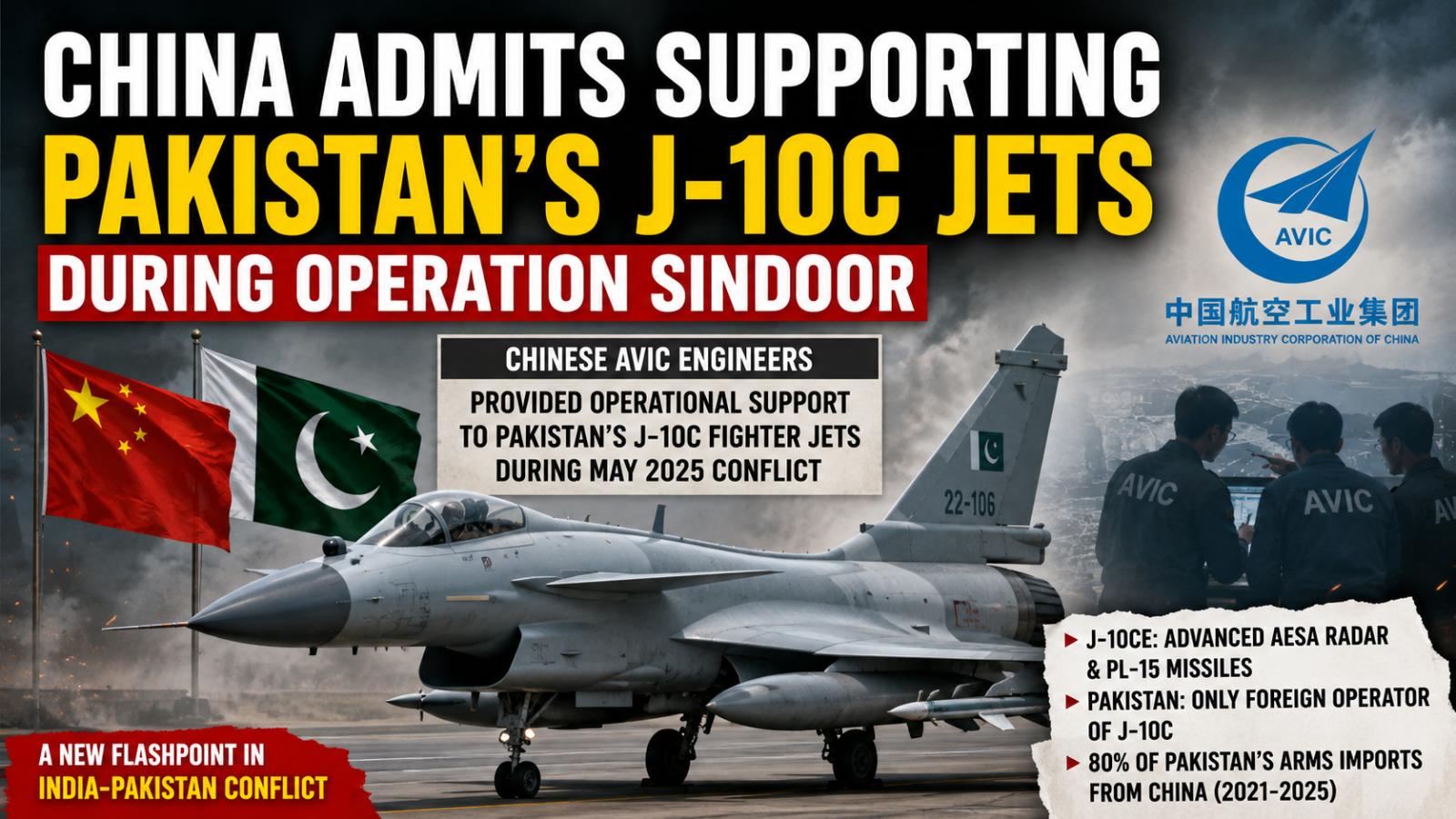
China’s rare admission raises stakes China has admitted its engineers supported Pakistan’s J-10C fighter jet operations during India’s Operation Sindoor in May 2025, a disclosure that adds a sharper China angle to the India-Pakistan conflict. The admission came through Chinese state broadcaster CCTV, where AVIC engineer Zhang Heng described being at a support base as fighter jets took off and air-raid sirens sounded. He said the team worked in extreme May heat while trying to keep Chinese-made equipment combat-ready. Why the J-10C disclosure matters The J-10CE, Pakistan’s export version of China’s J-10C multirole fighter, is central to the story because Pakistan remains its only foreign operator. The aircraft is linked to advanced AESA radar and PL-15 long-range air-to-air missiles, making any wartime support politically sensitive. Indian defence officials have said Operation Sindoor targeted terror infrastructure after the Pahalgam attack, while later briefings claimed 13 Pakistani aircraft and 11 airfields were hit. Those claims, combined with Beijing’s acknowledgement of technical support, are likely to intensify scrutiny of the China-Pakistan defence partnership. Regional security impact The timing is significant. The disclosure surfaced around the first anniversary of Operation Sindoor and reinforces India’s long-held concern that Pakistan’s military capability is increasingly backed by Chinese systems, engineers and supply chains. For New Delhi, the key question is no longer whether Chinese weapons were used, but how deeply Chinese personnel supported Pakistan during active conflict. That makes this admission more than a defence update—it is a fresh flashpoint in Asian security.
China Admits Pakistan J-10C Support During Operation Sindoor
China’s rare admission raises stakes China has admitted its engineers supported Pakistan’s J-10C fighter jet operations during India’s Operation Sindoor in May 2025, a disclosure that adds a sharper China angle to the India-Pakistan conflict. The admission came through Chinese state broadcaster CCTV, where AVIC engineer Zhang Heng described being at a support base as fighter jets took off and air-raid sirens sounded. He said the team worked in extreme May heat while trying to keep Chinese-made equipment combat-ready. Why the J-10C disclosure matters The J-10CE, Pakistan’s export version of China’s J-10C multirole fighter, is central to the story because Pakistan remains its only foreign operator. The aircraft is linked to advanced AESA radar and PL-15 long-range air-to-air missiles, making any wartime support politically sensitive. Indian defence officials have said Operation Sindoor targeted terror infrastructure after the Pahalgam attack, while later briefings claimed 13 Pakistani aircraft and 11 airfields were hit. Those claims, combined with Beijing’s acknowledgement of technical support, are likely to intensify scrutiny of the China-Pakistan defence partnership. Regional security impact The timing is significant. The disclosure surfaced around the first anniversary of Operation Sindoor and reinforces India’s long-held concern that Pakistan’s military capability is increasingly backed by Chinese systems, engineers and supply chains. For New Delhi, the key question is no longer whether Chinese weapons were used, but how deeply Chinese personnel supported Pakistan during active conflict. That makes this admission more than a defence update—it is a fresh flashpoint in Asian security.
MS Dhoni Ruled Out for First Two Weeks of IPL 2026
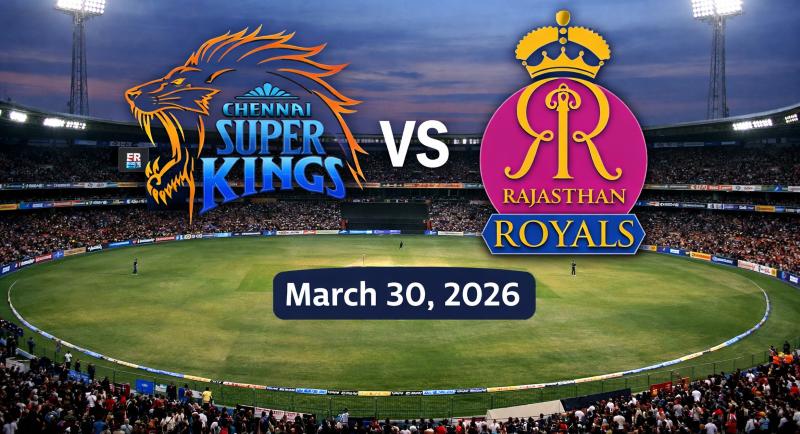
Chennai Super Kings (CSK) have been dealt a significant blow with the news that their legendary player MS Dhoni will miss the first two weeks of the IPL 2026 season due to a calf strain. Dhoni is currently undergoing rehabilitation, and it is expected that he will be sidelined for the early stages of the tournament. In light of Dhoni’s absence, former India cricketer Ravichandran Ashwin, who has represented CSK in the past, picked his strongest pl
MS Dhoni Ruled Out for First Two Weeks of IPL 2026
Chennai Super Kings (CSK) have been dealt a significant blow with the news that their legendary player MS Dhoni will miss the first two weeks of the IPL 2026 season due to a calf strain. Dhoni is currently undergoing rehabilitation, and it is expected that he will be sidelined for the early stages of the tournament. In light of Dhoni’s absence, former India cricketer Ravichandran Ashwin, who has represented CSK in the past, picked his strongest pl
India lift T20 World Cup 2026 after posting record 255 against New Zealand
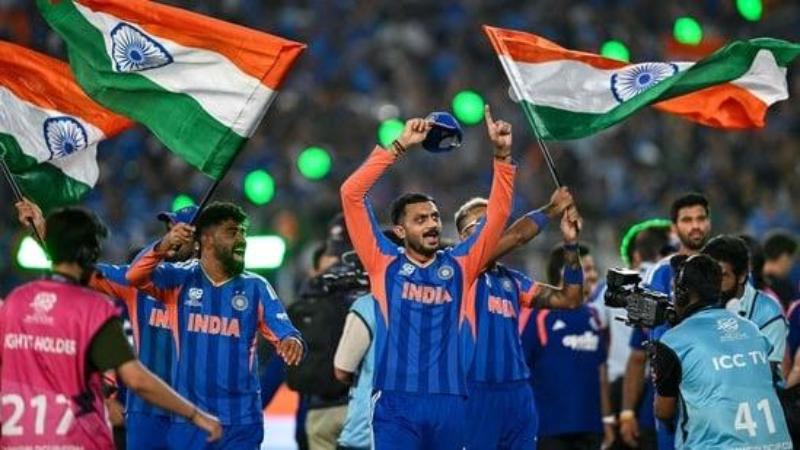
India created history by becoming the first team to successfully defend a T20 World Cup title after securing a dominant 96-run victory over New Zealand in the 2026 final at the Narendra Modi Stadium in Ahmedabad on Sunday. In a match filled with powerful batting and clinical bowling, India delivered a commanding performance to lift the trophy and underline their dominance in the shortest format of the game. Match Result India won by 96 runs
India lift T20 World Cup 2026 after posting record 255 against New Zealand
India created history by becoming the first team to successfully defend a T20 World Cup title after securing a dominant 96-run victory over New Zealand in the 2026 final at the Narendra Modi Stadium in Ahmedabad on Sunday. In a match filled with powerful batting and clinical bowling, India delivered a commanding performance to lift the trophy and underline their dominance in the shortest format of the game. Match Result India won by 96 runs
ISRO rules out sabotage amid repeated strategic mission failures
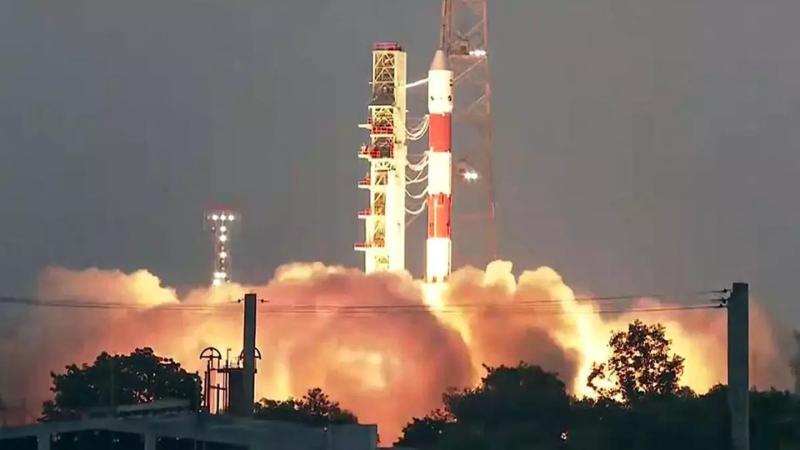
India’s Space Minister Dr. Jitendra Singh has said that there is no indication of sabotage behind a series of recent failures involving the Indian Space Research Organisation, even as repeated setbacks to strategic missions have triggered concern within policy and defence circles. The remarks come after three out of six ISRO missions launched from Indian soil over the past year failed, all of them linked to national security and strategic objectives. Speaking at a press briefing in New Delhi, Dr. Singh said that no report pointing to sabotage has been received so far. He clarified that while he is responsible for overseeing space launches, investigations related to sabotage or hostile interference fall under the purview of other ministries such as defence, home affairs, or external affairs. The minister added that, as of now, there is no information to suggest external interference in the recent launch failures. The comments follow two rare back-to-back mid-flight failures of ISRO’s Polar Satellite Launch Vehicle, a rocket that has long been considered the agency’s most dependable platform. Over a 33-year operational history, the PSLV had suffered only four major failures prior to 2025. The failures in May 2025 and January 2026, both occurring during the third stage of flight, have therefore raised serious questions about reliability and corrective action. Dr. Singh addressed public speculation that ISRO may have failed to rectify earlier faults, stating that the two PSLV failures had different technical causes despite occurring at the same stage. He expressed confidence in ISRO’s internal failure appraisal process, describing it as thorough and analytical. Traditionally, ISRO has publicly released summaries of mission failure analyses, contributing to its image as a transparent space agency. However, in recent cases, that practice has not been consistently followed. The failure analysis report of the PSLV-C61 mission in May 2025 was submitted to the Prime Minister’s Office but not released publicly. Similarly, no detailed technical update has been shared regarding the PSLV-C62 failure in January 2026 beyond ministerial statements. January 2026 – PSLV-C62 / EOS-N1 The PSLV-C62 mission on January 12, 2026, was ISRO’s first launch of the year and marked the PSLV’s return to flight after a setback in May 2025. The primary payload was EOS-N1, also known as Anvesha, a hyperspectral Earth observation satellite developed by the Defence Research and Development Organisation. The satellite was designed to operate at an altitude of 511 kilometres and provide advanced material identification capabilities by analysing reflected light across multiple wavelengths. The mission also carried 15 co-passenger satellites. A mid-flight failure during the third stage of the PSLV resulted in the loss of the rocket and all onboard satellites, ending the mission prematurely. May 2025 – PSLV-C61 / EOS-09 On May 18, 2025, ISRO’s PSLV-C61 mission failed approximately six minutes after liftoff. According to ISRO officials, performance was normal up to the second stage before an anomaly was observed during third-stage operation. The EOS-09 satellite, a radar imaging platform capable of all-weather, day-and-night surveillance, was lost along with the launch vehicle. Despite the strategic importance of the mission, ISRO did not release a public failure analysis, a departure from past practice. January 2025 – GSLV-F15 / NVS-02 On January 29, 2025, ISRO launched the NVS-02 navigation satellite aboard the GSLV-F15 rocket during the 100th launch from the Sriharikota spaceport. While the rocket successfully placed the satellite into its initial orbit, the satellite failed to fire its onboard engines, preventing it from reaching its designated operational orbit. The failure rendered NVS-02 unusable for its intended role within India’s NAVIC regional navigation system, which serves both civilian agencies and the armed forces. August 2021 – GSLV-F10 / EOS-03 In August 2021, ISRO launched the EOS-03 satellite, previously known as GISAT-1, aboard the GSLV-F10 rocket. Designed for near real-time Earth observation and disaster monitoring, the mission failed due to a malfunction in the cryogenic upper stage. ISRO later identified a valve leak in the liquid hydrogen tank as the cause of the failure. August 2017 – PSLV-C39 / IRNSS-1H The PSLV-C39 mission in August 2017 failed after the satellite remained trapped inside the rocket’s heat shield due to a separation failure. Although all other flight events proceeded as planned, the navigation satellite could not be deployed, resulting in the loss of a critical component of the Indian Regional Navigation Satellite System. The cumulative impact of these strategic mission failures over the past nine years is significant. Financial estimates suggest losses amounting to several hundred million dollars, excluding the cost of rebuilding and relaunching replacement missions. Beyond monetary loss, delays in deploying indigenous navigation and surveillance satellites force greater reliance on foreign systems, affecting strategic autonomy. ISRO has indicated that each failure was caused by a different subsystem or component, reinforcing the reality that spaceflight is a zero-error domain where even minor defects can have catastrophic consequences. While each failure contributes valuable lessons, the repeated setbacks have slowed the deployment of key space-based capabilities developed by Indian scientists, placing renewed focus on reliability, transparency, and long-term mission planning.
ISRO rules out sabotage amid repeated strategic mission failures
India’s Space Minister Dr. Jitendra Singh has said that there is no indication of sabotage behind a series of recent failures involving the Indian Space Research Organisation, even as repeated setbacks to strategic missions have triggered concern within policy and defence circles. The remarks come after three out of six ISRO missions launched from Indian soil over the past year failed, all of them linked to national security and strategic objectives. Speaking at a press briefing in New Delhi, Dr. Singh said that no report pointing to sabotage has been received so far. He clarified that while he is responsible for overseeing space launches, investigations related to sabotage or hostile interference fall under the purview of other ministries such as defence, home affairs, or external affairs. The minister added that, as of now, there is no information to suggest external interference in the recent launch failures. The comments follow two rare back-to-back mid-flight failures of ISRO’s Polar Satellite Launch Vehicle, a rocket that has long been considered the agency’s most dependable platform. Over a 33-year operational history, the PSLV had suffered only four major failures prior to 2025. The failures in May 2025 and January 2026, both occurring during the third stage of flight, have therefore raised serious questions about reliability and corrective action. Dr. Singh addressed public speculation that ISRO may have failed to rectify earlier faults, stating that the two PSLV failures had different technical causes despite occurring at the same stage. He expressed confidence in ISRO’s internal failure appraisal process, describing it as thorough and analytical. Traditionally, ISRO has publicly released summaries of mission failure analyses, contributing to its image as a transparent space agency. However, in recent cases, that practice has not been consistently followed. The failure analysis report of the PSLV-C61 mission in May 2025 was submitted to the Prime Minister’s Office but not released publicly. Similarly, no detailed technical update has been shared regarding the PSLV-C62 failure in January 2026 beyond ministerial statements. January 2026 – PSLV-C62 / EOS-N1 The PSLV-C62 mission on January 12, 2026, was ISRO’s first launch of the year and marked the PSLV’s return to flight after a setback in May 2025. The primary payload was EOS-N1, also known as Anvesha, a hyperspectral Earth observation satellite developed by the Defence Research and Development Organisation. The satellite was designed to operate at an altitude of 511 kilometres and provide advanced material identification capabilities by analysing reflected light across multiple wavelengths. The mission also carried 15 co-passenger satellites. A mid-flight failure during the third stage of the PSLV resulted in the loss of the rocket and all onboard satellites, ending the mission prematurely. May 2025 – PSLV-C61 / EOS-09 On May 18, 2025, ISRO’s PSLV-C61 mission failed approximately six minutes after liftoff. According to ISRO officials, performance was normal up to the second stage before an anomaly was observed during third-stage operation. The EOS-09 satellite, a radar imaging platform capable of all-weather, day-and-night surveillance, was lost along with the launch vehicle. Despite the strategic importance of the mission, ISRO did not release a public failure analysis, a departure from past practice. January 2025 – GSLV-F15 / NVS-02 On January 29, 2025, ISRO launched the NVS-02 navigation satellite aboard the GSLV-F15 rocket during the 100th launch from the Sriharikota spaceport. While the rocket successfully placed the satellite into its initial orbit, the satellite failed to fire its onboard engines, preventing it from reaching its designated operational orbit. The failure rendered NVS-02 unusable for its intended role within India’s NAVIC regional navigation system, which serves both civilian agencies and the armed forces. August 2021 – GSLV-F10 / EOS-03 In August 2021, ISRO launched the EOS-03 satellite, previously known as GISAT-1, aboard the GSLV-F10 rocket. Designed for near real-time Earth observation and disaster monitoring, the mission failed due to a malfunction in the cryogenic upper stage. ISRO later identified a valve leak in the liquid hydrogen tank as the cause of the failure. August 2017 – PSLV-C39 / IRNSS-1H The PSLV-C39 mission in August 2017 failed after the satellite remained trapped inside the rocket’s heat shield due to a separation failure. Although all other flight events proceeded as planned, the navigation satellite could not be deployed, resulting in the loss of a critical component of the Indian Regional Navigation Satellite System. The cumulative impact of these strategic mission failures over the past nine years is significant. Financial estimates suggest losses amounting to several hundred million dollars, excluding the cost of rebuilding and relaunching replacement missions. Beyond monetary loss, delays in deploying indigenous navigation and surveillance satellites force greater reliance on foreign systems, affecting strategic autonomy. ISRO has indicated that each failure was caused by a different subsystem or component, reinforcing the reality that spaceflight is a zero-error domain where even minor defects can have catastrophic consequences. While each failure contributes valuable lessons, the repeated setbacks have slowed the deployment of key space-based capabilities developed by Indian scientists, placing renewed focus on reliability, transparency, and long-term mission planning.
Jemimah Rodrigues powers India to record World Cup final berth with epic chase vs Australia
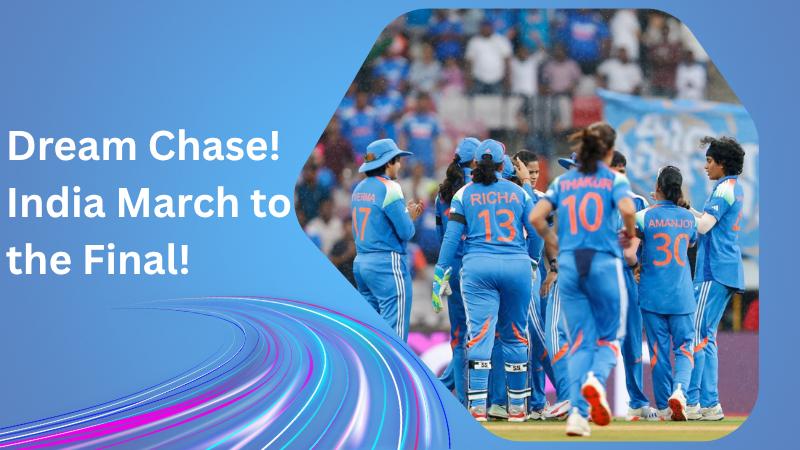
Jemimah Rodrigues scripted one of the greatest chapters in Indian cricket history with a breathtaking unbeaten 127 off 134 balls as India stunned Australia in the Women’s ODI World Cup semifinal in Navi Mumbai. Chasing a daunting 339, India reached the target with five wickets in hand and nine balls to spare, registering the highest successful chase in Women’s One Day Internationals. The victory ended Australia’s 15-match unbeaten run in the tournament and propelled India into their third
Jemimah Rodrigues powers India to record World Cup final berth with epic chase vs Australia
Jemimah Rodrigues scripted one of the greatest chapters in Indian cricket history with a breathtaking unbeaten 127 off 134 balls as India stunned Australia in the Women’s ODI World Cup semifinal in Navi Mumbai. Chasing a daunting 339, India reached the target with five wickets in hand and nine balls to spare, registering the highest successful chase in Women’s One Day Internationals. The victory ended Australia’s 15-match unbeaten run in the tournament and propelled India into their third
Trump message on China Victory Day sparks global attention amid tensions
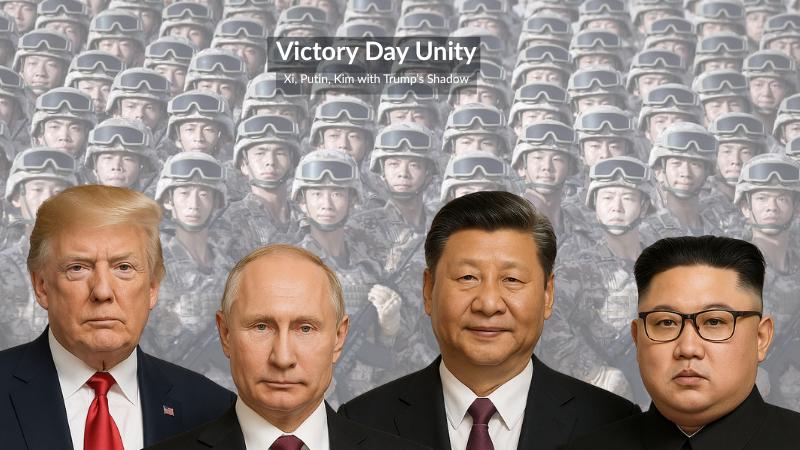
US President Donald Trump extended greetings to China on its Victory Day celebrations and sent what he described as warm regards to world leaders Vladimir Putin and Kim Jong Un. His message came in the form of a statement where he linked historical sacrifices made by American soldiers during China’s wartime struggle to present-day global politics. The statement sparked widespread attention, not only because of the sensitive timing of the message but also because of the leaders he specif
Trump message on China Victory Day sparks global attention amid tensions
US President Donald Trump extended greetings to China on its Victory Day celebrations and sent what he described as warm regards to world leaders Vladimir Putin and Kim Jong Un. His message came in the form of a statement where he linked historical sacrifices made by American soldiers during China’s wartime struggle to present-day global politics. The statement sparked widespread attention, not only because of the sensitive timing of the message but also because of the leaders he specif
NDA Likely to Announce Vice Presidential Candidate on August 12, PM Modi and JP Nadda to Decide Nominee
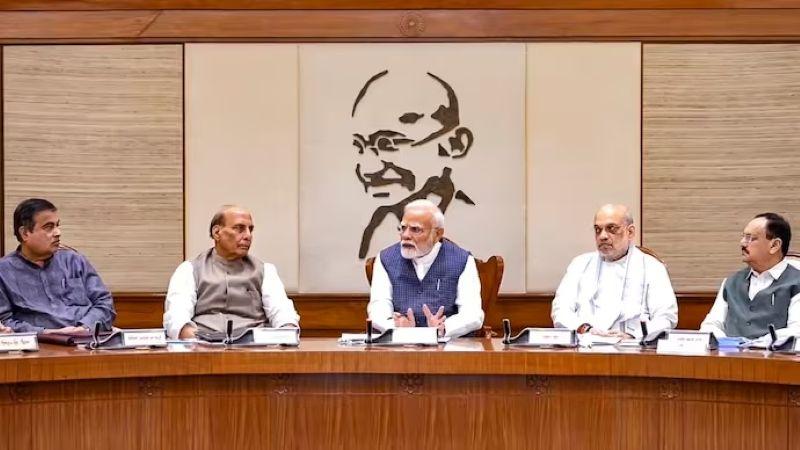
In a significant development ahead of the Vice Presidential election, Prime Minister Narendra Modi and BJP President JP Nadda are expected to finalize the NDA's nominee by August 12, 2025. This comes after the resignation of Vice President Jagdeep Dhankhar due to health reasons, which has left the position vacant on the very first day of the Monsoon Session of Parliament. A crucial meet
NDA Likely to Announce Vice Presidential Candidate on August 12, PM Modi and JP Nadda to Decide Nominee
In a significant development ahead of the Vice Presidential election, Prime Minister Narendra Modi and BJP President JP Nadda are expected to finalize the NDA's nominee by August 12, 2025. This comes after the resignation of Vice President Jagdeep Dhankhar due to health reasons, which has left the position vacant on the very first day of the Monsoon Session of Parliament. A crucial meet
Jagdeep Dhankhar Resigns As Vice President of India Citing Health Reasons
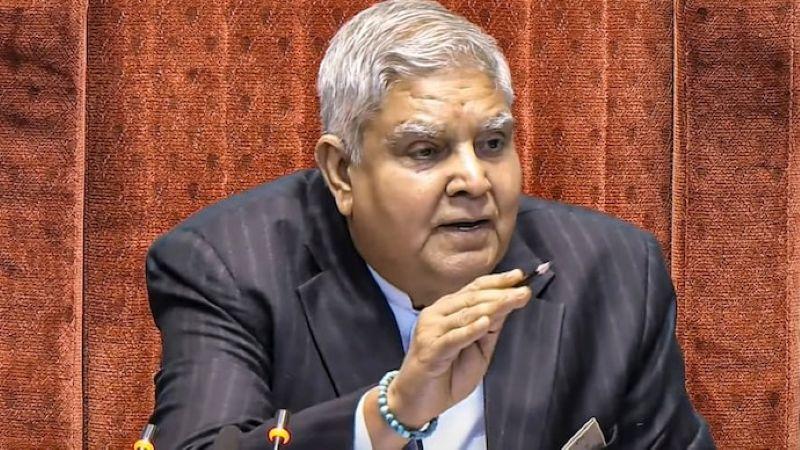
Jagdeep Dhankhar, the 14th Vice President of India, has officially resigned from his post, citing health concerns. This surprising resignation comes as the country’s political landscape faces an unexpected shift on the first day of the Monsoon Parliament session. Dhankhar, who was also serving as the Chairman of the Rajya Sabha, had taken office in August 2022. His resignation letter, addressed to President Droupadi Murmu, was a formal declaration in whi
Jagdeep Dhankhar Resigns As Vice President of India Citing Health Reasons
Jagdeep Dhankhar, the 14th Vice President of India, has officially resigned from his post, citing health concerns. This surprising resignation comes as the country’s political landscape faces an unexpected shift on the first day of the Monsoon Parliament session. Dhankhar, who was also serving as the Chairman of the Rajya Sabha, had taken office in August 2022. His resignation letter, addressed to President Droupadi Murmu, was a formal declaration in whi