
















#canadavisa
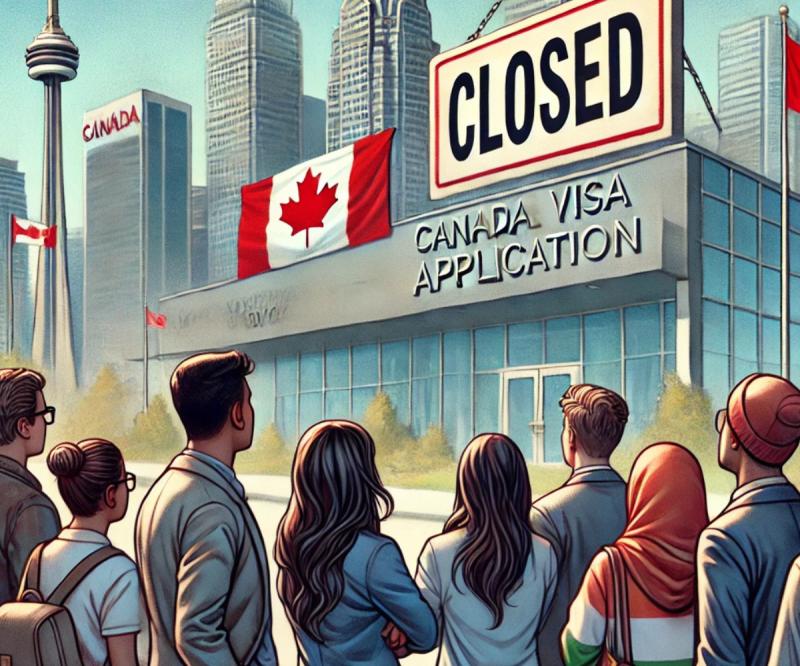
Canada World Cup Visa Refusal Rate for Indians Reaches 71%
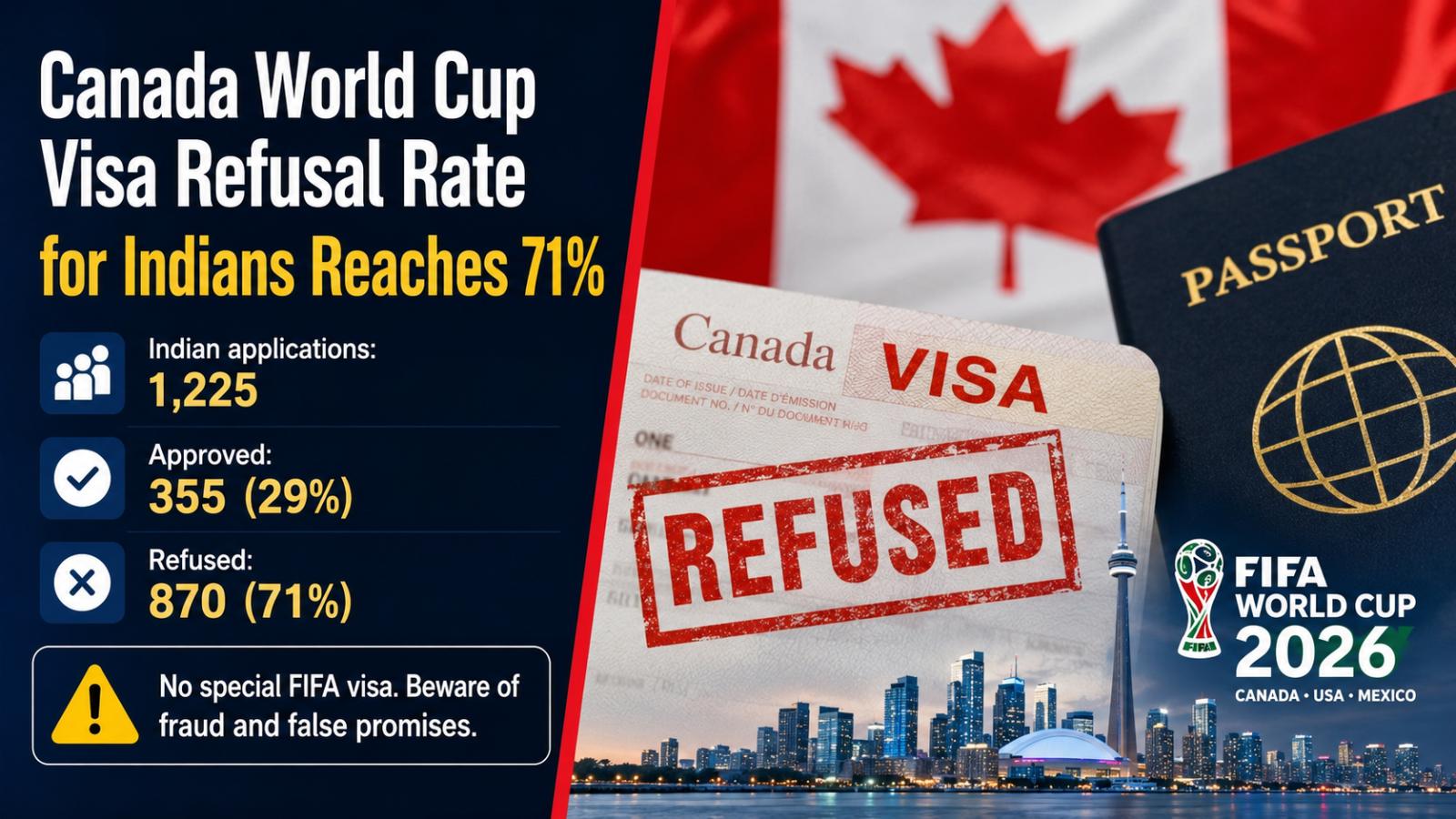
The Canada World Cup visa refusal rate for Indians reached about 71%, with only 355 of 1,225 FIFA 2026-related visitor visa applications approved, according to data attributed to Immigration, Refugees and Citizenship Canada. The figures cover applications processed from Saturday, November 15, 2025, through Tuesday, March 31, 2026. Canada processed nearly 17,000 visitor visa applications linked to the tournament during that period and approved
Canada World Cup Visa Refusal Rate for Indians Reaches 71%
The Canada World Cup visa refusal rate for Indians reached about 71%, with only 355 of 1,225 FIFA 2026-related visitor visa applications approved, according to data attributed to Immigration, Refugees and Citizenship Canada. The figures cover applications processed from Saturday, November 15, 2025, through Tuesday, March 31, 2026. Canada processed nearly 17,000 visitor visa applications linked to the tournament during that period and approved
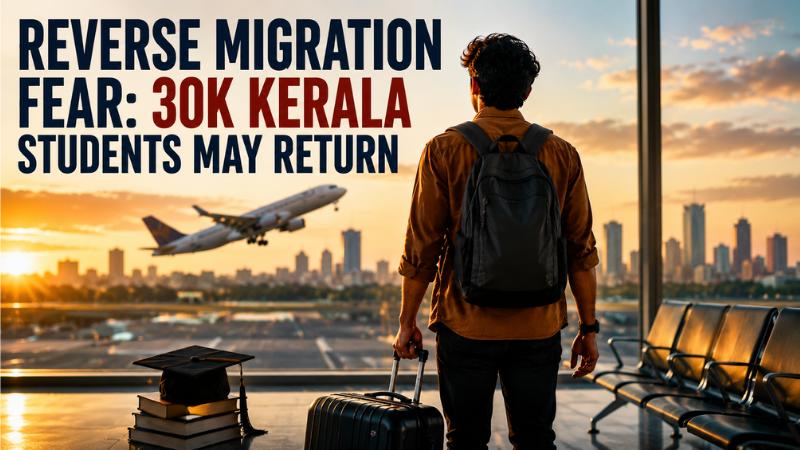
Reverse Migration Fear: 30K Kerala Students May Return Amid Global Visa Crackdown
Reverse migration concerns are growing rapidly in Kerala as countries like the United Kingdom, Canada, Australia, and several European nations tighten immigration and student visa policies. Education experts and overseas consultancy agencies estimate that nearly 30,000 Malayali students could return home over the coming years due to stricter migration rules, reduced work opportunities, and changing settlement regulations abroad. The issue is creating anxiety among students and families who once viewed overseas education as a stable path toward global careers and permanent residency. For many years, Kerala witnessed a sharp rise in students moving abroad for higher education, attracted by better salaries, international exposure, and long-term settlement opportunities. However, recent policy changes in foreign nations are creating uncertainty for thousands of students who invested heavily through education loans and family savings. Many students now fear limited job opportunities and uncertain residency prospects after completing their courses. Countries such as the UK have introduced tighter dependent visa restrictions and stricter financial eligibility rules for international students. Canada has announced caps on student permits, while Australia has increased scrutiny in visa approvals and raised language and financial requirements for applicants. These changes are making it harder for students to secure employment and permanent residency after graduation, forcing many to reconsider their future plans abroad. The possibility of large-scale reverse migration is raising concerns about Kerala’s economy and employment sector. Returning graduates may struggle to find jobs that match their international qualifications and work experience. Education consultants in Kochi, Thiruvananthapuram, Kozhikode, and other cities report that students are becoming more cautious while selecting foreign destinations, increasingly preferring countries with stable immigration pathways. Experts believe Kerala may eventually need stronger employment programs, startup incentives, and skill-based opportunities to support returning graduates and prevent rising unemployment.
Reverse Migration Fear: 30K Kerala Students May Return Amid Global Visa Crackdown
Reverse migration concerns are growing rapidly in Kerala as countries like the United Kingdom, Canada, Australia, and several European nations tighten immigration and student visa policies. Education experts and overseas consultancy agencies estimate that nearly 30,000 Malayali students could return home over the coming years due to stricter migration rules, reduced work opportunities, and changing settlement regulations abroad. The issue is creating anxiety among students and families who once viewed overseas education as a stable path toward global careers and permanent residency. For many years, Kerala witnessed a sharp rise in students moving abroad for higher education, attracted by better salaries, international exposure, and long-term settlement opportunities. However, recent policy changes in foreign nations are creating uncertainty for thousands of students who invested heavily through education loans and family savings. Many students now fear limited job opportunities and uncertain residency prospects after completing their courses. Countries such as the UK have introduced tighter dependent visa restrictions and stricter financial eligibility rules for international students. Canada has announced caps on student permits, while Australia has increased scrutiny in visa approvals and raised language and financial requirements for applicants. These changes are making it harder for students to secure employment and permanent residency after graduation, forcing many to reconsider their future plans abroad. The possibility of large-scale reverse migration is raising concerns about Kerala’s economy and employment sector. Returning graduates may struggle to find jobs that match their international qualifications and work experience. Education consultants in Kochi, Thiruvananthapuram, Kozhikode, and other cities report that students are becoming more cautious while selecting foreign destinations, increasingly preferring countries with stable immigration pathways. Experts believe Kerala may eventually need stronger employment programs, startup incentives, and skill-based opportunities to support returning graduates and prevent rising unemployment.
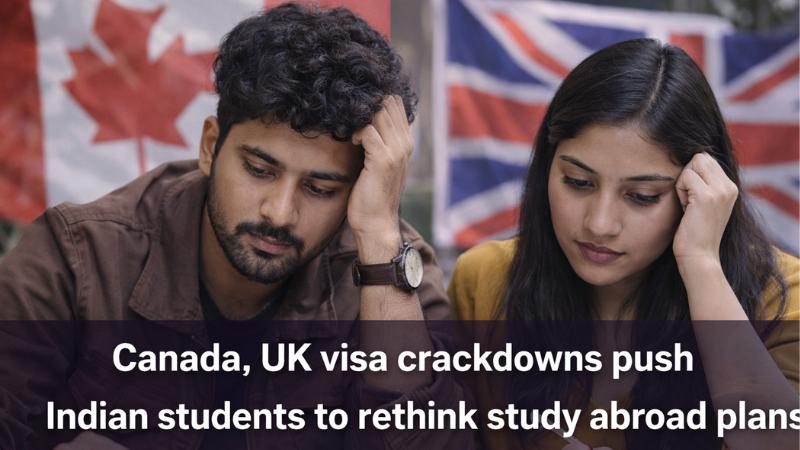
Canada, UK visa crackdowns push Indian students to rethink study abroad plans
Canada and the United Kingdom emerged as dependable alternatives for Indian students seeking overseas education, especially as uncertainty around US work visas grew. Clear post-study work routes, predictable immigration rules, and relatively stable visa approval trends helped both countries attract hundreds of thousands of Indian students. However, policy changes in 2025 are reshaping that confidence and forcing students and families to reassess long-held assumptions about studying abroad.
Canada, UK visa crackdowns push Indian students to rethink study abroad plans
Canada and the United Kingdom emerged as dependable alternatives for Indian students seeking overseas education, especially as uncertainty around US work visas grew. Clear post-study work routes, predictable immigration rules, and relatively stable visa approval trends helped both countries attract hundreds of thousands of Indian students. However, policy changes in 2025 are reshaping that confidence and forcing students and families to reassess long-held assumptions about studying abroad.
New visa policies make studying and working abroad tougher for Indians
The path to studying or working abroad, once viewed as a clear and achievable journey, is becoming increasingly complicated as major economies introduce tighter immigration and visa rules. Countries such as the United States, the United Kingdom, Sweden, Canada, and Australia have each rolled out new policies in the past two years that collectively raise costs, elevate salary requirements, and reduce the number of visas available for international students and skilled professionals. For many,
New visa policies make studying and working abroad tougher for Indians
The path to studying or working abroad, once viewed as a clear and achievable journey, is becoming increasingly complicated as major economies introduce tighter immigration and visa rules. Countries such as the United States, the United Kingdom, Sweden, Canada, and Australia have each rolled out new policies in the past two years that collectively raise costs, elevate salary requirements, and reduce the number of visas available for international students and skilled professionals. For many,
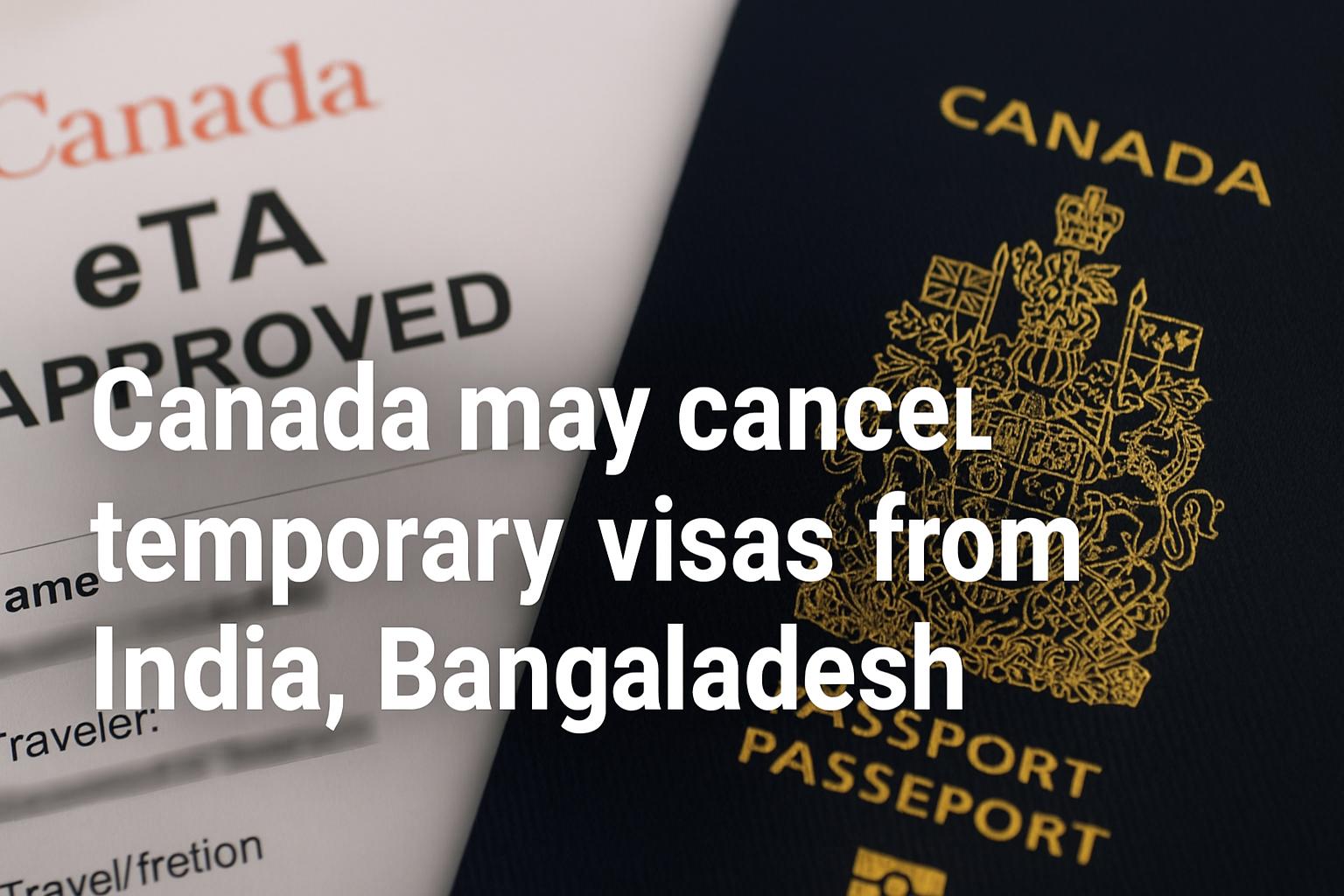
Canada mulls new powers to cancel visas, India and Bangladesh in focus
Canada’s immigration authorities are reportedly moving toward adopting new powers that could allow them to cancel temporary visas on a large scale — a policy shift that may disproportionately affect applicants from India and Bangladesh. According to internal government documents, the initiative is part of a broader partnership between Canadian agencies and their U.S. counterparts to strengthen border controls and address rising concerns over fraudulent applications. The document
Canada mulls new powers to cancel visas, India and Bangladesh in focus
Canada’s immigration authorities are reportedly moving toward adopting new powers that could allow them to cancel temporary visas on a large scale — a policy shift that may disproportionately affect applicants from India and Bangladesh. According to internal government documents, the initiative is part of a broader partnership between Canadian agencies and their U.S. counterparts to strengthen border controls and address rising concerns over fraudulent applications. The document
Canada rejects 74% of Indian student visa applications amid tighter immigration rules
Canada has recorded a sharp surge in the rejection of student visa applications from India, with nearly three out of every four applicants being denied entry to Canadian post-secondary institutions in August 2025. Data from Canada’s immigration department shows that 74% of Indian applications for study permits were refused, a dramatic increase from 32% during the same month in 2023. The figures indicate a growing policy shift in Ottawa’s approach to international education and immigration
Canada rejects 74% of Indian student visa applications amid tighter immigration rules
Canada has recorded a sharp surge in the rejection of student visa applications from India, with nearly three out of every four applicants being denied entry to Canadian post-secondary institutions in August 2025. Data from Canada’s immigration department shows that 74% of Indian applications for study permits were refused, a dramatic increase from 32% during the same month in 2023. The figures indicate a growing policy shift in Ottawa’s approach to international education and immigration
Canada Ends Fast-Track Visa Program, Impacting Indian Students
Canada Ends Fast-Track Visa Program, Impacting Indian Students In a move likely to affect thousands of Indian students, Canada has discontinued its popular fast-track study visa program amid ongoing diplomatic tensions with India. The decision marks a significant change for international students, particularly those from India, who have relied on the streamlined Student Direct
Canada Ends Fast-Track Visa Program, Impacting Indian Students
Canada Ends Fast-Track Visa Program, Impacting Indian Students In a move likely to affect thousands of Indian students, Canada has discontinued its popular fast-track study visa program amid ongoing diplomatic tensions with India. The decision marks a significant change for international students, particularly those from India, who have relied on the streamlined Student Direct


