







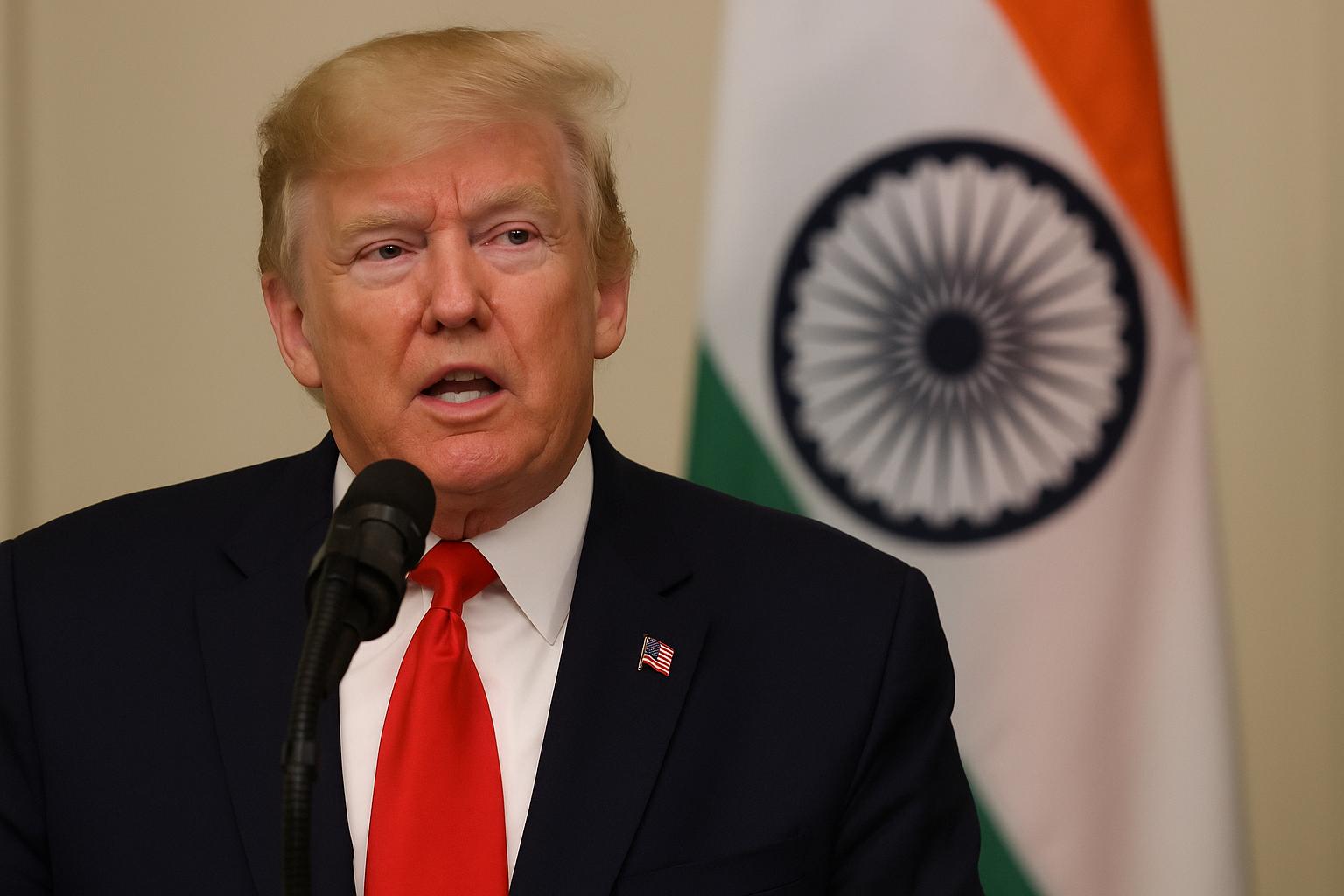











Washington — U.S. President Donald Trump reiterated on Friday that India will no longer buy oil from Russia, asserting that the South Asian nation has already begun reducing its dependence on Moscow’s energy supplies. Speaking at the White House during a meeting with Ukrainian President Volodymyr Zelenskyy, Trump said the move reflects a broader international effort to isolate Russia economically over its invasion of Ukraine. “India will not be buying oil from Russia,” Trump
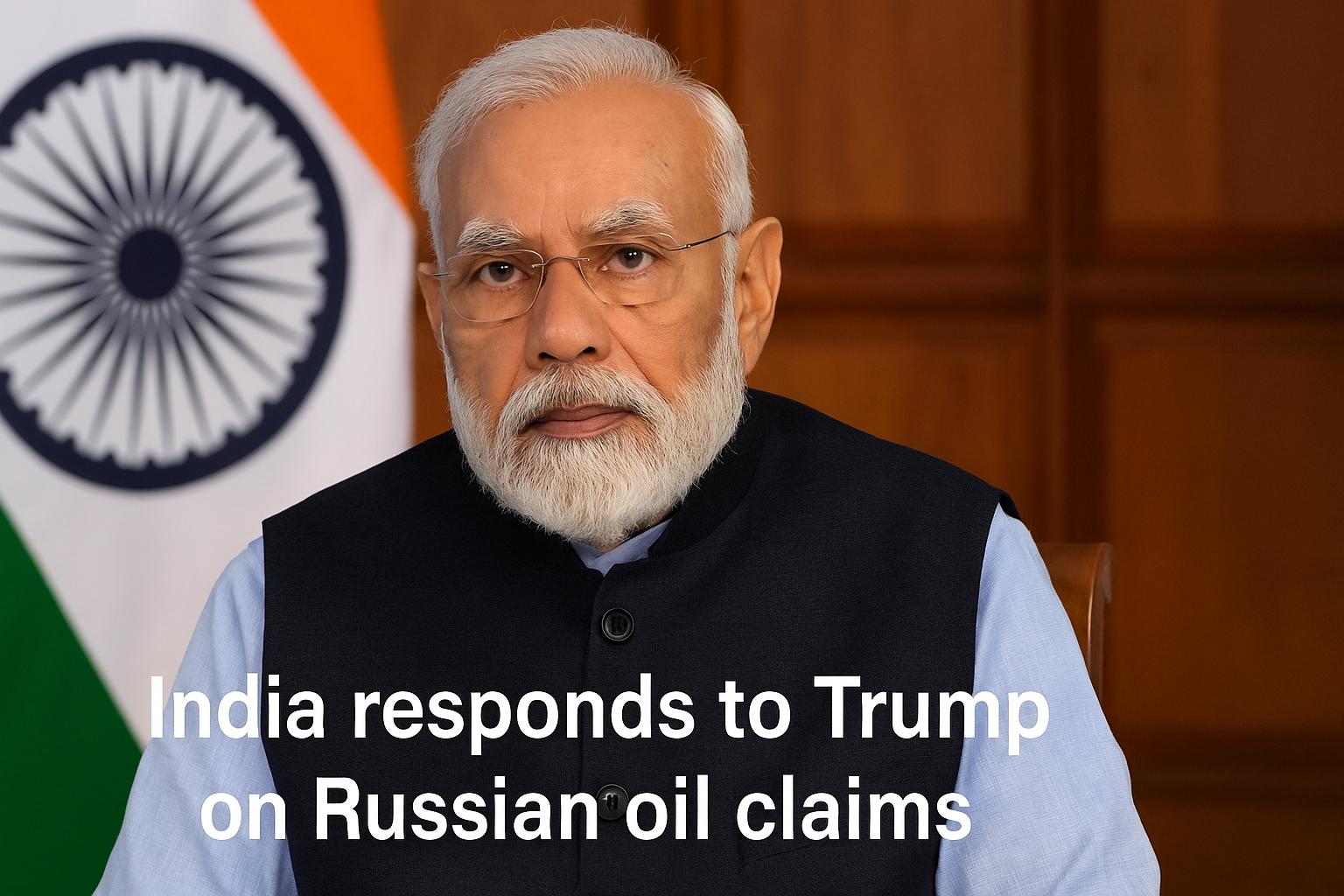
Hours after United States President Donald Trump asserted that Indian Prime Minister Narendra Modi had personally assured him that New Delhi would soon halt the purchase of oil from Russia, the Indian government issued a carefully worded statement reiterating its independent energy policy. The clarification underscored India’s commitment to protecting its national interests and consumers amid global price volatility, without directly confirming or denying Trump’s remarks. In a s
Oil sector stocks in India saw notable gains today, largely driven by major geopolitical developments. A ceasefire between Iran and Israel led to a sudden shift in oilarket sentiment, reversing a recent upward trend in crude prices. The announcement resulted in a noticeable decline in global oil benchmarks, which had been elevated due to the prior escalation of tensions. Brent crude, which had surged earlier in the week to a peak of $81.40 per barrel, dropped sharply following the
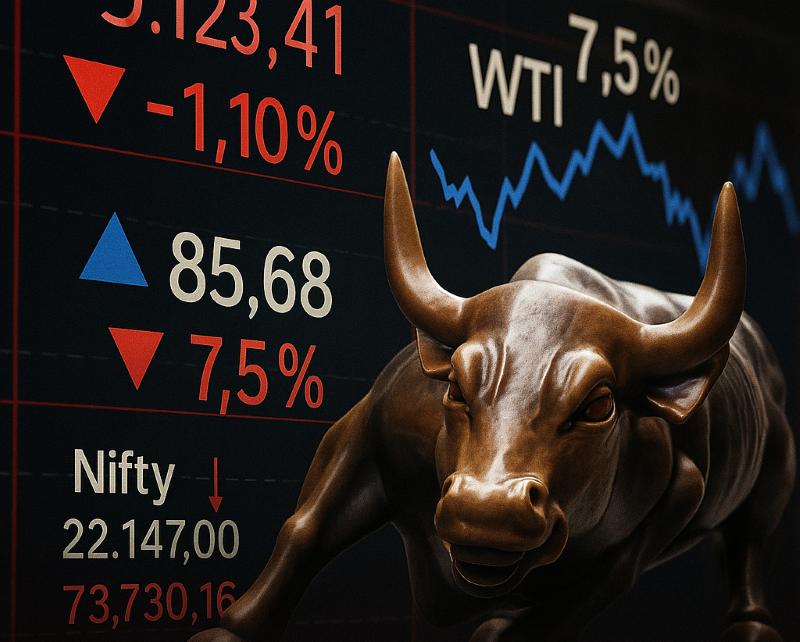
Global financial markets came under pressure on Friday as Iran launched hundreds of missiles toward Israel in retaliation for earlier airstrikes on its nuclear and military facilities. The geopolitical escalation sparked fears of a wider Middle East conflict, leading to a steep sell-off on Wall Street and sharp gains in oil and gold. The S&P 500 fell 1.1%, while crude oil futures jumped 7.5%, their largest single-day gain in over two years. The VIX fear g
Oil prices continued their downward trajectory for a third consecutive session as larger-than-expected builds in US crude and fuel inventories raised fresh doubts about demand strength. At the same time, market participants kept a close watch on the potential impact of renewed nuclear talks between Iran and the United States, which could alter global oil supply dynamics if sanctions are lifted. By Thursday morning, benchmark Brent crude slipped by 16 cents to $64.75 per barrel, wh
Oil prices rose on Monday as encouraging signs from trade talks between the United States and China improved market sentiment. Over the weekend, both sides reported progress in negotiations, helping ease concerns in global markets and fueling optimism that the two largest crude consumers are moving closer to resolving their long-running trade dispute. Brent crude futures increased by 43 cents, or 0.67%, reaching $64.34 per barrel in early Asian trading. At the same time, U.S. West
In a landmark energy agreement, Russia’s state oil company Rosneft has committed to supply 500,000 barrels of crude oil per day to India’s Reliance for the next 10 years, worth approximately $13 billion annually. This deal represents about 0.5% of global oil supply and strengthens energy relations between India and Russia, especially as Russia faces intense Western sanctions due to its invasion of Ukraine. The deal is set to begin in January and will involve monthly deli
Oil prices have shown remarkable stability, remaining in a narrow range since mid-October, with West Texas Intermediate (WTI) crude fluctuating around $70 per barrel. This rangebound trend has been characterized by a significant drop in volatility, with recent levels at their lowest since August. Despite ongoing geopolitical risks, such as the tensions between Iran and Israel and the potential impacts of a second Donald Trump presidency, traders have remained cautious. The market's curren
The Finance Ministry is set to review the windfall tax on fuel exports, including petrol, diesel, and Aviation Turbine Fuel (ATF), following the stabilization of global crude oil prices. The tax, introduced in July 2022, was implemented to address the substantial profits earned by oil refiners exporting fuel, which had an impact on domestic supplies. The review will assess the tax’s effectiveness and the revenue it has generated, with the Ministry of Petroleum and Natural Gas already re