Canvas Cyberattack: Schools Scramble as Student Data Leak Fears Grow
Canvas cyberattack disrupts schools during finals The Canvas cyberattack disrupted schools and universities nationwide during final exam season, leaving students unable to access assignments, grades and course materials. The incident has also raised data breach fears after ShinyHunters claimed it stole Canvas user information. What happened to Canvas? Canvas, the learning platform run by Instructure, was taken offline for many users after reports of hacked login pages and service disruptions. Students at multiple colleges said they were redirected to a message allegedly posted by ShinyHunters, a hacking group that threatened to leak school data if its demands were not met. The timing intensified the fallout. With finals underway, some students lost access to exam materials, lecture notes and submission portals, forcing schools to adjust deadlines, monitor systems and guide users through temporary workarounds. Which schools were affected? The disruption touched schools across the U.S., including districts and colleges in North Texas. Plano ISD, Allen ISD, Southern Methodist University and Tarrant County College were among institutions reviewing the impact as Canvas access began returning. What student data may be at risk? Instructure has said it is investigating the security incident. Reports indicate the exposed information may include names, email addresses, student ID numbers and messages, though the full scope has not been independently confirmed. Cybersecurity experts warn that education platforms remain high-value targets because they store data on minors, teachers and university communities. For students and families, the immediate advice is simple: watch for suspicious emails, avoid unknown links and follow official school updates while the investigation continues.
Canvas Cyberattack: Schools Scramble as Student Data Leak Fears Grow
Canvas cyberattack disrupts schools during finals The Canvas cyberattack disrupted schools and universities nationwide during final exam season, leaving students unable to access assignments, grades and course materials. The incident has also raised data breach fears after ShinyHunters claimed it stole Canvas user information. What happened to Canvas? Canvas, the learning platform run by Instructure, was taken offline for many users after reports of hacked login pages and service disruptions. Students at multiple colleges said they were redirected to a message allegedly posted by ShinyHunters, a hacking group that threatened to leak school data if its demands were not met. The timing intensified the fallout. With finals underway, some students lost access to exam materials, lecture notes and submission portals, forcing schools to adjust deadlines, monitor systems and guide users through temporary workarounds. Which schools were affected? The disruption touched schools across the U.S., including districts and colleges in North Texas. Plano ISD, Allen ISD, Southern Methodist University and Tarrant County College were among institutions reviewing the impact as Canvas access began returning. What student data may be at risk? Instructure has said it is investigating the security incident. Reports indicate the exposed information may include names, email addresses, student ID numbers and messages, though the full scope has not been independently confirmed. Cybersecurity experts warn that education platforms remain high-value targets because they store data on minors, teachers and university communities. For students and families, the immediate advice is simple: watch for suspicious emails, avoid unknown links and follow official school updates while the investigation continues.
Trump administration to implement AI oversight, reversing earlier stance
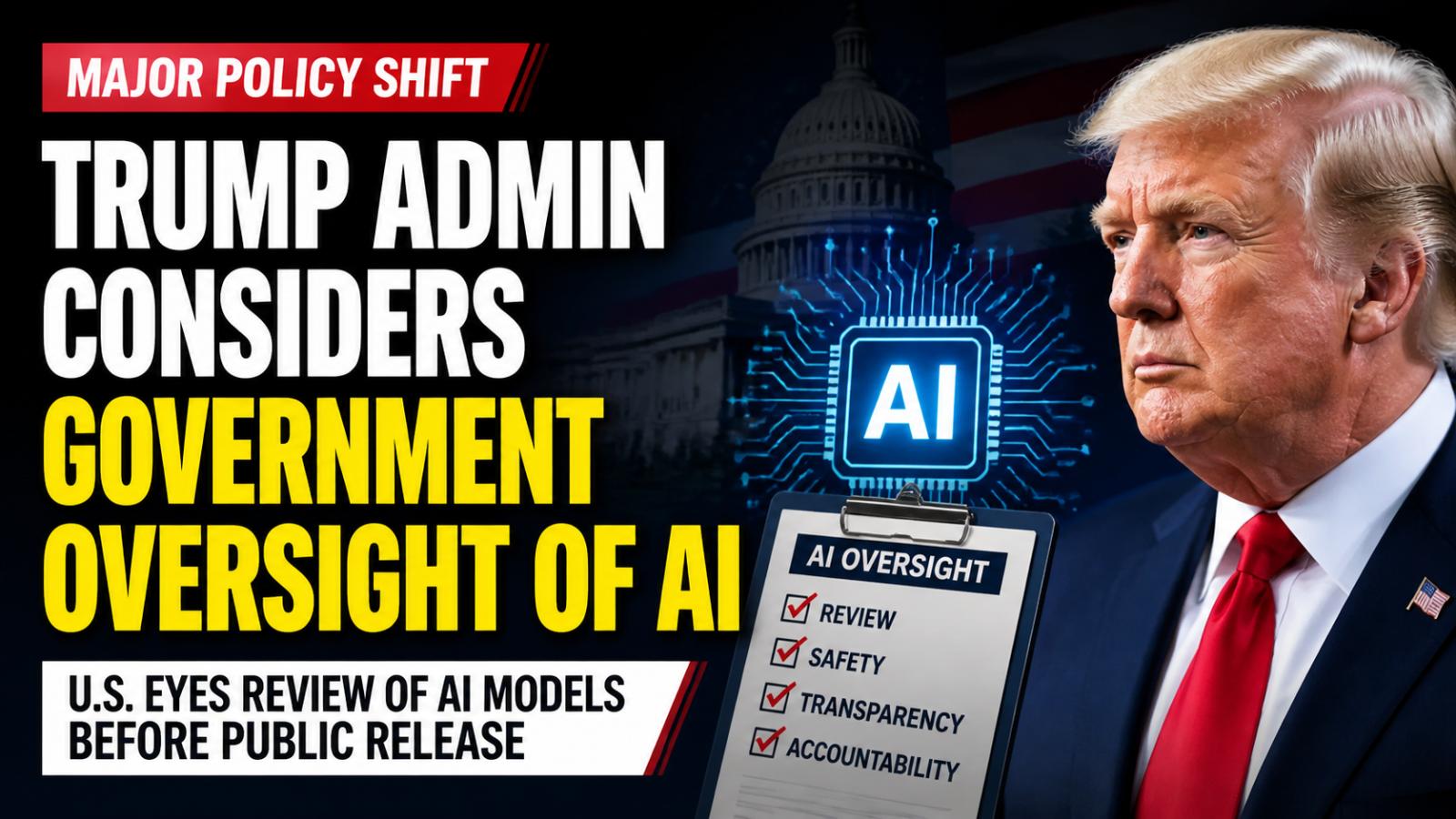
The Trump administration is reversing its previous stance on artificial intelligence oversight, now planning to introduce government review procedures for AI models before they are released to the public. According to reports, the White House is considering an executive order that would establish a working group consisting of both tech executives and government officials to explore potential review procedures for new AI models. This marks a s
Trump administration to implement AI oversight, reversing earlier stance
The Trump administration is reversing its previous stance on artificial intelligence oversight, now planning to introduce government review procedures for AI models before they are released to the public. According to reports, the White House is considering an executive order that would establish a working group consisting of both tech executives and government officials to explore potential review procedures for new AI models. This marks a s
What happened in the US Marines data breach? Hackers claim to leak thousands of records
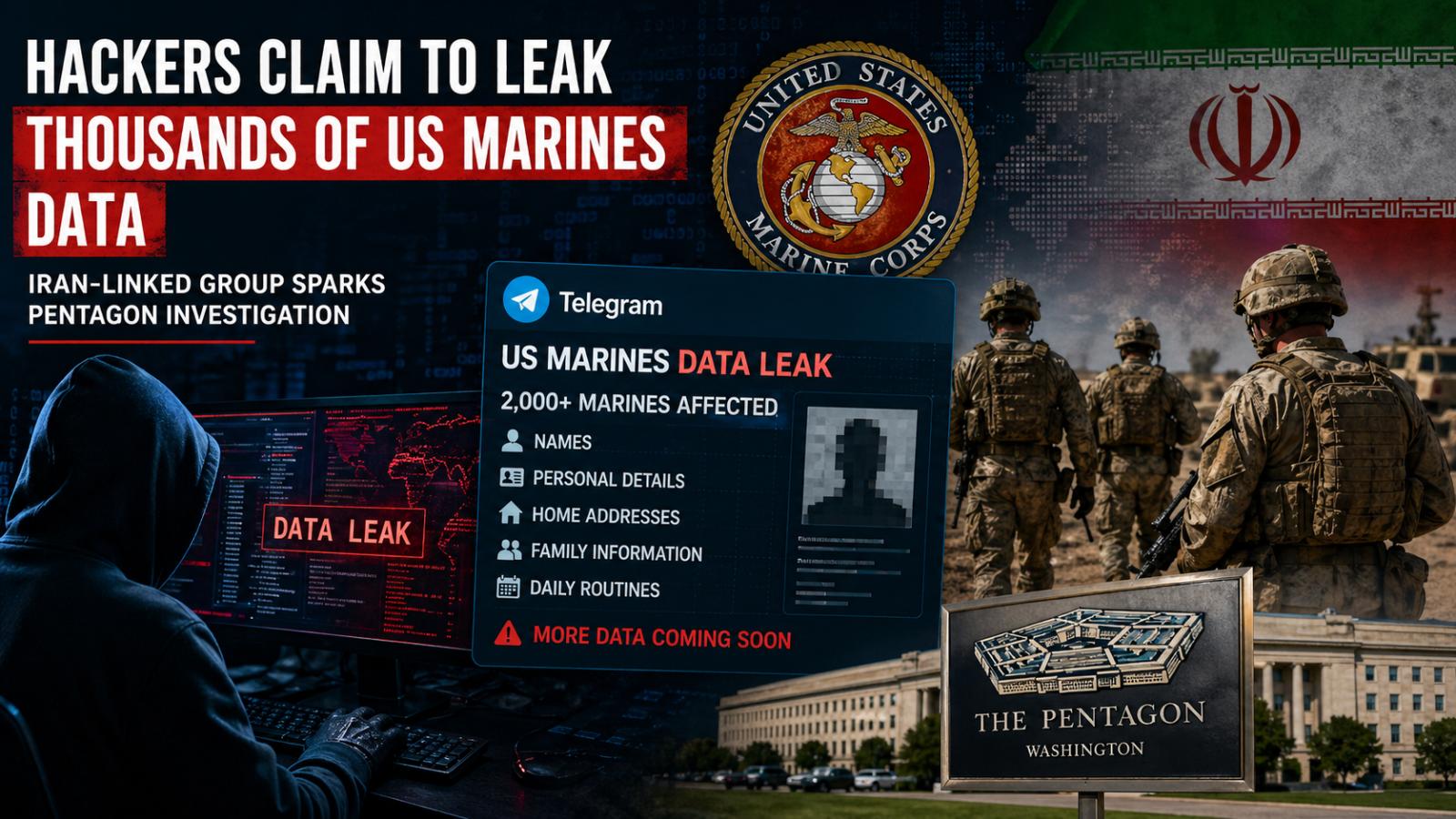
Hackers claim to leak thousands of records A hacker group reportedly linked to Iran has claimed responsibility for leaking sensitive personal data of thousands of US Marines deployed in West Asia, triggering an investigation by the US Department of Defense. Reports indicate that the breach involved the release of names and personal details belonging to more than 2,000 Marines, raising serious concerns about military cybersecurity and operational safety. According to The Wall Street Journal, the leaked dataset included records of over 2,000 personnel, while another report suggested the number could be as high as 2,379. The group claiming responsibility has been identified as Handala, also known as Hanzala, which has previously been associated with cyber activities targeting Western interests. Details of leaked information and surveillance claims The hackers reportedly published the data on a channel on Telegram, presenting it as proof of their surveillance capabilities. The exposed information allegedly includes names and potentially other identifying details of US Marines stationed in the region. Reports also indicate that US troops received warning messages via WhatsApp, claiming they were being monitored and could be targeted. The group further asserted that it possesses additional sensitive data, including home addresses, family details, and daily routines of American personnel. It warned that more information could be released in the future, escalating concerns about the safety of military members and their families. Rising geopolitical tensions amplify cybersecurity risks The reported breach comes amid heightened tensions between the United States and Iran. The incident underscores growing cybersecurity threats tied to geopolitical rivalries, particularly in regions where US forces are actively deployed. Analysts say such cyber operations can serve both as intelligence-gathering efforts and psychological pressure tactics. Trump comments add to diplomatic strain Amid these developments, Donald Trump commented on relations with Iran, stating that the country had reached out to the United States regarding reopening the Strait of Hormuz. In posts on his social media platform, Trump described Iran as being in a “state of collapse” and criticized its handling of negotiations over a non-nuclear agreement. The convergence of cyber threats and diplomatic friction highlights the evolving nature of modern conflict, where digital attacks increasingly accompany traditional geopolitical disputes.
What happened in the US Marines data breach? Hackers claim to leak thousands of records
Hackers claim to leak thousands of records A hacker group reportedly linked to Iran has claimed responsibility for leaking sensitive personal data of thousands of US Marines deployed in West Asia, triggering an investigation by the US Department of Defense. Reports indicate that the breach involved the release of names and personal details belonging to more than 2,000 Marines, raising serious concerns about military cybersecurity and operational safety. According to The Wall Street Journal, the leaked dataset included records of over 2,000 personnel, while another report suggested the number could be as high as 2,379. The group claiming responsibility has been identified as Handala, also known as Hanzala, which has previously been associated with cyber activities targeting Western interests. Details of leaked information and surveillance claims The hackers reportedly published the data on a channel on Telegram, presenting it as proof of their surveillance capabilities. The exposed information allegedly includes names and potentially other identifying details of US Marines stationed in the region. Reports also indicate that US troops received warning messages via WhatsApp, claiming they were being monitored and could be targeted. The group further asserted that it possesses additional sensitive data, including home addresses, family details, and daily routines of American personnel. It warned that more information could be released in the future, escalating concerns about the safety of military members and their families. Rising geopolitical tensions amplify cybersecurity risks The reported breach comes amid heightened tensions between the United States and Iran. The incident underscores growing cybersecurity threats tied to geopolitical rivalries, particularly in regions where US forces are actively deployed. Analysts say such cyber operations can serve both as intelligence-gathering efforts and psychological pressure tactics. Trump comments add to diplomatic strain Amid these developments, Donald Trump commented on relations with Iran, stating that the country had reached out to the United States regarding reopening the Strait of Hormuz. In posts on his social media platform, Trump described Iran as being in a “state of collapse” and criticized its handling of negotiations over a non-nuclear agreement. The convergence of cyber threats and diplomatic friction highlights the evolving nature of modern conflict, where digital attacks increasingly accompany traditional geopolitical disputes.
Chinese hacker extradited from Italy to face U.S. charges in COVID-19 cyber case
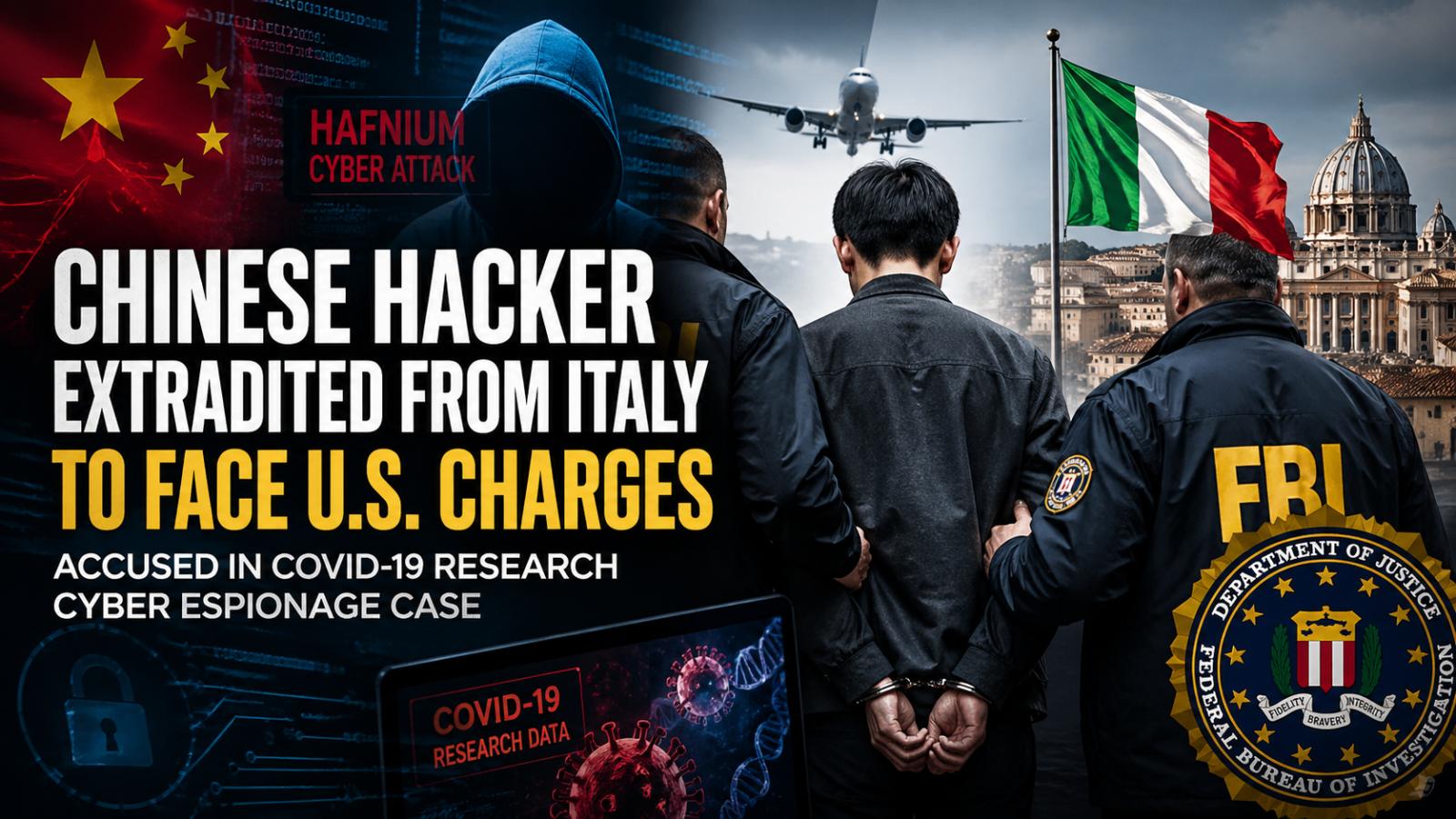
A Chinese national accused of hacking U.S. COVID-19 research systems was extradited from Italy on Friday, April 25, 2026, to face federal charges. The FBI links the case to China’s intelligence services and the global HAFNIUM cyber campaign. Chinese hacker extradited from Italy to face U.S. charges in COVID-19 cyber case as federal authorities confirmed that a previously scrutinized trip to Italy in early 2026 helped facilitate the arrest of a Chinese national ac
Chinese hacker extradited from Italy to face U.S. charges in COVID-19 cyber case
A Chinese national accused of hacking U.S. COVID-19 research systems was extradited from Italy on Friday, April 25, 2026, to face federal charges. The FBI links the case to China’s intelligence services and the global HAFNIUM cyber campaign. Chinese hacker extradited from Italy to face U.S. charges in COVID-19 cyber case as federal authorities confirmed that a previously scrutinized trip to Italy in early 2026 helped facilitate the arrest of a Chinese national ac
One Arrested for Harassing Akshay Kumar’s Daughter in Online Game
Hero’s Daughter Harassed in Online Game; One Arrested A troubling online incident involving Bollywood actor Akshay Kumar's teenage daughter has led to the arrest of one individual. The situation came to light when Akshay Kumar shared that his daughter had received inappropriate messages while playing an online game. What began as a routine interaction with another player quickly escalated when the stranger began asking personal qu
One Arrested for Harassing Akshay Kumar’s Daughter in Online Game
Hero’s Daughter Harassed in Online Game; One Arrested A troubling online incident involving Bollywood actor Akshay Kumar's teenage daughter has led to the arrest of one individual. The situation came to light when Akshay Kumar shared that his daughter had received inappropriate messages while playing an online game. What began as a routine interaction with another player quickly escalated when the stranger began asking personal qu
Nirmala Sitharaman Warns Banks On AI Threat From Anthropic Claude Mythos
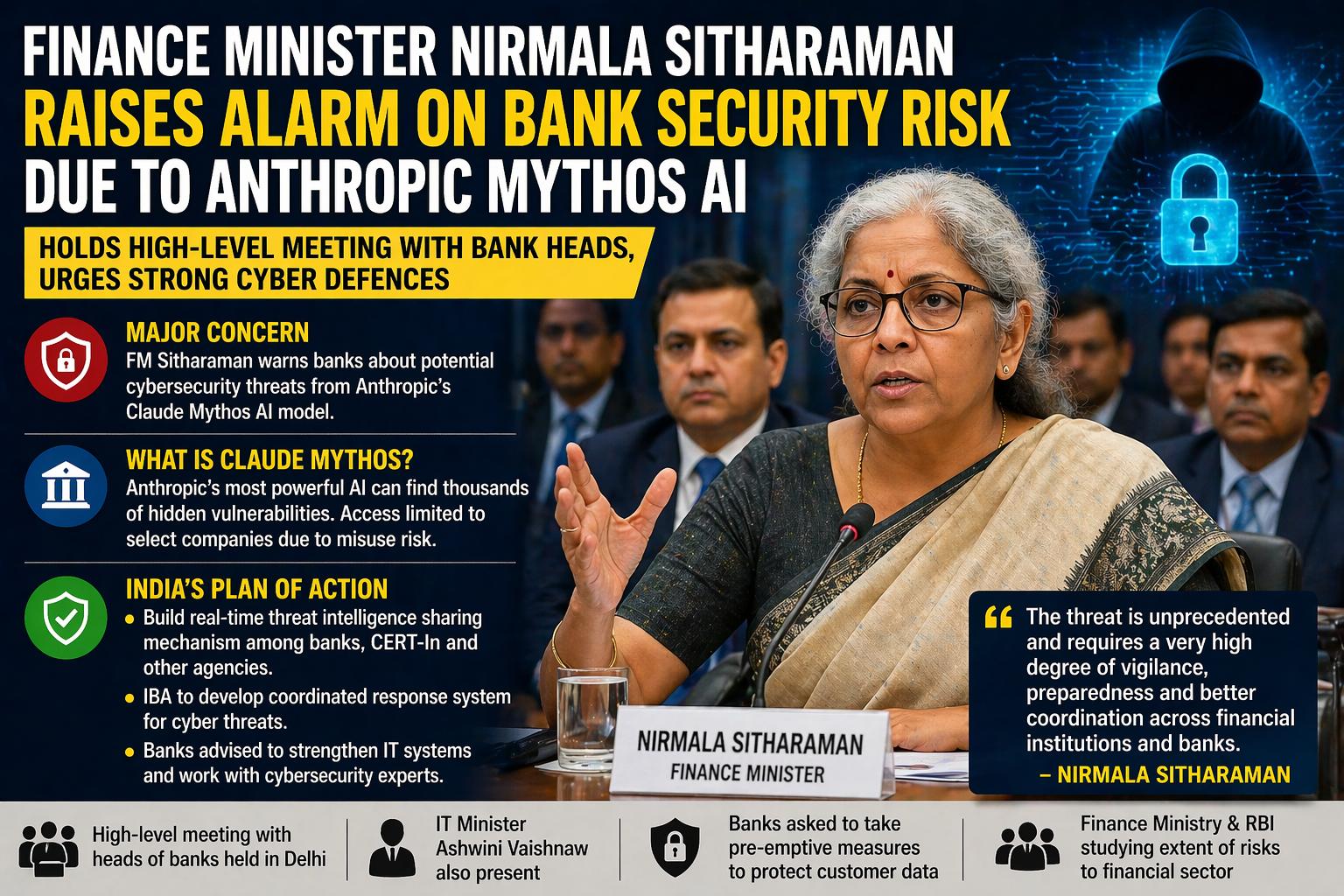
Union Finance Minister Nirmala Sitharaman on Thursday, April 24, 2026, raised serious concerns over emerging cybersecurity risks posed by advanced artificial intelligence systems, particularly Claude Mythos developed by
Nirmala Sitharaman Warns Banks On AI Threat From Anthropic Claude Mythos
Union Finance Minister Nirmala Sitharaman on Thursday, April 24, 2026, raised serious concerns over emerging cybersecurity risks posed by advanced artificial intelligence systems, particularly Claude Mythos developed by
Instant Payments, Rising Risks: Digital Fraud Surges in India
India’s rapid digital transformation has made financial transactions faster and more convenient, but it has also led to a sharp rise in online fraud cases. Over the past decade, digital payments have grown exponentially, with platforms like Unified Payments Interface becoming a part of everyday life. However, this growth has been accompanied by a surge in fra
Instant Payments, Rising Risks: Digital Fraud Surges in India
India’s rapid digital transformation has made financial transactions faster and more convenient, but it has also led to a sharp rise in online fraud cases. Over the past decade, digital payments have grown exponentially, with platforms like Unified Payments Interface becoming a part of everyday life. However, this growth has been accompanied by a surge in fra
India’s nuclear posture: balancing deterrence with global stability
India’s nuclear strategy has consistently evolved, reflecting the country’s changing security landscape and its response to emerging global challenges. With a doctrine centered on credible minimum deterrence, India ensures that its nuclear capabilities are sufficient to deter adversaries without striving for nuclear superiority. This strategic posture maintains a delicate balance, ensuring national security while preventing the escalation of conflicts into nuclear war.
India’s nuclear posture: balancing deterrence with global stability
India’s nuclear strategy has consistently evolved, reflecting the country’s changing security landscape and its response to emerging global challenges. With a doctrine centered on credible minimum deterrence, India ensures that its nuclear capabilities are sufficient to deter adversaries without striving for nuclear superiority. This strategic posture maintains a delicate balance, ensuring national security while preventing the escalation of conflicts into nuclear war.
Rockstar Games hit by new hack but says no impact on players
Rockstar Games has confirmed a new cybersecurity incident after hackers claimed to have accessed company data, marking the second breach involving the developer in recent years. The breach was reported on Saturday, though the company emphasized that the impact appears minimal. In a statement, Rockstar said a “limited amount of non-material company information” was accessed through a third-party cloud service provider. The company added that the incident has had no effect on its operations or players, seeking to reassure its global user base. The group claiming responsibility, known as ShinyHunters, alleged it had gained access to Rockstar’s systems and threatened to release stolen data unless a ransom was paid. The group is known for targeting major corporations and exploiting vulnerabilities in cloud-based infrastructure. Cybersecurity experts generally advise against paying ransom demands, noting that such payments often encourage further attacks without guaranteeing data recovery or deletion. ShinyHunters has previously been linked to several high-profile breaches involving large companies. This latest incident follows a major breach in 2023, when sensitive material related to the highly anticipated Grand Theft Auto VI was leaked online. That attack, carried out by a teenage hacker associated with a separate group, exposed early gameplay footage and internal data, forcing Rockstar to accelerate its official announcements. Despite the repeated targeting, Rockstar has indicated that its current security posture has limited the damage in the latest incident. The company has not disclosed additional technical details but continues to monitor the situation as cybersecurity threats remain a persistent challenge for the gaming industry.
Rockstar Games hit by new hack but says no impact on players
Rockstar Games has confirmed a new cybersecurity incident after hackers claimed to have accessed company data, marking the second breach involving the developer in recent years. The breach was reported on Saturday, though the company emphasized that the impact appears minimal. In a statement, Rockstar said a “limited amount of non-material company information” was accessed through a third-party cloud service provider. The company added that the incident has had no effect on its operations or players, seeking to reassure its global user base. The group claiming responsibility, known as ShinyHunters, alleged it had gained access to Rockstar’s systems and threatened to release stolen data unless a ransom was paid. The group is known for targeting major corporations and exploiting vulnerabilities in cloud-based infrastructure. Cybersecurity experts generally advise against paying ransom demands, noting that such payments often encourage further attacks without guaranteeing data recovery or deletion. ShinyHunters has previously been linked to several high-profile breaches involving large companies. This latest incident follows a major breach in 2023, when sensitive material related to the highly anticipated Grand Theft Auto VI was leaked online. That attack, carried out by a teenage hacker associated with a separate group, exposed early gameplay footage and internal data, forcing Rockstar to accelerate its official announcements. Despite the repeated targeting, Rockstar has indicated that its current security posture has limited the damage in the latest incident. The company has not disclosed additional technical details but continues to monitor the situation as cybersecurity threats remain a persistent challenge for the gaming industry.
Iran Threatens to Strike Google, Microsoft, Nvidia Sites and Banks Amid Escalating Economic War
In the latest escalation of the regional conflict, Iran has issued a
Iran Threatens to Strike Google, Microsoft, Nvidia Sites and Banks Amid Escalating Economic War
In the latest escalation of the regional conflict, Iran has issued a
Modi’s Israel visit to deepen defence and innovation ties, says envoy
Israel’s Ambassador to India, Reuven Azar, on Monday expressed enthusiasm ahead of Prime Minister Narendra Modi’s upcoming visit, describing it as a significant step forward in strengthening India-Israel relations. The visit, scheduled for February 25, is expected to accelerate cooperation across defence, technology, and economic sectors, reflecting the growing depth of the strategic partnership between the two nations. In a video message shared on social media, Azar said Israel was l
Modi’s Israel visit to deepen defence and innovation ties, says envoy
Israel’s Ambassador to India, Reuven Azar, on Monday expressed enthusiasm ahead of Prime Minister Narendra Modi’s upcoming visit, describing it as a significant step forward in strengthening India-Israel relations. The visit, scheduled for February 25, is expected to accelerate cooperation across defence, technology, and economic sectors, reflecting the growing depth of the strategic partnership between the two nations. In a video message shared on social media, Azar said Israel was l
FBI warns of sharp rise in ATM jackpotting attacks across US
The Federal Bureau of Investigation has issued a nationwide alert to banks and financial institutions, warning of a significant rise in ATM jackpotting attacks, a form of cyber-enabled theft that forces machines to dispense cash without legitimate transactions. Authorities say the trend is accelerating, with financial losses mounting as criminal groups refine their techniques and expand operations across the United States. According to federal officials, nearly 1,900 ATM jackpotting incidents have been reported nationwide since 2020. More than 700 of those cases occurred in 2025 alone, resulting in losses exceeding $20 million. The sharp increase has prompted urgent calls for banks to strengthen ATM security controls, monitor suspicious activity more closely, and share threat intelligence with law enforcement. At the center of the surge is malware from the Ploutus family, a tool specifically designed to hijack ATM systems. Rather than targeting individual customer accounts, the malware attacks the machine’s internal software layer. It exploits the Extensions for Financial Services, or XFS, which normally manages how ATMs physically dispense cash. By injecting unauthorized commands into this layer, attackers can override standard authorization checks and trigger withdrawals without bank approval, card use, or customer credentials. Security analysts warn that once installed, the malware can give criminals direct control of the machine. Because many ATMs operate on widely used operating systems, the attack can often be adapted across different manufacturers with minimal modification. In many cases, cash-out operations can be completed within minutes, allowing perpetrators to leave before alerts are triggered or the machine runs empty. Investigators emphasize that physical access remains the most common entry point for these attacks. Criminals frequently use generic keys to open ATM cabinets and then deploy malware using one of two primary methods. In some incidents, the machine’s hard drive is removed, infected on a separate computer, and reinstalled. In others, the original drive is replaced entirely with a compromised device preloaded with malicious software. Because the malware operates independently of standard banking communications, it can dispense cash without interacting with customer accounts or triggering traditional fraud detection systems. Officials have outlined several warning signs that may indicate a compromised ATM, including unexpected door alerts outside maintenance windows, sudden low-cash notifications, unauthorized devices connected to the machine, missing or tampered hard drives, and machines abruptly marked out of service. Financial institutions are being urged to review physical security protocols, enhance monitoring of service patterns, and report suspicious activity promptly as part of a broader effort to contain the growing ATM cyberattack threat.
FBI warns of sharp rise in ATM jackpotting attacks across US
The Federal Bureau of Investigation has issued a nationwide alert to banks and financial institutions, warning of a significant rise in ATM jackpotting attacks, a form of cyber-enabled theft that forces machines to dispense cash without legitimate transactions. Authorities say the trend is accelerating, with financial losses mounting as criminal groups refine their techniques and expand operations across the United States. According to federal officials, nearly 1,900 ATM jackpotting incidents have been reported nationwide since 2020. More than 700 of those cases occurred in 2025 alone, resulting in losses exceeding $20 million. The sharp increase has prompted urgent calls for banks to strengthen ATM security controls, monitor suspicious activity more closely, and share threat intelligence with law enforcement. At the center of the surge is malware from the Ploutus family, a tool specifically designed to hijack ATM systems. Rather than targeting individual customer accounts, the malware attacks the machine’s internal software layer. It exploits the Extensions for Financial Services, or XFS, which normally manages how ATMs physically dispense cash. By injecting unauthorized commands into this layer, attackers can override standard authorization checks and trigger withdrawals without bank approval, card use, or customer credentials. Security analysts warn that once installed, the malware can give criminals direct control of the machine. Because many ATMs operate on widely used operating systems, the attack can often be adapted across different manufacturers with minimal modification. In many cases, cash-out operations can be completed within minutes, allowing perpetrators to leave before alerts are triggered or the machine runs empty. Investigators emphasize that physical access remains the most common entry point for these attacks. Criminals frequently use generic keys to open ATM cabinets and then deploy malware using one of two primary methods. In some incidents, the machine’s hard drive is removed, infected on a separate computer, and reinstalled. In others, the original drive is replaced entirely with a compromised device preloaded with malicious software. Because the malware operates independently of standard banking communications, it can dispense cash without interacting with customer accounts or triggering traditional fraud detection systems. Officials have outlined several warning signs that may indicate a compromised ATM, including unexpected door alerts outside maintenance windows, sudden low-cash notifications, unauthorized devices connected to the machine, missing or tampered hard drives, and machines abruptly marked out of service. Financial institutions are being urged to review physical security protocols, enhance monitoring of service patterns, and report suspicious activity promptly as part of a broader effort to contain the growing ATM cyberattack threat.
Poland bans Chinese-made vehicles from military facilities over data risks
Poland has formally prohibited Chinese-made cars and other technologically advanced vehicles from entering the country’s military facilities, citing concerns over potential data security risks. The decision, announced by the Chief of the General Staff of the Polish Armed Forces, is intended to reduce the possibility of uncontrolled acquisition and use of sensitive information by modern automotive systems. According to the Polish military, the move follows a detailed risk assessmen
Poland bans Chinese-made vehicles from military facilities over data risks
Poland has formally prohibited Chinese-made cars and other technologically advanced vehicles from entering the country’s military facilities, citing concerns over potential data security risks. The decision, announced by the Chief of the General Staff of the Polish Armed Forces, is intended to reduce the possibility of uncontrolled acquisition and use of sensitive information by modern automotive systems. According to the Polish military, the move follows a detailed risk assessmen
Russia blocks WhatsApp nationwide, launches state-backed MAX messenger
Russia has fully blocked access to M
Russia blocks WhatsApp nationwide, launches state-backed MAX messenger
Russia has fully blocked access to M
CISA investigates internal ChatGPT data exposure involving sensitive DHS documents
The US Cybersecurity and Infrastructure Security Agency has launched an internal review following the upload of sensitive contracting documents to a public version of ChatGPT by its acting director, according to officials familiar with the matter. The incident, which occurred last summer, triggered multiple automated security alerts within the Department of Homeland Security and has renewed scrutiny around the use of artificial intelligence tools inside federal agencies. The documen
CISA investigates internal ChatGPT data exposure involving sensitive DHS documents
The US Cybersecurity and Infrastructure Security Agency has launched an internal review following the upload of sensitive contracting documents to a public version of ChatGPT by its acting director, according to officials familiar with the matter. The incident, which occurred last summer, triggered multiple automated security alerts within the Department of Homeland Security and has renewed scrutiny around the use of artificial intelligence tools inside federal agencies. The documen
Iran blocks internet nationwide as military jammers disrupt Starlink satellite access
Iran has once again imposed sweeping restrictions on internet access, escalating its long-standing campaign of digital control by reportedly disrupting even satellite-based connectivity such as Starlink. The latest shutdown marks a significant development, as Starlink has long been considered resistant to conventional censorship and network blocking methods used by state authorities. Digital rights researchers monitoring the situation say the government has deployed military-grade G
Iran blocks internet nationwide as military jammers disrupt Starlink satellite access
Iran has once again imposed sweeping restrictions on internet access, escalating its long-standing campaign of digital control by reportedly disrupting even satellite-based connectivity such as Starlink. The latest shutdown marks a significant development, as Starlink has long been considered resistant to conventional censorship and network blocking methods used by state authorities. Digital rights researchers monitoring the situation say the government has deployed military-grade G
China-linked cyber operation breached US House staff email systems
Chinese intelligence services have penetrated email systems used by staff members working for key committees in the United States House of Representatives, according to officials familiar with the matter, marking one of the most significant congressional cyber intrusions disclosed in recent years. The operation, known internally as Salt Typhoon, is described as part of a long-running cyber-espionage campaign attributed to China’s Ministry of State Security. Sources with knowledge of the investigation said the breach affected email accounts used by congressional staff supporting the House China Committee, as well as aides associated with the Foreign Affairs Committee, the Intelligence Committee, and the Armed Services Committee. The unauthorized access was discovered in December, prompting federal authorities to begin a broader review of congressional digital security practices and potential exposure of sensitive communications. Officials emphasized that the compromised accounts belonged to staffers rather than elected lawmakers, and it remains unclear whether the personal email accounts of members of Congress were accessed during the intrusion. Nonetheless, the targeting of committees responsible for national security, foreign policy, and intelligence oversight has raised concerns about the scale and intent of the operation. Investigators are continuing to assess what data may have been viewed or extracted and whether the intrusion enabled further access to internal government systems. Salt Typhoon is believed to be part of a sustained cyber campaign that has targeted US communications infrastructure for several years. According to individuals familiar with the operation, the tools and methods linked to the campaign have allowed Chinese intelligence to exploit vulnerabilities in telecommunications networks, providing access to unencrypted phone calls, text messages, and voicemail traffic across the United States. In certain circumstances, the same infrastructure has reportedly been used to gain entry into email systems. Security officials have also indicated that communications involving senior US government figures may have been intercepted as part of this broader effort, underscoring the persistent nature of the threat. While the full scope of the intercepted material has not been publicly detailed, authorities view the campaign as a strategic intelligence-gathering effort rather than a short-term or isolated attack. The incident highlights ongoing challenges facing US institutions as foreign intelligence agencies increasingly rely on cyber tools to collect information. Lawmakers and security experts have repeatedly warned that congressional offices, which often operate with limited technical resources compared with executive branch agencies, can present attractive targets for sophisticated adversaries seeking insight into policy deliberations and legislative priorities. Federal agencies responsible for cybersecurity and counterintelligence are coordinating with congressional officials to strengthen defenses, review access controls, and improve monitoring of digital systems. The breach is expected to intensify calls for additional investment in cybersecurity protections for legislative offices and for closer cooperation between Congress and national security agencies in responding to advanced cyber threats. As investigations continue, officials have stressed that the episode serves as a reminder of the evolving nature of cyber espionage and the need for constant vigilance in protecting sensitive government communications.

China-linked cyber operation breached US House staff email systems
Chinese intelligence services have penetrated email systems used by staff members working for key committees in the United States House of Representatives, according to officials familiar with the matter, marking one of the most significant congressional cyber intrusions disclosed in recent years. The operation, known internally as Salt Typhoon, is described as part of a long-running cyber-espionage campaign attributed to China’s Ministry of State Security. Sources with knowledge of the investigation said the breach affected email accounts used by congressional staff supporting the House China Committee, as well as aides associated with the Foreign Affairs Committee, the Intelligence Committee, and the Armed Services Committee. The unauthorized access was discovered in December, prompting federal authorities to begin a broader review of congressional digital security practices and potential exposure of sensitive communications. Officials emphasized that the compromised accounts belonged to staffers rather than elected lawmakers, and it remains unclear whether the personal email accounts of members of Congress were accessed during the intrusion. Nonetheless, the targeting of committees responsible for national security, foreign policy, and intelligence oversight has raised concerns about the scale and intent of the operation. Investigators are continuing to assess what data may have been viewed or extracted and whether the intrusion enabled further access to internal government systems. Salt Typhoon is believed to be part of a sustained cyber campaign that has targeted US communications infrastructure for several years. According to individuals familiar with the operation, the tools and methods linked to the campaign have allowed Chinese intelligence to exploit vulnerabilities in telecommunications networks, providing access to unencrypted phone calls, text messages, and voicemail traffic across the United States. In certain circumstances, the same infrastructure has reportedly been used to gain entry into email systems. Security officials have also indicated that communications involving senior US government figures may have been intercepted as part of this broader effort, underscoring the persistent nature of the threat. While the full scope of the intercepted material has not been publicly detailed, authorities view the campaign as a strategic intelligence-gathering effort rather than a short-term or isolated attack. The incident highlights ongoing challenges facing US institutions as foreign intelligence agencies increasingly rely on cyber tools to collect information. Lawmakers and security experts have repeatedly warned that congressional offices, which often operate with limited technical resources compared with executive branch agencies, can present attractive targets for sophisticated adversaries seeking insight into policy deliberations and legislative priorities. Federal agencies responsible for cybersecurity and counterintelligence are coordinating with congressional officials to strengthen defenses, review access controls, and improve monitoring of digital systems. The breach is expected to intensify calls for additional investment in cybersecurity protections for legislative offices and for closer cooperation between Congress and national security agencies in responding to advanced cyber threats. As investigations continue, officials have stressed that the episode serves as a reminder of the evolving nature of cyber espionage and the need for constant vigilance in protecting sensitive government communications.


Apply now: I4C announces 2025 winter internship for students in cybercrime and AI fields
The Indian Cyber Crime Coordination Centre (I4C), an initiative under the Ministry of Home Affairs (MHA), has announced its Winter Internship Programme for 2025, aimed at students who wish to gain practical experience in cybersecurity, digital forensics, and cybercrime investigation. The programme offers aspiring professionals a platform to learn directly from experts engaged in safeguarding India’s digital infrastructure. Applications must be submitted by October 17, 2025. The in
Apply now: I4C announces 2025 winter internship for students in cybercrime and AI fields
The Indian Cyber Crime Coordination Centre (I4C), an initiative under the Ministry of Home Affairs (MHA), has announced its Winter Internship Programme for 2025, aimed at students who wish to gain practical experience in cybersecurity, digital forensics, and cybercrime investigation. The programme offers aspiring professionals a platform to learn directly from experts engaged in safeguarding India’s digital infrastructure. Applications must be submitted by October 17, 2025. The in
AICTE launches minor degree in defence technology for engineering students
The All India Council for Technical Education (AICTE) has introduced a model curriculum for a Minor Degree in Defence Technology, marking a significant move toward strengthening India’s defence education framework. The programme is designed for undergraduate engineering and technology students who wish to pursue careers in defence research, the armed forces, and defence manufacturing industries. This initiative opens new opportunities for young engineers to contribute to the nation’s securit
AICTE launches minor degree in defence technology for engineering students
The All India Council for Technical Education (AICTE) has introduced a model curriculum for a Minor Degree in Defence Technology, marking a significant move toward strengthening India’s defence education framework. The programme is designed for undergraduate engineering and technology students who wish to pursue careers in defence research, the armed forces, and defence manufacturing industries. This initiative opens new opportunities for young engineers to contribute to the nation’s securit
Judge dismisses Columbus cyberattack lawsuit citing Ohio political immunity laws
A judge in Franklin County has dismissed a class action lawsuit brought against the City of Columbus following a major 2024 cyberattack that exposed the private information of nearly half a million residents. The ruling determined that the city cannot be held liable for damages because it qualifies as a political subdivision under Ohio law, which grants it immunity from certain types of lawsuits. The lawsuit stemmed from a ransomware attack in which a hacking group known as Rhysida
Judge dismisses Columbus cyberattack lawsuit citing Ohio political immunity laws
A judge in Franklin County has dismissed a class action lawsuit brought against the City of Columbus following a major 2024 cyberattack that exposed the private information of nearly half a million residents. The ruling determined that the city cannot be held liable for damages because it qualifies as a political subdivision under Ohio law, which grants it immunity from certain types of lawsuits. The lawsuit stemmed from a ransomware attack in which a hacking group known as Rhysida