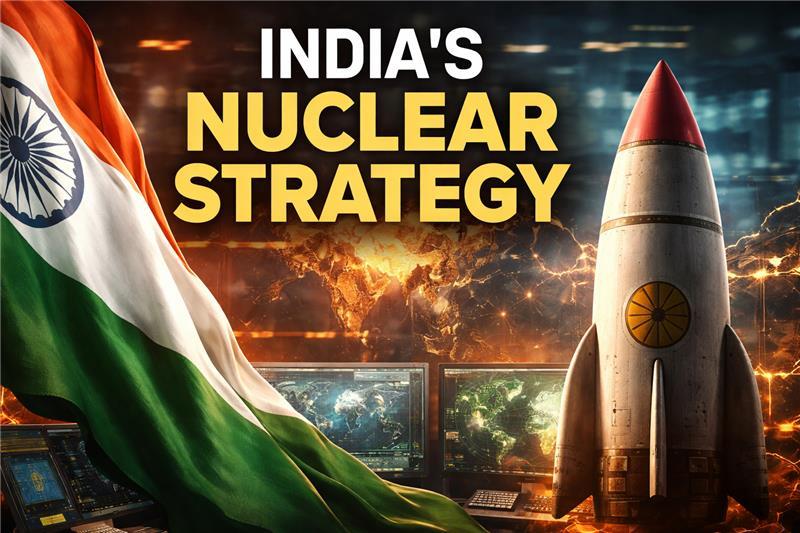
India’s nuclear strategy has consistently evolved, reflecting the country’s changing security landscape and its response to emerging global challenges. With a doctrine centered on credible minimum deterrence, India ensures that its nuclear capabilities are sufficient to deter adversaries without striving for nuclear superiority. This strategic posture maintains a delicate balance, ensuring national security while preventing the escalation of conflicts into nuclear war.
At the core of India’s nuclear framework is the Nuclear Command Authority (NCA), which provides strict oversight over the country’s nuclear arsenal. The NCA ensures that nuclear weapons are used only as a deterrent, under controlled and supervised conditions, maintaining a defensive rather than offensive stance.
India’s commitment to modernizing its nuclear deterrence has led to significant technological advancements. The country has invested heavily in hypersonic technologies, such as the Hypersonic Technology Demonstrator Vehicle (HSTDV), and cyber defense systems designed to protect its nuclear command infrastructure from evolving threats. Additionally, missile defense systems like Aakash, Prithvi, and Barak-8 play a vital role in safeguarding India’s nuclear assets from potential missile attacks.
India’s nuclear deterrence is also reinforced through strategic alliances and partnerships. The country’s involvement in the Quad (a security dialogue between India, the U.S., Japan, and Australia) strengthens its nuclear strategy, with collaborative efforts enhancing missile defense and intelligence sharing. Additionally, India’s defense relationships with Russia and Israel provide valuable technological advancements and support, particularly in missile defense systems.
India’s nuclear strategy is also deeply influenced by its regional security concerns. The ongoing nuclear arms race with Pakistan and the rising nuclear and missile capabilities of China have prompted India to continue modernizing its deterrence capabilities. India’s nuclear strategy ensures stability in the region by balancing tensions with these nuclear-armed neighbors while maintaining peace through deterrence.
Despite its military nuclear ambitions, India remains committed to nuclear disarmament and global non-proliferation efforts. Although not a signatory to the Non-Proliferation Treaty (NPT), India advocates for global disarmament and has consistently pushed for membership in the Nuclear Suppliers Group (NSG). This membership would allow India to integrate more fully into the global nuclear governance framework while maintaining its stance on responsible nuclear capabilities.
Looking to the future, India faces new and emerging threats that challenge its nuclear deterrence strategy. Advances in artificial intelligence (AI), the increasing importance of cybersecurity, and the evolving domain of space warfare are all areas where India is investing to ensure its nuclear assets remain secure. In the broader context of the global nuclear arms race, particularly with China and the U.S., India continues to adapt its strategy, seeking to maintain a credible deterrent without escalating tensions further.
India also faces the challenge of balancing its military nuclear capabilities with its growing ambitions in peaceful nuclear energy. As the country looks to expand its energy infrastructure, nuclear power plays a key role in meeting growing demands. Despite geopolitical challenges, India continues to aspire toward a nuclear-free world, promoting global disarmament while understanding the current realities of the nuclear landscape.
India’s nuclear journey has been one of resilience and strategic foresight. As the country navigates a rapidly changing security environment, its nuclear policy remains grounded in credible deterrence, the peaceful use of nuclear energy, and a commitment to global stability. With ongoing advancements in technology and evolving regional dynamics, India’s nuclear strategy is poised to adapt, ensuring that it remains both a responsible nuclear power and a leader in advocating for a safer world.