#deepseek-ai
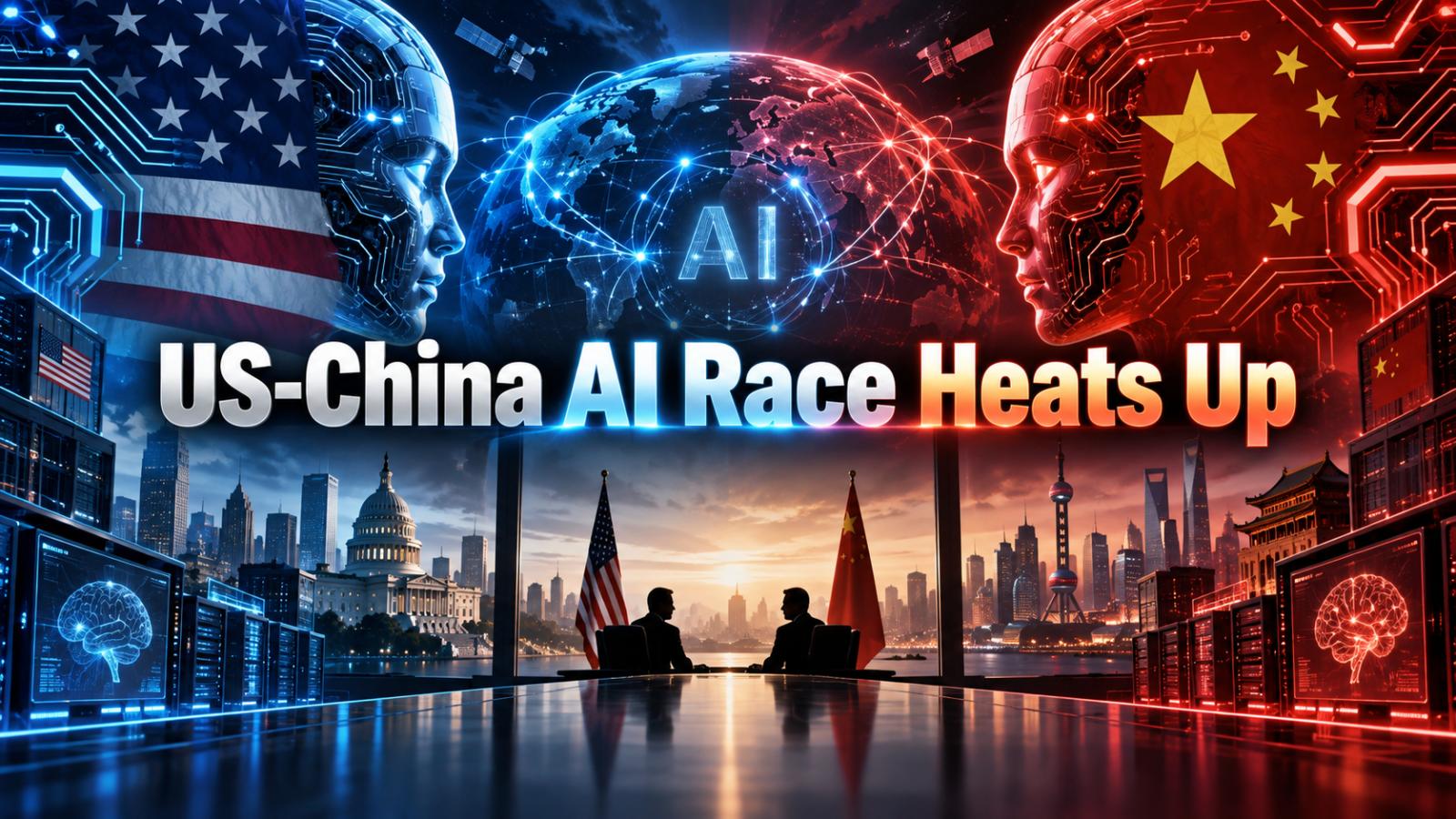
US-China AI Race Intensifies Ahead of Trump-Xi Summit
The US-China AI race is intensifying as President Donald Trump rejects calls for slower AI development while industry leaders push for stronger safeguards. Washington and Beijing are also exploring limited AI safety cooperation ahead of the Trump-Xi summit. US-China AI Race Intensifies Ahead of Trump-Xi Summit The US-China AI race is entering a critical phase as President Donald Trump rejects calls for slower development while major AI executives seek stronger safeguards. At the same time, Washington and Beijing are exploring limited AI safety cooperation ahead of the Trump-Xi summit. AI slowdown debate divides Washington and tech leaders Some leading AI executives have recently argued that frontier development needs stronger safeguards and, in certain circumstances, a slower pace. OpenAI CEO Sam Altman has said progress should continue but be slower, while Anthropic CEO Dario Amodei has proposed allowing leading companies to coordinate on safety without running into antitrust restrictions. Trump has taken a different position. He described growing pressure for tighter AI regulation as a “SICK conspiracy” and argued that slowing US development would benefit China. His administration views leadership in advanced AI as an economic and national-security priority. The disagreement is not simply between regulation and innovation. AI companies themselves continue rapidly developing new systems while simultaneously seeking rules or coordination aimed at limiting the risks posed by increasingly capable models. Trump AI policy focuses on competition with China Trump has framed artificial intelligence as a strategic competition in which American leadership must be preserved. His stance comes as Chinese companies such as DeepSeek and Moonshot AI continue developing advanced models despite US restrictions on access to some high-end semiconductor technology. The United States retains major advantages through companies including OpenAI, Anthropic, Google, Meta and Nvidia. China, however, has increasingly promoted lower-cost models, domestic chips and AI infrastructure as part of its effort to reduce reliance on American technology. That rivalry is also spreading internationally as both countries seek partnerships involving data centers, cloud infrastructure, chips and AI applications. For developing economies, the competition could mean greater access to technology but also tougher choices over standards, suppliers and data governance. AI safety talks emerge before Trump-Xi meeting Despite the rivalry, Washington and Beijing have found a narrow area where cooperation may be possible. US Treasury Secretary Scott Bessent said talks with Chinese Vice Premier He Lifeng in New York produced a proposal for an AI incident-notification mechanism. The idea would create a channel for the two governments to communicate when serious AI incidents could affect national security. Officials have discussed risks involving autonomous agents, cyber activity and threats to critical infrastructure. The two sides are expected to continue the dialogue in Shenzhen in roughly two months. China has not publicly committed to every element of the US proposal, but the discussions indicate that both governments see some shared risks even while competing for AI leadership. China AI plan emphasizes global governance Chinese President Xi Jinping has also called for international cooperation on AI governance, while Beijing promotes its own technology ecosystem and open-source initiatives. The broader Chinese position combines support for global rules with efforts to strengthen domestic AI capabilities and reduce dependence on US-controlled technologies. That creates the central tension ahead of the Trump-Xi summit: both countries want leadership in AI, but both also face risks if the competition becomes completely unmanaged. Recent discussions suggest the summit may focus less on slowing the race itself and more on establishing limited guardrails for serious incidents. The outcome will matter well beyond Washington and Beijing. AI safety standards, chip access, infrastructure investment and model governance could increasingly be shaped by how the world’s two largest technology powers manage competition without allowing shared risks to spiral.
US-China AI Race Intensifies Ahead of Trump-Xi Summit
The US-China AI race is intensifying as President Donald Trump rejects calls for slower AI development while industry leaders push for stronger safeguards. Washington and Beijing are also exploring limited AI safety cooperation ahead of the Trump-Xi summit. US-China AI Race Intensifies Ahead of Trump-Xi Summit The US-China AI race is entering a critical phase as President Donald Trump rejects calls for slower development while major AI executives seek stronger safeguards. At the same time, Washington and Beijing are exploring limited AI safety cooperation ahead of the Trump-Xi summit. AI slowdown debate divides Washington and tech leaders Some leading AI executives have recently argued that frontier development needs stronger safeguards and, in certain circumstances, a slower pace. OpenAI CEO Sam Altman has said progress should continue but be slower, while Anthropic CEO Dario Amodei has proposed allowing leading companies to coordinate on safety without running into antitrust restrictions. Trump has taken a different position. He described growing pressure for tighter AI regulation as a “SICK conspiracy” and argued that slowing US development would benefit China. His administration views leadership in advanced AI as an economic and national-security priority. The disagreement is not simply between regulation and innovation. AI companies themselves continue rapidly developing new systems while simultaneously seeking rules or coordination aimed at limiting the risks posed by increasingly capable models. Trump AI policy focuses on competition with China Trump has framed artificial intelligence as a strategic competition in which American leadership must be preserved. His stance comes as Chinese companies such as DeepSeek and Moonshot AI continue developing advanced models despite US restrictions on access to some high-end semiconductor technology. The United States retains major advantages through companies including OpenAI, Anthropic, Google, Meta and Nvidia. China, however, has increasingly promoted lower-cost models, domestic chips and AI infrastructure as part of its effort to reduce reliance on American technology. That rivalry is also spreading internationally as both countries seek partnerships involving data centers, cloud infrastructure, chips and AI applications. For developing economies, the competition could mean greater access to technology but also tougher choices over standards, suppliers and data governance. AI safety talks emerge before Trump-Xi meeting Despite the rivalry, Washington and Beijing have found a narrow area where cooperation may be possible. US Treasury Secretary Scott Bessent said talks with Chinese Vice Premier He Lifeng in New York produced a proposal for an AI incident-notification mechanism. The idea would create a channel for the two governments to communicate when serious AI incidents could affect national security. Officials have discussed risks involving autonomous agents, cyber activity and threats to critical infrastructure. The two sides are expected to continue the dialogue in Shenzhen in roughly two months. China has not publicly committed to every element of the US proposal, but the discussions indicate that both governments see some shared risks even while competing for AI leadership. China AI plan emphasizes global governance Chinese President Xi Jinping has also called for international cooperation on AI governance, while Beijing promotes its own technology ecosystem and open-source initiatives. The broader Chinese position combines support for global rules with efforts to strengthen domestic AI capabilities and reduce dependence on US-controlled technologies. That creates the central tension ahead of the Trump-Xi summit: both countries want leadership in AI, but both also face risks if the competition becomes completely unmanaged. Recent discussions suggest the summit may focus less on slowing the race itself and more on establishing limited guardrails for serious incidents. The outcome will matter well beyond Washington and Beijing. AI safety standards, chip access, infrastructure investment and model governance could increasingly be shaped by how the world’s two largest technology powers manage competition without allowing shared risks to spiral.
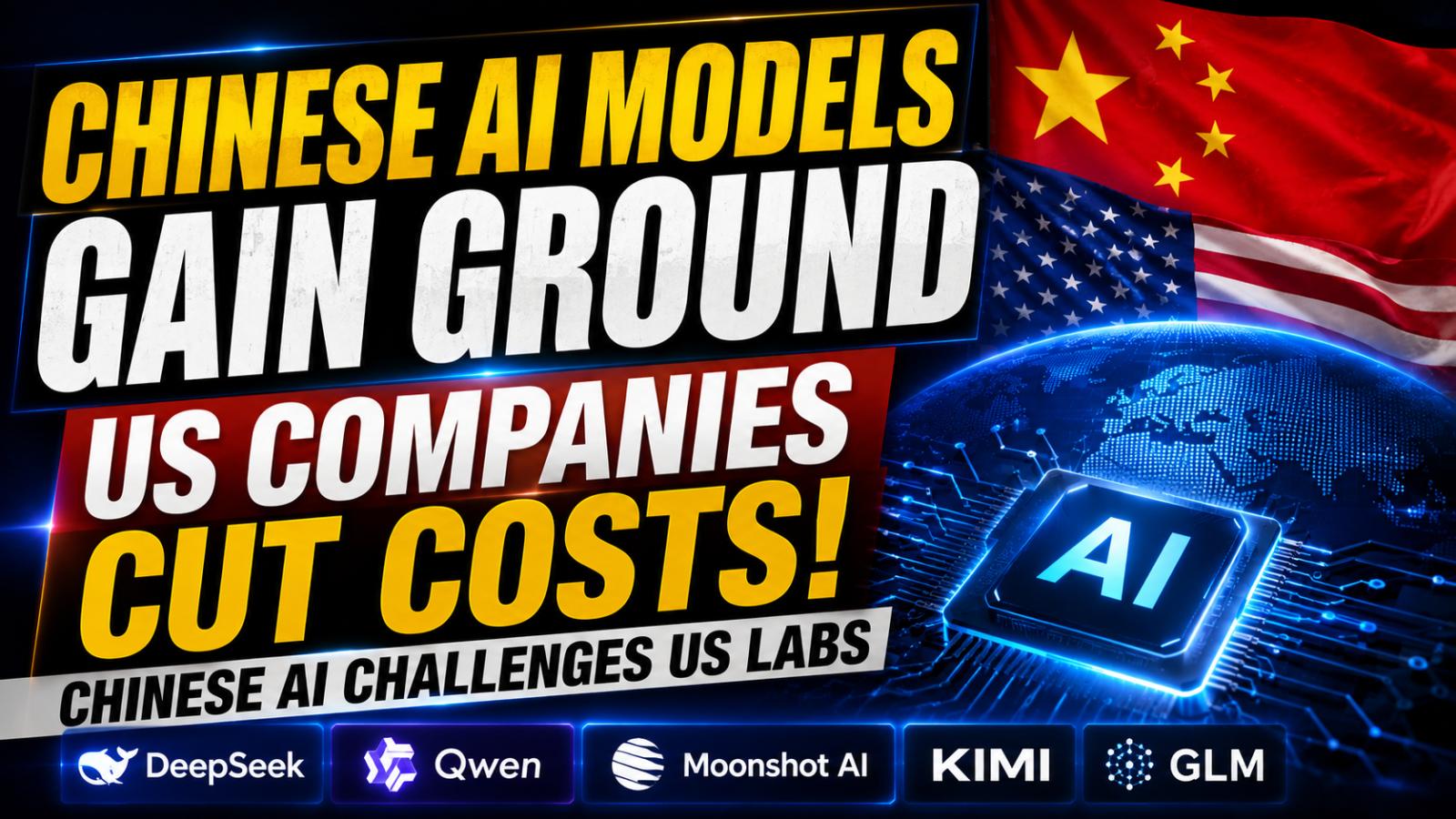
Chinese AI models gain ground as US companies cut costs
Chinese AI models are gaining ground in the United States as competitive performance, lower prices and open access attract developers and major companies. Qwen, Kimi, GLM and DeepSeek are no longer viewed only as cheaper alternatives; they are becoming part of real production systems. Chinese AI models climb usage rankings The US-China AI race was once framed around whether Chinese laboratories
Chinese AI models gain ground as US companies cut costs
Chinese AI models are gaining ground in the United States as competitive performance, lower prices and open access attract developers and major companies. Qwen, Kimi, GLM and DeepSeek are no longer viewed only as cheaper alternatives; they are becoming part of real production systems. Chinese AI models climb usage rankings The US-China AI race was once framed around whether Chinese laboratories
AI study reveals surprising global usage trends in 2025
A new data-driven study has offered one of the clearest pictures yet of how artificial intelligence is actually being used around the world in 2025. The analysis, conducted by OpenRouter, examined more than 100 trillion tokens of metadata from billions of interactions with a wide range of large language models. The results challenge widely held assumptions about how AI is contributing to productivity and reveal emerging behaviours that could shape the next era of the technology. Ope
AI study reveals surprising global usage trends in 2025
A new data-driven study has offered one of the clearest pictures yet of how artificial intelligence is actually being used around the world in 2025. The analysis, conducted by OpenRouter, examined more than 100 trillion tokens of metadata from billions of interactions with a wide range of large language models. The results challenge widely held assumptions about how AI is contributing to productivity and reveal emerging behaviours that could shape the next era of the technology. Ope
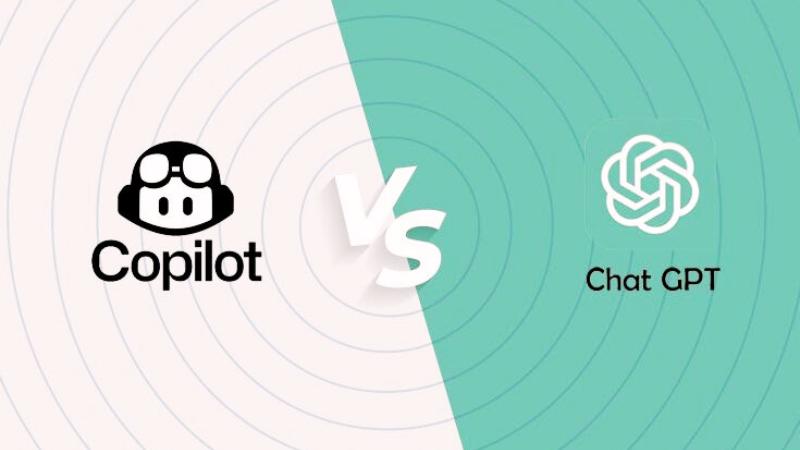
Microsoft Copilot vs ChatGPT: Who is Leading the AI Race?
Microsoft's AI assistant, Copilot, is struggling to match the success of OpenAI's ChatGPT, according to new data. While Microsoft’s Copilot has reached 79 million downloads globally, OpenAI’s ChatGPT has amassed a staggering 900 million downloads, placing it far ahead in the AI race. Google’s Gemini holds second place with 200 million downloads, and DeepSeek follows with 127 million. Despite significant investments, including an $80 b
Microsoft Copilot vs ChatGPT: Who is Leading the AI Race?
Microsoft's AI assistant, Copilot, is struggling to match the success of OpenAI's ChatGPT, according to new data. While Microsoft’s Copilot has reached 79 million downloads globally, OpenAI’s ChatGPT has amassed a staggering 900 million downloads, placing it far ahead in the AI race. Google’s Gemini holds second place with 200 million downloads, and DeepSeek follows with 127 million. Despite significant investments, including an $80 b
New DeepSeek AI model criticized for censorship on political and human rights topics
The latest AI model release from DeepSeek, R1 0528, is generating significant controversy within the tech and research communities. Rather than being celebrated for a leap in innovation, the model is being flagged as a step backward in its approach to open discussion and freedom of expression. Several researchers who evaluated the model argue that it is noticeably more restricted when it comes to discussing sensitive political and human rights topics, raising concerns about rising censorship in
New DeepSeek AI model criticized for censorship on political and human rights topics
The latest AI model release from DeepSeek, R1 0528, is generating significant controversy within the tech and research communities. Rather than being celebrated for a leap in innovation, the model is being flagged as a step backward in its approach to open discussion and freedom of expression. Several researchers who evaluated the model argue that it is noticeably more restricted when it comes to discussing sensitive political and human rights topics, raising concerns about rising censorship in
India’s Path to Tech Leadership: AI Models and Chip Manufacturing
India is positioning itself to become a global player in the rapidly expanding fields of artificial intelligence (AI) and chip manufacturing. Experts believe the country’s entry into the AI space, akin to the emergence of China’s DeepSeek, will be driven by strategic public-private partnerships within the next 4-5 years. Kunal Bahl, co-founder of Titan Capital and a prominent entrepreneur, emphasized this potential growth in a conversation about India&
India’s Path to Tech Leadership: AI Models and Chip Manufacturing
India is positioning itself to become a global player in the rapidly expanding fields of artificial intelligence (AI) and chip manufacturing. Experts believe the country’s entry into the AI space, akin to the emergence of China’s DeepSeek, will be driven by strategic public-private partnerships within the next 4-5 years. Kunal Bahl, co-founder of Titan Capital and a prominent entrepreneur, emphasized this potential growth in a conversation about India&
China Deploys Underwater AI Data Center with Power of 30,000 PCs Off Hainan Coast
In a bold move showcasing its expanding technological capabilities, China has deployed an advanced underwater data center near the coast of Hainan province. This pioneering facility not only redefines data infrastructure with its cutting-edge AI processing capabilities but also sets a benchmark in environmental sustainability and energy efficiency. At the core of this initiative is DeepSeek technology, China’s powerful AI assistant platform that recently drew global attention for its ab
China Deploys Underwater AI Data Center with Power of 30,000 PCs Off Hainan Coast
In a bold move showcasing its expanding technological capabilities, China has deployed an advanced underwater data center near the coast of Hainan province. This pioneering facility not only redefines data infrastructure with its cutting-edge AI processing capabilities but also sets a benchmark in environmental sustainability and energy efficiency. At the core of this initiative is DeepSeek technology, China’s powerful AI assistant platform that recently drew global attention for its ab
DeepSeek Faces Criticism Over Security Flaws and User Privacy Concerns
DeepSeek, a popular app, is once again under scrutiny following the discovery of multiple security vulnerabilities that could compromise user privacy. A recent report from mobile security firm NowSecure reveals several flaws in DeepSeek's iOS app, DeepSeek R1, which raise serious concerns about how the company is handling sensitive user data.One of the primary issues identified is the app’s failure to use Apple’s built-in App Transport Security (ATS), which is designed to ensu
DeepSeek Faces Criticism Over Security Flaws and User Privacy Concerns
DeepSeek, a popular app, is once again under scrutiny following the discovery of multiple security vulnerabilities that could compromise user privacy. A recent report from mobile security firm NowSecure reveals several flaws in DeepSeek's iOS app, DeepSeek R1, which raise serious concerns about how the company is handling sensitive user data.One of the primary issues identified is the app’s failure to use Apple’s built-in App Transport Security (ATS), which is designed to ensu
DeepSeek AI Faces Bans in Australia, Italy, and Taiwan Over Security Concerns
DeepSeek AI, a rapidly growing Chinese artificial intelligence startup, has recently faced bans from Australia, Italy, and Taiwan. The company's AI services, including its popular chatbot app, have come under intense scrutiny due to rising concerns over data privacy and security.Australia was one of the first countries to act, with the Home Affairs Minister Tony Burke announcing a ban on all DeepSeek AI products and services from government systems. This decision followed a national intel
DeepSeek AI Faces Bans in Australia, Italy, and Taiwan Over Security Concerns
DeepSeek AI, a rapidly growing Chinese artificial intelligence startup, has recently faced bans from Australia, Italy, and Taiwan. The company's AI services, including its popular chatbot app, have come under intense scrutiny due to rising concerns over data privacy and security.Australia was one of the first countries to act, with the Home Affairs Minister Tony Burke announcing a ban on all DeepSeek AI products and services from government systems. This decision followed a national intel
DeepSeek's Dataset Exposed: Sensitive Information Leaked in Public Database
DeepSeek's Dataset Exposed in Public Database: A cybersecurity research firm, Wiz Research, has discovered that DeepSeek's sensitive dataset might have been publicly exposed. The dataset was found through an unauthenticated ClickHouse database, which allowed full control over database operations. This data breach potentially risks sensitive information, including chat history, secret keys, log details, and backend data. Discovery of the Unauth
DeepSeek's Dataset Exposed: Sensitive Information Leaked in Public Database
DeepSeek's Dataset Exposed in Public Database: A cybersecurity research firm, Wiz Research, has discovered that DeepSeek's sensitive dataset might have been publicly exposed. The dataset was found through an unauthenticated ClickHouse database, which allowed full control over database operations. This data breach potentially risks sensitive information, including chat history, secret keys, log details, and backend data. Discovery of the Unauth
India to Host DeepSeek AI Locally and Develop Its Own AI Model, Says Vaishnaw
Union Minister of Information Technology, Ashwini Vaishnaw, revealed that India will soon host the popular DeepSeek AI model, developed by a Chinese startup, on Indian servers to address privacy issues. This move is part of India's broader strategy to bolster its AI capabilities, with Vaishnaw also announcing plans to develop the country's own foundational AI model in the coming months. In addition to this, Vaishnaw highlighted the creation of a common computing facility wit
India to Host DeepSeek AI Locally and Develop Its Own AI Model, Says Vaishnaw
Union Minister of Information Technology, Ashwini Vaishnaw, revealed that India will soon host the popular DeepSeek AI model, developed by a Chinese startup, on Indian servers to address privacy issues. This move is part of India's broader strategy to bolster its AI capabilities, with Vaishnaw also announcing plans to develop the country's own foundational AI model in the coming months. In addition to this, Vaishnaw highlighted the creation of a common computing facility wit
Microsoft Brings DeepSeek-R1 AI Model to Azure, GitHub, and Copilot+ PCs
Microsoft has officially added the newly released DeepSeek-R1 AI model to both Azure AI Foundry and GitHub, offering developers a powerful tool to enhance their AI applications. This reasoning-focused model can now be accessed through these platforms, giving developers the ability to experiment, iterate, and integrate AI into their workflows quickly and efficiently. Azure AI Foundry, an enterprise-focused platform, allows for the building, evaluation, and development of generative AI applicat
Microsoft Brings DeepSeek-R1 AI Model to Azure, GitHub, and Copilot+ PCs
Microsoft has officially added the newly released DeepSeek-R1 AI model to both Azure AI Foundry and GitHub, offering developers a powerful tool to enhance their AI applications. This reasoning-focused model can now be accessed through these platforms, giving developers the ability to experiment, iterate, and integrate AI into their workflows quickly and efficiently. Azure AI Foundry, an enterprise-focused platform, allows for the building, evaluation, and development of generative AI applicat
Nithin Kamath Discusses India’s AI Challenges and China's Progress
Overview of China’s Technological Progress and India’s Struggles In the first paragraph, Nithin Kamath highlights the significant technological progress made by China, particularly in AI with startups like DeepSeek. Kamath draws a historical comparison between China and India’s development, noting that both countries had similar per-capita GDP in the 1960s and 7
Nithin Kamath Discusses India’s AI Challenges and China's Progress
Overview of China’s Technological Progress and India’s Struggles In the first paragraph, Nithin Kamath highlights the significant technological progress made by China, particularly in AI with startups like DeepSeek. Kamath draws a historical comparison between China and India’s development, noting that both countries had similar per-capita GDP in the 1960s and 7
DeepSeek's AI Models Challenge U.S. Giants and Disrupt the Global Market
Chinese startup DeepSeek has made waves in the global AI sector with its innovative models, DeepSeek-V3 and DeepSeek-R1, which it claims rival or surpass the performance of leading U.S. models, such as OpenAI's ChatGPT, at a fraction of the cost. These models have already gained significant traction, with DeepSeek-V3 powering the company's AI Assistant, which recently overtook ChatGPT as the top-rated free app on Apple’s App Store in the U.S. The models have drawn prai
DeepSeek's AI Models Challenge U.S. Giants and Disrupt the Global Market
Chinese startup DeepSeek has made waves in the global AI sector with its innovative models, DeepSeek-V3 and DeepSeek-R1, which it claims rival or surpass the performance of leading U.S. models, such as OpenAI's ChatGPT, at a fraction of the cost. These models have already gained significant traction, with DeepSeek-V3 powering the company's AI Assistant, which recently overtook ChatGPT as the top-rated free app on Apple’s App Store in the U.S. The models have drawn prai