








Gold and Silver Lose $2 Trillion: A Look into the $2 Trillion Market Wipeout
In a stunning turn of events, the global precious metals market witnessed a staggering $2 trillion wipeout, a rare occurrence that has rattled financial markets. This unprecedented crash occurred in just hours, disrupting the long-held belief that metals like gold and silver serve as ultimate safe-havens, especially during times of crisis. What makes this even more perplexing is that the meltdown happened amid an escalating war, with oil prices still elevated and investors seeking refuge in c
Gold and Silver Lose $2 Trillion: A Look into the $2 Trillion Market Wipeout
In a stunning turn of events, the global precious metals market witnessed a staggering $2 trillion wipeout, a rare occurrence that has rattled financial markets. This unprecedented crash occurred in just hours, disrupting the long-held belief that metals like gold and silver serve as ultimate safe-havens, especially during times of crisis. What makes this even more perplexing is that the meltdown happened amid an escalating war, with oil prices still elevated and investors seeking refuge in c

Europe must unite capital markets or risk losing to US, warns Norway wealth fund chief
Europe’s financial markets are facing a critical moment and must urgently reform to remain competitive in a rapidly shifting global investment landscape, according to the head of the world’s largest sovereign wealth fund. Nicolai Tangen, chief executive of Norges Bank Investment Management, which oversees Norway’s $2 trillion wealth fund, has issued a stark warning that Europe risks falling further behind unless it addresses long-standing structural issues in its capital markets. Speaking
Europe must unite capital markets or risk losing to US, warns Norway wealth fund chief
Europe’s financial markets are facing a critical moment and must urgently reform to remain competitive in a rapidly shifting global investment landscape, according to the head of the world’s largest sovereign wealth fund. Nicolai Tangen, chief executive of Norges Bank Investment Management, which oversees Norway’s $2 trillion wealth fund, has issued a stark warning that Europe risks falling further behind unless it addresses long-standing structural issues in its capital markets. Speaking

Women’s Day 2026: Key Empowerment Schemes Every Woman Should Know About
Empowering Rural Women through Self-Help Groups (SHGs) The Deendayal Antyodaya Yojana – National Rural Livelihoods Mission (DAY-NRLM) has made a significant impact on empowering rural women by creating Self-Help Groups (SHGs). These groups enable women to access affordable loans, skill development programs, and crucial support to start or expand small businesses. Currently, over 10 crore rural women households are involved in more than 90 lakh SHGs, making it one
Women’s Day 2026: Key Empowerment Schemes Every Woman Should Know About
Empowering Rural Women through Self-Help Groups (SHGs) The Deendayal Antyodaya Yojana – National Rural Livelihoods Mission (DAY-NRLM) has made a significant impact on empowering rural women by creating Self-Help Groups (SHGs). These groups enable women to access affordable loans, skill development programs, and crucial support to start or expand small businesses. Currently, over 10 crore rural women households are involved in more than 90 lakh SHGs, making it one
OpenAI launches GPT-5.4 to power advanced professional AI workflows
OpenAI has announced the launch of GPT-5.4, a new foundation model designed to support complex professional work across a range of industries. The company describes the system as its most capable and efficient frontier model to date, highlighting improvements in performance, reasoning ability and adaptability for real-world applications. The new model arrives as artificial intelligence continues to play a growing role in professional workflows. According to OpenAI, GPT-5.4 is intended to assist users with tasks that require advanced knowledge processing, including software development, financial analysis, research and technical problem solving. The company says the model has been optimized to handle demanding workloads while maintaining efficiency and accuracy. GPT-5.4 has been released in three separate variants, each tailored to different use cases. The standard version is designed to provide balanced performance across a wide range of tasks. A specialized reasoning model, known as GPT-5.4 Thinking, focuses on deeper analytical capabilities and structured problem solving. Meanwhile, GPT-5.4 Pro has been developed as a high-performance version intended for more intensive professional environments that require greater speed and computational power. The launch reflects a broader shift within the artificial intelligence sector as technology companies increasingly build AI systems specifically aimed at professional and enterprise applications. Developers and organizations are adopting advanced AI models to streamline coding processes, improve data analysis and accelerate research workflows. Industry observers note that the development of more specialized AI models could significantly influence how businesses integrate machine learning tools into everyday operations. As companies continue to explore the potential of generative AI and large language models, systems such as GPT-5.4 are expected to play a central role in shaping the next phase of AI-driven productivity and innovation.
OpenAI launches GPT-5.4 to power advanced professional AI workflows
OpenAI has announced the launch of GPT-5.4, a new foundation model designed to support complex professional work across a range of industries. The company describes the system as its most capable and efficient frontier model to date, highlighting improvements in performance, reasoning ability and adaptability for real-world applications. The new model arrives as artificial intelligence continues to play a growing role in professional workflows. According to OpenAI, GPT-5.4 is intended to assist users with tasks that require advanced knowledge processing, including software development, financial analysis, research and technical problem solving. The company says the model has been optimized to handle demanding workloads while maintaining efficiency and accuracy. GPT-5.4 has been released in three separate variants, each tailored to different use cases. The standard version is designed to provide balanced performance across a wide range of tasks. A specialized reasoning model, known as GPT-5.4 Thinking, focuses on deeper analytical capabilities and structured problem solving. Meanwhile, GPT-5.4 Pro has been developed as a high-performance version intended for more intensive professional environments that require greater speed and computational power. The launch reflects a broader shift within the artificial intelligence sector as technology companies increasingly build AI systems specifically aimed at professional and enterprise applications. Developers and organizations are adopting advanced AI models to streamline coding processes, improve data analysis and accelerate research workflows. Industry observers note that the development of more specialized AI models could significantly influence how businesses integrate machine learning tools into everyday operations. As companies continue to explore the potential of generative AI and large language models, systems such as GPT-5.4 are expected to play a central role in shaping the next phase of AI-driven productivity and innovation.

RBI and Nirmala Sitharaman Target Mis-selling in Banking Sector with New Guidelines
India’s financial sector has been grappling with the persistent issue of mis-selling, especially in the realm of banking and insurance products. In a recent statement, Finance Minister Nirmala Sitharaman addressed the ongoing concern, declaring that banks cannot treat mis-selling as a routine part of their business. She went as far as to say that mis-selling is an "offence," sending a clear message to financial institutions that such practices will not be tolerated. Her remarks came at a pr
RBI and Nirmala Sitharaman Target Mis-selling in Banking Sector with New Guidelines
India’s financial sector has been grappling with the persistent issue of mis-selling, especially in the realm of banking and insurance products. In a recent statement, Finance Minister Nirmala Sitharaman addressed the ongoing concern, declaring that banks cannot treat mis-selling as a routine part of their business. She went as far as to say that mis-selling is an "offence," sending a clear message to financial institutions that such practices will not be tolerated. Her remarks came at a pr

FBI warns of sharp rise in ATM jackpotting attacks across US
The Federal Bureau of Investigation has issued a nationwide alert to banks and financial institutions, warning of a significant rise in ATM jackpotting attacks, a form of cyber-enabled theft that forces machines to dispense cash without legitimate transactions. Authorities say the trend is accelerating, with financial losses mounting as criminal groups refine their techniques and expand operations across the United States. According to federal officials, nearly 1,900 ATM jackpotting incidents have been reported nationwide since 2020. More than 700 of those cases occurred in 2025 alone, resulting in losses exceeding $20 million. The sharp increase has prompted urgent calls for banks to strengthen ATM security controls, monitor suspicious activity more closely, and share threat intelligence with law enforcement. At the center of the surge is malware from the Ploutus family, a tool specifically designed to hijack ATM systems. Rather than targeting individual customer accounts, the malware attacks the machine’s internal software layer. It exploits the Extensions for Financial Services, or XFS, which normally manages how ATMs physically dispense cash. By injecting unauthorized commands into this layer, attackers can override standard authorization checks and trigger withdrawals without bank approval, card use, or customer credentials. Security analysts warn that once installed, the malware can give criminals direct control of the machine. Because many ATMs operate on widely used operating systems, the attack can often be adapted across different manufacturers with minimal modification. In many cases, cash-out operations can be completed within minutes, allowing perpetrators to leave before alerts are triggered or the machine runs empty. Investigators emphasize that physical access remains the most common entry point for these attacks. Criminals frequently use generic keys to open ATM cabinets and then deploy malware using one of two primary methods. In some incidents, the machine’s hard drive is removed, infected on a separate computer, and reinstalled. In others, the original drive is replaced entirely with a compromised device preloaded with malicious software. Because the malware operates independently of standard banking communications, it can dispense cash without interacting with customer accounts or triggering traditional fraud detection systems. Officials have outlined several warning signs that may indicate a compromised ATM, including unexpected door alerts outside maintenance windows, sudden low-cash notifications, unauthorized devices connected to the machine, missing or tampered hard drives, and machines abruptly marked out of service. Financial institutions are being urged to review physical security protocols, enhance monitoring of service patterns, and report suspicious activity promptly as part of a broader effort to contain the growing ATM cyberattack threat.
FBI warns of sharp rise in ATM jackpotting attacks across US
The Federal Bureau of Investigation has issued a nationwide alert to banks and financial institutions, warning of a significant rise in ATM jackpotting attacks, a form of cyber-enabled theft that forces machines to dispense cash without legitimate transactions. Authorities say the trend is accelerating, with financial losses mounting as criminal groups refine their techniques and expand operations across the United States. According to federal officials, nearly 1,900 ATM jackpotting incidents have been reported nationwide since 2020. More than 700 of those cases occurred in 2025 alone, resulting in losses exceeding $20 million. The sharp increase has prompted urgent calls for banks to strengthen ATM security controls, monitor suspicious activity more closely, and share threat intelligence with law enforcement. At the center of the surge is malware from the Ploutus family, a tool specifically designed to hijack ATM systems. Rather than targeting individual customer accounts, the malware attacks the machine’s internal software layer. It exploits the Extensions for Financial Services, or XFS, which normally manages how ATMs physically dispense cash. By injecting unauthorized commands into this layer, attackers can override standard authorization checks and trigger withdrawals without bank approval, card use, or customer credentials. Security analysts warn that once installed, the malware can give criminals direct control of the machine. Because many ATMs operate on widely used operating systems, the attack can often be adapted across different manufacturers with minimal modification. In many cases, cash-out operations can be completed within minutes, allowing perpetrators to leave before alerts are triggered or the machine runs empty. Investigators emphasize that physical access remains the most common entry point for these attacks. Criminals frequently use generic keys to open ATM cabinets and then deploy malware using one of two primary methods. In some incidents, the machine’s hard drive is removed, infected on a separate computer, and reinstalled. In others, the original drive is replaced entirely with a compromised device preloaded with malicious software. Because the malware operates independently of standard banking communications, it can dispense cash without interacting with customer accounts or triggering traditional fraud detection systems. Officials have outlined several warning signs that may indicate a compromised ATM, including unexpected door alerts outside maintenance windows, sudden low-cash notifications, unauthorized devices connected to the machine, missing or tampered hard drives, and machines abruptly marked out of service. Financial institutions are being urged to review physical security protocols, enhance monitoring of service patterns, and report suspicious activity promptly as part of a broader effort to contain the growing ATM cyberattack threat.

Sri Lanka Urges Pakistan to Reconsider India Boycott, Warns of Heavy Financial Losses
Sri Lanka Cricket (SLC) has reportedly urged the Pakistan Cricket Board (PCB) to reconsider its decision to boycott the India-Pakistan match in the 2026 T20 World Cup. In a formal letter sent to the PCB, SLC expressed concerns over the severe financial losses that could result from the boycott. The India-Pakistan fixture is one of the most lucrative matches in world cricket, drawing massive global viewership and contributing significantly to the revenue generated during International Cricket
Sri Lanka Urges Pakistan to Reconsider India Boycott, Warns of Heavy Financial Losses
Sri Lanka Cricket (SLC) has reportedly urged the Pakistan Cricket Board (PCB) to reconsider its decision to boycott the India-Pakistan match in the 2026 T20 World Cup. In a formal letter sent to the PCB, SLC expressed concerns over the severe financial losses that could result from the boycott. The India-Pakistan fixture is one of the most lucrative matches in world cricket, drawing massive global viewership and contributing significantly to the revenue generated during International Cricket
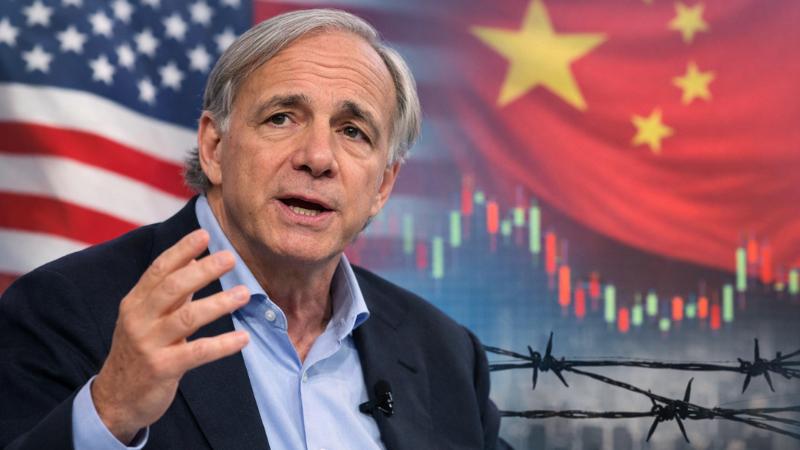
Ray Dalio flags risk of capital war as geopolitics unsettle global financial markets
Legendary investor Ray Dalio has cautioned that the global economy is approaching a dangerous tipping point, warning that mounting geopolitical frictions and unstable financial markets could trigger what he describes as a “capital war,” in which nations weaponize money, trade, and investment flows to exert influence over one another. Speaking at the World Governments Summit in Dubai, Dalio said the international system is not yet in such a conflict but is “on the brink,” with conditions that could quickly escalate. He described capital war as a scenario where governments restrict access to markets, impose sanctions, enforce capital controls, or use debt holdings and trade leverage to pressure rivals. According to Dalio, rising mistrust among major economies is increasing the likelihood of these tools being deployed more aggressively. He pointed to growing tensions between the United States and its allies and competitors as a key source of concern. Discussions surrounding Washington’s interest in Greenland, a Danish territory, as well as broader disagreements over trade and security policy, have unsettled investors. Dalio said some European holders of U.S.-denominated assets fear potential sanctions or restrictions, while American policymakers may worry about losing reliable foreign buyers for government debt. European investors have played a significant role in financing U.S. borrowing needs, accounting for a large share of foreign purchases of Treasurys in recent months. Any disruption to those flows could amplify volatility in global markets and increase funding pressures. Dalio noted that “capital, money, matters,” emphasizing that financial interdependence has become both a strength and a vulnerability for the global system. Since returning to office, President Donald Trump has introduced and, at times, rolled back punitive tariffs targeting several trading partners. Those policy shifts have added to market swings and uncertainty. Dalio said similar patterns in the past have often preceded broader economic confrontations, with governments imposing foreign exchange restrictions and tightening controls to protect domestic interests. Drawing parallels with history, he referenced periods leading up to major conflicts, when sanctions and trade barriers intensified rivalries between nations. He suggested that today’s environment could produce comparable strains, particularly in relations between the United States and China, or between the United States and Europe, where trade deficits and capital imbalances remain sensitive issues. Against this backdrop, Dalio reiterated his long-standing view that gold remains an effective hedge during periods of stress. Although prices have fluctuated recently, he said the precious metal continues to serve as a reliable diversifier for portfolios. Rather than focusing on short-term movements, he advised investors, central banks, and sovereign wealth funds to maintain a steady allocation to gold as protection against systemic risk. Ultimately, Dalio urged a disciplined approach to investing, stressing that diversification across assets and regions is the best defense in an increasingly uncertain economic landscape.
Ray Dalio flags risk of capital war as geopolitics unsettle global financial markets
Legendary investor Ray Dalio has cautioned that the global economy is approaching a dangerous tipping point, warning that mounting geopolitical frictions and unstable financial markets could trigger what he describes as a “capital war,” in which nations weaponize money, trade, and investment flows to exert influence over one another. Speaking at the World Governments Summit in Dubai, Dalio said the international system is not yet in such a conflict but is “on the brink,” with conditions that could quickly escalate. He described capital war as a scenario where governments restrict access to markets, impose sanctions, enforce capital controls, or use debt holdings and trade leverage to pressure rivals. According to Dalio, rising mistrust among major economies is increasing the likelihood of these tools being deployed more aggressively. He pointed to growing tensions between the United States and its allies and competitors as a key source of concern. Discussions surrounding Washington’s interest in Greenland, a Danish territory, as well as broader disagreements over trade and security policy, have unsettled investors. Dalio said some European holders of U.S.-denominated assets fear potential sanctions or restrictions, while American policymakers may worry about losing reliable foreign buyers for government debt. European investors have played a significant role in financing U.S. borrowing needs, accounting for a large share of foreign purchases of Treasurys in recent months. Any disruption to those flows could amplify volatility in global markets and increase funding pressures. Dalio noted that “capital, money, matters,” emphasizing that financial interdependence has become both a strength and a vulnerability for the global system. Since returning to office, President Donald Trump has introduced and, at times, rolled back punitive tariffs targeting several trading partners. Those policy shifts have added to market swings and uncertainty. Dalio said similar patterns in the past have often preceded broader economic confrontations, with governments imposing foreign exchange restrictions and tightening controls to protect domestic interests. Drawing parallels with history, he referenced periods leading up to major conflicts, when sanctions and trade barriers intensified rivalries between nations. He suggested that today’s environment could produce comparable strains, particularly in relations between the United States and China, or between the United States and Europe, where trade deficits and capital imbalances remain sensitive issues. Against this backdrop, Dalio reiterated his long-standing view that gold remains an effective hedge during periods of stress. Although prices have fluctuated recently, he said the precious metal continues to serve as a reliable diversifier for portfolios. Rather than focusing on short-term movements, he advised investors, central banks, and sovereign wealth funds to maintain a steady allocation to gold as protection against systemic risk. Ultimately, Dalio urged a disciplined approach to investing, stressing that diversification across assets and regions is the best defense in an increasingly uncertain economic landscape.

Bitcoin slides below $80,000 as global markets weaken and liquidations surge
Bitcoin traded slightly higher on Monday after falling below the $80,000 mark for the first time since April 2025, as a broad risk-off move across global markets weighed heavily on digital assets. The world’s largest cryptocurrency was priced at $77,925.99 as of 8:37 a.m. Eastern Time, reflecting a modest rebound of about 1% following sharp losses over the weekend. Earlier in the session, Bitcoin briefly touched a low of $74,876 before recovering part of its decline. The recent se
Bitcoin slides below $80,000 as global markets weaken and liquidations surge
Bitcoin traded slightly higher on Monday after falling below the $80,000 mark for the first time since April 2025, as a broad risk-off move across global markets weighed heavily on digital assets. The world’s largest cryptocurrency was priced at $77,925.99 as of 8:37 a.m. Eastern Time, reflecting a modest rebound of about 1% following sharp losses over the weekend. Earlier in the session, Bitcoin briefly touched a low of $74,876 before recovering part of its decline. The recent se
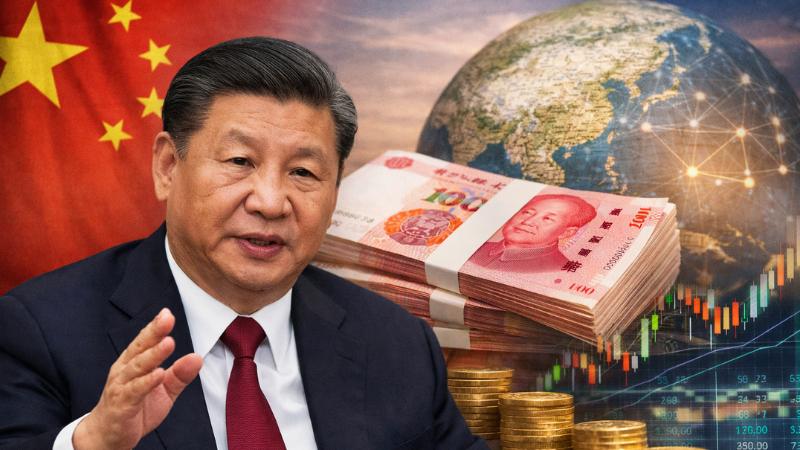
China seeks stronger yuan as Xi Jinping outlines push for global reserve currency
Amid continuing global economic uncertainty and renewed debate over the stability of major reserve currencies, Chinese President Xi Jinping has reiterated China’s ambition to build a “strong currency” and gradually elevate the yuan’s status in the global financial system. Xi said China aims to expand the use of the yuan in international trade, investment, and foreign exchange markets, underscoring a long-standing policy goal to strengthen the country’s financial influence worldwide. Xi’s remarks were outlined in a speech delivered in 2024 to senior provincial and ministerial officials and later published on Saturday in Qiushi, the Communist Party’s leading theoretical journal. The publication of excerpts from the address comes at a time of heightened volatility in global markets and growing scrutiny of the dominance of the US dollar, adding significance to Beijing’s renewed emphasis on currency strength and financial resilience. In the speech, Xi set out what he described as the essential characteristics of a global financial powerhouse. These included a solid economic foundation, world-leading technological and industrial capabilities, and a widely accepted and credible currency. He argued that currency strength was inseparable from broader national competitiveness and institutional capacity, noting that financial influence must be supported by real economic and technological power rather than short-term market movements. Xi also stressed the importance of a capable and independent central bank able to implement effective monetary policy and macroprudential management. He said globally competitive financial institutions, along with influential international financial centres, were necessary to attract global capital and exert pricing power in international markets. According to Xi, these elements must be matched with strong regulation, a reliable legal framework, and a deep pool of skilled financial professionals to ensure long-term stability and credibility. While acknowledging China’s scale in global finance, Xi noted that the country still faced structural limitations. He said China ranked among the world’s largest economies in terms of banking assets, foreign exchange reserves, and capital market size, but remained “big but not strong” overall. Transforming China into a true global financial powerhouse, he added, would be a gradual and long-term undertaking rather than an immediate achievement. Beijing has promoted the internationalisation of the yuan for more than a decade, with measurable progress in its use for cross-border trade settlement. The currency’s role in global markets, however, remains limited when compared with established reserve currencies. China’s Cross-Border Interbank Payment System currently clears an average of about 700 billion yuan, or roughly 100 billion US dollars, in transactions each day. This figure remains well below the nearly 2 trillion US dollars cleared daily through the dollar-based Clearing House Interbank Payments System. Yuan-denominated debt issuance in international markets also accounts for a small share of global activity, representing less than one percent of total issuance. These figures highlight the gap between China’s ambitions and the yuan’s current global footprint, despite steady domestic financial expansion. In recent months, the yuan has generally held firm against the US dollar, even amid trade tensions and uneven global growth. This stability contrasts with the sharper depreciation seen during former US President Donald Trump’s first term, when market observers speculated that Chinese authorities tolerated a weaker currency to offset the impact of tariffs. International investment banks continue to argue that the yuan remains below its long-term fair value, reflecting both policy controls and cautious foreign investor sentiment. The republication of Xi’s speech signals continuity in China’s financial strategy rather than a sudden shift. As global markets navigate uncertainty and reassess existing monetary structures, Beijing appears intent on steadily advancing its vision of a stronger yuan and a more influential role in the international financial system over the long term.
China seeks stronger yuan as Xi Jinping outlines push for global reserve currency
Amid continuing global economic uncertainty and renewed debate over the stability of major reserve currencies, Chinese President Xi Jinping has reiterated China’s ambition to build a “strong currency” and gradually elevate the yuan’s status in the global financial system. Xi said China aims to expand the use of the yuan in international trade, investment, and foreign exchange markets, underscoring a long-standing policy goal to strengthen the country’s financial influence worldwide. Xi’s remarks were outlined in a speech delivered in 2024 to senior provincial and ministerial officials and later published on Saturday in Qiushi, the Communist Party’s leading theoretical journal. The publication of excerpts from the address comes at a time of heightened volatility in global markets and growing scrutiny of the dominance of the US dollar, adding significance to Beijing’s renewed emphasis on currency strength and financial resilience. In the speech, Xi set out what he described as the essential characteristics of a global financial powerhouse. These included a solid economic foundation, world-leading technological and industrial capabilities, and a widely accepted and credible currency. He argued that currency strength was inseparable from broader national competitiveness and institutional capacity, noting that financial influence must be supported by real economic and technological power rather than short-term market movements. Xi also stressed the importance of a capable and independent central bank able to implement effective monetary policy and macroprudential management. He said globally competitive financial institutions, along with influential international financial centres, were necessary to attract global capital and exert pricing power in international markets. According to Xi, these elements must be matched with strong regulation, a reliable legal framework, and a deep pool of skilled financial professionals to ensure long-term stability and credibility. While acknowledging China’s scale in global finance, Xi noted that the country still faced structural limitations. He said China ranked among the world’s largest economies in terms of banking assets, foreign exchange reserves, and capital market size, but remained “big but not strong” overall. Transforming China into a true global financial powerhouse, he added, would be a gradual and long-term undertaking rather than an immediate achievement. Beijing has promoted the internationalisation of the yuan for more than a decade, with measurable progress in its use for cross-border trade settlement. The currency’s role in global markets, however, remains limited when compared with established reserve currencies. China’s Cross-Border Interbank Payment System currently clears an average of about 700 billion yuan, or roughly 100 billion US dollars, in transactions each day. This figure remains well below the nearly 2 trillion US dollars cleared daily through the dollar-based Clearing House Interbank Payments System. Yuan-denominated debt issuance in international markets also accounts for a small share of global activity, representing less than one percent of total issuance. These figures highlight the gap between China’s ambitions and the yuan’s current global footprint, despite steady domestic financial expansion. In recent months, the yuan has generally held firm against the US dollar, even amid trade tensions and uneven global growth. This stability contrasts with the sharper depreciation seen during former US President Donald Trump’s first term, when market observers speculated that Chinese authorities tolerated a weaker currency to offset the impact of tariffs. International investment banks continue to argue that the yuan remains below its long-term fair value, reflecting both policy controls and cautious foreign investor sentiment. The republication of Xi’s speech signals continuity in China’s financial strategy rather than a sudden shift. As global markets navigate uncertainty and reassess existing monetary structures, Beijing appears intent on steadily advancing its vision of a stronger yuan and a more influential role in the international financial system over the long term.

Apple set to report fiscal Q1 earnings as iPhone demand and AI costs draw scrutiny
Apple is scheduled to report its fiscal first-quarter earnings after the market closes on Thursday, with investors closely monitoring whether strong holiday demand for iPhones can offset rising costs and uncertainty around artificial intelligence investments. The company’s fiscal first quarter, which concludes in December, is traditionally its most important period of the year due to seasonal consumer spending. According to consensus estimates compiled by LSEG, analysts expect App
Apple set to report fiscal Q1 earnings as iPhone demand and AI costs draw scrutiny
Apple is scheduled to report its fiscal first-quarter earnings after the market closes on Thursday, with investors closely monitoring whether strong holiday demand for iPhones can offset rising costs and uncertainty around artificial intelligence investments. The company’s fiscal first quarter, which concludes in December, is traditionally its most important period of the year due to seasonal consumer spending. According to consensus estimates compiled by LSEG, analysts expect App
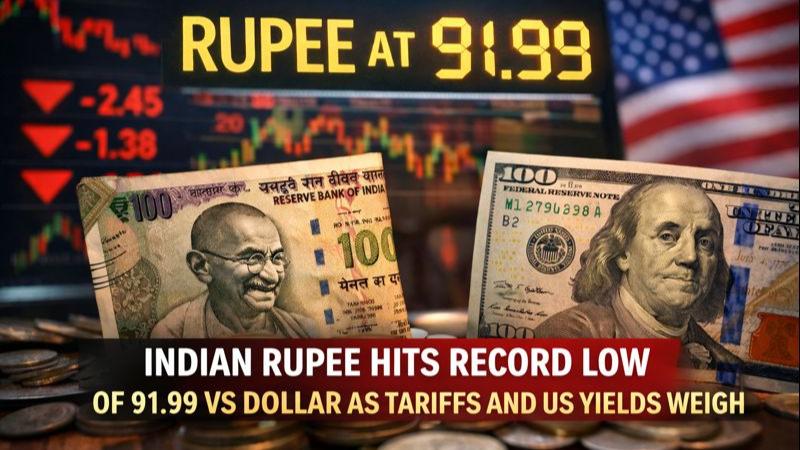
Indian rupee hits record low of 91.99 vs dollar as tariffs and US yields weigh
The Indian rupee weakened to a fresh all-time low of 91.99 against the US dollar on January 29, extending its recent slide amid persistent pressure from global and domestic factors. The currency has now fallen 2 percent so far this year and nearly 5 percent since the United States imposed higher tariffs on Indian merchandise exports. The sharp decline reflects continued weakness in foreign capital inflows and a surge in corporate demand for dollar hedging, which have outweighed the positive i
Indian rupee hits record low of 91.99 vs dollar as tariffs and US yields weigh
The Indian rupee weakened to a fresh all-time low of 91.99 against the US dollar on January 29, extending its recent slide amid persistent pressure from global and domestic factors. The currency has now fallen 2 percent so far this year and nearly 5 percent since the United States imposed higher tariffs on Indian merchandise exports. The sharp decline reflects continued weakness in foreign capital inflows and a surge in corporate demand for dollar hedging, which have outweighed the positive i
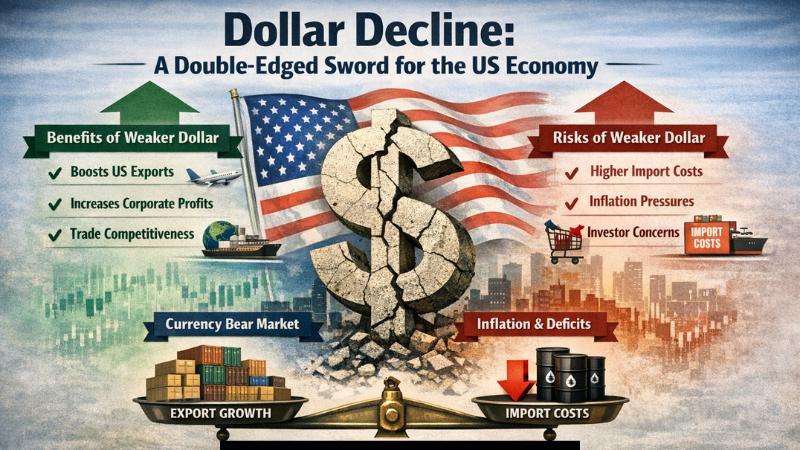
Dollar decline creates double-edged sword for US economy
The U.S. dollar has continued its recent decline, extending a trend that presents both opportunities and challenges for the American economy. President Donald Trump described the currency as “doing great,” reflecting his view that a moderately weaker dollar can provide strategic benefits in international trade. Despite this optimism, economists warn that the weakening greenback represents a “double-edged sword,” offering advantages to exporters while introducing risks related to inflatio
Dollar decline creates double-edged sword for US economy
The U.S. dollar has continued its recent decline, extending a trend that presents both opportunities and challenges for the American economy. President Donald Trump described the currency as “doing great,” reflecting his view that a moderately weaker dollar can provide strategic benefits in international trade. Despite this optimism, economists warn that the weakening greenback represents a “double-edged sword,” offering advantages to exporters while introducing risks related to inflatio

US launches ‘Trump accounts’ for newborns with initial government investment
The United States government has officially launched a new investment program for newborns, called ‘Trump accounts,’ designed to help families start saving for their children’s future. The initiative, established under the One Big Beautiful Bill, provides an initial government deposit of $1,000 for every child born between 2025 and 2028. Officials estimate that approximately 25 million families will be eligible to participate over the next three years. Early adoption has been strong, with
US launches ‘Trump accounts’ for newborns with initial government investment
The United States government has officially launched a new investment program for newborns, called ‘Trump accounts,’ designed to help families start saving for their children’s future. The initiative, established under the One Big Beautiful Bill, provides an initial government deposit of $1,000 for every child born between 2025 and 2028. Officials estimate that approximately 25 million families will be eligible to participate over the next three years. Early adoption has been strong, with
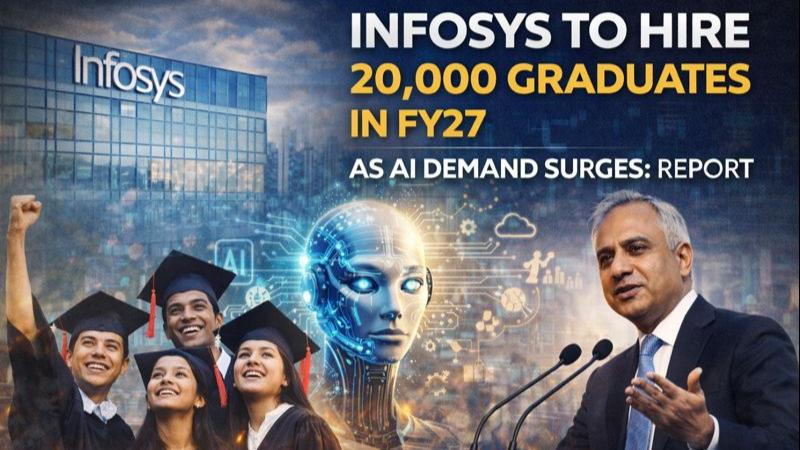
Infosys to Hire 20,000 Graduates in FY27 as AI Demand Surges
Infosys, the global information technology giant, is set to hire 20,000 college graduates in FY27, reinforcing its strong push into the artificial intelligence (AI) services sector. The announcement comes at a time when many companies in the tech industry are facing layoffs, positioning Infosys as a major player in the growing demand for AI-driven solutions. CEO Salil Parekh confirmed the hiring plan at the World Economic Forum (WEF) in Davos, where he highlighted the changing demand landscap
Infosys to Hire 20,000 Graduates in FY27 as AI Demand Surges
Infosys, the global information technology giant, is set to hire 20,000 college graduates in FY27, reinforcing its strong push into the artificial intelligence (AI) services sector. The announcement comes at a time when many companies in the tech industry are facing layoffs, positioning Infosys as a major player in the growing demand for AI-driven solutions. CEO Salil Parekh confirmed the hiring plan at the World Economic Forum (WEF) in Davos, where he highlighted the changing demand landscap

Retiring soon? Avoid these tax mistakes that can quietly drain your savings
Retirement is often seen as a reward for years of hard work, offering time, freedom, and flexibility. However, it also brings a significant change in how income is earned and taxed. Instead of a single salary slip, retirees begin receiving income from multiple sources such as pension, bank interest, fixed deposits, rental income, and investment withdrawals. This sudden shift creates confusion, and even small tax oversights during the first year of retirement can quietly reduce lifetime saving
Retiring soon? Avoid these tax mistakes that can quietly drain your savings
Retirement is often seen as a reward for years of hard work, offering time, freedom, and flexibility. However, it also brings a significant change in how income is earned and taxed. Instead of a single salary slip, retirees begin receiving income from multiple sources such as pension, bank interest, fixed deposits, rental income, and investment withdrawals. This sudden shift creates confusion, and even small tax oversights during the first year of retirement can quietly reduce lifetime saving

Markets stay resilient as Trump-era geopolitical risks fail to shake investors
The opening weeks of 2026 have delivered a series of dramatic geopolitical developments tied to the United States, ranging from the capture of Venezuela’s president to sharp rhetoric surrounding Iran’s handling of domestic unrest and renewed discussion of using force to secure Greenland. Yet, in contrast to the gravity of these headlines, global equity markets have continued to post steady gains, raising questions about why investors appear largely unfazed by rising international tensions
Markets stay resilient as Trump-era geopolitical risks fail to shake investors
The opening weeks of 2026 have delivered a series of dramatic geopolitical developments tied to the United States, ranging from the capture of Venezuela’s president to sharp rhetoric surrounding Iran’s handling of domestic unrest and renewed discussion of using force to secure Greenland. Yet, in contrast to the gravity of these headlines, global equity markets have continued to post steady gains, raising questions about why investors appear largely unfazed by rising international tensions
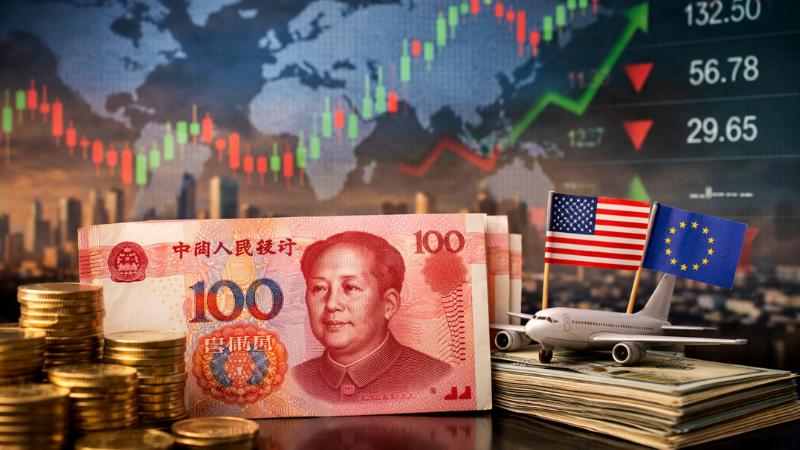
Record Chinese exports drive private capital into global stocks and bonds
China’s record-breaking trade surplus is increasingly reshaping global financial markets as export earnings that once accumulated primarily in state reserves are now being redirected into private investments overseas. The shift marks a notable departure from Beijing’s traditionally centralized management of foreign exchange inflows and introduces new dynamics into global capital movements at a time of heightened sensitivity over trade imbalances and financial stability. Last yea
Record Chinese exports drive private capital into global stocks and bonds
China’s record-breaking trade surplus is increasingly reshaping global financial markets as export earnings that once accumulated primarily in state reserves are now being redirected into private investments overseas. The shift marks a notable departure from Beijing’s traditionally centralized management of foreign exchange inflows and introduces new dynamics into global capital movements at a time of heightened sensitivity over trade imbalances and financial stability. Last yea

New Insurance Laws In India: Will Claim Settlements Really Improve For Policyholders
India has ushered in a new phase of insurance regulation with Parliament clearing the Sabka Bima Sabki Raksha (Amendment of Insurance Laws) Bill, 2025, a move that comes at a time when trust between insurers and policyholders is increasingly strained. For millions of Indians, insurance is ultimately judged not by policy documents or premium receipts but by the ease and fairness of claim settlement. Delays, repeated document requests, late-stage exclusions, and opaque rejections have long plag
New Insurance Laws In India: Will Claim Settlements Really Improve For Policyholders
India has ushered in a new phase of insurance regulation with Parliament clearing the Sabka Bima Sabki Raksha (Amendment of Insurance Laws) Bill, 2025, a move that comes at a time when trust between insurers and policyholders is increasingly strained. For millions of Indians, insurance is ultimately judged not by policy documents or premium receipts but by the ease and fairness of claim settlement. Delays, repeated document requests, late-stage exclusions, and opaque rejections have long plag

PAN Aadhaar Link Deadline Near What Happens If You Miss December 31
With just days left before the December 31, 2025 deadline, taxpayers across India are being urged to check whether their PAN is linked with Aadhaar. The warning comes from the Income Tax Department, which has made it clear that failure to complete the linking process on time could lead to serious financial and tax-related disruptions. PAN Aadhaar linking is the process of connecting an ind
PAN Aadhaar Link Deadline Near What Happens If You Miss December 31
With just days left before the December 31, 2025 deadline, taxpayers across India are being urged to check whether their PAN is linked with Aadhaar. The warning comes from the Income Tax Department, which has made it clear that failure to complete the linking process on time could lead to serious financial and tax-related disruptions. PAN Aadhaar linking is the process of connecting an ind