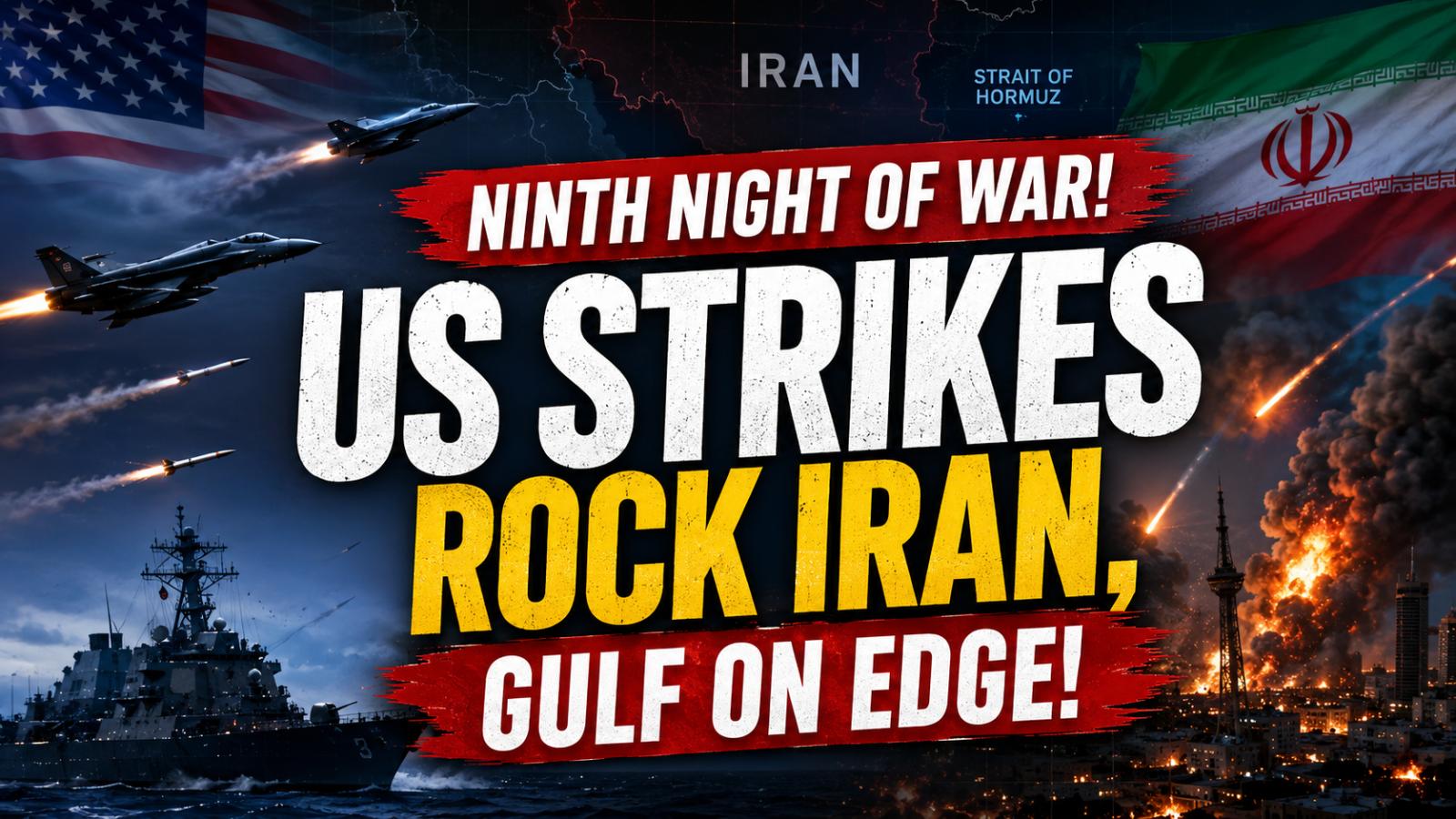
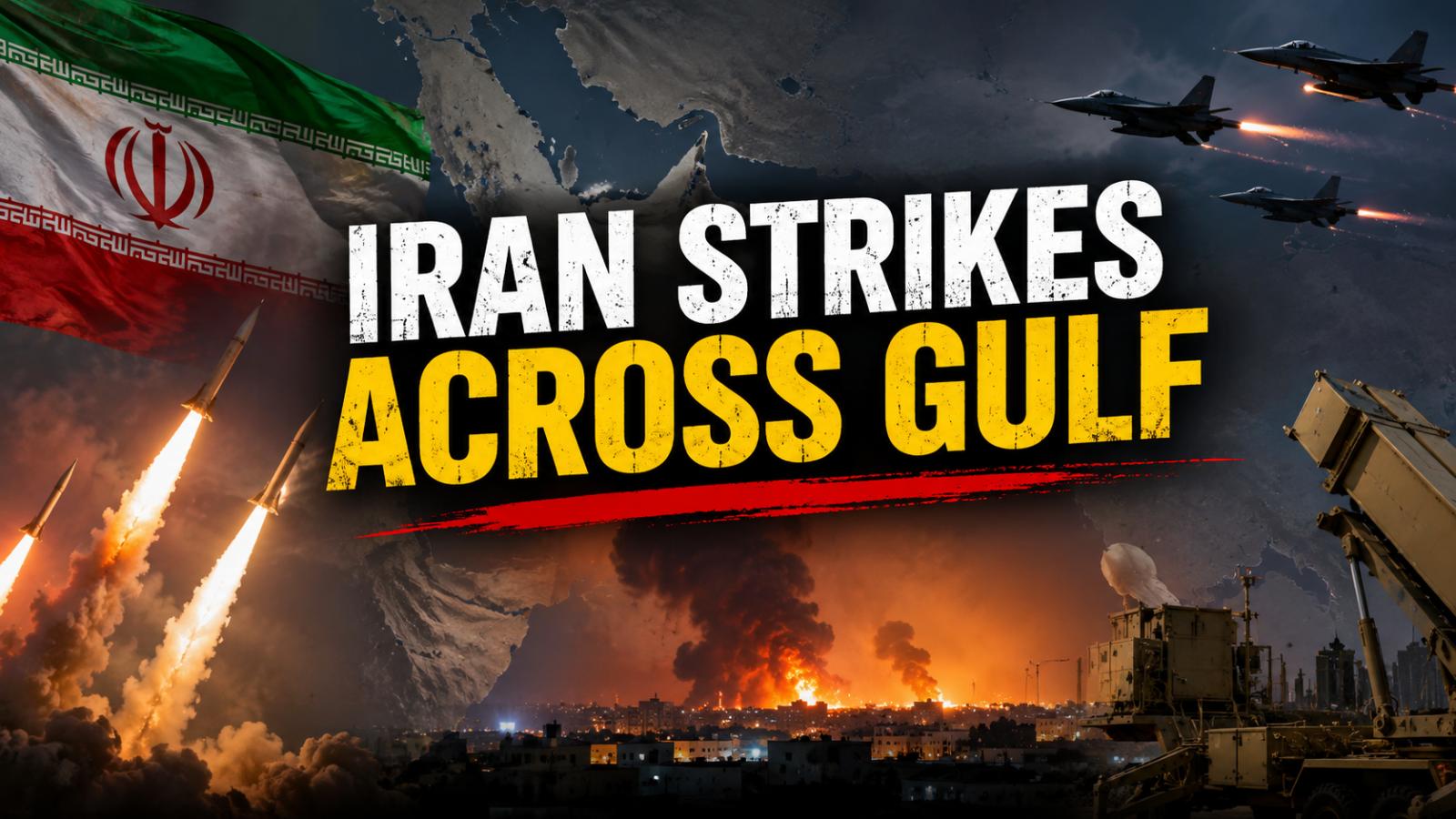
The US Iran ninth night strikes deepened the regional crisis as CENTCOM targeted Iranian military capabilities. Missile alerts spread across the Gulf, another US soldier died in Iraq, and rising oil prices reflected growing fears over the Strait of Hormuz.
US Iran ninth night strikes announced by CENTCOM
The US military launched a ninth consecutive night of attacks against Iran on Sunday, July 19, as the conflict entered another dangerous phase. US Central Command said on X that operations began at 7 p.m. Eastern Time and would continue targeting Iranian capabilities used to attack commercial vessels crossing the Strait of Hormuz.
CENTCOM’s website had earlier confirmed eight consecutive nights of strikes through July 18 and listed several rounds of attacks conducted since July 11. It also confirmed that the United States had resumed its naval blockade against Iranian ports on July 13.
Iranian state media reported explosions in several cities after the latest operation began, including Tabriz and areas near important ports. Reports from inside Iran also claimed that air-defence forces shot down a drone over the country’s south. These battlefield accounts had not been independently verified when they emerged.
US soldier killed by Iranian drone ordnance
CENTCOM announced that a US service member died in northern Iraq during a controlled detonation of unexploded ordnance from a downed Iranian one-way attack drone. Another service member suffered a minor injury during the incident.
The death brought the reported number of US military fatalities linked to the wider Iran conflict to 17. Recent casualties have included service members killed during Iranian attacks in Jordan and other incidents across the region.
The latest death highlights a risk that extends beyond direct missile and drone impacts. Unexploded weapons can remain dangerous after interception or crashing, placing military disposal teams and nearby communities at continued risk.
Kuwait attack and Bahrain alerts widen crisis
The confrontation also spread further across Gulf states. Bahrain activated warning sirens and instructed residents to seek shelter, while Kuwait said its air defences were responding to Iranian missile and drone attacks.
Kuwaiti authorities accused Iran of damaging energy, water and oil-related facilities and causing fires. Gulf governments condemned the attacks as concerns grew that retaliatory operations could draw more countries into direct confrontation.
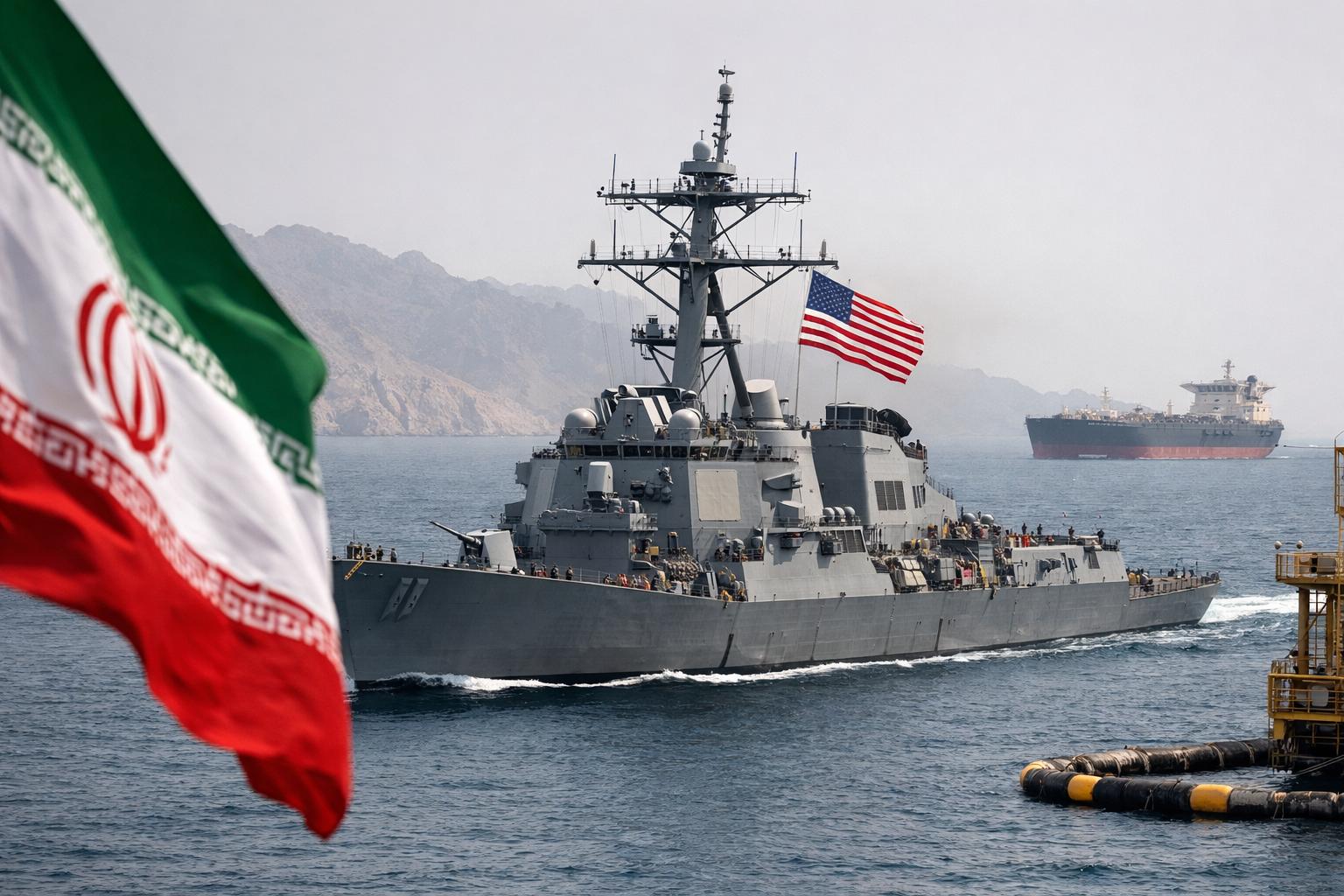
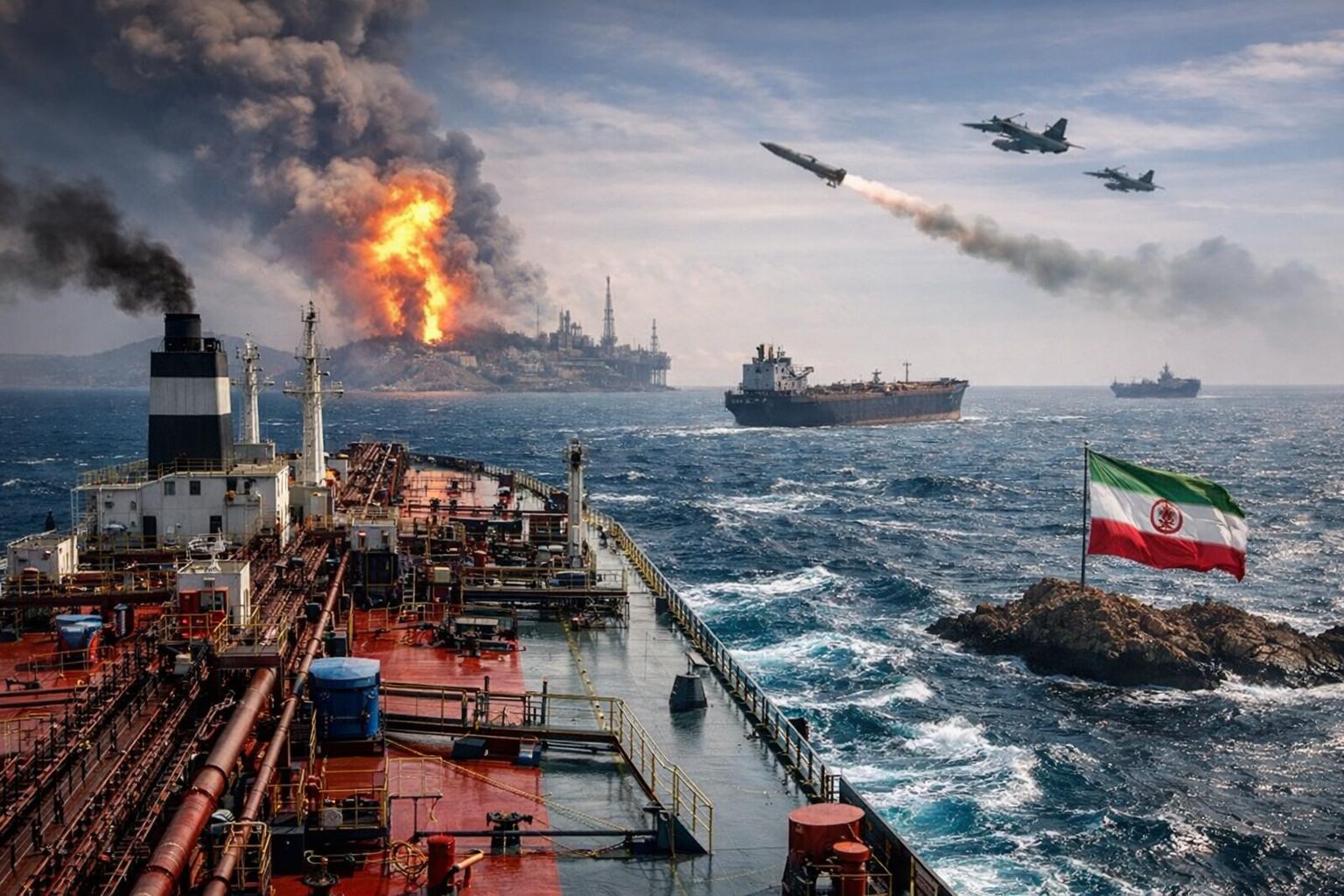
The Strait of Hormuz remains at the centre of the crisis because disruptions there can affect major international energy shipments. CENTCOM says its latest attacks aim to reduce Iran’s ability to threaten vessels using the waterway. The renewed US blockade has added pressure on maritime traffic and increased fears of prolonged supply disruption.
Strait of Hormuz crisis pushes oil above $90
Oil markets reacted quickly as fighting continued. Brent crude moved above $90 a barrel, while US crude traded above $84 during Sunday trading. Market reports linked the increase to renewed strikes, Iranian retaliation and uncertainty surrounding shipping through the Strait of Hormuz.
The price rise shows how quickly a military escalation can spread beyond the battlefield. Higher crude costs can increase transport, manufacturing and consumer prices, particularly when traders expect shipping delays or damage to regional energy infrastructure.
Iran also announced that it was suspending commitments connected to its ceasefire understanding with Washington. Iranian officials accused the United States of violating the arrangement by continuing military attacks. Those claims reflect Tehran’s position and require comparison with the original agreement and statements from all parties.
With diplomacy weakening, casualties rising and Gulf infrastructure facing attacks, neither side appears close to de-escalation. The immediate danger is no longer limited to targets inside Iran. It now includes military bases, ports, commercial shipping and essential facilities across the wider region.
Relevant internal links include previous coverage of the CENTCOM strikes on Iran, the Chabahar Port attack, Iranian missile interceptions over Gulf states and the full US-Iran conflict timeline.
The US Iran ninth night strikes deepened the regional crisis as CENTCOM targeted Iranian military capabilities. Missile alerts spread across the Gulf, another US soldier died in Iraq, and rising oil prices reflected growing fears over the Strait of Hormuz.
US Iran ninth night strikes announced by CENTCOM
The US military launched a ninth consecutive night of attacks against Iran on Sunday, July 19, as the conflict entered another dangerous phase. US Central Command said on X that operations began at 7 p.m. Eastern Time and would continue targeting Iranian capabilities used to attack commercial vessels crossing the Strait of Hormuz.
CENTCOM’s website had earlier confirmed eight consecutive nights of strikes through July 18 and listed several rounds of attacks conducted since July 11. It also confirmed that the United States had resumed its naval blockade against Iranian ports on July 13.
Iranian state media reported explosions in several cities after the latest operation began, including Tabriz and areas near important ports. Reports from inside Iran also claimed that air-defence forces shot down a drone over the country’s south. These battlefield accounts had not been independently verified when they emerged.
US soldier killed by Iranian drone ordnance
CENTCOM announced that a US service member died in northern Iraq during a controlled detonation of unexploded ordnance from a downed Iranian one-way attack drone. Another service member suffered a minor injury during the incident.
The death brought the reported number of US military fatalities linked to the wider Iran conflict to 17. Recent casualties have included service members killed during Iranian attacks in Jordan and other incidents across the region.
The latest death highlights a risk that extends beyond direct missile and drone impacts. Unexploded weapons can remain dangerous after interception or crashing, placing military disposal teams and nearby communities at continued risk.
Kuwait attack and Bahrain alerts widen crisis
The confrontation also spread further across Gulf states. Bahrain activated warning sirens and instructed residents to seek shelter, while Kuwait said its air defences were responding to Iranian missile and drone attacks.
Kuwaiti authorities accused Iran of damaging energy, water and oil-related facilities and causing fires. Gulf governments condemned the attacks as concerns grew that retaliatory operations could draw more countries into direct confrontation.
The Strait of Hormuz remains at the centre of the crisis because disruptions there can affect major international energy shipments. CENTCOM says its latest attacks aim to reduce Iran’s ability to threaten vessels using the waterway. The renewed US blockade has added pressure on maritime traffic and increased fears of prolonged supply disruption.
Strait of Hormuz crisis pushes oil above $90
Oil markets reacted quickly as fighting continued. Brent crude moved above $90 a barrel, while US crude traded above $84 during Sunday trading. Market reports linked the increase to renewed strikes, Iranian retaliation and uncertainty surrounding shipping through the Strait of Hormuz.
The price rise shows how quickly a military escalation can spread beyond the battlefield. Higher crude costs can increase transport, manufacturing and consumer prices, particularly when traders expect shipping delays or damage to regional energy infrastructure.
Iran also announced that it was suspending commitments connected to its ceasefire understanding with Washington. Iranian officials accused the United States of violating the arrangement by continuing military attacks. Those claims reflect Tehran’s position and require comparison with the original agreement and statements from all parties.
With diplomacy weakening, casualties rising and Gulf infrastructure facing attacks, neither side appears close to de-escalation. The immediate danger is no longer limited to targets inside Iran. It now includes military bases, ports, commercial shipping and essential facilities across the wider region.
Relevant internal links include previous coverage of the CENTCOM strikes on Iran, the Chabahar Port attack, Iranian missile interceptions over Gulf states and the full US-Iran conflict timeline.
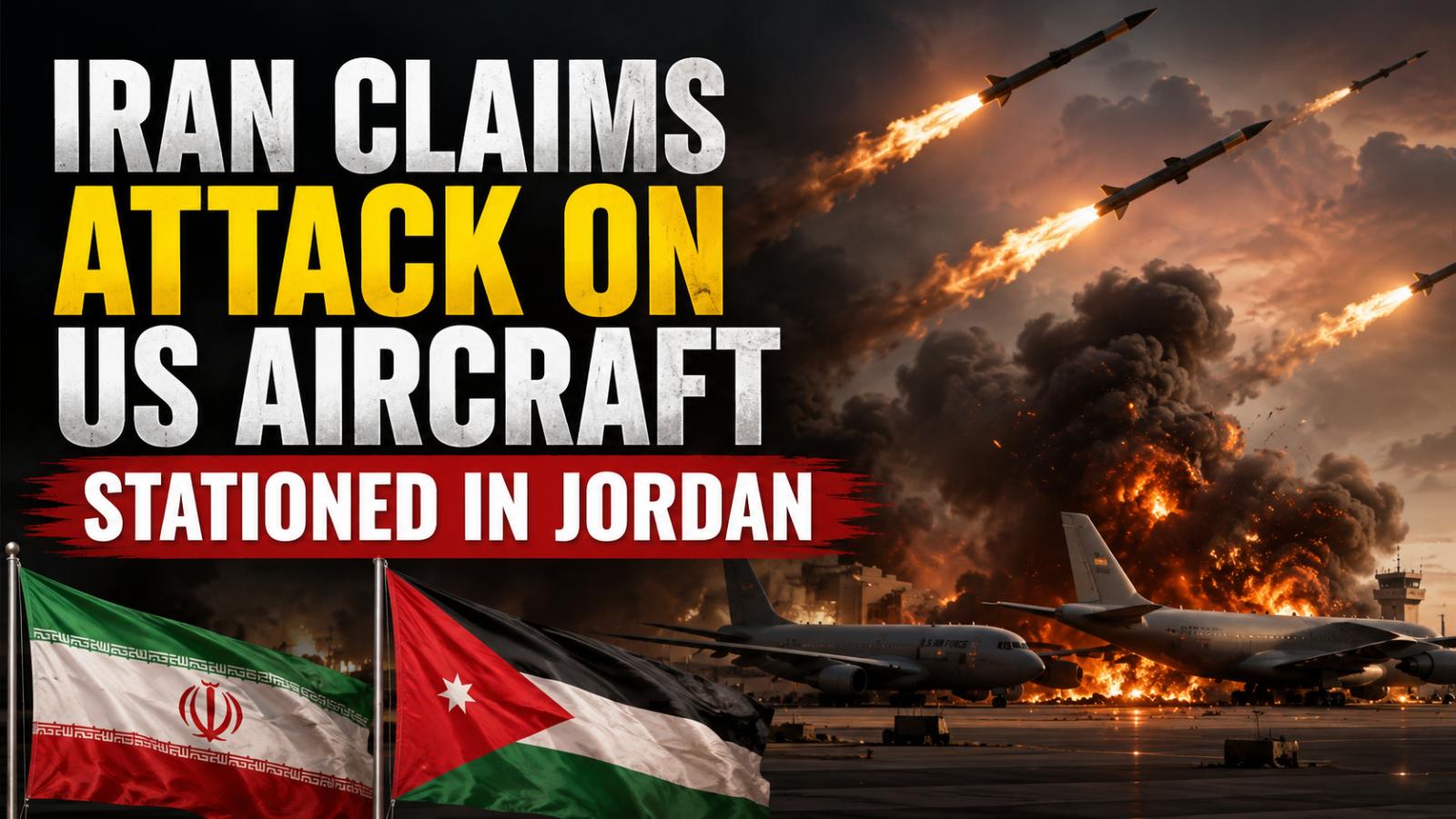
Iran’s Islamic Revolutionary Guard Corps claimed on Friday, July 17, that it had launched ballistic missiles and drones at US military aircraft stationed in Jordan, marking another dangerous expansion of the US-Iran conflict across the Middle East.
The IRGC said several American fighter jets and aerial refuelling aircraft were destroyed, while other planes suffered serious damage. However, neither the United States nor Jordan had indepen
Iran’s Islamic Revolutionary Guard Corps claimed on Friday, July 17, that it had launched ballistic missiles and drones at US military aircraft stationed in Jordan, marking another dangerous expansion of the US-Iran conflict across the Middle East.
The IRGC said several American fighter jets and aerial refuelling aircraft were destroyed, while other planes suffered serious damage. However, neither the United States nor Jordan had indepen
Iran launched strikes on military targets in Kuwait and Syria following recent US attacks. Missiles and drones were also intercepted over Jordan and Iraq, while explosions were reported in Qatar and Bahrain, raising fears of a wider regional conflict.
Iran attacks Kuwait
Iranian state television reported that the country launched drone attacks against US military deployment sites and logistical support facilities in
Iran launched strikes on military targets in Kuwait and Syria following recent US attacks. Missiles and drones were also intercepted over Jordan and Iraq, while explosions were reported in Qatar and Bahrain, raising fears of a wider regional conflict.
Iran attacks Kuwait
Iranian state television reported that the country launched drone attacks against US military deployment sites and logistical support facilities in
Immediate Aftermath and Casualties
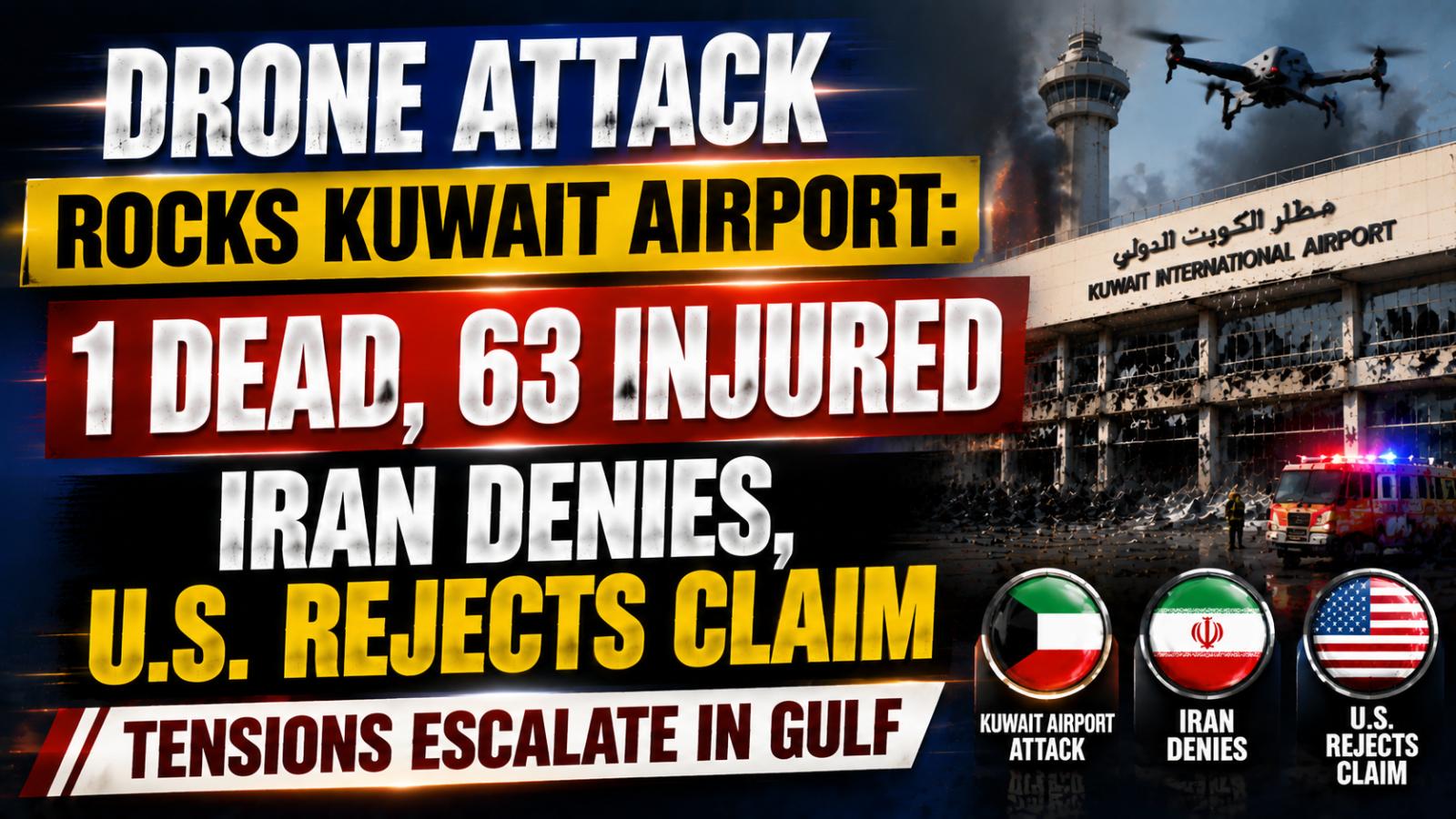
Kuwait’s Civil Aviation Authority released CCTV footage on June 4 showing the chaos following a drone strike on Terminal 1 at Kuwait International Airport. The attack killed an Indian national and injured 63 others, forcing the temporary closure of the airport. Officials described this as the first deadly strike in the Gulf since the April 8 ceasefire. The incident follows US military strikes on
Immediate Aftermath and Casualties
Kuwait’s Civil Aviation Authority released CCTV footage on June 4 showing the chaos following a drone strike on Terminal 1 at Kuwait International Airport. The attack killed an Indian national and injured 63 others, forcing the temporary closure of the airport. Officials described this as the first deadly strike in the Gulf since the April 8 ceasefire. The incident follows US military strikes on
The United States has announced the start of a naval blockade targeting Iranian maritime activity, marking a significant escalation in tensions in the Middle East. Speaking to reporters outside the Oval Office on Monday, April 13, 2026, President Donald Trump said the blockade of the Strait of Hormuz had begun, adding that other countries would assist in the operation, though he did not identify them.
The Strait of Hormuz, one of the world’s most critical oil transit routes, has b
The United States has announced the start of a naval blockade targeting Iranian maritime activity, marking a significant escalation in tensions in the Middle East. Speaking to reporters outside the Oval Office on Monday, April 13, 2026, President Donald Trump said the blockade of the Strait of Hormuz had begun, adding that other countries would assist in the operation, though he did not identify them.
The Strait of Hormuz, one of the world’s most critical oil transit routes, has b
US President Donald Trump has made a striking claim that “regime change has happened” in Iran, even as the conflict between the two nations continues after a month of escalating military action. Speaking aboard Air Force One, Trump indicated that negotiations are underway and suggested that a peace deal could be reached “pretty soon,” despite ongoing tensions.
According to Trump, t
US President Donald Trump has made a striking claim that “regime change has happened” in Iran, even as the conflict between the two nations continues after a month of escalating military action. Speaking aboard Air Force One, Trump indicated that negotiations are underway and suggested that a peace deal could be reached “pretty soon,” despite ongoing tensions.
According to Trump, t
ABU DHABI — March 26, 2026 (Thursday):
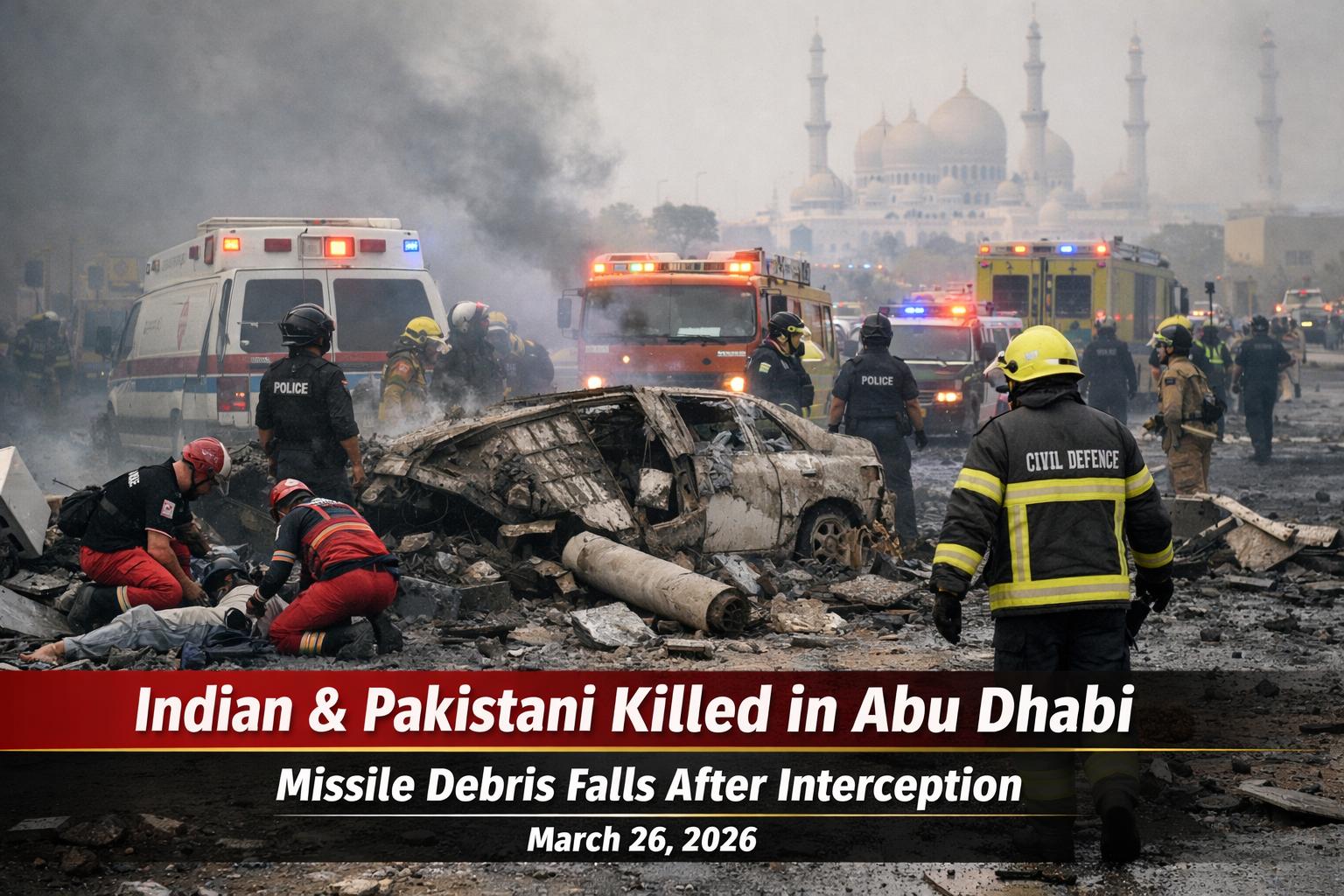
An Indian national was among two people killed on Thursday, March 26, 2026, in Abu Dhabi after debris from a missile interception struck the city. The second victim was a Pakistani citizen, while three others — including another Indian national and a Jordanian — were injured.
The incident occurred on Sweihan Street, where debris fell following the successful interception of a ballistic
ABU DHABI — March 26, 2026 (Thursday):
An Indian national was among two people killed on Thursday, March 26, 2026, in Abu Dhabi after debris from a missile interception struck the city. The second victim was a Pakistani citizen, while three others — including another Indian national and a Jordanian — were injured.
The incident occurred on Sweihan Street, where debris fell following the successful interception of a ballistic
Global crude oil prices have surged past $110 per barrel as escalating tensions in the Gulf region shake energy markets worldwide. The sharp increase has triggered concerns about potential supply disruptions, particularly through the Strait of Hormuz, one of the most critical oil transit routes globally. The sudden spike represents the biggest jump in crude prices since 2020 and has raised fears about its possible ripple effects on economies that depend heavily on imported oil.
Desp
Global crude oil prices have surged past $110 per barrel as escalating tensions in the Gulf region shake energy markets worldwide. The sharp increase has triggered concerns about potential supply disruptions, particularly through the Strait of Hormuz, one of the most critical oil transit routes globally. The sudden spike represents the biggest jump in crude prices since 2020 and has raised fears about its possible ripple effects on economies that depend heavily on imported oil.
Desp
The global shipping industry is grappling with mounting financial strain as escalating conflict involving the United States, Israel, and Iran disrupts maritime traffic through the Strait of Hormuz. Within three days of hostilities and retaliatory strikes across the Gulf region, freight markets have recorded sharp increases in costs, with industry estimates pointing to potential losses amounting to tens of billions of dollars per day.
The Strait of Hormuz, a critical chokepoint for m
The global shipping industry is grappling with mounting financial strain as escalating conflict involving the United States, Israel, and Iran disrupts maritime traffic through the Strait of Hormuz. Within three days of hostilities and retaliatory strikes across the Gulf region, freight markets have recorded sharp increases in costs, with industry estimates pointing to potential losses amounting to tens of billions of dollars per day.
The Strait of Hormuz, a critical chokepoint for m