






#hormuzstrait
Switzerland hosts US Iran ceasefire talks with mediators
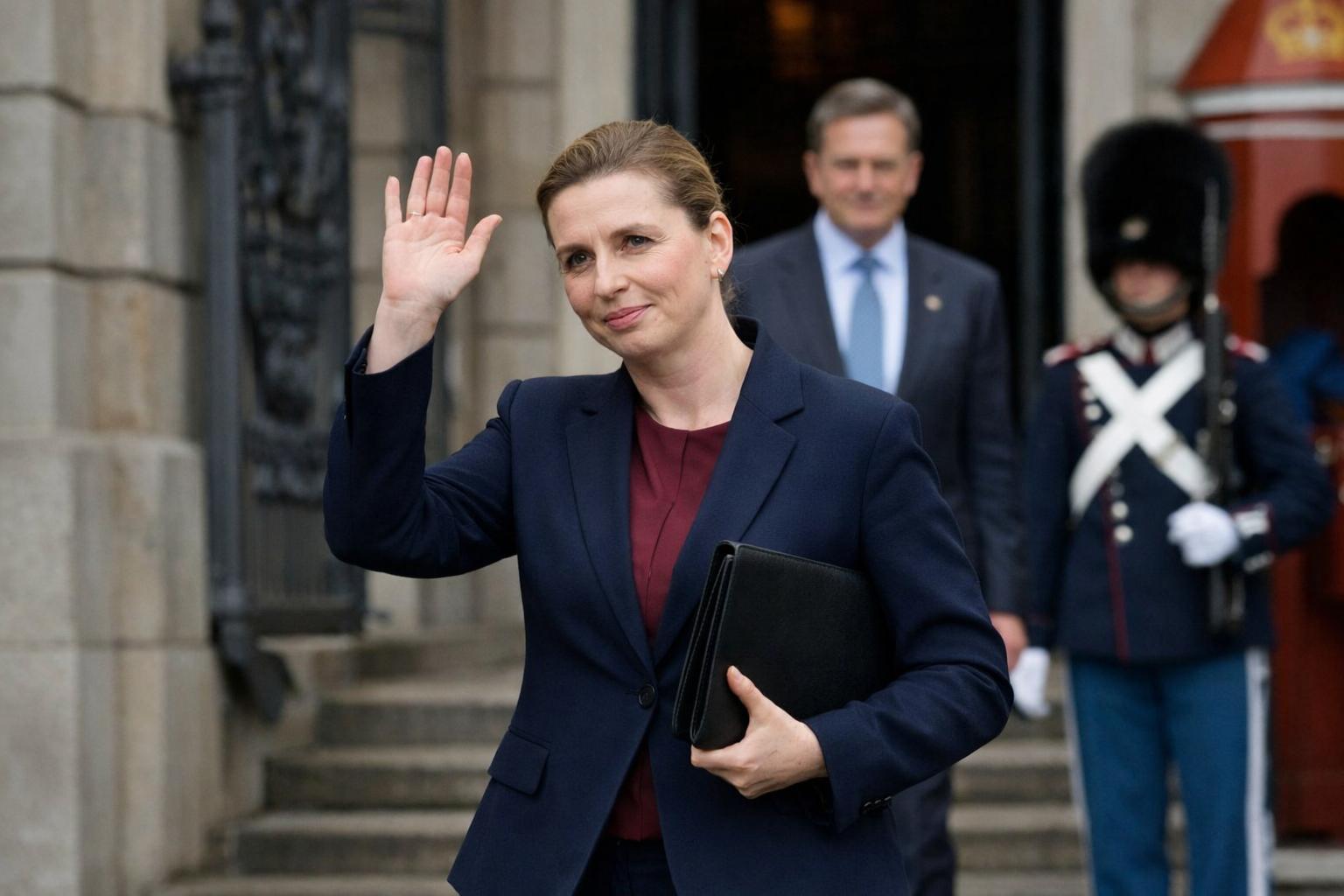
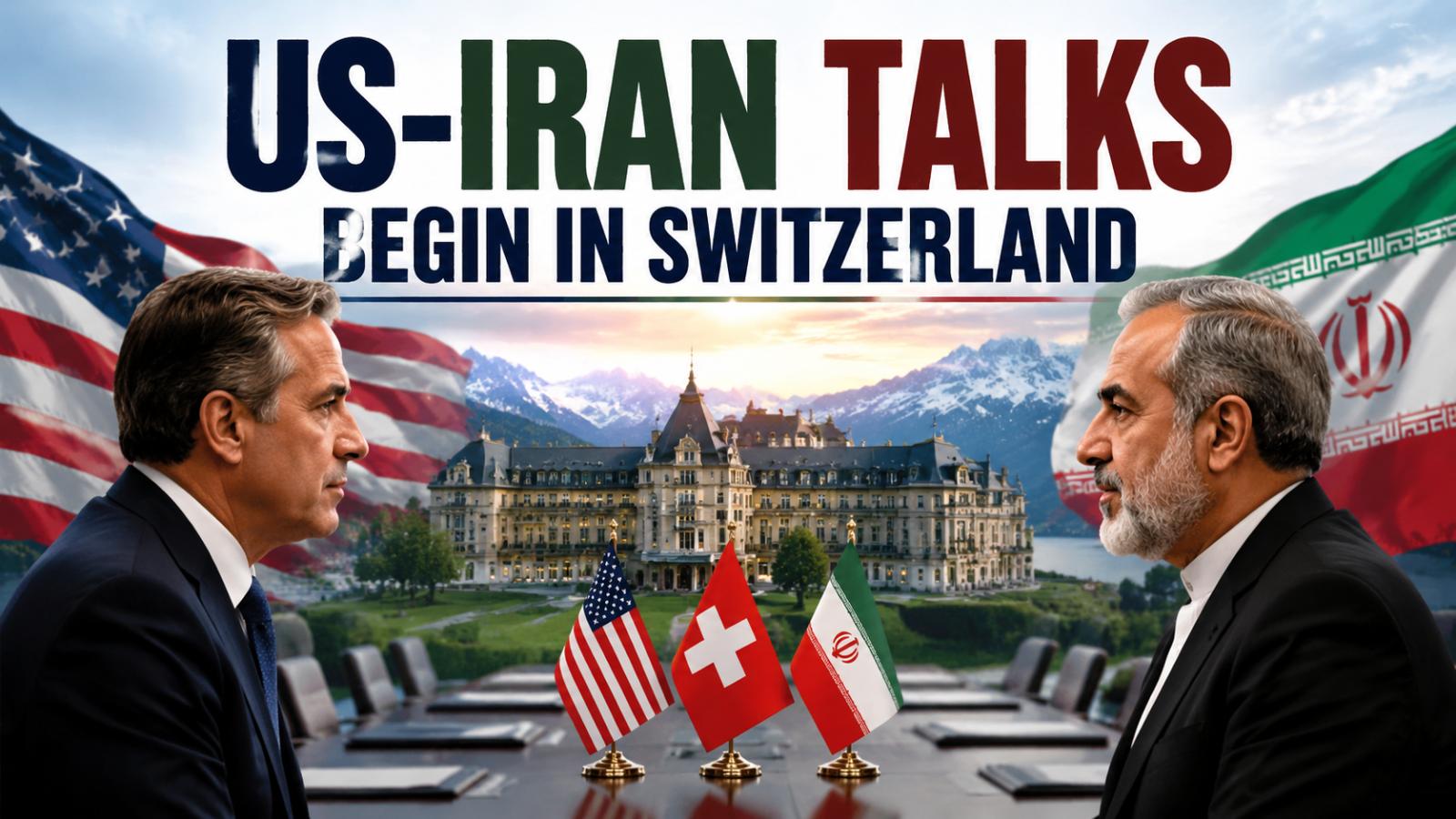
US and Iran have entered early-stage mediated discussions in Switzerland, with the Bürgenstock resort emerging as the selected venue for indirect engagement. The talks are being described by diplomatic sources as exploratory in nature, focusing on reducing regional tensions and testing the feasibility of a broader ceasefire framework. While no final agreement has been confirmed, the engagement signals renewed diplomatic activity after months of escalation concerns in the Middle East. Switzerland positions itself as neutral facilitator Switzerland is hosting the meeting in a neutral capacity, offering logistical support for dialogue between the two sides along with participating mediators. Officials familiar with the arrangement indicate that the format is structured to keep discussions indirect, with Pakistan and Qatar reportedly assisting in communication channels. The goal at this stage is not a binding treaty but a structured conversation on de-escalation pathways. Ceasefire framework and maritime concerns under discussion A key focus of the discussions is believed to be a proposed framework aimed at reducing military tensions and stabilizing critical maritime routes, including the Strait of Hormuz. Trade security and energy transport remain central concerns, given the strategic importance of the passage for global oil movement. However, details remain fluid, and no side has publicly confirmed acceptance of any structured agreement. Diverging interpretations of diplomatic progress Despite reports of engagement, there is no unified position on the status or timing of the talks. Iranian representatives have suggested that discussions remain under internal review following earlier diplomatic exchanges, while US-linked sources describe continued exploratory coordination. This gap in interpretation highlights the fragile and uncertain nature of the process, where messaging remains inconsistent across stakeholders. What the next phase depends on The outcome of these discussions will largely depend on whether both sides can align on verification mechanisms and phased de-escalation steps. Observers note that even incremental progress could reduce regional risk, but breakdowns in coordination could stall momentum quickly. For now, the Switzerland-hosted engagement represents an early diplomatic opening rather than a finalized peace roadmap.
Switzerland hosts US Iran ceasefire talks with mediators
US and Iran have entered early-stage mediated discussions in Switzerland, with the Bürgenstock resort emerging as the selected venue for indirect engagement. The talks are being described by diplomatic sources as exploratory in nature, focusing on reducing regional tensions and testing the feasibility of a broader ceasefire framework. While no final agreement has been confirmed, the engagement signals renewed diplomatic activity after months of escalation concerns in the Middle East. Switzerland positions itself as neutral facilitator Switzerland is hosting the meeting in a neutral capacity, offering logistical support for dialogue between the two sides along with participating mediators. Officials familiar with the arrangement indicate that the format is structured to keep discussions indirect, with Pakistan and Qatar reportedly assisting in communication channels. The goal at this stage is not a binding treaty but a structured conversation on de-escalation pathways. Ceasefire framework and maritime concerns under discussion A key focus of the discussions is believed to be a proposed framework aimed at reducing military tensions and stabilizing critical maritime routes, including the Strait of Hormuz. Trade security and energy transport remain central concerns, given the strategic importance of the passage for global oil movement. However, details remain fluid, and no side has publicly confirmed acceptance of any structured agreement. Diverging interpretations of diplomatic progress Despite reports of engagement, there is no unified position on the status or timing of the talks. Iranian representatives have suggested that discussions remain under internal review following earlier diplomatic exchanges, while US-linked sources describe continued exploratory coordination. This gap in interpretation highlights the fragile and uncertain nature of the process, where messaging remains inconsistent across stakeholders. What the next phase depends on The outcome of these discussions will largely depend on whether both sides can align on verification mechanisms and phased de-escalation steps. Observers note that even incremental progress could reduce regional risk, but breakdowns in coordination could stall momentum quickly. For now, the Switzerland-hosted engagement represents an early diplomatic opening rather than a finalized peace roadmap.
G7 leaders confront iran conflict and global energy shock
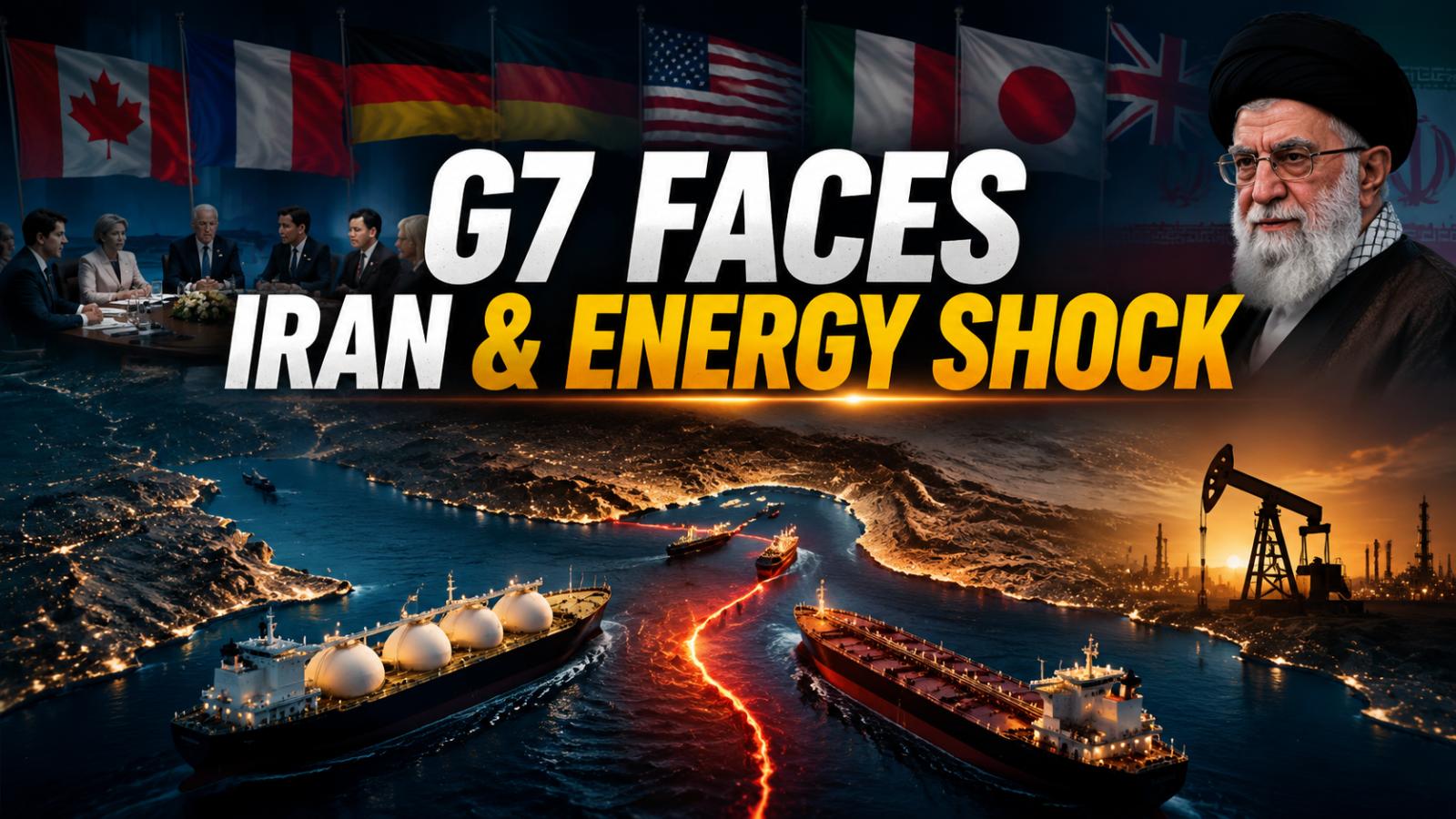
The G7 summit in France unfolded under the shadow of growing instability linked to tensions involving Iran and wider regional security concerns. While political disagreements remained in the background, the more immediate concern for leaders was the economic impact spreading across global energy markets. Rising uncertainty around shipping routes and oil supply quickly turned the discussions toward inflation, fuel pricing, and trade resilience.
G7 leaders confront iran conflict and global energy shock
The G7 summit in France unfolded under the shadow of growing instability linked to tensions involving Iran and wider regional security concerns. While political disagreements remained in the background, the more immediate concern for leaders was the economic impact spreading across global energy markets. Rising uncertainty around shipping routes and oil supply quickly turned the discussions toward inflation, fuel pricing, and trade resilience.
US Iran MoU deal raises doubts over ceasefire framework
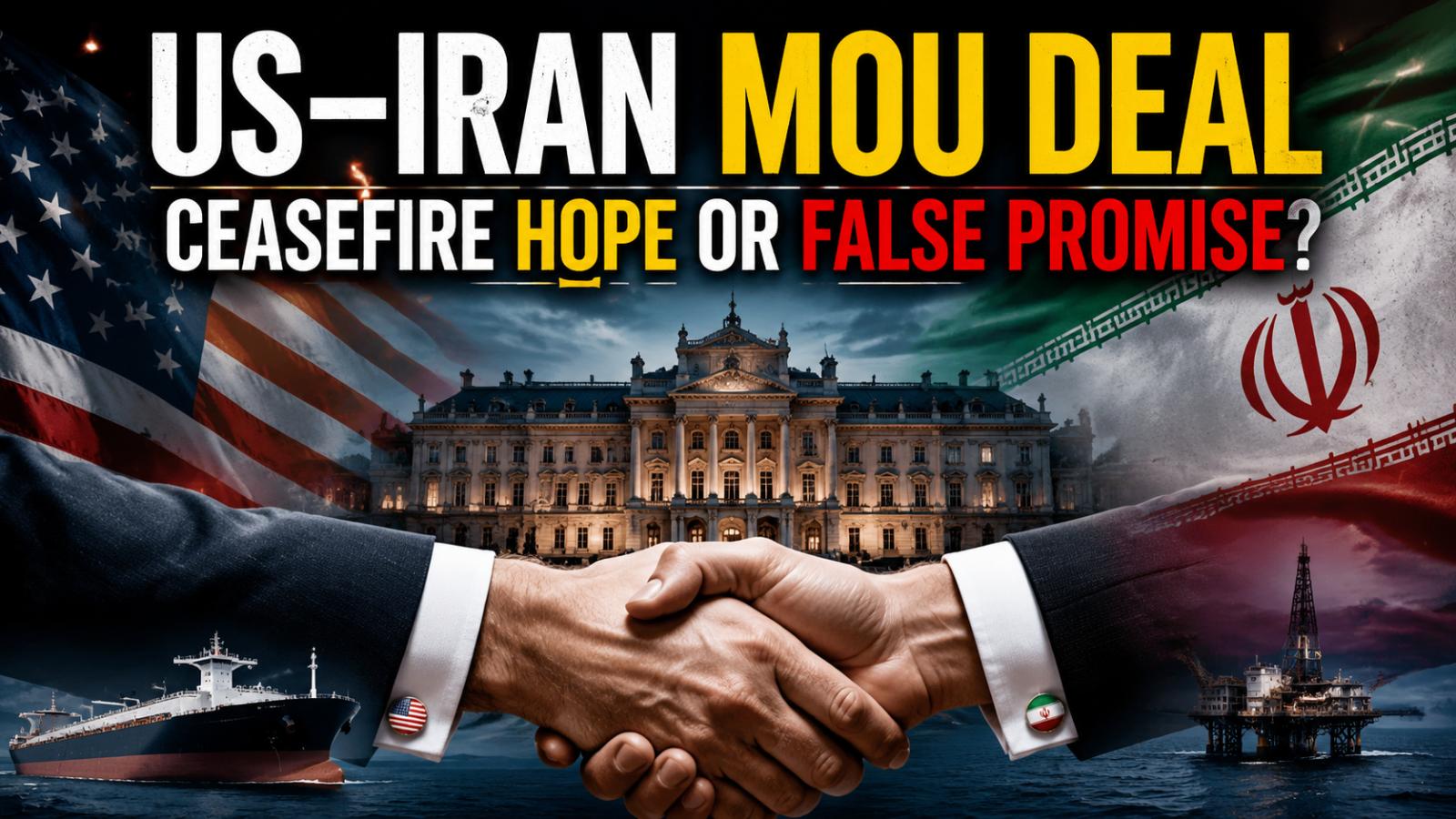
The recent US Iran MoU agreement, discussed during a diplomatic gathering in France, is being viewed as an early-stage framework aimed at reducing long-standing tensions between Washington and Tehran. The document outlines intentions for reduced hostilities and future negotiations, but many of its provisions remain open-ended, leaving room for differing interpretations from both sides. While the agreement signals a willingness to engage, it stops short of offering a fully defined roadmap for
US Iran MoU deal raises doubts over ceasefire framework
The recent US Iran MoU agreement, discussed during a diplomatic gathering in France, is being viewed as an early-stage framework aimed at reducing long-standing tensions between Washington and Tehran. The document outlines intentions for reduced hostilities and future negotiations, but many of its provisions remain open-ended, leaving room for differing interpretations from both sides. While the agreement signals a willingness to engage, it stops short of offering a fully defined roadmap for
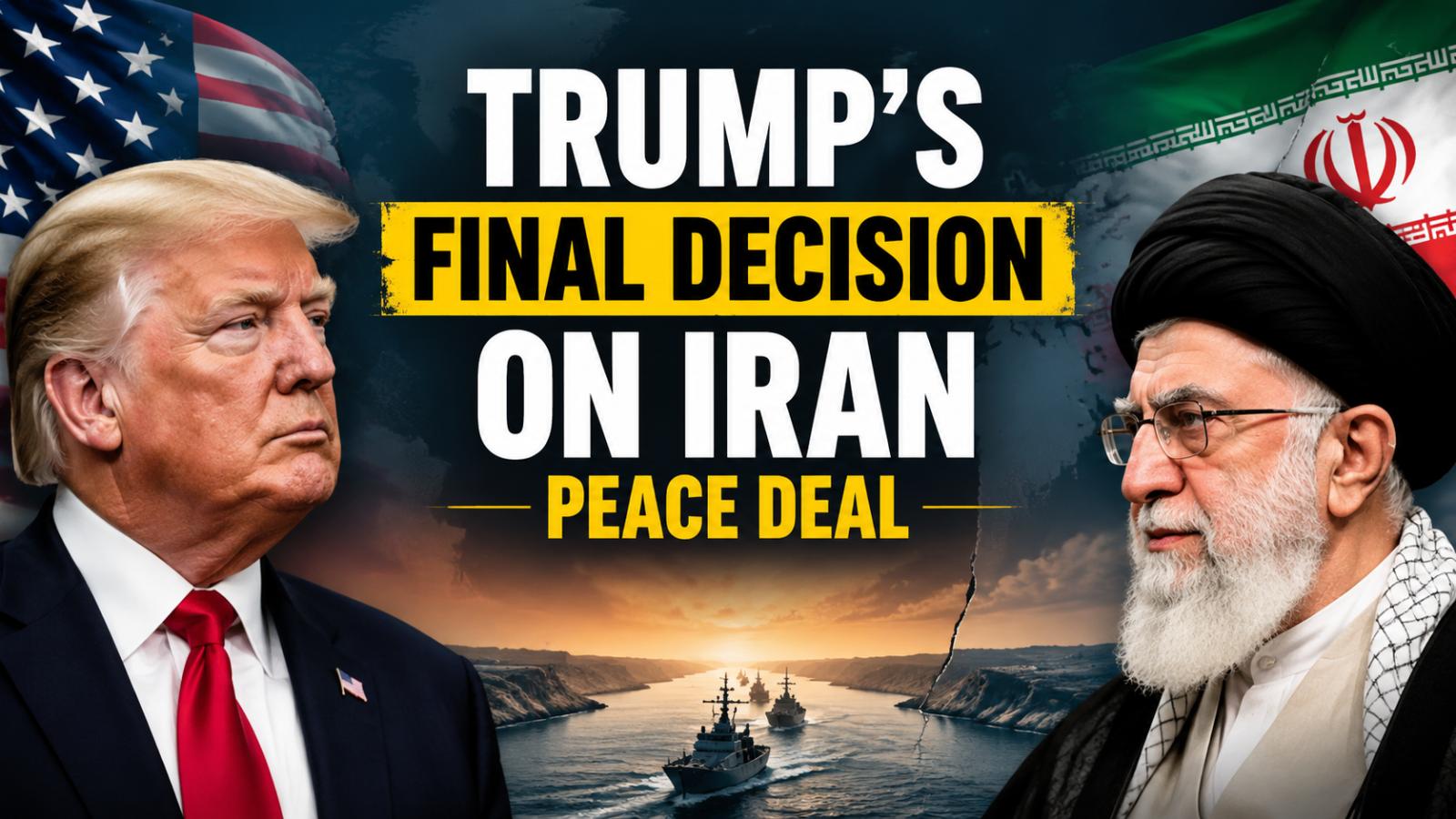
Trump Finalizes Iran Peace Deal Terms Amid Rising Tensions
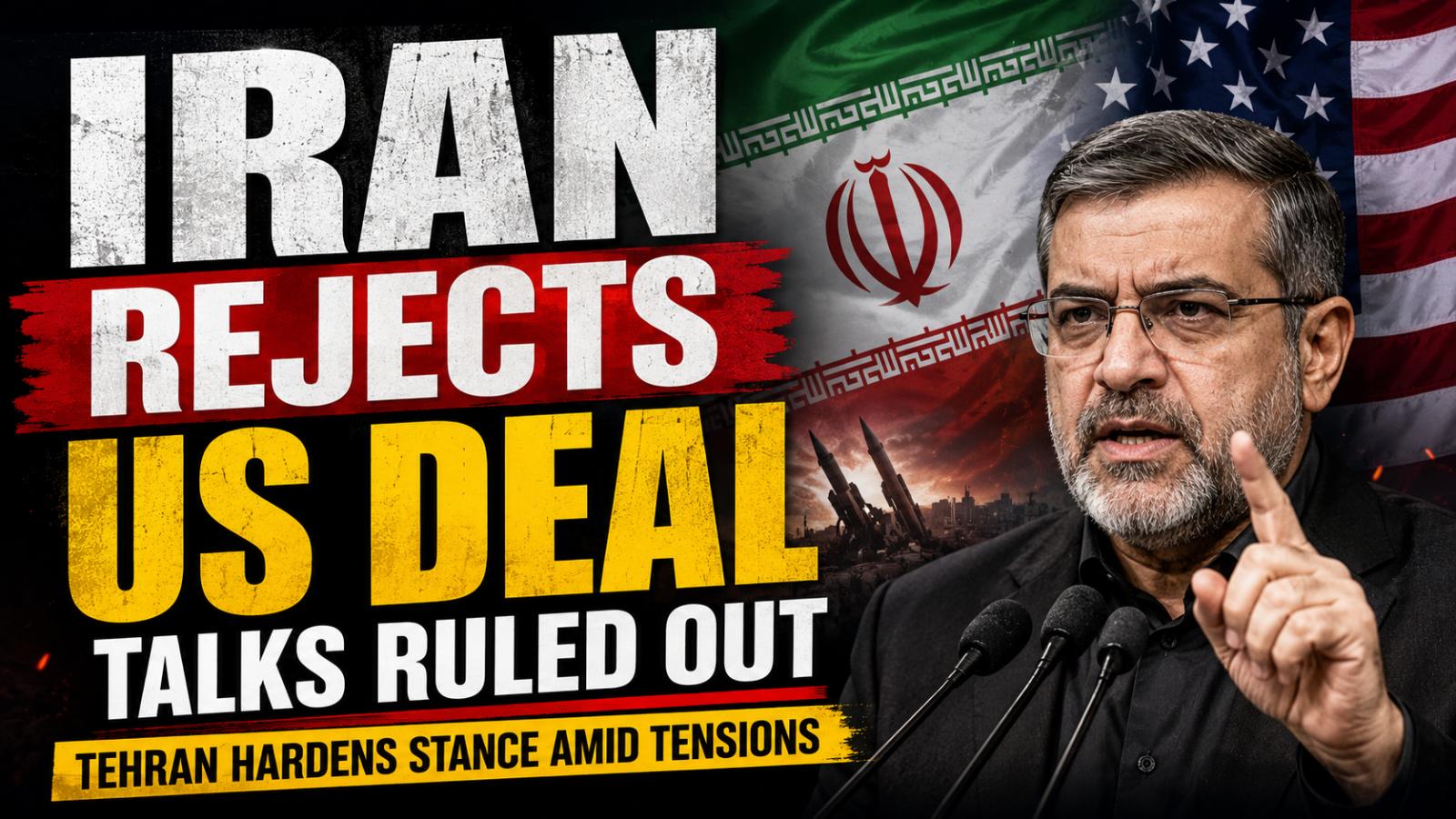
United States President Donald Trump has declared his final terms for a potential peace agreement with Iran. The proposal emphasizes strict nuclear compliance and guarantees for uninterrupted shipping through the strategic Hormuz Strait. This announcement has sparked strong reactions from Iranian officials, signaling potential hurdles in diplomatic negotiations. Iran Responds to US Demands
Trump Finalizes Iran Peace Deal Terms Amid Rising Tensions
United States President Donald Trump has declared his final terms for a potential peace agreement with Iran. The proposal emphasizes strict nuclear compliance and guarantees for uninterrupted shipping through the strategic Hormuz Strait. This announcement has sparked strong reactions from Iranian officials, signaling potential hurdles in diplomatic negotiations. Iran Responds to US Demands
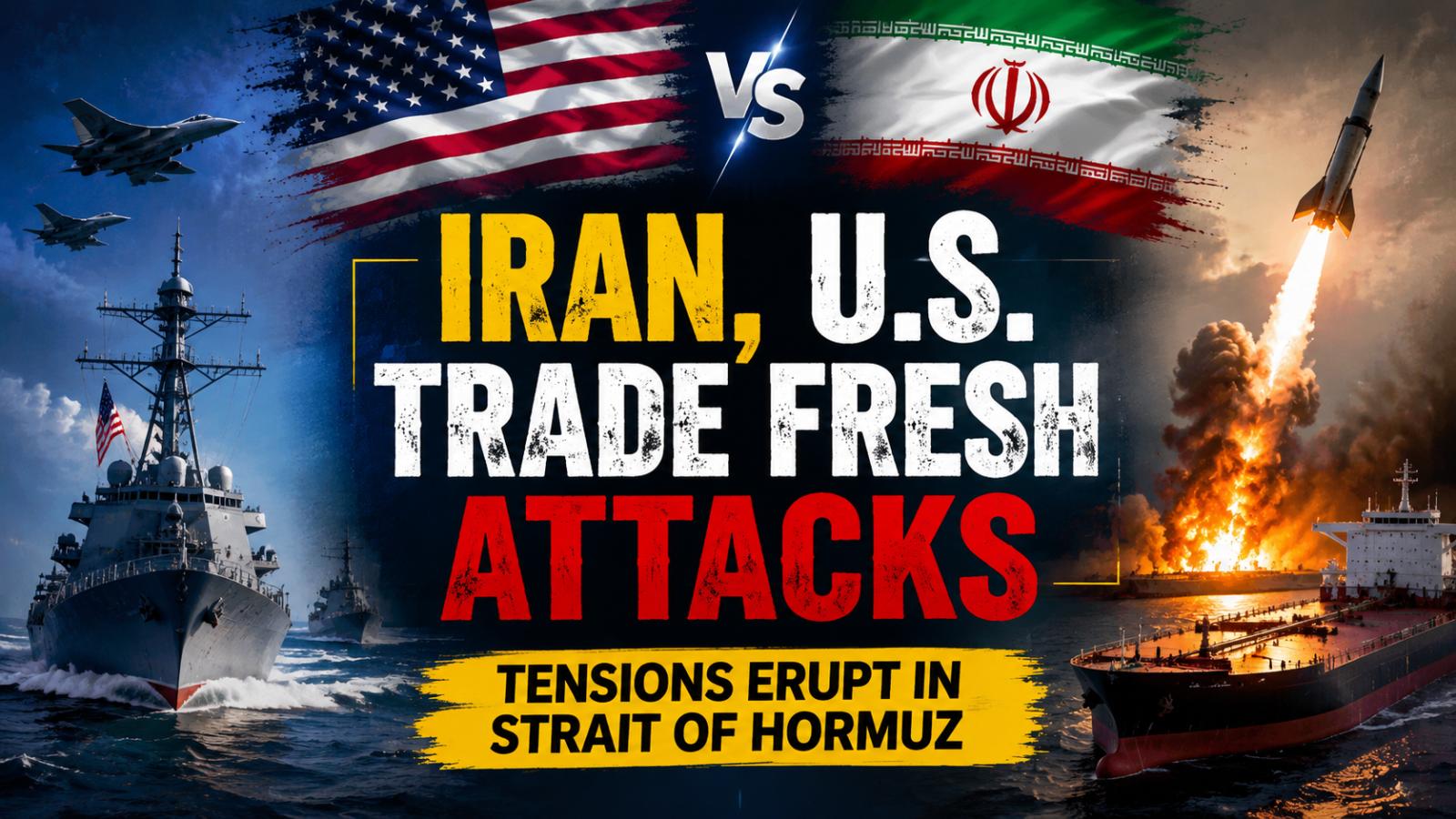
Iran and US Accuse Each Other of Violating Ceasefire in Strait of Hormuz
In a dramatic escalation of tensions in the Middle East, Iran's central military command has accused the United States of violating a ceasefire agreement by launching attacks on vessels in the Strait of Hormuz. According to a statement from the Khatam Al Anbiya headquarters, Iranian forces retaliated by targeting U.S. military ships. The statement, broadcasted on Iranian state television, claimed that the U.S. had attacked an Iranian oil tanker traveling from Iran's Jask region toward t
Iran and US Accuse Each Other of Violating Ceasefire in Strait of Hormuz
In a dramatic escalation of tensions in the Middle East, Iran's central military command has accused the United States of violating a ceasefire agreement by launching attacks on vessels in the Strait of Hormuz. According to a statement from the Khatam Al Anbiya headquarters, Iranian forces retaliated by targeting U.S. military ships. The statement, broadcasted on Iranian state television, claimed that the U.S. had attacked an Iranian oil tanker traveling from Iran's Jask region toward t
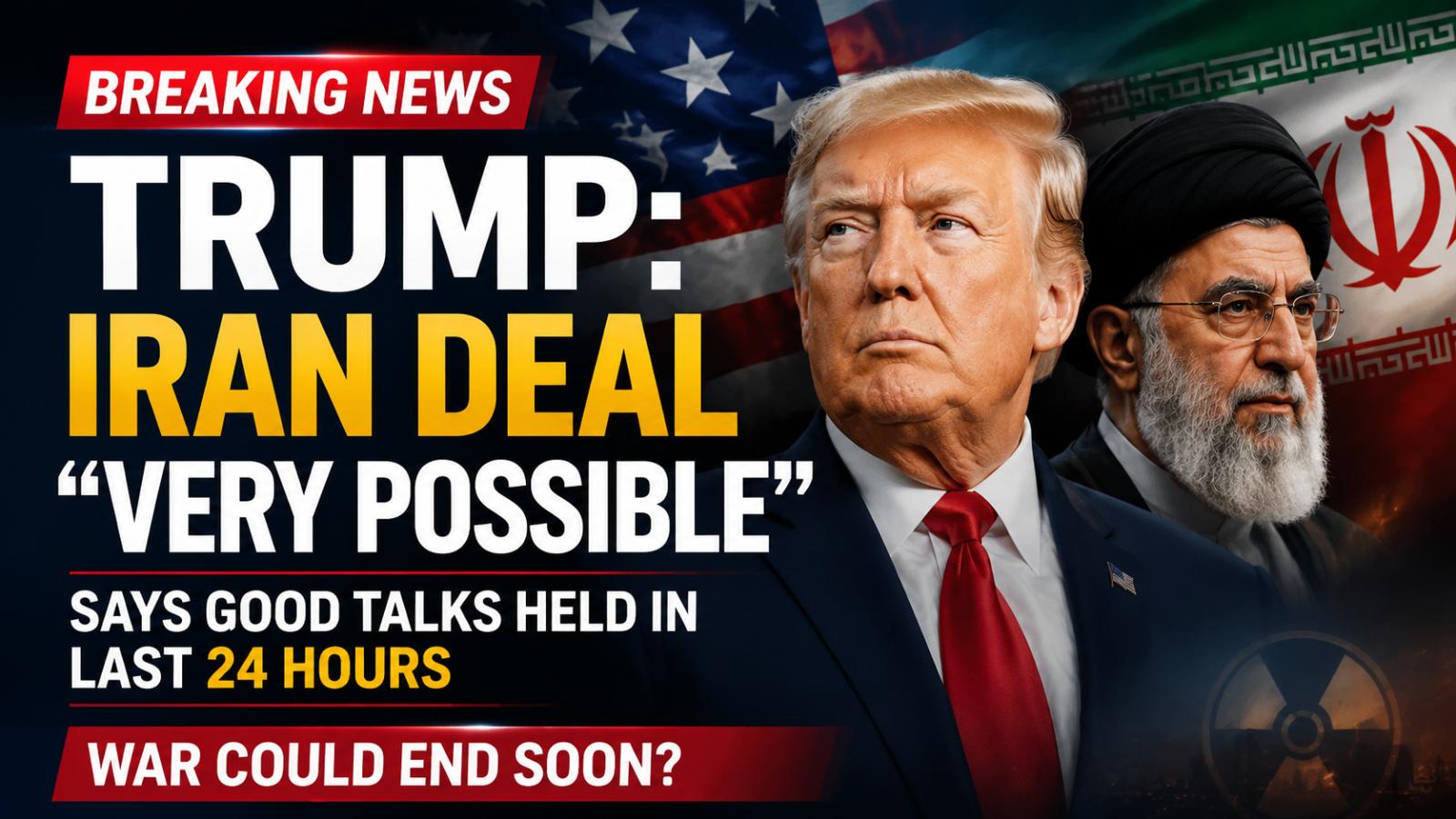
Trump confident of deal with Iran to end war, nuclear weapon discussions ongoing
President Donald Trump stated on May 6 that he has been involved in "good talks" with Iran over the past 24 hours and suggested that a deal to end the ongoing war between the two countries is "very possible." Trump emphasized that the discussions centered on Iran's nuclear program, which remains a critical point of concern for the United States. The president stated, “Iran cannot have a nuclear weapon, and they won’t.” He added that this is a point the Iranian government has already agreed to, alongside other key terms. Trump's statements come after a recent warning to Iran that the United States would escalate its military action if a deal is not reached. "If they don’t agree, the bombing starts, and it will be, sadly, at a much higher level and intensity than it was before,” Trump wrote in a post on Truth Social on May 6. This aggressive stance reflects the president’s resolve to prevent Iran from advancing its nuclear capabilities. In the wake of these talks, Israeli political officials have indicated that there are signs of progress in negotiations between Trump and Iranian Foreign Minister Abbas Araghchi. According to sources, Israel sees this as an opportunity for diplomatic progress. However, the Israeli officials also warned that internal divisions within Iran’s leadership could potentially jeopardize the long-term stability of any agreement. As of now, the future of US-Iran relations remains uncertain, but Trump’s recent comments suggest that both sides are exploring avenues for negotiation. If a deal is reached, it could have significant implications for regional stability, particularly regarding the security of the Strait of Hormuz. This strategic waterway has long been a focal point of tensions in the Middle East due to its role in global oil shipments. The president’s assurance that the Hormuz Strait would be “OPEN TO ALL, including Iran” if an agreement is reached suggests that economic and geopolitical interests are also being considered alongside security concerns. While the talks between Trump and Iran hold promise, the situation remains volatile. Both the US and Iranian governments face internal and external pressures that could complicate efforts to reach a lasting peace agreement. With the threat of military action still on the table, the world watches closely as the two nations navigate these delicate negotiations.
Trump confident of deal with Iran to end war, nuclear weapon discussions ongoing
President Donald Trump stated on May 6 that he has been involved in "good talks" with Iran over the past 24 hours and suggested that a deal to end the ongoing war between the two countries is "very possible." Trump emphasized that the discussions centered on Iran's nuclear program, which remains a critical point of concern for the United States. The president stated, “Iran cannot have a nuclear weapon, and they won’t.” He added that this is a point the Iranian government has already agreed to, alongside other key terms. Trump's statements come after a recent warning to Iran that the United States would escalate its military action if a deal is not reached. "If they don’t agree, the bombing starts, and it will be, sadly, at a much higher level and intensity than it was before,” Trump wrote in a post on Truth Social on May 6. This aggressive stance reflects the president’s resolve to prevent Iran from advancing its nuclear capabilities. In the wake of these talks, Israeli political officials have indicated that there are signs of progress in negotiations between Trump and Iranian Foreign Minister Abbas Araghchi. According to sources, Israel sees this as an opportunity for diplomatic progress. However, the Israeli officials also warned that internal divisions within Iran’s leadership could potentially jeopardize the long-term stability of any agreement. As of now, the future of US-Iran relations remains uncertain, but Trump’s recent comments suggest that both sides are exploring avenues for negotiation. If a deal is reached, it could have significant implications for regional stability, particularly regarding the security of the Strait of Hormuz. This strategic waterway has long been a focal point of tensions in the Middle East due to its role in global oil shipments. The president’s assurance that the Hormuz Strait would be “OPEN TO ALL, including Iran” if an agreement is reached suggests that economic and geopolitical interests are also being considered alongside security concerns. While the talks between Trump and Iran hold promise, the situation remains volatile. Both the US and Iranian governments face internal and external pressures that could complicate efforts to reach a lasting peace agreement. With the threat of military action still on the table, the world watches closely as the two nations navigate these delicate negotiations.
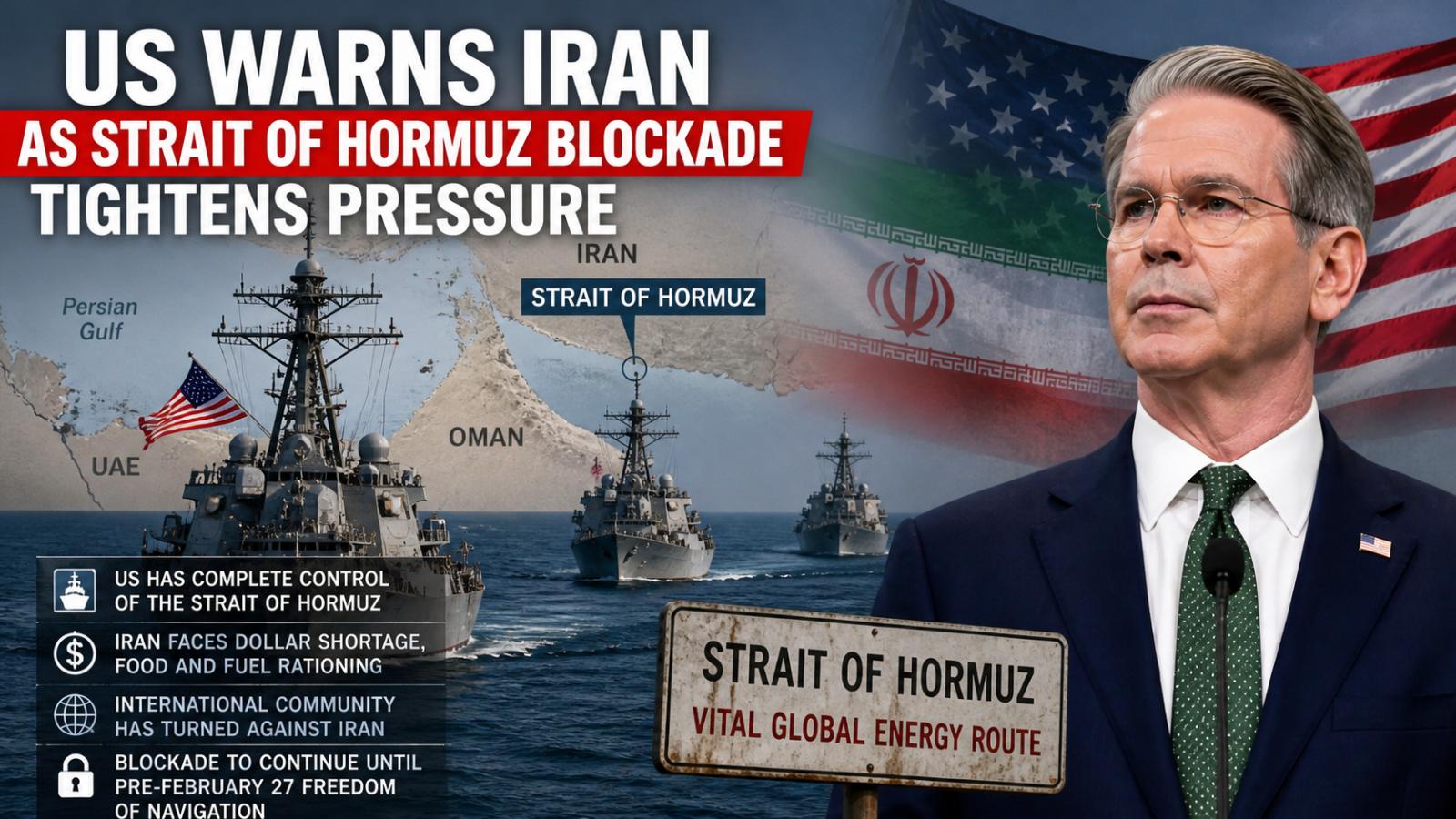
US warns Iran as Strait of Hormuz blockade tightens pressure
The US tightened pressure on Iran with a Strait of Hormuz blockade, disrupting oil trade and worsening Iran’s economic crisis, while internal political divisions grow and tensions with Washington escalate. US warns Iran as Strait of Hormuz blockade tightens pressure as tensions escalated following a sharply worded statement by U.S. Treasury Secretary Scott Bessent on Friday, in which he criticized Iran’s leadership and outlined the United States’ strategic position in the ongoing standoff. In a public post, Bessent asserted that the United States maintains full control over the Strait of Hormuz, a critical global energy transit route, and emphasized that a naval blockade would remain in effect until freedom of navigation conditions are restored to levels seen before February 27. The remarks come amid heightened geopolitical tensions involving Iran and the United States, with Bessent also pointing to economic strain within Iran, including a shortage of U.S. dollars and the implementation of food and gasoline rationing. He further stated that international sentiment has increasingly turned against Tehran, underscoring Washington’s broader diplomatic stance. The blockade represents a significant shift in pressure tactics. For years, Iran had managed to navigate sanctions by exporting oil through informal channels, particularly to China, using a network of so-called shadow vessels. However, U.S. naval operations have disrupted these routes, preventing tankers from bypassing enforcement measures and, in some cases, pursuing them beyond the Persian Gulf into the Indian Ocean. The situation escalated after Iran targeted commercial vessels and restricted maritime traffic through the Hormuz corridor, a move that disrupted global oil and liquefied natural gas shipments. In response, the United States deployed naval forces to secure the passage, effectively limiting Iran’s ability to continue its covert export operations. Internally, the crisis has exposed divisions within Iran’s leadership. President Masoud Pezeshkian is reportedly aligned with moderate factions seeking negotiations, while hardline figures such as Saeed Jalili advocate a more confrontational approach. The divergence reflects broader concerns about the sustainability of the conflict, particularly as economic conditions deteriorate. President Donald Trump has indicated support for maintaining the blockade, describing it as highly effective and signaling preparedness for a prolonged standoff. According to statements made to reporters, the administration is considering extending the measure until Iran meets specific nuclear-related demands. The economic impact on Iran has been severe. Reports indicate that unemployment has surged, food prices have risen sharply, and widespread internet disruptions have affected digital commerce. The national currency has weakened significantly over the past year, with the exchange rate reaching approximately 1.81 million rials per U.S. dollar, intensifying concerns about potential economic collapse.
US warns Iran as Strait of Hormuz blockade tightens pressure
The US tightened pressure on Iran with a Strait of Hormuz blockade, disrupting oil trade and worsening Iran’s economic crisis, while internal political divisions grow and tensions with Washington escalate. US warns Iran as Strait of Hormuz blockade tightens pressure as tensions escalated following a sharply worded statement by U.S. Treasury Secretary Scott Bessent on Friday, in which he criticized Iran’s leadership and outlined the United States’ strategic position in the ongoing standoff. In a public post, Bessent asserted that the United States maintains full control over the Strait of Hormuz, a critical global energy transit route, and emphasized that a naval blockade would remain in effect until freedom of navigation conditions are restored to levels seen before February 27. The remarks come amid heightened geopolitical tensions involving Iran and the United States, with Bessent also pointing to economic strain within Iran, including a shortage of U.S. dollars and the implementation of food and gasoline rationing. He further stated that international sentiment has increasingly turned against Tehran, underscoring Washington’s broader diplomatic stance. The blockade represents a significant shift in pressure tactics. For years, Iran had managed to navigate sanctions by exporting oil through informal channels, particularly to China, using a network of so-called shadow vessels. However, U.S. naval operations have disrupted these routes, preventing tankers from bypassing enforcement measures and, in some cases, pursuing them beyond the Persian Gulf into the Indian Ocean. The situation escalated after Iran targeted commercial vessels and restricted maritime traffic through the Hormuz corridor, a move that disrupted global oil and liquefied natural gas shipments. In response, the United States deployed naval forces to secure the passage, effectively limiting Iran’s ability to continue its covert export operations. Internally, the crisis has exposed divisions within Iran’s leadership. President Masoud Pezeshkian is reportedly aligned with moderate factions seeking negotiations, while hardline figures such as Saeed Jalili advocate a more confrontational approach. The divergence reflects broader concerns about the sustainability of the conflict, particularly as economic conditions deteriorate. President Donald Trump has indicated support for maintaining the blockade, describing it as highly effective and signaling preparedness for a prolonged standoff. According to statements made to reporters, the administration is considering extending the measure until Iran meets specific nuclear-related demands. The economic impact on Iran has been severe. Reports indicate that unemployment has surged, food prices have risen sharply, and widespread internet disruptions have affected digital commerce. The national currency has weakened significantly over the past year, with the exchange rate reaching approximately 1.81 million rials per U.S. dollar, intensifying concerns about potential economic collapse.
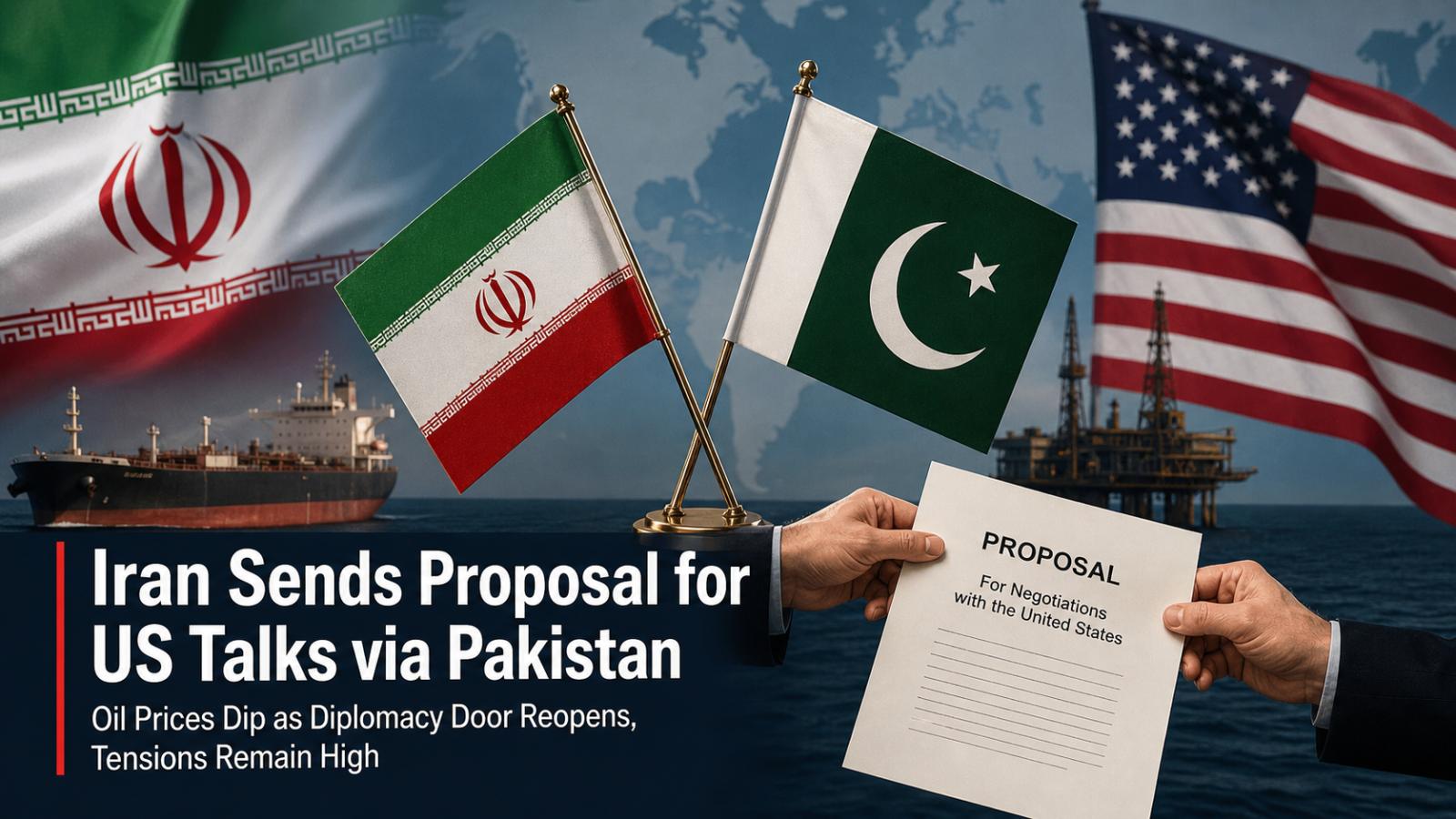
What did Iran propose to the U.S.? New talks plan sent via Pakistan signals diplomacy
Iran has delivered a new proposal for negotiations with the United States through Pakistan, signaling a potential diplomatic opening amid heightened regional tensions. According to IRNA, the proposal was formally
What did Iran propose to the U.S.? New talks plan sent via Pakistan signals diplomacy
Iran has delivered a new proposal for negotiations with the United States through Pakistan, signaling a potential diplomatic opening amid heightened regional tensions. According to IRNA, the proposal was formally
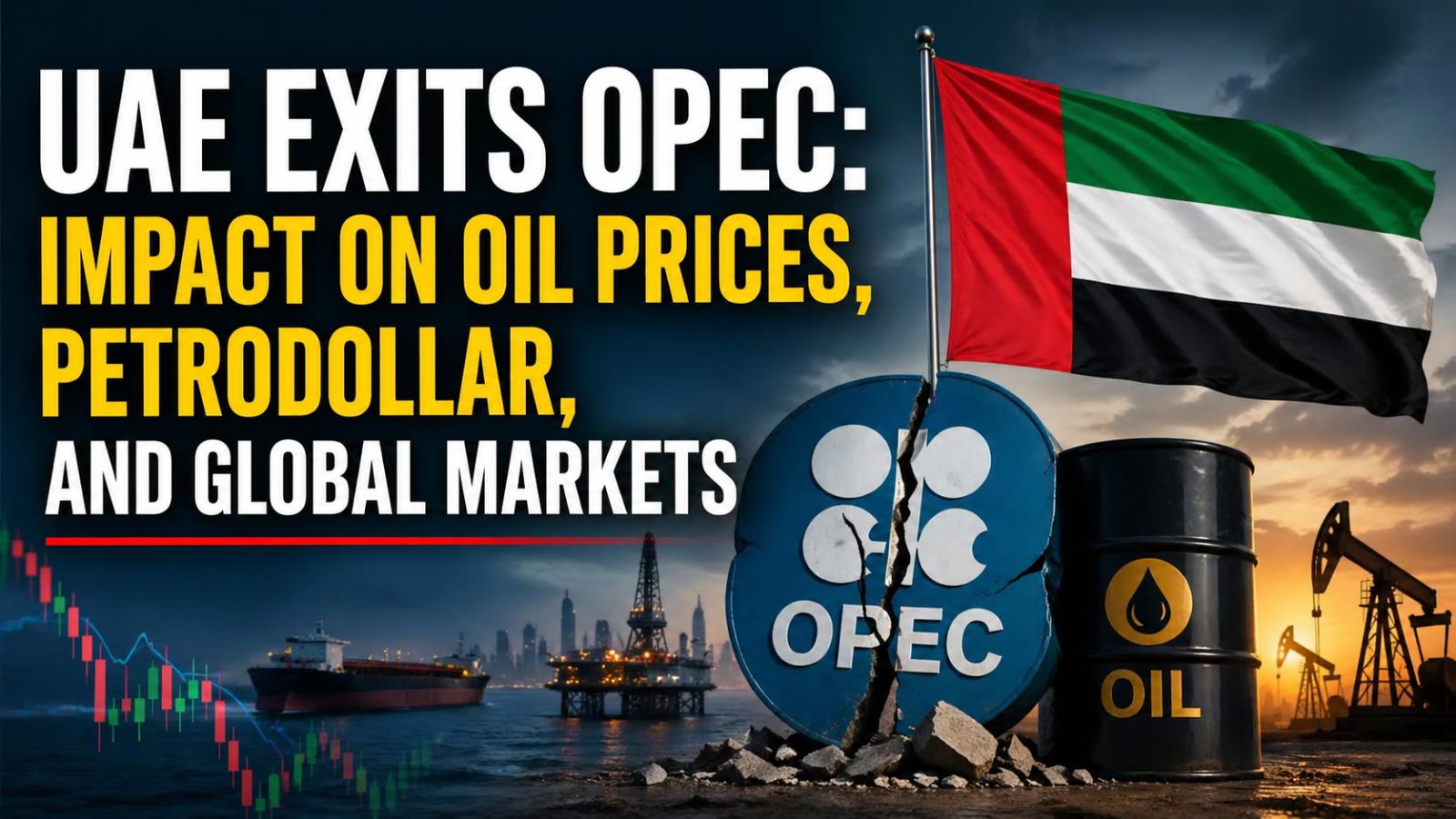
UAE leaves OPEC bloc amid Gulf tensions and shifting global currency trends
UAE exits OPEC and reshapes global oil and currency dynamics The decision by the United Arab Emirates to exit OPEC and OPEC+ marks a major shift in global energy markets. This move could increase oil price volatility, weaken OPEC’s control, and challenge the dominance of the US dollar in global oil trade. The timing is critical, coming amid rising oil prices, a growing dollar shortage in Gulf countries, and escalating tensions around the Strait of Hormuz. What does thi
UAE leaves OPEC bloc amid Gulf tensions and shifting global currency trends
UAE exits OPEC and reshapes global oil and currency dynamics The decision by the United Arab Emirates to exit OPEC and OPEC+ marks a major shift in global energy markets. This move could increase oil price volatility, weaken OPEC’s control, and challenge the dominance of the US dollar in global oil trade. The timing is critical, coming amid rising oil prices, a growing dollar shortage in Gulf countries, and escalating tensions around the Strait of Hormuz. What does thi
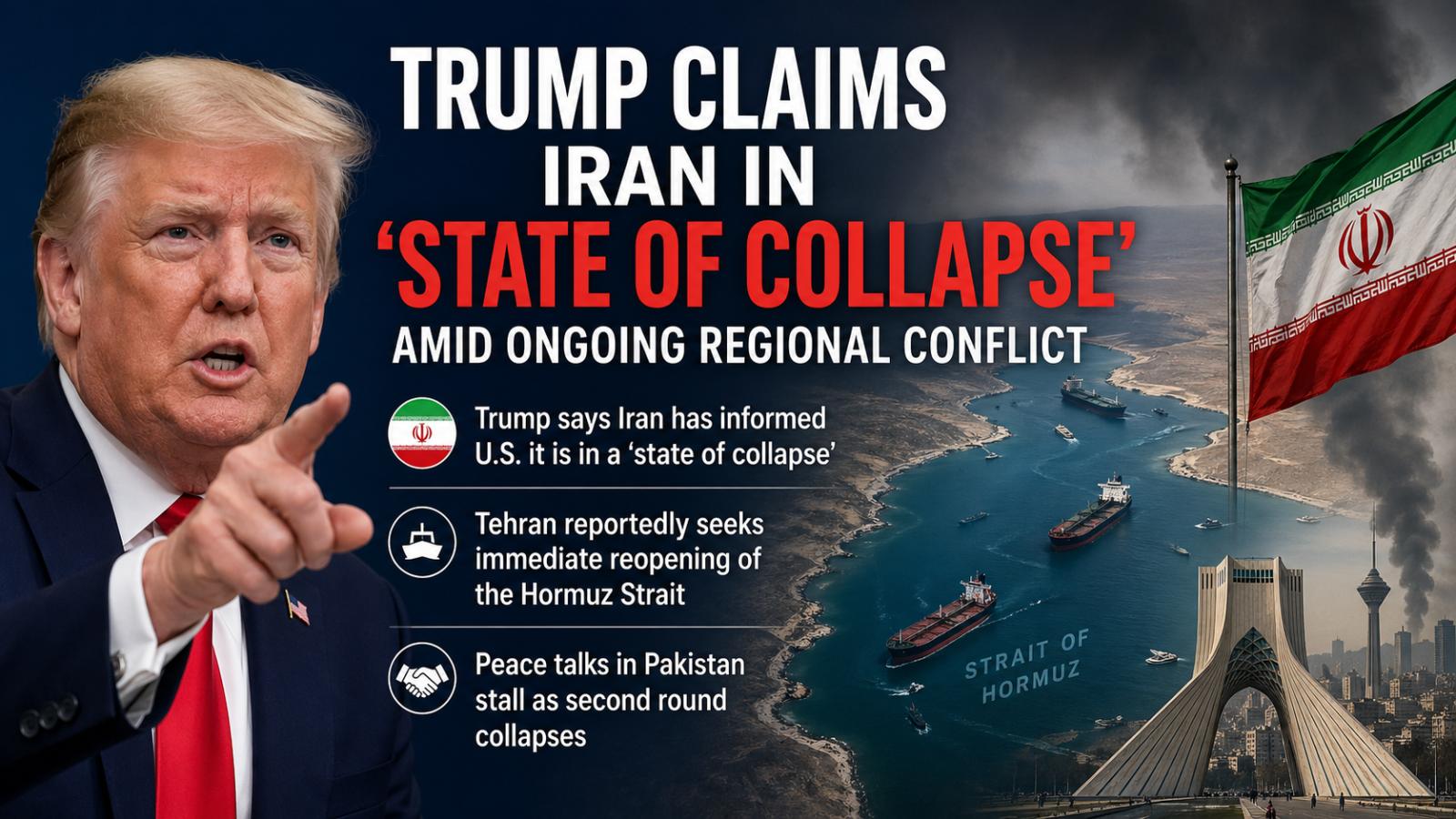
Trump claims Iran in ‘state of collapse’ amid ongoing regional conflict
Trump says Iran is in “collapse” and seeks reopening of the Hormuz Strait as conflict continues. Peace talks in Pakistan stalled, leaving regional tensions unresolved. Trump claims Iran in ‘state of collapse’ amid ongoing regional conflict as former U.S. President Donald Trump said the Iranian government has informed Washington it is facing a severe breakdown in l
Trump claims Iran in ‘state of collapse’ amid ongoing regional conflict
Trump says Iran is in “collapse” and seeks reopening of the Hormuz Strait as conflict continues. Peace talks in Pakistan stalled, leaving regional tensions unresolved. Trump claims Iran in ‘state of collapse’ amid ongoing regional conflict as former U.S. President Donald Trump said the Iranian government has informed Washington it is facing a severe breakdown in l
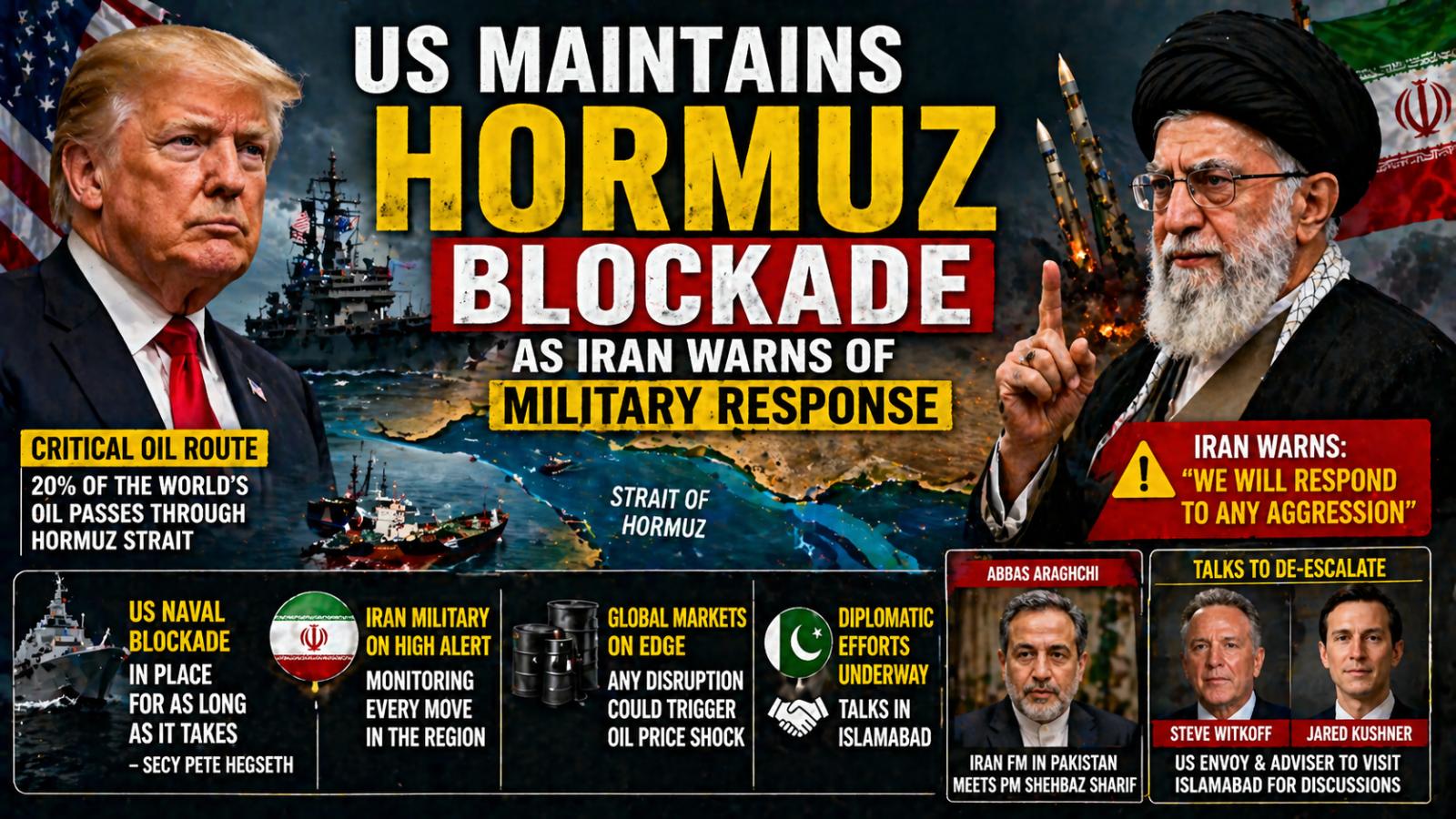
US maintains Hormuz blockade as Iran warns of military response
US maintains Hormuz blockade as Iran warns of retaliation, escalating tensions over a key global oil route while both sides pursue parallel diplomatic talks in Pakistan. US maintains Hormuz blockade as Iran warns of military response as tensions escalated on Saturday, April 25, 2026, when Iranian officials warned they would respond if U.S. naval actions targeting Iranian ports continue. The statement, issued through state-run media, described the U.S. presence in t
US maintains Hormuz blockade as Iran warns of military response
US maintains Hormuz blockade as Iran warns of retaliation, escalating tensions over a key global oil route while both sides pursue parallel diplomatic talks in Pakistan. US maintains Hormuz blockade as Iran warns of military response as tensions escalated on Saturday, April 25, 2026, when Iranian officials warned they would respond if U.S. naval actions targeting Iranian ports continue. The statement, issued through state-run media, described the U.S. presence in t
Venezuela, Hormuz, Malacca: The US-China energy conflict intensifies in 2026
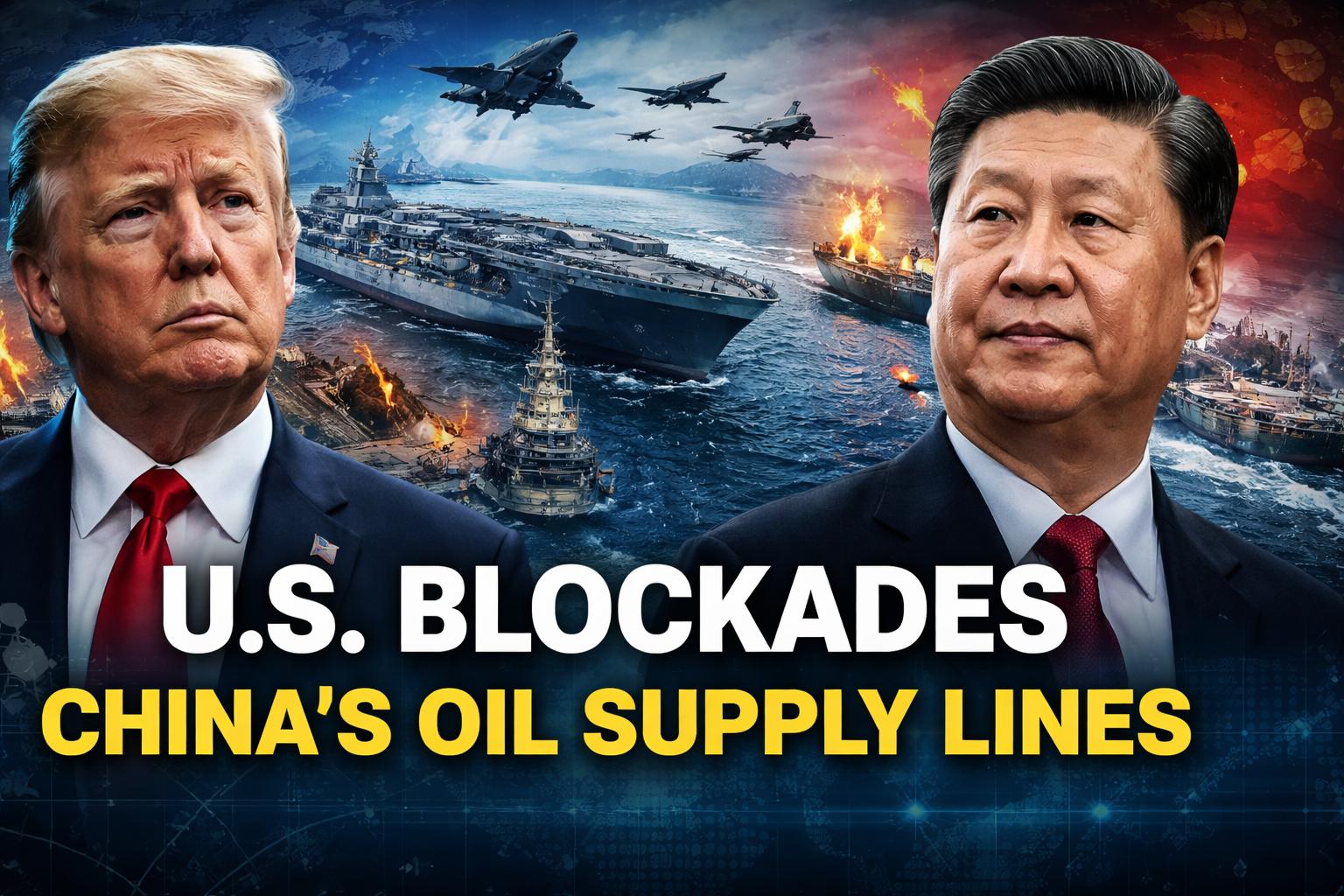
The geopolitical struggle for control over global oil supply routes escalated in early 2026, as the United States moved to strategically target key energy chokepoints in an attempt to disrupt China’s oil flow. With major oil reserves located in Venezuela, the strategic Strait of Hormuz, and the Malacca Strait, the US appears to be building a complex energy blockade aimed at China, using military force and economic pressure to shift the balance of power. In January 2026, the US took a bold step by moving its military presence to Venezuela, home to the world’s largest proven oil reserves. The operation involved an elite force that captured former Venezuelan President Nicolas Maduro, potentially altering the country’s political landscape and controlling access to its vast oil reserves. With an estimated 303 billion barrels of oil at stake, Venezuela became the first of many critical points in this evolving global energy chess game. The next move came in February 2026, when the US extended its reach into the Strait of Hormuz. This chokepoint, through which 20 to 25 percent of the world’s seaborne crude oil passes, became a target as the US launched air strikes on Iranian military and energy infrastructure. The subsequent blockade of Hormuz raised the stakes even higher, as China, a major oil importer, relies heavily on this route for its energy needs. Despite Trump’s assertion that the US no longer needed Hormuz oil due to domestic production, the global impact was undeniable, with oil prices rising sharply. By March 2026, the US had expanded its strategy to the Malacca Strait, one of the world’s busiest shipping lanes and a vital route for Chinese oil imports. Through a new deal with Indonesia, the US gained increased access to the region’s airspace, strengthening its surveillance and control capabilities. This move escalated the geopolitical pressure on China, which had already been preparing for such scenarios by building overland pipeline infrastructure to mitigate risks associated with maritime routes. China’s response to these strategic moves has been multifaceted. In Venezuela, it quickly adapted to the US military action, tapping into shadow fleets and using alternative routes to maintain its crude supply. Furthermore, China’s vast reserves, along with its investments in Russian and Iranian oil, have provided it with a buffer to withstand the pressure from the US blockade. With over 1.3 billion barrels in emergency reserves, China has the capacity to play the waiting game, absorbing the initial shocks to its oil supply. As the US tightens its grip on these strategic chokepoints, the geopolitical chessboard continues to shift. China’s ability to reroute oil through its vast pipeline network and shadow tanker fleet provides a buffer, but it remains to be seen which side will blink first in this high-stakes game. While the US hopes to achieve its goals through escalating energy denial, China’s resilience and strategic planning indicate that this global oil conflict is far from over. The Malacca Strait, a vital point in this strategic maneuvering, serves as the final battleground. With its ability to influence both regional and global shipping routes, the US’s efforts to control this chokepoint may prove pivotal. However, China’s efforts to secure alternative oil sources and protect its interests in the region suggest that the true outcome of this energy conflict will depend on the endurance and tactical flexibility of both superpowers.
Venezuela, Hormuz, Malacca: The US-China energy conflict intensifies in 2026
The geopolitical struggle for control over global oil supply routes escalated in early 2026, as the United States moved to strategically target key energy chokepoints in an attempt to disrupt China’s oil flow. With major oil reserves located in Venezuela, the strategic Strait of Hormuz, and the Malacca Strait, the US appears to be building a complex energy blockade aimed at China, using military force and economic pressure to shift the balance of power. In January 2026, the US took a bold step by moving its military presence to Venezuela, home to the world’s largest proven oil reserves. The operation involved an elite force that captured former Venezuelan President Nicolas Maduro, potentially altering the country’s political landscape and controlling access to its vast oil reserves. With an estimated 303 billion barrels of oil at stake, Venezuela became the first of many critical points in this evolving global energy chess game. The next move came in February 2026, when the US extended its reach into the Strait of Hormuz. This chokepoint, through which 20 to 25 percent of the world’s seaborne crude oil passes, became a target as the US launched air strikes on Iranian military and energy infrastructure. The subsequent blockade of Hormuz raised the stakes even higher, as China, a major oil importer, relies heavily on this route for its energy needs. Despite Trump’s assertion that the US no longer needed Hormuz oil due to domestic production, the global impact was undeniable, with oil prices rising sharply. By March 2026, the US had expanded its strategy to the Malacca Strait, one of the world’s busiest shipping lanes and a vital route for Chinese oil imports. Through a new deal with Indonesia, the US gained increased access to the region’s airspace, strengthening its surveillance and control capabilities. This move escalated the geopolitical pressure on China, which had already been preparing for such scenarios by building overland pipeline infrastructure to mitigate risks associated with maritime routes. China’s response to these strategic moves has been multifaceted. In Venezuela, it quickly adapted to the US military action, tapping into shadow fleets and using alternative routes to maintain its crude supply. Furthermore, China’s vast reserves, along with its investments in Russian and Iranian oil, have provided it with a buffer to withstand the pressure from the US blockade. With over 1.3 billion barrels in emergency reserves, China has the capacity to play the waiting game, absorbing the initial shocks to its oil supply. As the US tightens its grip on these strategic chokepoints, the geopolitical chessboard continues to shift. China’s ability to reroute oil through its vast pipeline network and shadow tanker fleet provides a buffer, but it remains to be seen which side will blink first in this high-stakes game. While the US hopes to achieve its goals through escalating energy denial, China’s resilience and strategic planning indicate that this global oil conflict is far from over. The Malacca Strait, a vital point in this strategic maneuvering, serves as the final battleground. With its ability to influence both regional and global shipping routes, the US’s efforts to control this chokepoint may prove pivotal. However, China’s efforts to secure alternative oil sources and protect its interests in the region suggest that the true outcome of this energy conflict will depend on the endurance and tactical flexibility of both superpowers.
US President Trump on Failed Talks: Iran Will Not Have a Nuclear Weapon
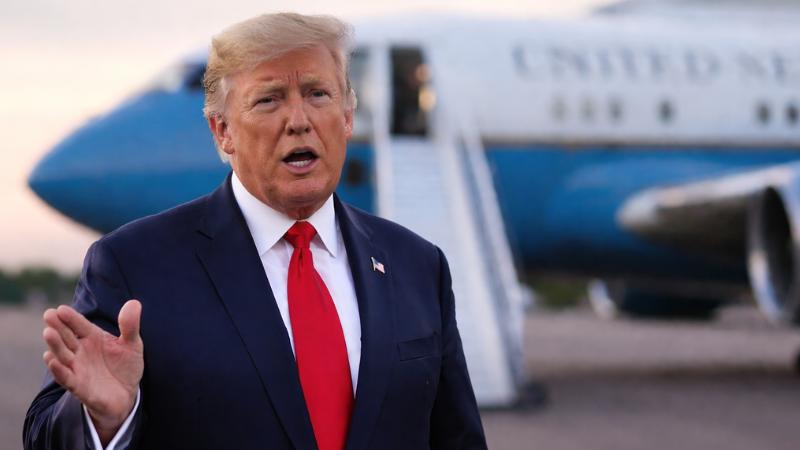
In the wake of a failed peace negotiation between the United States and Iran in Pakistan, US President Donald Trump announced a blockade on the Strait of Hormuz, which would come into effect at 10 AM on 13th April 2026. Speaking outside Air Force One, Trump stated that Iran is in a "very bad shape," emphasizing that the United States had a superior understanding of the situation. Despite the 21-hour long talks between the two nations, no agreement was reached, particularly on the issue of Ira
US President Trump on Failed Talks: Iran Will Not Have a Nuclear Weapon
In the wake of a failed peace negotiation between the United States and Iran in Pakistan, US President Donald Trump announced a blockade on the Strait of Hormuz, which would come into effect at 10 AM on 13th April 2026. Speaking outside Air Force One, Trump stated that Iran is in a "very bad shape," emphasizing that the United States had a superior understanding of the situation. Despite the 21-hour long talks between the two nations, no agreement was reached, particularly on the issue of Ira
India Secures Passage for Two Gas Tankers Through Hormuz Strait, Jaishankar Highlights Diplomatic Success
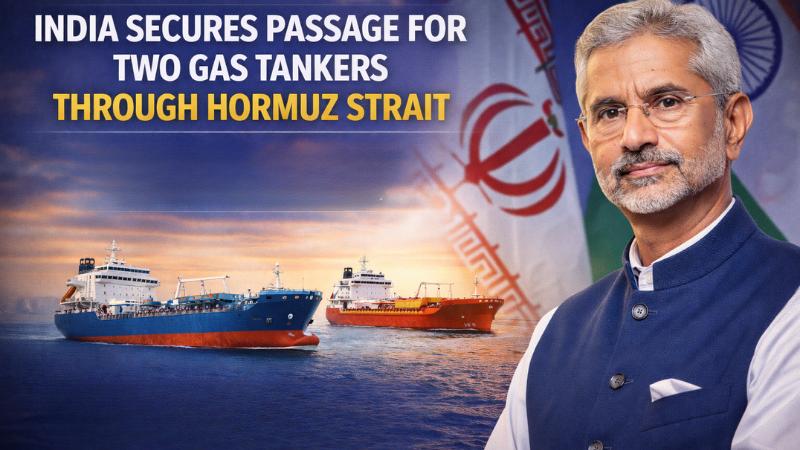
In a significant diplomatic development, External Affairs Minister S. Jaishankarhighlighted India's successful engagement with Iranthat
India Secures Passage for Two Gas Tankers Through Hormuz Strait, Jaishankar Highlights Diplomatic Success
In a significant diplomatic development, External Affairs Minister S. Jaishankarhighlighted India's successful engagement with Iranthat










