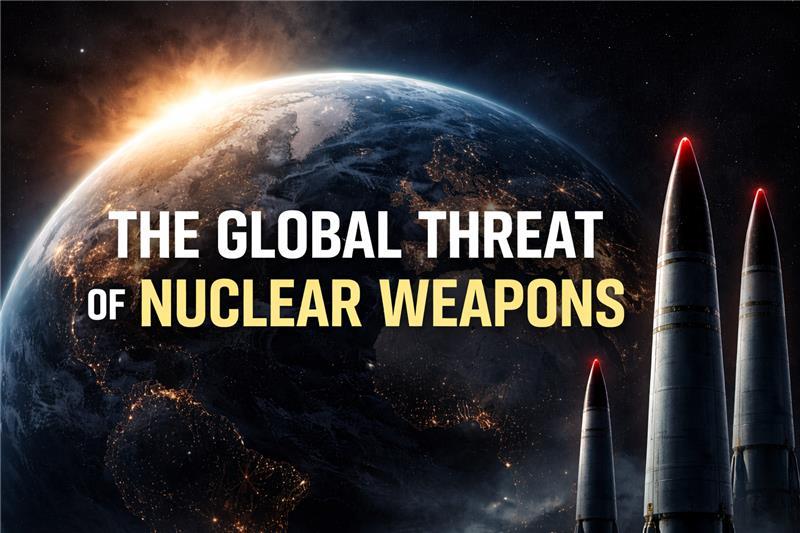
The global system governing nuclear weapons is not anchored in a single treaty but rather a web of agreements, arms-control arrangements, and regional initiatives, each designed to address different facets of nuclear security. While some agreements restrict which nations can possess nuclear weapons, others focus on halting tests, limiting arsenals, or even striving to establish nuclear-weapon-free zones. As of 2025, nine countries—led by the United States and Russia—currently maintain nuclear arsenals. These include the United Kingdom, France, China, India, Pakistan, North Korea, and Israel.
The foundation of global nuclear governance lies in the Treaty on the Non-Proliferation of Nuclear Weapons (NPT), enacted in 1970. This treaty designates the U.S., Russia, the U.K., France, and China as recognized nuclear states, while the remaining signatories pledge not to develop nuclear weapons and open their nuclear facilities to international inspections. The International Atomic Energy Agency (IAEA) plays a pivotal role in enforcing these inspections through safeguards designed to prevent misuse of nuclear technology.
In addition to the NPT, the Comprehensive Nuclear-Test-Ban Treaty (CTBT) seeks to prohibit all nuclear testing worldwide, though it is yet to be fully ratified. Meanwhile, the Treaty on the Prohibition of Nuclear Weapons (TPNW), adopted in 2017, aims to eliminate nuclear weapons entirely, but major nuclear powers have not signed on. Moreover, several regions have established Nuclear-Weapon-Free Zones, offering protection against nuclear threats in large parts of the world. Notably, the U.S. and Russia have signed multiple arms-control agreements, such as START and New START, to cap nuclear weapons and reduce global risks.
Despite these efforts, the rise of new nuclear arms races poses a critical challenge to the system. While the global nuclear framework is effective at curbing the spread of nuclear weapons, it struggles to completely eliminate them. Tensions between nuclear states continue to rise, showing the limitations of current treaties in preventing further escalation.
If a nuclear conflict were to ignite, the results would be catastrophic. Massive blast waves, extreme heat, and radiation would obliterate cities, decimating infrastructure and human life. Radiation would continue to claim lives over time, while healthcare systems and essential services collapse, leaving no effective means of recovery. The ensuing global disruption would collapse food systems and possibly lead to famine across continents. Even a limited nuclear war could affect billions globally, emphasizing that no region is safe from the fallout. Escalation remains the most dangerous element, with a single strike potentially triggering a wider, uncontrollable conflict.
In conclusion, nuclear weapons pose an existential risk to humanity. While international agreements such as the NPT, CTBT, and TPNW have worked to manage and control these weapons, they are increasingly inadequate in the face of growing geopolitical tensions. The future of nuclear arms control hinges on nations choosing cooperation over the peril of irreversible destruction.