







India Beat Pakistan by 19 Runs to Win Asian Games 2026 Gold
India clinched the men’s cricket gold medal at the 2026 Asian Games after defeating Pakistan by 19 runs in a high-scoring final in Japan on Saturday, October 3. Batting first after winning the toss, India posted an imposing 211/6 in 20 overs, powered by impressive half-centuries from Abhishek Sharma and Tilak Varma. Pakistan fought back during the chase but finished at 192/6, handing India the gold medal. Abhishek Sharma Gives India Flying Start
India Beat Pakistan by 19 Runs to Win Asian Games 2026 Gold
India clinched the men’s cricket gold medal at the 2026 Asian Games after defeating Pakistan by 19 runs in a high-scoring final in Japan on Saturday, October 3. Batting first after winning the toss, India posted an imposing 211/6 in 20 overs, powered by impressive half-centuries from Abhishek Sharma and Tilak Varma. Pakistan fought back during the chase but finished at 192/6, handing India the gold medal. Abhishek Sharma Gives India Flying Start
Russia backs India for permanent UNSC seat at UNGA
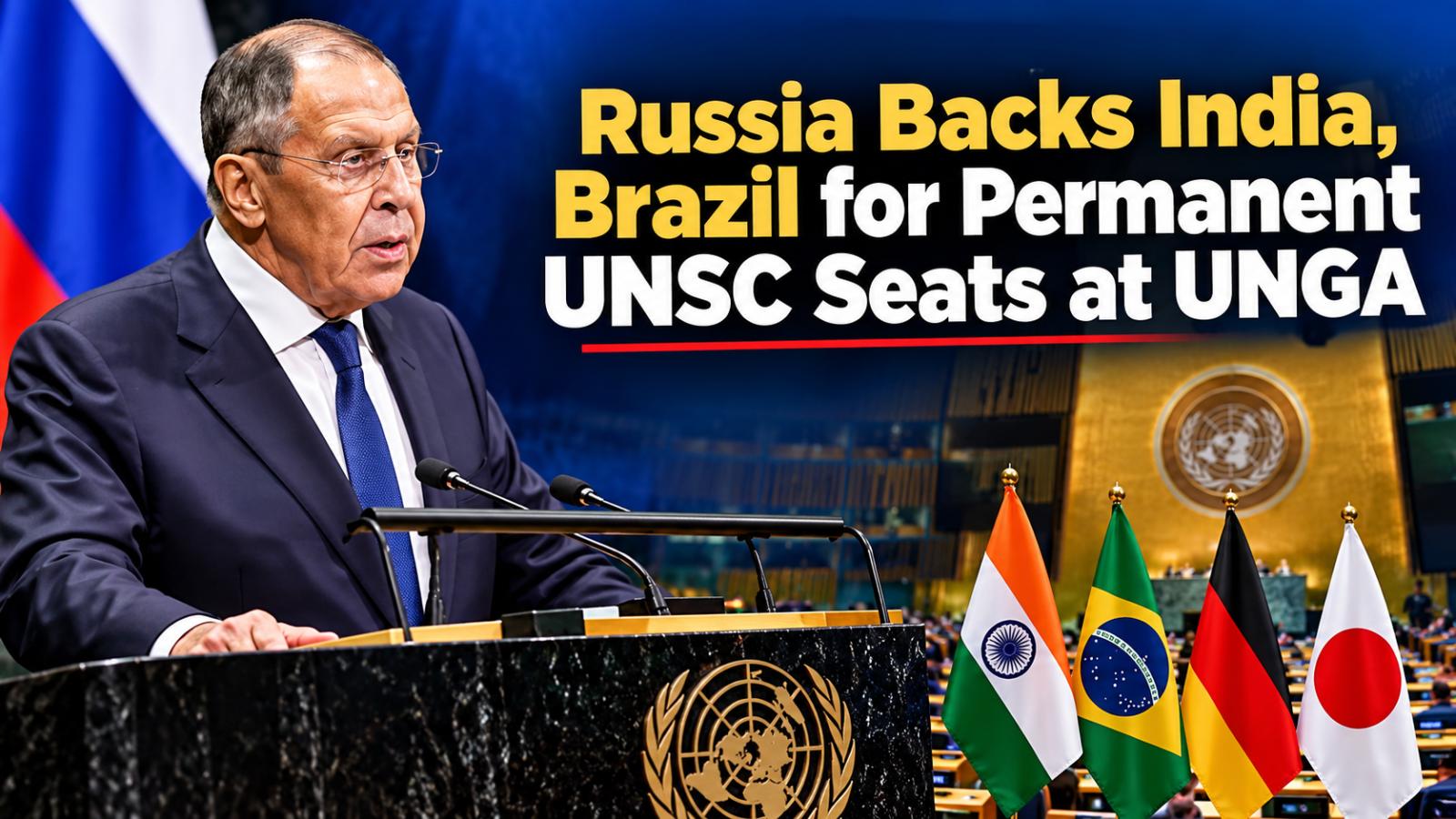
Russia backs India for a permanent UNSC seat as Sergey Lavrov renews Moscow’s support for India and Brazil at the UNGA. The move sharpens the UNSC reform debate, highlighting G4 differences and calls for stronger Global South representation. Russia backs India UNSC bid at UN General Assembly Russia has renewed its support for India becoming a permanent member of the United Nations Security
Russia backs India for permanent UNSC seat at UNGA
Russia backs India for a permanent UNSC seat as Sergey Lavrov renews Moscow’s support for India and Brazil at the UNGA. The move sharpens the UNSC reform debate, highlighting G4 differences and calls for stronger Global South representation. Russia backs India UNSC bid at UN General Assembly Russia has renewed its support for India becoming a permanent member of the United Nations Security

India-Japan T20I: Wide reversal seals dramatic Suzuki Cup win
India survived a remarkable Japan challenge in the one-off T20I in Sano, winning by just two runs after a controversial wide-ball decision was reversed in the final over. The five-over contest ended with India defending 32, but Axar Patel’s last over turned the Suzuki Cup finish into a major talking point. Axar wide call sparks final-over drama Japan entered the final over with a realistic chance of completing a major upset. Axar Patel conceded only one run from his first two deliveries before Alexander Shirai-Patmore attempted a reverse sweep. The bowler then sent down a delivery that umpire Chris Thurgate called wide. A similar delivery followed, and the umpire again initially signalled wide. India protested the second call, leading to a discussion between the officials before it was reversed. That reversal mattered enormously. It removed the extra run and, because the delivery became legal, also denied Japan the additional ball that a wide would normally produce. Japan eventually finished on 30 for three as India escaped with a two-run victory. Reverse sweep rule explains the decision The key issue was not simply that the batter attempted a reverse sweep. Under MCC Law 22, an umpire judges whether the ball passed beyond the batter’s reach for a normal cricket stroke, while also taking the striker’s movement into account. A delivery should not be called wide if the batter’s movement brings it sufficiently within reach. That distinction is important because saying every reverse-sweep attempt automatically removes the possibility of a wide would be inaccurate. ICC regulations have long allowed greater leeway to bowlers when batters switch position or attempt unconventional strokes. Final over becomes match-defining moment The overturned decision immediately changed the equation. Japan still had an opportunity to force a tie or win, but Axar kept the remaining deliveries under control. Had the second wide stood, Japan would have received both an extra run and an extra delivery, making the closing equation significantly easier. Instead, India completed a narrow win in a match that had been reduced to five overs per side. Japan chase gives India a major scare India’s total of 32 proved far less comfortable than expected. Japan stayed in contention throughout the short chase and pushed the match to its final delivery, giving India little margin for error. The result handed India the Suzuki Cup, but the lasting discussion centered on the umpiring reversal rather than the trophy itself. The incident also showed why modern wide-ball interpretations become complicated when batters move across the crease or attempt reverse sweeps and switch hits.
India-Japan T20I: Wide reversal seals dramatic Suzuki Cup win
India survived a remarkable Japan challenge in the one-off T20I in Sano, winning by just two runs after a controversial wide-ball decision was reversed in the final over. The five-over contest ended with India defending 32, but Axar Patel’s last over turned the Suzuki Cup finish into a major talking point. Axar wide call sparks final-over drama Japan entered the final over with a realistic chance of completing a major upset. Axar Patel conceded only one run from his first two deliveries before Alexander Shirai-Patmore attempted a reverse sweep. The bowler then sent down a delivery that umpire Chris Thurgate called wide. A similar delivery followed, and the umpire again initially signalled wide. India protested the second call, leading to a discussion between the officials before it was reversed. That reversal mattered enormously. It removed the extra run and, because the delivery became legal, also denied Japan the additional ball that a wide would normally produce. Japan eventually finished on 30 for three as India escaped with a two-run victory. Reverse sweep rule explains the decision The key issue was not simply that the batter attempted a reverse sweep. Under MCC Law 22, an umpire judges whether the ball passed beyond the batter’s reach for a normal cricket stroke, while also taking the striker’s movement into account. A delivery should not be called wide if the batter’s movement brings it sufficiently within reach. That distinction is important because saying every reverse-sweep attempt automatically removes the possibility of a wide would be inaccurate. ICC regulations have long allowed greater leeway to bowlers when batters switch position or attempt unconventional strokes. Final over becomes match-defining moment The overturned decision immediately changed the equation. Japan still had an opportunity to force a tie or win, but Axar kept the remaining deliveries under control. Had the second wide stood, Japan would have received both an extra run and an extra delivery, making the closing equation significantly easier. Instead, India completed a narrow win in a match that had been reduced to five overs per side. Japan chase gives India a major scare India’s total of 32 proved far less comfortable than expected. Japan stayed in contention throughout the short chase and pushed the match to its final delivery, giving India little margin for error. The result handed India the Suzuki Cup, but the lasting discussion centered on the umpiring reversal rather than the trophy itself. The incident also showed why modern wide-ball interpretations become complicated when batters move across the crease or attempt reverse sweeps and switch hits.
India Global Opinion Survey: Sri Lanka Leads With 79% Support
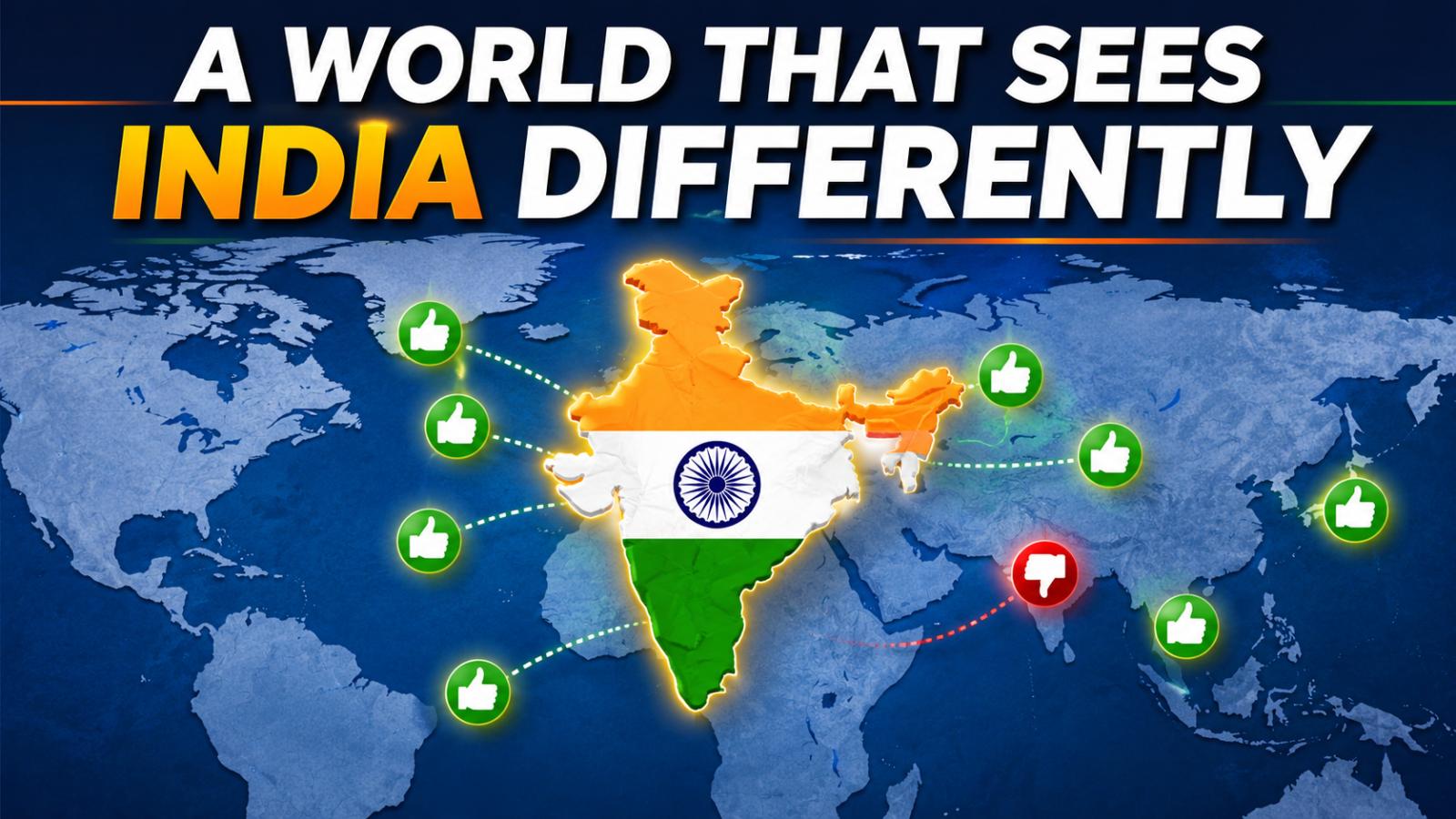
A new India global opinion survey shows striking differences in how the country is viewed worldwide. Sri Lanka records the strongest favourable opinion, while the UK, Kenya and Germany also show strong goodwill. Pakistan stands at the opposite end, giving India its lowest rating among the 36 countries surveyed. Sri Lanka Sri Lanka emerged as the most India-friendly country in Pew Research Cente
India Global Opinion Survey: Sri Lanka Leads With 79% Support
A new India global opinion survey shows striking differences in how the country is viewed worldwide. Sri Lanka records the strongest favourable opinion, while the UK, Kenya and Germany also show strong goodwill. Pakistan stands at the opposite end, giving India its lowest rating among the 36 countries surveyed. Sri Lanka Sri Lanka emerged as the most India-friendly country in Pew Research Cente
India Bullet Train Project to Start With Indian Trains, Japan E10 Later
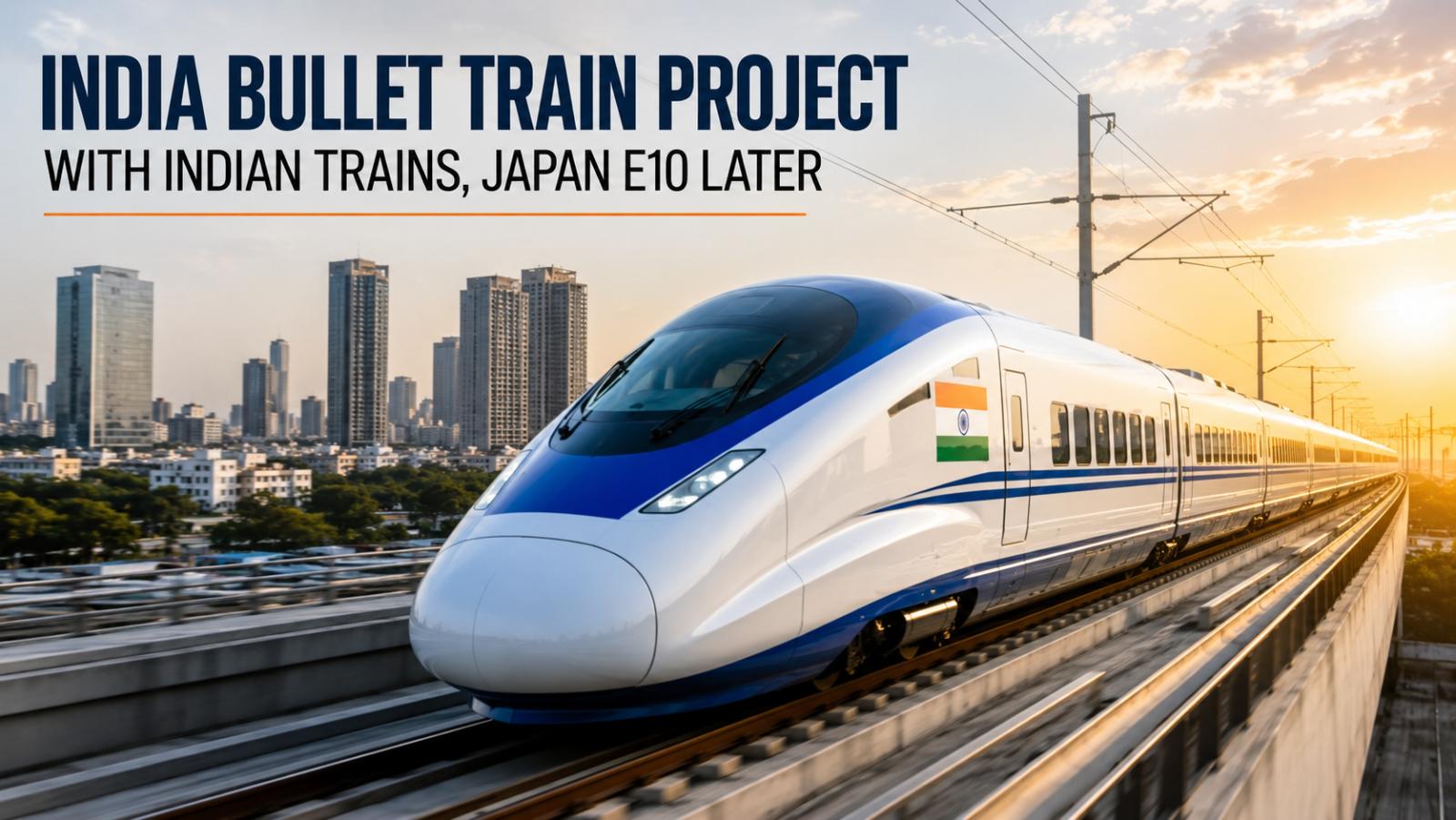
India’s bullet train programme is moving into a new phase, with Indian-built high-speed trains expected to start services before Japan supplies its next-generation E10 Shinkansen sets. The plan is important for domestic rail technology, faster corridor rollout and long-term India-Japan cooperation. The India bullet train project with Indian trains is set to begin before Japan supplies its next-generation E10 Shinkansen fleet. The Ministry of E
India Bullet Train Project to Start With Indian Trains, Japan E10 Later
India’s bullet train programme is moving into a new phase, with Indian-built high-speed trains expected to start services before Japan supplies its next-generation E10 Shinkansen sets. The plan is important for domestic rail technology, faster corridor rollout and long-term India-Japan cooperation. The India bullet train project with Indian trains is set to begin before Japan supplies its next-generation E10 Shinkansen fleet. The Ministry of E
India-Japan summit signals strategic shift beyond China
India-Japan summit reflects a broader strategic shift The India-Japan summit has drawn attention beyond New Delhi and Tokyo because its outcomes point to a wider realignment in Asia’s economic and security order. Japan’s plan to invest more than $61 billion in India over the next decade is the headline, but the deeper issue is why Tokyo is seeking stronger options outside China. Prime Minister Sanae Takai
India-Japan summit signals strategic shift beyond China
India-Japan summit reflects a broader strategic shift The India-Japan summit has drawn attention beyond New Delhi and Tokyo because its outcomes point to a wider realignment in Asia’s economic and security order. Japan’s plan to invest more than $61 billion in India over the next decade is the headline, but the deeper issue is why Tokyo is seeking stronger options outside China. Prime Minister Sanae Takai
India Japan economic ties shift toward supply chain resilience
India and Japan are steadily moving their partnership beyond routine trade discussions into a broader realignment shaped by global risk and industrial restructuring. What looks like increased investment flows is actually part of a deeper repositioning of how both countries want to secure long-term economic stability in an uncertain global environment. Investment growth driven by risk recalibration Japanese companies are expanding their footprint in India not only for growth but also to reduce exposure to concentrated supply networks in East Asia. Rising geopolitical friction and periodic trade restrictions have forced firms to reconsider how dependent they are on single-country manufacturing systems. India is increasingly viewed as a viable diversification hub due to its scale, labor availability, and expanding industrial base. Supply chain restructuring becomes the core driver The most significant shift is happening in supply chains rather than headline investment figures. Japanese manufacturers are gradually redesigning sourcing and production models to reduce vulnerabilities in electronics, automotive components, and precision engineering. India fits into this transition as an alternative production and assembly base, especially for sectors where demand is growing but diversification is still limited. Technology and industrial cooperation deepen Cooperation is also expanding into advanced sectors such as semiconductors, digital systems, and artificial intelligence. These areas are no longer treated as purely commercial exchanges but as strategic capabilities. Both countries are aligning on technology resilience, where production continuity and security of supply matter as much as cost efficiency. Rare earths and critical materials gain importance Another emerging focus is critical minerals and rare earth supply chains. These materials are essential for electronics, renewable energy systems, and defence manufacturing. Dependence on concentrated suppliers has pushed both India and Japan to explore alternative sourcing strategies and joint development frameworks to reduce long-term risk. Financial flows signal long-term positioning Japanese capital inflows into Indian financial institutions and industrial projects suggest more than short-term investment interest. Financial participation typically indicates long-term confidence in policy stability and market expansion. However, the real test will be whether this capital flow expands into deeper manufacturing integration rather than remaining portfolio-based exposure. Economic security becomes the defining theme At the core of this evolving relationship is economic security. Trade decisions are increasingly shaped by geopolitical uncertainty rather than pure cost advantage. This marks a shift from efficiency-driven globalization to resilience-driven partnerships, where countries prioritize stability over optimization. A cautious but strategic realignment The India–Japan partnership is gradually becoming a case study in how middle and advanced economies adjust to global fragmentation. While the direction is clear—greater cooperation in technology, investment, and supply chains—the pace will depend on regulatory alignment, infrastructure readiness, and how effectively both sides manage external geopolitical pressures.
India Japan economic ties shift toward supply chain resilience
India and Japan are steadily moving their partnership beyond routine trade discussions into a broader realignment shaped by global risk and industrial restructuring. What looks like increased investment flows is actually part of a deeper repositioning of how both countries want to secure long-term economic stability in an uncertain global environment. Investment growth driven by risk recalibration Japanese companies are expanding their footprint in India not only for growth but also to reduce exposure to concentrated supply networks in East Asia. Rising geopolitical friction and periodic trade restrictions have forced firms to reconsider how dependent they are on single-country manufacturing systems. India is increasingly viewed as a viable diversification hub due to its scale, labor availability, and expanding industrial base. Supply chain restructuring becomes the core driver The most significant shift is happening in supply chains rather than headline investment figures. Japanese manufacturers are gradually redesigning sourcing and production models to reduce vulnerabilities in electronics, automotive components, and precision engineering. India fits into this transition as an alternative production and assembly base, especially for sectors where demand is growing but diversification is still limited. Technology and industrial cooperation deepen Cooperation is also expanding into advanced sectors such as semiconductors, digital systems, and artificial intelligence. These areas are no longer treated as purely commercial exchanges but as strategic capabilities. Both countries are aligning on technology resilience, where production continuity and security of supply matter as much as cost efficiency. Rare earths and critical materials gain importance Another emerging focus is critical minerals and rare earth supply chains. These materials are essential for electronics, renewable energy systems, and defence manufacturing. Dependence on concentrated suppliers has pushed both India and Japan to explore alternative sourcing strategies and joint development frameworks to reduce long-term risk. Financial flows signal long-term positioning Japanese capital inflows into Indian financial institutions and industrial projects suggest more than short-term investment interest. Financial participation typically indicates long-term confidence in policy stability and market expansion. However, the real test will be whether this capital flow expands into deeper manufacturing integration rather than remaining portfolio-based exposure. Economic security becomes the defining theme At the core of this evolving relationship is economic security. Trade decisions are increasingly shaped by geopolitical uncertainty rather than pure cost advantage. This marks a shift from efficiency-driven globalization to resilience-driven partnerships, where countries prioritize stability over optimization. A cautious but strategic realignment The India–Japan partnership is gradually becoming a case study in how middle and advanced economies adjust to global fragmentation. While the direction is clear—greater cooperation in technology, investment, and supply chains—the pace will depend on regulatory alignment, infrastructure readiness, and how effectively both sides manage external geopolitical pressures.

India Japan summit 2026 boosts FOIP rare earth strategy
The India Japan Summit 2026 is emerging as more than diplomatic engagement, shifting toward a structured economic alignment under the Free and Open Indo-Pacific (FOIP) framework. Japan is positioning India as a long-term partner in building alternative production networks outside China’s dominant supply ecosystem. The focus is no longer symbolic cooperation but measurable industrial integration across energy, technology, and critical materials. Rare Earth Dependency and Strategic Diversification A major driver of the summit is global concern over rare earth concentration in China. These materials are essential for electric vehicles, defence systems, and semiconductor manufacturing. Japan has been actively seeking diversification, and India is being viewed as a viable partner due to its untapped mineral reserves and growing extraction capability. However, this shift is not immediate. India still faces infrastructure gaps in refining and processing, which limits its ability to fully replace existing supply chains. The partnership therefore focuses on joint development rather than replacement. Northeast India as an Emerging Industrial Bridge Northeast India is increasingly being integrated into strategic planning as a logistics and manufacturing connector between South Asia and Southeast Asia. Its geographical position near the Bay of Bengal makes it relevant for regional trade routes, especially under Japan-backed connectivity initiatives. The long-term expectation is the development of corridors linking manufacturing zones, ports, and resource hubs. But execution remains a challenge due to terrain, infrastructure bottlenecks, and slow industrial scaling. EV Batteries and Semiconductor Collaboration Expands The summit is expected to accelerate cooperation in electric mobility and chip production. Japan’s technology strength in precision manufacturing complements India’s expanding industrial base and domestic demand growth. Instead of simple export-import trade, both countries are moving toward localized production ecosystems. This includes battery supply chains, semiconductor assembly, and joint research in advanced materials. The real shift here is from consumption-driven trade to production-sharing models. Investment Flow and Industrial Integration Japanese investment in India continues to grow steadily, with a strong presence in automobiles, electronics, and infrastructure. The partnership now appears to be entering a deeper phase where investment is tied to strategic supply chain redesign rather than isolated projects. This creates a long-term dependency loop where both economies benefit from shared manufacturing ecosystems, but also become more structurally linked to global market fluctuations. Strategic Outcome: A Competing Supply Chain Bloc The broader outcome of the India Japan Summit 2026 is the gradual formation of an alternative industrial network in Asia. It does not replace existing systems overnight but creates parallel pathways in critical sectors like energy storage, semiconductors, and defence manufacturing. The key question going forward is execution speed. Policy alignment is strong, but infrastructure readiness and capital deployment will decide how quickly this partnership moves from strategy to reality.
India Japan summit 2026 boosts FOIP rare earth strategy
The India Japan Summit 2026 is emerging as more than diplomatic engagement, shifting toward a structured economic alignment under the Free and Open Indo-Pacific (FOIP) framework. Japan is positioning India as a long-term partner in building alternative production networks outside China’s dominant supply ecosystem. The focus is no longer symbolic cooperation but measurable industrial integration across energy, technology, and critical materials. Rare Earth Dependency and Strategic Diversification A major driver of the summit is global concern over rare earth concentration in China. These materials are essential for electric vehicles, defence systems, and semiconductor manufacturing. Japan has been actively seeking diversification, and India is being viewed as a viable partner due to its untapped mineral reserves and growing extraction capability. However, this shift is not immediate. India still faces infrastructure gaps in refining and processing, which limits its ability to fully replace existing supply chains. The partnership therefore focuses on joint development rather than replacement. Northeast India as an Emerging Industrial Bridge Northeast India is increasingly being integrated into strategic planning as a logistics and manufacturing connector between South Asia and Southeast Asia. Its geographical position near the Bay of Bengal makes it relevant for regional trade routes, especially under Japan-backed connectivity initiatives. The long-term expectation is the development of corridors linking manufacturing zones, ports, and resource hubs. But execution remains a challenge due to terrain, infrastructure bottlenecks, and slow industrial scaling. EV Batteries and Semiconductor Collaboration Expands The summit is expected to accelerate cooperation in electric mobility and chip production. Japan’s technology strength in precision manufacturing complements India’s expanding industrial base and domestic demand growth. Instead of simple export-import trade, both countries are moving toward localized production ecosystems. This includes battery supply chains, semiconductor assembly, and joint research in advanced materials. The real shift here is from consumption-driven trade to production-sharing models. Investment Flow and Industrial Integration Japanese investment in India continues to grow steadily, with a strong presence in automobiles, electronics, and infrastructure. The partnership now appears to be entering a deeper phase where investment is tied to strategic supply chain redesign rather than isolated projects. This creates a long-term dependency loop where both economies benefit from shared manufacturing ecosystems, but also become more structurally linked to global market fluctuations. Strategic Outcome: A Competing Supply Chain Bloc The broader outcome of the India Japan Summit 2026 is the gradual formation of an alternative industrial network in Asia. It does not replace existing systems overnight but creates parallel pathways in critical sectors like energy storage, semiconductors, and defence manufacturing. The key question going forward is execution speed. Policy alignment is strong, but infrastructure readiness and capital deployment will decide how quickly this partnership moves from strategy to reality.
India Japan summit 2026 reshapes Indo Pacific alignment
The latest round of strategic talks between India and Japan signals a shift from broad diplomatic alignment to project-driven cooperation. The visit by Japanese Prime Minister Sanae Takaichi marks a renewed focus on infrastructure delivery, supply chain redesign, and
India Japan summit 2026 reshapes Indo Pacific alignment
The latest round of strategic talks between India and Japan signals a shift from broad diplomatic alignment to project-driven cooperation. The visit by Japanese Prime Minister Sanae Takaichi marks a renewed focus on infrastructure delivery, supply chain redesign, and
India Japan summit to review 10-year joint vision roadmap cooperation
India-Japan Summit to Review Long-Term Strategic Roadmap India is set to host Japanese Prime Minister Sanae Takaichi from July 1 to 3 for the 16th India-Japan Annual Summit, where both sides are expected to review progress under the Japan-India Joint Vision for the Next Decade. The framework, signed in Tokyo in August 2025, outlines a long-term roadmap aimed at streng
India Japan summit to review 10-year joint vision roadmap cooperation
India-Japan Summit to Review Long-Term Strategic Roadmap India is set to host Japanese Prime Minister Sanae Takaichi from July 1 to 3 for the 16th India-Japan Annual Summit, where both sides are expected to review progress under the Japan-India Joint Vision for the Next Decade. The framework, signed in Tokyo in August 2025, outlines a long-term roadmap aimed at streng
Japan PM visit pushes India Japan tech and defence cooperation
India and Japan have taken another step toward strengthening their long-term strategic relationship as high-level discussions were held in New Delhi focused on expanding cooperation across trade, defence, technology, and infrastructure. The engagement reflects a broader effort by both nations to build resilience in supply chains and increase coordination in the Indo-Pacific region amid shifting global economic and security dynamics. Rather than treating the relationship as routine diplomacy, both sides are increasingly positioning it as a structured partnership tied to economic security, innovation, and regional stability. Trade and investment becoming the core growth driver Economic cooperation continues to act as the backbone of the relationship. Japan remains one of India’s key foreign investors, with long-term commitments spread across manufacturing, transport, and urban development sectors. Japanese companies continue to expand their presence in India, particularly in automotive, electronics, and industrial technology. Infrastructure development remains a central pillar, with ongoing support for metro systems, freight corridors, and high-speed rail projects. Financial and institutional backing through Japanese development agencies has played a major role in shaping large-scale connectivity projects across Indian cities. However, both sides still face structural challenges such as slow project execution timelines and regulatory bottlenecks, which limit the speed of capital deployment despite strong political alignment. Defence cooperation expands beyond symbolic engagement Security collaboration between India and Japan has gradually shifted from occasional exercises to more consistent operational coordination. Joint drills such as maritime exercises and regional security training programs have strengthened interoperability between the two defence forces. The focus is increasingly on maritime domain awareness, especially in the Indo-Pacific region where strategic sea lanes remain critical for global trade. Both countries are also exploring ways to improve defence technology exchange, although this area remains sensitive due to regulatory and strategic constraints. Despite progress, defence cooperation is still relatively cautious compared to economic engagement, reflecting differing strategic thresholds and domestic policy considerations. Northeast India emerges as a strategic connectivity zone One of the most notable areas of cooperation is India’s northeastern region, which has gained attention as a key connectivity and development corridor. Japanese-supported infrastructure projects have contributed to road development, bridge construction, and logistics improvement in the region. Beyond physical infrastructure, skill development initiatives are also being introduced to improve employment readiness and cross-border workforce mobility. The region is increasingly being viewed as a bridge between South Asia and Southeast Asia, aligning with broader Indo-Pacific connectivity goals. Still, the region continues to face challenges including terrain constraints, limited industrial base, and slower private sector participation. Technology, AI and future-oriented collaboration Both countries are expanding cooperation in advanced technologies including artificial intelligence, clean energy systems, and digital infrastructure. Joint initiatives are being explored in areas such as smart manufacturing, automation, and next-generation communication systems. There is also growing interest in building more resilient supply chains for critical sectors like semiconductors and green energy technologies. This reflects a shared concern over global supply disruptions and overdependence on concentrated manufacturing hubs. While ambitions are high, actual implementation will depend on regulatory alignment and private sector participation, which remain uneven across sectors. Strategic outlook for the partnership The India–Japan relationship is increasingly being shaped by long-term geopolitical and economic considerations rather than short-term diplomatic exchanges. Both countries appear aligned on maintaining stability in the Indo-Pacific while expanding economic integration. However, the partnership is still evolving and remains uneven across sectors—strong in trade and infrastructure, moderate in defence, and still developing in advanced technology cooperation. The next phase will depend on execution efficiency and the ability to convert policy agreements into large-scale operational outcomes.
Japan PM visit pushes India Japan tech and defence cooperation
India and Japan have taken another step toward strengthening their long-term strategic relationship as high-level discussions were held in New Delhi focused on expanding cooperation across trade, defence, technology, and infrastructure. The engagement reflects a broader effort by both nations to build resilience in supply chains and increase coordination in the Indo-Pacific region amid shifting global economic and security dynamics. Rather than treating the relationship as routine diplomacy, both sides are increasingly positioning it as a structured partnership tied to economic security, innovation, and regional stability. Trade and investment becoming the core growth driver Economic cooperation continues to act as the backbone of the relationship. Japan remains one of India’s key foreign investors, with long-term commitments spread across manufacturing, transport, and urban development sectors. Japanese companies continue to expand their presence in India, particularly in automotive, electronics, and industrial technology. Infrastructure development remains a central pillar, with ongoing support for metro systems, freight corridors, and high-speed rail projects. Financial and institutional backing through Japanese development agencies has played a major role in shaping large-scale connectivity projects across Indian cities. However, both sides still face structural challenges such as slow project execution timelines and regulatory bottlenecks, which limit the speed of capital deployment despite strong political alignment. Defence cooperation expands beyond symbolic engagement Security collaboration between India and Japan has gradually shifted from occasional exercises to more consistent operational coordination. Joint drills such as maritime exercises and regional security training programs have strengthened interoperability between the two defence forces. The focus is increasingly on maritime domain awareness, especially in the Indo-Pacific region where strategic sea lanes remain critical for global trade. Both countries are also exploring ways to improve defence technology exchange, although this area remains sensitive due to regulatory and strategic constraints. Despite progress, defence cooperation is still relatively cautious compared to economic engagement, reflecting differing strategic thresholds and domestic policy considerations. Northeast India emerges as a strategic connectivity zone One of the most notable areas of cooperation is India’s northeastern region, which has gained attention as a key connectivity and development corridor. Japanese-supported infrastructure projects have contributed to road development, bridge construction, and logistics improvement in the region. Beyond physical infrastructure, skill development initiatives are also being introduced to improve employment readiness and cross-border workforce mobility. The region is increasingly being viewed as a bridge between South Asia and Southeast Asia, aligning with broader Indo-Pacific connectivity goals. Still, the region continues to face challenges including terrain constraints, limited industrial base, and slower private sector participation. Technology, AI and future-oriented collaboration Both countries are expanding cooperation in advanced technologies including artificial intelligence, clean energy systems, and digital infrastructure. Joint initiatives are being explored in areas such as smart manufacturing, automation, and next-generation communication systems. There is also growing interest in building more resilient supply chains for critical sectors like semiconductors and green energy technologies. This reflects a shared concern over global supply disruptions and overdependence on concentrated manufacturing hubs. While ambitions are high, actual implementation will depend on regulatory alignment and private sector participation, which remain uneven across sectors. Strategic outlook for the partnership The India–Japan relationship is increasingly being shaped by long-term geopolitical and economic considerations rather than short-term diplomatic exchanges. Both countries appear aligned on maintaining stability in the Indo-Pacific while expanding economic integration. However, the partnership is still evolving and remains uneven across sectors—strong in trade and infrastructure, moderate in defence, and still developing in advanced technology cooperation. The next phase will depend on execution efficiency and the ability to convert policy agreements into large-scale operational outcomes.
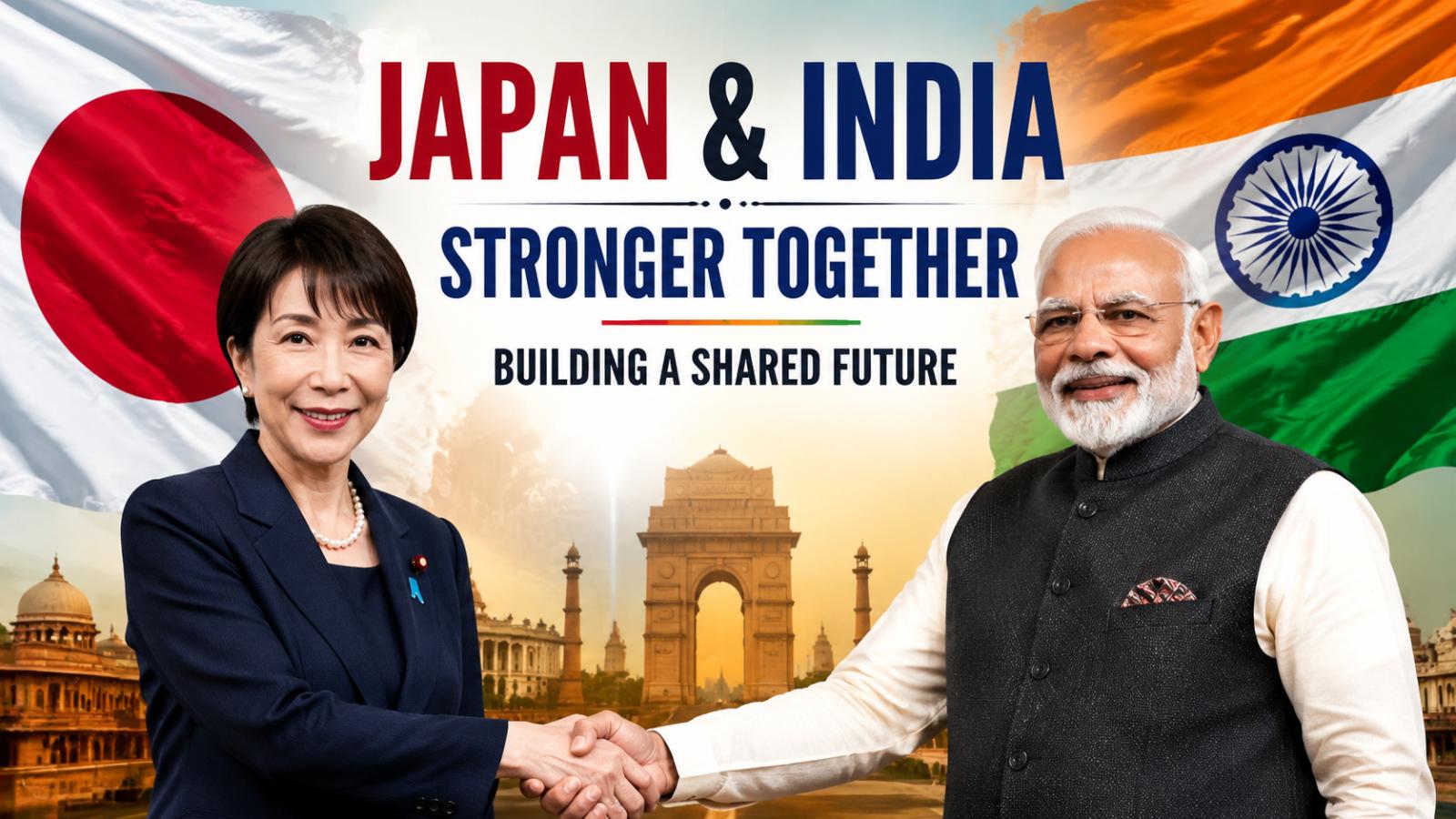
Takaichi visit signals deeper Japan India strategic cooperation
The visit of Sanae Takaichi to New Delhi marks a renewed phase in relations between Japan and India. Her meeting with
Takaichi visit signals deeper Japan India strategic cooperation
The visit of Sanae Takaichi to New Delhi marks a renewed phase in relations between Japan and India. Her meeting with
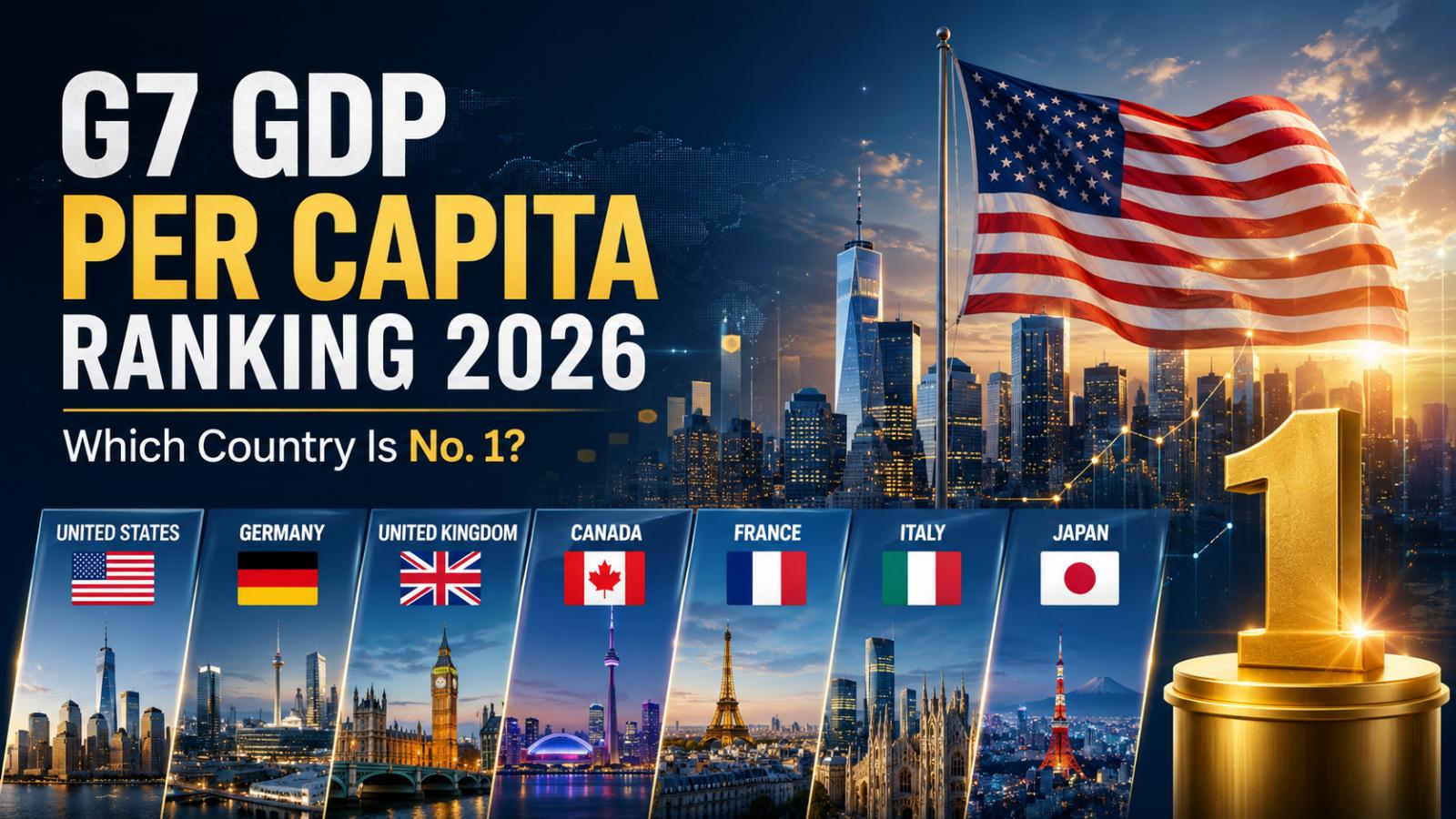
G7 GDP Per Capita Ranking 2026: US First, India Below Average
The G7 GDP per capita ranking for 2026 places the United States first at a projected $94,430, according to the International Monetary Fund’s World Economic Outlook released Tuesday, April 14, 2026. India, at $2,813, remains below both the global average and the average for emerging market and developing economies. GDP per capita measures economic output per person at current prices and market exchange rates. It should not be interpreted as household income, wages
G7 GDP Per Capita Ranking 2026: US First, India Below Average
The G7 GDP per capita ranking for 2026 places the United States first at a projected $94,430, according to the International Monetary Fund’s World Economic Outlook released Tuesday, April 14, 2026. India, at $2,813, remains below both the global average and the average for emerging market and developing economies. GDP per capita measures economic output per person at current prices and market exchange rates. It should not be interpreted as household income, wages
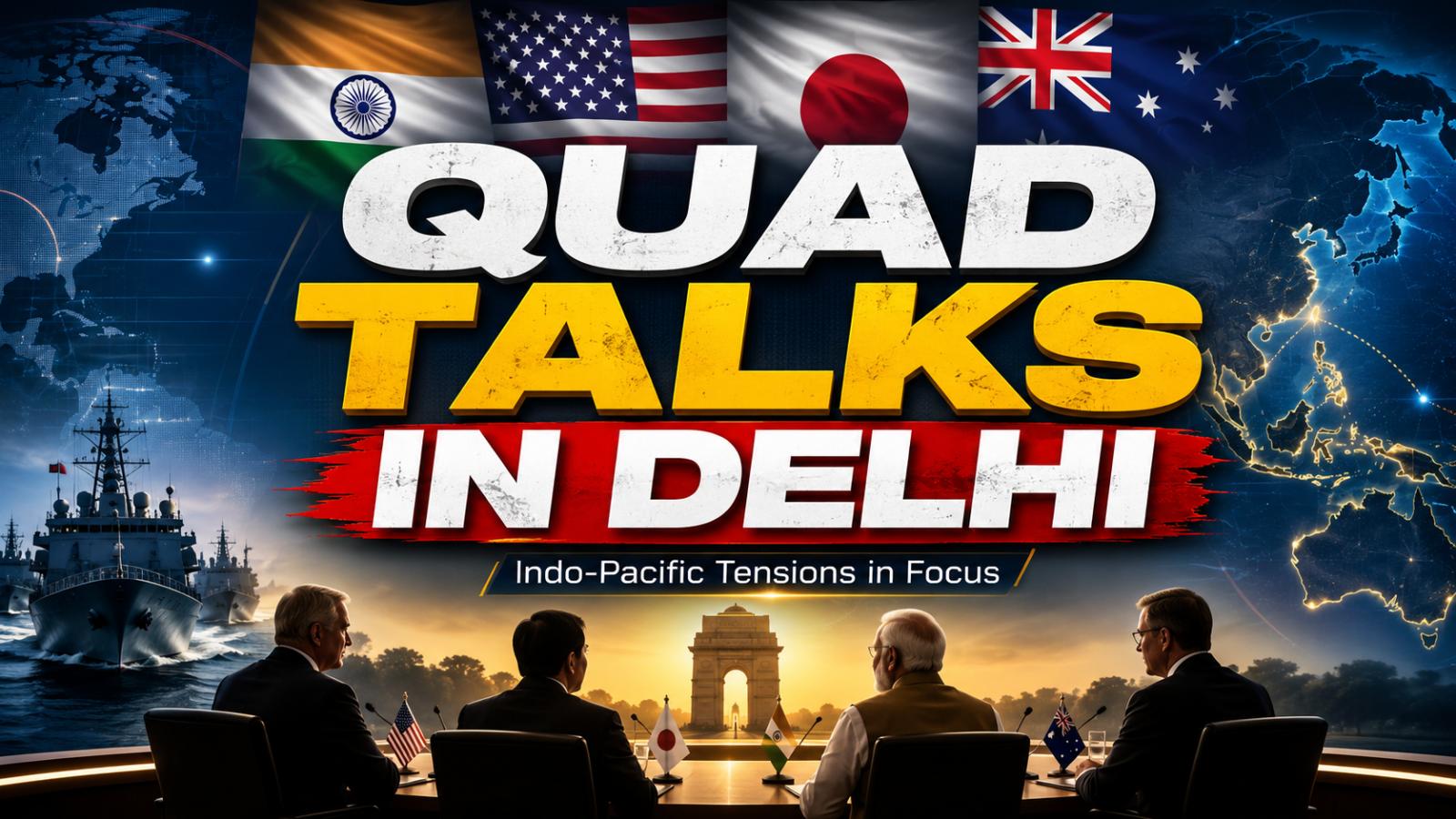
India Hosts Quad Delhi Meeting as Indo-Pacific Security, China and West Asia Tensions Take Centre Stage
India is hosting the Quad foreign ministers’ meeting in New Delhi on May 26, 2026, bringing together senior leaders from India, the United States, Japan and Australia. External Affairs Minister S. Jaishankar is chairing the meeting, with U.S. Secretary of State Marco Rubio, Australian Foreign Minister Penny Wong and Japanese Foreign Minister Toshimitsu Motegi attending the talks. The participation details are confirmed by India’s Ministry of External Affairs. The meeting comes a
India Hosts Quad Delhi Meeting as Indo-Pacific Security, China and West Asia Tensions Take Centre Stage
India is hosting the Quad foreign ministers’ meeting in New Delhi on May 26, 2026, bringing together senior leaders from India, the United States, Japan and Australia. External Affairs Minister S. Jaishankar is chairing the meeting, with U.S. Secretary of State Marco Rubio, Australian Foreign Minister Penny Wong and Japanese Foreign Minister Toshimitsu Motegi attending the talks. The participation details are confirmed by India’s Ministry of External Affairs. The meeting comes a

Indian Seafood Booms As China Bans Japanese Imports Amid Rising Asia Trade Tensions
India’s seafood industry is witnessing a sharp rise in demand from China after Beijing imposed a complete ban on Japanese seafood imports. The move comes amid escalating geopolitical tensions between China and Japan, triggered by remarks linking the Taiwan conflict to Japan’s national security. As China halted all Japanese seafood imports, Indian seafood exporters experienced a significant surge in interest, marking a major shift in Asian trade patterns. Indian seafood stocks re
Indian Seafood Booms As China Bans Japanese Imports Amid Rising Asia Trade Tensions
India’s seafood industry is witnessing a sharp rise in demand from China after Beijing imposed a complete ban on Japanese seafood imports. The move comes amid escalating geopolitical tensions between China and Japan, triggered by remarks linking the Taiwan conflict to Japan’s national security. As China halted all Japanese seafood imports, Indian seafood exporters experienced a significant surge in interest, marking a major shift in Asian trade patterns. Indian seafood stocks re
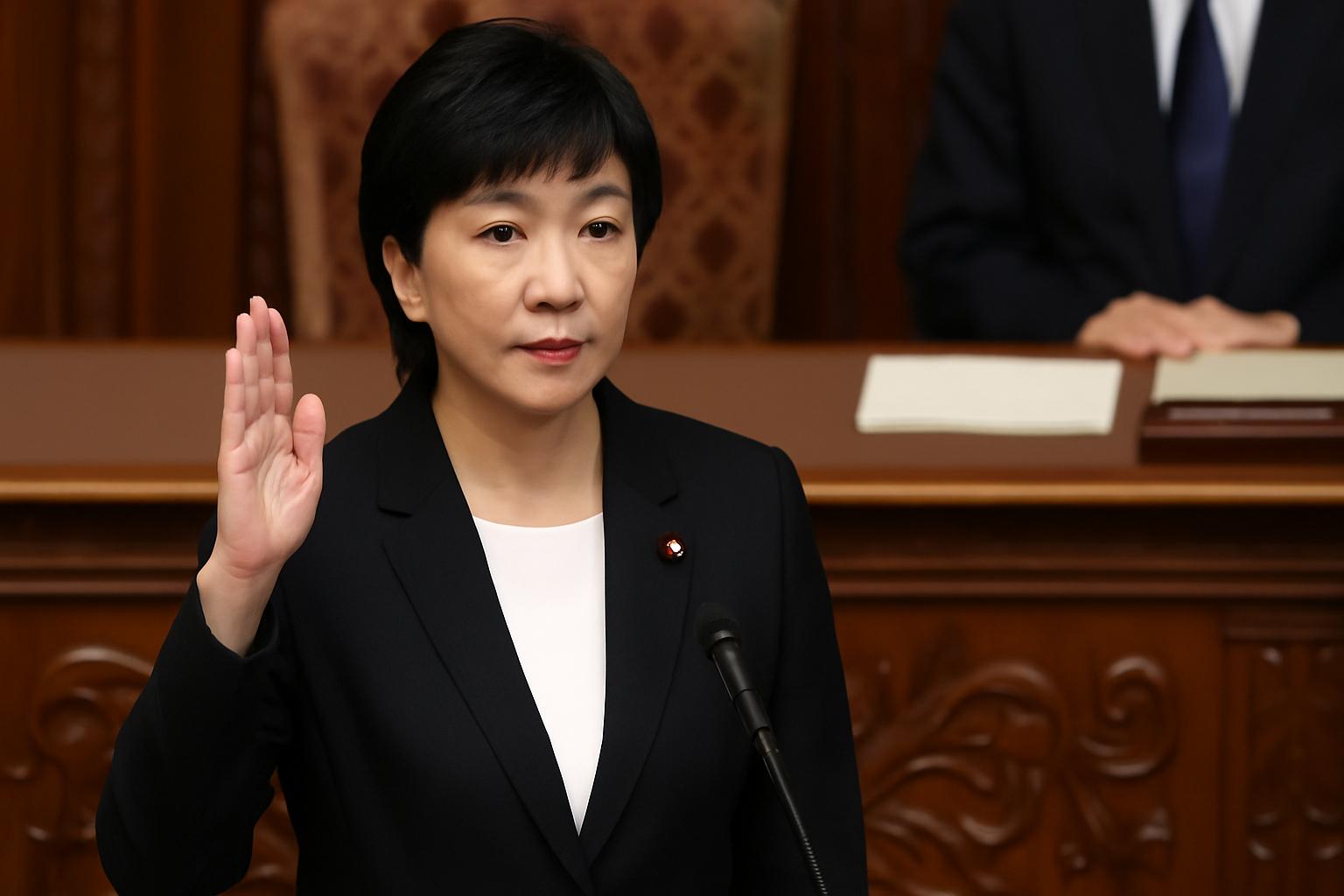
Sanae Takaichi becomes Japan’s first woman prime minister, marking historic change
Japan made history on Tuesday as Sanae Takaichi was appointed the country’s first woman prime minister after a decisive vote in the lower house of parliament. Her elevation marks a groundbreaking moment in a nation where political and corporate leadership remains overwhelmingly male. Takaichi, a prominent conservative and known China hawk, secured 237 votes in the 465-member House of Representatives, crossing the majority threshold in the first round itself. She is expected to formally assu
Sanae Takaichi becomes Japan’s first woman prime minister, marking historic change
Japan made history on Tuesday as Sanae Takaichi was appointed the country’s first woman prime minister after a decisive vote in the lower house of parliament. Her elevation marks a groundbreaking moment in a nation where political and corporate leadership remains overwhelmingly male. Takaichi, a prominent conservative and known China hawk, secured 237 votes in the 465-member House of Representatives, crossing the majority threshold in the first round itself. She is expected to formally assu

Yellow Fever and Other Rare Vaccines for NRI Travelers
For many NRI families, international travel is a regular part of life. Whether it’s visiting relatives in India, exploring new destinations, or moving between countries for work, travel brings both opportunities and responsibilities. One area that often raises questions is vaccination, especially when it comes to vaccines that are not part of the standard childhood immunization schedule. Yellow fever and a few other rare vaccines fall into this category, and understanding when they are
Yellow Fever and Other Rare Vaccines for NRI Travelers
For many NRI families, international travel is a regular part of life. Whether it’s visiting relatives in India, exploring new destinations, or moving between countries for work, travel brings both opportunities and responsibilities. One area that often raises questions is vaccination, especially when it comes to vaccines that are not part of the standard childhood immunization schedule. Yellow fever and a few other rare vaccines fall into this category, and understanding when they are
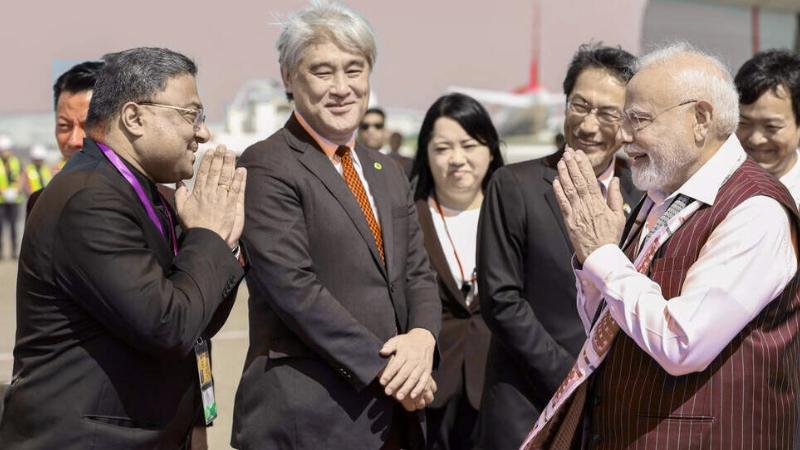
PM Modi In Japan: Quad, Bullet Train, Semiconductors And $68 Billion Investment
Prime Minister Narendra Modi has begun his two-day Japan visit with a packed agenda that includes strengthening economic ties, advancing technology partnerships, and reinforcing India’s role in the Quad grouping. The visit comes at a time of rising trade tensions with the United States following President Donald Trump’s imposition of a 50 per cent tariff on Indian goods. Against this backdrop, Tokyo is positioning itself as a stronger ally for New
PM Modi In Japan: Quad, Bullet Train, Semiconductors And $68 Billion Investment
Prime Minister Narendra Modi has begun his two-day Japan visit with a packed agenda that includes strengthening economic ties, advancing technology partnerships, and reinforcing India’s role in the Quad grouping. The visit comes at a time of rising trade tensions with the United States following President Donald Trump’s imposition of a 50 per cent tariff on Indian goods. Against this backdrop, Tokyo is positioning itself as a stronger ally for New
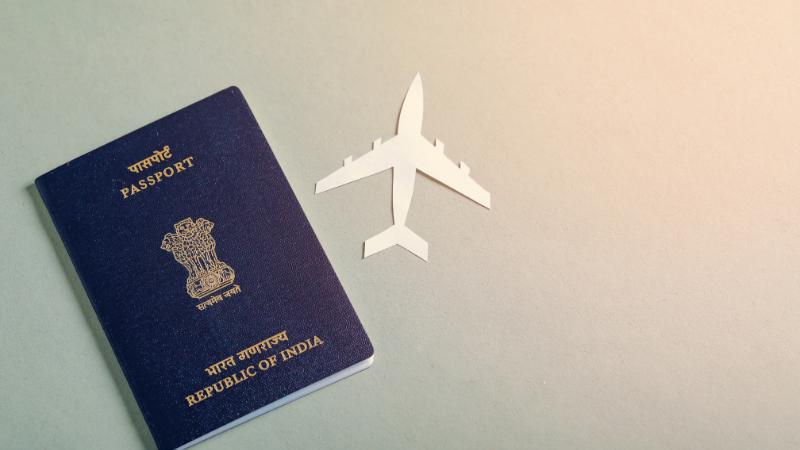
India's Passport Sees Largest Jump in Henley Index, Now Visa-Free to 59 Countries
In the latest Henley Passport Index update, India’s passport saw the most significant improvement, climbing eight spots from 85th to 77th position. This leap makes India the largest mover globally over the past six months, as its passport now allows visa-free or visa-on-arrival access to 59 destinations. Countries such as Malaysia, Indonesia, the Maldives, and Thailand are among the many that offer visa-free ac
India's Passport Sees Largest Jump in Henley Index, Now Visa-Free to 59 Countries
In the latest Henley Passport Index update, India’s passport saw the most significant improvement, climbing eight spots from 85th to 77th position. This leap makes India the largest mover globally over the past six months, as its passport now allows visa-free or visa-on-arrival access to 59 destinations. Countries such as Malaysia, Indonesia, the Maldives, and Thailand are among the many that offer visa-free ac
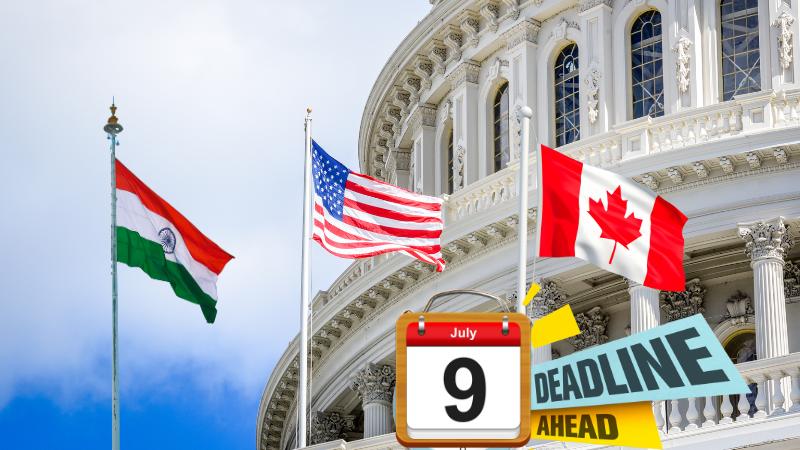
Trump Pushes Tariff Strategy, Targets Canada Tech Tax and India Trade Progress
President Donald Trump has announced that he does not intend to extend the 90-day pause on tariffs beyond July 9, signaling a return to aggressive trade measures that could affect several countries unless individual trade agreements are secured. Speaking in an interview, Trump stated that his administration would begin sending formal notifications to countries soon, warning them of upcoming trade penalties unless they finalize deals with the United States. The president emphasi
Trump Pushes Tariff Strategy, Targets Canada Tech Tax and India Trade Progress
President Donald Trump has announced that he does not intend to extend the 90-day pause on tariffs beyond July 9, signaling a return to aggressive trade measures that could affect several countries unless individual trade agreements are secured. Speaking in an interview, Trump stated that his administration would begin sending formal notifications to countries soon, warning them of upcoming trade penalties unless they finalize deals with the United States. The president emphasi










