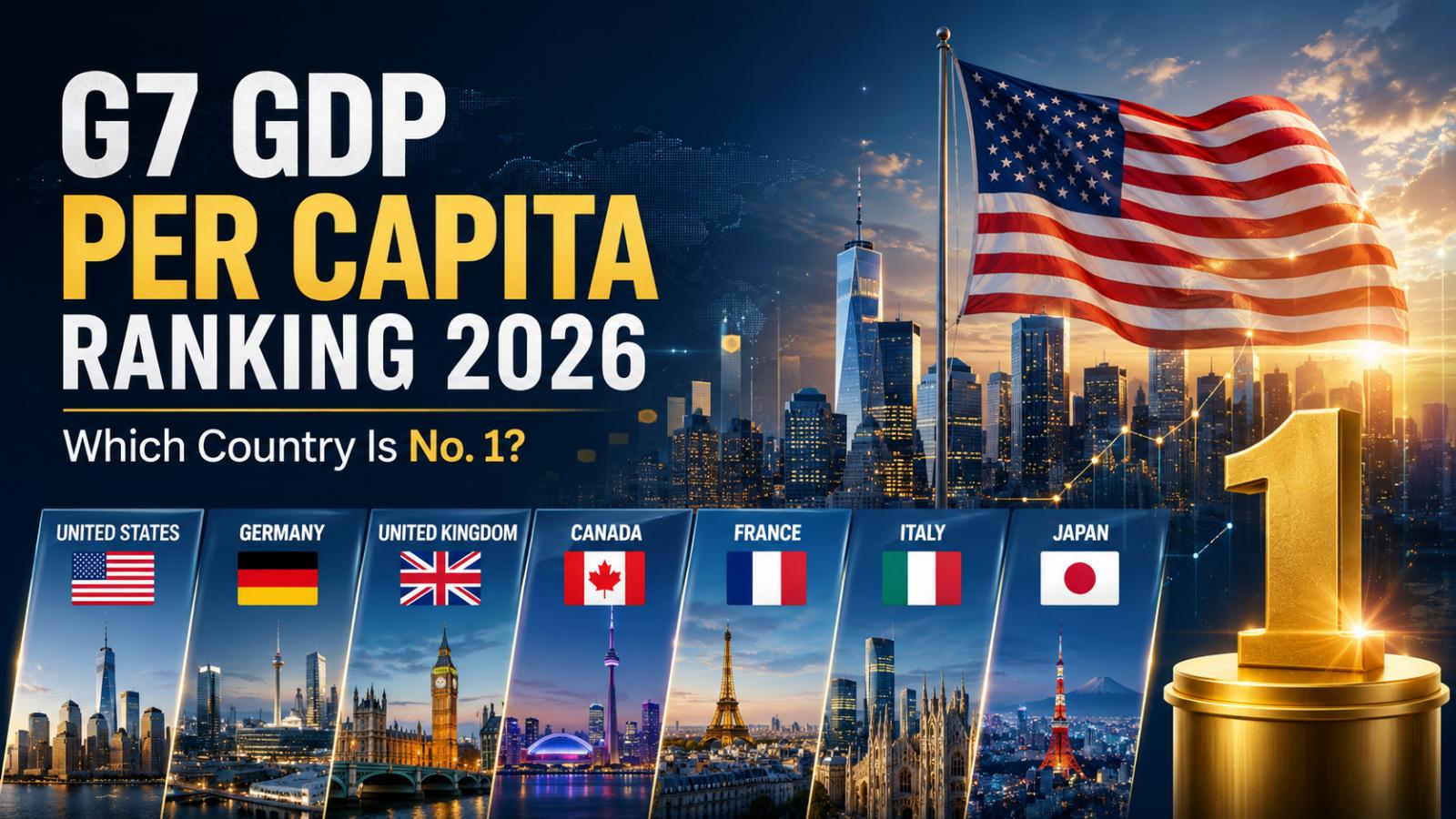
The G7 GDP per capita ranking for 2026 places the United States first at a projected $94,430, according to the International Monetary Fund’s World Economic Outlook released Tuesday, April 14, 2026. India, at $2,813, remains below both the global average and the average for emerging market and developing economies.
GDP per capita measures economic output per person at current prices and market exchange rates. It should not be interpreted as household income, wages or median earnings.
G7 GDP Per Capita Ranking 2026
Germany ranks second at $65,303, followed by the United Kingdom at $61,056 and Canada at $60,305. France is fifth at $52,083, Italy is sixth at $46,505, and Japan ranks seventh at $35,703.
Nominal dollar comparisons can change when currencies strengthen or weaken against the U.S. dollar. Differences in population size and the structure of each economy also influence the rankings.
Germany benefits from manufacturing, engineering and exports, while the United Kingdom relies heavily on financial and other services. Canada combines natural resources with developed service and technology sectors.
India GDP Per Capita Remains Below Global Average
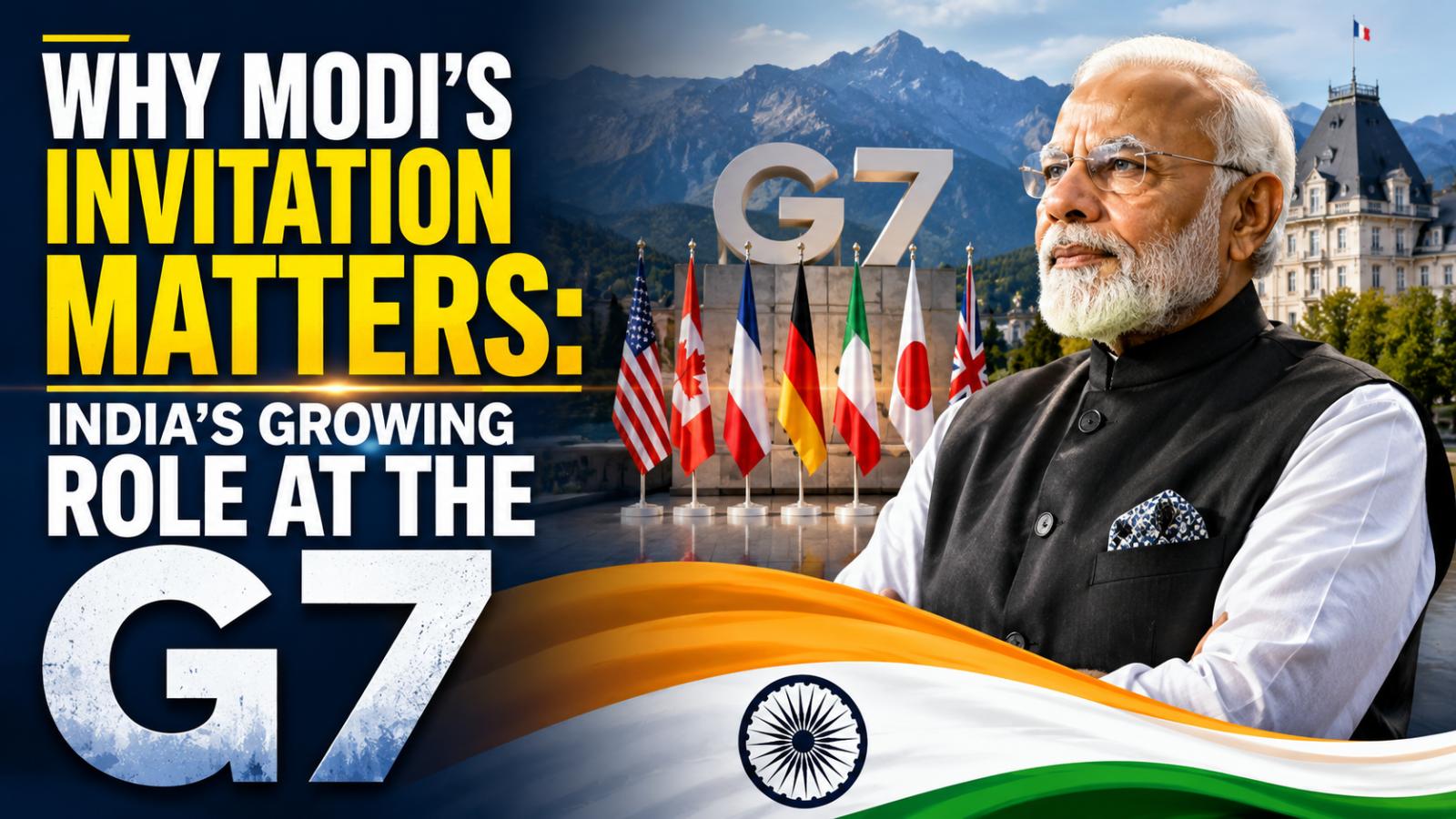
India’s projected GDP per capita of $2,813 is below the IMF’s global average of $15,680 and the $7,560 average for emerging market and developing economies.
The Indian figure is also about 4% of the IMF’s $70,170 aggregate figure for the G7. That group-level figure represents the G7 economy as a whole and is not a simple average of the seven individual country values.
India’s large population helps make it one of the world’s biggest economies by total output. However, the per-person measurement demonstrates the continuing gap in productivity and average economic output.
Watch the Reel: See the complete G7 GDP per capita ranking and India comparison in our Instagram Reel.
The comparison matters because GDP per capita provides a different perspective from total GDP. For India, productivity growth, investment, job creation and rising earnings will be important to narrowing the gap with wealthier economies.