








Birthright Citizenship Ruling: What H-1B and F-1 Families Should Know
The birthright citizenship ruling issued by the U.S. Supreme Court on Tuesday, June 30, 2026, provides important clarity for families living in the United States on temporary visas. Children born in the country to parents who are lawfully but temporarily present remain U.S. citizens at birth under the 14th Amendment. For the court’s vote and constitutional reasoning, read NRIPage’s full report on the
Birthright Citizenship Ruling: What H-1B and F-1 Families Should Know
The birthright citizenship ruling issued by the U.S. Supreme Court on Tuesday, June 30, 2026, provides important clarity for families living in the United States on temporary visas. Children born in the country to parents who are lawfully but temporarily present remain U.S. citizens at birth under the 14th Amendment. For the court’s vote and constitutional reasoning, read NRIPage’s full report on the

Trump v. Barbara Ruling: Supreme Court Protects Birthright Citizenship
The Trump v. Barbara ruling preserved automatic U.S. citizenship for nearly all children born on American soil. In a 6-3 decision issued Tuesday, June 30, 2026, the Supreme Court affirmed a lower-court judgment blocking President Donald Trump’s executive order. What the Trump v. Barbara ruling decided Chief Justice John Roberts wrote the court’s principal opinion, joined by Justices Sonia S
Trump v. Barbara Ruling: Supreme Court Protects Birthright Citizenship
The Trump v. Barbara ruling preserved automatic U.S. citizenship for nearly all children born on American soil. In a 6-3 decision issued Tuesday, June 30, 2026, the Supreme Court affirmed a lower-court judgment blocking President Donald Trump’s executive order. What the Trump v. Barbara ruling decided Chief Justice John Roberts wrote the court’s principal opinion, joined by Justices Sonia S
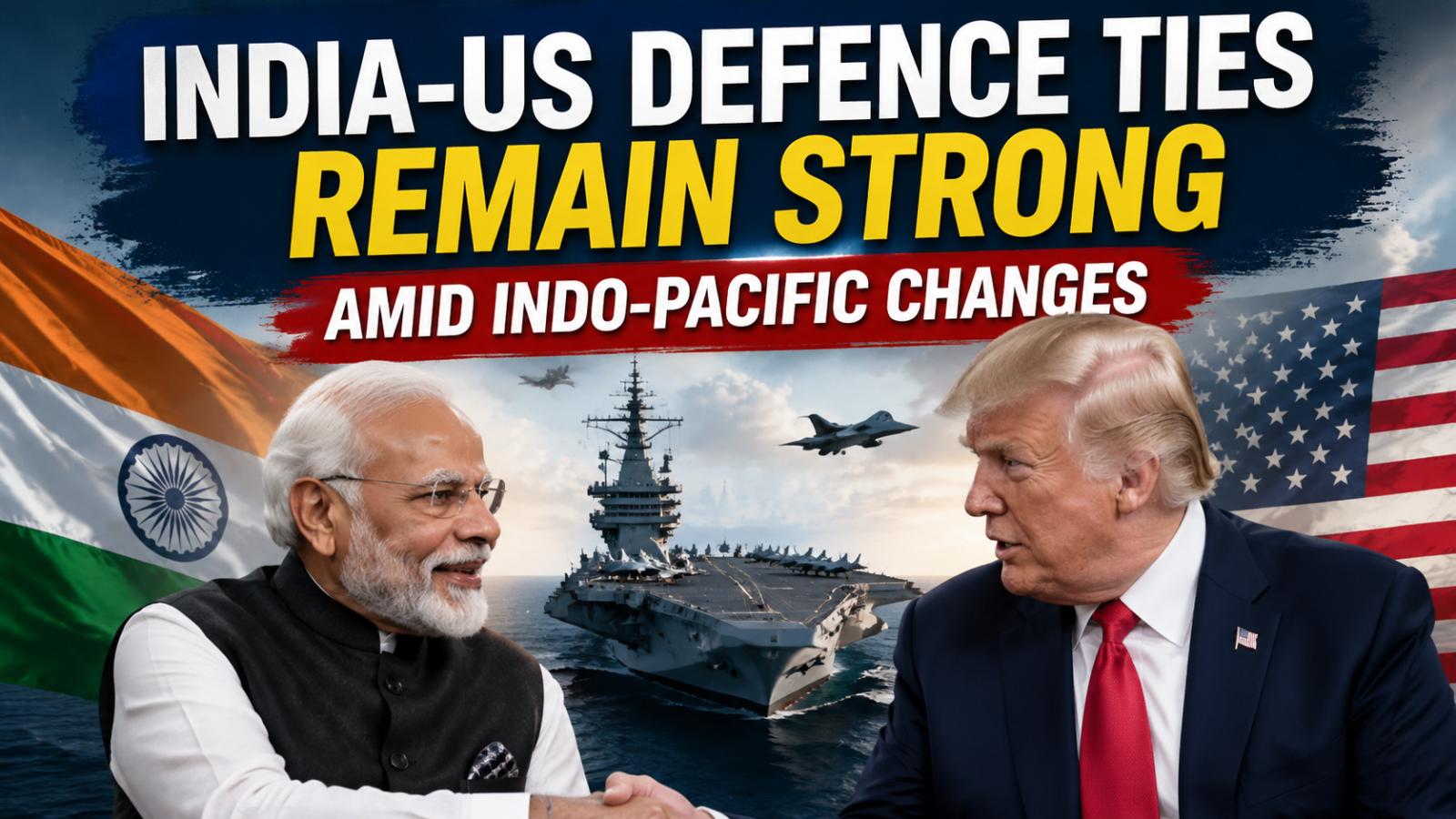
India-US defence ties remain stable amid Indo-Pacific changes
India and the United States continue to maintain stable defence cooperation despite recent adjustments in how Washington refers to its Indo-Pacific military structure. US Ambassador Sergio Gor reiterated that operational collaboration between the two countries is unaffected by the change in terminology, stressing continuity over symbolism. Military engagement remains active According to Gor, defence interaction between both nations is not only ongoing but expanding. Joint exercises, training programs, and coordinated operational planning continue across multiple domains. He noted that India remains one of the most frequently engaged partners in US military exercises globally, reflecting long-term strategic alignment rather than short-term political messaging. Indo-Pacific command terminology shift The discussion gained attention after the US reverted from the “Indo-Pacific Command” branding to its earlier designation. While the naming change sparked speculation about shifting priorities, officials clarified that command responsibilities and regional engagement remain unchanged. The operational scope still spans a vast area covering key maritime and security corridors in Asia-Pacific. Interpretation and political reactions The naming adjustment has been interpreted in different ways across policy circles, with some viewing it as symbolic recalibration. However, US officials have consistently pushed back on that narrative, arguing that defence cooperation with India is driven by shared strategic interests rather than administrative labels. Leadership relations and diplomatic tone Gor also highlighted the working relationship between former US President Donald Trump and Indian Prime Minister Narendra Modi, describing it as direct and pragmatic. He pointed to informal diplomatic interactions as evidence of sustained trust and coordination between leadership levels, which continues to influence broader strategic engagement. Long-term partnership outlook Despite periodic debates over terminology and diplomatic optics, both nations continue to prioritize defence, technology collaboration, and regional security coordination. The emphasis remains on sustained engagement in the Indo-Pacific region, where shared concerns over maritime security and strategic balance continue to drive cooperation rather than divergence.
India-US defence ties remain stable amid Indo-Pacific changes
India and the United States continue to maintain stable defence cooperation despite recent adjustments in how Washington refers to its Indo-Pacific military structure. US Ambassador Sergio Gor reiterated that operational collaboration between the two countries is unaffected by the change in terminology, stressing continuity over symbolism. Military engagement remains active According to Gor, defence interaction between both nations is not only ongoing but expanding. Joint exercises, training programs, and coordinated operational planning continue across multiple domains. He noted that India remains one of the most frequently engaged partners in US military exercises globally, reflecting long-term strategic alignment rather than short-term political messaging. Indo-Pacific command terminology shift The discussion gained attention after the US reverted from the “Indo-Pacific Command” branding to its earlier designation. While the naming change sparked speculation about shifting priorities, officials clarified that command responsibilities and regional engagement remain unchanged. The operational scope still spans a vast area covering key maritime and security corridors in Asia-Pacific. Interpretation and political reactions The naming adjustment has been interpreted in different ways across policy circles, with some viewing it as symbolic recalibration. However, US officials have consistently pushed back on that narrative, arguing that defence cooperation with India is driven by shared strategic interests rather than administrative labels. Leadership relations and diplomatic tone Gor also highlighted the working relationship between former US President Donald Trump and Indian Prime Minister Narendra Modi, describing it as direct and pragmatic. He pointed to informal diplomatic interactions as evidence of sustained trust and coordination between leadership levels, which continues to influence broader strategic engagement. Long-term partnership outlook Despite periodic debates over terminology and diplomatic optics, both nations continue to prioritize defence, technology collaboration, and regional security coordination. The emphasis remains on sustained engagement in the Indo-Pacific region, where shared concerns over maritime security and strategic balance continue to drive cooperation rather than divergence.

Japan PM visit pushes India Japan tech and defence cooperation
India and Japan have taken another step toward strengthening their long-term strategic relationship as high-level discussions were held in New Delhi focused on expanding cooperation across trade, defence, technology, and infrastructure. The engagement reflects a broader effort by both nations to build resilience in supply chains and increase coordination in the Indo-Pacific region amid shifting global economic and security dynamics. Rather than treating the relationship as routine diplomacy, both sides are increasingly positioning it as a structured partnership tied to economic security, innovation, and regional stability. Trade and investment becoming the core growth driver Economic cooperation continues to act as the backbone of the relationship. Japan remains one of India’s key foreign investors, with long-term commitments spread across manufacturing, transport, and urban development sectors. Japanese companies continue to expand their presence in India, particularly in automotive, electronics, and industrial technology. Infrastructure development remains a central pillar, with ongoing support for metro systems, freight corridors, and high-speed rail projects. Financial and institutional backing through Japanese development agencies has played a major role in shaping large-scale connectivity projects across Indian cities. However, both sides still face structural challenges such as slow project execution timelines and regulatory bottlenecks, which limit the speed of capital deployment despite strong political alignment. Defence cooperation expands beyond symbolic engagement Security collaboration between India and Japan has gradually shifted from occasional exercises to more consistent operational coordination. Joint drills such as maritime exercises and regional security training programs have strengthened interoperability between the two defence forces. The focus is increasingly on maritime domain awareness, especially in the Indo-Pacific region where strategic sea lanes remain critical for global trade. Both countries are also exploring ways to improve defence technology exchange, although this area remains sensitive due to regulatory and strategic constraints. Despite progress, defence cooperation is still relatively cautious compared to economic engagement, reflecting differing strategic thresholds and domestic policy considerations. Northeast India emerges as a strategic connectivity zone One of the most notable areas of cooperation is India’s northeastern region, which has gained attention as a key connectivity and development corridor. Japanese-supported infrastructure projects have contributed to road development, bridge construction, and logistics improvement in the region. Beyond physical infrastructure, skill development initiatives are also being introduced to improve employment readiness and cross-border workforce mobility. The region is increasingly being viewed as a bridge between South Asia and Southeast Asia, aligning with broader Indo-Pacific connectivity goals. Still, the region continues to face challenges including terrain constraints, limited industrial base, and slower private sector participation. Technology, AI and future-oriented collaboration Both countries are expanding cooperation in advanced technologies including artificial intelligence, clean energy systems, and digital infrastructure. Joint initiatives are being explored in areas such as smart manufacturing, automation, and next-generation communication systems. There is also growing interest in building more resilient supply chains for critical sectors like semiconductors and green energy technologies. This reflects a shared concern over global supply disruptions and overdependence on concentrated manufacturing hubs. While ambitions are high, actual implementation will depend on regulatory alignment and private sector participation, which remain uneven across sectors. Strategic outlook for the partnership The India–Japan relationship is increasingly being shaped by long-term geopolitical and economic considerations rather than short-term diplomatic exchanges. Both countries appear aligned on maintaining stability in the Indo-Pacific while expanding economic integration. However, the partnership is still evolving and remains uneven across sectors—strong in trade and infrastructure, moderate in defence, and still developing in advanced technology cooperation. The next phase will depend on execution efficiency and the ability to convert policy agreements into large-scale operational outcomes.
Japan PM visit pushes India Japan tech and defence cooperation
India and Japan have taken another step toward strengthening their long-term strategic relationship as high-level discussions were held in New Delhi focused on expanding cooperation across trade, defence, technology, and infrastructure. The engagement reflects a broader effort by both nations to build resilience in supply chains and increase coordination in the Indo-Pacific region amid shifting global economic and security dynamics. Rather than treating the relationship as routine diplomacy, both sides are increasingly positioning it as a structured partnership tied to economic security, innovation, and regional stability. Trade and investment becoming the core growth driver Economic cooperation continues to act as the backbone of the relationship. Japan remains one of India’s key foreign investors, with long-term commitments spread across manufacturing, transport, and urban development sectors. Japanese companies continue to expand their presence in India, particularly in automotive, electronics, and industrial technology. Infrastructure development remains a central pillar, with ongoing support for metro systems, freight corridors, and high-speed rail projects. Financial and institutional backing through Japanese development agencies has played a major role in shaping large-scale connectivity projects across Indian cities. However, both sides still face structural challenges such as slow project execution timelines and regulatory bottlenecks, which limit the speed of capital deployment despite strong political alignment. Defence cooperation expands beyond symbolic engagement Security collaboration between India and Japan has gradually shifted from occasional exercises to more consistent operational coordination. Joint drills such as maritime exercises and regional security training programs have strengthened interoperability between the two defence forces. The focus is increasingly on maritime domain awareness, especially in the Indo-Pacific region where strategic sea lanes remain critical for global trade. Both countries are also exploring ways to improve defence technology exchange, although this area remains sensitive due to regulatory and strategic constraints. Despite progress, defence cooperation is still relatively cautious compared to economic engagement, reflecting differing strategic thresholds and domestic policy considerations. Northeast India emerges as a strategic connectivity zone One of the most notable areas of cooperation is India’s northeastern region, which has gained attention as a key connectivity and development corridor. Japanese-supported infrastructure projects have contributed to road development, bridge construction, and logistics improvement in the region. Beyond physical infrastructure, skill development initiatives are also being introduced to improve employment readiness and cross-border workforce mobility. The region is increasingly being viewed as a bridge between South Asia and Southeast Asia, aligning with broader Indo-Pacific connectivity goals. Still, the region continues to face challenges including terrain constraints, limited industrial base, and slower private sector participation. Technology, AI and future-oriented collaboration Both countries are expanding cooperation in advanced technologies including artificial intelligence, clean energy systems, and digital infrastructure. Joint initiatives are being explored in areas such as smart manufacturing, automation, and next-generation communication systems. There is also growing interest in building more resilient supply chains for critical sectors like semiconductors and green energy technologies. This reflects a shared concern over global supply disruptions and overdependence on concentrated manufacturing hubs. While ambitions are high, actual implementation will depend on regulatory alignment and private sector participation, which remain uneven across sectors. Strategic outlook for the partnership The India–Japan relationship is increasingly being shaped by long-term geopolitical and economic considerations rather than short-term diplomatic exchanges. Both countries appear aligned on maintaining stability in the Indo-Pacific while expanding economic integration. However, the partnership is still evolving and remains uneven across sectors—strong in trade and infrastructure, moderate in defence, and still developing in advanced technology cooperation. The next phase will depend on execution efficiency and the ability to convert policy agreements into large-scale operational outcomes.

EU India trade talks near final approval stage
The proposed free trade agreement between the European Union and India has moved into its last procedural stage after years of negotiation. Both sides have already agreed on the core framework, and the current focus is on legal refinement and institutional clearance before formal approval. Officials describe this phase as technical but decisive, as even small wording changes can affect implementation across sectors. The agreement is being revi
EU India trade talks near final approval stage
The proposed free trade agreement between the European Union and India has moved into its last procedural stage after years of negotiation. Both sides have already agreed on the core framework, and the current focus is on legal refinement and institutional clearance before formal approval. Officials describe this phase as technical but decisive, as even small wording changes can affect implementation across sectors. The agreement is being revi
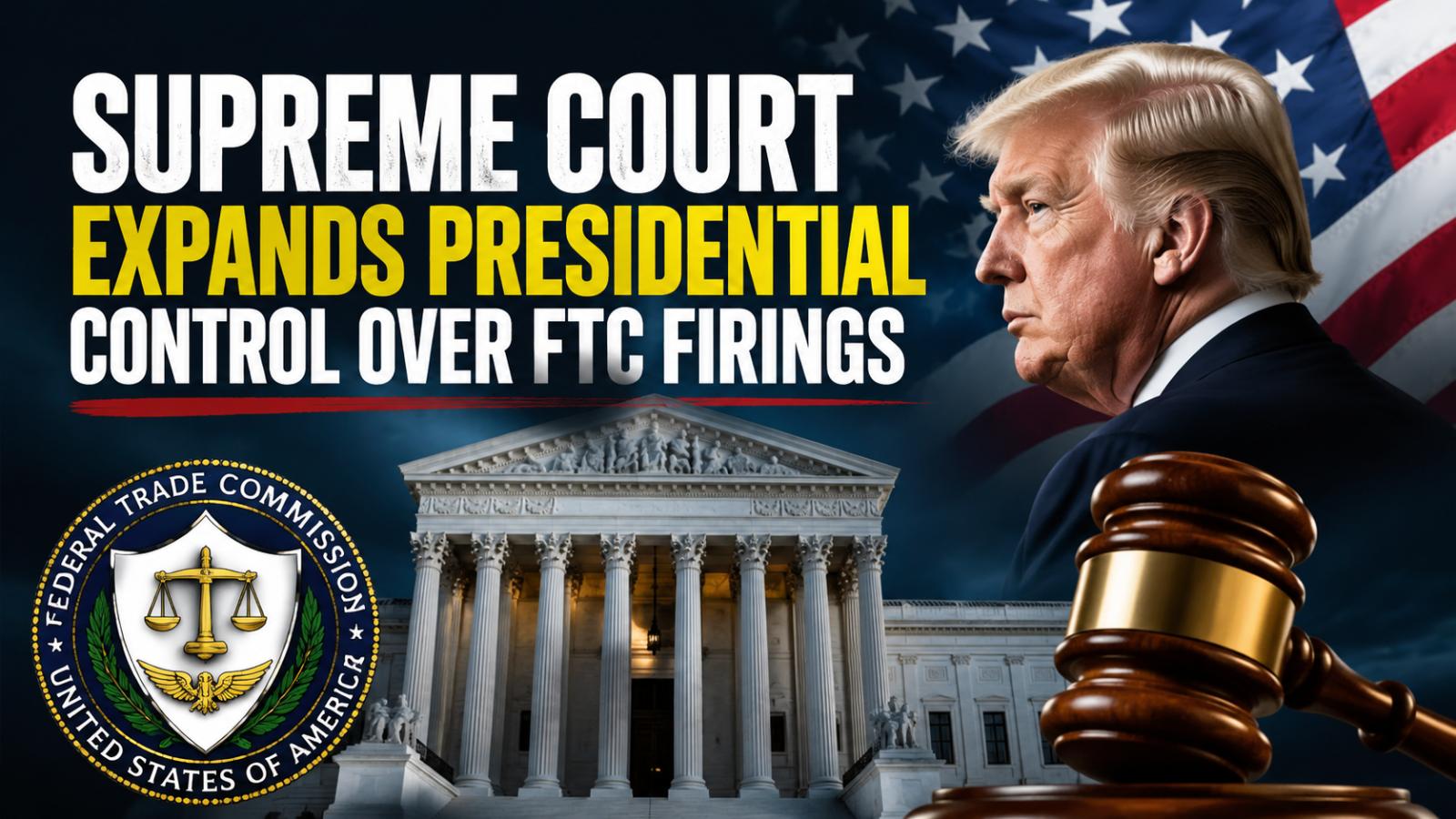
US Supreme Court expands presidential control over FTC firings
A major ruling from the US Supreme Court has redefined how much authority the president holds over independent federal agencies, including the Federal Trade Commission. In a closely watched 6–3 decision, the court concluded that certain protections preventing removal of agency officials without cause are inconsistent with the constitutional structure of executive power. The judgment effectively strengthens presidential oversight, allowing broader discretion in removing commissioners who exercise executive functions. Background of the FTC dismissal dispute The case arose after FTC commissioner Rebecca Slaughter was removed from her position without being given a formal reason tied to misconduct or inefficiency. She challenged the decision, arguing that the Federal Trade Commission Act of 1914 only permits removal under limited conditions such as neglect of duty or wrongdoing. Her legal team maintained that her dismissal violated statutory safeguards designed to protect agency independence. The dispute quickly escalated into a constitutional question about how far presidential authority extends over regulatory bodies. Court’s interpretation of executive authority Writing for the majority, Chief Justice John Roberts held that officials exercising executive power must remain accountable to the president. The court reasoned that insulating such officials from removal undermines the constitutional principle of a unified executive branch. As a result, the Federal Trade Commission’s structure was found to be partially incompatible with absolute “for cause” removal protection. The ruling split the court 6–3, with dissenting justices warning that the decision weakens institutional safeguards designed to prevent political interference in regulatory enforcement. Legal precedent and structural implications The decision revisits long-standing administrative law principles tied to earlier rulings that had supported limits on presidential removal power for independent agencies. By narrowing those protections, the court has opened the door for broader executive control over a range of federal commissions that previously operated with significant autonomy. Legal analysts expect the ruling to influence disputes involving multiple regulatory bodies beyond the FTC, particularly where commissioners have statutory job protections. Impact on independent agencies and governance The ruling could affect dozens of federal agencies that rely on “for cause” removal standards to maintain operational independence. These institutions, which include regulatory, labor, and enforcement bodies such as the Federal Trade Commission, may now face closer oversight from the White House. Supporters of the ruling argue it strengthens accountability and reduces bureaucratic insulation. Critics, however, warn it concentrates too much power in the executive branch and could weaken regulatory neutrality. Political reactions and dissenting views Former President Donald Trump welcomed the decision, describing it as a significant reinforcement of presidential authority over federal institutions. In contrast, Justice Sonia Sotomayor issued a strong dissent, arguing that the ruling undermines structural protections that prevent excessive executive control over independent agencies. The decision is expected to remain a key reference point in future constitutional debates on the balance of power between the presidency and regulatory institutions.
US Supreme Court expands presidential control over FTC firings
A major ruling from the US Supreme Court has redefined how much authority the president holds over independent federal agencies, including the Federal Trade Commission. In a closely watched 6–3 decision, the court concluded that certain protections preventing removal of agency officials without cause are inconsistent with the constitutional structure of executive power. The judgment effectively strengthens presidential oversight, allowing broader discretion in removing commissioners who exercise executive functions. Background of the FTC dismissal dispute The case arose after FTC commissioner Rebecca Slaughter was removed from her position without being given a formal reason tied to misconduct or inefficiency. She challenged the decision, arguing that the Federal Trade Commission Act of 1914 only permits removal under limited conditions such as neglect of duty or wrongdoing. Her legal team maintained that her dismissal violated statutory safeguards designed to protect agency independence. The dispute quickly escalated into a constitutional question about how far presidential authority extends over regulatory bodies. Court’s interpretation of executive authority Writing for the majority, Chief Justice John Roberts held that officials exercising executive power must remain accountable to the president. The court reasoned that insulating such officials from removal undermines the constitutional principle of a unified executive branch. As a result, the Federal Trade Commission’s structure was found to be partially incompatible with absolute “for cause” removal protection. The ruling split the court 6–3, with dissenting justices warning that the decision weakens institutional safeguards designed to prevent political interference in regulatory enforcement. Legal precedent and structural implications The decision revisits long-standing administrative law principles tied to earlier rulings that had supported limits on presidential removal power for independent agencies. By narrowing those protections, the court has opened the door for broader executive control over a range of federal commissions that previously operated with significant autonomy. Legal analysts expect the ruling to influence disputes involving multiple regulatory bodies beyond the FTC, particularly where commissioners have statutory job protections. Impact on independent agencies and governance The ruling could affect dozens of federal agencies that rely on “for cause” removal standards to maintain operational independence. These institutions, which include regulatory, labor, and enforcement bodies such as the Federal Trade Commission, may now face closer oversight from the White House. Supporters of the ruling argue it strengthens accountability and reduces bureaucratic insulation. Critics, however, warn it concentrates too much power in the executive branch and could weaken regulatory neutrality. Political reactions and dissenting views Former President Donald Trump welcomed the decision, describing it as a significant reinforcement of presidential authority over federal institutions. In contrast, Justice Sonia Sotomayor issued a strong dissent, arguing that the ruling undermines structural protections that prevent excessive executive control over independent agencies. The decision is expected to remain a key reference point in future constitutional debates on the balance of power between the presidency and regulatory institutions.

Sabarimala Gold Theft: SIT Names 7 In Conspiracy Report
Kochi, June 30, 2026: The Sabarimala gold theft probe has widened after the Special Investigation Team informed the Kerala High Court that it had collected material against seven persons, including former Travancore Devaswom Board president P.S. Prasanth. The SIT report points to alleged criminal breach of trust, forgery and criminal conspiracy in connection with the Dwarapalaka idols and related gold-plating work. Sabarimala Gold Thef
Sabarimala Gold Theft: SIT Names 7 In Conspiracy Report
Kochi, June 30, 2026: The Sabarimala gold theft probe has widened after the Special Investigation Team informed the Kerala High Court that it had collected material against seven persons, including former Travancore Devaswom Board president P.S. Prasanth. The SIT report points to alleged criminal breach of trust, forgery and criminal conspiracy in connection with the Dwarapalaka idols and related gold-plating work. Sabarimala Gold Thef
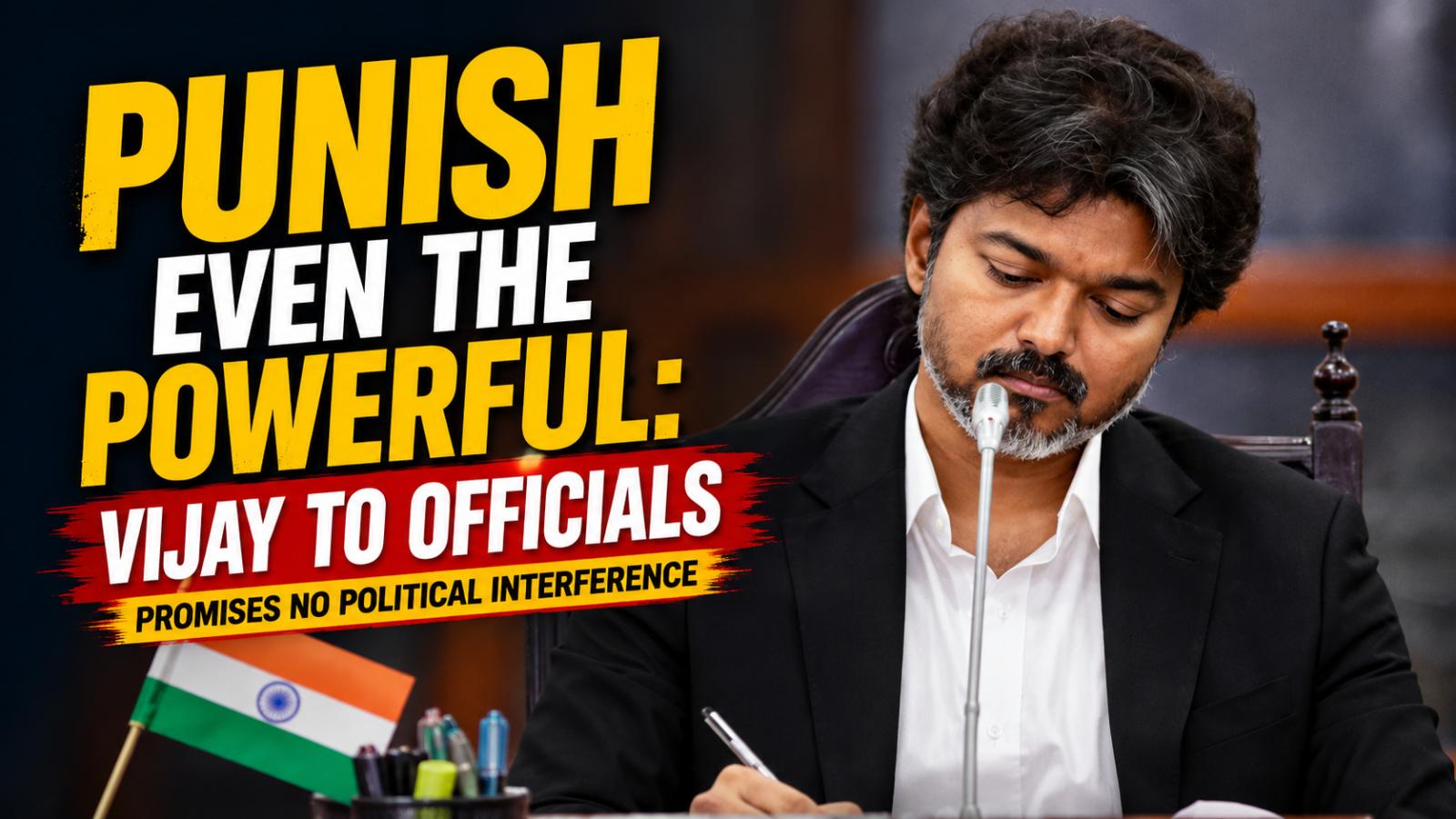
Vijay Vows No Political Interference In Crime Crackdown
Tamil Nadu Chief Minister C. Joseph Vijay has directed district collectors, police chiefs and senior officials to take fearless and impartial action against criminals, saying there will be no political interference in law-and-order matters. Addressing the first joint conference of district collectors, superintendents of police and senior officials after the TVK government assumed office in May, Vijay said officials should act freely and ensure that even powerful offenders are punish
Vijay Vows No Political Interference In Crime Crackdown
Tamil Nadu Chief Minister C. Joseph Vijay has directed district collectors, police chiefs and senior officials to take fearless and impartial action against criminals, saying there will be no political interference in law-and-order matters. Addressing the first joint conference of district collectors, superintendents of police and senior officials after the TVK government assumed office in May, Vijay said officials should act freely and ensure that even powerful offenders are punish
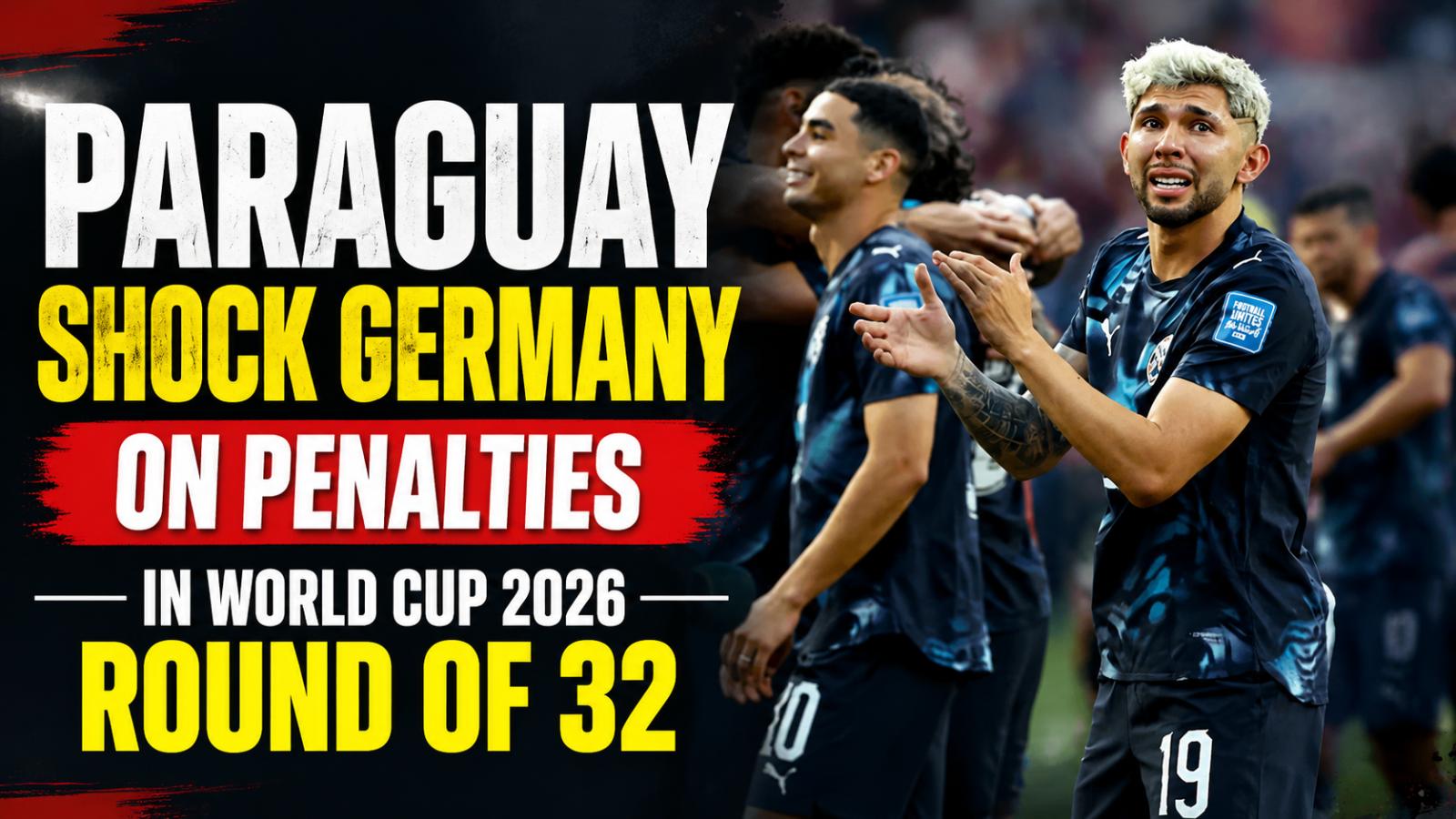
Paraguay stun Germany on penalties in World Cup 2026 Round of 32
Paraguay deliver shock elimination in Round of 32 On June 29, 2026, Paraguay produced one of the biggest shocks of the FIFA World Cup 2026 by defeating Germany 4-3 in a penalty shootout after a 1-1 draw across 120 minutes in the Round of 32 at Foxborough Stadium, Boston. The result ended Germany’s campaign earlier than expected and marked a historic knockout victory for Paraguay. Germany controlled possession for long stretches and dictated the tempo of the match, but their inability to convert dominance into goals proved costly. Paraguay stayed compact, defending deep and relying on structured transitions. Their breakthrough came in the first half through Julio Enciso, who finished a sharp attacking move despite carrying an injury concern into the match. Germany responded later through Kai Havertz, restoring balance but failing to break Paraguay’s resistance in normal and extra time. The match turned controversial in extra time when Germany briefly believed they had scored through Jonathan Tah. However, after a VAR review, the goal was disallowed due to a foul in the buildup involving obstruction on goalkeeper Orlando Gill. The decision shifted momentum again and kept Paraguay alive until penalties. Orlando Gill decisive as Germany collapse in shootout The penalty shootout became the defining phase of the contest. Paraguay goalkeeper Orlando Gill delivered a standout performance, saving crucial attempts and applying pressure on German takers throughout the sequence. Germany, despite having experienced players including Manuel Neuer, struggled with execution under pressure. The decisive moment came when Jonathan Tah sent his penalty over the crossbar, sealing Germany’s elimination. Jose Canale converted the final kick to complete Paraguay’s 4-3 shootout victory and send them into the Round of 16. The result highlights two contrasting trends in modern tournament football: Germany’s repeated struggles in knockout finishing efficiency, and Paraguay’s disciplined, defensive structure combined with clinical execution at key moments. For Paraguay, June 29, 2026 will be remembered as a landmark night that redefined their World Cup legacy.
Paraguay stun Germany on penalties in World Cup 2026 Round of 32
Paraguay deliver shock elimination in Round of 32 On June 29, 2026, Paraguay produced one of the biggest shocks of the FIFA World Cup 2026 by defeating Germany 4-3 in a penalty shootout after a 1-1 draw across 120 minutes in the Round of 32 at Foxborough Stadium, Boston. The result ended Germany’s campaign earlier than expected and marked a historic knockout victory for Paraguay. Germany controlled possession for long stretches and dictated the tempo of the match, but their inability to convert dominance into goals proved costly. Paraguay stayed compact, defending deep and relying on structured transitions. Their breakthrough came in the first half through Julio Enciso, who finished a sharp attacking move despite carrying an injury concern into the match. Germany responded later through Kai Havertz, restoring balance but failing to break Paraguay’s resistance in normal and extra time. The match turned controversial in extra time when Germany briefly believed they had scored through Jonathan Tah. However, after a VAR review, the goal was disallowed due to a foul in the buildup involving obstruction on goalkeeper Orlando Gill. The decision shifted momentum again and kept Paraguay alive until penalties. Orlando Gill decisive as Germany collapse in shootout The penalty shootout became the defining phase of the contest. Paraguay goalkeeper Orlando Gill delivered a standout performance, saving crucial attempts and applying pressure on German takers throughout the sequence. Germany, despite having experienced players including Manuel Neuer, struggled with execution under pressure. The decisive moment came when Jonathan Tah sent his penalty over the crossbar, sealing Germany’s elimination. Jose Canale converted the final kick to complete Paraguay’s 4-3 shootout victory and send them into the Round of 16. The result highlights two contrasting trends in modern tournament football: Germany’s repeated struggles in knockout finishing efficiency, and Paraguay’s disciplined, defensive structure combined with clinical execution at key moments. For Paraguay, June 29, 2026 will be remembered as a landmark night that redefined their World Cup legacy.

Pawan Kalyan Delays Shoulder Surgery For Official Duties
Pawan Kalyan has reportedly been advised to undergo immediate shoulder surgery after a recent medical examination found that his injury was more serious than earlier believed. The Andhra Pradesh Deputy Chief Minister visited Kokilaben Dhirubhai Ambani Hospital in Mumbai on Monday, June 29, 2026, for medical tests after dealing with shoulder pain and related discomfort for some time. According to reports, doctors found severe rotator cuff d
Pawan Kalyan Delays Shoulder Surgery For Official Duties
Pawan Kalyan has reportedly been advised to undergo immediate shoulder surgery after a recent medical examination found that his injury was more serious than earlier believed. The Andhra Pradesh Deputy Chief Minister visited Kokilaben Dhirubhai Ambani Hospital in Mumbai on Monday, June 29, 2026, for medical tests after dealing with shoulder pain and related discomfort for some time. According to reports, doctors found severe rotator cuff d
Italy’s Meloni calls for unity with US after Trump dispute
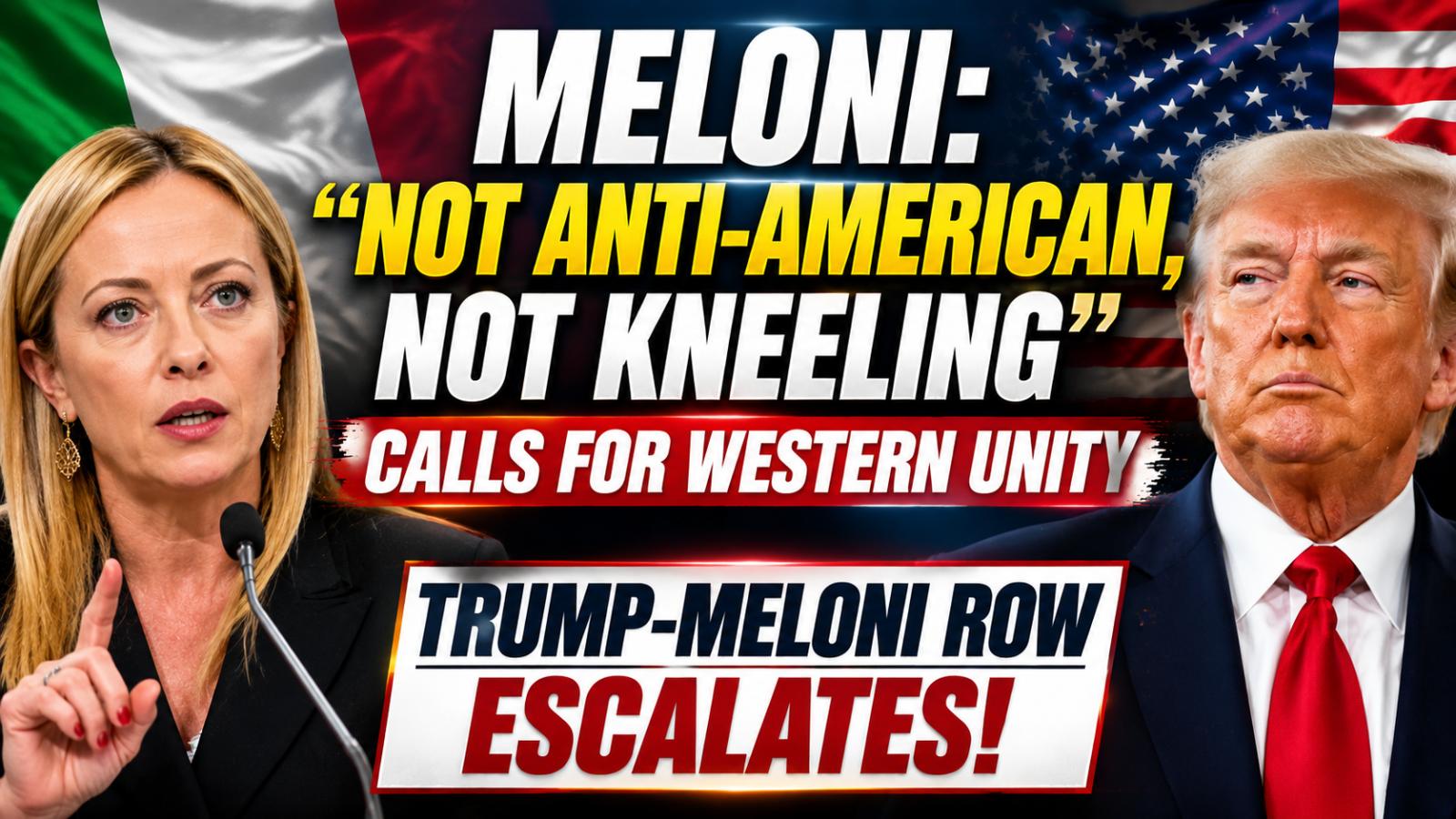
Meloni pushes back amid US controversy Italian Prime Minister Giorgia Meloni has responded to recent tensions with US President Donald Trump, stating that she is not anti-American but also refuses to be “kneeling” in political relationships. Her remarks come amid an ongoing public exchange that has drawn attention to the state of Italy–US relations and broader Western unity. Meloni stressed that her posit
Italy’s Meloni calls for unity with US after Trump dispute
Meloni pushes back amid US controversy Italian Prime Minister Giorgia Meloni has responded to recent tensions with US President Donald Trump, stating that she is not anti-American but also refuses to be “kneeling” in political relationships. Her remarks come amid an ongoing public exchange that has drawn attention to the state of Italy–US relations and broader Western unity. Meloni stressed that her posit

India pushes sunset clause in proposed US trade deal
India considers expiry safeguard in US trade talks India is reportedly preparing to seek a sunset clause in its proposed interim trade agreement with the United States, reflecting a growing global trend among trading partners to build expiry mechanisms into major economic deals. The move aligns closely with recent developments in European Union–US trade arrangements, where similar provisions have been introduced to limit long-term exposure
India pushes sunset clause in proposed US trade deal
India considers expiry safeguard in US trade talks India is reportedly preparing to seek a sunset clause in its proposed interim trade agreement with the United States, reflecting a growing global trend among trading partners to build expiry mechanisms into major economic deals. The move aligns closely with recent developments in European Union–US trade arrangements, where similar provisions have been introduced to limit long-term exposure

June 28 cricket shock: retirements, defeats and historic wins
A dramatic day in international cricket June 28,2026 turned into one of the most discussed days in recent cricket memory as multiple international results and personal milestones created a wave of reactions across the sport. From emotional retirements to unexpected defeats and dominant performances, the day highlighted how quickly momentum can shift in modern cricket. Major retirement and emotional moments
June 28 cricket shock: retirements, defeats and historic wins
A dramatic day in international cricket June 28,2026 turned into one of the most discussed days in recent cricket memory as multiple international results and personal milestones created a wave of reactions across the sport. From emotional retirements to unexpected defeats and dominant performances, the day highlighted how quickly momentum can shift in modern cricket. Major retirement and emotional moments
Jannik Sinner survives five-set Wimbledon scare against Kecmanovic
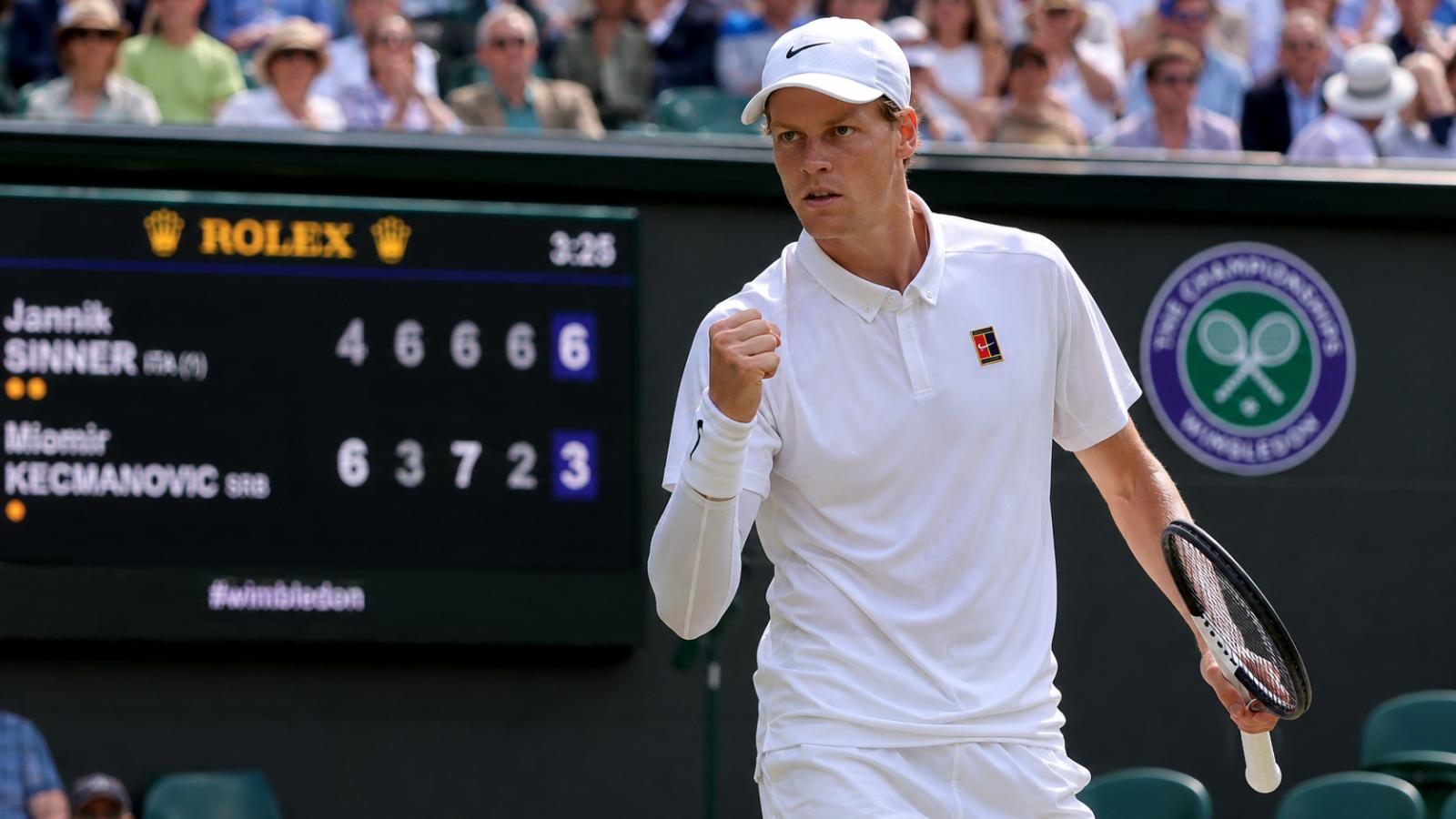
LONDON — Jannik Sinner survived a five-set Wimbledon scare on Monday, June 29, 2026, defeating Miomir Kecmanovic 4-6, 6-3, 6-7 (6), 6-2, 6-3 in the first round on Centre Court. The defending champion twice recovered from a one-set deficit and overcame a fall during the 3-hour, 30-minute match. The victory sent the world No. 1 into the second round and kept his Wimbledon title defense alive. How Jannik Sinner survived his Wimbledon opener Kecm
Jannik Sinner survives five-set Wimbledon scare against Kecmanovic
LONDON — Jannik Sinner survived a five-set Wimbledon scare on Monday, June 29, 2026, defeating Miomir Kecmanovic 4-6, 6-3, 6-7 (6), 6-2, 6-3 in the first round on Centre Court. The defending champion twice recovered from a one-set deficit and overcame a fall during the 3-hour, 30-minute match. The victory sent the world No. 1 into the second round and kept his Wimbledon title defense alive. How Jannik Sinner survived his Wimbledon opener Kecm
2026 World Cup Texas schedule: Brazil-Japan, Haaland and Salah
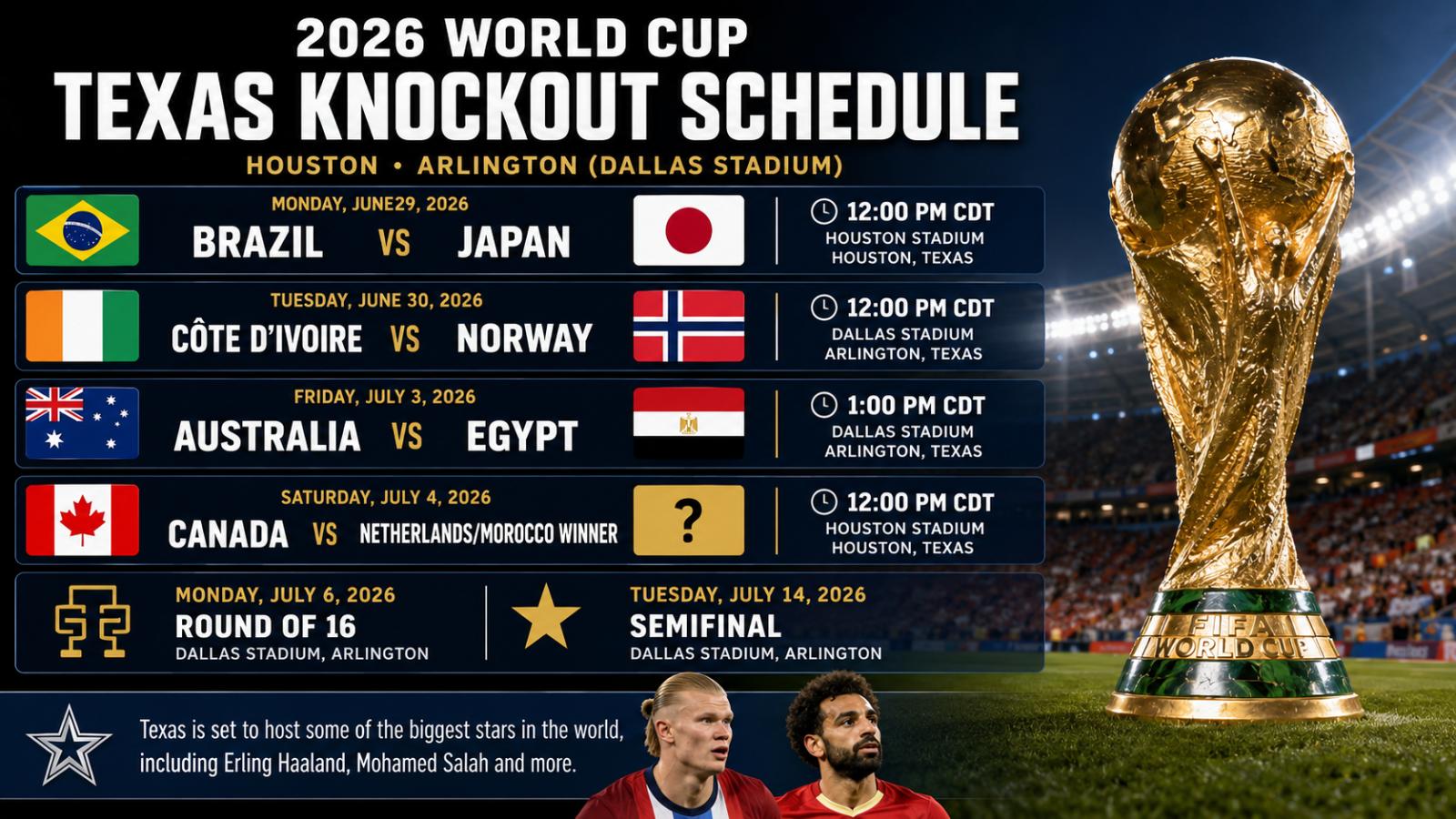
The 2026 World Cup Texas schedule brings major knockout matches to Houston and Arlington, with Brazil, Japan, Norway, Côte d’Ivoire, Australia, Egypt and Canada all appearing in the state. The first Texas knockout match is Brazil vs. Japan at 12:00 PM CDT on Monday, June 29, 2026, at Houston Stadium. The game falls exactly 68 years after Brazil won its first World Cup championship against Sweden on June 29, 1958. Pelé, then 17, scored five goals across the semifinal and final of
2026 World Cup Texas schedule: Brazil-Japan, Haaland and Salah
The 2026 World Cup Texas schedule brings major knockout matches to Houston and Arlington, with Brazil, Japan, Norway, Côte d’Ivoire, Australia, Egypt and Canada all appearing in the state. The first Texas knockout match is Brazil vs. Japan at 12:00 PM CDT on Monday, June 29, 2026, at Houston Stadium. The game falls exactly 68 years after Brazil won its first World Cup championship against Sweden on June 29, 1958. Pelé, then 17, scored five goals across the semifinal and final of
India Condemns Pakistan Airstrikes After Afghan Civilian Deaths
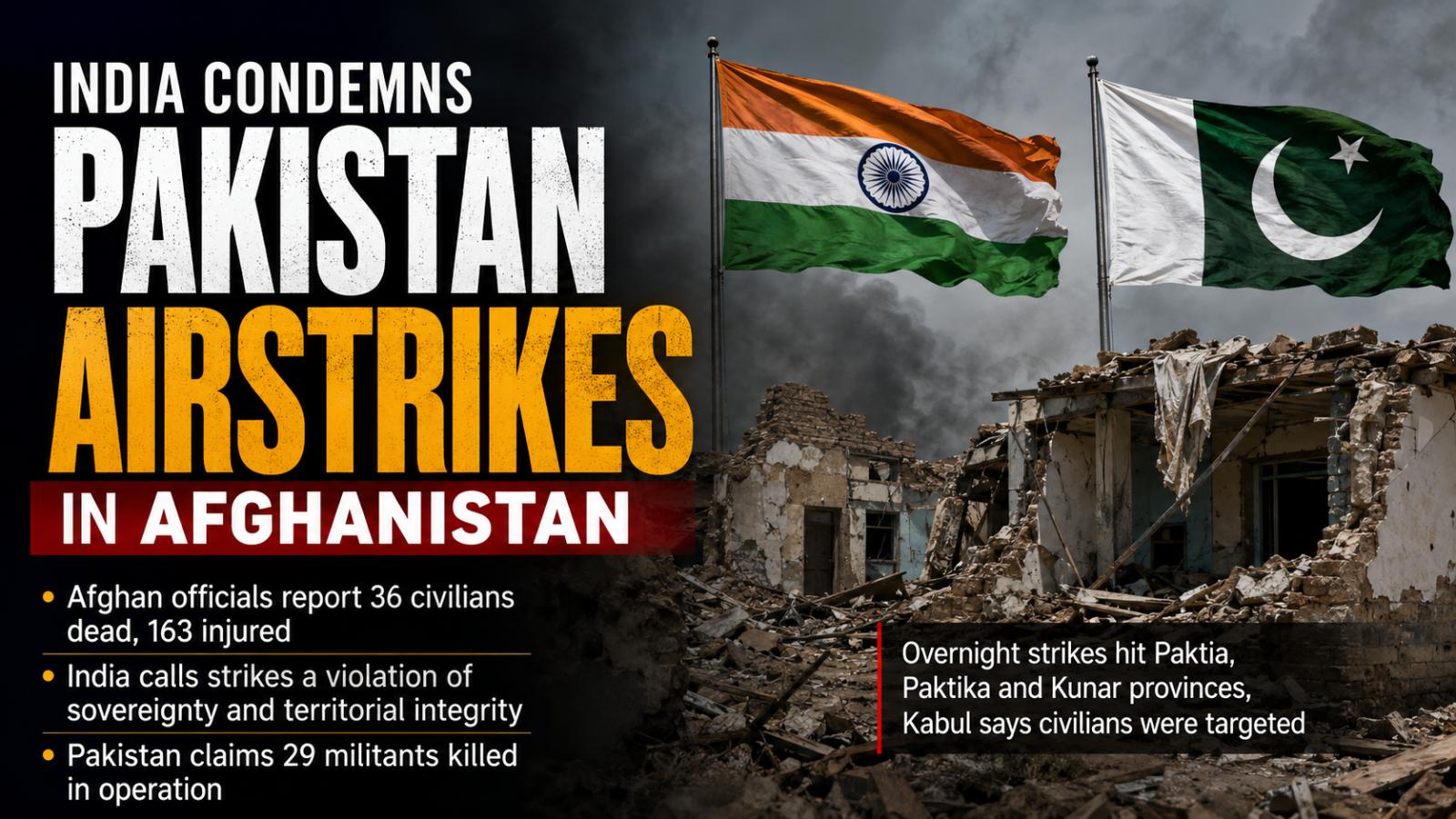
India’s Ministry of External Affairs said the military action violated Afghanistan’s sovereignty and territorial integrity and threatened regional peace. New Delhi also expressed condolences to the victims’ families, wished the injured a quick recovery and reaffirmed its support for Afghanistan’s sovereignty. The ministry accused Pakistan of using force outside its borders to divert attention from domestic security failures. Kabul and Islamabad Dispute the
India Condemns Pakistan Airstrikes After Afghan Civilian Deaths
India’s Ministry of External Affairs said the military action violated Afghanistan’s sovereignty and territorial integrity and threatened regional peace. New Delhi also expressed condolences to the victims’ families, wished the injured a quick recovery and reaffirmed its support for Afghanistan’s sovereignty. The ministry accused Pakistan of using force outside its borders to divert attention from domestic security failures. Kabul and Islamabad Dispute the
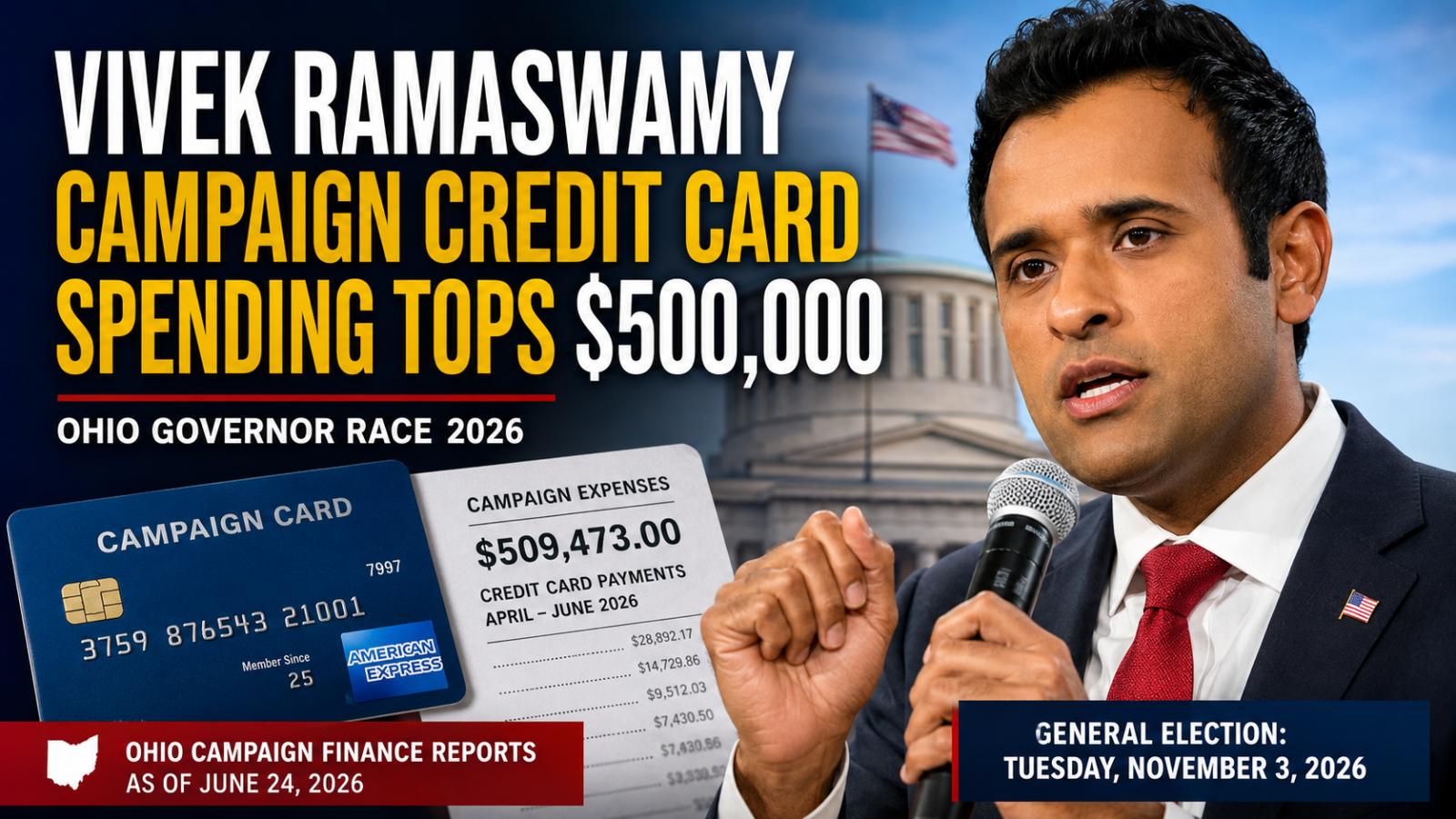
Vivek Ramaswamy Campaign Credit Card Spending Tops $500,000
COLUMBUS, Ohio — Vivek Ramaswamy’s campaign for Ohio governor has reported $509,473 in credit card payments, drawing scrutiny over how the expenses were disclosed in state campaign-finance filings. The Republican nominee’s campaign charged $280,892 to an American Express card since April, according to an Ohio Capital Journal review of campaign reports published Wednesday, June 24, 2026. Ramaswamy campaign spending draws disclosure questions
Vivek Ramaswamy Campaign Credit Card Spending Tops $500,000
COLUMBUS, Ohio — Vivek Ramaswamy’s campaign for Ohio governor has reported $509,473 in credit card payments, drawing scrutiny over how the expenses were disclosed in state campaign-finance filings. The Republican nominee’s campaign charged $280,892 to an American Express card since April, according to an Ohio Capital Journal review of campaign reports published Wednesday, June 24, 2026. Ramaswamy campaign spending draws disclosure questions
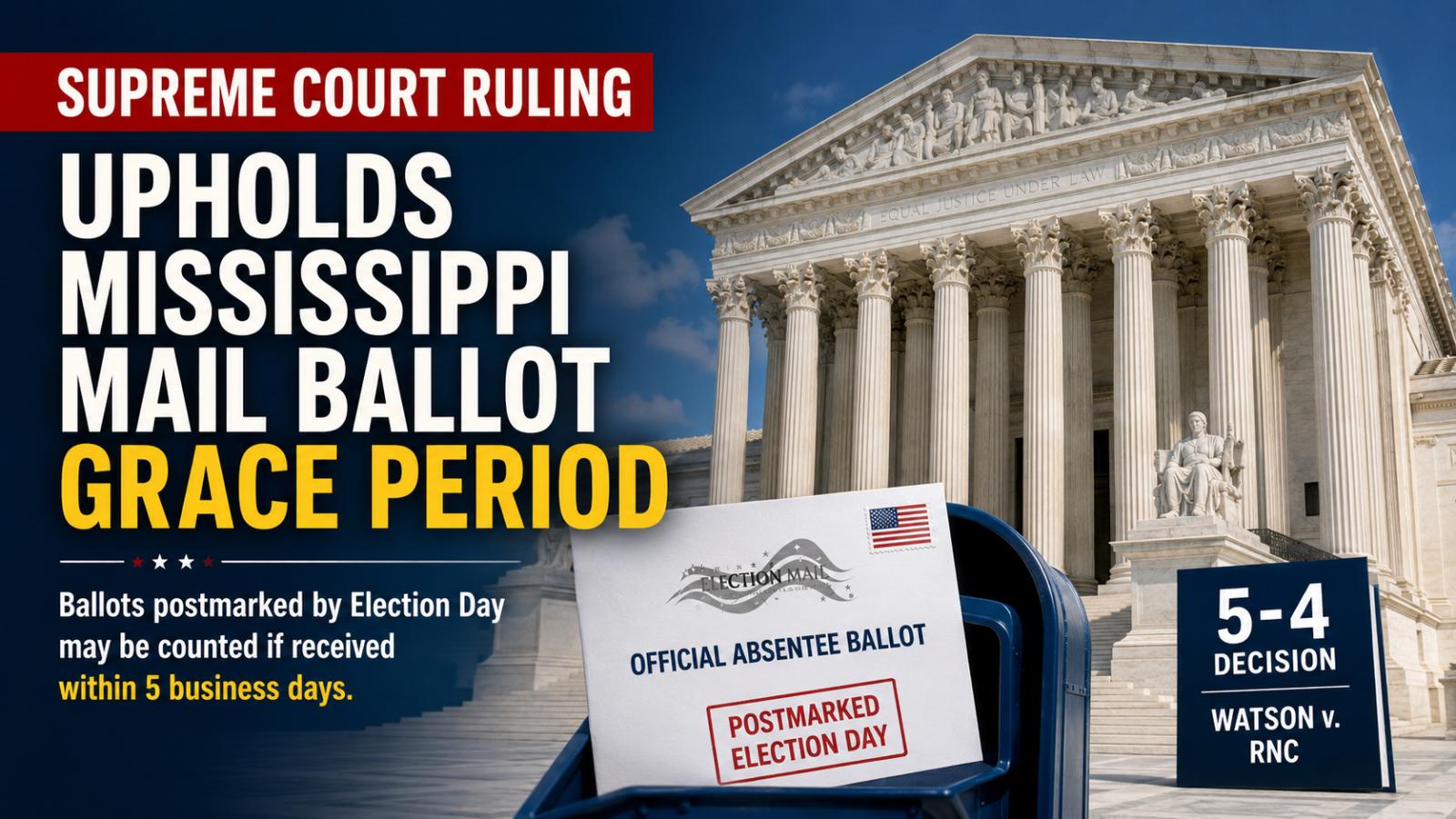
Supreme Court Upholds Mississippi Mail Ballot Grace Period
WASHINGTON — The U.S. Supreme Court on Monday, June 29, 2026, upheld the Mississippi mail ballot grace period, ruling that absentee ballots postmarked by Election Day may be counted if they arrive within five business days. The 5-4 decision overturned a federal appeals court ruling and preserved similar post-election ballot receipt rules in other states. What the Mississippi Mail Ballot Grace Period Ruling Means
Supreme Court Upholds Mississippi Mail Ballot Grace Period
WASHINGTON — The U.S. Supreme Court on Monday, June 29, 2026, upheld the Mississippi mail ballot grace period, ruling that absentee ballots postmarked by Election Day may be counted if they arrive within five business days. The 5-4 decision overturned a federal appeals court ruling and preserved similar post-election ballot receipt rules in other states. What the Mississippi Mail Ballot Grace Period Ruling Means
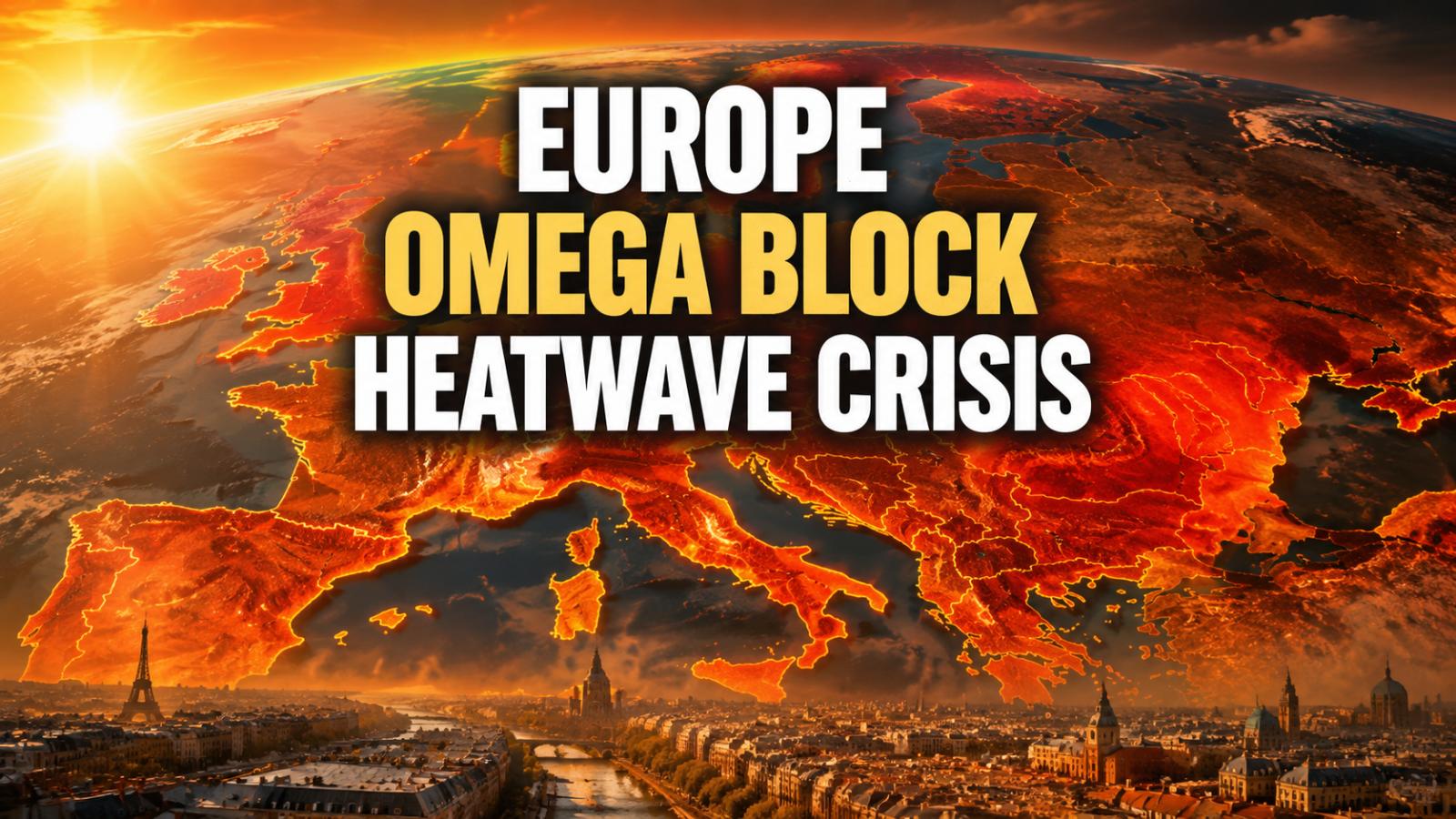
Europe omega block heatwave drives deadly temperature surge
Europe is currently experiencing a severe heatwave driven by a trapped atmospheric system known as an omega block. This Europe omega block heatwave is preventing normal weather movement, locking hot air over large parts of the continent for days. As a result, temperatures are rising sharply, affecting daily life, health systems, and infrastructure across multiple countries. What is driving this extreme heat The main reason behind the heat buildup is a stalled jet stream pattern. In this pattern, high pressure sits over Europe in a shape that blocks cooler air from entering. Instead of changing weather systems, the same hot air remains in place and continues to intensify under strong summer sunlight. This creates repeated days of extreme heat rather than short-term spikes. Nights also remain warm, giving the human body little time to recover from daytime heat exposure. Countries facing the strongest impact The heatwave is affecting a wide region including France, Germany, Italy, Spain, Switzerland, the United Kingdom, Poland, Czechia, Hungary, and parts of the Balkans. Several areas in Central and Eastern Europe have recorded temperatures above 40°C, with some locations reaching historic highs. The heat is spreading gradually eastward as the trapped system shifts across the continent. Why some regions are more exposed Southern Europe is directly exposed to hot air moving from North Africa and the Mediterranean. Countries such as Spain, Italy, and France experience intense surface heating due to prolonged sunlight and dry conditions. In Central and Eastern Europe, countries like Germany, Poland, Czechia, and Hungary face heat accumulation over landlocked regions, where hot air remains trapped for longer periods. Impact on health and daily life Health systems are under growing pressure as heat-related illnesses increase. Conditions such as dehydration, heatstroke, and cardiovascular stress are rising, particularly among older adults, outdoor workers, and people without cooling access. Reports from multiple regions indicate excess deaths above normal levels during the heatwave period, highlighting the seriousness of prolonged exposure to extreme temperatures. Transport systems are also affected. Railway lines expand under heat, causing delays, while road surfaces soften and become unstable. Energy demand increases as cooling systems are used more widely, putting pressure on national grids. Agriculture is also suffering due to dry soil conditions, reduced crop yields, and falling river levels. In some regions, water availability is becoming a growing concern for both farming and urban supply. Public response and risk outlook Authorities across Europe are advising people to stay hydrated, avoid outdoor activity during peak heat hours, and check on vulnerable individuals. Hospitals remain alert as heat-related admissions continue to rise. Experts warn that the full impact of this heatwave may take time to appear, as excess mortality data is still being compiled. The situation highlights how extreme weather patterns are becoming more persistent and widespread, with the omega block heatwave showing how atmospheric conditions can directly affect health, infrastructure, and daily life across Europe.
Europe omega block heatwave drives deadly temperature surge
Europe is currently experiencing a severe heatwave driven by a trapped atmospheric system known as an omega block. This Europe omega block heatwave is preventing normal weather movement, locking hot air over large parts of the continent for days. As a result, temperatures are rising sharply, affecting daily life, health systems, and infrastructure across multiple countries. What is driving this extreme heat The main reason behind the heat buildup is a stalled jet stream pattern. In this pattern, high pressure sits over Europe in a shape that blocks cooler air from entering. Instead of changing weather systems, the same hot air remains in place and continues to intensify under strong summer sunlight. This creates repeated days of extreme heat rather than short-term spikes. Nights also remain warm, giving the human body little time to recover from daytime heat exposure. Countries facing the strongest impact The heatwave is affecting a wide region including France, Germany, Italy, Spain, Switzerland, the United Kingdom, Poland, Czechia, Hungary, and parts of the Balkans. Several areas in Central and Eastern Europe have recorded temperatures above 40°C, with some locations reaching historic highs. The heat is spreading gradually eastward as the trapped system shifts across the continent. Why some regions are more exposed Southern Europe is directly exposed to hot air moving from North Africa and the Mediterranean. Countries such as Spain, Italy, and France experience intense surface heating due to prolonged sunlight and dry conditions. In Central and Eastern Europe, countries like Germany, Poland, Czechia, and Hungary face heat accumulation over landlocked regions, where hot air remains trapped for longer periods. Impact on health and daily life Health systems are under growing pressure as heat-related illnesses increase. Conditions such as dehydration, heatstroke, and cardiovascular stress are rising, particularly among older adults, outdoor workers, and people without cooling access. Reports from multiple regions indicate excess deaths above normal levels during the heatwave period, highlighting the seriousness of prolonged exposure to extreme temperatures. Transport systems are also affected. Railway lines expand under heat, causing delays, while road surfaces soften and become unstable. Energy demand increases as cooling systems are used more widely, putting pressure on national grids. Agriculture is also suffering due to dry soil conditions, reduced crop yields, and falling river levels. In some regions, water availability is becoming a growing concern for both farming and urban supply. Public response and risk outlook Authorities across Europe are advising people to stay hydrated, avoid outdoor activity during peak heat hours, and check on vulnerable individuals. Hospitals remain alert as heat-related admissions continue to rise. Experts warn that the full impact of this heatwave may take time to appear, as excess mortality data is still being compiled. The situation highlights how extreme weather patterns are becoming more persistent and widespread, with the omega block heatwave showing how atmospheric conditions can directly affect health, infrastructure, and daily life across Europe.

Russia Ukraine war losses rise amid drone escalation
The Russia–Ukraine conflict continues to evolve into a high-intensity war of attrition, with rising casualties reported among newly deployed troops and increasing strain on military systems. The nature of combat has shifted significantly, with rapid deployments and constant surveillance reducing operational margins for survival on key frontlines. Rapid deployment and shrink
Russia Ukraine war losses rise amid drone escalation
The Russia–Ukraine conflict continues to evolve into a high-intensity war of attrition, with rising casualties reported among newly deployed troops and increasing strain on military systems. The nature of combat has shifted significantly, with rapid deployments and constant surveillance reducing operational margins for survival on key frontlines. Rapid deployment and shrink










