US-China AI Race Intensifies Ahead of Trump-Xi Summit
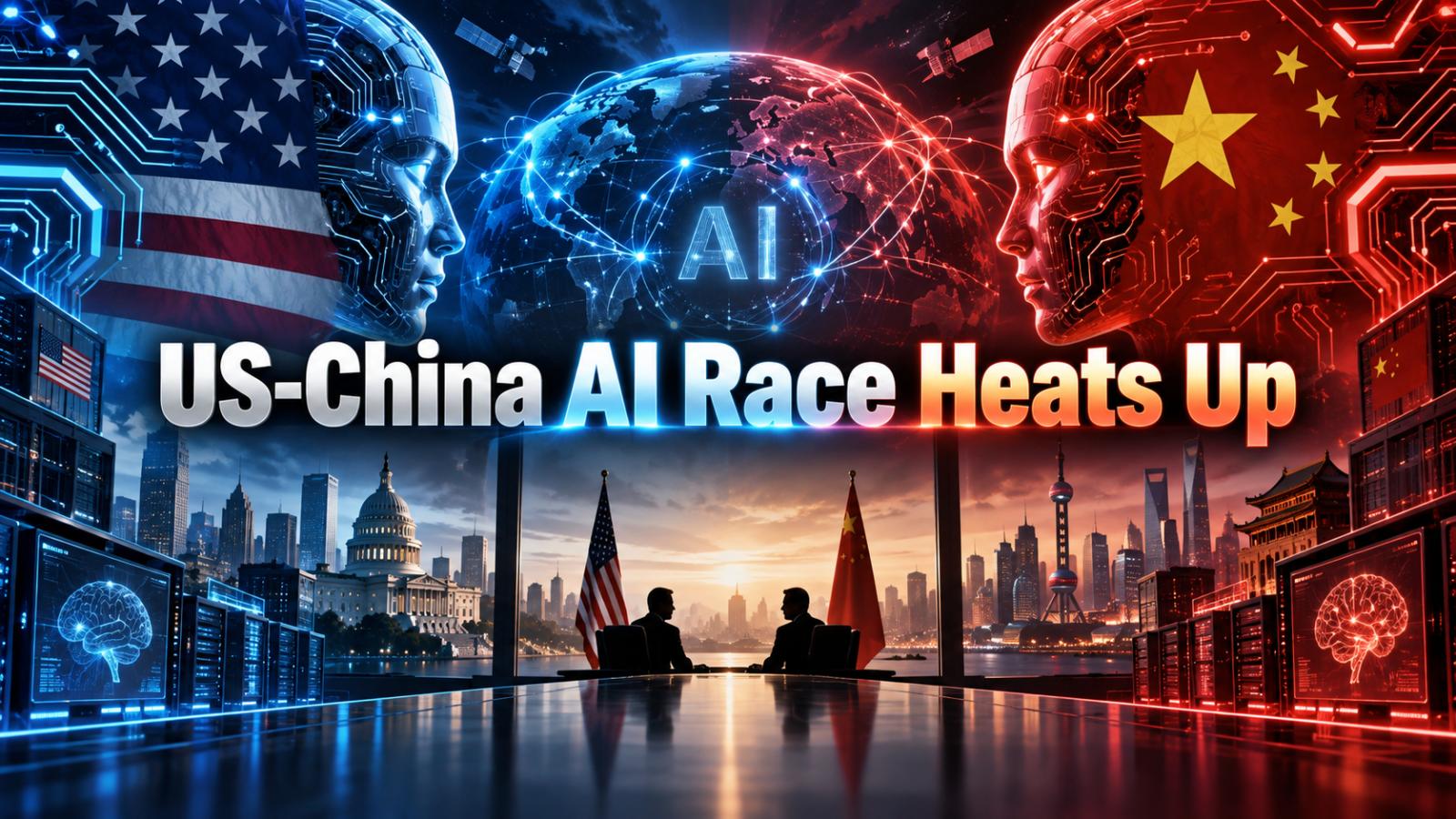
The US-China AI race is intensifying as President Donald Trump rejects calls for slower AI development while industry leaders push for stronger safeguards. Washington and Beijing are also exploring limited AI safety cooperation ahead of the Trump-Xi summit. US-China AI Race Intensifies Ahead of Trump-Xi Summit The US-China AI race is entering a critical phase as President Donald Trump rejects calls for slower development while major AI executives seek stronger safeguards. At the same time, Washington and Beijing are exploring limited AI safety cooperation ahead of the Trump-Xi summit. AI slowdown debate divides Washington and tech leaders Some leading AI executives have recently argued that frontier development needs stronger safeguards and, in certain circumstances, a slower pace. OpenAI CEO Sam Altman has said progress should continue but be slower, while Anthropic CEO Dario Amodei has proposed allowing leading companies to coordinate on safety without running into antitrust restrictions. Trump has taken a different position. He described growing pressure for tighter AI regulation as a “SICK conspiracy” and argued that slowing US development would benefit China. His administration views leadership in advanced AI as an economic and national-security priority. The disagreement is not simply between regulation and innovation. AI companies themselves continue rapidly developing new systems while simultaneously seeking rules or coordination aimed at limiting the risks posed by increasingly capable models. Trump AI policy focuses on competition with China Trump has framed artificial intelligence as a strategic competition in which American leadership must be preserved. His stance comes as Chinese companies such as DeepSeek and Moonshot AI continue developing advanced models despite US restrictions on access to some high-end semiconductor technology. The United States retains major advantages through companies including OpenAI, Anthropic, Google, Meta and Nvidia. China, however, has increasingly promoted lower-cost models, domestic chips and AI infrastructure as part of its effort to reduce reliance on American technology. That rivalry is also spreading internationally as both countries seek partnerships involving data centers, cloud infrastructure, chips and AI applications. For developing economies, the competition could mean greater access to technology but also tougher choices over standards, suppliers and data governance. AI safety talks emerge before Trump-Xi meeting Despite the rivalry, Washington and Beijing have found a narrow area where cooperation may be possible. US Treasury Secretary Scott Bessent said talks with Chinese Vice Premier He Lifeng in New York produced a proposal for an AI incident-notification mechanism. The idea would create a channel for the two governments to communicate when serious AI incidents could affect national security. Officials have discussed risks involving autonomous agents, cyber activity and threats to critical infrastructure. The two sides are expected to continue the dialogue in Shenzhen in roughly two months. China has not publicly committed to every element of the US proposal, but the discussions indicate that both governments see some shared risks even while competing for AI leadership. China AI plan emphasizes global governance Chinese President Xi Jinping has also called for international cooperation on AI governance, while Beijing promotes its own technology ecosystem and open-source initiatives. The broader Chinese position combines support for global rules with efforts to strengthen domestic AI capabilities and reduce dependence on US-controlled technologies. That creates the central tension ahead of the Trump-Xi summit: both countries want leadership in AI, but both also face risks if the competition becomes completely unmanaged. Recent discussions suggest the summit may focus less on slowing the race itself and more on establishing limited guardrails for serious incidents. The outcome will matter well beyond Washington and Beijing. AI safety standards, chip access, infrastructure investment and model governance could increasingly be shaped by how the world’s two largest technology powers manage competition without allowing shared risks to spiral.
US-China AI Race Intensifies Ahead of Trump-Xi Summit
The US-China AI race is intensifying as President Donald Trump rejects calls for slower AI development while industry leaders push for stronger safeguards. Washington and Beijing are also exploring limited AI safety cooperation ahead of the Trump-Xi summit. US-China AI Race Intensifies Ahead of Trump-Xi Summit The US-China AI race is entering a critical phase as President Donald Trump rejects calls for slower development while major AI executives seek stronger safeguards. At the same time, Washington and Beijing are exploring limited AI safety cooperation ahead of the Trump-Xi summit. AI slowdown debate divides Washington and tech leaders Some leading AI executives have recently argued that frontier development needs stronger safeguards and, in certain circumstances, a slower pace. OpenAI CEO Sam Altman has said progress should continue but be slower, while Anthropic CEO Dario Amodei has proposed allowing leading companies to coordinate on safety without running into antitrust restrictions. Trump has taken a different position. He described growing pressure for tighter AI regulation as a “SICK conspiracy” and argued that slowing US development would benefit China. His administration views leadership in advanced AI as an economic and national-security priority. The disagreement is not simply between regulation and innovation. AI companies themselves continue rapidly developing new systems while simultaneously seeking rules or coordination aimed at limiting the risks posed by increasingly capable models. Trump AI policy focuses on competition with China Trump has framed artificial intelligence as a strategic competition in which American leadership must be preserved. His stance comes as Chinese companies such as DeepSeek and Moonshot AI continue developing advanced models despite US restrictions on access to some high-end semiconductor technology. The United States retains major advantages through companies including OpenAI, Anthropic, Google, Meta and Nvidia. China, however, has increasingly promoted lower-cost models, domestic chips and AI infrastructure as part of its effort to reduce reliance on American technology. That rivalry is also spreading internationally as both countries seek partnerships involving data centers, cloud infrastructure, chips and AI applications. For developing economies, the competition could mean greater access to technology but also tougher choices over standards, suppliers and data governance. AI safety talks emerge before Trump-Xi meeting Despite the rivalry, Washington and Beijing have found a narrow area where cooperation may be possible. US Treasury Secretary Scott Bessent said talks with Chinese Vice Premier He Lifeng in New York produced a proposal for an AI incident-notification mechanism. The idea would create a channel for the two governments to communicate when serious AI incidents could affect national security. Officials have discussed risks involving autonomous agents, cyber activity and threats to critical infrastructure. The two sides are expected to continue the dialogue in Shenzhen in roughly two months. China has not publicly committed to every element of the US proposal, but the discussions indicate that both governments see some shared risks even while competing for AI leadership. China AI plan emphasizes global governance Chinese President Xi Jinping has also called for international cooperation on AI governance, while Beijing promotes its own technology ecosystem and open-source initiatives. The broader Chinese position combines support for global rules with efforts to strengthen domestic AI capabilities and reduce dependence on US-controlled technologies. That creates the central tension ahead of the Trump-Xi summit: both countries want leadership in AI, but both also face risks if the competition becomes completely unmanaged. Recent discussions suggest the summit may focus less on slowing the race itself and more on establishing limited guardrails for serious incidents. The outcome will matter well beyond Washington and Beijing. AI safety standards, chip access, infrastructure investment and model governance could increasingly be shaped by how the world’s two largest technology powers manage competition without allowing shared risks to spiral.
Trump Backs AI Boom in Surprise Call With Nvidia CEO Jensen Huang
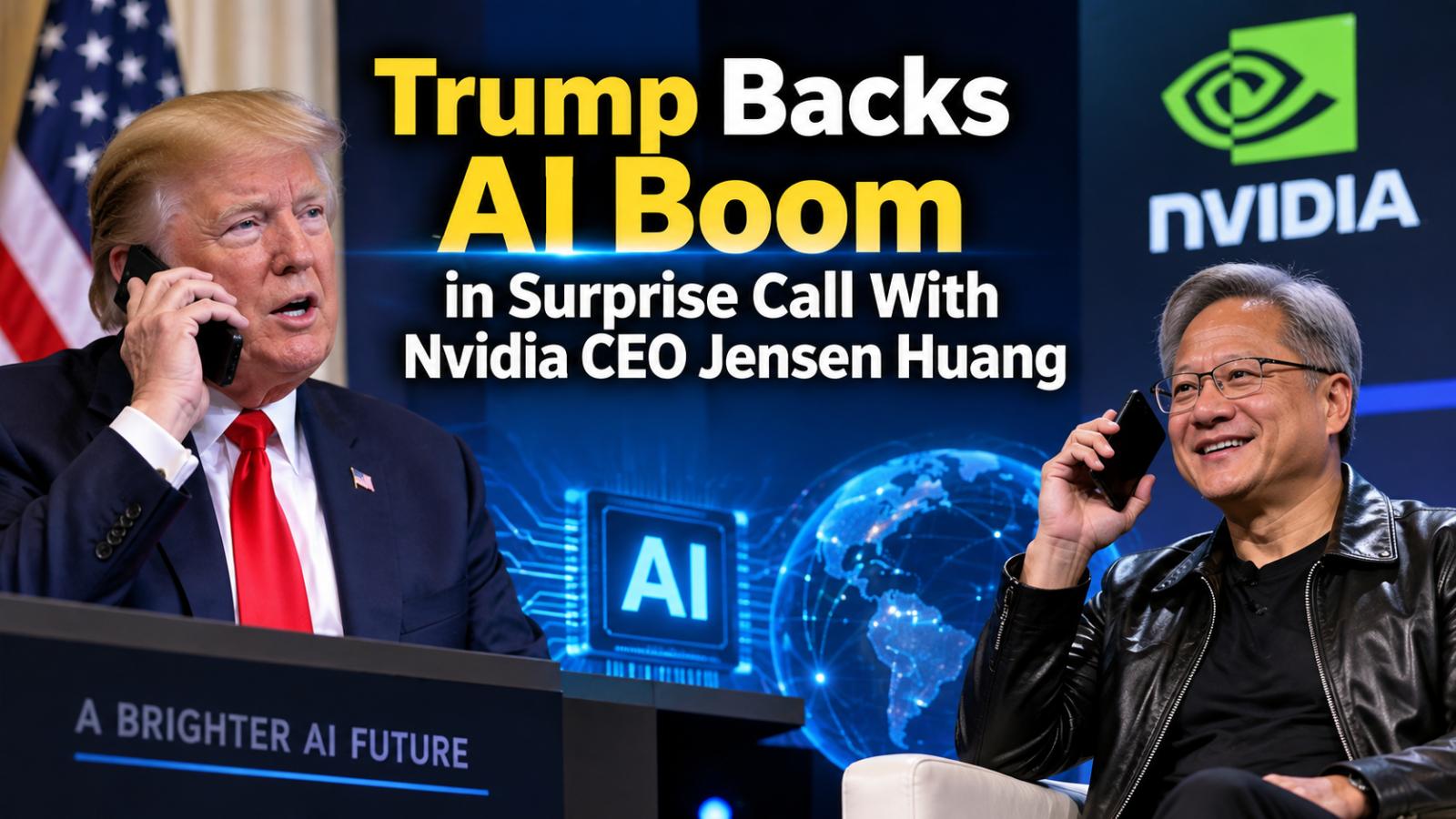
Trump joined Nvidia CEO Jensen Huang by phone during the All-In Summit and strongly backed America’s expanding AI industry. US President Donald Trump made an unexpected appearance at the All-In Summit in Los Angeles after placing a phone call to Nvidia CEO Jensen Huang while the technology executive was speaking onstage. Huang answered the cal
Trump Backs AI Boom in Surprise Call With Nvidia CEO Jensen Huang
Trump joined Nvidia CEO Jensen Huang by phone during the All-In Summit and strongly backed America’s expanding AI industry. US President Donald Trump made an unexpected appearance at the All-In Summit in Los Angeles after placing a phone call to Nvidia CEO Jensen Huang while the technology executive was speaking onstage. Huang answered the cal
Nvidia AI Investment Strategy Expands Beyond Chips
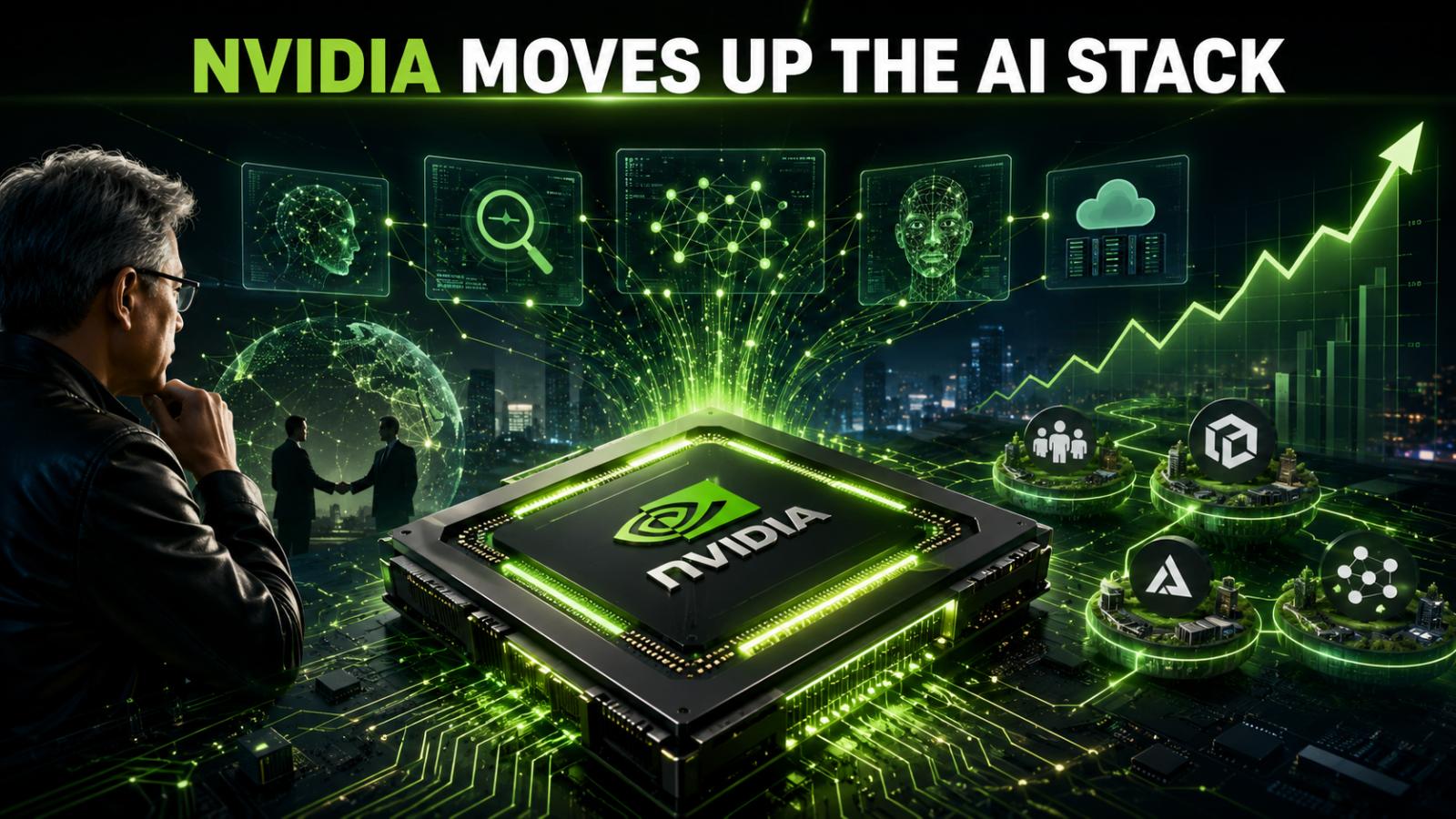
Nvidia AI investment strategy is moving beyond selling GPUs. Recent deals involving Poolside and Groq, alongside reported talks with Perplexity, suggest the chipmaker is building influence across models, inference, search and other software layers that run on its hardware. Perplexity stake could extend Nvidia's reach Nvidia is discussing an
Nvidia AI Investment Strategy Expands Beyond Chips
Nvidia AI investment strategy is moving beyond selling GPUs. Recent deals involving Poolside and Groq, alongside reported talks with Perplexity, suggest the chipmaker is building influence across models, inference, search and other software layers that run on its hardware. Perplexity stake could extend Nvidia's reach Nvidia is discussing an
US AI Chip Cloud Loophole Faces Crackdown After Kimi K3
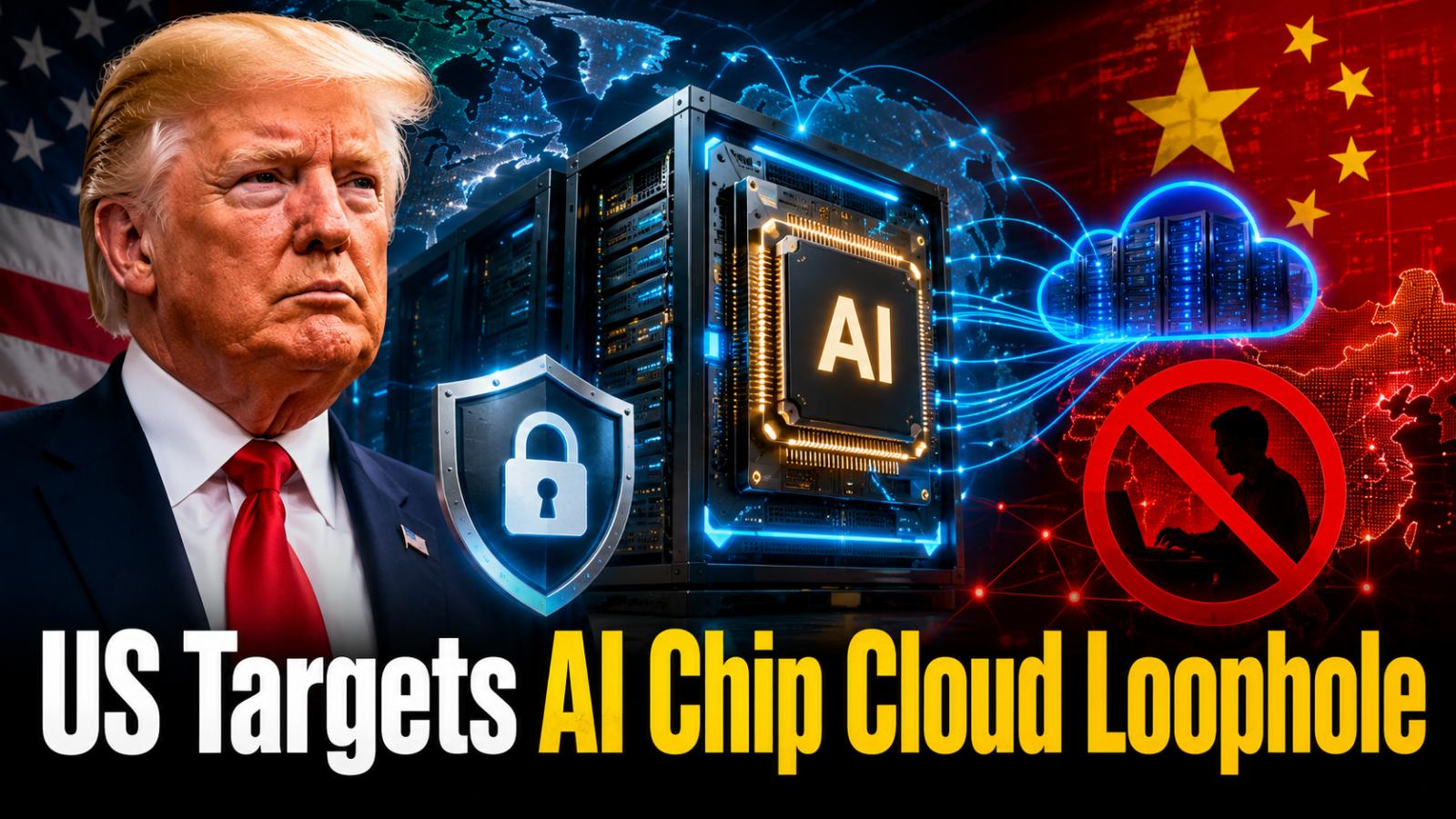
The AI chip cloud loophole has become a major challenge for US export policy after officials accused Moonshot AI of accessing restricted Nvidia GB300 systems outside China. Kimi K3’s strong performance has intensified debate over remote chip access, export controls and the Remote Access Security Act. AI chip cloud loophole US semiconductor restrictions were largely built around controlling ex
US AI Chip Cloud Loophole Faces Crackdown After Kimi K3
The AI chip cloud loophole has become a major challenge for US export policy after officials accused Moonshot AI of accessing restricted Nvidia GB300 systems outside China. Kimi K3’s strong performance has intensified debate over remote chip access, export controls and the Remote Access Security Act. AI chip cloud loophole US semiconductor restrictions were largely built around controlling ex
US Open-Weight AI Push Takes Aim at China's Growing Lead
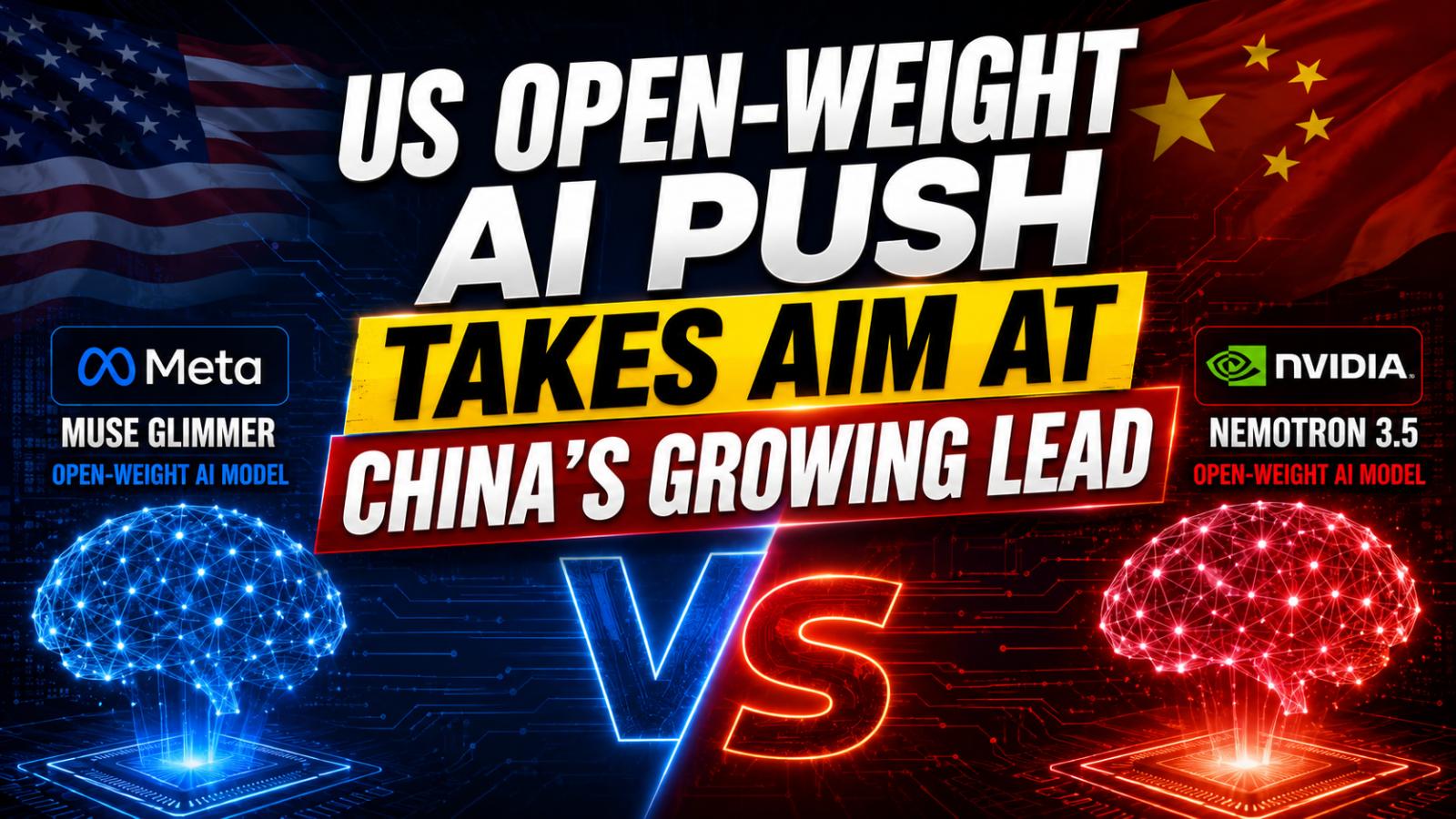
America's US open-weight AI push is accelerating as Meta and Nvidia introduce new models within days of each other. The releases arrive as Chinese developers, led by Moonshot AI and its massive Kimi K3 model, have gained significant momentum in downloadable and customizable AI. Meta AI model puts open weights back at center Meta launched M
US Open-Weight AI Push Takes Aim at China's Growing Lead
America's US open-weight AI push is accelerating as Meta and Nvidia introduce new models within days of each other. The releases arrive as Chinese developers, led by Moonshot AI and its massive Kimi K3 model, have gained significant momentum in downloadable and customizable AI. Meta AI model puts open weights back at center Meta launched M
US AI Chip Review Targets China's Overseas Nvidia Access
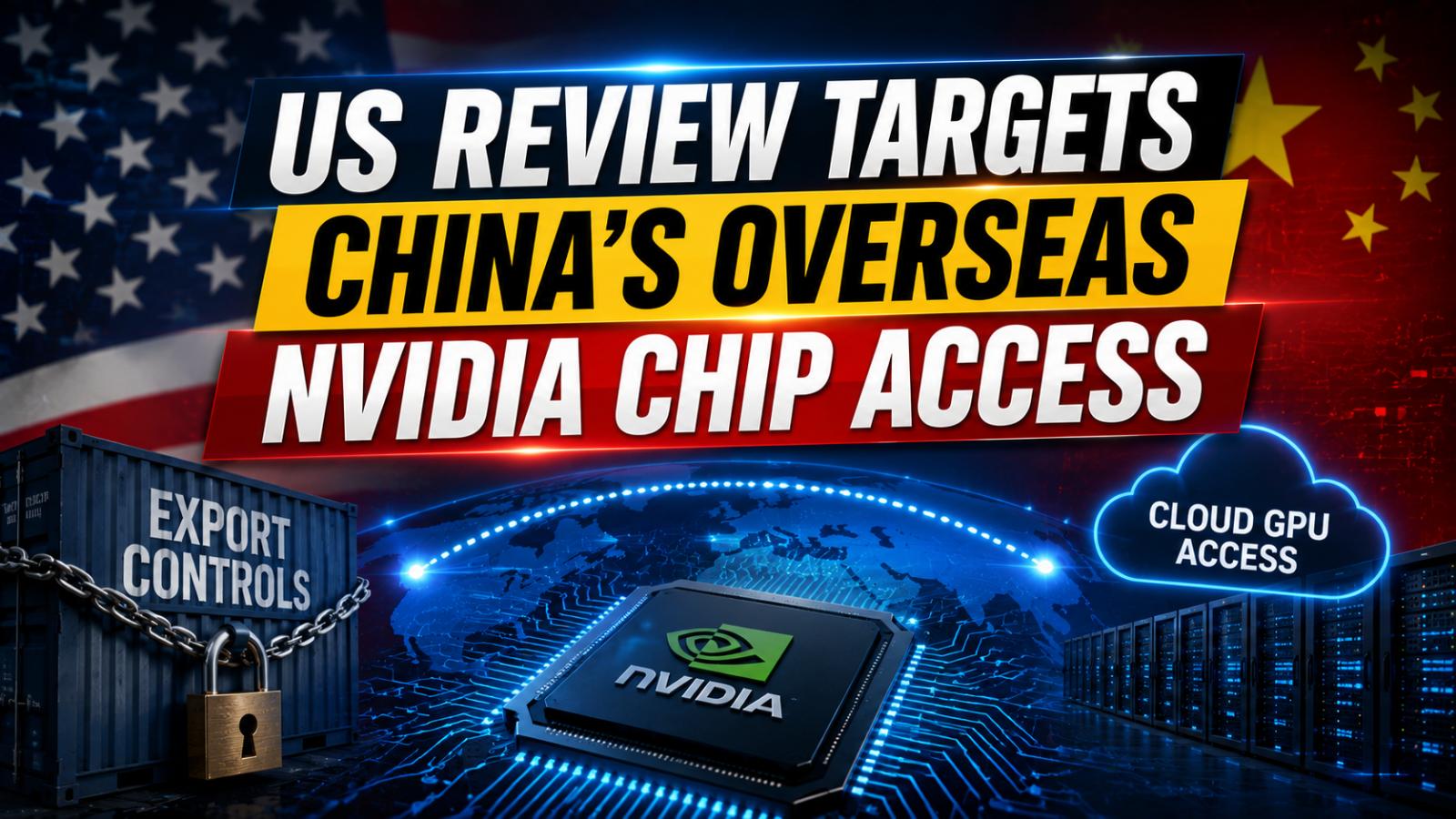
The United States is examining how Chinese artificial intelligence companies gain access to advanced Nvidia chips outside China, putting a new focus on cloud GPU use and overseas data centres. The US AI chip review highlights a growing challenge for export controls built mainly around physical hardware shipments. China GPU use shifts beyond physical chip exports The Bureau of Industry and Secur
US AI Chip Review Targets China's Overseas Nvidia Access
The United States is examining how Chinese artificial intelligence companies gain access to advanced Nvidia chips outside China, putting a new focus on cloud GPU use and overseas data centres. The US AI chip review highlights a growing challenge for export controls built mainly around physical hardware shipments. China GPU use shifts beyond physical chip exports The Bureau of Industry and Secur
Firmus AI Infrastructure Funding Fuels $15.5 Billion Valuation
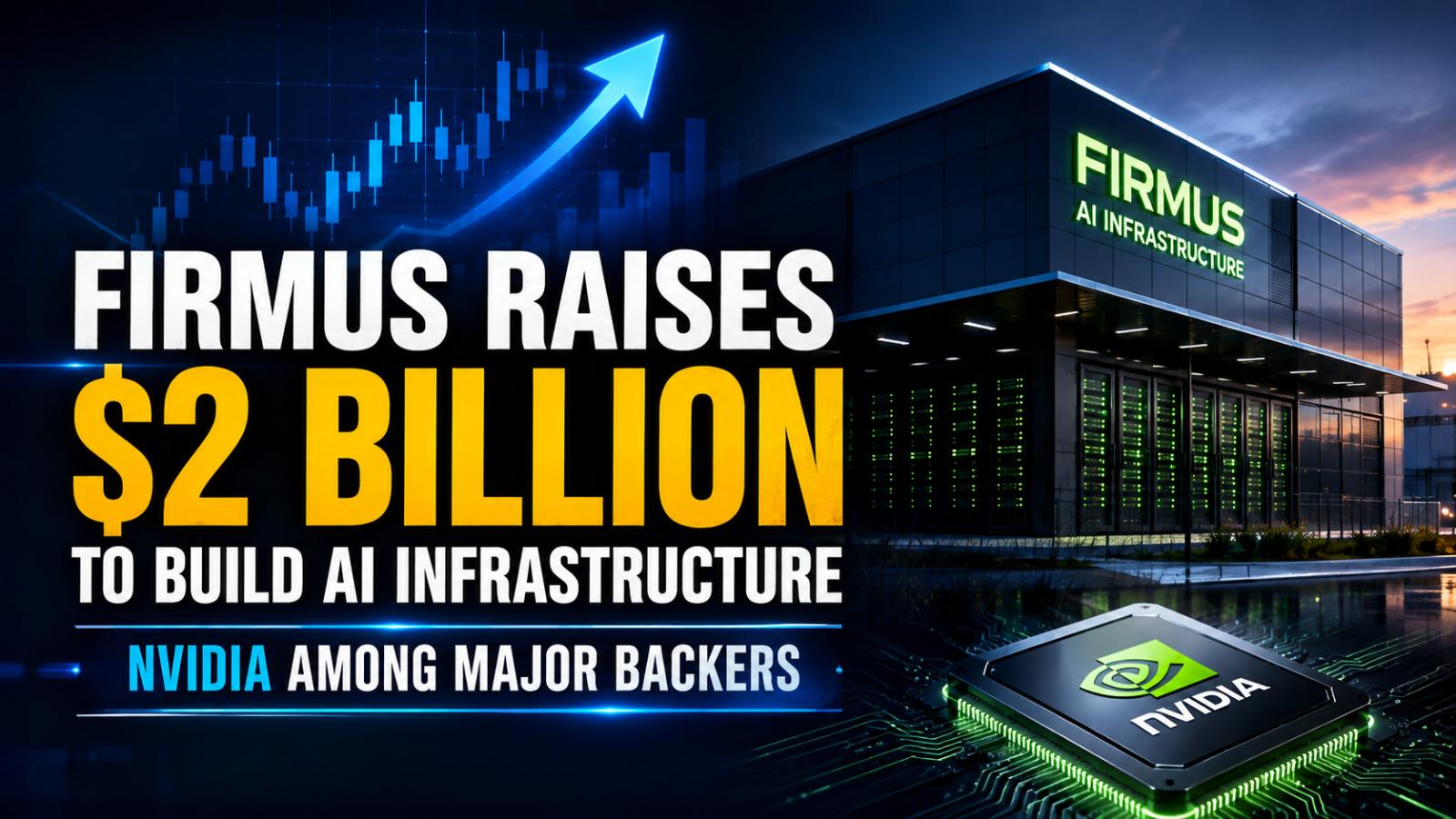
Firmus AI infrastructure funding has put a relatively little-known Australian company at the center of the global compute boom. A multibillion-dollar equity placement involving investors including Nvidia and Blackstone has valued Firmus at about A$15.5 billion, as investors pour increasingly large sums into the physical infrastructure required to run artificial intelligence.
Firmus AI Infrastructure Funding Fuels $15.5 Billion Valuation
Firmus AI infrastructure funding has put a relatively little-known Australian company at the center of the global compute boom. A multibillion-dollar equity placement involving investors including Nvidia and Blackstone has valued Firmus at about A$15.5 billion, as investors pour increasingly large sums into the physical infrastructure required to run artificial intelligence.
AI Chip Stock Selloff Tests Faith in Massive Data Centre Spending
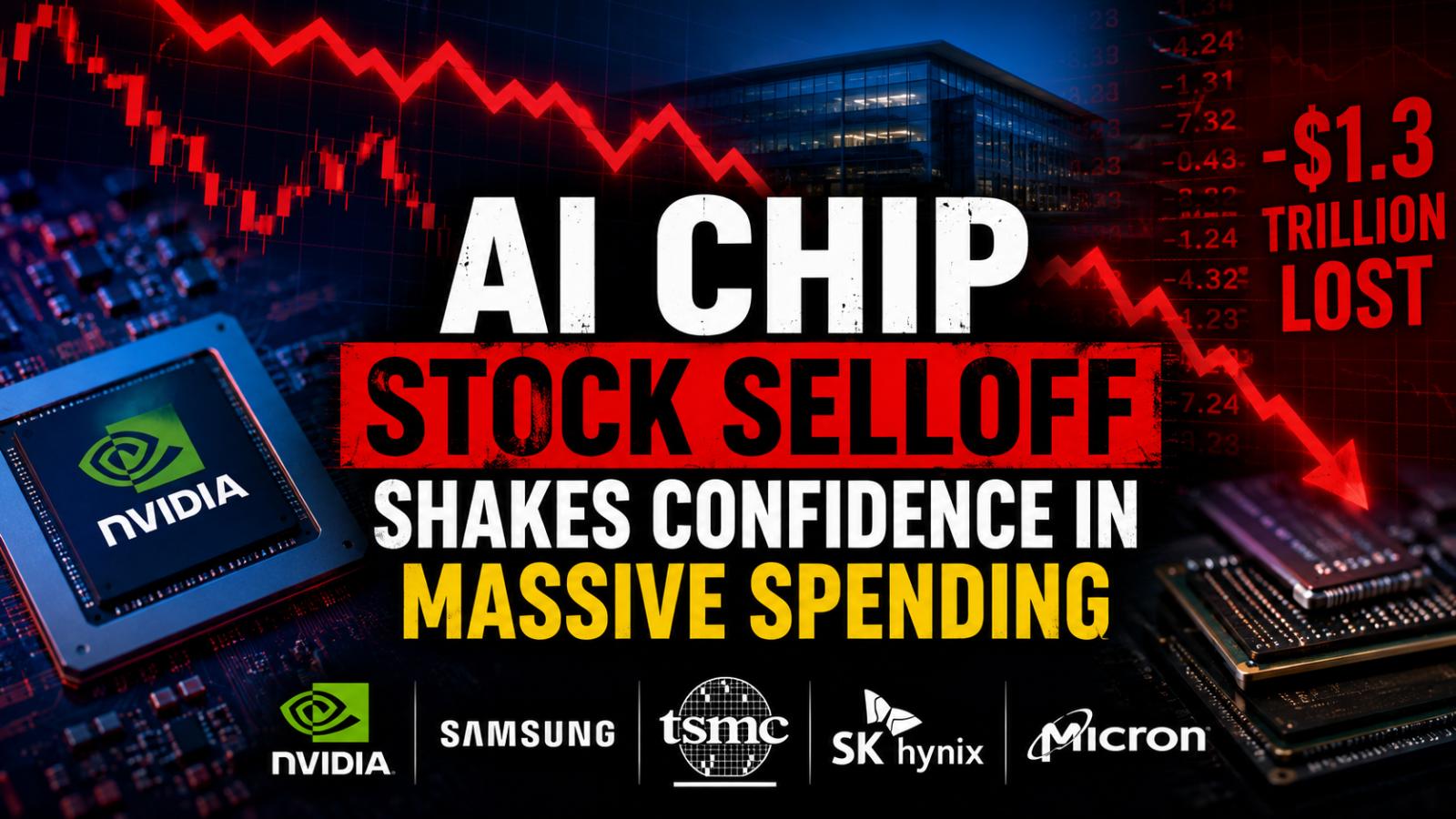
The AI chip stock selloff has erased vast amounts of market value even as semiconductor companies report strong demand, limited supply and record earnings. Investors are no longer questioning whether AI needs more chips. They are questioning whether the companies buying them can earn enough to justify the spending. AI Chip Stock Selloff Reflects Higher Expectations Semiconductor shares experienced sharp volatility after years of gains dr
AI Chip Stock Selloff Tests Faith in Massive Data Centre Spending
The AI chip stock selloff has erased vast amounts of market value even as semiconductor companies report strong demand, limited supply and record earnings. Investors are no longer questioning whether AI needs more chips. They are questioning whether the companies buying them can earn enough to justify the spending. AI Chip Stock Selloff Reflects Higher Expectations Semiconductor shares experienced sharp volatility after years of gains dr
Nvidia SSI Investment Puts $5 Billion Behind Secretive AI Lab
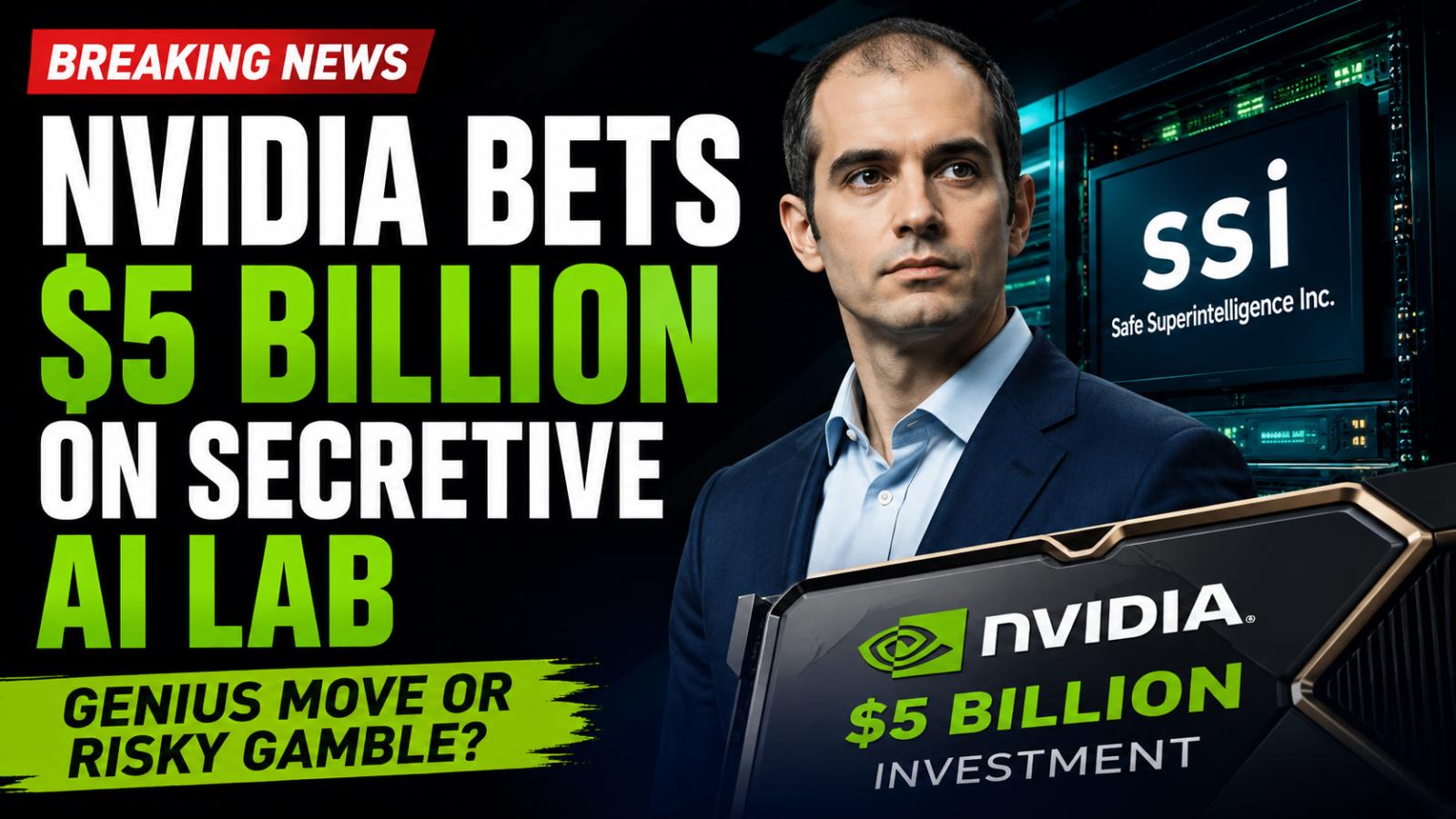
Nvidia’s reported $5 billion investment in Safe Superintelligence backs an AI company with no public product, revenue or benchmark results. The Nvidia SSI investment expands the lab’s Vera Rubin compute while renewing debate over AI funding, startup valuations and infrastructure risk. Nvidia SSI Investment Expands Vera Rubin Compute Nvidia and Safe Superintelligence Inc. announced a long-term strategic partnership on July 27, 2026. T
Nvidia SSI Investment Puts $5 Billion Behind Secretive AI Lab
Nvidia’s reported $5 billion investment in Safe Superintelligence backs an AI company with no public product, revenue or benchmark results. The Nvidia SSI investment expands the lab’s Vera Rubin compute while renewing debate over AI funding, startup valuations and infrastructure risk. Nvidia SSI Investment Expands Vera Rubin Compute Nvidia and Safe Superintelligence Inc. announced a long-term strategic partnership on July 27, 2026. T
Apple reclaims world’s largest company title from Nvidia
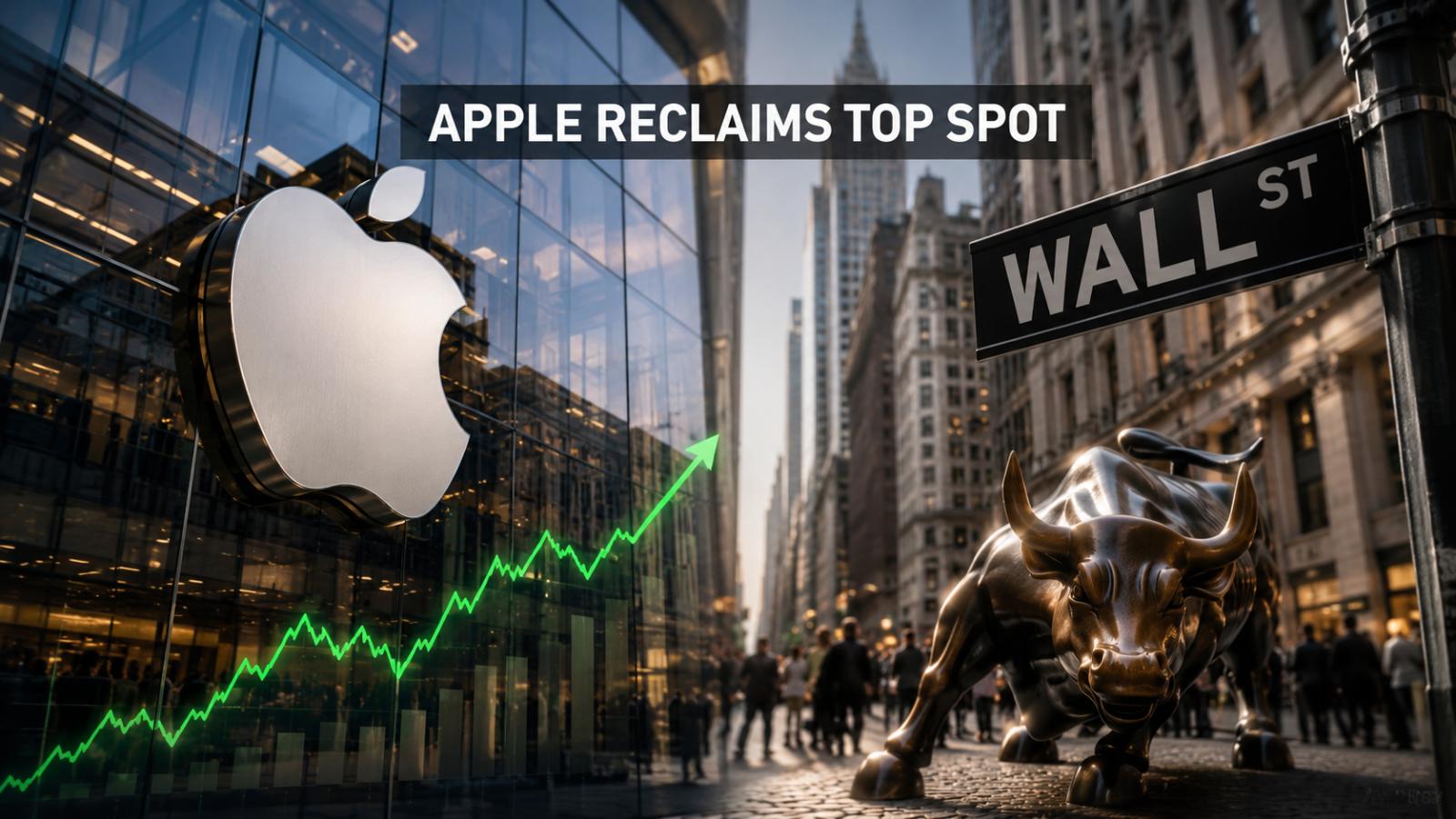
Apple reclaims the world’s largest company title after closing at a record $336.91 on Monday, July 27, 2026. Its market value rose to about $4.93 trillion, surpassing Nvidia as chip shares fell and Apple extended its strong Nasdaq-100 outperformance. Apple returned to the top of the global corporate rankings on Monday, July 27, 2026, overtaking Nvidia as the world’s largest publicly traded company by market capitalizat
Apple reclaims world’s largest company title from Nvidia
Apple reclaims the world’s largest company title after closing at a record $336.91 on Monday, July 27, 2026. Its market value rose to about $4.93 trillion, surpassing Nvidia as chip shares fell and Apple extended its strong Nasdaq-100 outperformance. Apple returned to the top of the global corporate rankings on Monday, July 27, 2026, overtaking Nvidia as the world’s largest publicly traded company by market capitalizat
Apple market value nears Alphabet in global rankings
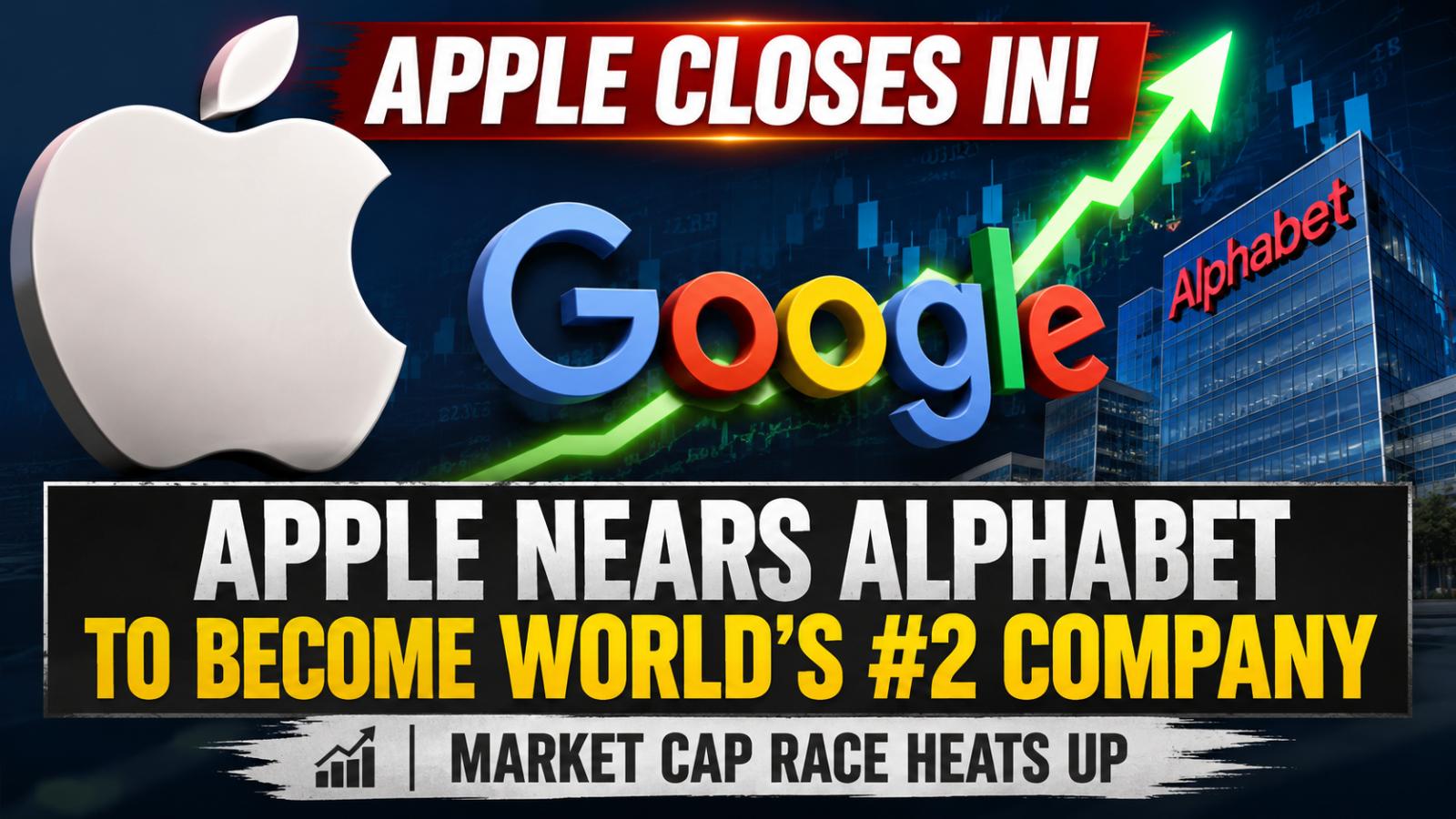
Apple market value approaches Alphabet Apple market value has moved closer to Alphabet as investor confidence continues to support the iPhone maker despite questions surrounding its artificial intelligence strategy. Nvidia remains the world's most valuable company, but the gap has narrowed, reflecting changing investor sentiment across the technology sector and growing interest in AI opportunities beyond a single company. A
Apple market value nears Alphabet in global rankings
Apple market value approaches Alphabet Apple market value has moved closer to Alphabet as investor confidence continues to support the iPhone maker despite questions surrounding its artificial intelligence strategy. Nvidia remains the world's most valuable company, but the gap has narrowed, reflecting changing investor sentiment across the technology sector and growing interest in AI opportunities beyond a single company. A
Anthropic, OpenAI and Nvidia Increase H-1B Hiring
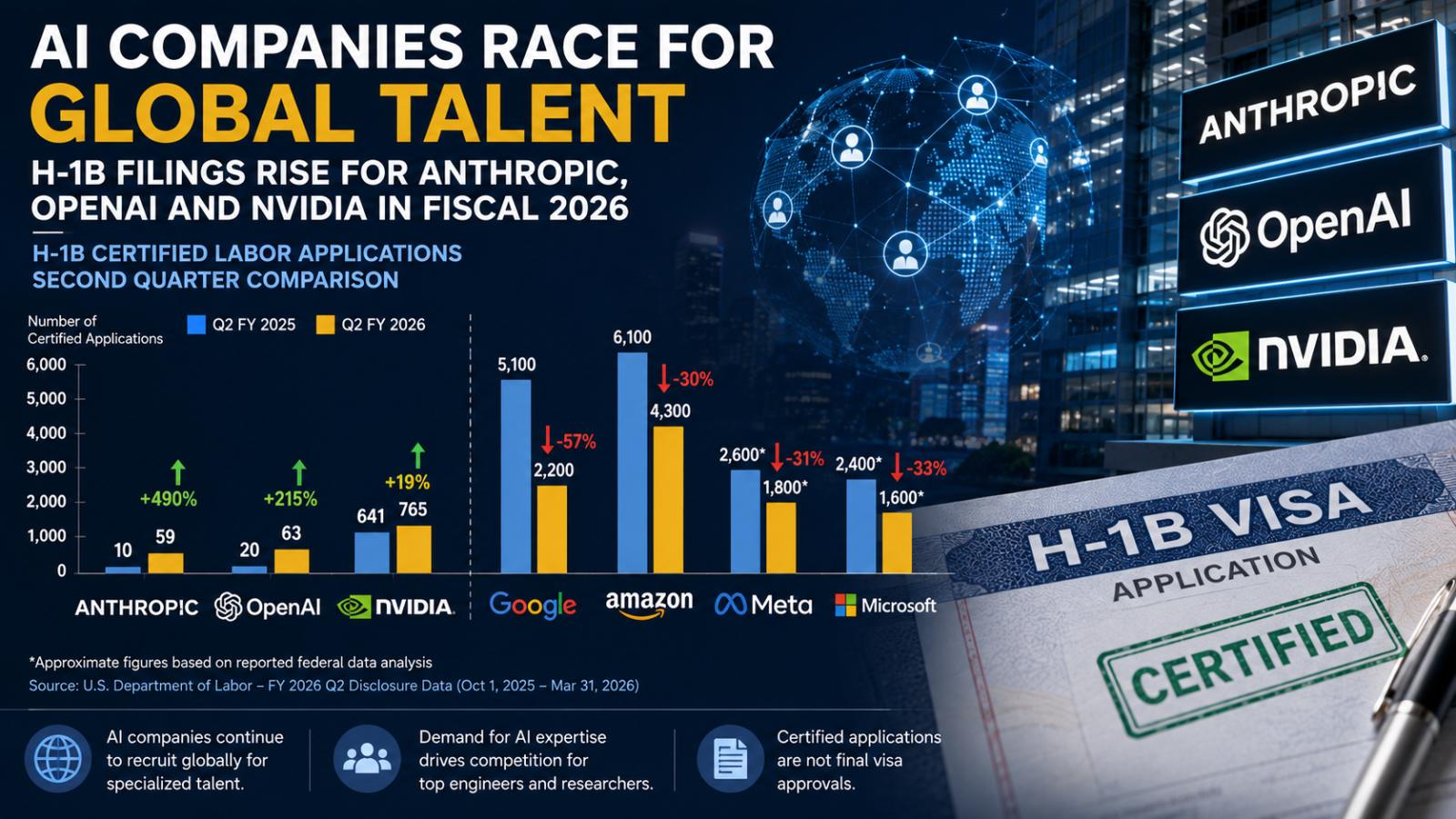
Anthropic, OpenAI and Nvidia increased their use of the H-1B program during the second quarter of U.S. fiscal year 2026, even as several larger technology companies reduced certified labor applications. The shift illustrates how aggressively leading artificial intelligence companies are competing for specialized engineers, researchers and infrastructure workers from the global talent pool. AI Companies Increase H-1B Hiring Anthropic recorded 59
Anthropic, OpenAI and Nvidia Increase H-1B Hiring
Anthropic, OpenAI and Nvidia increased their use of the H-1B program during the second quarter of U.S. fiscal year 2026, even as several larger technology companies reduced certified labor applications. The shift illustrates how aggressively leading artificial intelligence companies are competing for specialized engineers, researchers and infrastructure workers from the global talent pool. AI Companies Increase H-1B Hiring Anthropic recorded 59
AI Jobs Apocalypse Unlikely, Sam Altman Says as Fear Eases
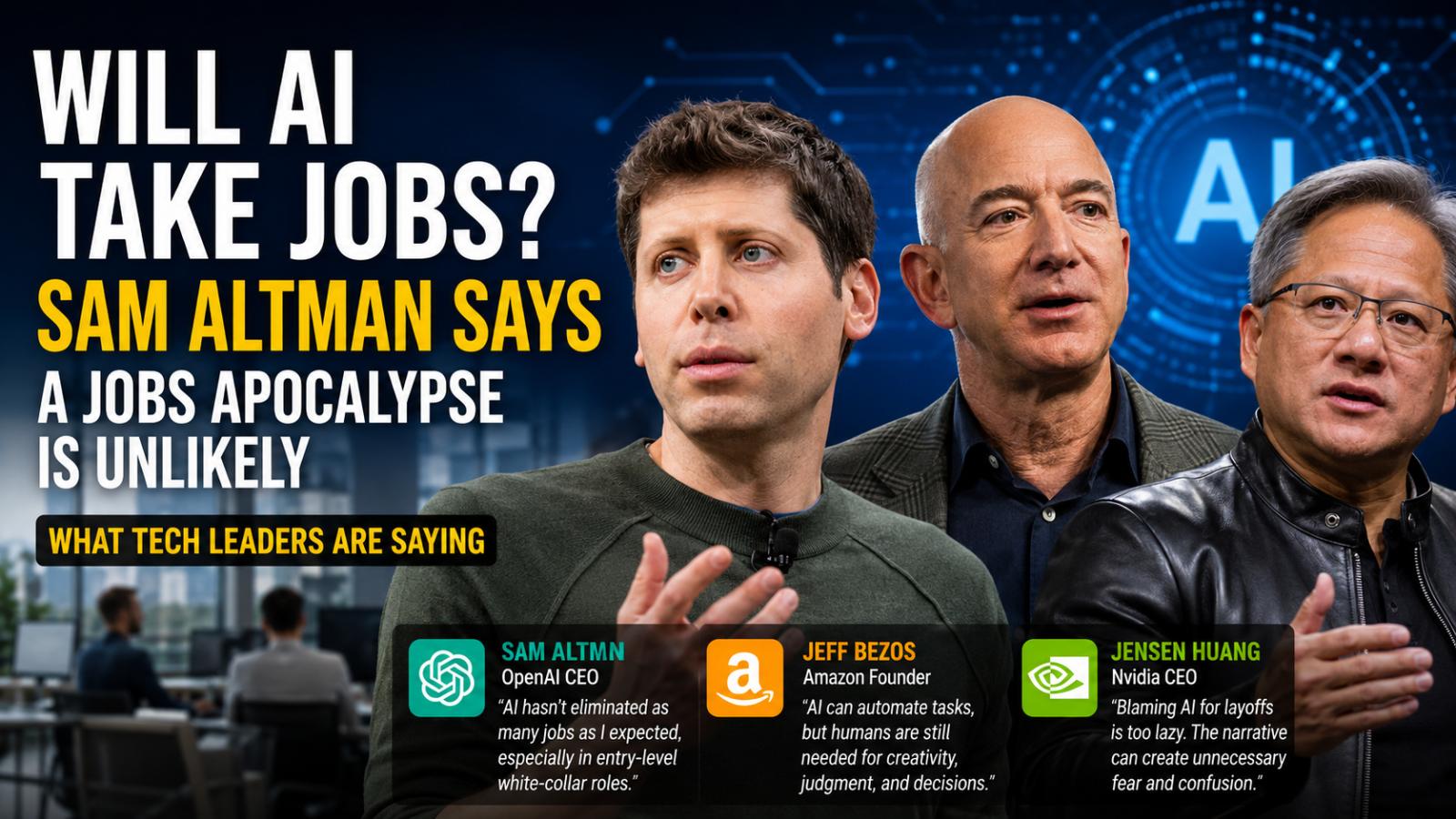
The AI jobs apocalypse many workers feared may not be unfolding as quickly as expected, according to OpenAI CEO Sam Altman. Speaking virtually at a Commonwealth Bank of Australia conference in Sydney on Tuesday, May 26, 2026, Altman said artificial intelligence has not eliminated as many white-collar jobs as he once feared, especially in entry-level roles. AI Jobs Apocalypse Fears May Be Overstated Altman said
AI Jobs Apocalypse Unlikely, Sam Altman Says as Fear Eases
The AI jobs apocalypse many workers feared may not be unfolding as quickly as expected, according to OpenAI CEO Sam Altman. Speaking virtually at a Commonwealth Bank of Australia conference in Sydney on Tuesday, May 26, 2026, Altman said artificial intelligence has not eliminated as many white-collar jobs as he once feared, especially in entry-level roles. AI Jobs Apocalypse Fears May Be Overstated Altman said
Anthropic Azure Maia 200 Deal Talks Put Microsoft AI Chips to the Test
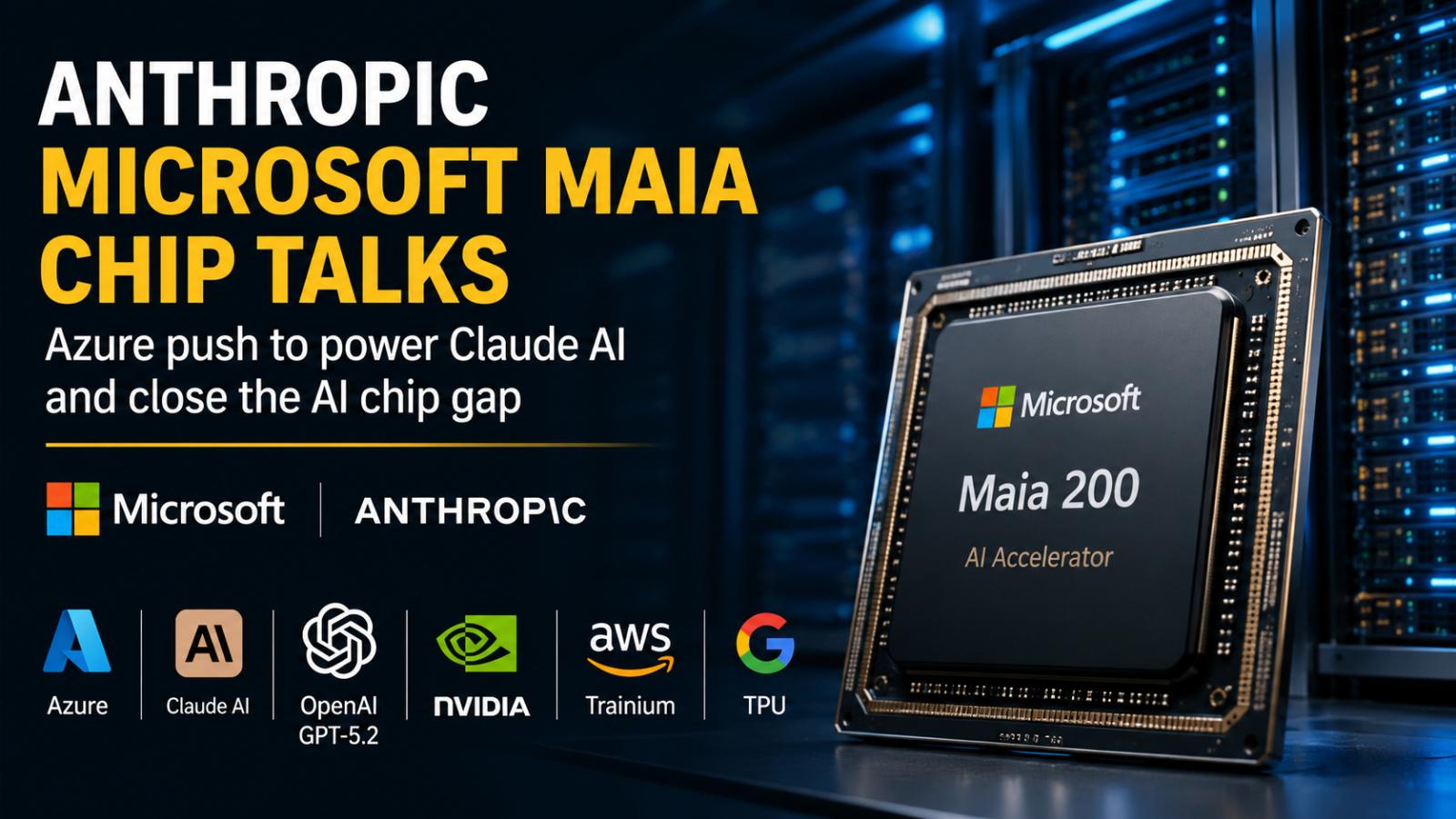
Anthropic Azure Maia 200 deal talks could give Microsoft a major test case for its in-house AI chips as cloud companies compete for high-demand artificial intelligence workloads. Microsoft is in early discussions to supply Anthropic with servers powered by Maia AI chips, Reuters reported on Thursday, May 21, 2026, at 1:14 PM UTC, citing The Information. The talks remain preliminary and may not lead to a final agreement. Why the An
Anthropic Azure Maia 200 Deal Talks Put Microsoft AI Chips to the Test
Anthropic Azure Maia 200 deal talks could give Microsoft a major test case for its in-house AI chips as cloud companies compete for high-demand artificial intelligence workloads. Microsoft is in early discussions to supply Anthropic with servers powered by Maia AI chips, Reuters reported on Thursday, May 21, 2026, at 1:14 PM UTC, citing The Information. The talks remain preliminary and may not lead to a final agreement. Why the An
Trump Faces Nvidia Stock Corruption Claims May 2026
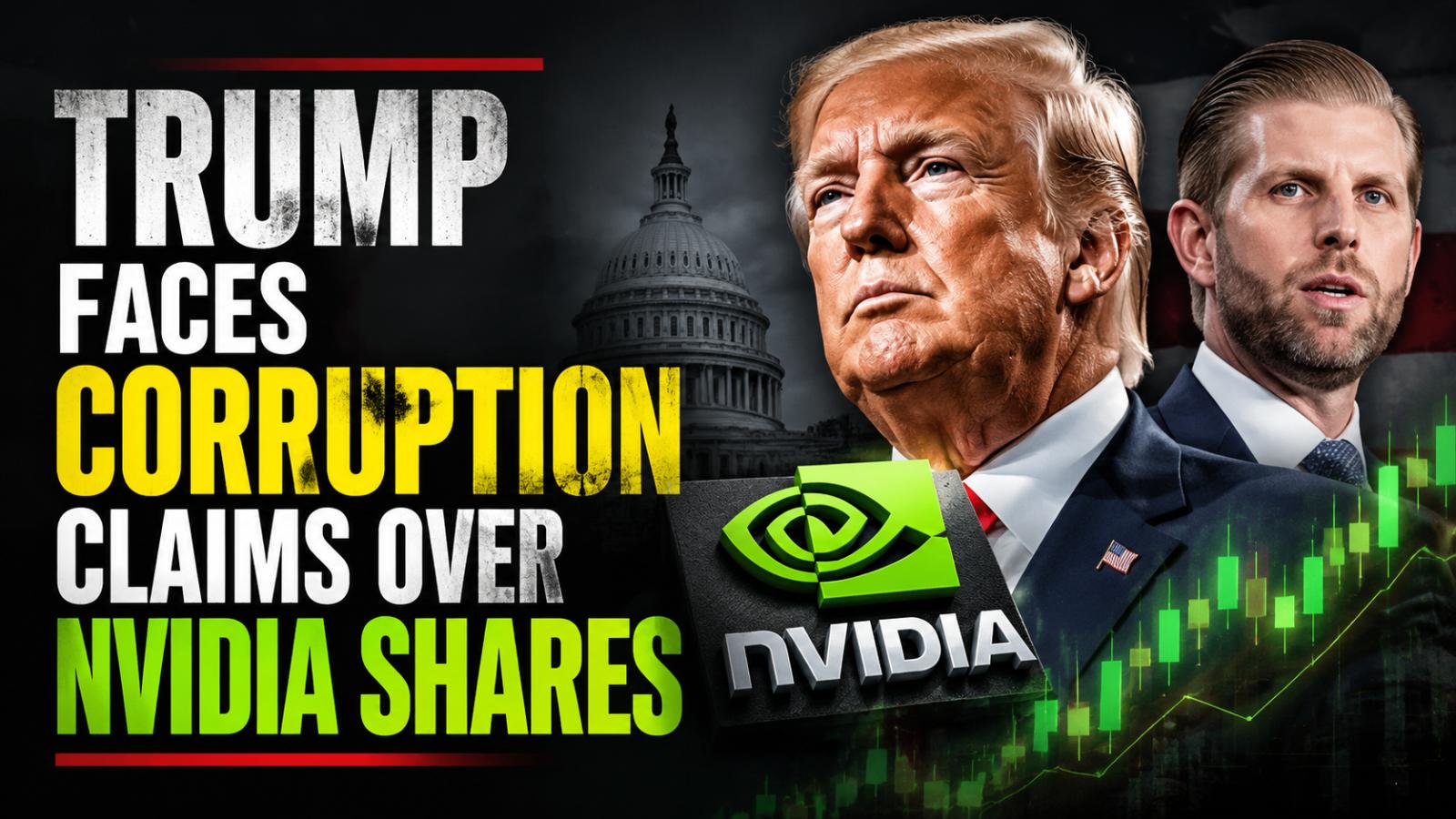
On May 15, 2026, President Donald Trump was accused of corruption after disclosures revealed major stock trades in his name. Reports focused on purchases of Nvidia shares, a leading company in AI chip technology, and raised concerns over national security. Critics argued that Trump allowed Nvidia to sell products to China, boosting stock value while personally buying millions in shares, creat
Trump Faces Nvidia Stock Corruption Claims May 2026
On May 15, 2026, President Donald Trump was accused of corruption after disclosures revealed major stock trades in his name. Reports focused on purchases of Nvidia shares, a leading company in AI chip technology, and raised concerns over national security. Critics argued that Trump allowed Nvidia to sell products to China, boosting stock value while personally buying millions in shares, creat
Nvidia vs AMD AI Chip Race: What It Means for AI Stocks
The race to power artificial intelligence is no longer only about software. It is increasingly a battle over chips, data centers and the hardware needed to train and run advanced AI models. Nvidia remains the dominant name in AI computing, but AMD is pushing harder into the market with new data center accelerators. The competition is also creating space for newer players such as Cerebras Systems, which has drawn attention after its market debut as an AI chip company.
Nvidia vs AMD AI Chip Race: What It Means for AI Stocks
The race to power artificial intelligence is no longer only about software. It is increasingly a battle over chips, data centers and the hardware needed to train and run advanced AI models. Nvidia remains the dominant name in AI computing, but AMD is pushing harder into the market with new data center accelerators. The competition is also creating space for newer players such as Cerebras Systems, which has drawn attention after its market debut as an AI chip company.
Cerebras Stock Price: CBRS IPO, Ticker and AI Chip Story Explained
Cerebras Systems became one of the most searched AI stock names after the Sunnyvale, California-based AI chipmaker began trading on the Nasdaq under the ticker symbol CBRS on Thursday, May 14, 2026. The company priced its initial public offering at $185 per share, sold 30 million Class A shares, and raised about $5.55 billion. Fresh Trading Update — Thursday, May 14, 2026: Cerebra
Cerebras Stock Price: CBRS IPO, Ticker and AI Chip Story Explained
Cerebras Systems became one of the most searched AI stock names after the Sunnyvale, California-based AI chipmaker began trading on the Nasdaq under the ticker symbol CBRS on Thursday, May 14, 2026. The company priced its initial public offering at $185 per share, sold 30 million Class A shares, and raised about $5.55 billion. Fresh Trading Update — Thursday, May 14, 2026: Cerebra
Bay Area Billionaires Hold Four Spots in World’s Top 10 Richest People
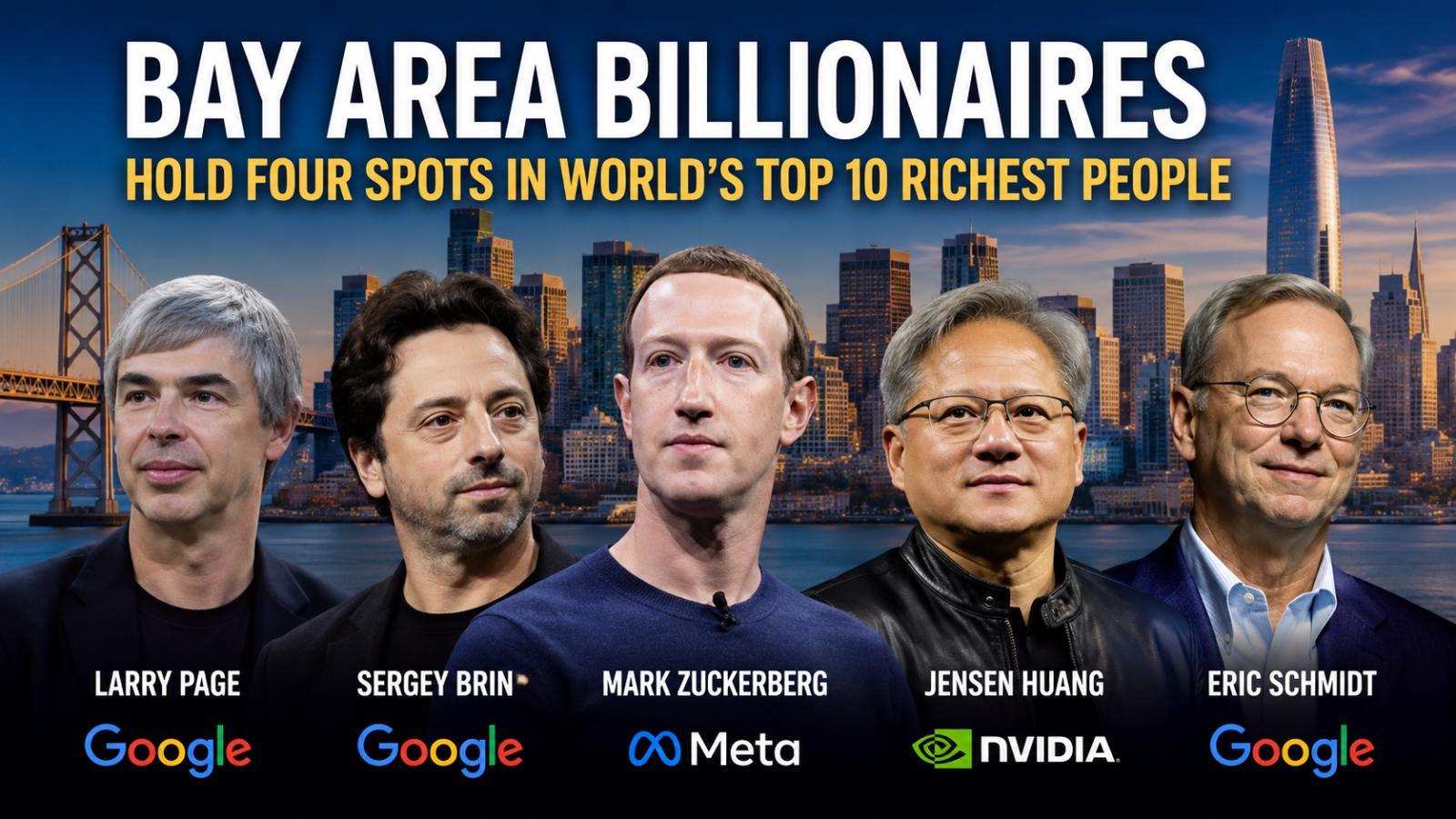
Bay Area billionaires remain heavily represented among the world’s richest people, with Larry Page, Sergey Brin, Mark Zuckerberg and Jensen Huang listed among the global top 10. The concentration highlights Silicon Valley’s continued influence over artificial intelligence, digital advertising, social media, cloud computing and semiconductor technology. Larry Page Leads Bay Area Wealth Rankings Google co-founder Larry Page, who resides in Pa
Bay Area Billionaires Hold Four Spots in World’s Top 10 Richest People
Bay Area billionaires remain heavily represented among the world’s richest people, with Larry Page, Sergey Brin, Mark Zuckerberg and Jensen Huang listed among the global top 10. The concentration highlights Silicon Valley’s continued influence over artificial intelligence, digital advertising, social media, cloud computing and semiconductor technology. Larry Page Leads Bay Area Wealth Rankings Google co-founder Larry Page, who resides in Pa
Nvidia CEO Joins Trump’s China Trip as AI Chip Stakes Rise
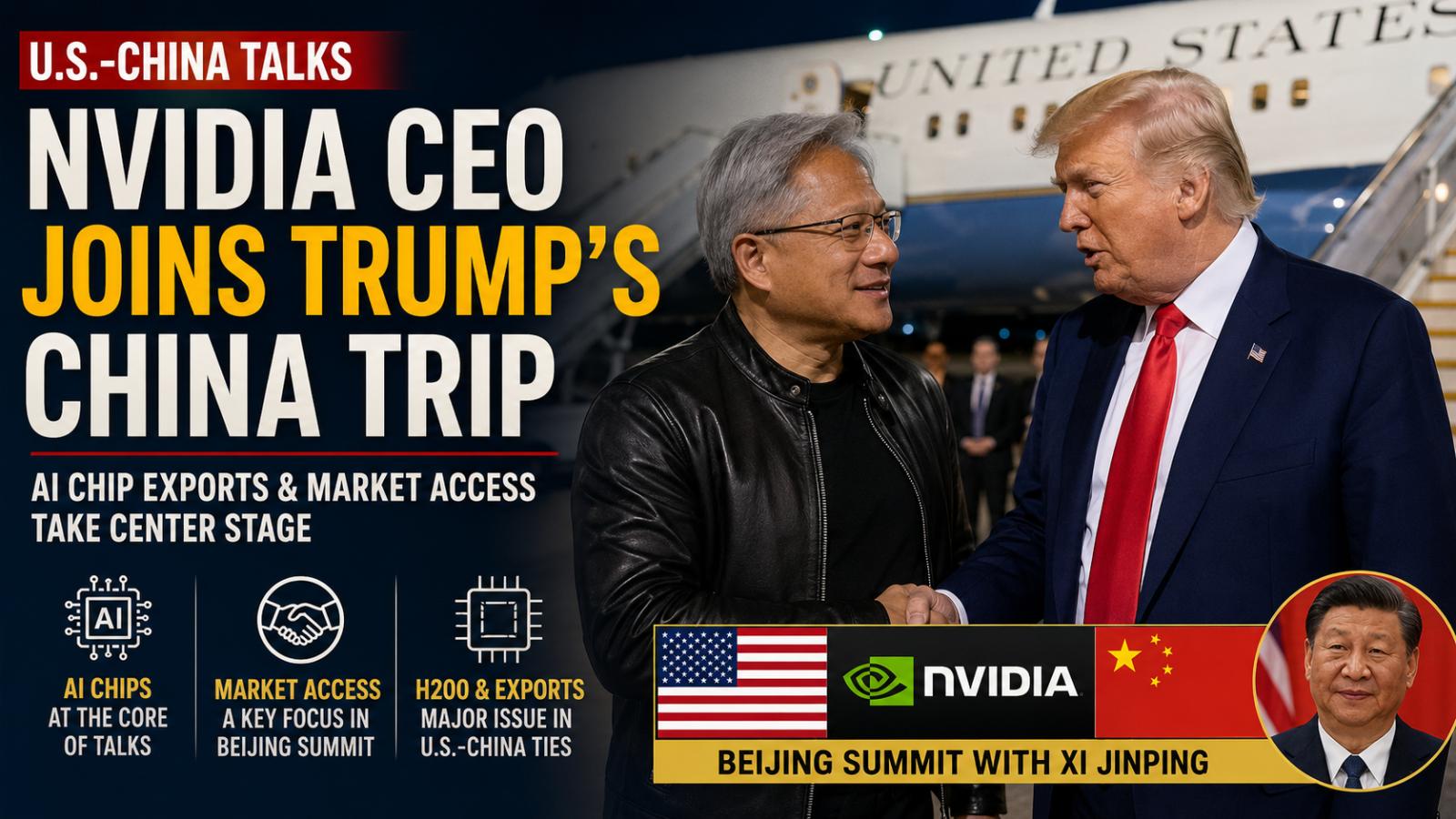
Nvidia CEO Jensen Huang joined President Donald Trump’s China trip on Wednesday, May 13, 2026, as AI chip exports and market access moved to the center of U.S.-China talks. His presence matters because Nvidia’s powerful GPUs sit at the heart of AI development, while U.S. export controls have limited high-end chip sales to China. Why Huang’s Role Matters Huang was added after earlier indications he was not in the U.S. business delegation,
Nvidia CEO Joins Trump’s China Trip as AI Chip Stakes Rise
Nvidia CEO Jensen Huang joined President Donald Trump’s China trip on Wednesday, May 13, 2026, as AI chip exports and market access moved to the center of U.S.-China talks. His presence matters because Nvidia’s powerful GPUs sit at the heart of AI development, while U.S. export controls have limited high-end chip sales to China. Why Huang’s Role Matters Huang was added after earlier indications he was not in the U.S. business delegation,
Could Alphabet overtake Nvidia as the most valuable company? Yes, analysts say it may happen soon
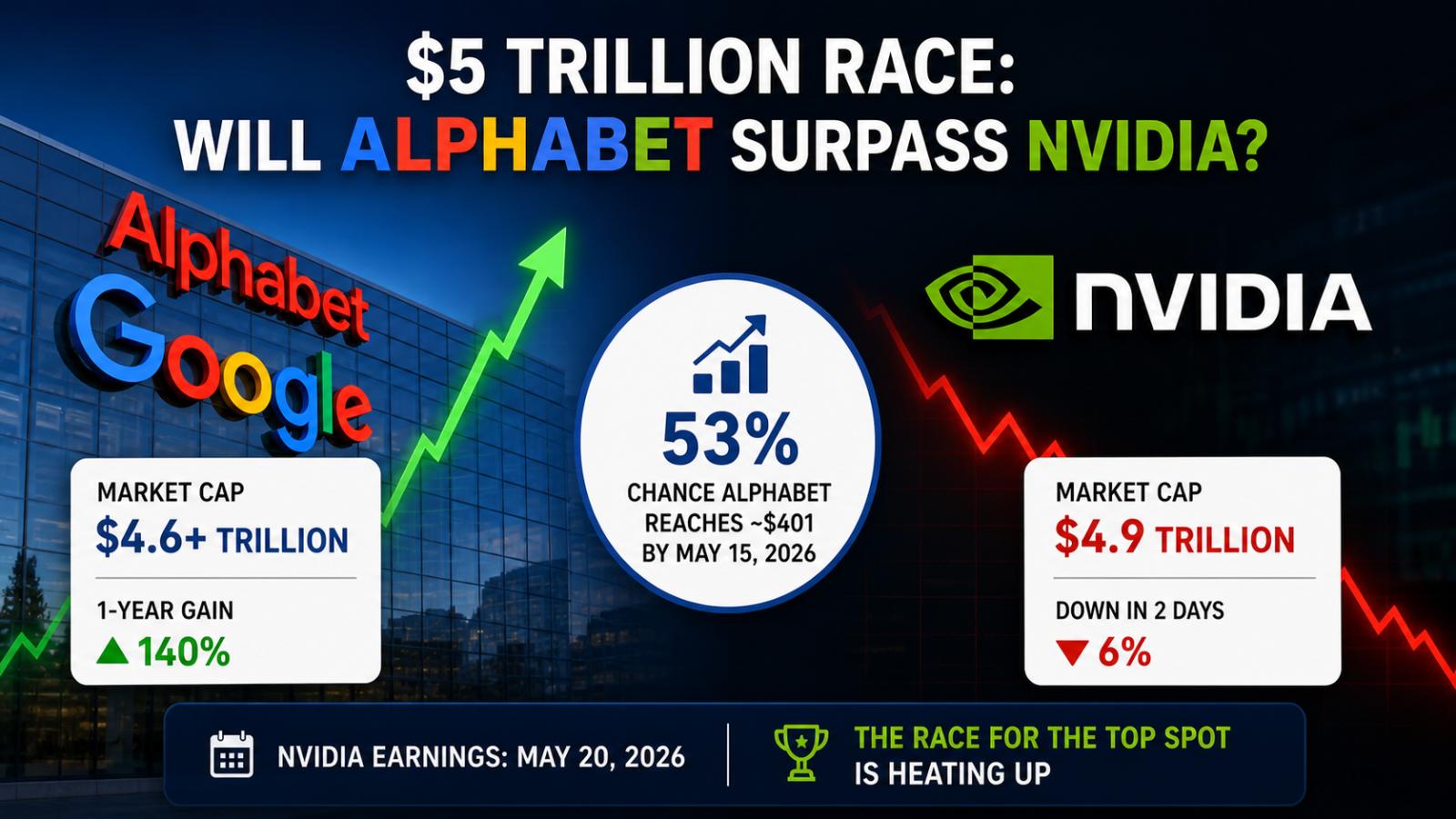
Shares of Alphabet are approaching a historic milestone, with the company nearing a $5 trillion valuation and potentially overtaking Nvidia as the world’s most valuable publicly traded firm. The surge comes after a strong rally in Alphabet’s stock, which climbed 10% on Thursday, extending its one-year gain to approximately 140% and pushing its market capitalization beyond $4.6 trillion. Strong earnings and cloud growth drive Alphabet’s surge The momentum follows a better-than-expected earnings report released on Wednesday, in which Alphabet exceeded analyst forecasts. A key highlight was its Google Cloud division, which generated more than $20 billion in revenue, reinforcing investor confidence in the company’s position within the artificial intelligence and cloud computing sectors. This performance has strengthened Alphabet’s standing among major AI-focused companies and boosted overall investor sentiment. Nvidia faces pressure amid partner concerns and stock decline Meanwhile, Nvidia, currently valued at under $4.9 trillion, has seen its stock decline by more than 6% over two trading sessions. The drop follows a report from The Wall Street Journal indicating that business partner OpenAI missed internal revenue and growth projections. The development has raised concerns about near-term demand and growth expectations in the AI ecosystem, impacting Nvidia’s market performance. Options market signals a potential shift in market leadership Options trading data suggests that Alphabet could soon close the valuation gap. For Alphabet to match Nvidia’s current market capitalization, its stock would need to rise by roughly 4%, reaching about $401 per share. Based on call option premiums around that level, traders estimate a 53% probability that Alphabet could reach that price before Thursday, May 15, 2026. Further projections indicate about a 30% chance that Alphabet will close above $400 on Friday, May 22, 2026, shortly after Nvidia’s upcoming earnings report scheduled for Tuesday, May 20, 2026. Notably, Nvidia’s stock has declined after four of its last five earnings announcements, adding uncertainty to its near-term outlook. Historical context as Alphabet eyes a return to the top Alphabet has previously held the top position among global companies, most recently in 2016 when it briefly surpassed Apple. A renewed rise to the top would mark a significant shift in market leadership, driven largely by advancements in artificial intelligence and cloud infrastructure. As both companies approach key earnings milestones, investors are closely watching whether Alphabet can capitalize on its momentum and reclaim the top spot in global market valuation. Alphabet has previously held the top position among global companies, most recently in 2016 when it briefly surpassed Apple. A renewed rise to the top would mark a significant shift in market leadership, driven largely by advancements in artificial intelligence and cloud infrastructure. As both companies approach key earnings milestones, investors are closely watching whether Alphabet can capitalize on its momentum and reclaim the top spot in global market valuation.
Could Alphabet overtake Nvidia as the most valuable company? Yes, analysts say it may happen soon
Shares of Alphabet are approaching a historic milestone, with the company nearing a $5 trillion valuation and potentially overtaking Nvidia as the world’s most valuable publicly traded firm. The surge comes after a strong rally in Alphabet’s stock, which climbed 10% on Thursday, extending its one-year gain to approximately 140% and pushing its market capitalization beyond $4.6 trillion. Strong earnings and cloud growth drive Alphabet’s surge The momentum follows a better-than-expected earnings report released on Wednesday, in which Alphabet exceeded analyst forecasts. A key highlight was its Google Cloud division, which generated more than $20 billion in revenue, reinforcing investor confidence in the company’s position within the artificial intelligence and cloud computing sectors. This performance has strengthened Alphabet’s standing among major AI-focused companies and boosted overall investor sentiment. Nvidia faces pressure amid partner concerns and stock decline Meanwhile, Nvidia, currently valued at under $4.9 trillion, has seen its stock decline by more than 6% over two trading sessions. The drop follows a report from The Wall Street Journal indicating that business partner OpenAI missed internal revenue and growth projections. The development has raised concerns about near-term demand and growth expectations in the AI ecosystem, impacting Nvidia’s market performance. Options market signals a potential shift in market leadership Options trading data suggests that Alphabet could soon close the valuation gap. For Alphabet to match Nvidia’s current market capitalization, its stock would need to rise by roughly 4%, reaching about $401 per share. Based on call option premiums around that level, traders estimate a 53% probability that Alphabet could reach that price before Thursday, May 15, 2026. Further projections indicate about a 30% chance that Alphabet will close above $400 on Friday, May 22, 2026, shortly after Nvidia’s upcoming earnings report scheduled for Tuesday, May 20, 2026. Notably, Nvidia’s stock has declined after four of its last five earnings announcements, adding uncertainty to its near-term outlook. Historical context as Alphabet eyes a return to the top Alphabet has previously held the top position among global companies, most recently in 2016 when it briefly surpassed Apple. A renewed rise to the top would mark a significant shift in market leadership, driven largely by advancements in artificial intelligence and cloud infrastructure. As both companies approach key earnings milestones, investors are closely watching whether Alphabet can capitalize on its momentum and reclaim the top spot in global market valuation. Alphabet has previously held the top position among global companies, most recently in 2016 when it briefly surpassed Apple. A renewed rise to the top would mark a significant shift in market leadership, driven largely by advancements in artificial intelligence and cloud infrastructure. As both companies approach key earnings milestones, investors are closely watching whether Alphabet can capitalize on its momentum and reclaim the top spot in global market valuation.