










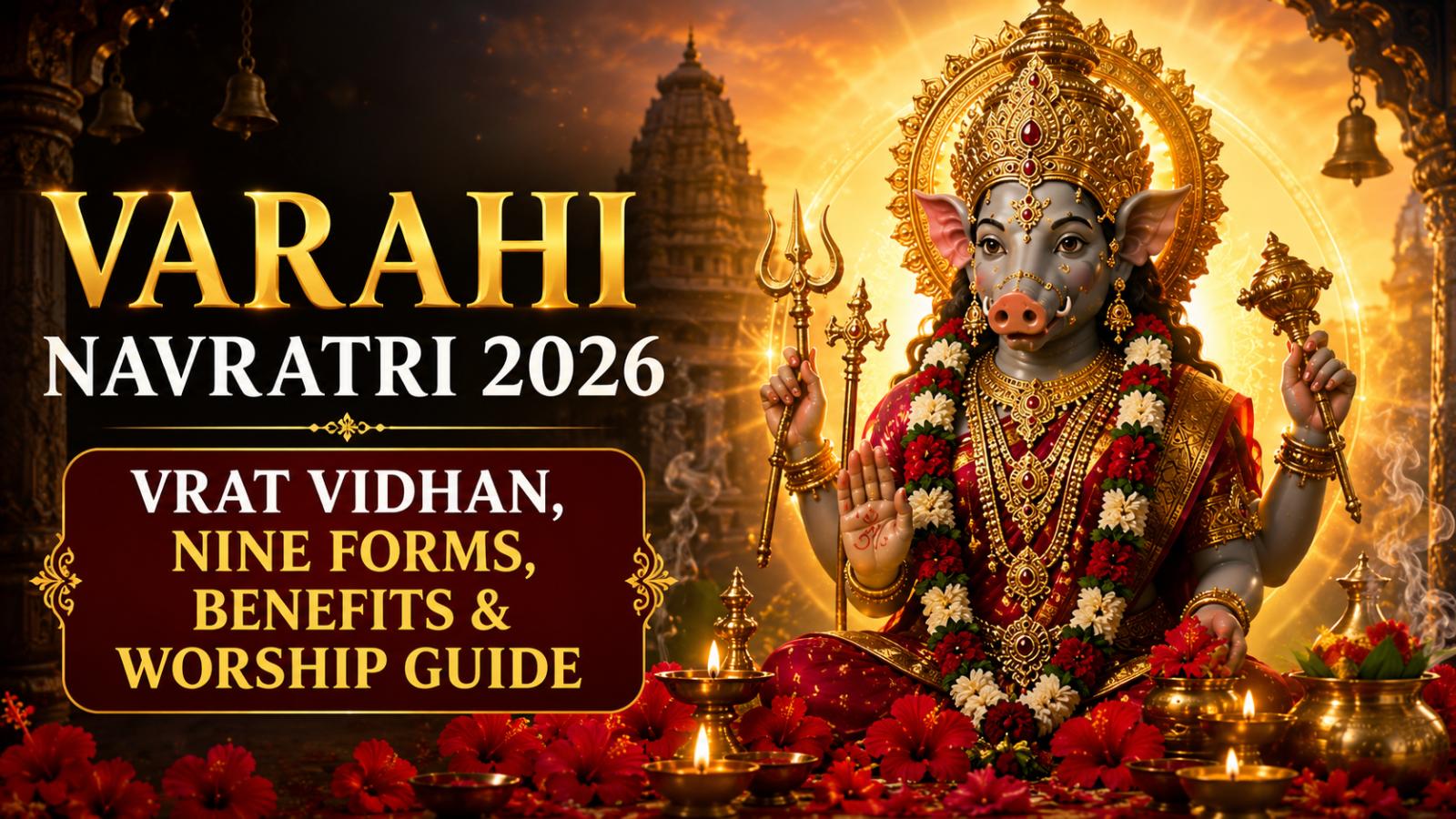
Varahi Navratri 2026: Dates, Vrat Vidhan and Puja Guide
Varahi Navratri is a sacred period dedicated to Maa Varahi, the protective warrior form of Divine Shakti. This guide explains the 2026 dates, Varahi vrat vidhan, nine forms, fasting practices, Satvik food, mantra worship and traditionally believed benefits. Varahi Navratri 2026 dates and significance Varahi Navratri, also called Ashadha Gupt Navratri, begins on July 15, 2026. The main Navratri observance contin
Varahi Navratri 2026: Dates, Vrat Vidhan and Puja Guide
Varahi Navratri is a sacred period dedicated to Maa Varahi, the protective warrior form of Divine Shakti. This guide explains the 2026 dates, Varahi vrat vidhan, nine forms, fasting practices, Satvik food, mantra worship and traditionally believed benefits. Varahi Navratri 2026 dates and significance Varahi Navratri, also called Ashadha Gupt Navratri, begins on July 15, 2026. The main Navratri observance contin
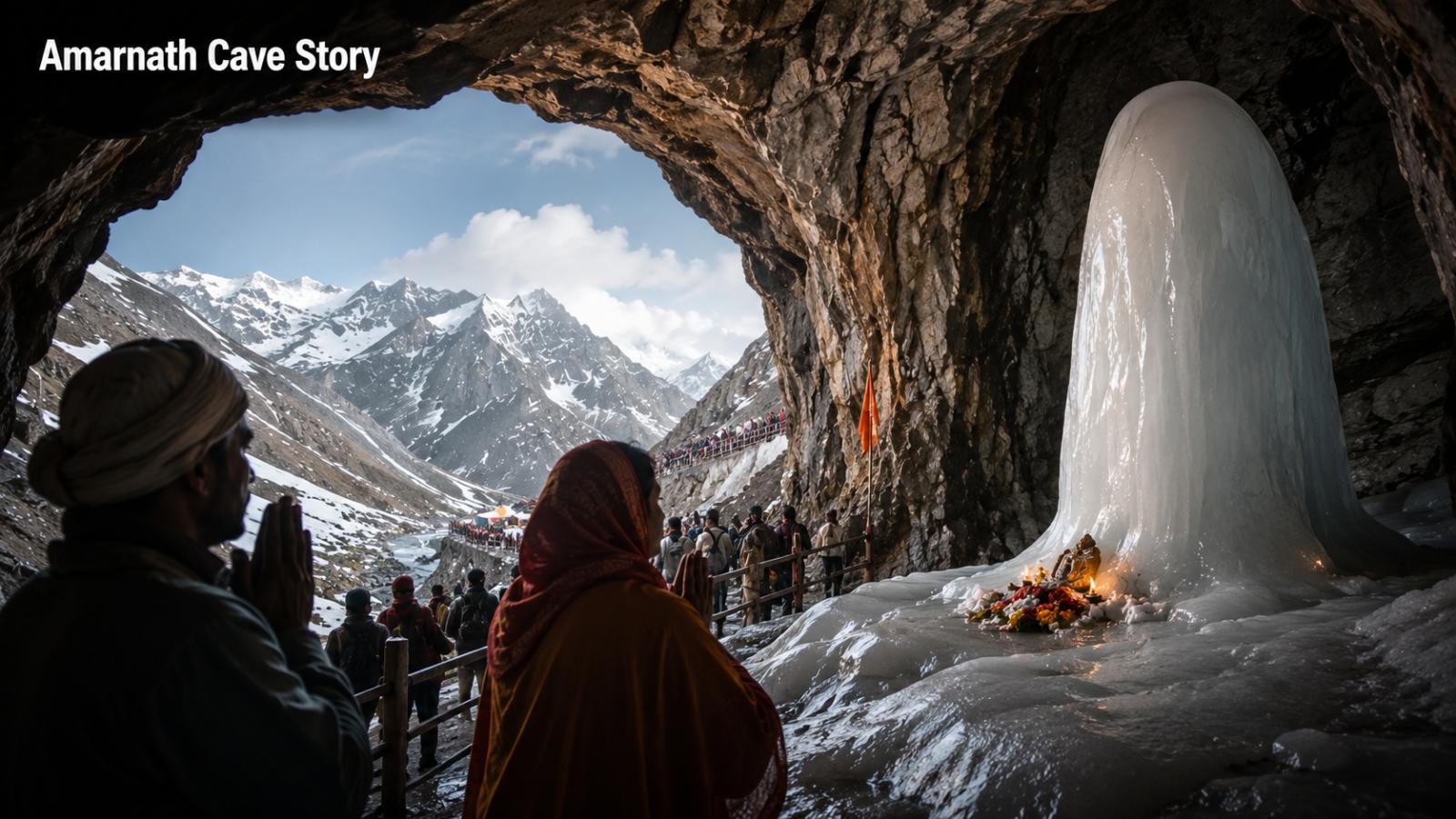
Amarnath Cave Story: Shiva’s Secret of Immortality
The Amarnath Cave story connects Lord Shiva, Goddess Parvati, the Amar Katha and a mysterious pair of immortal pigeons. Here is the traditional account behind the sacred Himalayan cave and its naturally forming ice Shiva Lingam. Deep in the Indian Himalayas, Amarnath Cave is revered as the place where Lord Shiva is believed to have revealed the secret of immortality to Goddess Parvati. The sacred cave in Jammu and Kashmir is a
Amarnath Cave Story: Shiva’s Secret of Immortality
The Amarnath Cave story connects Lord Shiva, Goddess Parvati, the Amar Katha and a mysterious pair of immortal pigeons. Here is the traditional account behind the sacred Himalayan cave and its naturally forming ice Shiva Lingam. Deep in the Indian Himalayas, Amarnath Cave is revered as the place where Lord Shiva is believed to have revealed the secret of immortality to Goddess Parvati. The sacred cave in Jammu and Kashmir is a

TTD suspends VIP break darshan on key festival days
TTD has suspended VIP break darshan on select days from July 14 to September 23 for major temple rituals and festivals, including Brahmotsavams. TTD suspends VIP break darshan on key festival days The Tirumala Tirupati Devasthanams has announced the suspension of VIP break darshan on several important ritual and festival days between July 14 and September 23, 2026, at the Sri Venkateswara temple in Tirumala. The restrictions are being introduced to facil
TTD suspends VIP break darshan on key festival days
TTD has suspended VIP break darshan on select days from July 14 to September 23 for major temple rituals and festivals, including Brahmotsavams. TTD suspends VIP break darshan on key festival days The Tirumala Tirupati Devasthanams has announced the suspension of VIP break darshan on several important ritual and festival days between July 14 and September 23, 2026, at the Sri Venkateswara temple in Tirumala. The restrictions are being introduced to facil
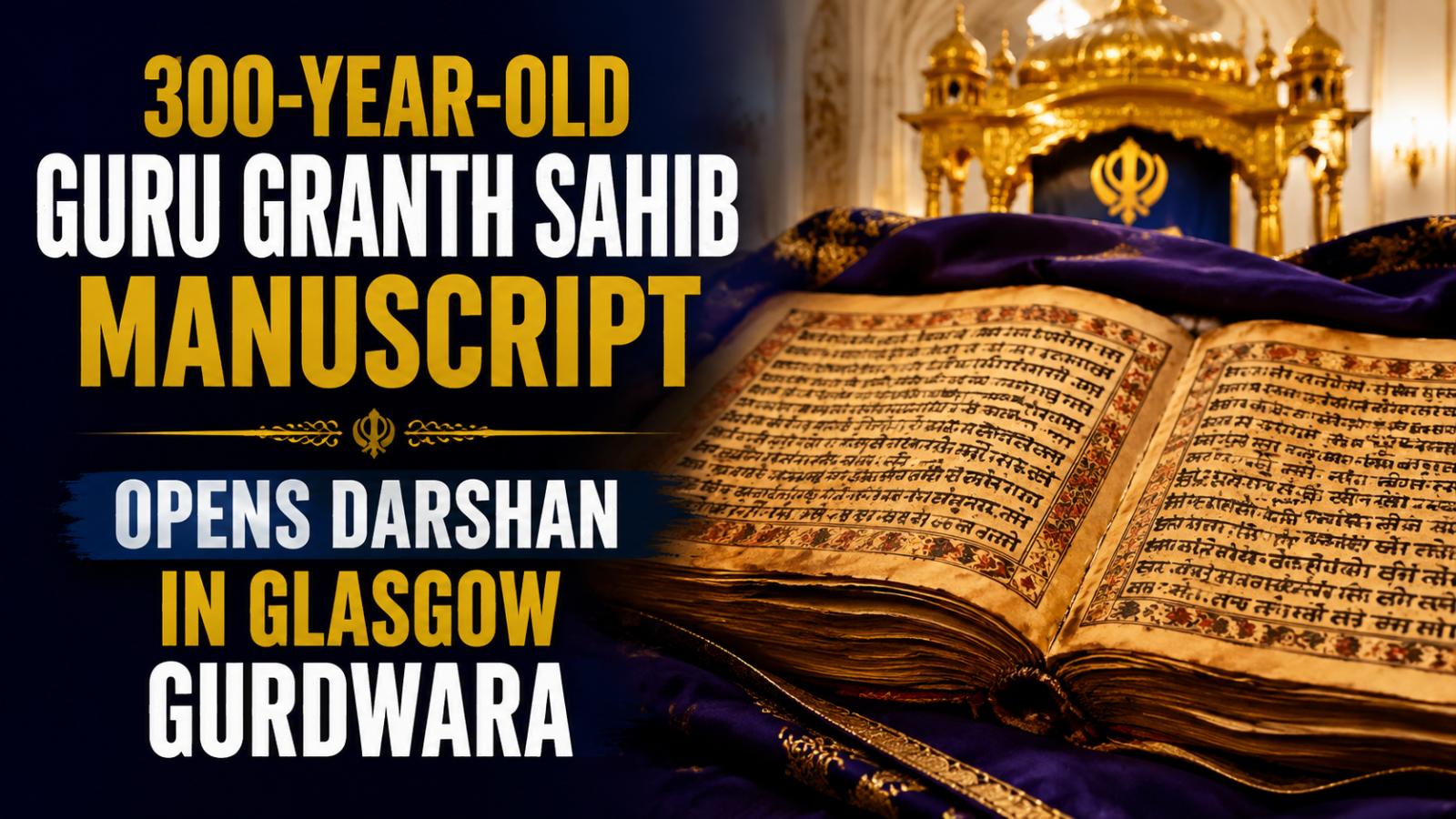
Rare Sikh scripture from colonial era opens darshan in Scotland
A rare handwritten copy of the Sikh sacred scripture linked to Punjab’s royal-era history has been identified in long-held academic archives in Scotland. The document, preserved for decades without public attention, is believed to date back roughly three centuries and is associated with collections once connected to Sikh aristocratic custodianship during the pre-colonial and colonial transition period. From forgotten record to verified heritage object Researchers examining archival holdings in Edinburgh traced the manuscript during a wider study of South Asian religious texts preserved in British institutions. Initial catalog entries did not clearly reflect its significance, but further examination confirmed it as a complete or near-complete handwritten version of the revered Sikh scripture. This reassessment changed its status from overlooked archival material to a culturally significant heritage object. Careful restoration and preservation process Specialist conservators in Scotland undertook detailed restoration work to stabilize the fragile pages and ink. Centuries of storage had weakened the manuscript, making handling risky. Preservation efforts focused on ensuring structural stability while maintaining original integrity, allowing the text to be viewed without causing further deterioration. The process took an extended period due to the delicate condition of the material. Journey across continents and historical custody Historical records suggest the manuscript left Punjab during a turbulent period when royal and religious collections were dispersed under colonial administration. Over time, it entered institutional custody in Britain, eventually becoming part of academic archives. Its journey reflects a broader pattern of cultural objects from South Asia being relocated and stored in European collections, often with limited documentation of their origins. Public darshan at Glasgow gurdwara The restored manuscript has now been placed for controlled public viewing at a Sikh place of worship in Glasgow. Devotees are being allowed to observe the scripture under strict preservation guidelines that balance respect for religious practice with conservation requirements. The arrangement enables spiritual engagement while ensuring the artifact remains protected. Community response and cultural significance Members of the Sikh community in Scotland have described the display as emotionally meaningful, viewing it as a reconnection with historical identity and heritage. The presence of the manuscript has also sparked interest among researchers and visitors, highlighting the importance of rediscovering and reassessing archival collections that may hold significant cultural and religious value.
Rare Sikh scripture from colonial era opens darshan in Scotland
A rare handwritten copy of the Sikh sacred scripture linked to Punjab’s royal-era history has been identified in long-held academic archives in Scotland. The document, preserved for decades without public attention, is believed to date back roughly three centuries and is associated with collections once connected to Sikh aristocratic custodianship during the pre-colonial and colonial transition period. From forgotten record to verified heritage object Researchers examining archival holdings in Edinburgh traced the manuscript during a wider study of South Asian religious texts preserved in British institutions. Initial catalog entries did not clearly reflect its significance, but further examination confirmed it as a complete or near-complete handwritten version of the revered Sikh scripture. This reassessment changed its status from overlooked archival material to a culturally significant heritage object. Careful restoration and preservation process Specialist conservators in Scotland undertook detailed restoration work to stabilize the fragile pages and ink. Centuries of storage had weakened the manuscript, making handling risky. Preservation efforts focused on ensuring structural stability while maintaining original integrity, allowing the text to be viewed without causing further deterioration. The process took an extended period due to the delicate condition of the material. Journey across continents and historical custody Historical records suggest the manuscript left Punjab during a turbulent period when royal and religious collections were dispersed under colonial administration. Over time, it entered institutional custody in Britain, eventually becoming part of academic archives. Its journey reflects a broader pattern of cultural objects from South Asia being relocated and stored in European collections, often with limited documentation of their origins. Public darshan at Glasgow gurdwara The restored manuscript has now been placed for controlled public viewing at a Sikh place of worship in Glasgow. Devotees are being allowed to observe the scripture under strict preservation guidelines that balance respect for religious practice with conservation requirements. The arrangement enables spiritual engagement while ensuring the artifact remains protected. Community response and cultural significance Members of the Sikh community in Scotland have described the display as emotionally meaningful, viewing it as a reconnection with historical identity and heritage. The presence of the manuscript has also sparked interest among researchers and visitors, highlighting the importance of rediscovering and reassessing archival collections that may hold significant cultural and religious value.

Muharram 2026: Meaning, History, Significance of Ashura & Islamic New Year
What Does Muharram Mean? The word "Muharram" comes from the Arabic term "Al-Muharram," which means "forbidden" or "sacred." The month derives its name from the prohibition of warfare and bloodshed during this sacred period. Islam recognizes four sacred months in the lunar calendar: Muharram Rajab Dhul Qa'dah Dhul Hijjah These months are considered especially holy, and Muslims are encour
Muharram 2026: Meaning, History, Significance of Ashura & Islamic New Year
What Does Muharram Mean? The word "Muharram" comes from the Arabic term "Al-Muharram," which means "forbidden" or "sacred." The month derives its name from the prohibition of warfare and bloodshed during this sacred period. Islam recognizes four sacred months in the lunar calendar: Muharram Rajab Dhul Qa'dah Dhul Hijjah These months are considered especially holy, and Muslims are encour
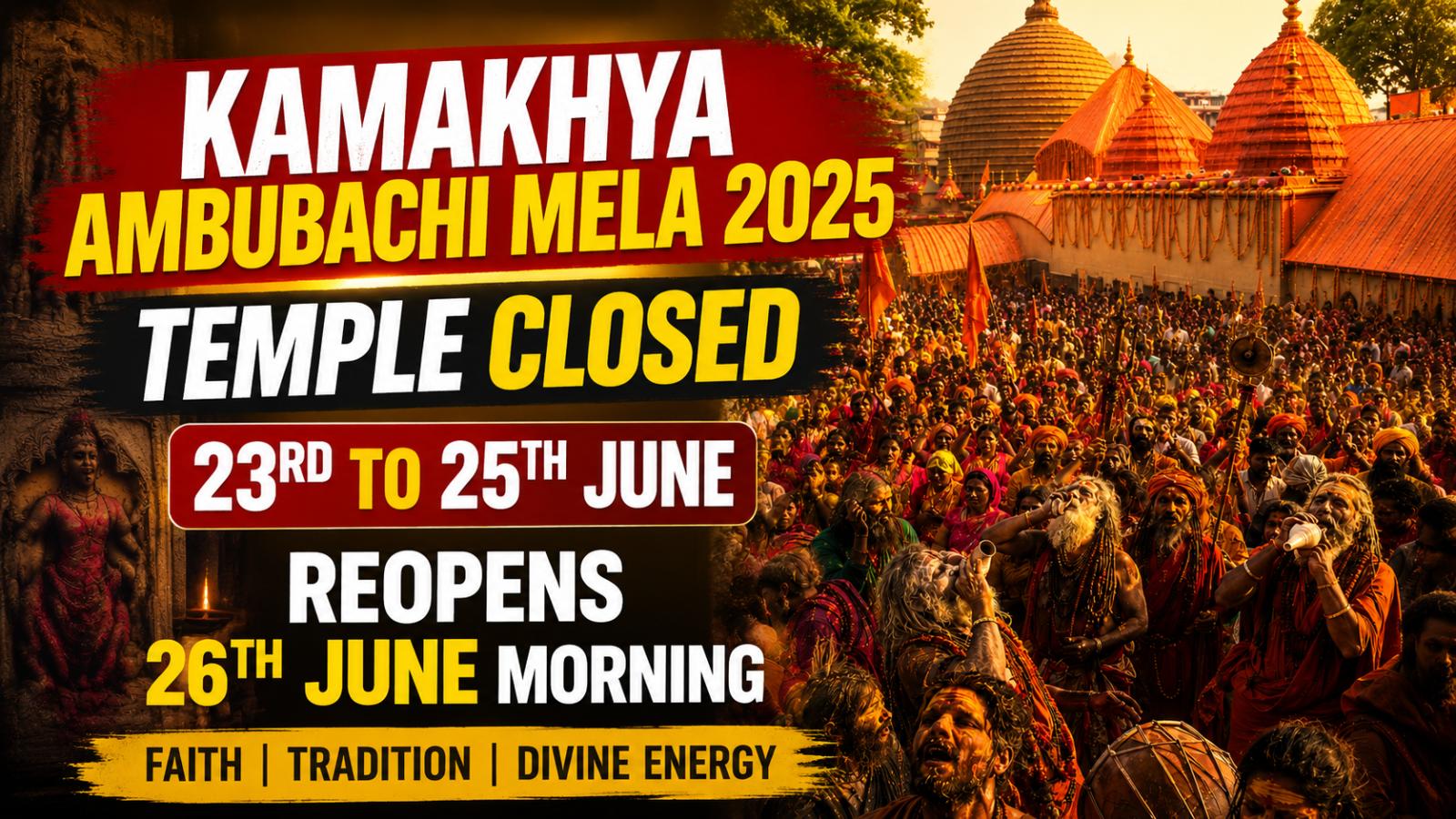
Maa Kamakhya Ambubachi Mela 2026
Maa Kamakhya Temple and Ambubachi Mela Observance Maa Kamakhya Temple in Guwahati, Assam, is one of the most revered Shakti Peeths in India and is globally known for the Ambubachi Mela. The event symbolizes the annual ritual associated with the Goddess Kamakhya and represents fertility, feminine power, and natural cycles. During this time, the temple follows a strict
Maa Kamakhya Ambubachi Mela 2026
Maa Kamakhya Temple and Ambubachi Mela Observance Maa Kamakhya Temple in Guwahati, Assam, is one of the most revered Shakti Peeths in India and is globally known for the Ambubachi Mela. The event symbolizes the annual ritual associated with the Goddess Kamakhya and represents fertility, feminine power, and natural cycles. During this time, the temple follows a strict

Mutalik Objects To KS Bhagawan’s Lord Rama Statement In Karnataka
Mutalik Objects To KS Bhagawan’s Lord Rama Statement In Karnataka Sri Rama Sene chief Pramod Mutalik has criticised writer KS Bhagawan over a recent statement linked to Lord Rama. Mutalik said Bhagawan should avoid making remarks that may affect religious sentiments and disturb public harmony. He said statements that undermine the faith of devotees should not be made in the name of public debate. Mutalik also argued that such comments go against the sp
Mutalik Objects To KS Bhagawan’s Lord Rama Statement In Karnataka
Mutalik Objects To KS Bhagawan’s Lord Rama Statement In Karnataka Sri Rama Sene chief Pramod Mutalik has criticised writer KS Bhagawan over a recent statement linked to Lord Rama. Mutalik said Bhagawan should avoid making remarks that may affect religious sentiments and disturb public harmony. He said statements that undermine the faith of devotees should not be made in the name of public debate. Mutalik also argued that such comments go against the sp
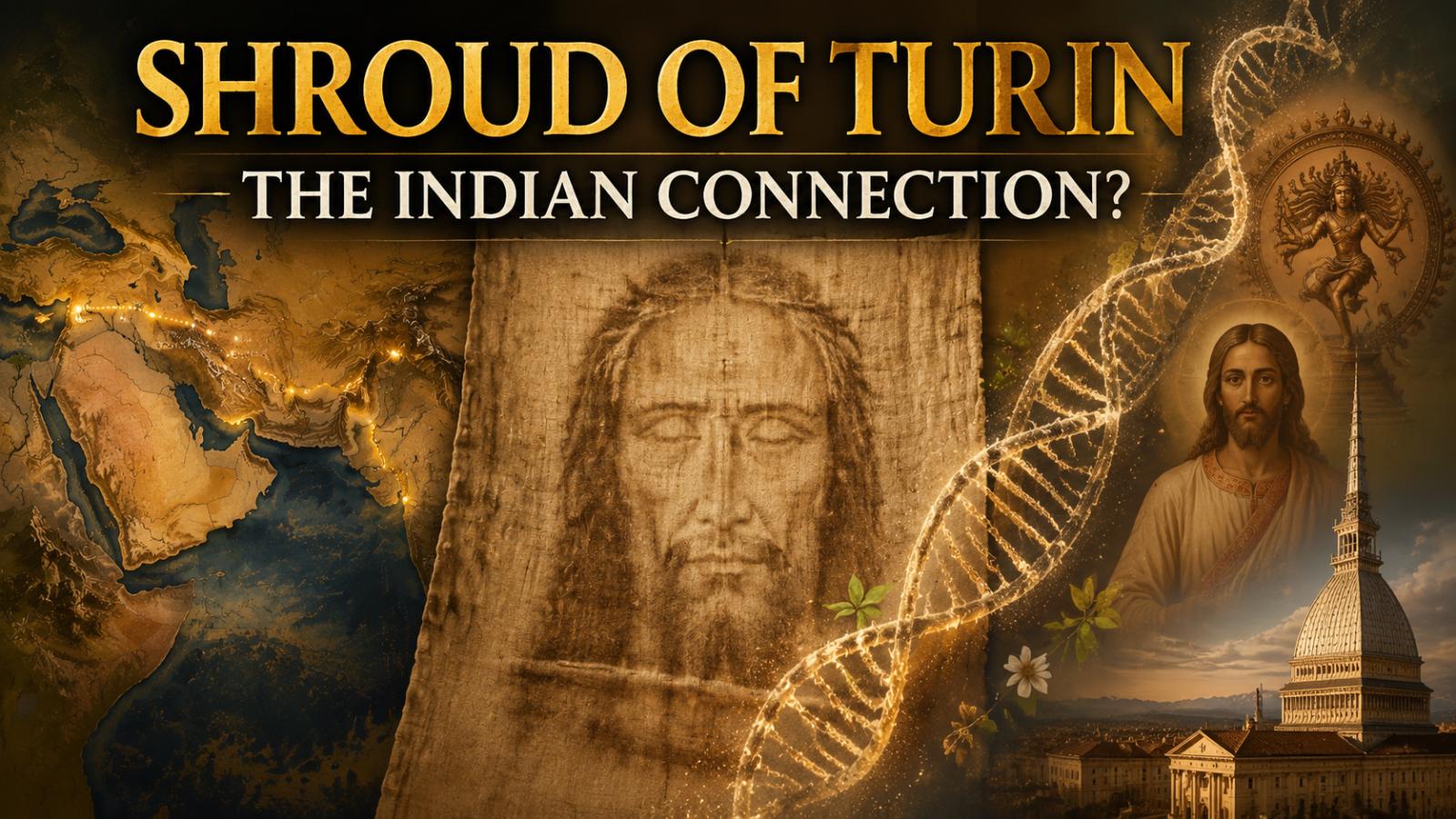
Shroud of Turin DNA reveals Indian lineage and trade history
Genomic analysis of the Shroud of Turin, a 4.4‑meter linen cloth long associated with Jesus Christ, has revealed that nearly 40% of the human dna traces on the fabric correspond to indian lineage dna. Researchers at the University of Padova in Italy conducted advanced environmental dna (eDNA) tests on dust and linen fibers from the relic. The scientists detected genetic markers linked to the Indian subcontinent, as well as botanical dna traces, including co
Shroud of Turin DNA reveals Indian lineage and trade history
Genomic analysis of the Shroud of Turin, a 4.4‑meter linen cloth long associated with Jesus Christ, has revealed that nearly 40% of the human dna traces on the fabric correspond to indian lineage dna. Researchers at the University of Padova in Italy conducted advanced environmental dna (eDNA) tests on dust and linen fibers from the relic. The scientists detected genetic markers linked to the Indian subcontinent, as well as botanical dna traces, including co
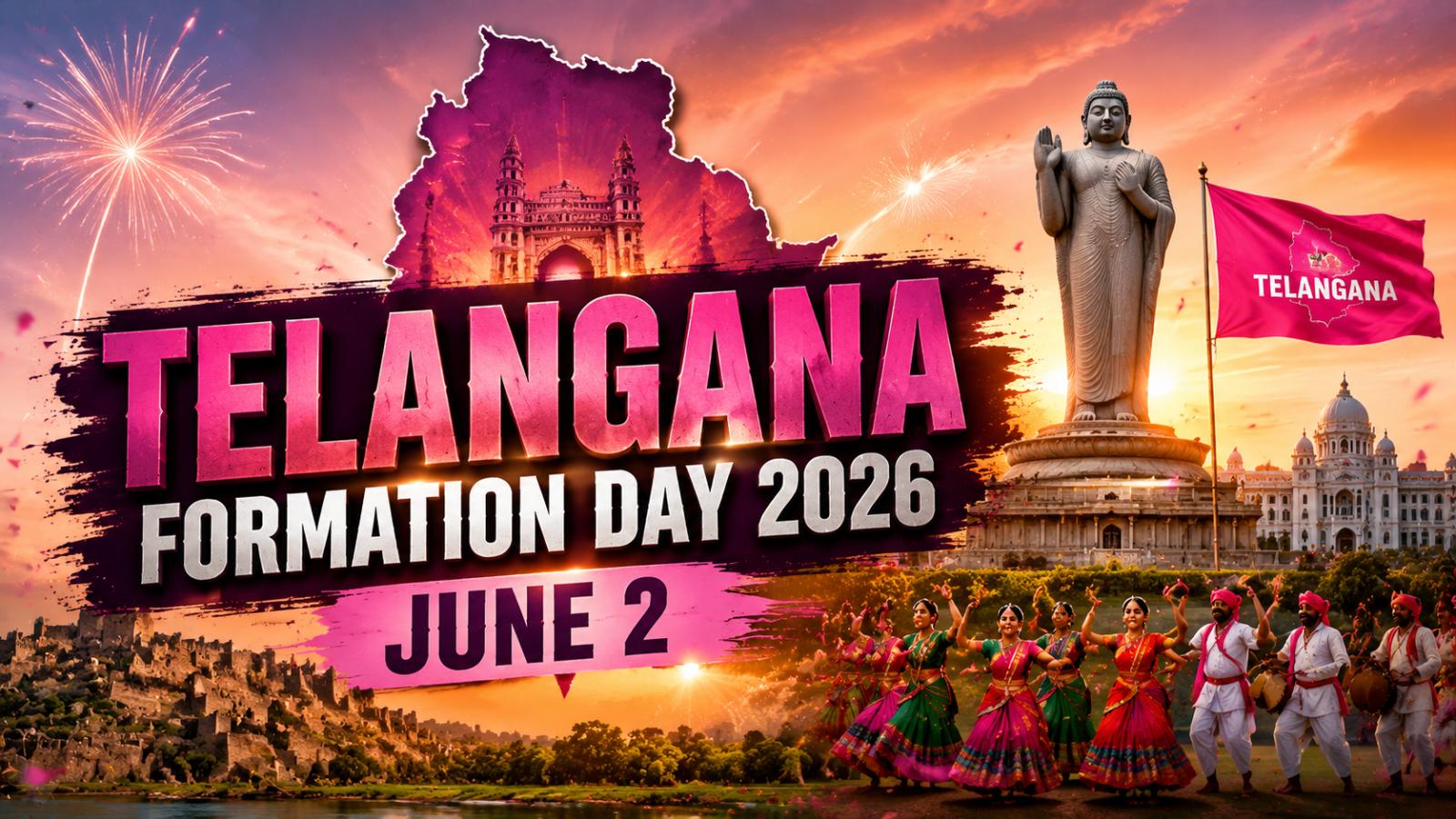
Telangana Formation Day 2026: History, Significance, Celebrations
What is Telangana Formation Day? Telangana Formation Day is celebrated annually on June 2 to mark the official creation of Telangana as India’s 29th state in 2014. The day honors decades of struggle for separate statehood, paying tribute to the sacrifices of activists, students, and citizens who fought for governance, development, and recognition of Telangana’s unique identity. Key Poi
Telangana Formation Day 2026: History, Significance, Celebrations
What is Telangana Formation Day? Telangana Formation Day is celebrated annually on June 2 to mark the official creation of Telangana as India’s 29th state in 2014. The day honors decades of struggle for separate statehood, paying tribute to the sacrifices of activists, students, and citizens who fought for governance, development, and recognition of Telangana’s unique identity. Key Poi
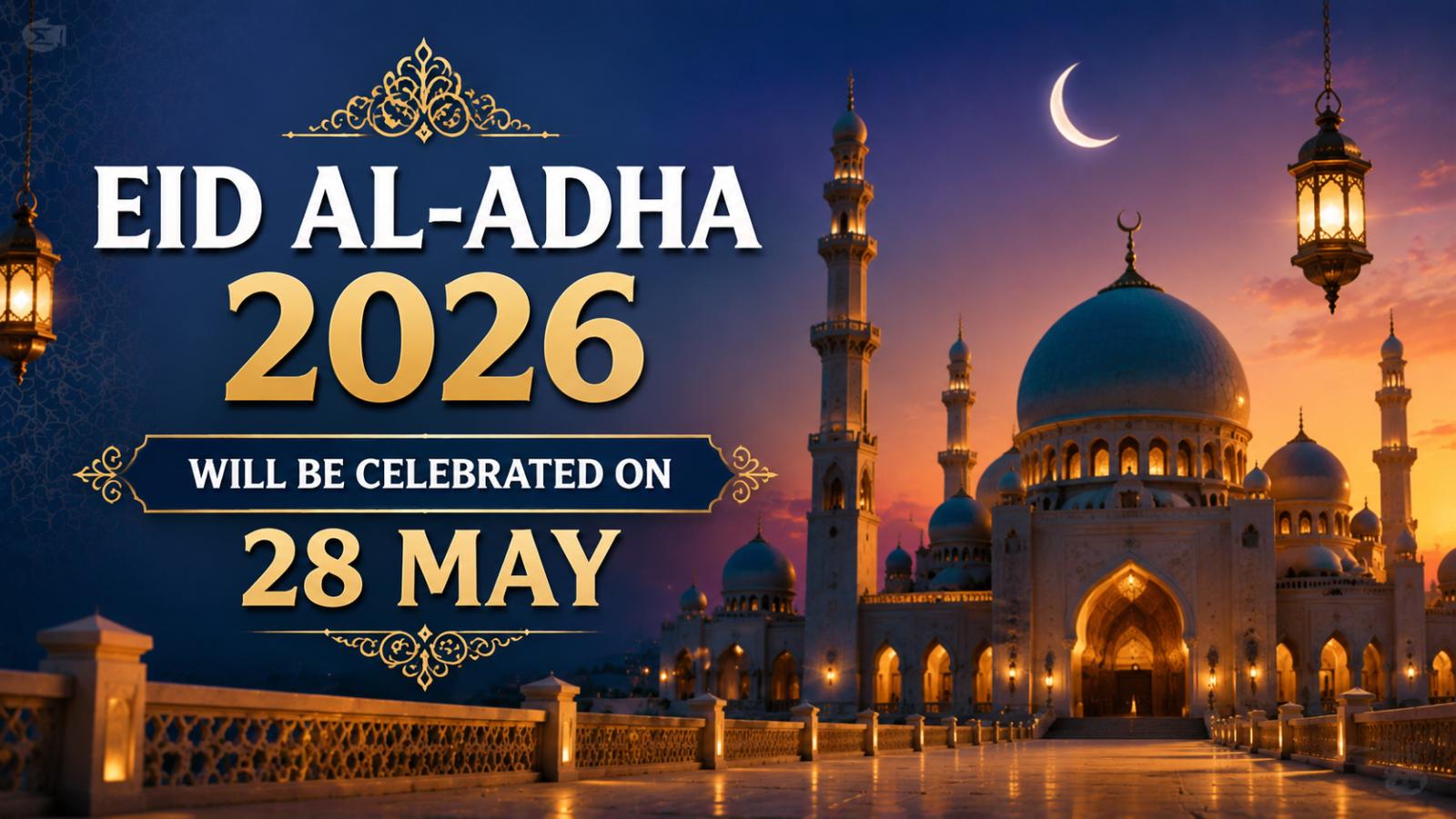
Bakrid 2026 Celebrated on May 28: Eid al-Adha Prayers, Qurbani, and Festivities
Bakrid, also known as Eid al-Adha, will be celebrated on May 28, 2026 in India, following moon sighting confirmations in different states. The festival commemorates Prophet Ibrahim’s devotion, highlighting his willingness to sacrifice his son in obedience to God. Observed worldwide, Bakrid emphasizes faith, charity, and community unity, and is considered one of the two major Islamic festivals. Key Points: Bakrid 2026 falls on May
Bakrid 2026 Celebrated on May 28: Eid al-Adha Prayers, Qurbani, and Festivities
Bakrid, also known as Eid al-Adha, will be celebrated on May 28, 2026 in India, following moon sighting confirmations in different states. The festival commemorates Prophet Ibrahim’s devotion, highlighting his willingness to sacrifice his son in obedience to God. Observed worldwide, Bakrid emphasizes faith, charity, and community unity, and is considered one of the two major Islamic festivals. Key Points: Bakrid 2026 falls on May
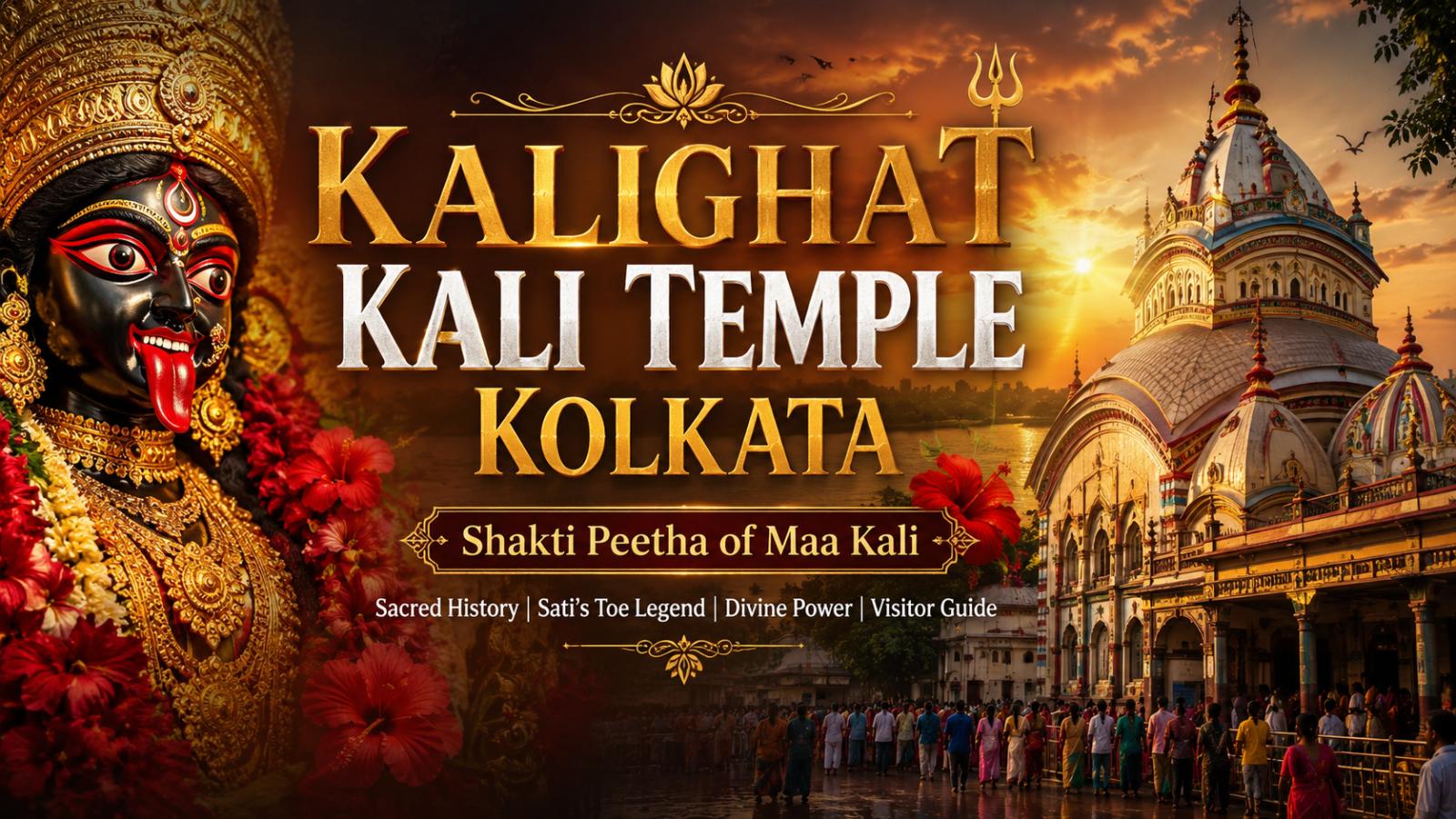
Kalighat Kali Temple Kolkata: Shakti Peetha Guide
Kalighat Kali Temple in Kolkata, India, is one of the most revered Hindu pilgrimage sites dedicated to Goddess Kali. The temple is widely recognized as a sacred Shakti Peetha and is closely linked to the legend of Goddess Sati, Lord Shiva and the origin of holy sites across India. Kalighat Kali Temple and the Shakti Peetha Legend
Kalighat Kali Temple Kolkata: Shakti Peetha Guide
Kalighat Kali Temple in Kolkata, India, is one of the most revered Hindu pilgrimage sites dedicated to Goddess Kali. The temple is widely recognized as a sacred Shakti Peetha and is closely linked to the legend of Goddess Sati, Lord Shiva and the origin of holy sites across India. Kalighat Kali Temple and the Shakti Peetha Legend
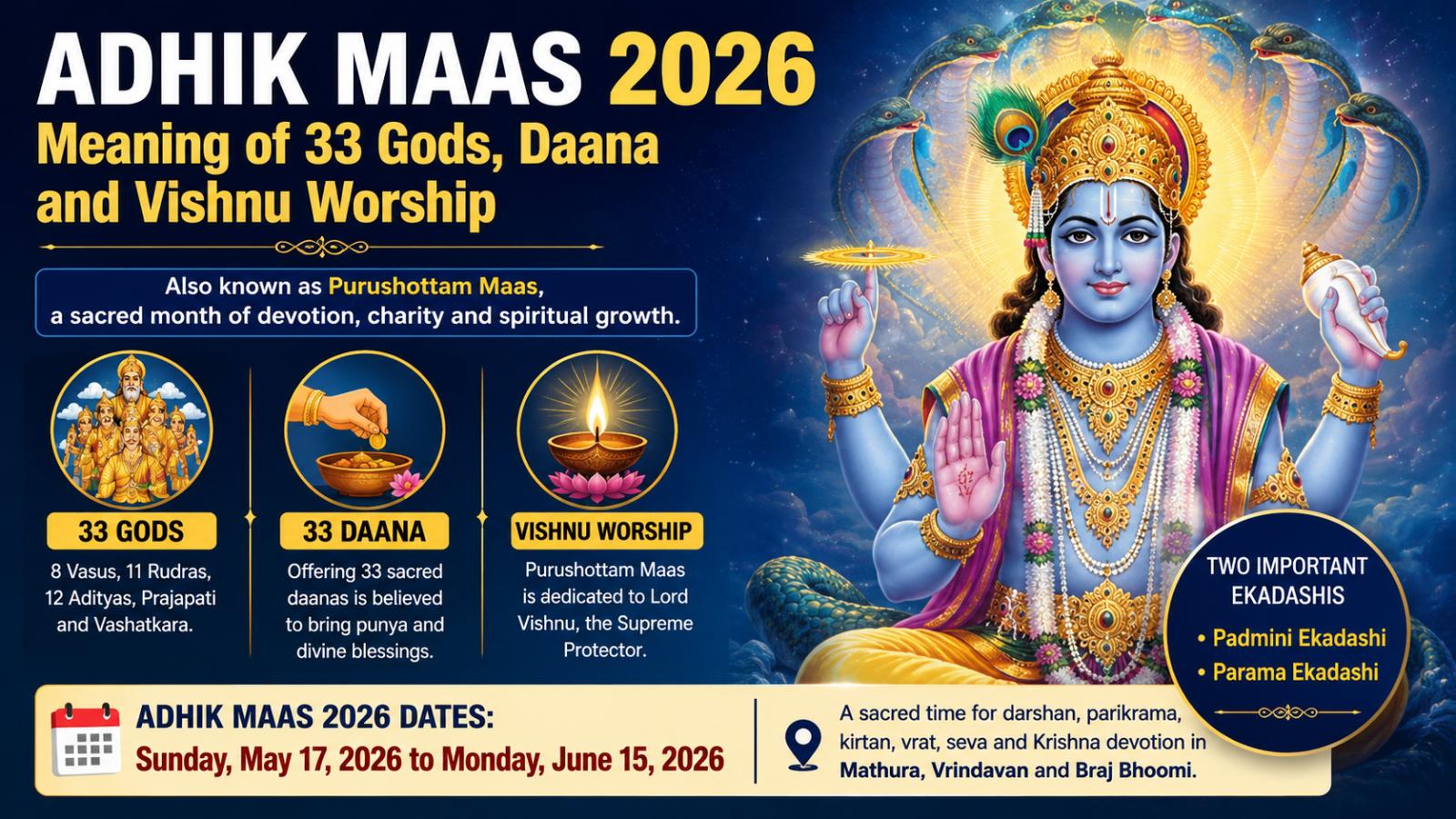
Adhik Masa 2026: Meaning of 33 Gods, Daana and Vishnu Worship
Adhik Maas 2026 will be observed from Sunday, May 17, 2026, to Monday, June 15, 2026. In Hindu tradition, the month is also known as Purushottam Maas and is considered a sacred period for daana, vrat, Vishnu worship and spiritual discipline. One of the most searched questions around Adhik Maas is the meaning of 33. According to traditional belief, the number is linked with 33 gods and the practice of offering 33 daanas during this extra lunar month. What Is the Me
Adhik Masa 2026: Meaning of 33 Gods, Daana and Vishnu Worship
Adhik Maas 2026 will be observed from Sunday, May 17, 2026, to Monday, June 15, 2026. In Hindu tradition, the month is also known as Purushottam Maas and is considered a sacred period for daana, vrat, Vishnu worship and spiritual discipline. One of the most searched questions around Adhik Maas is the meaning of 33. According to traditional belief, the number is linked with 33 gods and the practice of offering 33 daanas during this extra lunar month. What Is the Me
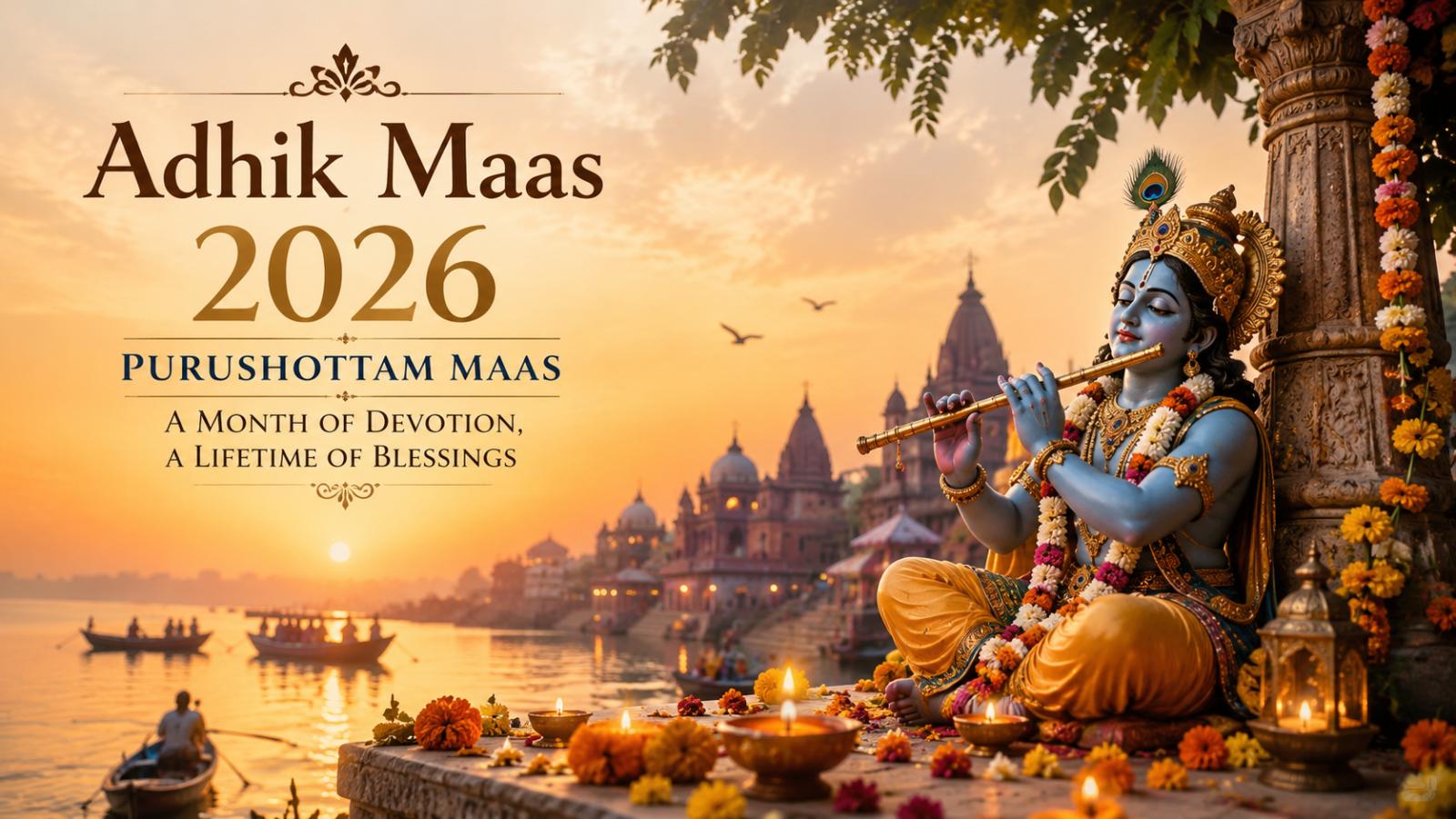
Adhika Masa 2026: Dates, Rituals, Timings and Significance
Adhik Maas 2026 will be observed from Sunday, May 17, 2026, to Monday, June 15, 2026, according to commonly followed India-based Panchang listings. Also called Purushottam Maas, it is an extra lunar month in the Hindu calendar and is considered a sacred period for Vishnu and Krishna devotion. What Is Adhik Maas 2026? Adhik Maas is an additional lunar month added to the Hindu calendar roughly once every three years to help realign lunar months with the solar year. In 2026, the extra month is listed as Jyeshtha Adhik Maas. For devotees, the month is not viewed only as a calendar adjustment. It is traditionally used for prayer, fasting, charity, scripture reading, temple visits and simple devotional living. Why Is It Called Purushottam Maas? Adhik Maas is also known as Purushottam Maas, a name linked to Lord Vishnu, who is revered as Purushottam, or the Supreme Being. Devotional traditions describe the month as especially meaningful for worship, self-discipline and good deeds. Because Krishna is worshipped as an incarnation of Vishnu, the month also carries special importance for Krishna bhakti, especially in Mathura, Vrindavan and the wider Braj region. For deeper understanding of the month’s spiritual symbolism, read our detailed guide on Adhik Masa 2026: Meaning of 33 Gods, Daana and Vishnu Worship. Adhik Maas 2026 Dates and Panchang Details For New Delhi, Drik Panchang lists Adhika Chandra Darshana on Sunday, May 17, 2026, and Jyeshtha Adhik Maas Ends on Monday, June 15, 2026. The month includes Adhika Jyeshtha Purnima on Sunday, May 31, 2026, and Parama Ekadashi on Thursday, June 11, 2026. US-based devotees should check their local temple Panchang because tithi observance can vary by location and time zone. Mathura, Vrindavan and Braj Pilgrimage During Adhik Maas 2026, many devotees may focus on Mathura, Vrindavan and Braj Bhoomi for darshan, parikrama, kirtan, Bhagwat Katha, Bhagavad Gita recitation, vrat and daan. These practices are believed by followers to bring punya and spiritual purification during Purushottam Maas. Why It Matters Adhik Maas 2026 gives devotees a full month for spiritual realignment. For many Hindu families, Purushottam Maas is a time to slow down, simplify daily life and reconnect with devotion through prayer, service and charity.
Adhika Masa 2026: Dates, Rituals, Timings and Significance
Adhik Maas 2026 will be observed from Sunday, May 17, 2026, to Monday, June 15, 2026, according to commonly followed India-based Panchang listings. Also called Purushottam Maas, it is an extra lunar month in the Hindu calendar and is considered a sacred period for Vishnu and Krishna devotion. What Is Adhik Maas 2026? Adhik Maas is an additional lunar month added to the Hindu calendar roughly once every three years to help realign lunar months with the solar year. In 2026, the extra month is listed as Jyeshtha Adhik Maas. For devotees, the month is not viewed only as a calendar adjustment. It is traditionally used for prayer, fasting, charity, scripture reading, temple visits and simple devotional living. Why Is It Called Purushottam Maas? Adhik Maas is also known as Purushottam Maas, a name linked to Lord Vishnu, who is revered as Purushottam, or the Supreme Being. Devotional traditions describe the month as especially meaningful for worship, self-discipline and good deeds. Because Krishna is worshipped as an incarnation of Vishnu, the month also carries special importance for Krishna bhakti, especially in Mathura, Vrindavan and the wider Braj region. For deeper understanding of the month’s spiritual symbolism, read our detailed guide on Adhik Masa 2026: Meaning of 33 Gods, Daana and Vishnu Worship. Adhik Maas 2026 Dates and Panchang Details For New Delhi, Drik Panchang lists Adhika Chandra Darshana on Sunday, May 17, 2026, and Jyeshtha Adhik Maas Ends on Monday, June 15, 2026. The month includes Adhika Jyeshtha Purnima on Sunday, May 31, 2026, and Parama Ekadashi on Thursday, June 11, 2026. US-based devotees should check their local temple Panchang because tithi observance can vary by location and time zone. Mathura, Vrindavan and Braj Pilgrimage During Adhik Maas 2026, many devotees may focus on Mathura, Vrindavan and Braj Bhoomi for darshan, parikrama, kirtan, Bhagwat Katha, Bhagavad Gita recitation, vrat and daan. These practices are believed by followers to bring punya and spiritual purification during Purushottam Maas. Why It Matters Adhik Maas 2026 gives devotees a full month for spiritual realignment. For many Hindu families, Purushottam Maas is a time to slow down, simplify daily life and reconnect with devotion through prayer, service and charity.
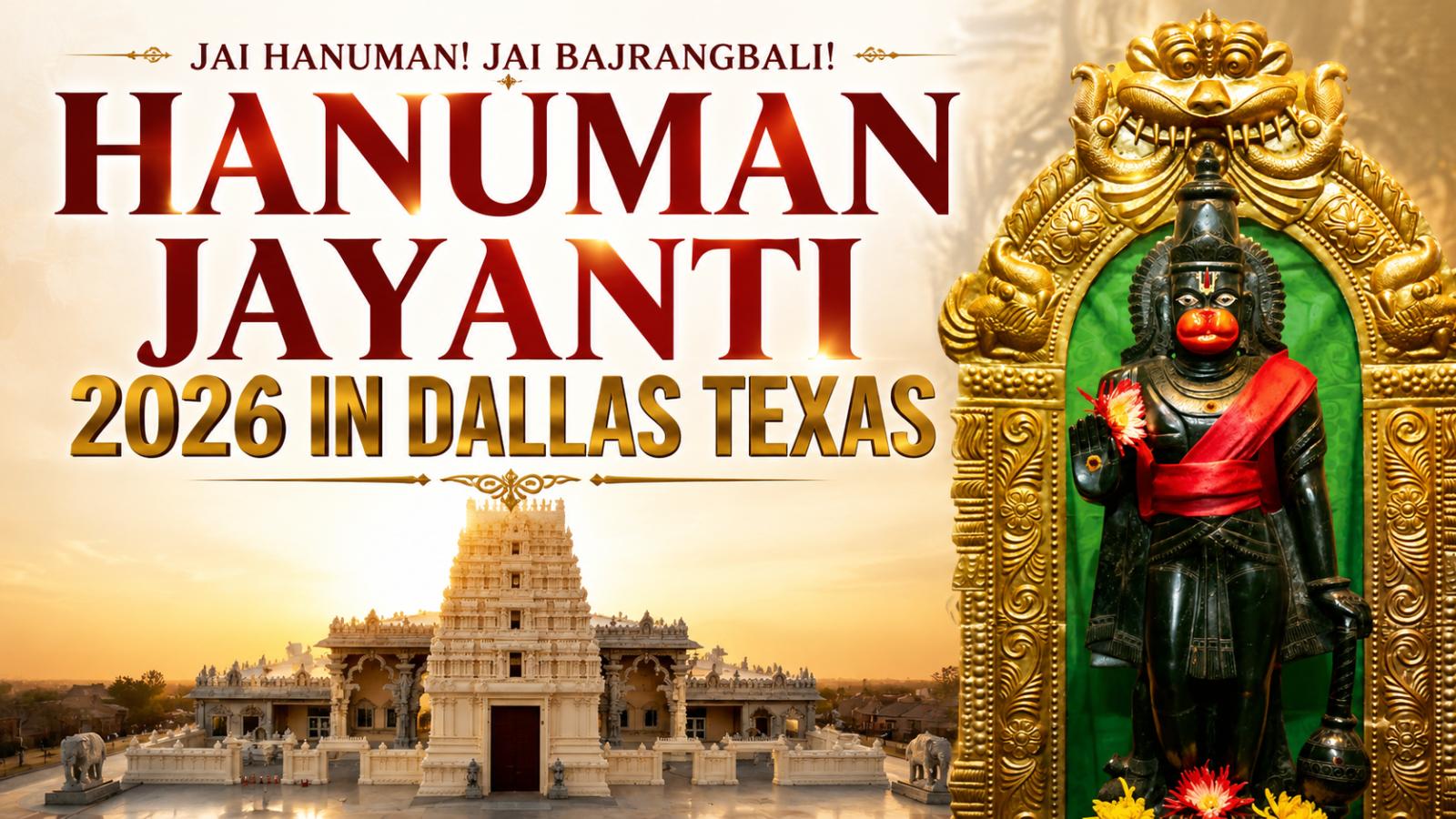
Hanuman Jayanti 2026 in Dallas Texas: Frisco Temple Announces Events
Devotees searching for “Hanuman Jayanti in Dallas Texas” or “when is Hanuman Jayanti in Dallas” are expected to gather in large numbers at Karya Siddhi Hanuman Temple as the temple announced grand Hanuman Jayanti 2026 celebrations in the Dallas-Fort Worth area. The Frisco-based Hindu temple, one of the most visited spiritual centers in Texas, will host multiple rituals and seva p
Hanuman Jayanti 2026 in Dallas Texas: Frisco Temple Announces Events
Devotees searching for “Hanuman Jayanti in Dallas Texas” or “when is Hanuman Jayanti in Dallas” are expected to gather in large numbers at Karya Siddhi Hanuman Temple as the temple announced grand Hanuman Jayanti 2026 celebrations in the Dallas-Fort Worth area. The Frisco-based Hindu temple, one of the most visited spiritual centers in Texas, will host multiple rituals and seva p
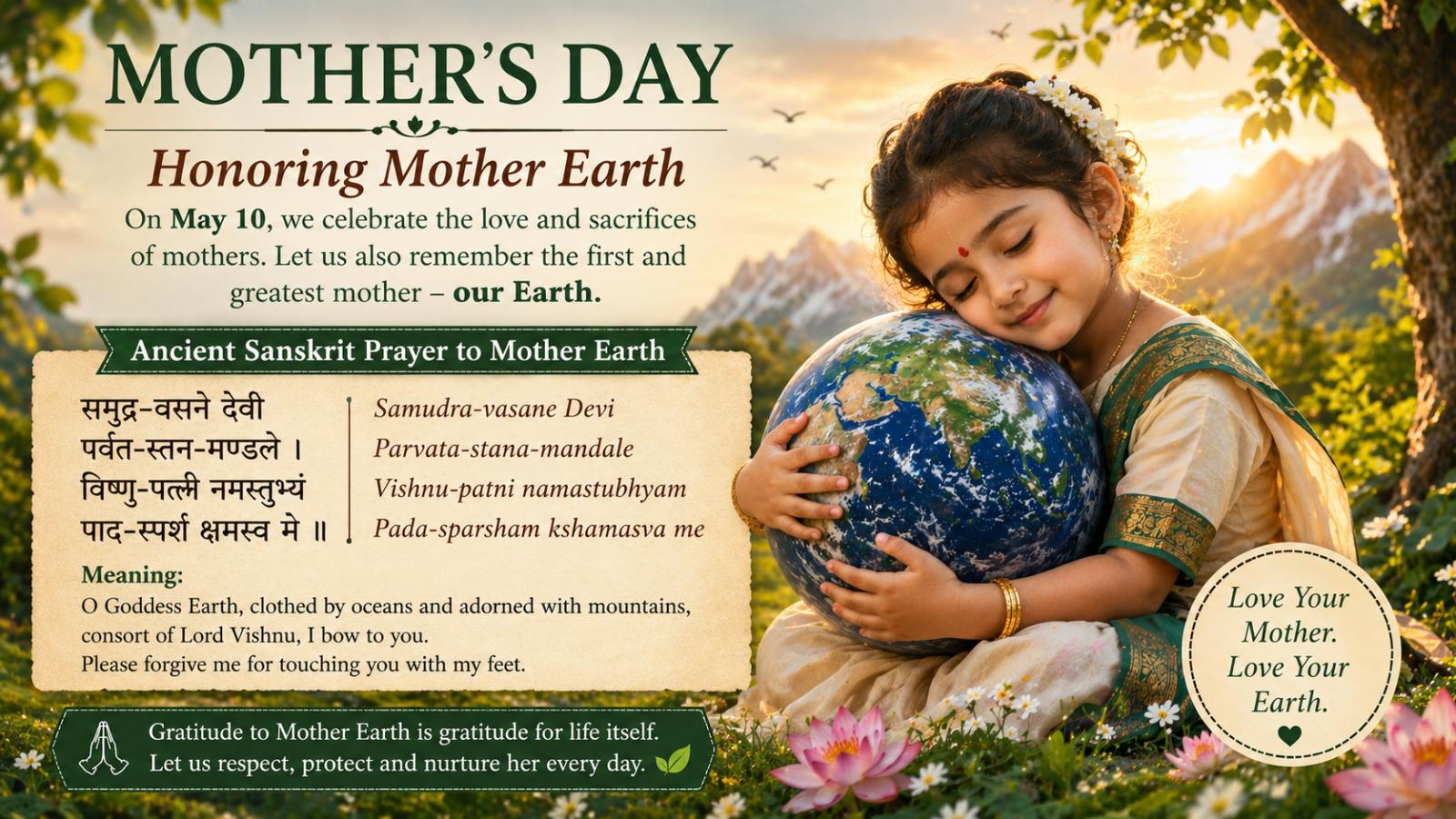
Mother’s Day and the Ancient Indian Prayer to Mother Earth
Mother’s Day Tradition Echoes Ancient Indian Earth Prayer Mother’s Day, celebrated on Sunday, May 10 in many parts of the world, is widely observed as a tribute to maternal love and sacrifice. But an ancient Indian Sanskrit prayer reveals that the idea of motherhood extends far beyond family, honoring Earth itself as humanity’s first mother. For centuries, Indian spiritual tradition has included a morning prayer recited before touching the ground w
Mother’s Day and the Ancient Indian Prayer to Mother Earth
Mother’s Day Tradition Echoes Ancient Indian Earth Prayer Mother’s Day, celebrated on Sunday, May 10 in many parts of the world, is widely observed as a tribute to maternal love and sacrifice. But an ancient Indian Sanskrit prayer reveals that the idea of motherhood extends far beyond family, honoring Earth itself as humanity’s first mother. For centuries, Indian spiritual tradition has included a morning prayer recited before touching the ground w
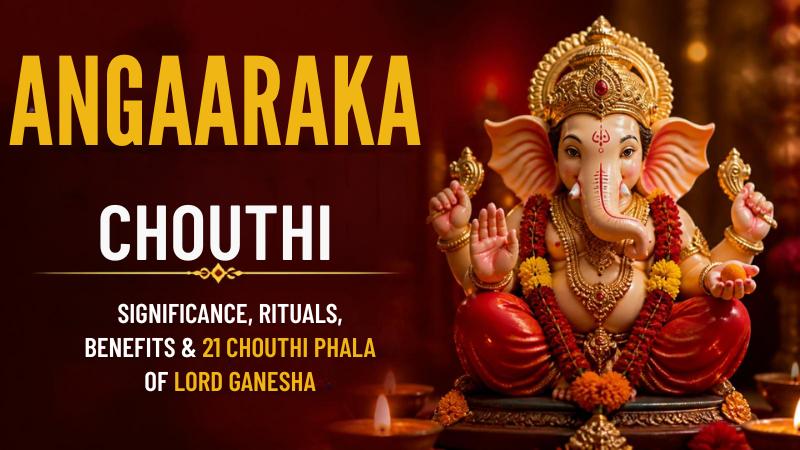
Angaraka Chouthi: Importance, Rituals, and the Blessings of Lord Ganesha
What Is Sankashta Hara Chaturthi? Sankashta Hara Chaturthi is observed every month on the 4th day after the full moon (Krishna Paksha Chaturthi). It is dedicated to Lord Ganesha, and devotees fast on this day to remove obstacles, gain peace, and invite prosperity. What Is Angaraka Chaturthi and Why Is It Powerful When this monthly Sankashti Chaturthi falls on a Tuesday, it is called Angaraka Chaturthi. Tuesda
Angaraka Chouthi: Importance, Rituals, and the Blessings of Lord Ganesha
What Is Sankashta Hara Chaturthi? Sankashta Hara Chaturthi is observed every month on the 4th day after the full moon (Krishna Paksha Chaturthi). It is dedicated to Lord Ganesha, and devotees fast on this day to remove obstacles, gain peace, and invite prosperity. What Is Angaraka Chaturthi and Why Is It Powerful When this monthly Sankashti Chaturthi falls on a Tuesday, it is called Angaraka Chaturthi. Tuesda

What causes Panchang confusion abroad? A USA-focused Vedic tool offers clarity
Why are Hindu calendar timings confusing in the USA? A new online Panchang solves it For many Indians living in the United States, following traditional Hindu practices often presents an unexpected challenge. Festivals, poojas, and important life events require precise timing, yet differences in Tithi, Nakshatra, and muhurthams across sources frequently create confusion. What appears as a simple search can quickly turn into uncertainty, especially when Indian calendar timings do not align with local US conditions. Why traditional Panchang timings do not match US locations The root of this issue lies in geography and time zones. Most Hindu calendars are calculated based on Indian Standard Time, where sunrise, sunset, and lunar positions differ significantly from those in the United States. Because Vedic calculations are location-sensitive, even a few hours’ difference can alter Tithi durations, Nakshatra transitions, and auspicious muhurthams. For NRIs, relying solely on Indian Panchang data can result in performing rituals at incorrect times, creating a growing need for location-specific accuracy. A USA-focused online Panchang addressing the gap To bridge this gap, a dedicated digital solution has emerged in the form of lagna.pravachanam.com, an online Panchang platform designed specifically for US users. Users can directly access the platform by visiting: https://lagna.pravachanam.com, where location-based Vedic timings are available instantly through a simple browser interface. Unlike traditional tools, it provides accurate Panchang details tailored to individual cities across the United States, eliminating confusion caused by time zone differences and generalized data. City-specific Tithi, Vara, and Nakshatra calculations One of the platform’s core strengths is its ability to deliver precise Panchang details based on a user’s exact US location. It calculates Tithi, Vara, and Nakshatra according to local sunrise and sunset timings, ensuring that all information reflects accurate regional conditions rather than relying on Indian Standard Time. Seven-day planning view for upcoming muhurthams The platform includes a forward-looking seven-day calendar that allows users to plan religious and personal events in advance. This feature is particularly useful for identifying suitable muhurthams for occasions such as weddings, housewarmings, and poojas, helping users make informed decisions without last-minute uncertainty. Daily Lagna charts with precise timing windows For users who follow astrology closely, the tool provides detailed Lagna charts with clearly defined start and end times. These insights help identify favorable periods for rituals and important activities, aligning traditional practices with accurate astronomical calculations. Integrated astrology insights and annual predictions Beyond daily Panchang data, the platform offers traditional astrology insights, including Rashi Phalalu, Nava Nayaka Phalalu, and Kandaya Phalalu. These features provide a broader understanding of astrological influences based on the current Hindu year, supporting both personal reflection and spiritual planning. Comprehensive festival guide and auspicious day tracking A built-in festival guide ensures users stay informed about major Hindu festivals and auspicious days throughout the year. By aligning these dates with US-based timings, the platform removes ambiguity and helps users observe traditions correctly. Simple browser-based access with user-friendly design The platform is designed for ease of use, requiring no application downloads or technical expertise. Its clean and intuitive interface allows users to quickly access relevant information, making it suitable for both regular users and those new to Panchang systems. Enabling cultural continuity with accurate Vedic timing By combining traditional Vedic principles with modern digital accessibility, platforms like https://lagna.pravachanam.com address a long-standing challenge faced by the NRI community. Accurate, location-based Hindu calendar data reduces uncertainty and supports the continuation of cultural and spiritual practices for individuals living in the United States.
What causes Panchang confusion abroad? A USA-focused Vedic tool offers clarity
Why are Hindu calendar timings confusing in the USA? A new online Panchang solves it For many Indians living in the United States, following traditional Hindu practices often presents an unexpected challenge. Festivals, poojas, and important life events require precise timing, yet differences in Tithi, Nakshatra, and muhurthams across sources frequently create confusion. What appears as a simple search can quickly turn into uncertainty, especially when Indian calendar timings do not align with local US conditions. Why traditional Panchang timings do not match US locations The root of this issue lies in geography and time zones. Most Hindu calendars are calculated based on Indian Standard Time, where sunrise, sunset, and lunar positions differ significantly from those in the United States. Because Vedic calculations are location-sensitive, even a few hours’ difference can alter Tithi durations, Nakshatra transitions, and auspicious muhurthams. For NRIs, relying solely on Indian Panchang data can result in performing rituals at incorrect times, creating a growing need for location-specific accuracy. A USA-focused online Panchang addressing the gap To bridge this gap, a dedicated digital solution has emerged in the form of lagna.pravachanam.com, an online Panchang platform designed specifically for US users. Users can directly access the platform by visiting: https://lagna.pravachanam.com, where location-based Vedic timings are available instantly through a simple browser interface. Unlike traditional tools, it provides accurate Panchang details tailored to individual cities across the United States, eliminating confusion caused by time zone differences and generalized data. City-specific Tithi, Vara, and Nakshatra calculations One of the platform’s core strengths is its ability to deliver precise Panchang details based on a user’s exact US location. It calculates Tithi, Vara, and Nakshatra according to local sunrise and sunset timings, ensuring that all information reflects accurate regional conditions rather than relying on Indian Standard Time. Seven-day planning view for upcoming muhurthams The platform includes a forward-looking seven-day calendar that allows users to plan religious and personal events in advance. This feature is particularly useful for identifying suitable muhurthams for occasions such as weddings, housewarmings, and poojas, helping users make informed decisions without last-minute uncertainty. Daily Lagna charts with precise timing windows For users who follow astrology closely, the tool provides detailed Lagna charts with clearly defined start and end times. These insights help identify favorable periods for rituals and important activities, aligning traditional practices with accurate astronomical calculations. Integrated astrology insights and annual predictions Beyond daily Panchang data, the platform offers traditional astrology insights, including Rashi Phalalu, Nava Nayaka Phalalu, and Kandaya Phalalu. These features provide a broader understanding of astrological influences based on the current Hindu year, supporting both personal reflection and spiritual planning. Comprehensive festival guide and auspicious day tracking A built-in festival guide ensures users stay informed about major Hindu festivals and auspicious days throughout the year. By aligning these dates with US-based timings, the platform removes ambiguity and helps users observe traditions correctly. Simple browser-based access with user-friendly design The platform is designed for ease of use, requiring no application downloads or technical expertise. Its clean and intuitive interface allows users to quickly access relevant information, making it suitable for both regular users and those new to Panchang systems. Enabling cultural continuity with accurate Vedic timing By combining traditional Vedic principles with modern digital accessibility, platforms like https://lagna.pravachanam.com address a long-standing challenge faced by the NRI community. Accurate, location-based Hindu calendar data reduces uncertainty and supports the continuation of cultural and spiritual practices for individuals living in the United States.

How One Indian Monk Won the World in 1893!
Swami Vivekananda’s visit to Chicago in 1893 remains a defining moment in the global exchange of spiritual and cultural ideas. He traveled to the United States to participate in the World’s Parliament of Religions, an international gathering held as part of the Columbian Exposition. His address on September 11, 1893, is widely remembered for its message of unity and universal acceptance. Opening his speech with the now-famous greeting, “Brothers and Sisters of America,” Vivekananda immediately connected with the audience, receiving a prolonged standing ovation. His remarks emphasized the shared essence of all religions and advocated for tolerance, mutual respect, and compassion. He presented the principles of Vedanta and Yoga as paths toward understanding humanity’s deeper spiritual nature, highlighting that true religion transcends rigid doctrines. The impact of his speech extended far beyond the event itself. Vivekananda’s ideas resonated strongly with American audiences, introducing many to Indian philosophical traditions for the first time. His teachings contributed to a broader awareness of Hinduism and helped establish a foundation for ongoing cultural and intellectual dialogue between India and the West. In India, his legacy continues to inspire generations, particularly through the observance of National Youth Day on January 12, his birth anniversary. Declared by the Government of India in 1984, the day is marked by educational and cultural activities across schools and institutions. These events reflect Vivekananda’s enduring message of self-confidence, service, and the transformative power of knowledge. Through his writings and lectures, inspired by his guru Ramakrishna Paramahansa, Vivekananda encouraged young people to pursue both personal growth and social responsibility. His influence remains significant today, as his vision of harmony and spiritual awareness continues to shape conversations on global unity and cultural understanding.
How One Indian Monk Won the World in 1893!
Swami Vivekananda’s visit to Chicago in 1893 remains a defining moment in the global exchange of spiritual and cultural ideas. He traveled to the United States to participate in the World’s Parliament of Religions, an international gathering held as part of the Columbian Exposition. His address on September 11, 1893, is widely remembered for its message of unity and universal acceptance. Opening his speech with the now-famous greeting, “Brothers and Sisters of America,” Vivekananda immediately connected with the audience, receiving a prolonged standing ovation. His remarks emphasized the shared essence of all religions and advocated for tolerance, mutual respect, and compassion. He presented the principles of Vedanta and Yoga as paths toward understanding humanity’s deeper spiritual nature, highlighting that true religion transcends rigid doctrines. The impact of his speech extended far beyond the event itself. Vivekananda’s ideas resonated strongly with American audiences, introducing many to Indian philosophical traditions for the first time. His teachings contributed to a broader awareness of Hinduism and helped establish a foundation for ongoing cultural and intellectual dialogue between India and the West. In India, his legacy continues to inspire generations, particularly through the observance of National Youth Day on January 12, his birth anniversary. Declared by the Government of India in 1984, the day is marked by educational and cultural activities across schools and institutions. These events reflect Vivekananda’s enduring message of self-confidence, service, and the transformative power of knowledge. Through his writings and lectures, inspired by his guru Ramakrishna Paramahansa, Vivekananda encouraged young people to pursue both personal growth and social responsibility. His influence remains significant today, as his vision of harmony and spiritual awareness continues to shape conversations on global unity and cultural understanding.
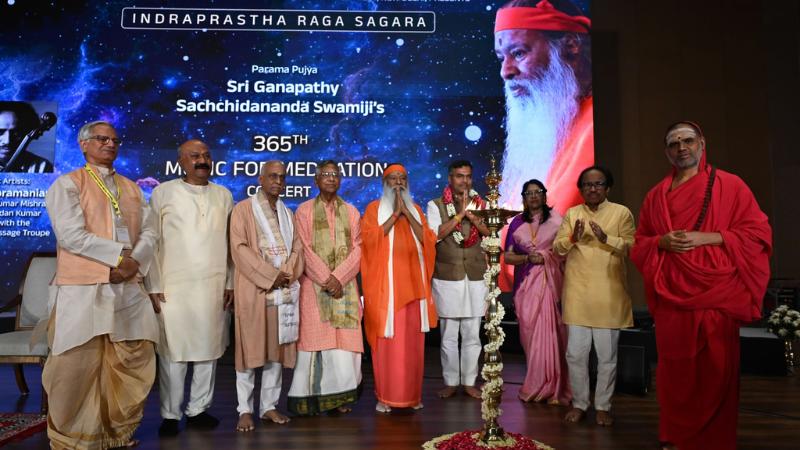
Sri Swamiji marks 365th meditation concert in New Delhi with global acclaim
Paramapujya Sri Ganapathy Sachchidananda Swamiji marked a historic milestone with his 365th “Music for Meditation and Healing” concert, titled Indraprastha Raga Sagara, at Bharat Mandapam, Pragati Maidan, New Delhi, on Sunday, April 19, 2026 (IST). Renowned violinist Dr. L. Subraman
Sri Swamiji marks 365th meditation concert in New Delhi with global acclaim
Paramapujya Sri Ganapathy Sachchidananda Swamiji marked a historic milestone with his 365th “Music for Meditation and Healing” concert, titled Indraprastha Raga Sagara, at Bharat Mandapam, Pragati Maidan, New Delhi, on Sunday, April 19, 2026 (IST). Renowned violinist Dr. L. Subraman
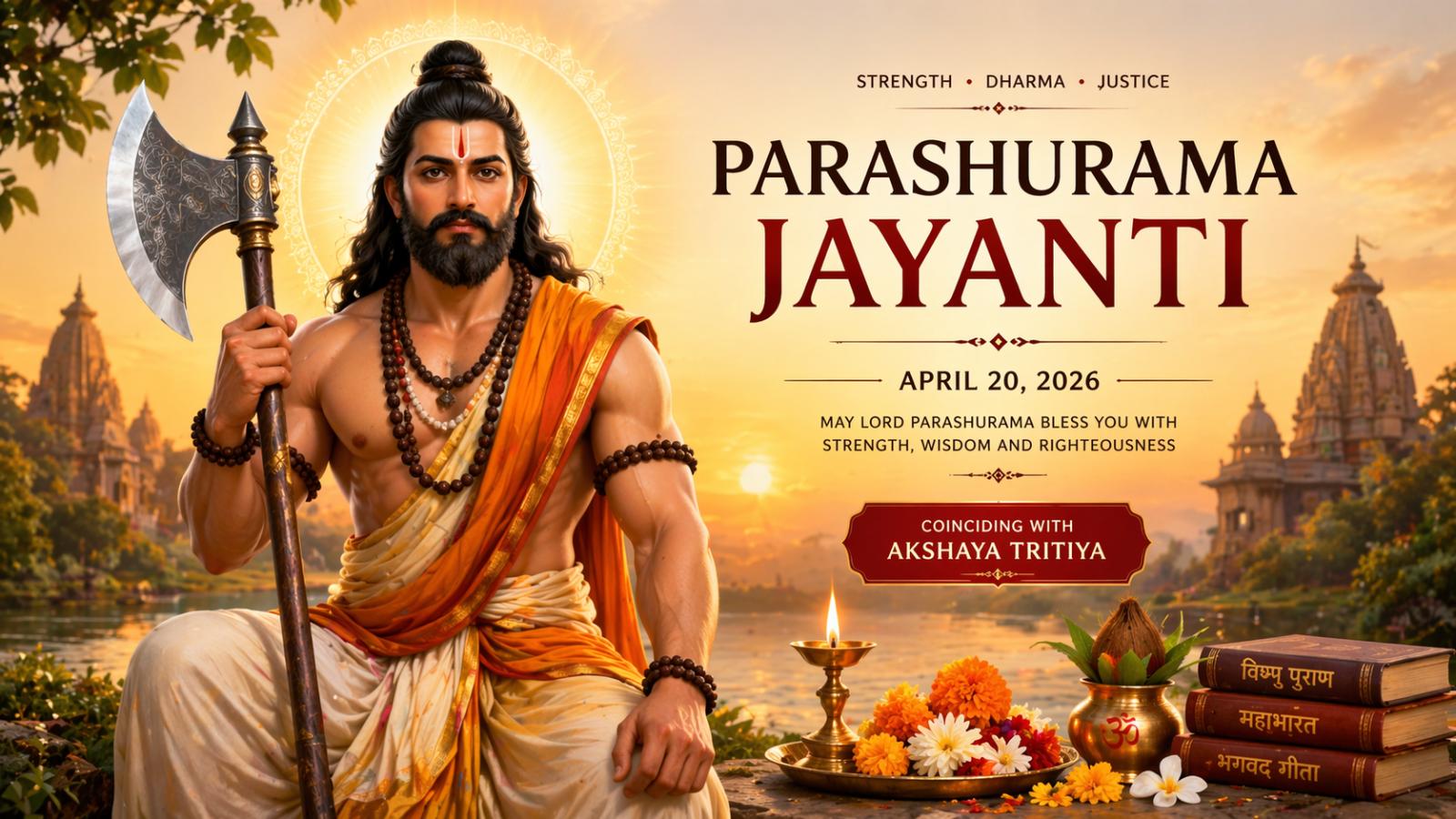
Parashurama Jayanti 2026 Date Tithi Puja Timings And Significance Explained
Parashurama Jayanti 2026 will be observed on April 20, coinciding with the highly auspicious Akshaya Tritiya. This sacred occasion marks the birth anniversary of Parashurama, who is regarded as the warrior sage and the sixth incarnation of Vishnu. The alignment of these two important occasions enhances the spiritual significance of the day, making it especially favorable for prayers, charity, and new beginnings. Devotees across India observe this festival with devotion, seeking blessings for strength, prosperity, and moral guidance. The festival falls on the Tritiya Tithi of the Shukla Paksha in the Vaishakha month. Since this lunar phase is present during the daytime on April 20, it is considered ideal for performing religious rituals. The most suitable time for worship is during the morning and midday hours. Temples dedicated to Lord Vishnu and Parashurama witness large gatherings of devotees who participate in special ceremonies, offer prayers, and chant sacred hymns. Date: April 20, 2026 (Monday) Tithi: Tritiya Tithi (Shukla Paksha, Vaishakha month) Special Significance: Coincides with Akshaya Tritiya Best Time for Worship: Morning and midday hours Main Deities Worshipped: Lord Parashurama and Lord Vishnu Significance of the Festival Parashurama Jayanti holds deep religious and cultural importance. Parashurama is believed to have been born to restore balance and uphold righteousness. His life represents discipline, courage, and a strong sense of justice. The festival serves as a reminder of these values and encourages individuals to follow a path of integrity and responsibility. The coincidence with Akshaya Tritiya further adds to its importance. This day is considered naturally auspicious, meaning that important activities can be undertaken without the need for a specific timing window. Many people choose this day to start new ventures, make investments, or purchase gold, as it is believed to bring lasting prosperity and success. Rituals and Celebrations Devotees celebrate Parashurama Jayanti through a range of spiritual practices that emphasize devotion and simplicity. People begin the day early with a cleansing bath, followed by prayers offered to Lord Vishnu and Parashurama. Homes and temples are decorated, and offerings such as flowers, fruits, and incense are presented during worship. Fasting is commonly observed as a mark of devotion and self-discipline. Devotees also chant sacred mantras and read religious texts dedicated to Lord Vishnu. Visiting temples and participating in special ceremonies form an important part of the celebration. Charity plays a significant role on this day. Many people donate food, clothing, or money to those in need, as acts of giving are believed to bring positive outcomes and spiritual merit. These practices highlight the importance of compassion and generosity. Why This Day Matters Parashurama Jayanti 2026 is more than a ritualistic celebration; it is a day that combines spiritual devotion with meaningful life values. It encourages individuals to reflect on their actions, strengthen their faith, and pursue a balanced life guided by ethics and responsibility. With its association with Akshaya Tritiya, the day becomes even more powerful for initiating positive changes and building a prosperous future. Whether through prayer, fasting, or acts of kindness, the essence of the festival lies in promoting harmony, discipline, and continuous growth in both personal and spiritual life.
Parashurama Jayanti 2026 Date Tithi Puja Timings And Significance Explained
Parashurama Jayanti 2026 will be observed on April 20, coinciding with the highly auspicious Akshaya Tritiya. This sacred occasion marks the birth anniversary of Parashurama, who is regarded as the warrior sage and the sixth incarnation of Vishnu. The alignment of these two important occasions enhances the spiritual significance of the day, making it especially favorable for prayers, charity, and new beginnings. Devotees across India observe this festival with devotion, seeking blessings for strength, prosperity, and moral guidance. The festival falls on the Tritiya Tithi of the Shukla Paksha in the Vaishakha month. Since this lunar phase is present during the daytime on April 20, it is considered ideal for performing religious rituals. The most suitable time for worship is during the morning and midday hours. Temples dedicated to Lord Vishnu and Parashurama witness large gatherings of devotees who participate in special ceremonies, offer prayers, and chant sacred hymns. Date: April 20, 2026 (Monday) Tithi: Tritiya Tithi (Shukla Paksha, Vaishakha month) Special Significance: Coincides with Akshaya Tritiya Best Time for Worship: Morning and midday hours Main Deities Worshipped: Lord Parashurama and Lord Vishnu Significance of the Festival Parashurama Jayanti holds deep religious and cultural importance. Parashurama is believed to have been born to restore balance and uphold righteousness. His life represents discipline, courage, and a strong sense of justice. The festival serves as a reminder of these values and encourages individuals to follow a path of integrity and responsibility. The coincidence with Akshaya Tritiya further adds to its importance. This day is considered naturally auspicious, meaning that important activities can be undertaken without the need for a specific timing window. Many people choose this day to start new ventures, make investments, or purchase gold, as it is believed to bring lasting prosperity and success. Rituals and Celebrations Devotees celebrate Parashurama Jayanti through a range of spiritual practices that emphasize devotion and simplicity. People begin the day early with a cleansing bath, followed by prayers offered to Lord Vishnu and Parashurama. Homes and temples are decorated, and offerings such as flowers, fruits, and incense are presented during worship. Fasting is commonly observed as a mark of devotion and self-discipline. Devotees also chant sacred mantras and read religious texts dedicated to Lord Vishnu. Visiting temples and participating in special ceremonies form an important part of the celebration. Charity plays a significant role on this day. Many people donate food, clothing, or money to those in need, as acts of giving are believed to bring positive outcomes and spiritual merit. These practices highlight the importance of compassion and generosity. Why This Day Matters Parashurama Jayanti 2026 is more than a ritualistic celebration; it is a day that combines spiritual devotion with meaningful life values. It encourages individuals to reflect on their actions, strengthen their faith, and pursue a balanced life guided by ethics and responsibility. With its association with Akshaya Tritiya, the day becomes even more powerful for initiating positive changes and building a prosperous future. Whether through prayer, fasting, or acts of kindness, the essence of the festival lies in promoting harmony, discipline, and continuous growth in both personal and spiritual life.










