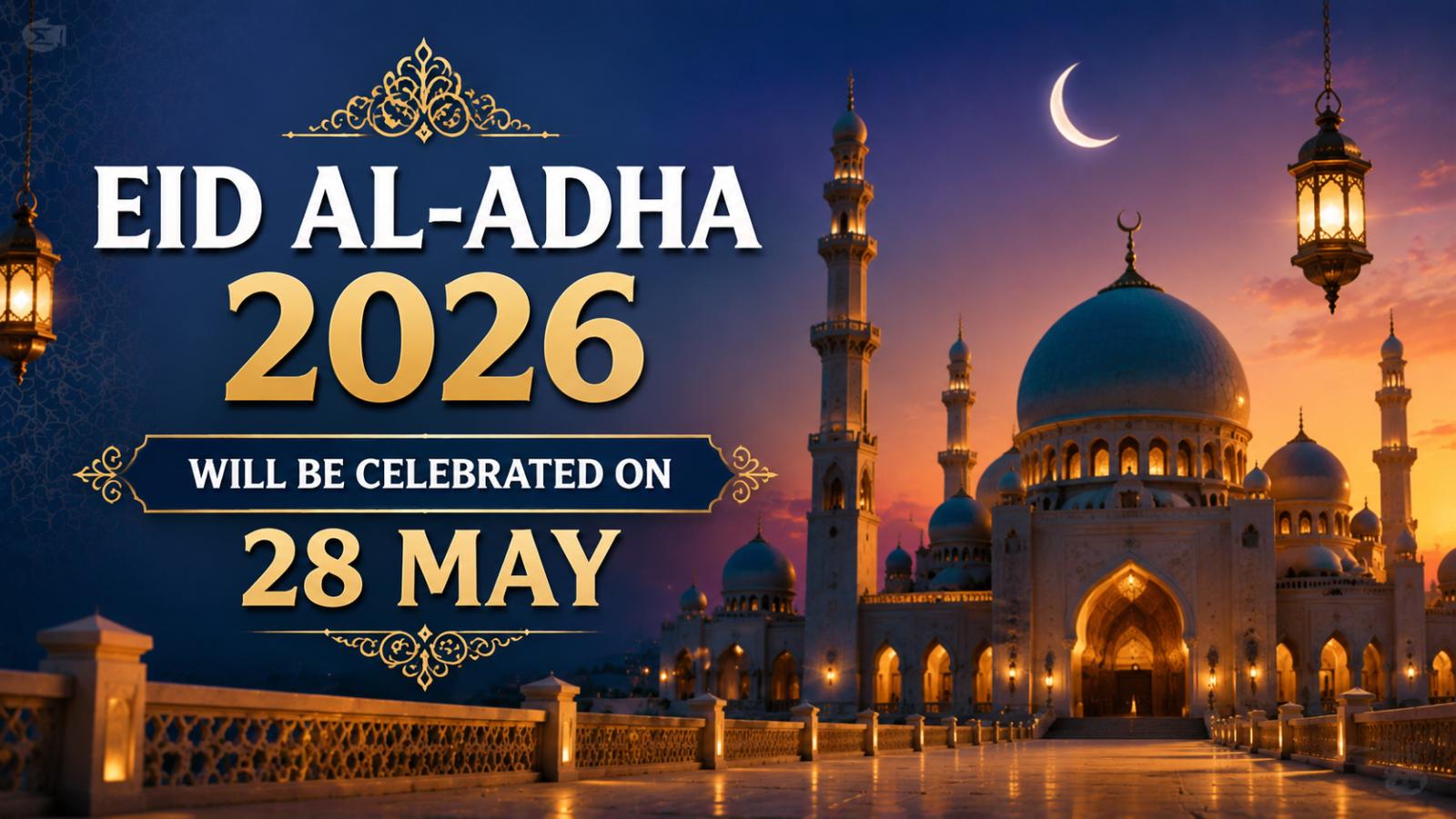
Bakrid, also known as Eid al-Adha, will be celebrated on May 28, 2026 in India, following moon sighting confirmations in different states. The festival commemorates Prophet Ibrahim’s devotion, highlighting his willingness to sacrifice his son in obedience to God. Observed worldwide, Bakrid emphasizes faith, charity, and community unity, and is considered one of the two major Islamic festivals.
Key Points:
- Bakrid 2026 falls on May 28 based on local moon sightings.
- The festival celebrates Prophet Ibrahim’s obedience and devotion.
- Acts of charity and helping the needy are central to observance.
Celebration Practices Across India and Globally
The day begins with Eid prayers held at mosques or open grounds, followed by the ritual of Qurbani, where animals such as goats, sheep, cows, or camels are sacrificed and the meat is distributed to family, friends, and the poor. Families prepare festive meals and sweets to mark the occasion, and digital connections are used to send greetings when relatives are far away.
Key Points:
- Eid prayers are performed in the morning across India and globally.
- Qurbani is a ritual sacrifice, symbolizing devotion and sharing blessings.
- Community meals, charity, and family gatherings reinforce social bonds.
- Pilgrims performing Hajj in Mecca observe rituals aligned with Bakrid.
- Modern celebrations include digital greetings and virtual gatherings.
Bakrid 2026 on May 28 is not only a day of spiritual devotion but also an opportunity for families and communities to come together, reinforce cultural values, and extend generosity to those in need. It combines traditional rituals with contemporary digital connectivity, making it a widely celebrated festival across nations.
History and Significance of Bakrid (Eid al-Adha)
Historical Background:
Bakrid, also known as Eid al-Adha, is an Islamic festival that commemorates the devotion and obedience of Prophet Ibrahim (Abraham). According to Islamic tradition, God commanded Ibrahim to sacrifice his son as a test of faith. Demonstrating unwavering submission to God, Ibrahim prepared to carry out the command, but God replaced his son with a ram at the last moment. This act became a symbol of ultimate faith, devotion, and obedience.
Significance in Islam:
- Obedience to God: Bakrid emphasizes absolute submission to God’s will, reflecting the faith and trust shown by Prophet Ibrahim.
- Sacrifice (Qurbani): Muslims perform Qurbani, the ritual sacrifice of an animal (goat, sheep, cow, or camel), to honor Ibrahim’s devotion. The meat is shared among family, friends, and the less fortunate.
- Charity and Compassion: The festival highlights helping the needy, strengthening community bonds, and promoting generosity.
- Spiritual Reflection: It is a time for prayer, reflection on moral and spiritual values, and reinforcing social responsibility.
Cultural Observance:
Bakrid is celebrated globally with prayers, feasts, family gatherings, and charitable acts. In countries like India, the UAE, Pakistan, and Indonesia, the festival blends religious rituals with cultural practices, making it both a spiritual and social occasion. In essence, Bakrid is not just a commemoration of a historical event but also a reminder of faith, obedience, generosity, and the importance of community.