









How Iran’s affordable drones are challenging America’s expensive interceptors
One of the most striking lessons from the war with Iran is how a relatively low-cost adversary has exposed vulnerabilities in U.S. defense strategy. Iran has demonstrated both a willingness to go on the offensive and an ability to leverage inexpensive drone technology at scale. These drones, often built with commercial-grade components, cost roughly $35,000 each—far less than the high-end interceptors used to destroy them. This imbalance has forced the United States and its allies to confront a new reality: modern warfare is no longer dominated solely by precision and sophistication, but also by affordability and volume. Cheap drones had already reshaped the battlefield in Ukraine, and Iran has now applied similar tactics in the Middle East, exploiting a long-standing gap in U.S. defense investments that favored fewer, more expensive systems over scalable solutions. Why are U.S. defenses struggling with cost efficiency? Because interceptors far exceed drone prices The financial mismatch is stark. In just the first six days of the conflict, the U.S. spent $11.3 billion, with estimates later rising to between $25 billion and $35 billion. A significant portion of that cost comes from interceptor missiles used to shoot down relatively inexpensive drones. Despite years of Pentagon focus on counter-drone capabilities, experts like Michael C. Horowitz note that there has been little urgency to scale affordable solutions. The result is a defense strategy where each engagement can cost far more than the threat itself—an unsustainable model in prolonged conflicts. How do air-based defenses work against drones? By using early detection and precision strikes—when available In an ideal scenario, airborne early warning systems detect drones hundreds of miles away. Fighter jets such as the F-16 Fighting Falcon are then deployed to intercept them using relatively cheaper rocket systems like APKWS II. This method is among the most cost-efficient, but it depends heavily on maintaining constant air patrols and intact detection systems. Iran has targeted these early warning assets, limiting their effectiveness and reducing the availability of this optimal defense approach. What role do ground and naval systems play? They offer range and reliability but at a steep price When air defenses are unavailable, the U.S. relies on ground- and sea-based systems. These include: Short-range systems like the Coyote, designed specifically for drones and relatively cost-effective—but in short supply. Naval destroyers using radar and SM-2 interceptors, which are powerful but expensive and designed for larger threats. The Patriot missile system, capable of intercepting drones from long distances using costly PAC-3 missiles. These systems were originally built to counter high-end threats like ballistic missiles, not swarms of cheap drones. As a result, they are often overkill—both technologically and financially—for the task at hand. Still, their use can be justified when defending high-value assets, such as billion-dollar radar installations or critical military infrastructure. What are the emerging solutions to counter drones? AI interceptors and lasers show promise but remain unproven New approaches aim to fix the cost imbalance. AI-powered interceptor drones, such as the Merops system developed by a company founded by Eric Schmidt, represent a potential shift toward cheaper, scalable defenses. These systems have been tested in collaboration with Ukrainian forces experienced in countering Iranian drones. The U.S. has already sent thousands of these units to the Middle East and begun training troops, though it remains unclear whether they have been deployed in combat. Meanwhile, the Pentagon has invested heavily in directed energy weapons—lasers that could cost as little as $3 per shot and reach targets up to 12 miles away. However, these systems have yet to be fielded in real-world combat. Why is ammunition depletion a growing concern? Because stockpiles may run out faster than they can be replaced Beyond cost, a more immediate concern is supply. Experts warn that interceptor stockpiles are being depleted at an alarming rate. As Tom Karako explains, the issue is not just affordability but availability: the U.S. risks running out of munitions before it can replenish them. This highlights a deeper strategic challenge. Modern conflicts—defined by mass-produced, low-cost threats—require not just advanced technology, but also sustainable production and scalable defense systems.

Instant Payments, Rising Risks: Digital Fraud Surges in India
India’s rapid digital transformation has made financial transactions faster and more convenient, but it has also led to a sharp rise in online fraud cases. Over the past decade, digital payments have grown exponentially, with platforms like Unified Payments Interface becoming a part of everyday life. However, this growth has been accompanied by a surge in fra

What is a digital twin in the workplace?
What is a digital twin? A digital twin is an AI-powered system that replicates a person’s knowledge, behavior, and decision-making using their data. It can assist with tasks, answer questions, and act as a virtual version of an employee. Digital twin in workplace: the rise of AI ‘superwo

India’s nuclear posture: balancing deterrence with global stability
India’s nuclear strategy has consistently evolved, reflecting the country’s changing security landscape and its response to emerging global challenges. With a doctrine centered on credible minimum deterrence, India ensures that its nuclear capabilities are sufficient to deter adversaries without striving for nuclear superiority. This strategic posture maintains a delicate balance, ensuring national security while preventing the escalation of conflicts into nuclear war.

Sundar Pichai, Ranbir Kapoor named in TIME 100 list for 2026
TIME magazine released its 2026 list of the 100 most influential people in the world on Wednesday, highlighting individuals whose work has shaped global conversations across technology, entertainment, and culture. The annual TIME100 list recognizes leaders, innovators, and artists for their far-reaching impact, with Indian figures again earning international recognition. Among those featured is Sun

Mahindra PawPal Mode adds climate-controlled safety for pets in cars
Mahindra has introduced a new in-cabin feature called PawPal Mode in its electric SUVs, designed to enhance pet safety during short stops. The system addresses a common concern among pet owners by maintaining a comfortable environment inside the vehicle while the driver is briefly away. PawPal Mode allows the air-conditioning system to remain active even after the driver exits the vehicle. At the same time, the doors stay securely locked, ensuring that both the vehicle and the pet

Amazon to acquire Globalstar in $11.57 billion satellite internet deal
Amazon has entered into a definitive agreement to acquire Globalstar in a deal valued at $11.57 billion, marking a significant expansion of its satellite internet strategy as it seeks to compete with SpaceX’s Starlink network. The companies formally signed the agreement on Monday, April 13, 2026, with the transaction publicly announced on Tuesday, April 14, 2026. The acquisition represents a major step in Amazon’s broader push into low Earth orbit connectivity under its Amazon Leo

Chandrababu Naidu Launches India’s First Quantum Testbeds In Andhra Pradesh
N. Chandrababu Naidu, Chief Minister of Andhra Pradesh, is set to mark a major milestone in India’s deep tech journey by launching the country’s first indigenous quantum computing testbeds in Amaravati. The landmark initiative aligns with the vision of transforming the capital region into a globally recognized “Quantum Valley” and coincides with the celebration of World Quantum Day. The advanced quantum testbed facility, establishe

Tamil Nadu Polls 2026: TVK Uses Hologram Vijay to Reach Every Voter
In a major technological twist to election campaigning, actor-turned-politician Vijay and his party Tamizhaga Vetri Kazhagam have introduced hologram-based outreach to connect with voters across Tamil Nadu. With elections approaching, the party is using life-sized 3D projections of Vijay to overcome the ch
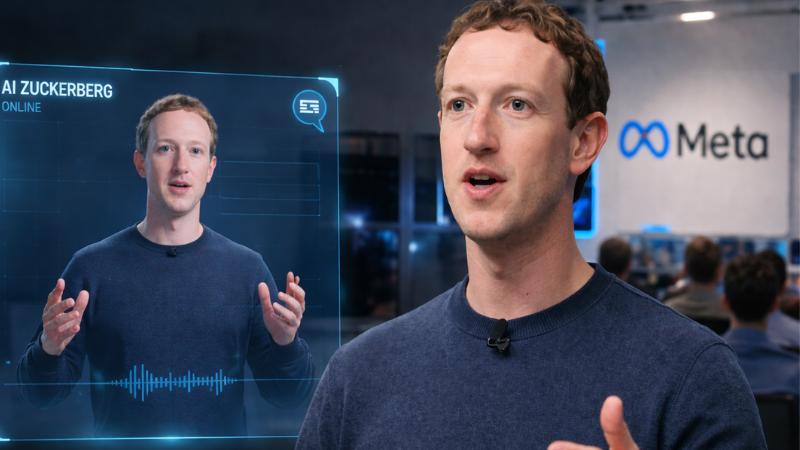
Meta Develops AI Zuckerberg to Strengthen CEO-Employee Connections
Meta is working on an AI-powered version of CEO Mark Zuckerberg to enhance communication within the company. The project, still in its early stages, aims to create a photorealistic AI character that can interact with employees. This AI is being designed to mirror Zuckerberg’s speech patterns, tone, and views on company strategy, with the goal of making employees feel a stronger connection to their CEO. Zuckerberg is directly involved in training the AI character, feeding it his cu

New pancreatic cancer drug shows major survival gains in Phase 3 study
REDWOOD CITY, California — Revolution Medicines announced positive results from a late-stage clinical trial evaluating its experimental drug daraxonrasib, showing a significant survival benefit for patients with advanced pancreatic cancer who had previously undergone treatment. According to the company, patients receiving the once-daily oral therapy lived a median of 13.2 months, compar

Software stocks rebound as Oracle leads gains amid AI concerns
Shares of major U.S. software companies moved sharply higher as investors returned to a sector that has faced sustained pressure amid concerns about artificial intelligence disrupting traditional business models. Oracle led the gains, with its stock rising 11%, helping drive a broader recovery across technology equities that had experienced steep declines earlier in the year. Other prominent

Rockstar Games hit by new hack but says no impact on players
Rockstar Games has confirmed a new cybersecurity incident after hackers claimed to have accessed company data, marking the second breach involving the developer in recent years. The breach was reported on Saturday, though the company emphasized that the impact appears minimal. In a statement, Rockstar said a “limited amount of non-material company information” was accessed through a third-party cloud service provider. The company added that the incident has had no effect on its operations or players, seeking to reassure its global user base. The group claiming responsibility, known as ShinyHunters, alleged it had gained access to Rockstar’s systems and threatened to release stolen data unless a ransom was paid. The group is known for targeting major corporations and exploiting vulnerabilities in cloud-based infrastructure. Cybersecurity experts generally advise against paying ransom demands, noting that such payments often encourage further attacks without guaranteeing data recovery or deletion. ShinyHunters has previously been linked to several high-profile breaches involving large companies. This latest incident follows a major breach in 2023, when sensitive material related to the highly anticipated Grand Theft Auto VI was leaked online. That attack, carried out by a teenage hacker associated with a separate group, exposed early gameplay footage and internal data, forcing Rockstar to accelerate its official announcements. Despite the repeated targeting, Rockstar has indicated that its current security posture has limited the damage in the latest incident. The company has not disclosed additional technical details but continues to monitor the situation as cybersecurity threats remain a persistent challenge for the gaming industry.

pico technology plans gcc in hyderabad meets telangana ministers for expansion
HYDERABAD: New York-based PICO Technology, a company that provides services to financial markets, is planning to set up a Global Capability Centre (GCC) in Hyderabad through its Indian arm, PICO Technology India. Company representatives met Telangana IT and Industries Minister Sridhar Babu and Roads and Buildings Minister Komatireddy Venkat Reddy at the Secretariat to discuss the proposal. During the meeting, Sridhar Babu highlighted the strong advantages Hyderabad offers

Trump praises Palantir as AI stock faces sharp weekly decline
Shares of Palantir Technologies declined sharply over the week ending Friday, April 10, 2026, even as Donald Trump publicly praised the company’s role in defense technology. The stock fell approximately 15% during the week, reflecting broader pressure across the software and artificial intelligence sectors. In a post on Truth Social on Friday, April 10, 2026, Trump highlighted Palantir’s capabilities, stating that the company has demonstrated strong “war fighting capabilities and equipment.” His remarks come as reports indicate that the U.S. military is using Palantir’s AI-powered Maven Smart System platform to assist with target identification in operations in the Middle East. The company derives a significant portion of its U.S. revenue from government contracts, including work with the Pentagon and immigration enforcement agencies. Palantir CEO Alex Karp has consistently supported the use of advanced technology in defense, aligning more closely with current administration policies despite previously backing Joe Biden. Karp has also defended the company against criticism over surveillance concerns involving both immigrants and U.S. citizens. The company’s political positioning has drawn internal and external scrutiny. In October 2025, a senior communications executive described the firm’s perceived political shift as “concerning,” though related public footage was later removed from online platforms. Palantir’s partnerships in the AI sector have also raised questions. Its platform integrates models from multiple labs, including Anthropic, which has faced restrictions from the Department of Defense due to concerns over potential misuse in autonomous weapons and surveillance. Although Karp previously indicated plans to phase out Anthropic’s models, no such move has yet been confirmed. Market sentiment toward AI stocks weakened further after Anthropic introduced a new model with limited release, citing risks of misuse. This has fueled broader concerns that rapid AI advancements could disrupt traditional software business models. Investor skepticism has also been amplified by Michael Burry, who has taken bearish positions on several AI-related companies, including Palantir. In recent commentary, Burry suggested the stock may experience short-term gains but maintained that its fundamental value remains significantly lower than current levels. Following the week’s decline, Palantir shares were trading near $128, reflecting ongoing volatility in the AI-driven technology sector.

YouTube bans AI Lego videos linked to Trump amid Iran narrative claims
A YouTube channel operated by Explosive Media has been removed from the platform following the rapid spread of an AI-generated video that referenced Donald Trump and alleged connections to the Epstein case. The video, presented in a stylized Lego animation format, gained millions of views across social media

Meta Introduces New AI Model, A Big Step After Team Reshuffle
Meta, the social media giant, has recently announced the release of its first new AI model following a major restructuring of its team. This move signals a fresh approach to artificial intelligence development under the leadership changes that shook up the company's AI division. For those tracking the latest in AI, this is a significant moment in the tech world. The new AI model comes as Meta strives to maintain its competitive edge in an increasingly AI-driven market. With the recent shake-up, many industry experts and insiders were curious about how the restructuring would impact Meta’s AI research and development efforts. The unveiling of this new AI model answers those questions, showcasing the company’s readiness to push forward with ambitious advancements in artificial intelligence. Meta’s latest AI model brings innovative breakthroughs, promising to enhance everything from machine learning algorithms to user experience optimization. This is the company’s first significant AI release post-reorganization, marking the beginning of what could be a new era for Meta in AI technology. This AI release will have widespread implications for various industries, ranging from social media algorithms to robotics and beyond. With the AI sector becoming more competitive, Meta’s release reflects its commitment to advancing the boundaries of artificial intelligence. The company is now well-positioned to continue its AI-driven innovations, ensuring that it remains a dominant player in the tech industry. This launch highlights the significant changes at Meta, showing that the shake-up in leadership could result in fresh ideas and innovative strategies for the company’s future. The AI model is expected to be a game-changer, both for Meta and the broader tech community, as it introduces new opportunities for advancements in AI technology. With more details expected to emerge in the coming weeks, the tech world is eagerly awaiting to see how this model will evolve and the impacts it will have on Meta’s future endeavors.

NASA Artemis II Mission: Crew Prepares for Pacific Ocean Splashdown
NASA is preparing for the safe return of the Artemis II mission after successfully completing its 10-day journey around the Moon. The spacecraft is expected to splash down in the Pacific Ocean, off the coast of California, on Friday, April 10 at around 8 PM EDT (5:37 AM IST, April 11). NASA officials have confirmed that all mission operations are going smoothly and are on track.

Pokemon Champions launch faces bugs trapping player transfers
Pokémon Champions, the newly released battle simulator on the Nintendo Switch, launched with significant technical issues that have drawn widespread criticism from the competitive gaming community. While players have reported a range of bugs and gameplay limitations, one particular issue involving Pokémon transfers is raising broader concerns about data integrity and player collections. The problem occurs when players attempt to move their Pokémon from the Pokémon Home storage application into Pokémon Champions. Multiple users report encountering an error during the transfer process, leaving certain Pokémon stuck in an inaccessible state. These affected Pokémon are labeled within the system as “visiting” Champions, preventing them from being used in the game or returned to Pokémon Home. Competitive player Justin “AzazeL” Carris highlighted the issue publicly, prompting responses from other players who experienced similar problems. Reports indicate that the error can occur across both the Nintendo Switch and mobile versions of Pokémon Home. Although similar transfer-related errors have been observed in the past across different Pokémon titles, the current issue appears more severe due to the inability to recover affected Pokémon. Attempts to resolve the problem have produced inconsistent results. Some players report success after reinstalling the Pokémon Home app, while others have tried clearing cache data on their devices without a guaranteed fix. As of now, no universal solution has been identified, leaving many players uncertain about the safety of transferring their Pokémon. The issue is particularly concerning for long-time players who maintain collections spanning multiple generations of games. In some cases, these Pokémon date back years, increasing the stakes of potential loss or inaccessibility. The developers have not yet issued an official response, and players are awaiting clarification on whether affected Pokémon can be restored.

Maharashtra Cabinet Approves New IT-AI Department and Major Administrative Overhaul
In a significant development, the Maharashtra Cabinet, chaired by Chief Minister Devendra Fadnavis, has approved a series of administrative and infrastructural reforms, including the creation of a new department dedicated to Information Technology (IT) and Artificial Intelligence (AI). The decision, part of the state’s "Viksit Maharashtra" vision, aims to accelerate the integration of emerging technologies and streamline public services. A central part of this initiative is the fo