#travelupdate
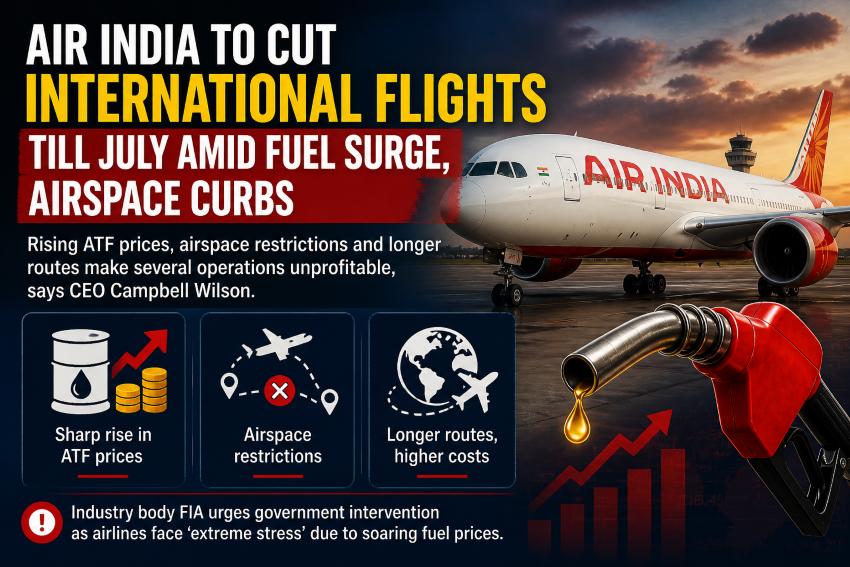
Air India Cuts International Schedules As Aviation Costs Soar
Air India’s decision to scale back its international flight operations reflects the growing pressure on the aviation sector as fuel prices continue to rise sharply. According to internal communication, CEO and Managing Director Campbell Wilson informed employees that the airline has little choice but to reduce schedules during June and July. The move follows earlier cuts in April and May, indicating a prolonged period of operational challenges driven by external factors beyond the airline’s control. The primary concern remains the steep increase in aviation turbine fuel prices, which constitute a major portion of airline operating costs. As fuel prices surge, airlines are finding it increasingly difficult to maintain profitability on long-haul international routes. Adding to the challenge are airspace restrictions in certain regions, forcing aircraft to take longer alternative paths. These extended routes not only increase fuel consumption but also lead to higher operational expenses and longer travel times for passengers. Industry Impact and Government Concerns The situation is not limited to a single airline, as the broader aviation industry in India is also feeling the strain. The Federation of Indian Airlines, representing major carriers like IndiGo and SpiceJet, has raised concerns with the government regarding the unsustainable rise in fuel costs. In a recent communication to the Civil Aviation Ministry, the industry body highlighted the extreme financial stress being faced by airlines, urging immediate intervention to stabilize operations and prevent further disruptions. Passenger Impact and Future Outlook For passengers, the reduction in international flights may lead to limited availability of seats, higher ticket prices, and potential changes in travel schedules. Travelers planning trips during the peak summer months may need to book tickets in advance or consider flexible travel plans. Despite these challenges, airlines are expected to closely monitor fuel price trends and regulatory developments before making further operational decisions. As the aviation sector navigates these turbulent conditions, the coming months will be crucial in determining how airlines adapt to rising costs and evolving geopolitical factors. The balance between maintaining connectivity and ensuring financial sustainability will remain a key focus for Air India and the wider airline industry.
Air India Cuts International Schedules As Aviation Costs Soar
Air India’s decision to scale back its international flight operations reflects the growing pressure on the aviation sector as fuel prices continue to rise sharply. According to internal communication, CEO and Managing Director Campbell Wilson informed employees that the airline has little choice but to reduce schedules during June and July. The move follows earlier cuts in April and May, indicating a prolonged period of operational challenges driven by external factors beyond the airline’s control. The primary concern remains the steep increase in aviation turbine fuel prices, which constitute a major portion of airline operating costs. As fuel prices surge, airlines are finding it increasingly difficult to maintain profitability on long-haul international routes. Adding to the challenge are airspace restrictions in certain regions, forcing aircraft to take longer alternative paths. These extended routes not only increase fuel consumption but also lead to higher operational expenses and longer travel times for passengers. Industry Impact and Government Concerns The situation is not limited to a single airline, as the broader aviation industry in India is also feeling the strain. The Federation of Indian Airlines, representing major carriers like IndiGo and SpiceJet, has raised concerns with the government regarding the unsustainable rise in fuel costs. In a recent communication to the Civil Aviation Ministry, the industry body highlighted the extreme financial stress being faced by airlines, urging immediate intervention to stabilize operations and prevent further disruptions. Passenger Impact and Future Outlook For passengers, the reduction in international flights may lead to limited availability of seats, higher ticket prices, and potential changes in travel schedules. Travelers planning trips during the peak summer months may need to book tickets in advance or consider flexible travel plans. Despite these challenges, airlines are expected to closely monitor fuel price trends and regulatory developments before making further operational decisions. As the aviation sector navigates these turbulent conditions, the coming months will be crucial in determining how airlines adapt to rising costs and evolving geopolitical factors. The balance between maintaining connectivity and ensuring financial sustainability will remain a key focus for Air India and the wider airline industry.
What is Trump’s final bailout plan for Spirit Airlines? It could prevent liquidation
President Donald Trump said on Friday, May 1, 2026, that his administration had delivered a “final” bailout proposal to Spirit Airlines as the budget airline faces the possibility of liquidation without immediate financial su
What is Trump’s final bailout plan for Spirit Airlines? It could prevent liquidation
President Donald Trump said on Friday, May 1, 2026, that his administration had delivered a “final” bailout proposal to Spirit Airlines as the budget airline faces the possibility of liquidation without immediate financial su
Ganga Expressway Opens Bringing Faster Travel From Delhi Noida And Haryana
Date: April 30, 2026 | Time: Morning Update | Place: Uttar Pradesh, India Prime Minister Narendra Modi on Wednesday inaugurated the 594-km-long Ganga Expressway from Hardoi in Uttar Pradesh, officially opening one of the state’s most important infrastructure projects. The expressway connects eastern and western parts of Uttar Pradesh, creating a faster and more efficient travel corridor. A large public gathering was held near the Sadarpur interchange in Hapur district to mark the occasion, with around 5,000 attendees including ministers, MPs, MLAs and senior officials. With the inauguration complete, the expressway is now open for traffic, offering a new route that is expected to cut down travel time significantly across the state. The Ganga Expressway, stretching nearly 594 kilometres, is set to improve connectivity between western Uttar Pradesh and Prayagraj. It will make travel easier and faster for both pilgrims and regular commuters. People traveling from Delhi, Noida, Ghaziabad, Baghpat and nearby regions in Haryana are expected to benefit the most from this new route. Officials say the improved road network could make same-day trips to Prayagraj more convenient, allowing devotees to visit the Triveni Sangam and return on the same day, which was earlier difficult due to long travel hours New Travel Times and Better Routes: The biggest advantage of the Ganga Expressway is the reduction in travel time. Journeys that earlier took up to 10 or 12 hours can now be completed in much less time depending on traffic flow. The expressway offers a more direct and less crowded route, helping drivers avoid busy city roads and delays.This new route also benefits travelers coming from Haryana and western Uttar Pradesh, giving them easier access to eastern regions without multiple diversions. The expressway is built to support high-speed travel, which helps improve efficiency for both personal and business trips. Transport companies will especially benefit from quicker delivery times and reduced fuel consumption. Impact On Economy and Daily Life: The opening of the Ganga Expressway is expected to boost economic growth in Uttar Pradesh. Improved connectivity attracts industries, logistics hubs and commercial activities along the route. This creates new job opportunities and supports development in nearby towns and cities.The expressway also makes it easier for people to travel for tourism and religious purposes. Prayagraj, known for its cultural and spiritual importance, will now be more accessible for visitors from Delhi and surrounding areas. Overall, the Ganga Expressway is a major step towards modern infrastructure, offering faster travel, better connectivity and new growth opportunities across the region.
Ganga Expressway Opens Bringing Faster Travel From Delhi Noida And Haryana
Date: April 30, 2026 | Time: Morning Update | Place: Uttar Pradesh, India Prime Minister Narendra Modi on Wednesday inaugurated the 594-km-long Ganga Expressway from Hardoi in Uttar Pradesh, officially opening one of the state’s most important infrastructure projects. The expressway connects eastern and western parts of Uttar Pradesh, creating a faster and more efficient travel corridor. A large public gathering was held near the Sadarpur interchange in Hapur district to mark the occasion, with around 5,000 attendees including ministers, MPs, MLAs and senior officials. With the inauguration complete, the expressway is now open for traffic, offering a new route that is expected to cut down travel time significantly across the state. The Ganga Expressway, stretching nearly 594 kilometres, is set to improve connectivity between western Uttar Pradesh and Prayagraj. It will make travel easier and faster for both pilgrims and regular commuters. People traveling from Delhi, Noida, Ghaziabad, Baghpat and nearby regions in Haryana are expected to benefit the most from this new route. Officials say the improved road network could make same-day trips to Prayagraj more convenient, allowing devotees to visit the Triveni Sangam and return on the same day, which was earlier difficult due to long travel hours New Travel Times and Better Routes: The biggest advantage of the Ganga Expressway is the reduction in travel time. Journeys that earlier took up to 10 or 12 hours can now be completed in much less time depending on traffic flow. The expressway offers a more direct and less crowded route, helping drivers avoid busy city roads and delays.This new route also benefits travelers coming from Haryana and western Uttar Pradesh, giving them easier access to eastern regions without multiple diversions. The expressway is built to support high-speed travel, which helps improve efficiency for both personal and business trips. Transport companies will especially benefit from quicker delivery times and reduced fuel consumption. Impact On Economy and Daily Life: The opening of the Ganga Expressway is expected to boost economic growth in Uttar Pradesh. Improved connectivity attracts industries, logistics hubs and commercial activities along the route. This creates new job opportunities and supports development in nearby towns and cities.The expressway also makes it easier for people to travel for tourism and religious purposes. Prayagraj, known for its cultural and spiritual importance, will now be more accessible for visitors from Delhi and surrounding areas. Overall, the Ganga Expressway is a major step towards modern infrastructure, offering faster travel, better connectivity and new growth opportunities across the region.
What does Tehran airport reopening signal? It marks easing regional tensions
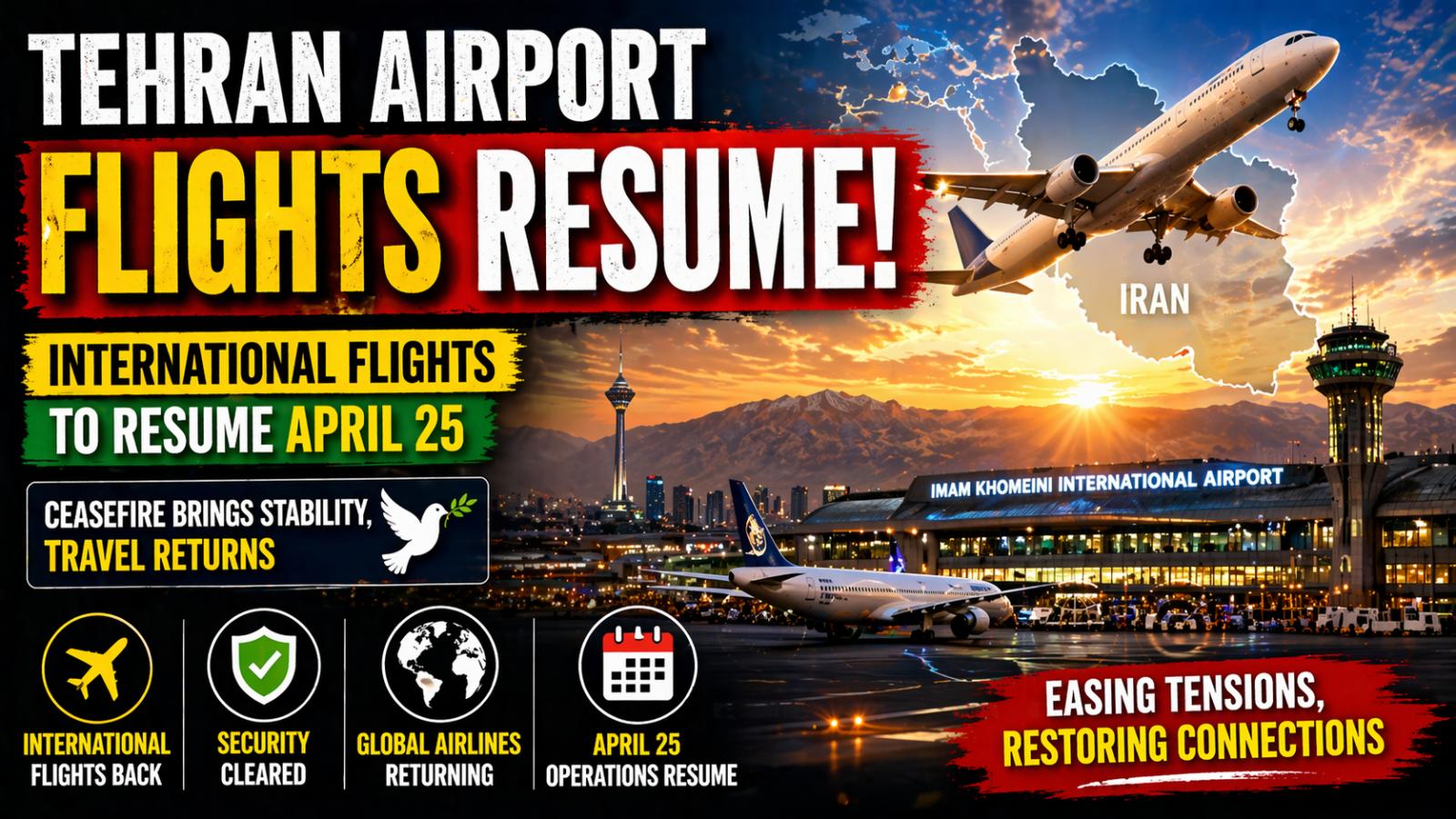
What does Tehran airport reopening signal? It marks easing regional tensions, Tehran’s primary international gateway is preparing to resume global flight operations on Saturday, April 25, 2026, according to Iranian aviation authorities, marking a significant step toward restoring stability after a week-long suspension tied to heightened regional tensions. Airport reopening follows week-long aviation shutdown Imam Khomeini International
What does Tehran airport reopening signal? It marks easing regional tensions
What does Tehran airport reopening signal? It marks easing regional tensions, Tehran’s primary international gateway is preparing to resume global flight operations on Saturday, April 25, 2026, according to Iranian aviation authorities, marking a significant step toward restoring stability after a week-long suspension tied to heightened regional tensions. Airport reopening follows week-long aviation shutdown Imam Khomeini International
Cathay Pacific cuts flights amid rising fuel costs from Middle East conflict
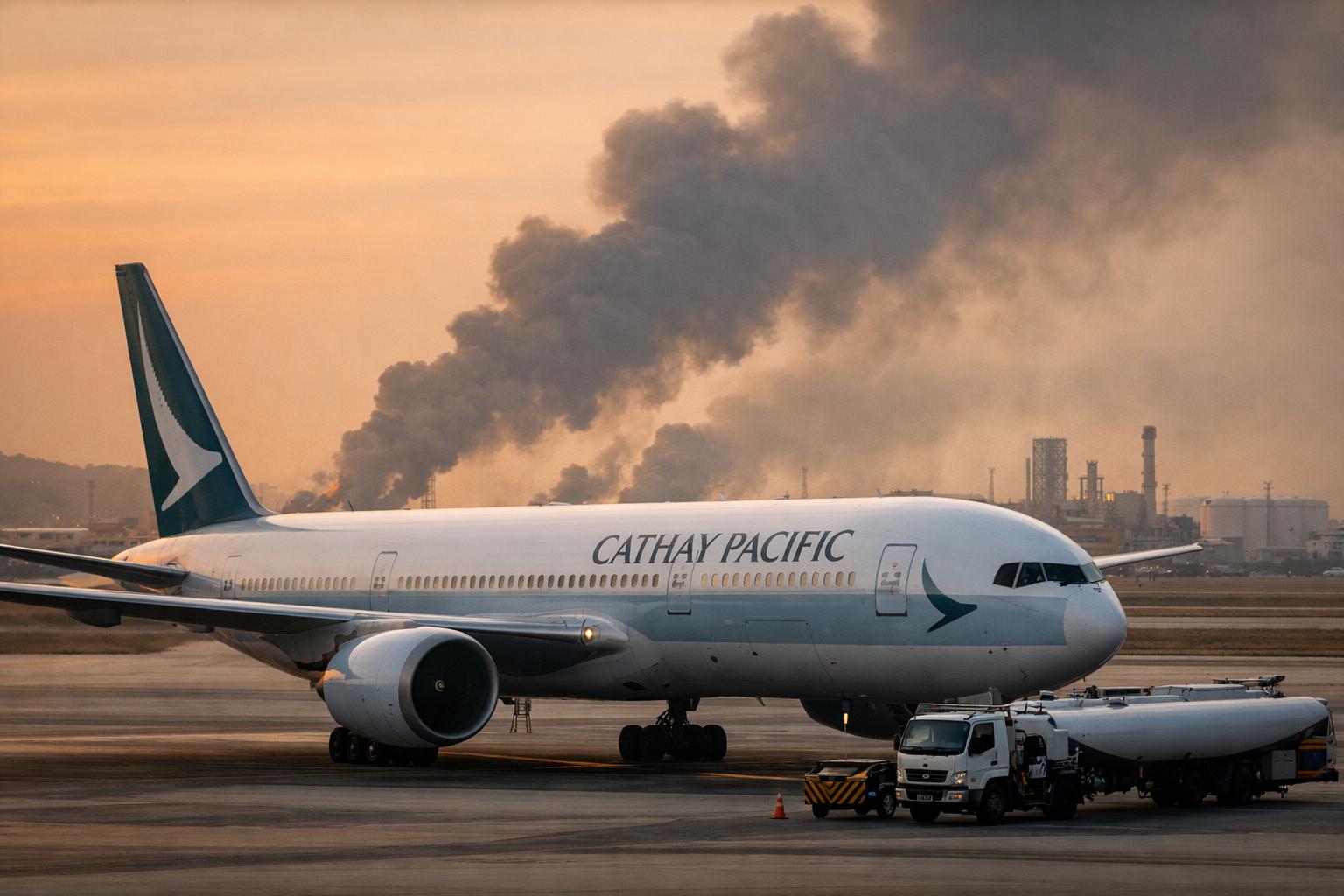
Cathay Pacific Airways announced on Saturday, April 11, 2026, that it will reduce a portion of its passenger flight schedule from mid-May through the end of June, citing a sharp increase in jet fuel costs linked to the ongoing conflict in the Middle East. The move reflects mounting pressure on global airlines as fuel prices continue to rise due to supply disruptions and regional instability.
Cathay Pacific cuts flights amid rising fuel costs from Middle East conflict
Cathay Pacific Airways announced on Saturday, April 11, 2026, that it will reduce a portion of its passenger flight schedule from mid-May through the end of June, citing a sharp increase in jet fuel costs linked to the ongoing conflict in the Middle East. The move reflects mounting pressure on global airlines as fuel prices continue to rise due to supply disruptions and regional instability.
Southwest Airlines ends open seating as assigned seats begin across its network
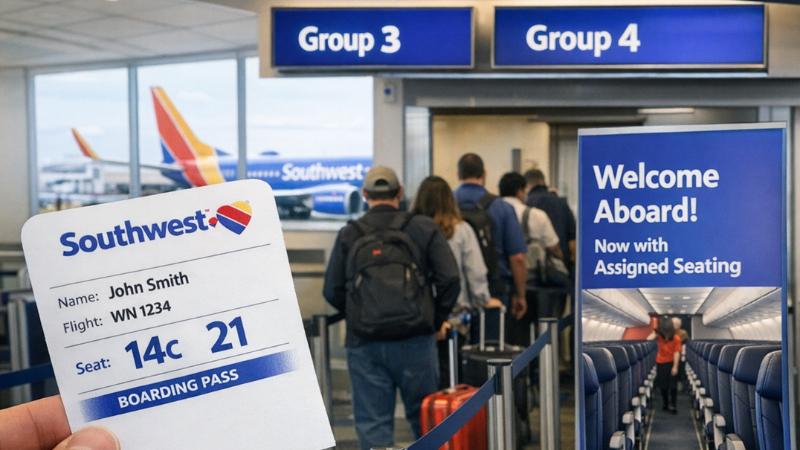
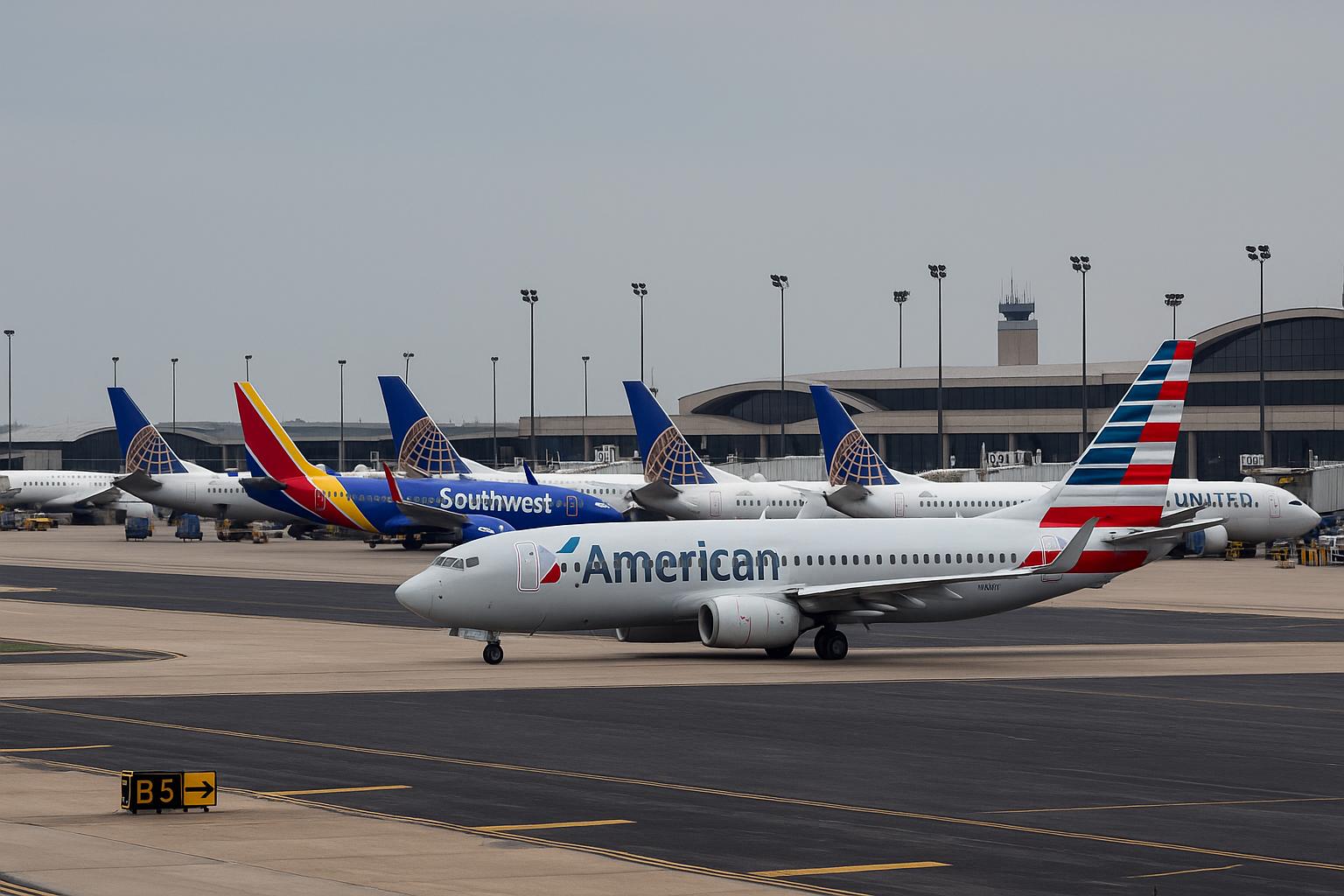
Southwest Airlines passengers completed their final boarding-day routines under the carrier’s open seating model on Monday, closing a chapter on a system that defined the airline for more than five decades. Beginning Tuesday, Southwest officially transitioned to assigned seating, a move that places the Dallas-based airline closer to industry norms followed by most major U.S. carriers. Under the new approach, customers flying Southwest will receive designated seat assignments and m
Southwest Airlines ends open seating as assigned seats begin across its network
Southwest Airlines passengers completed their final boarding-day routines under the carrier’s open seating model on Monday, closing a chapter on a system that defined the airline for more than five decades. Beginning Tuesday, Southwest officially transitioned to assigned seating, a move that places the Dallas-based airline closer to industry norms followed by most major U.S. carriers. Under the new approach, customers flying Southwest will receive designated seat assignments and m
O'Hare Airport faces widespread delays after burst pipe disrupts air traffic control
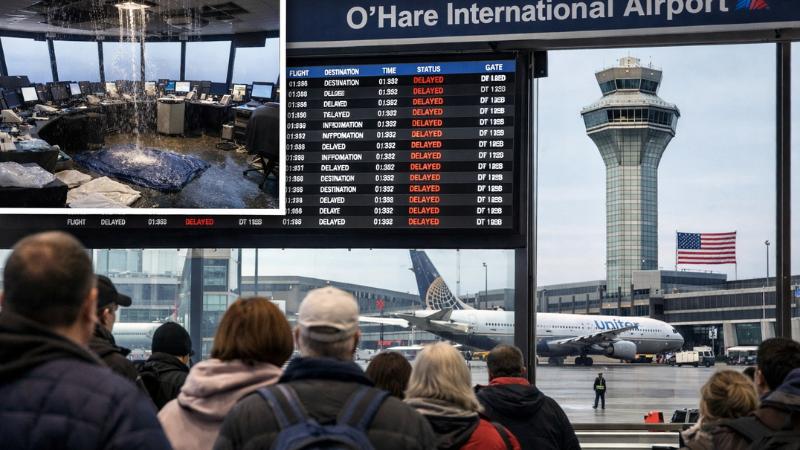
Operations at Chicago’s O’Hare International Airport were significantly disrupted Tuesday after a burst water pipe forced the evacuation of the airport’s primary air traffic control tower, triggering a prolonged ground delay program and affecting hundreds of flights throughout the day. Federal aviation officials confirmed the incident occurred during the early morning hours and continued to impact air traffic well into the evening. The situation began at approximately 1:10 a.m. when a water pipe failed inside the main air traffic control tower. The incident prompted the immediate evacuation of air traffic controllers working in the facility as a safety precaution. Controllers were temporarily relocated to the airport’s south control tower, where they resumed operations under adjusted procedures to maintain essential flight management functions. Shortly after the evacuation, the Federal Aviation Administration implemented a ground delay program for O’Hare. The measure was designed to manage air traffic flow while staffing and operational capacity were reduced. As of mid-morning, the FAA indicated that the ground delay program remained in effect and was expected to continue for much of the day, with projected delays extending into the evening hours. Flight tracking data showed widespread disruption across the airport, one of the busiest aviation hubs in the United States. More than 400 flights were reported delayed by Tuesday morning, with many experiencing wait times exceeding 45 minutes. The delays affected both arriving and departing flights, creating a ripple effect across domestic and international travel schedules. FAA officials confirmed that the main air traffic control tower remained closed as crews assessed the extent of the damage caused by the water intrusion. The full impact on equipment and infrastructure had not yet been determined, and officials said it was too early to estimate when normal operations would be fully restored. An investigation was launched to determine the cause of the pipe failure and to evaluate any structural or maintenance issues that may have contributed to the incident. Airport authorities worked alongside federal officials to manage passenger flow and minimize congestion within terminals. Travelers were advised to check directly with airlines for updated flight information and to allow extra time when traveling to or from the airport. Airlines adjusted schedules and staffing as they worked to accommodate delayed passengers and reposition aircraft. Despite the disruption, officials emphasized that safety remained the top priority and that the relocation of controllers allowed critical air traffic services to continue. The incident underscored the complexity of airport operations and the cascading impact that infrastructure issues can have on air travel, particularly at major hubs such as O’Hare. As repair efforts and inspections continued, officials said updates would be provided as more information became available. The FAA noted that restoring full capacity would depend on the outcome of the damage assessment and the completion of necessary repairs, while reiterating its commitment to maintaining safe and efficient air travel operations.


O'Hare Airport faces widespread delays after burst pipe disrupts air traffic control
Operations at Chicago’s O’Hare International Airport were significantly disrupted Tuesday after a burst water pipe forced the evacuation of the airport’s primary air traffic control tower, triggering a prolonged ground delay program and affecting hundreds of flights throughout the day. Federal aviation officials confirmed the incident occurred during the early morning hours and continued to impact air traffic well into the evening. The situation began at approximately 1:10 a.m. when a water pipe failed inside the main air traffic control tower. The incident prompted the immediate evacuation of air traffic controllers working in the facility as a safety precaution. Controllers were temporarily relocated to the airport’s south control tower, where they resumed operations under adjusted procedures to maintain essential flight management functions. Shortly after the evacuation, the Federal Aviation Administration implemented a ground delay program for O’Hare. The measure was designed to manage air traffic flow while staffing and operational capacity were reduced. As of mid-morning, the FAA indicated that the ground delay program remained in effect and was expected to continue for much of the day, with projected delays extending into the evening hours. Flight tracking data showed widespread disruption across the airport, one of the busiest aviation hubs in the United States. More than 400 flights were reported delayed by Tuesday morning, with many experiencing wait times exceeding 45 minutes. The delays affected both arriving and departing flights, creating a ripple effect across domestic and international travel schedules. FAA officials confirmed that the main air traffic control tower remained closed as crews assessed the extent of the damage caused by the water intrusion. The full impact on equipment and infrastructure had not yet been determined, and officials said it was too early to estimate when normal operations would be fully restored. An investigation was launched to determine the cause of the pipe failure and to evaluate any structural or maintenance issues that may have contributed to the incident. Airport authorities worked alongside federal officials to manage passenger flow and minimize congestion within terminals. Travelers were advised to check directly with airlines for updated flight information and to allow extra time when traveling to or from the airport. Airlines adjusted schedules and staffing as they worked to accommodate delayed passengers and reposition aircraft. Despite the disruption, officials emphasized that safety remained the top priority and that the relocation of controllers allowed critical air traffic services to continue. The incident underscored the complexity of airport operations and the cascading impact that infrastructure issues can have on air travel, particularly at major hubs such as O’Hare. As repair efforts and inspections continued, officials said updates would be provided as more information became available. The FAA noted that restoring full capacity would depend on the outcome of the damage assessment and the completion of necessary repairs, while reiterating its commitment to maintaining safe and efficient air travel operations.
US embassy in India issues fresh advisory after visa appointments rescheduled
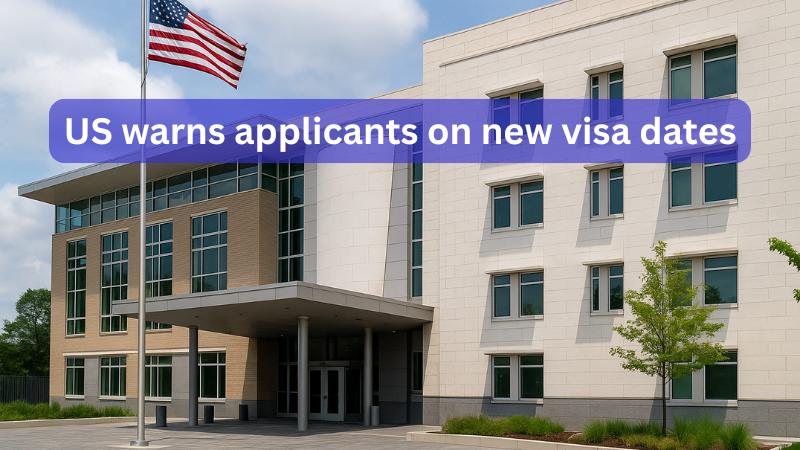
The United States embassy in India has issued a new advisory urging all visa applicants to strictly adhere to the updated appointment dates communicated through recent rescheduling emails. The mission clarified that individuals who arrive on their previously scheduled dates will not be granted entry into any embassy or consulate facility. The reminder follows a series of appointment modifications across multiple visa categories prompted by internal adjustments to scheduling systems, and aims
US embassy in India issues fresh advisory after visa appointments rescheduled
The United States embassy in India has issued a new advisory urging all visa applicants to strictly adhere to the updated appointment dates communicated through recent rescheduling emails. The mission clarified that individuals who arrive on their previously scheduled dates will not be granted entry into any embassy or consulate facility. The reminder follows a series of appointment modifications across multiple visa categories prompted by internal adjustments to scheduling systems, and aims
IndiGo Cancels 1,000 Flights, Full Normalcy Expected Dec 10–15, Says CEO
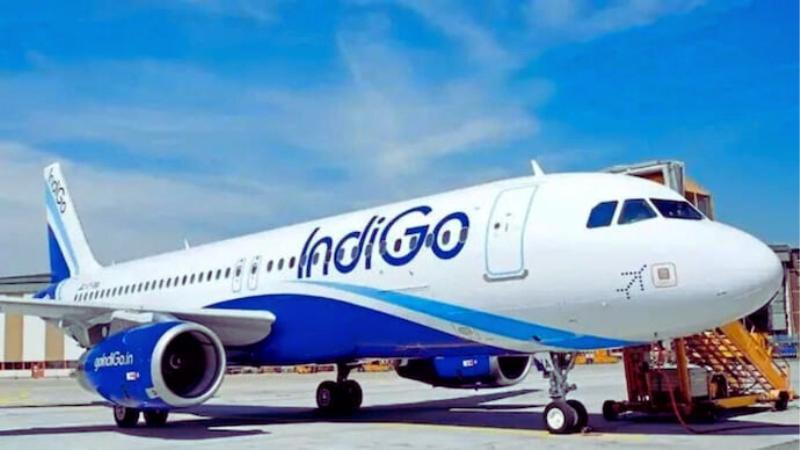
India’s largest airline IndiGo is facing one of its biggest operational disruptions in recent years as flight cancellations surged past 1,000 on December 5 alone, severely impacting passengers across the country. CEO Pieter Elbers issued his first public statement addressing the situation, confirming that the disruptions occurred due to the rebooting of IndiGo’s entire operational system. While the government had assured normalcy by Saturday and full stability by Monday, IndiGo’s CEO st
IndiGo Cancels 1,000 Flights, Full Normalcy Expected Dec 10–15, Says CEO
India’s largest airline IndiGo is facing one of its biggest operational disruptions in recent years as flight cancellations surged past 1,000 on December 5 alone, severely impacting passengers across the country. CEO Pieter Elbers issued his first public statement addressing the situation, confirming that the disruptions occurred due to the rebooting of IndiGo’s entire operational system. While the government had assured normalcy by Saturday and full stability by Monday, IndiGo’s CEO st
Flight delays persist nationwide as FAA limits traffic amid staffing strain
With the historic government shutdown approaching its resolution, flight delays continue to ripple across the United States as the Federal Aviation Administration (FAA) enforces a nationwide order aimed at reducing strain on air traffic controllers. The measure, while temporary, has led to extended flight times, increased rerouting, and longer wait periods for passengers and pilots alike. For the fifth consecutive day, air traffic operations have slowed as the FAA manages reduced st
Flight delays persist nationwide as FAA limits traffic amid staffing strain
With the historic government shutdown approaching its resolution, flight delays continue to ripple across the United States as the Federal Aviation Administration (FAA) enforces a nationwide order aimed at reducing strain on air traffic controllers. The measure, while temporary, has led to extended flight times, increased rerouting, and longer wait periods for passengers and pilots alike. For the fifth consecutive day, air traffic operations have slowed as the FAA manages reduced st
North Jersey Coast Line Suspended After Downed Tree Near Woodbridge
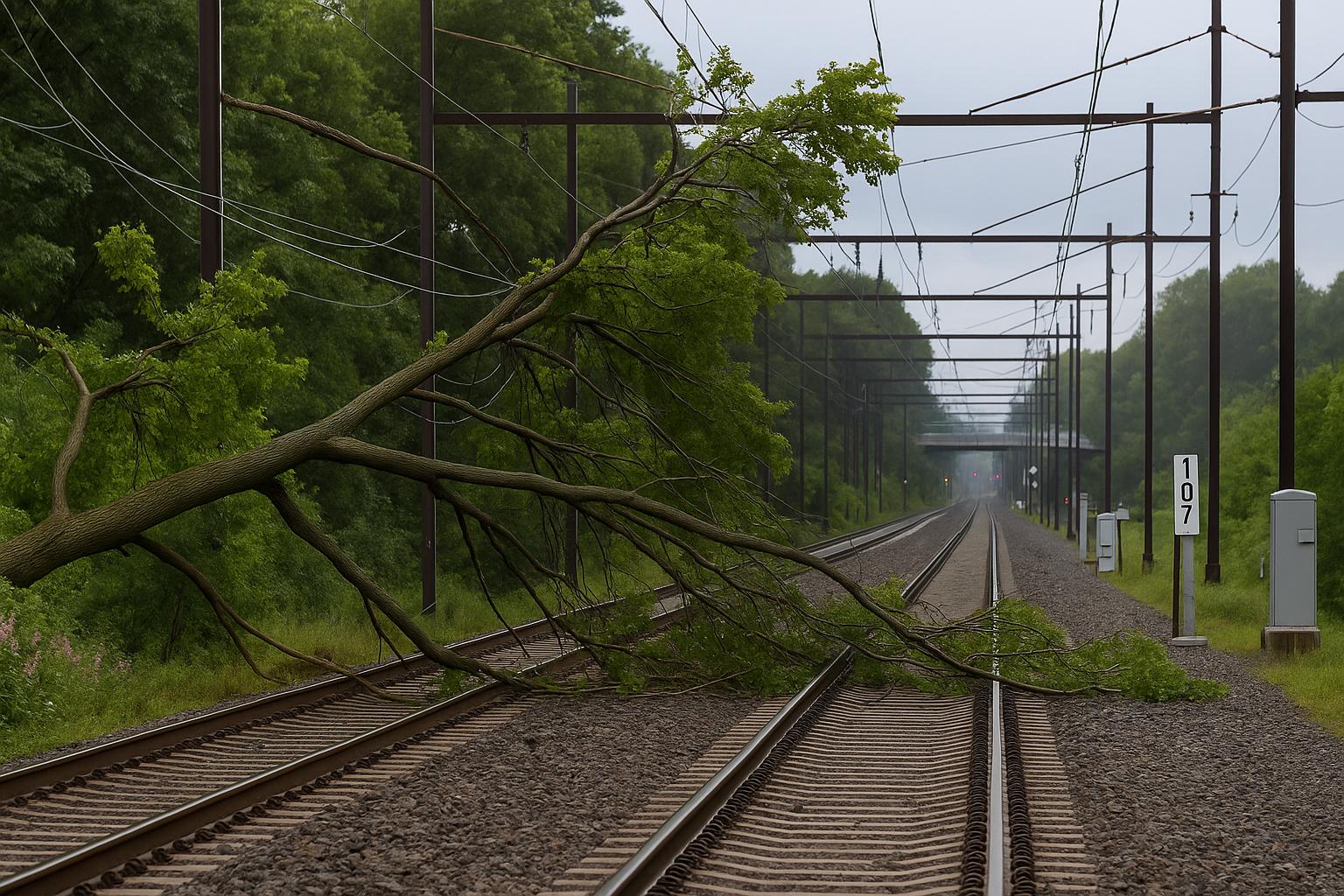
Train service on the North Jersey Coast Line came to a complete halt on Thursday morning after a large tree fell onto overhead electrical wires near Woodbridge, leading to a suspension of operations in both directions. The incident affected all trains traveling between New York Penn Station and Long Branch, stranding hundreds of commuters during the peak morning rush and forcing them to seek alternate ways to reach their destinations. According to transit officials, crews were immediately dispat
North Jersey Coast Line Suspended After Downed Tree Near Woodbridge
Train service on the North Jersey Coast Line came to a complete halt on Thursday morning after a large tree fell onto overhead electrical wires near Woodbridge, leading to a suspension of operations in both directions. The incident affected all trains traveling between New York Penn Station and Long Branch, stranding hundreds of commuters during the peak morning rush and forcing them to seek alternate ways to reach their destinations. According to transit officials, crews were immediately dispat
O’Hare Airport breaks ground on $1.3B concourse expansion with 19 new gates
Chicago’s O’Hare International Airport has officially begun construction on a major new concourse project aimed at easing air traffic congestion, improving passenger experiences, and preparing for the city’s future travel needs. Groundbreaking on Concourse D, a $1.3 billion expansion project located just south of Terminal 1, took place this week following what officials described as the busiest June in the airport’s history. With summer
O’Hare Airport breaks ground on $1.3B concourse expansion with 19 new gates
Chicago’s O’Hare International Airport has officially begun construction on a major new concourse project aimed at easing air traffic congestion, improving passenger experiences, and preparing for the city’s future travel needs. Groundbreaking on Concourse D, a $1.3 billion expansion project located just south of Terminal 1, took place this week following what officials described as the busiest June in the airport’s history. With summer
Passengers May Soon Keep Shoes On During Airport Security Screenings Nationwide
A nearly two-decade-old Transportation Security Administration policy requiring passengers to remove their shoes during airport screenings may soon become a thing of the past. According to senior officials, the TSA is in the early stages of phasing out the mandatory shoe removal rule for travelers going through standard security checks at select airports across the United States. The updated security procedure marks a significant shift in post-9/11 travel protocols that have lo
Passengers May Soon Keep Shoes On During Airport Security Screenings Nationwide
A nearly two-decade-old Transportation Security Administration policy requiring passengers to remove their shoes during airport screenings may soon become a thing of the past. According to senior officials, the TSA is in the early stages of phasing out the mandatory shoe removal rule for travelers going through standard security checks at select airports across the United States. The updated security procedure marks a significant shift in post-9/11 travel protocols that have lo