#unpeacekeeping
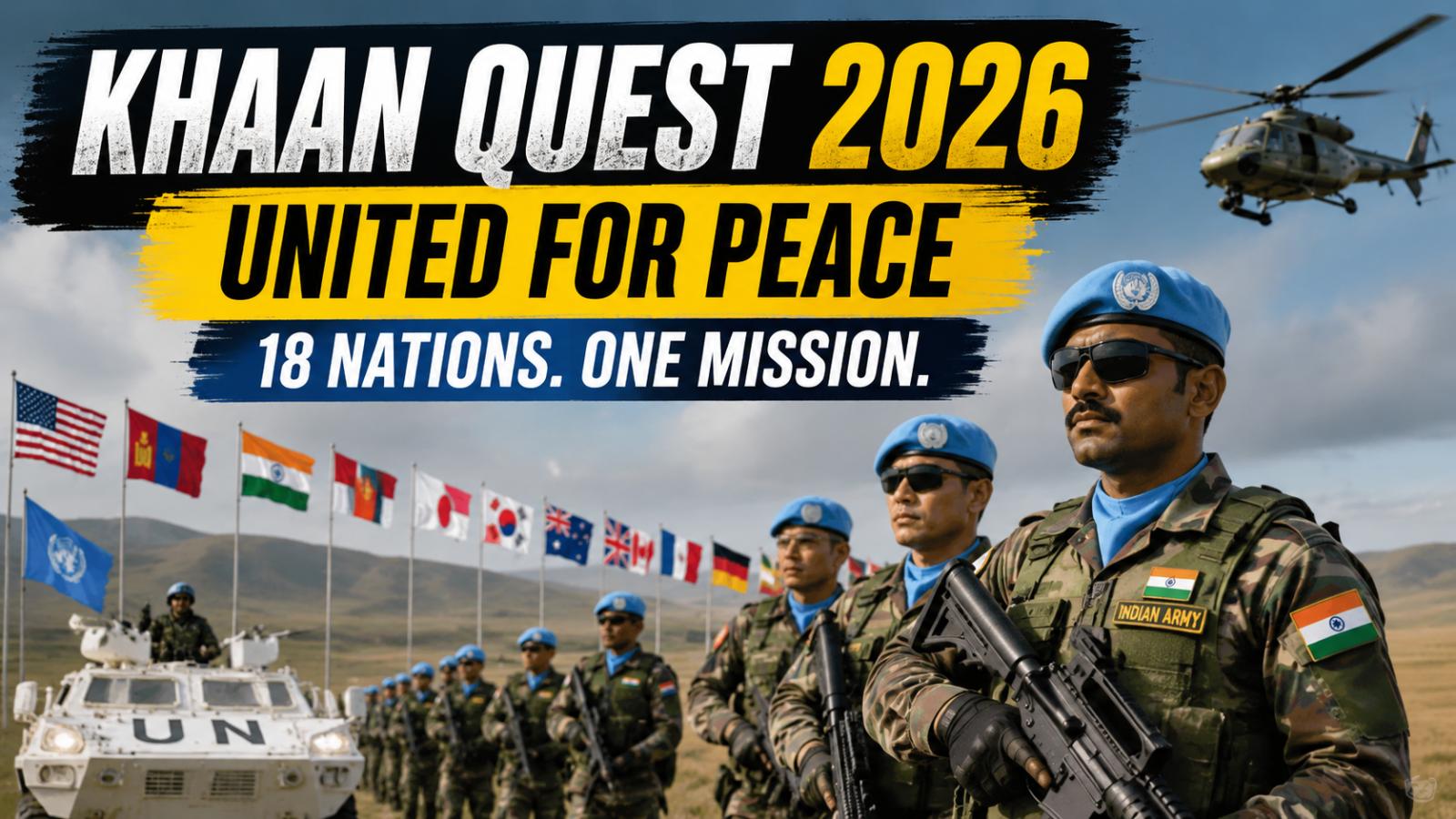
Khaan Quest 2026 brings 18 nations to Mongolia drill
Khaan Quest 2026 has officially begun at the Five Hills Training Area near Ulaanbaatar, marking one of the largest annual UN peacekeeping training exercises in the region. The drill brings together troops from 18 nations, with a focus on improving coordination in complex peace support environments. More than 1,000 personnel are taking part in structured field training designed to replicate real-world mission conditions under United Nations mandates. India strengthens peacekeeping engagement through participation The Indian Army has deployed a 40-member contingent for the exercise, including personnel from a battalion of the JAT Regiment along with supporting arms. Their participation reflects India’s continued operational commitment to global peacekeeping frameworks. Indian troops are actively engaged in tactical drills such as area domination, checkpoint operations, search procedures, and controlled movement scenarios that simulate volatile environments. Training designed for real-world mission readiness The exercise is structured around practical peacekeeping scenarios where multinational forces must operate under unified command conditions. Activities include convoy protection, casualty evacuation drills, and humanitarian response simulations. A strong emphasis is placed on interoperability, ensuring that forces from different countries can communicate and operate seamlessly during international deployments. Women, Peace and Security module gains importance A dedicated training segment on Women, Peace and Security is a key feature of this year’s exercise. It focuses on improving gender awareness in operational settings, strengthening civilian protection measures, and encouraging greater participation of women in peacekeeping roles. The module is designed to reflect evolving global expectations in modern conflict management. Exercise highlights growing global coordination Khaan Quest began as a bilateral initiative between Mongolia and the United States in the early 2000s and has since expanded into a multinational platform co-sponsored by US Indo-Pacific Command. Over the years, it has evolved into a key training ground for preparing forces for UN peace operations. The 2026 edition reinforces international cooperation, operational readiness, and shared security practices among participating nations. Strategic relevance of Khaan Quest 2026 The exercise serves as more than just a training event—it acts as a platform for military diplomacy and operational alignment among partner countries. By working together in simulated peace missions, participating forces strengthen trust, improve tactical compatibility, and enhance readiness for future UN deployments in conflict and post-conflict zones.
Khaan Quest 2026 brings 18 nations to Mongolia drill
Khaan Quest 2026 has officially begun at the Five Hills Training Area near Ulaanbaatar, marking one of the largest annual UN peacekeeping training exercises in the region. The drill brings together troops from 18 nations, with a focus on improving coordination in complex peace support environments. More than 1,000 personnel are taking part in structured field training designed to replicate real-world mission conditions under United Nations mandates. India strengthens peacekeeping engagement through participation The Indian Army has deployed a 40-member contingent for the exercise, including personnel from a battalion of the JAT Regiment along with supporting arms. Their participation reflects India’s continued operational commitment to global peacekeeping frameworks. Indian troops are actively engaged in tactical drills such as area domination, checkpoint operations, search procedures, and controlled movement scenarios that simulate volatile environments. Training designed for real-world mission readiness The exercise is structured around practical peacekeeping scenarios where multinational forces must operate under unified command conditions. Activities include convoy protection, casualty evacuation drills, and humanitarian response simulations. A strong emphasis is placed on interoperability, ensuring that forces from different countries can communicate and operate seamlessly during international deployments. Women, Peace and Security module gains importance A dedicated training segment on Women, Peace and Security is a key feature of this year’s exercise. It focuses on improving gender awareness in operational settings, strengthening civilian protection measures, and encouraging greater participation of women in peacekeeping roles. The module is designed to reflect evolving global expectations in modern conflict management. Exercise highlights growing global coordination Khaan Quest began as a bilateral initiative between Mongolia and the United States in the early 2000s and has since expanded into a multinational platform co-sponsored by US Indo-Pacific Command. Over the years, it has evolved into a key training ground for preparing forces for UN peace operations. The 2026 edition reinforces international cooperation, operational readiness, and shared security practices among participating nations. Strategic relevance of Khaan Quest 2026 The exercise serves as more than just a training event—it acts as a platform for military diplomacy and operational alignment among partner countries. By working together in simulated peace missions, participating forces strengthen trust, improve tactical compatibility, and enhance readiness for future UN deployments in conflict and post-conflict zones.
No Iran toll plan for Indian ships, India says amid shipping concerns
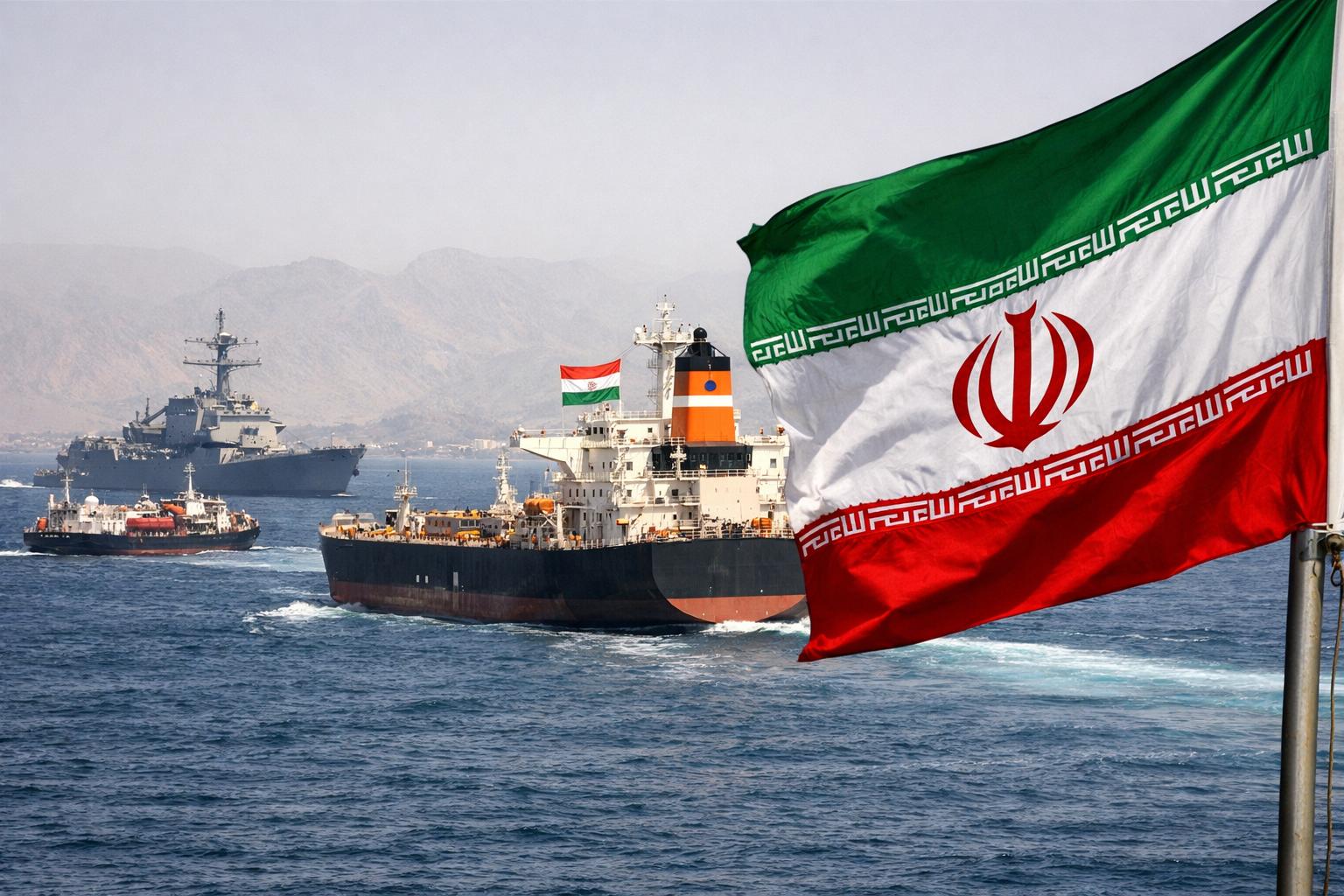
India’s government on Thursday, April 2, 2026 (IST), said there have been no discussions with Iran regarding the imposition of tolls on Indian ships transiting the Strait of Hormuz, dismissing recent reports circulating amid heightened tensions in West Asia. Speaking at a media briefing in New Delhi, Ministry of External Affairs spokesperson Randhir Jaiswal stated that no such proposal has been discussed between the two countries, countering speculation that had raised concerns over shipping c
No Iran toll plan for Indian ships, India says amid shipping concerns
India’s government on Thursday, April 2, 2026 (IST), said there have been no discussions with Iran regarding the imposition of tolls on Indian ships transiting the Strait of Hormuz, dismissing recent reports circulating amid heightened tensions in West Asia. Speaking at a media briefing in New Delhi, Ministry of External Affairs spokesperson Randhir Jaiswal stated that no such proposal has been discussed between the two countries, countering speculation that had raised concerns over shipping c
Indian Army joins US troops for Yudh Abhyas 2025 in Alaska
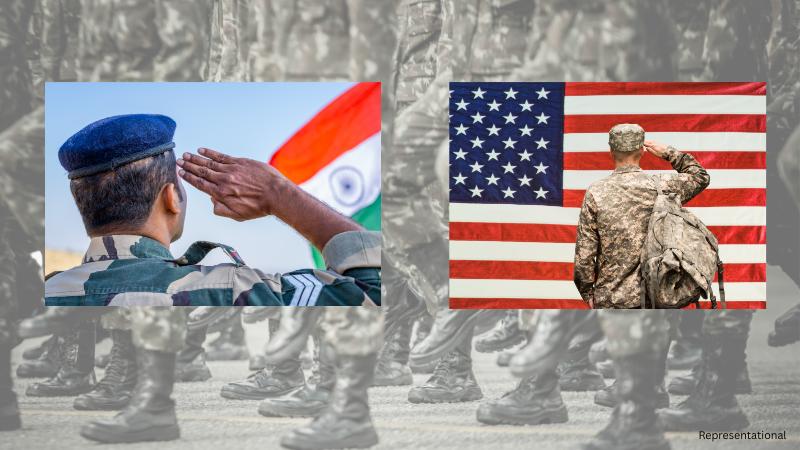
The 21st edition of Exercise Yudh Abhyas, the annual joint military drill between the Indian Army and the United States Army, commenced on September 1 at Fort Wainwright in Alaska. The two-week exercise will run until September 14, bringing together soldiers from both nations to sharpen interoperability, strengthen defence cooperation, and enhance preparedness in multi-domain operations. An Indian Army contingent, drawn from the Madras Regiment, arrived in Alaska to join American tr
Indian Army joins US troops for Yudh Abhyas 2025 in Alaska
The 21st edition of Exercise Yudh Abhyas, the annual joint military drill between the Indian Army and the United States Army, commenced on September 1 at Fort Wainwright in Alaska. The two-week exercise will run until September 14, bringing together soldiers from both nations to sharpen interoperability, strengthen defence cooperation, and enhance preparedness in multi-domain operations. An Indian Army contingent, drawn from the Madras Regiment, arrived in Alaska to join American tr