





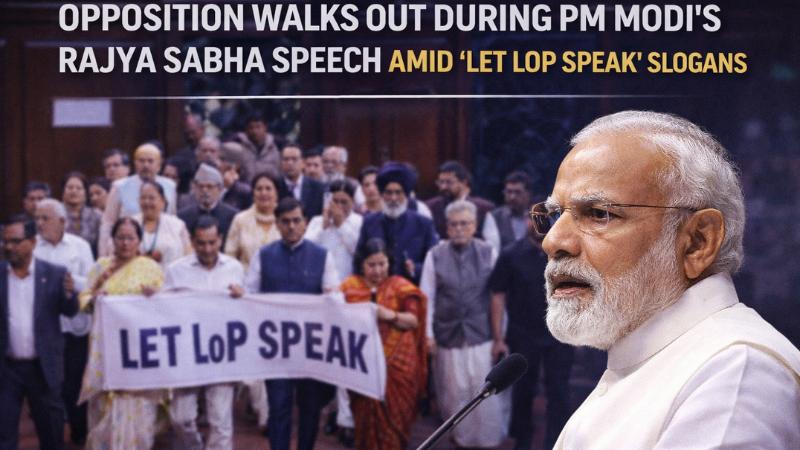
Opposition Walks Out During PM Modi’s Rajya Sabha Speech Amid Let LoP Speak Slogans
The ongoing standoff between the government and the Opposition took a new turn as the Congress-led Opposition staged a walkout from the Rajya Sabha on Thursday. The protest erupted as Prime Minister Narendra Modi continued his speech on the Motion of Thanks to the President’s address. The Opposition, led by Mallikarjun Kharge, demanded that Leader of the Opposition (LoP) in the Lok Sabha, Rahul Gandhi, be allowed to speak, especially after the Lok Sabha Speaker’s refusal to let Gandhi quote
Opposition Walks Out During PM Modi’s Rajya Sabha Speech Amid Let LoP Speak Slogans
The ongoing standoff between the government and the Opposition took a new turn as the Congress-led Opposition staged a walkout from the Rajya Sabha on Thursday. The protest erupted as Prime Minister Narendra Modi continued his speech on the Motion of Thanks to the President’s address. The Opposition, led by Mallikarjun Kharge, demanded that Leader of the Opposition (LoP) in the Lok Sabha, Rahul Gandhi, be allowed to speak, especially after the Lok Sabha Speaker’s refusal to let Gandhi quote
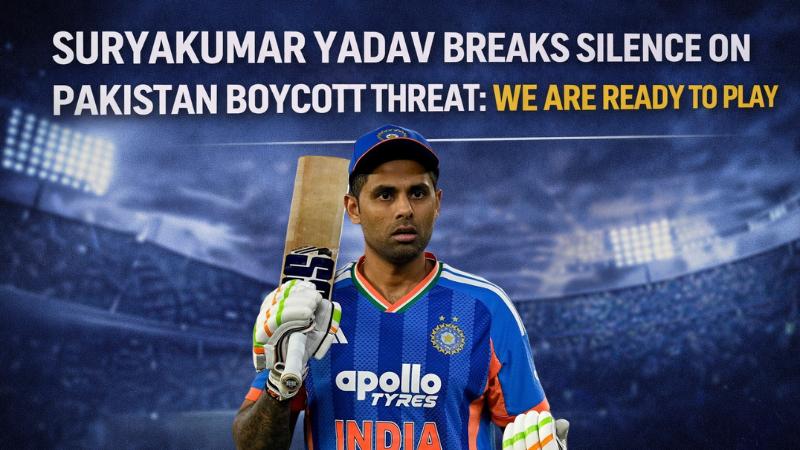
Suryakumar Yadav Breaks Silence on Pakistan Boycott Threat, Ready to Play in T20 World Cup
Ahead of the 2026 T20 World Cup, India's T20I captain Suryakumar Yadav addressed concerns over Pakistan's threat to boycott their scheduled group-stage clash. Yadav firmly stated that India's preparations for the match remain unchanged, regardless of Pakistan's stance on participation. During a captain's meet ahead of the tournament, Suryakumar emphasized that India's focus remains on the game. "Our mindset is very clear. We haven’t said no to playing them; they are the ones who??
Suryakumar Yadav Breaks Silence on Pakistan Boycott Threat, Ready to Play in T20 World Cup
Ahead of the 2026 T20 World Cup, India's T20I captain Suryakumar Yadav addressed concerns over Pakistan's threat to boycott their scheduled group-stage clash. Yadav firmly stated that India's preparations for the match remain unchanged, regardless of Pakistan's stance on participation. During a captain's meet ahead of the tournament, Suryakumar emphasized that India's focus remains on the game. "Our mindset is very clear. We haven’t said no to playing them; they are the ones who??
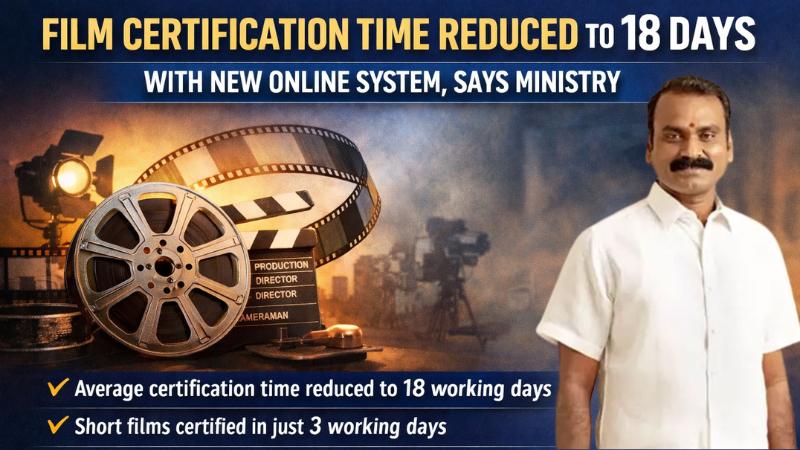
Film Certification Time Reduced to 18 Days with New Online System, Says Ministry
The Ministry of Information and Broadcasting announced that the average time taken for the certification of feature films has been reduced to just 18 working days, thanks to the introduction of the Online Certificate System. Minister L Murugan shared this information in response to a question raised by Priyanka Gandhi Vadra in the Lok Sabha. This reduction marks a significant improvement in the efficiency of the film certification process, which was previously subject to a 48-day prescribed t
Film Certification Time Reduced to 18 Days with New Online System, Says Ministry
The Ministry of Information and Broadcasting announced that the average time taken for the certification of feature films has been reduced to just 18 working days, thanks to the introduction of the Online Certificate System. Minister L Murugan shared this information in response to a question raised by Priyanka Gandhi Vadra in the Lok Sabha. This reduction marks a significant improvement in the efficiency of the film certification process, which was previously subject to a 48-day prescribed t

India–US trade deal: Doval warns Washington against pressure tactics
India’s national security advisor Ajit Doval conveyed a firm message to senior United States officials months before the announcement of a new trade agreement between New Delhi and Washington, underscoring that India would not yield to public pressure or coercive tactics during negotiations. According to officials familiar with the discussions, Doval made it clear during meetings in Washington that India was prepared to wait out the current US administration if necessary rather than accept terms it viewed as unfavorable. The visit took place in early September, shortly after Prime Minister Narendra Modi held talks with Russian President Vladimir Putin and Chinese President Xi Jinping, signaling an active diplomatic phase for New Delhi across major global powers. During his interaction with US Secretary of State Marco Rubio, Doval reportedly emphasized that while India remained committed to reviving trade talks, it expected a more measured tone from Washington and less public criticism that could complicate bilateral ties. Officials said Doval sought to put recent acrimony behind the two countries and expressed interest in restarting substantive discussions on a trade deal that has been under negotiation for several years. At the same time, he warned that India would not be “bullied” by President Donald Trump or senior members of his team, stressing that any agreement must respect India’s economic interests and strategic autonomy. The remarks came months before Trump publicly announced progress on a trade deal with India following a phone call with Modi on February 2. That announcement marked a fresh attempt by both sides to rebuild momentum in economic cooperation after a period marked by tariff disputes and disagreements over market access. Diplomatic observers note that India’s approach reflects a broader foreign policy strategy that balances engagement with firmness. By signaling willingness to continue talks while resisting overt pressure, New Delhi appears intent on safeguarding domestic priorities while preserving its long-term partnership with Washington. The United States remains one of India’s largest trading partners, and both governments view closer economic integration as central to strengthening strategic ties in the Indo-Pacific. The Washington meeting is seen as part of quiet backchannel diplomacy aimed at lowering tensions and creating space for practical negotiations. With both sides now indicating readiness to resume dialogue, officials say the focus will be on rebuilding trust and advancing a mutually beneficial trade framework that supports growth and stability in the relationship.
India–US trade deal: Doval warns Washington against pressure tactics
India’s national security advisor Ajit Doval conveyed a firm message to senior United States officials months before the announcement of a new trade agreement between New Delhi and Washington, underscoring that India would not yield to public pressure or coercive tactics during negotiations. According to officials familiar with the discussions, Doval made it clear during meetings in Washington that India was prepared to wait out the current US administration if necessary rather than accept terms it viewed as unfavorable. The visit took place in early September, shortly after Prime Minister Narendra Modi held talks with Russian President Vladimir Putin and Chinese President Xi Jinping, signaling an active diplomatic phase for New Delhi across major global powers. During his interaction with US Secretary of State Marco Rubio, Doval reportedly emphasized that while India remained committed to reviving trade talks, it expected a more measured tone from Washington and less public criticism that could complicate bilateral ties. Officials said Doval sought to put recent acrimony behind the two countries and expressed interest in restarting substantive discussions on a trade deal that has been under negotiation for several years. At the same time, he warned that India would not be “bullied” by President Donald Trump or senior members of his team, stressing that any agreement must respect India’s economic interests and strategic autonomy. The remarks came months before Trump publicly announced progress on a trade deal with India following a phone call with Modi on February 2. That announcement marked a fresh attempt by both sides to rebuild momentum in economic cooperation after a period marked by tariff disputes and disagreements over market access. Diplomatic observers note that India’s approach reflects a broader foreign policy strategy that balances engagement with firmness. By signaling willingness to continue talks while resisting overt pressure, New Delhi appears intent on safeguarding domestic priorities while preserving its long-term partnership with Washington. The United States remains one of India’s largest trading partners, and both governments view closer economic integration as central to strengthening strategic ties in the Indo-Pacific. The Washington meeting is seen as part of quiet backchannel diplomacy aimed at lowering tensions and creating space for practical negotiations. With both sides now indicating readiness to resume dialogue, officials say the focus will be on rebuilding trust and advancing a mutually beneficial trade framework that supports growth and stability in the relationship.
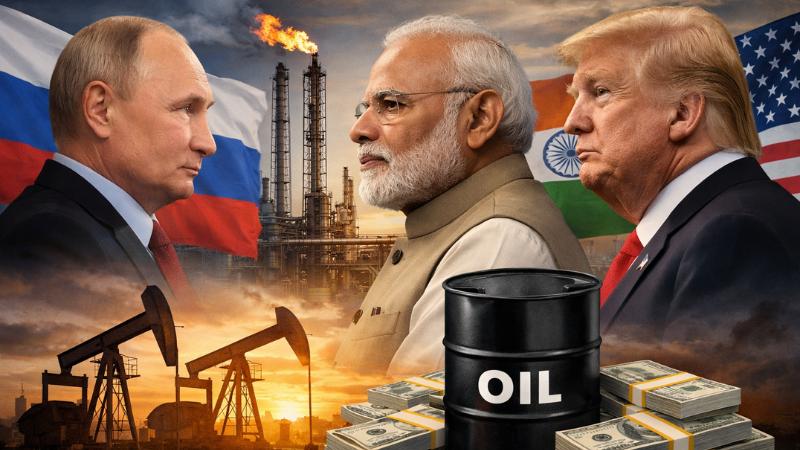
Russia questions India’s pledge to stop Russian crude after U.S. tariff agreement
Russia has said it has not received any official confirmation from India that the country plans to halt purchases of Russian oil, a day after U.S. President Donald Trump claimed New Delhi agreed to scale back those imports as part of a new trade agreement with Washington. Kremlin spokesperson Dmitry Peskov stated that Moscow had yet to hear directly from Indian authorities regarding any change in energy flows. While acknowledging the evolving relationship between the United States a
Russia questions India’s pledge to stop Russian crude after U.S. tariff agreement
Russia has said it has not received any official confirmation from India that the country plans to halt purchases of Russian oil, a day after U.S. President Donald Trump claimed New Delhi agreed to scale back those imports as part of a new trade agreement with Washington. Kremlin spokesperson Dmitry Peskov stated that Moscow had yet to hear directly from Indian authorities regarding any change in energy flows. While acknowledging the evolving relationship between the United States a
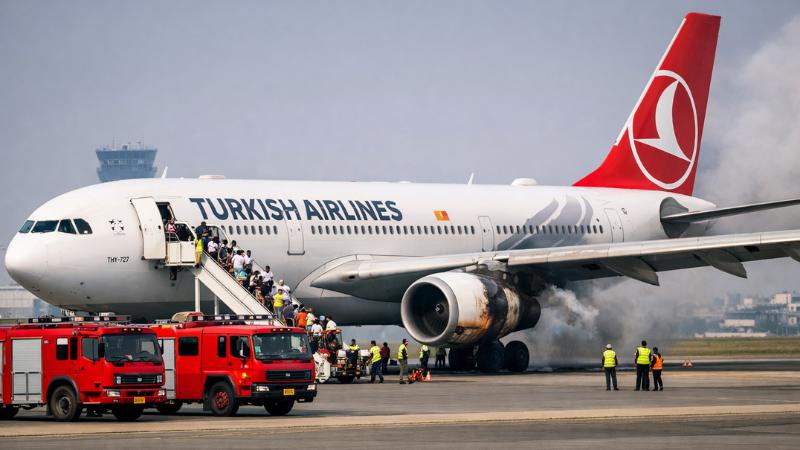
Turkish Airlines flight makes emergency diversion after engine fire near Kathmandu
A Turkish Airlines passenger aircraft carrying 236 people was forced to divert and make an emergency landing on Wednesday afternoon after its right engine caught fire shortly after takeoff from Tribhuvan International Airport in Kathmandu, officials confirmed. The incident triggered a brief operational halt at the airport and prompted swift coordination between air traffic control and emergency services to ensure the safety of everyone onboard. The wide-body Airbus A330-303, operati
Turkish Airlines flight makes emergency diversion after engine fire near Kathmandu
A Turkish Airlines passenger aircraft carrying 236 people was forced to divert and make an emergency landing on Wednesday afternoon after its right engine caught fire shortly after takeoff from Tribhuvan International Airport in Kathmandu, officials confirmed. The incident triggered a brief operational halt at the airport and prompted swift coordination between air traffic control and emergency services to ensure the safety of everyone onboard. The wide-body Airbus A330-303, operati
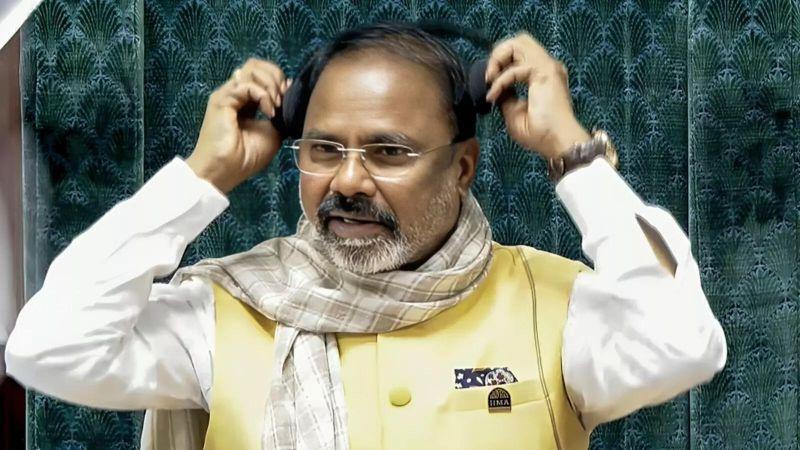
TDP MP Krishna Prasad Tenneti Goes Viral for Strong Stand in Parliament
The Telugu Desam Party once again found itself at the centre of national attention after one of its newly elected Members of Parliament delivered a commanding performance in the Lok Sabha. Krishna Prasad Tenneti, a first-time MP from Bapatla, went viral on social media after firmly handling a tense situation on the floor of Parliament. The incident highlighted the party’s long-standing tradition o
TDP MP Krishna Prasad Tenneti Goes Viral for Strong Stand in Parliament
The Telugu Desam Party once again found itself at the centre of national attention after one of its newly elected Members of Parliament delivered a commanding performance in the Lok Sabha. Krishna Prasad Tenneti, a first-time MP from Bapatla, went viral on social media after firmly handling a tense situation on the floor of Parliament. The incident highlighted the party’s long-standing tradition o
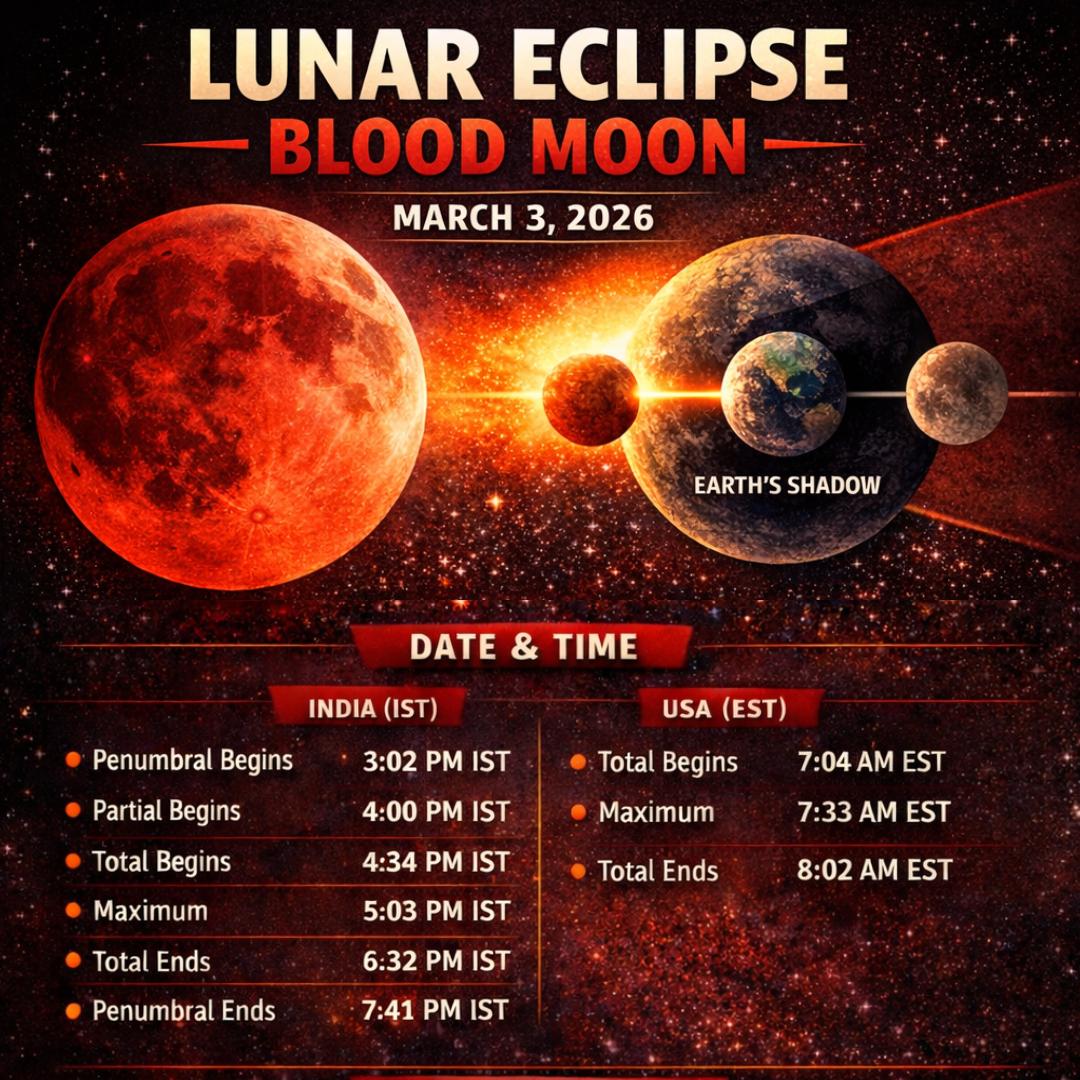
Lunar Blood Moon Eclipse 2026: Date, Time In India, USA & How To Watch
The March 3, 2026 Lunar Eclipse will be a Total Lunar Eclipse, often called a Blood Moon because the Moon turns deep red during totality. This happens when the Earth moves directly between the Sun and the Moon, casting its shadow completely over the Moon. According to NASA, the red color appears because Earth’s atmosphere filters sunligh
Lunar Blood Moon Eclipse 2026: Date, Time In India, USA & How To Watch
The March 3, 2026 Lunar Eclipse will be a Total Lunar Eclipse, often called a Blood Moon because the Moon turns deep red during totality. This happens when the Earth moves directly between the Sun and the Moon, casting its shadow completely over the Moon. According to NASA, the red color appears because Earth’s atmosphere filters sunligh
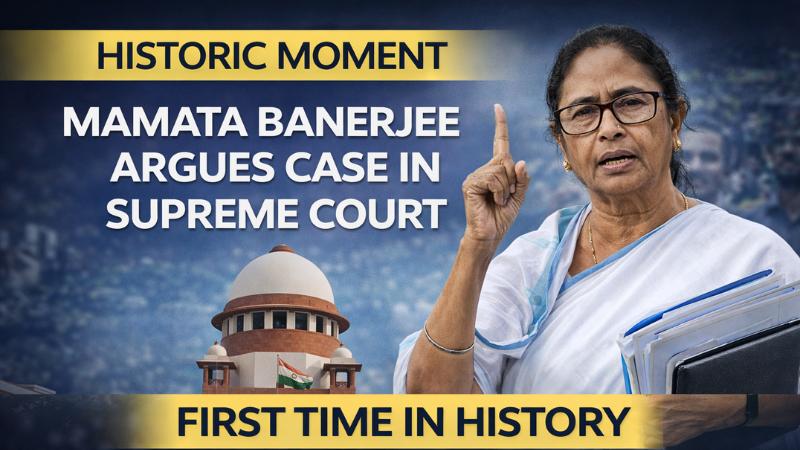
Historic Moment: Mamata Banerjee Argues Case in Supreme Court
For the first time in Indian history, a sitting Chief Minister will argue a case in the Supreme Court. Mamata Banerjee, the Chief Minister of West Bengal, is set to make history by appearing in person to argue a case before the country’s highest court. The case involves the Special Intensive Revision (SIR) of electoral rolls in West Bengal, a topic that has stirred significant political debate in the state. Mamata Banerjee’s appearance in the Supreme Court as a "party in person"
Historic Moment: Mamata Banerjee Argues Case in Supreme Court
For the first time in Indian history, a sitting Chief Minister will argue a case in the Supreme Court. Mamata Banerjee, the Chief Minister of West Bengal, is set to make history by appearing in person to argue a case before the country’s highest court. The case involves the Special Intensive Revision (SIR) of electoral rolls in West Bengal, a topic that has stirred significant political debate in the state. Mamata Banerjee’s appearance in the Supreme Court as a "party in person"
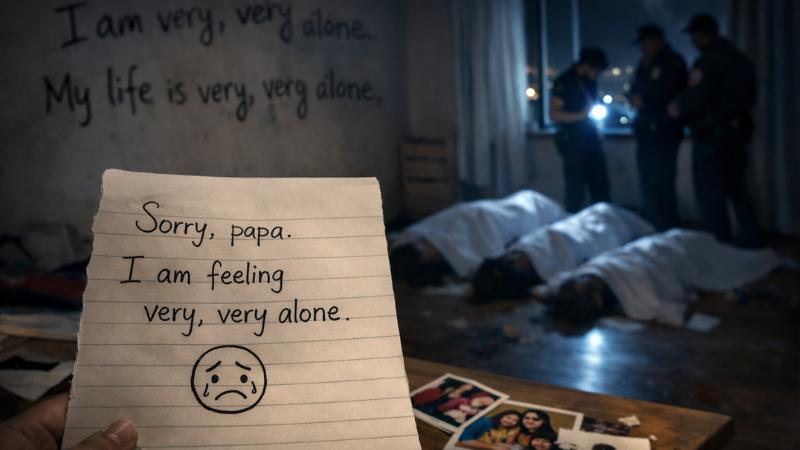
Tragic Deaths of Three Ghaziabad Sisters Linked to Korean Gaming App Addiction
The tragic deaths of three sisters in Ghaziabad, Uttar Pradesh, have raised serious concerns about the influence of online gaming on young minds. The sisters, aged 12, 14, and 16, tragically ended their lives by jumping from the ninth floor of their residential building in the early hours of February 4, 2026. The girls were reportedly addicted to a task-based Korean gaming app, which assigned them a series of challenges to complete. According to their father, Chetan Kumar, he had no knowledge
Tragic Deaths of Three Ghaziabad Sisters Linked to Korean Gaming App Addiction
The tragic deaths of three sisters in Ghaziabad, Uttar Pradesh, have raised serious concerns about the influence of online gaming on young minds. The sisters, aged 12, 14, and 16, tragically ended their lives by jumping from the ninth floor of their residential building in the early hours of February 4, 2026. The girls were reportedly addicted to a task-based Korean gaming app, which assigned them a series of challenges to complete. According to their father, Chetan Kumar, he had no knowledge
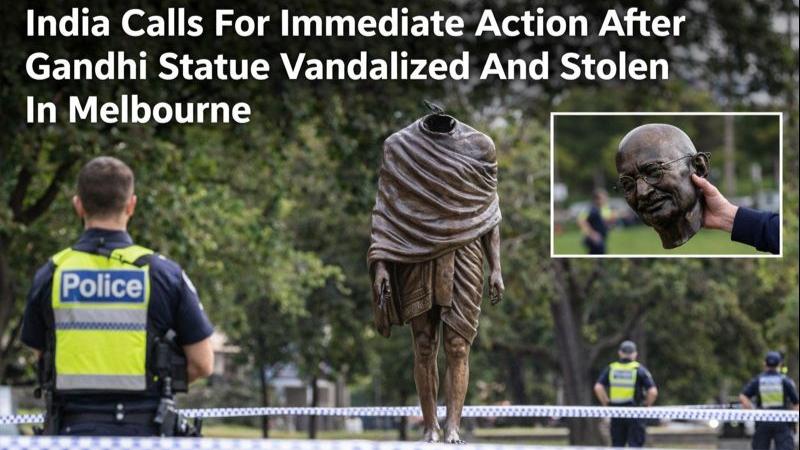
India Calls For Immediate Action After Gandhi Statue Vandalized And Stolen In Melbourne
In a shocking incident, a statue of Mahatma Gandhi was vandalized and stolen in Melbourne, sparking outrage both in India and abroad. The incident has drawn immediate attention from the Indian government, who has called for urgent action from the Australian authorities. The statue, which stood as a symbol of peace and non-violence, was reportedly cut and taken by unknown individuals in an act of desecration. The Indian government swiftly condemned the incident and expressed deep con
India Calls For Immediate Action After Gandhi Statue Vandalized And Stolen In Melbourne
In a shocking incident, a statue of Mahatma Gandhi was vandalized and stolen in Melbourne, sparking outrage both in India and abroad. The incident has drawn immediate attention from the Indian government, who has called for urgent action from the Australian authorities. The statue, which stood as a symbol of peace and non-violence, was reportedly cut and taken by unknown individuals in an act of desecration. The Indian government swiftly condemned the incident and expressed deep con
Lok Sabha Disruptions Over Rahul Gandhi's Memoir Reference: 8 MPs Suspended Amid Tensions
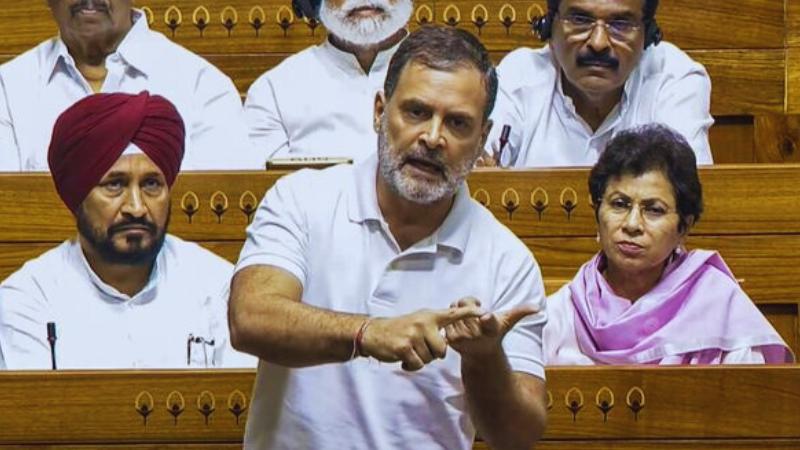
The Lok Sabha session on Tuesday was thrown into chaos after Rahul Gandhi, Leader of the Opposition, attempted to refer to an article based on former Army chief M M Naravane’s unpublished memoir. The reference ignited a fierce confrontation between the opposition Congress and the ruling BJP, which ultimately led to the adjournment of the proceedings. The tension arose when Gandhi, speaking on the Motion of Thanks to the President’s address, insisted on citing an article he claimed was lin
Lok Sabha Disruptions Over Rahul Gandhi's Memoir Reference: 8 MPs Suspended Amid Tensions
The Lok Sabha session on Tuesday was thrown into chaos after Rahul Gandhi, Leader of the Opposition, attempted to refer to an article based on former Army chief M M Naravane’s unpublished memoir. The reference ignited a fierce confrontation between the opposition Congress and the ruling BJP, which ultimately led to the adjournment of the proceedings. The tension arose when Gandhi, speaking on the Motion of Thanks to the President’s address, insisted on citing an article he claimed was lin
ISRO rules out sabotage amid repeated strategic mission failures
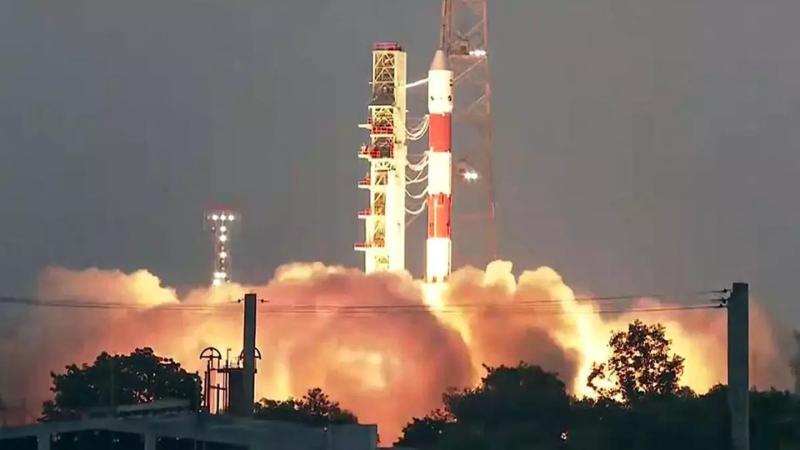
India’s Space Minister Dr. Jitendra Singh has said that there is no indication of sabotage behind a series of recent failures involving the Indian Space Research Organisation, even as repeated setbacks to strategic missions have triggered concern within policy and defence circles. The remarks come after three out of six ISRO missions launched from Indian soil over the past year failed, all of them linked to national security and strategic objectives. Speaking at a press briefing in New Delhi, Dr. Singh said that no report pointing to sabotage has been received so far. He clarified that while he is responsible for overseeing space launches, investigations related to sabotage or hostile interference fall under the purview of other ministries such as defence, home affairs, or external affairs. The minister added that, as of now, there is no information to suggest external interference in the recent launch failures. The comments follow two rare back-to-back mid-flight failures of ISRO’s Polar Satellite Launch Vehicle, a rocket that has long been considered the agency’s most dependable platform. Over a 33-year operational history, the PSLV had suffered only four major failures prior to 2025. The failures in May 2025 and January 2026, both occurring during the third stage of flight, have therefore raised serious questions about reliability and corrective action. Dr. Singh addressed public speculation that ISRO may have failed to rectify earlier faults, stating that the two PSLV failures had different technical causes despite occurring at the same stage. He expressed confidence in ISRO’s internal failure appraisal process, describing it as thorough and analytical. Traditionally, ISRO has publicly released summaries of mission failure analyses, contributing to its image as a transparent space agency. However, in recent cases, that practice has not been consistently followed. The failure analysis report of the PSLV-C61 mission in May 2025 was submitted to the Prime Minister’s Office but not released publicly. Similarly, no detailed technical update has been shared regarding the PSLV-C62 failure in January 2026 beyond ministerial statements. January 2026 – PSLV-C62 / EOS-N1 The PSLV-C62 mission on January 12, 2026, was ISRO’s first launch of the year and marked the PSLV’s return to flight after a setback in May 2025. The primary payload was EOS-N1, also known as Anvesha, a hyperspectral Earth observation satellite developed by the Defence Research and Development Organisation. The satellite was designed to operate at an altitude of 511 kilometres and provide advanced material identification capabilities by analysing reflected light across multiple wavelengths. The mission also carried 15 co-passenger satellites. A mid-flight failure during the third stage of the PSLV resulted in the loss of the rocket and all onboard satellites, ending the mission prematurely. May 2025 – PSLV-C61 / EOS-09 On May 18, 2025, ISRO’s PSLV-C61 mission failed approximately six minutes after liftoff. According to ISRO officials, performance was normal up to the second stage before an anomaly was observed during third-stage operation. The EOS-09 satellite, a radar imaging platform capable of all-weather, day-and-night surveillance, was lost along with the launch vehicle. Despite the strategic importance of the mission, ISRO did not release a public failure analysis, a departure from past practice. January 2025 – GSLV-F15 / NVS-02 On January 29, 2025, ISRO launched the NVS-02 navigation satellite aboard the GSLV-F15 rocket during the 100th launch from the Sriharikota spaceport. While the rocket successfully placed the satellite into its initial orbit, the satellite failed to fire its onboard engines, preventing it from reaching its designated operational orbit. The failure rendered NVS-02 unusable for its intended role within India’s NAVIC regional navigation system, which serves both civilian agencies and the armed forces. August 2021 – GSLV-F10 / EOS-03 In August 2021, ISRO launched the EOS-03 satellite, previously known as GISAT-1, aboard the GSLV-F10 rocket. Designed for near real-time Earth observation and disaster monitoring, the mission failed due to a malfunction in the cryogenic upper stage. ISRO later identified a valve leak in the liquid hydrogen tank as the cause of the failure. August 2017 – PSLV-C39 / IRNSS-1H The PSLV-C39 mission in August 2017 failed after the satellite remained trapped inside the rocket’s heat shield due to a separation failure. Although all other flight events proceeded as planned, the navigation satellite could not be deployed, resulting in the loss of a critical component of the Indian Regional Navigation Satellite System. The cumulative impact of these strategic mission failures over the past nine years is significant. Financial estimates suggest losses amounting to several hundred million dollars, excluding the cost of rebuilding and relaunching replacement missions. Beyond monetary loss, delays in deploying indigenous navigation and surveillance satellites force greater reliance on foreign systems, affecting strategic autonomy. ISRO has indicated that each failure was caused by a different subsystem or component, reinforcing the reality that spaceflight is a zero-error domain where even minor defects can have catastrophic consequences. While each failure contributes valuable lessons, the repeated setbacks have slowed the deployment of key space-based capabilities developed by Indian scientists, placing renewed focus on reliability, transparency, and long-term mission planning.
ISRO rules out sabotage amid repeated strategic mission failures
India’s Space Minister Dr. Jitendra Singh has said that there is no indication of sabotage behind a series of recent failures involving the Indian Space Research Organisation, even as repeated setbacks to strategic missions have triggered concern within policy and defence circles. The remarks come after three out of six ISRO missions launched from Indian soil over the past year failed, all of them linked to national security and strategic objectives. Speaking at a press briefing in New Delhi, Dr. Singh said that no report pointing to sabotage has been received so far. He clarified that while he is responsible for overseeing space launches, investigations related to sabotage or hostile interference fall under the purview of other ministries such as defence, home affairs, or external affairs. The minister added that, as of now, there is no information to suggest external interference in the recent launch failures. The comments follow two rare back-to-back mid-flight failures of ISRO’s Polar Satellite Launch Vehicle, a rocket that has long been considered the agency’s most dependable platform. Over a 33-year operational history, the PSLV had suffered only four major failures prior to 2025. The failures in May 2025 and January 2026, both occurring during the third stage of flight, have therefore raised serious questions about reliability and corrective action. Dr. Singh addressed public speculation that ISRO may have failed to rectify earlier faults, stating that the two PSLV failures had different technical causes despite occurring at the same stage. He expressed confidence in ISRO’s internal failure appraisal process, describing it as thorough and analytical. Traditionally, ISRO has publicly released summaries of mission failure analyses, contributing to its image as a transparent space agency. However, in recent cases, that practice has not been consistently followed. The failure analysis report of the PSLV-C61 mission in May 2025 was submitted to the Prime Minister’s Office but not released publicly. Similarly, no detailed technical update has been shared regarding the PSLV-C62 failure in January 2026 beyond ministerial statements. January 2026 – PSLV-C62 / EOS-N1 The PSLV-C62 mission on January 12, 2026, was ISRO’s first launch of the year and marked the PSLV’s return to flight after a setback in May 2025. The primary payload was EOS-N1, also known as Anvesha, a hyperspectral Earth observation satellite developed by the Defence Research and Development Organisation. The satellite was designed to operate at an altitude of 511 kilometres and provide advanced material identification capabilities by analysing reflected light across multiple wavelengths. The mission also carried 15 co-passenger satellites. A mid-flight failure during the third stage of the PSLV resulted in the loss of the rocket and all onboard satellites, ending the mission prematurely. May 2025 – PSLV-C61 / EOS-09 On May 18, 2025, ISRO’s PSLV-C61 mission failed approximately six minutes after liftoff. According to ISRO officials, performance was normal up to the second stage before an anomaly was observed during third-stage operation. The EOS-09 satellite, a radar imaging platform capable of all-weather, day-and-night surveillance, was lost along with the launch vehicle. Despite the strategic importance of the mission, ISRO did not release a public failure analysis, a departure from past practice. January 2025 – GSLV-F15 / NVS-02 On January 29, 2025, ISRO launched the NVS-02 navigation satellite aboard the GSLV-F15 rocket during the 100th launch from the Sriharikota spaceport. While the rocket successfully placed the satellite into its initial orbit, the satellite failed to fire its onboard engines, preventing it from reaching its designated operational orbit. The failure rendered NVS-02 unusable for its intended role within India’s NAVIC regional navigation system, which serves both civilian agencies and the armed forces. August 2021 – GSLV-F10 / EOS-03 In August 2021, ISRO launched the EOS-03 satellite, previously known as GISAT-1, aboard the GSLV-F10 rocket. Designed for near real-time Earth observation and disaster monitoring, the mission failed due to a malfunction in the cryogenic upper stage. ISRO later identified a valve leak in the liquid hydrogen tank as the cause of the failure. August 2017 – PSLV-C39 / IRNSS-1H The PSLV-C39 mission in August 2017 failed after the satellite remained trapped inside the rocket’s heat shield due to a separation failure. Although all other flight events proceeded as planned, the navigation satellite could not be deployed, resulting in the loss of a critical component of the Indian Regional Navigation Satellite System. The cumulative impact of these strategic mission failures over the past nine years is significant. Financial estimates suggest losses amounting to several hundred million dollars, excluding the cost of rebuilding and relaunching replacement missions. Beyond monetary loss, delays in deploying indigenous navigation and surveillance satellites force greater reliance on foreign systems, affecting strategic autonomy. ISRO has indicated that each failure was caused by a different subsystem or component, reinforcing the reality that spaceflight is a zero-error domain where even minor defects can have catastrophic consequences. While each failure contributes valuable lessons, the repeated setbacks have slowed the deployment of key space-based capabilities developed by Indian scientists, placing renewed focus on reliability, transparency, and long-term mission planning.
CEC Made Garbage Of Lies, Misbehaved With Us: Mamata Banerjee After SIR Meet
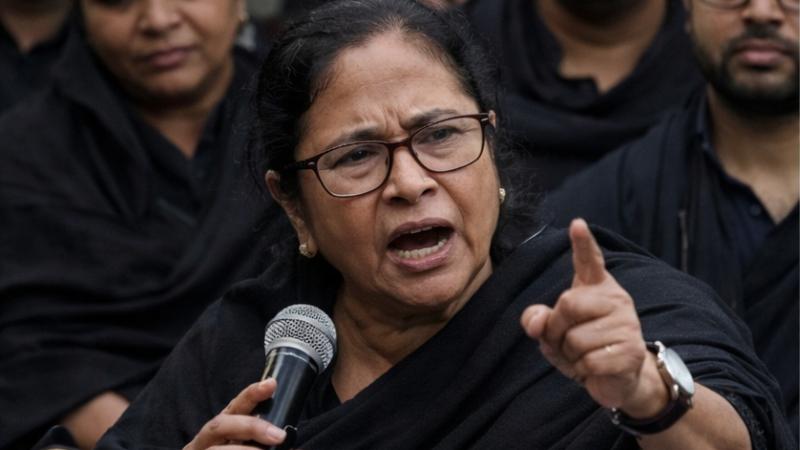
West Bengal Chief Minister Mamata Banerjee on Monday launched a fierce political and institutional attack on the Election Commission of India following a nearly 90-minute meeting with Chief Election Commissioner Gyanesh Kumar in New Delhi. Accompanied by senior Trinamool Congress leaders and families allegedly affected by the Special Intensive Revision process, Banerjee accused the poll panel of deleting voters’ names arbitrarily and functioning as an extension of the BJP. Emerging from the
CEC Made Garbage Of Lies, Misbehaved With Us: Mamata Banerjee After SIR Meet
West Bengal Chief Minister Mamata Banerjee on Monday launched a fierce political and institutional attack on the Election Commission of India following a nearly 90-minute meeting with Chief Election Commissioner Gyanesh Kumar in New Delhi. Accompanied by senior Trinamool Congress leaders and families allegedly affected by the Special Intensive Revision process, Banerjee accused the poll panel of deleting voters’ names arbitrarily and functioning as an extension of the BJP. Emerging from the
Union Budget 2026 Impact: What Becomes Cheaper and Costlier for Indians
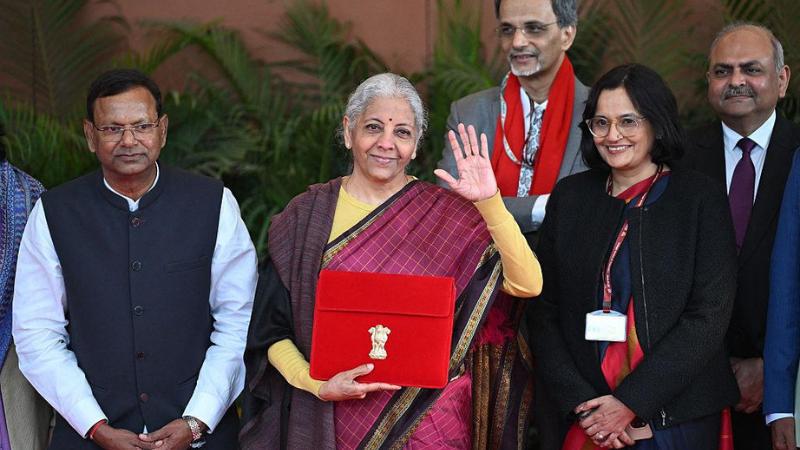
Union Budget 2026 was presented by Finance Minister Nirmala Sitharaman, marking her ninth consecutive budget and outlining the government’s commitment to inclusive growth. The budget is guided by three key kartavyas aimed at accelerating economic development while supporting the poor, underprivileged, and disadvantaged sections of society. While income tax payers were hoping for rebates or changes in standard deduction, the government chose to focus on indirect tax relief, healthcare afford
Union Budget 2026 Impact: What Becomes Cheaper and Costlier for Indians
Union Budget 2026 was presented by Finance Minister Nirmala Sitharaman, marking her ninth consecutive budget and outlining the government’s commitment to inclusive growth. The budget is guided by three key kartavyas aimed at accelerating economic development while supporting the poor, underprivileged, and disadvantaged sections of society. While income tax payers were hoping for rebates or changes in standard deduction, the government chose to focus on indirect tax relief, healthcare afford
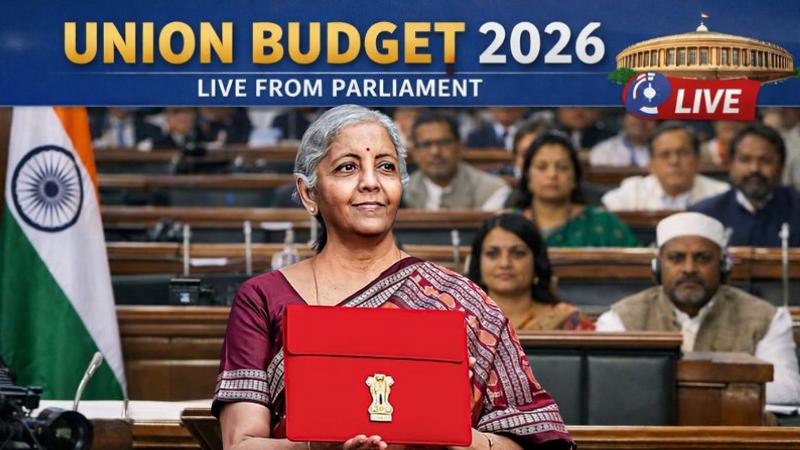
Union Budget 2026 Live Updates From Parliament And Key Announcements
Union Budget 2026 is being presented live from Parliament, marking a significant moment in India’s economic calendar. Finance Minister Nirmala Sitharaman is delivering her ninth consecutive Union Budget, continuing a historic streak that reflects policy continuity and long-term fiscal planning. The budget session is being closely watched by policymakers, economists, businesses, and citizens across
Union Budget 2026 Live Updates From Parliament And Key Announcements
Union Budget 2026 is being presented live from Parliament, marking a significant moment in India’s economic calendar. Finance Minister Nirmala Sitharaman is delivering her ninth consecutive Union Budget, continuing a historic streak that reflects policy continuity and long-term fiscal planning. The budget session is being closely watched by policymakers, economists, businesses, and citizens across
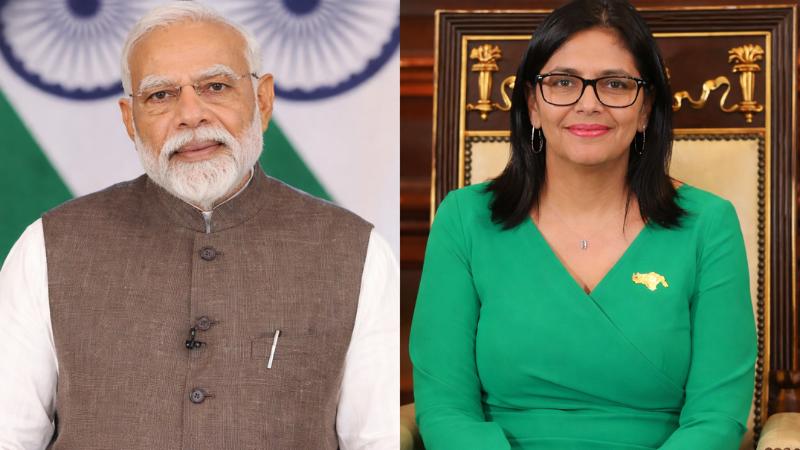
India, Venezuela look to deepen ties after leadership change, PM Modi speaks to Rodríguez
Prime Minister Narendra Modi on Friday held a conversation with Venezuela’s Acting President Delcy Rodríguez, reaffirming India’s intention to deepen and expand cooperation across multiple sectors. The discussion marks a significant diplomatic engagement nearly a month after former Venezuelan President Nicolás Maduro was removed from power and taken into United States custody following a high-profile military operation. In a message shared on social media, Modi said both sides
India, Venezuela look to deepen ties after leadership change, PM Modi speaks to Rodríguez
Prime Minister Narendra Modi on Friday held a conversation with Venezuela’s Acting President Delcy Rodríguez, reaffirming India’s intention to deepen and expand cooperation across multiple sectors. The discussion marks a significant diplomatic engagement nearly a month after former Venezuelan President Nicolás Maduro was removed from power and taken into United States custody following a high-profile military operation. In a message shared on social media, Modi said both sides
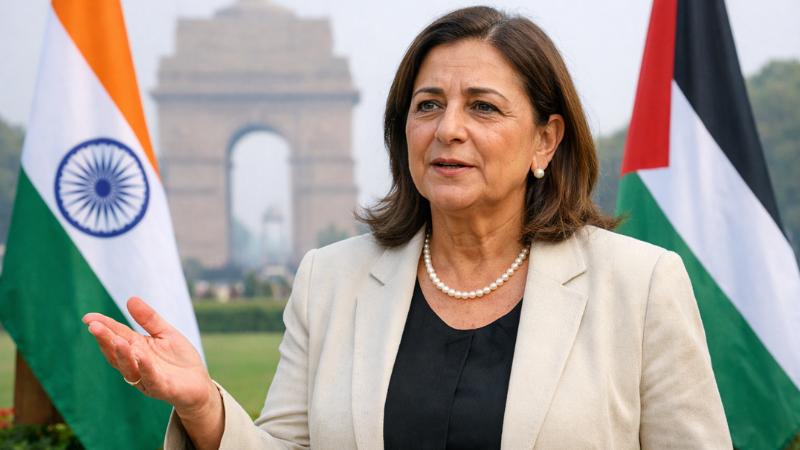
Palestine seeks India’s support for peace and reconstruction amid West Asia tensions
With renewed calls for peace, reconstruction, and an end to prolonged conflict, Dr. Varsen Aghabekian Shahin, Minister of Foreign Affairs and Expatriates of the State of Palestine, is on her first official visit to India. Speaking to journalists in New Delhi on Thursday, she stressed the urgency of achieving Palestinian statehood, arguing that lasting peace in West Asia cannot be realised without ending occupation and restoring sovereignty to the Palestinian people. Dr. Shahin highl
Palestine seeks India’s support for peace and reconstruction amid West Asia tensions
With renewed calls for peace, reconstruction, and an end to prolonged conflict, Dr. Varsen Aghabekian Shahin, Minister of Foreign Affairs and Expatriates of the State of Palestine, is on her first official visit to India. Speaking to journalists in New Delhi on Thursday, she stressed the urgency of achieving Palestinian statehood, arguing that lasting peace in West Asia cannot be realised without ending occupation and restoring sovereignty to the Palestinian people. Dr. Shahin highl
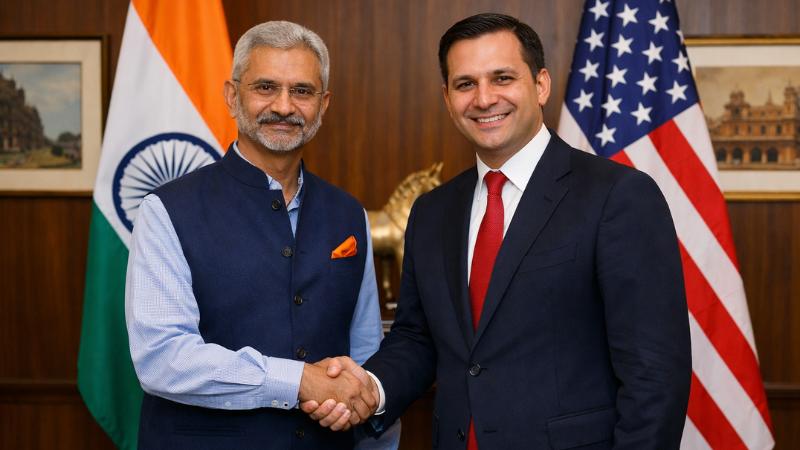
Jaishankar meets US envoy Sergio Gor ahead of Washington visit on critical minerals
External Affairs Minister S Jaishankar on Wednesday held talks with United States Ambassador to India Sergio Gor in New Delhi, days ahead of his scheduled visit to Washington, D.C., for a high-level engagement on critical minerals. The meeting focused on multiple aspects of the India-US relationship, reflecting the breadth and depth of cooperation between the two countries across strategic, economic and defence domains. Following the meeting, Jaishankar said the discussions covered
Jaishankar meets US envoy Sergio Gor ahead of Washington visit on critical minerals
External Affairs Minister S Jaishankar on Wednesday held talks with United States Ambassador to India Sergio Gor in New Delhi, days ahead of his scheduled visit to Washington, D.C., for a high-level engagement on critical minerals. The meeting focused on multiple aspects of the India-US relationship, reflecting the breadth and depth of cooperation between the two countries across strategic, economic and defence domains. Following the meeting, Jaishankar said the discussions covered
US museum to repatriate ancient Tamil Nadu bronzes to India
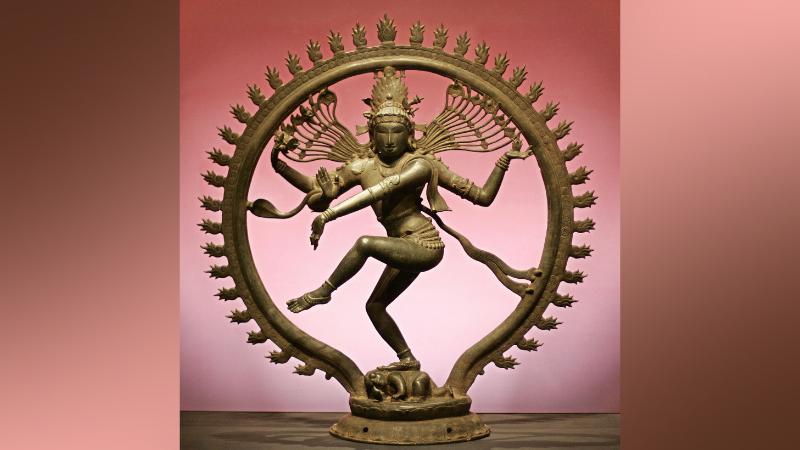
The Smithsonian’s National Museum of Asian Art in the United States has announced that it will return three historic bronze sculptures to India after concluding that the works were illegally removed from temple sites in Tamil Nadu. The decision follows an extensive provenance review of the museum’s South Asian collection and marks a significant step in addressing the long-standing issue of illicit trafficking of cultural heritage. The most prominent of the sculptures slated for return is a bronze depiction of Shiva Nataraja, dating to around A.D. 990. Created during the Chola period, the sculpture represents the Hindu deity Shiva in his cosmic dance, symbolizing the cycle of creation and destruction. The figure shows Shiva dancing upon a demon that embodies ignorance, encircled by a ring of fire and standing on a lotus base. Art historians regard this form as one of the most visually powerful and symbolically rich representations in Indian art, revered both within India and among global audiences. Alongside the Shiva Nataraja, the museum will repatriate a Somaskanda sculpture from the 12th century, also from the Chola period. This bronze depicts Shiva seated with his consort Parvathy and their son Skanda, reflecting devotional traditions that were central to temple worship in medieval South India. The third work to be returned is a 16th-century bronze titled Saint Sundarar With Paravai, dating to the Vijayanagar period, which portrays the revered Shaivite saint with his companion. The museum stated that the return of these works reflects its commitment to ethical museum practices and responsible stewardship. A comprehensive review was initiated to determine whether any objects in the collection had been unlawfully acquired. During this process, researchers uncovered evidence that raised serious concerns about the origins of the three bronzes. The Shiva Nataraja entered the museum’s collection in 2002 through a New York art gallery. Subsequent investigation revealed inconsistencies in the documentation associated with the acquisition, including the inability to verify the gallery’s listed address. Researchers later established that the sculpture appeared in photographs taken at a Tamil Nadu temple during the 1950s, confirming that it had been removed from its original religious setting. Further inquiry connected the gallery to a network involved in the trafficking of stolen antiquities. Court records have shown that individuals associated with this network engaged in smuggling cultural objects from South Asia and falsifying provenance records to introduce them into the international art market. In recent years, other institutions have also returned comparable works linked to the same sources. The Somaskanda and Saint Sundarar With Paravai sculptures were donated to the museum in 1987 as part of a major private collection. Their provenance came under scrutiny after a tip prompted researchers to consult archival material held by the French Institute of Pondicherry. Photographs from the 1950s in the institute’s archives showed both sculptures installed in temples in Tamil Nadu, providing clear evidence that they had been stolen and exported illegally. Experts note that bronze sculptures from South Indian temples have been frequent targets of theft due to their artistic value and global demand. Replicas have circulated widely in tourist markets, while original works disappeared from sacred sites, often leaving communities without objects of worship that had been central to their cultural and religious identity for centuries. The Smithsonian’s decision is being viewed as part of a broader international movement toward repatriation and accountability in the museum sector. By returning these sculptures, the institution acknowledges the importance of restoring cultural heritage to its place of origin and reinforces growing global standards for transparency and ethical collecting practices.
US museum to repatriate ancient Tamil Nadu bronzes to India
The Smithsonian’s National Museum of Asian Art in the United States has announced that it will return three historic bronze sculptures to India after concluding that the works were illegally removed from temple sites in Tamil Nadu. The decision follows an extensive provenance review of the museum’s South Asian collection and marks a significant step in addressing the long-standing issue of illicit trafficking of cultural heritage. The most prominent of the sculptures slated for return is a bronze depiction of Shiva Nataraja, dating to around A.D. 990. Created during the Chola period, the sculpture represents the Hindu deity Shiva in his cosmic dance, symbolizing the cycle of creation and destruction. The figure shows Shiva dancing upon a demon that embodies ignorance, encircled by a ring of fire and standing on a lotus base. Art historians regard this form as one of the most visually powerful and symbolically rich representations in Indian art, revered both within India and among global audiences. Alongside the Shiva Nataraja, the museum will repatriate a Somaskanda sculpture from the 12th century, also from the Chola period. This bronze depicts Shiva seated with his consort Parvathy and their son Skanda, reflecting devotional traditions that were central to temple worship in medieval South India. The third work to be returned is a 16th-century bronze titled Saint Sundarar With Paravai, dating to the Vijayanagar period, which portrays the revered Shaivite saint with his companion. The museum stated that the return of these works reflects its commitment to ethical museum practices and responsible stewardship. A comprehensive review was initiated to determine whether any objects in the collection had been unlawfully acquired. During this process, researchers uncovered evidence that raised serious concerns about the origins of the three bronzes. The Shiva Nataraja entered the museum’s collection in 2002 through a New York art gallery. Subsequent investigation revealed inconsistencies in the documentation associated with the acquisition, including the inability to verify the gallery’s listed address. Researchers later established that the sculpture appeared in photographs taken at a Tamil Nadu temple during the 1950s, confirming that it had been removed from its original religious setting. Further inquiry connected the gallery to a network involved in the trafficking of stolen antiquities. Court records have shown that individuals associated with this network engaged in smuggling cultural objects from South Asia and falsifying provenance records to introduce them into the international art market. In recent years, other institutions have also returned comparable works linked to the same sources. The Somaskanda and Saint Sundarar With Paravai sculptures were donated to the museum in 1987 as part of a major private collection. Their provenance came under scrutiny after a tip prompted researchers to consult archival material held by the French Institute of Pondicherry. Photographs from the 1950s in the institute’s archives showed both sculptures installed in temples in Tamil Nadu, providing clear evidence that they had been stolen and exported illegally. Experts note that bronze sculptures from South Indian temples have been frequent targets of theft due to their artistic value and global demand. Replicas have circulated widely in tourist markets, while original works disappeared from sacred sites, often leaving communities without objects of worship that had been central to their cultural and religious identity for centuries. The Smithsonian’s decision is being viewed as part of a broader international movement toward repatriation and accountability in the museum sector. By returning these sculptures, the institution acknowledges the importance of restoring cultural heritage to its place of origin and reinforces growing global standards for transparency and ethical collecting practices.










