LARGO, Md. — Facing mounting public pressure over sharply rising utility costs, Maryland lawmakers and local officials are advancing a series of measures aimed at delivering immediate financial relief while pursuing long-term changes to the state’s energy infrastructure. The coordinated push reflects growing concern among residents who say recent power bills have become increasingly difficult to manage.
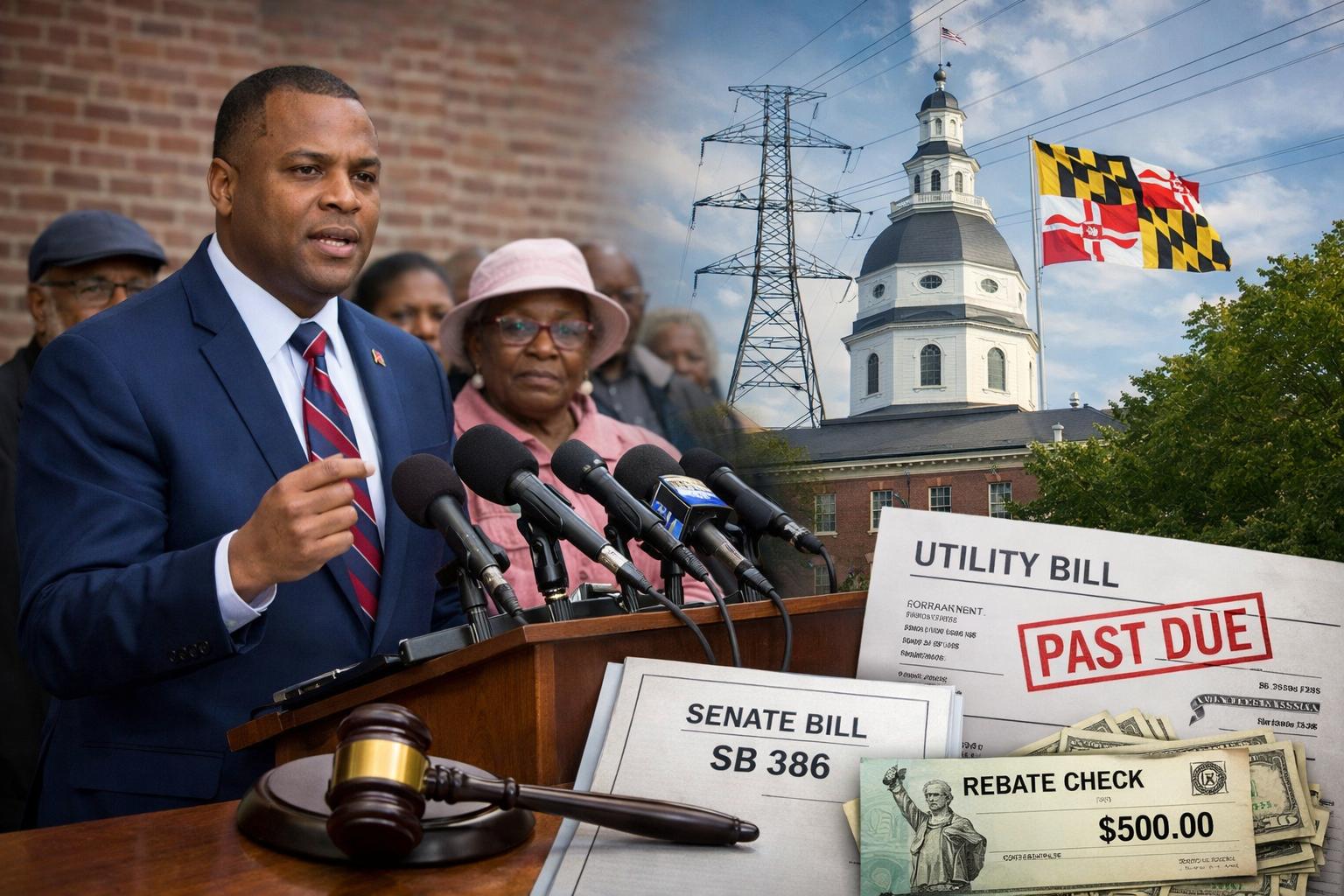
In Annapolis, the administration of Gov. Wes Moore introduced Senate Bill 386, known as the Lower Bills and Local Power Act of 2026. The proposal seeks to modernize Maryland’s grid, reduce excess utility earnings, and provide short-term rebates to households. Officials say the legislation is designed to address structural inefficiencies that contribute to higher energy costs while improving overall system performance.
A central component of the bill focuses on requiring utilities to adopt grid-enhancing technologies that allow electricity to move more efficiently across existing transmission lines. State leaders argue that better use of current infrastructure could reduce congestion-related expenses that often drive up monthly power bills. The measure also targets utility profit structures by eliminating a 0.5 percent financial incentive that currently allows companies to collect additional earnings on certain projects, a change projected to save ratepayers tens of millions annually.
The plan includes $100 million in direct relief, with households expected to receive one-time rebates estimated between $40 and $60 later this year. However, some residents say the proposed assistance may fall short of addressing the scale of recent rate increases. Prince George’s County resident Angel Canales questioned the impact, noting that a modest rebate would offer limited help against bills that can reach four figures.
While state leaders debate long-term policy, Prince George’s County officials are pursuing more immediate accountability measures. County Council Chair Ed Burroughs introduced Resolution CR-11-2026, formally urging the Maryland Office of People’s Counsel to conduct a comprehensive investigation into utility pricing and billing practices. Burroughs said his office frequently hears from seniors struggling to keep up with rising energy costs.
“These outrageous utility price increases have gone too far,” Burroughs said during a council meeting, emphasizing the urgency of relief for vulnerable residents. Alongside the call for a probe, he announced Phase II of the District 8 Senior Support Fund, which offers $500 rebates to qualifying residents aged 65 and older. The program is funded through the MGM National Harbor Casino Local Impact Fund rather than traditional tax revenue.
The dual efforts at the state and county levels come as residential energy costs have climbed significantly since 2020, intensifying financial pressure on households. Community members attending Burroughs’ press conference expressed deep frustration, with one resident saying the sustained increases are forcing some families to consider relocating. As policymakers move forward, the effectiveness of the proposed reforms and relief measures will likely remain under close public scrutiny.