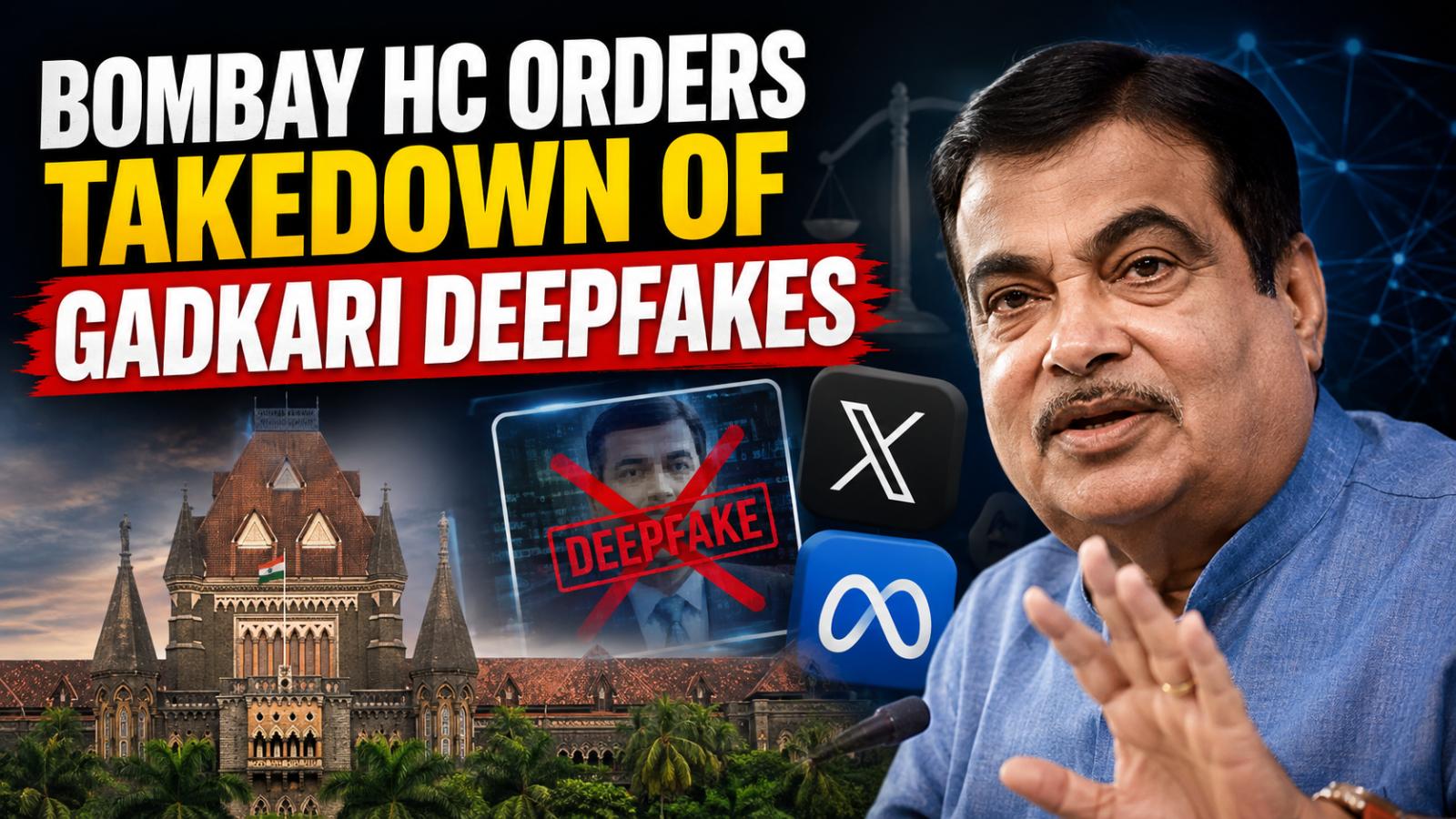
The Gadkari E20 deepfake court order has renewed attention on online defamation, manipulated media and platform accountability. The Bombay High Court directed the removal of disputed posts and sought details of accounts that allegedly circulated misleading content.
Post Removal
The Bombay High Court on Wednesday granted interim relief to Union Road Transport and Highways Minister Nitin Gadkari in a case concerning allegedly defamatory social media posts linked to the E20 ethanol-blended petrol debate.
The court directed Meta, X Corp and Google to remove the identified material. Reports from the hearing said the disputed posts included manipulated and AI-generated content that allegedly portrayed Gadkari in a false, abusive and damaging manner. The court reportedly described the material in strongly critical terms while directing its immediate removal.
AI Fakes
Gadkari approached the court after claiming that deepfake videos, altered images and misleading posts falsely connected him and his family with financial benefits arising from India’s ethanol-blending programme.
His petition maintained that the Ethanol Blended Petrol programme and the E20 initiative are administered by the Union Ministry of Petroleum and Natural Gas. Gadkari argued that the Road Transport Ministry does not control the programme and that posts assigning him direct responsibility contained fabricated claims.
The legal dispute is not merely about criticism of a government policy. The central question is whether the identified posts crossed the line from legitimate opinion into false attribution, manipulated representation and reputational harm. Public criticism of ethanol policy can continue, but fabricated quotations or deceptive videos may lead to legal action.
E20 Row
The proceedings come amid a wider debate over E20 petrol, which contains 20% ethanol. Concerns about fuel efficiency, vehicle compatibility and possible effects on older engines have circulated extensively on social media.
The Petroleum Ministry recently rejected several claims it described as misleading, including suggestions that every vehicle manufactured before 2023 would become unusable or that mileage would fall completely. However, vehicle owners continue to seek clearer information about compatibility, maintenance and real-world performance.
Publishers should distinguish between verified technical concerns and unsupported allegations against individuals. Information should clearly identify whether it comes from a court filing, government statement, vehicle manufacturer or independent technical assessment.
User Data
The High Court also instructed the platforms to disclose available details of the accounts responsible for uploading or circulating the disputed material. The information could allow Gadkari to identify those behind the posts and pursue appropriate legal remedies.
The direction remains part of an ongoing proceeding and does not establish the final liability of every account named in the petition. The platforms are expected to comply with the interim directions and provide their responses before the matter is heard again.
Platform Duty
The case highlights growing pressure on technology companies to respond quickly when courts identify allegedly defamatory deepfakes. It also exposes a difficult balance: platforms must restrict harmful synthetic content without automatically treating every criticism of a public official as unlawful.
Clear evidence, narrowly defined takedown requests and transparent legal procedures will become increasingly important as Indian courts handle more cases involving AI-generated videos, cloned voices and manipulated images.