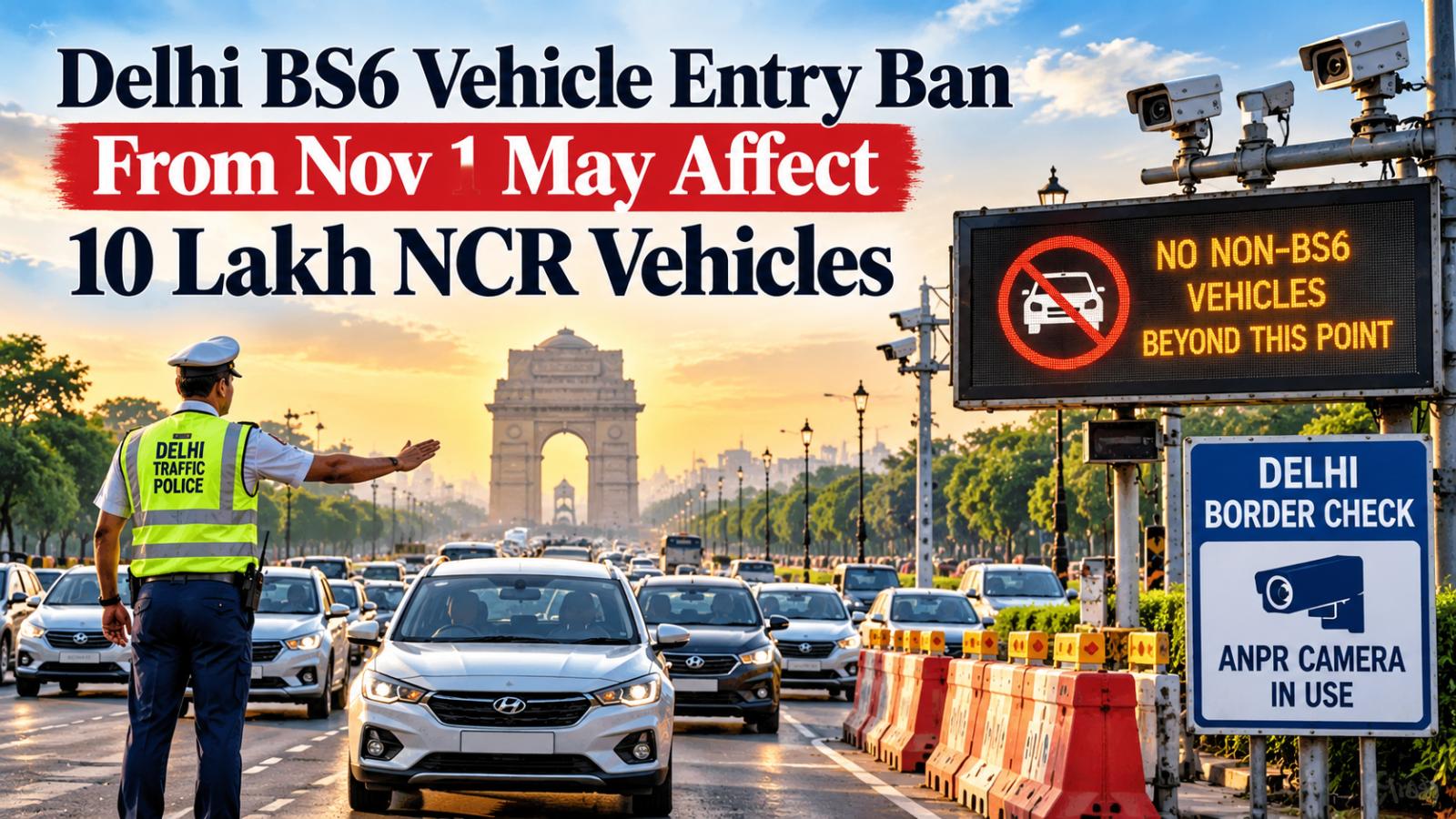
Delhi is preparing to introduce strict vehicle entry restrictions from November 1, 2026, potentially affecting more than 10 lakh vehicles across the National Capital Region (NCR). Under the new rules, vehicles registered outside Delhi that do not meet Bharat Stage 6 (BS6) emission standards will be barred from entering the national capital until January 31, 2027. The decision is part of the government's winter pollution control plan, aimed at reducing harmful vehicle emissions during the colder months.
The restrictions could significantly affect people who travel daily between Delhi and neighbouring cities, including Gurugram, Faridabad, Noida, Greater Noida and Ghaziabad. With thousands of commuters relying on older petrol and diesel vehicles, the new regulations may require many motorists to reconsider their travel arrangements.
Over 10 lakh non-BS6 vehicles in Delhi NCR face entry restrictions
According to transport department estimates, Gurugram and Faridabad together have nearly two lakh vehicles that do not meet BS6 emission standards. Around 70% of these belong to the older BS3 and BS4 categories. The two Haryana districts also have approximately 50,000 commercial vehicles that fall below the required emission standards.
The situation is similar in neighbouring Uttar Pradesh. Noida and Greater Noida collectively have more than four lakh non-BS6 vehicles, with BS4 vehicles accounting for over half of the total. Many of these are petrol-powered cars. Ghaziabad has approximately four lakh vehicles that do not comply with BS6 standards.
However, not every vehicle included in these estimates will be prohibited from entering Delhi. The restrictions primarily apply to older petrol and diesel vehicles registered outside the capital. Vehicles that meet BS6 standards will continue to be permitted, while electric and CNG-powered vehicles are exempt.
Ambulances, fire tenders and certain essential-service vehicles will also be allowed entry. Delhi-registered vehicles are not covered by this specific restriction, although they must continue to comply with other applicable pollution and vehicle regulations.
The new rules are expected to have the greatest impact on people travelling frequently across NCR borders for work, education and business.
Delhi border ANPR camera checks to enforce winter pollution rules
To implement the restrictions effectively, Delhi authorities are strengthening vehicle inspections at major entry points connecting the capital with neighbouring cities.
Automatic Number Plate Recognition (ANPR) cameras, supported by AI-powered monitoring systems, will help identify vehicle registration numbers and flag potentially non-compliant vehicles for inspection. Authorities are also preparing additional physical checkpoints to prevent restricted vehicles from entering the city.
Around 300 transport department enforcement personnel are expected to be deployed to support inspections and monitor compliance.
The vehicle entry ban is one of several measures being implemented under Delhi's winter pollution control strategy. The government has also introduced stricter Pollution Under Control (PUC) certificate requirements, higher parking charges at designated facilities and other steps aimed at reducing traffic-related pollution.
Under the broader pollution control framework, vehicles without valid PUC certificates will not be eligible to purchase fuel at Delhi filling stations.
BS6 emission standards were introduced to reduce pollutants released by petrol and diesel engines. Compared with earlier Bharat Stage standards, BS6 regulations impose tighter limits on harmful emissions.
With winter air pollution remaining a serious concern in Delhi, authorities hope the restrictions will help reduce emissions from older vehicles entering the capital.
Motorists travelling from Gurugram, Noida, Ghaziabad and other NCR cities are advised to check their vehicle's emission classification and registration details before November 1. Those using older petrol or diesel vehicles may need to consider public transport, carpooling or other permitted travel options during the three-month restriction period.
While the vehicle entry ban is scheduled to end on January 31, 2027, Delhi's broader winter pollution control measures will continue until February 28, 2027.