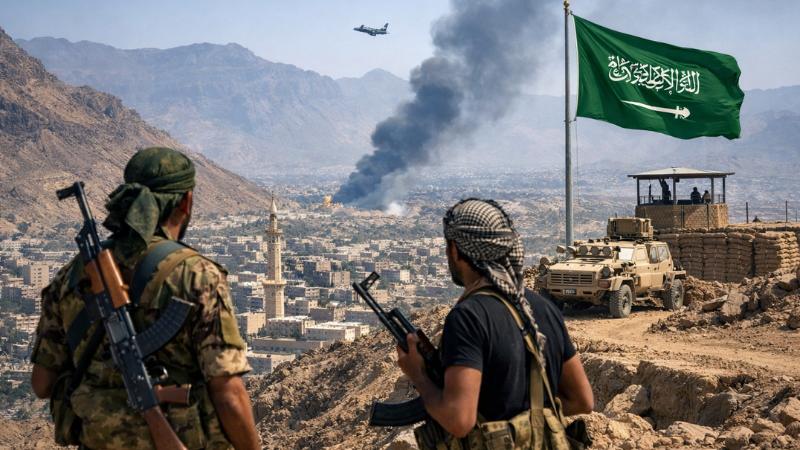
Saudi Arabia is deploying significant political influence and billions of dollars in financial support in an effort to stabilize Yemen and consolidate control over areas held by the internationally recognized government, marking a renewed regional focus after years of concentrating on domestic reforms. Officials familiar with the strategy say Riyadh aims to unify fragmented armed groups, strengthen state institutions and create conditions that could eventually pressure Houthi rebels into negotiations, even as the country remains mired in deep divisions and economic collapse.
According to Yemeni and Western officials, the kingdom has allocated nearly $3 billion this year to cover salaries for civil servants and security forces. The package includes funds for southern fighters who were previously backed by the United Arab Emirates, signaling Riyadh’s intention to become the primary external power shaping developments on the ground. Yemeni Information Minister Muammar Eryani said the support would help reorganize armed factions under a centralized command and restore basic governance in government-controlled areas.
The effort comes against a complex backdrop. A fragile truce with the Houthis has largely held since 2022, reducing large-scale fighting but failing to resolve the underlying conflict. The rebels continue to control the capital, Sanaa, and much of northern Yemen, while political rivalries and competing militias persist in the south. Saudi officials hope that building stability and improving services in areas under government authority will demonstrate an alternative to Houthi rule and strengthen Riyadh’s leverage in any future peace talks.
At the same time, the kingdom faces its own budget pressures due to lower oil revenues and ambitious domestic projects. Analysts say Riyadh nevertheless views stability along its 1,800-kilometer border with Yemen as a strategic necessity. Previous Houthi attacks on Saudi energy infrastructure highlighted the risks of prolonged instability, reinforcing the belief that investment in Yemen’s recovery is also an investment in Saudi security.
Riyadh has paired financial incentives with political outreach. Southern separatist factions, long divided over whether to pursue independence or remain within a unified state, have been invited to negotiations and offered assurances that their aspirations could be addressed once the conflict with the Houthis is resolved. The goal is to consolidate these groups into a single command structure aligned with the government. However, resistance remains strong, and some leaders question whether unification can be achieved without reigniting internal rivalries.
Experts warn that timelines for a lasting settlement may be optimistic. Farea al-Muslimi, a regional analyst at Chatham House, described hopes of ending the conflict within a year or two as ambitious, suggesting it could take several years to negotiate political arrangements and potentially hold a referendum on the south’s future. Beyond politics, dismantling a decade-old war economy—where armed service often pays far more than civilian work—poses an even deeper challenge.
In Mukalla, teacher Mohammad Al-Akbari said many students and colleagues have left classrooms to join armed groups, drawn by salaries that far exceed those of educators. While he earns about $30 a month, young fighters can receive several times that amount. The disparity, he said, undermines faith in education and peaceful livelihoods. “When we teach the kids, they ask what they can do with their studies,” he said, reflecting a broader sense of disillusionment.
For many Yemenis, the conflict has normalized militarization and eroded prospects for civilian life. Analysts say that even with increased aid and diplomatic engagement, reversing that mindset will take time. Saudi Arabia’s strategy may provide short-term stability, but lasting peace will depend on whether political factions can reconcile competing visions for the country’s future and rebuild institutions capable of delivering services and security without reliance on armed patronage networks.
As Riyadh assumes what some observers describe as sole stewardship of the Yemen file, the coming years are likely to test whether financial backing and political pressure can translate into durable peace or merely manage a conflict that has already endured for more than a decade.