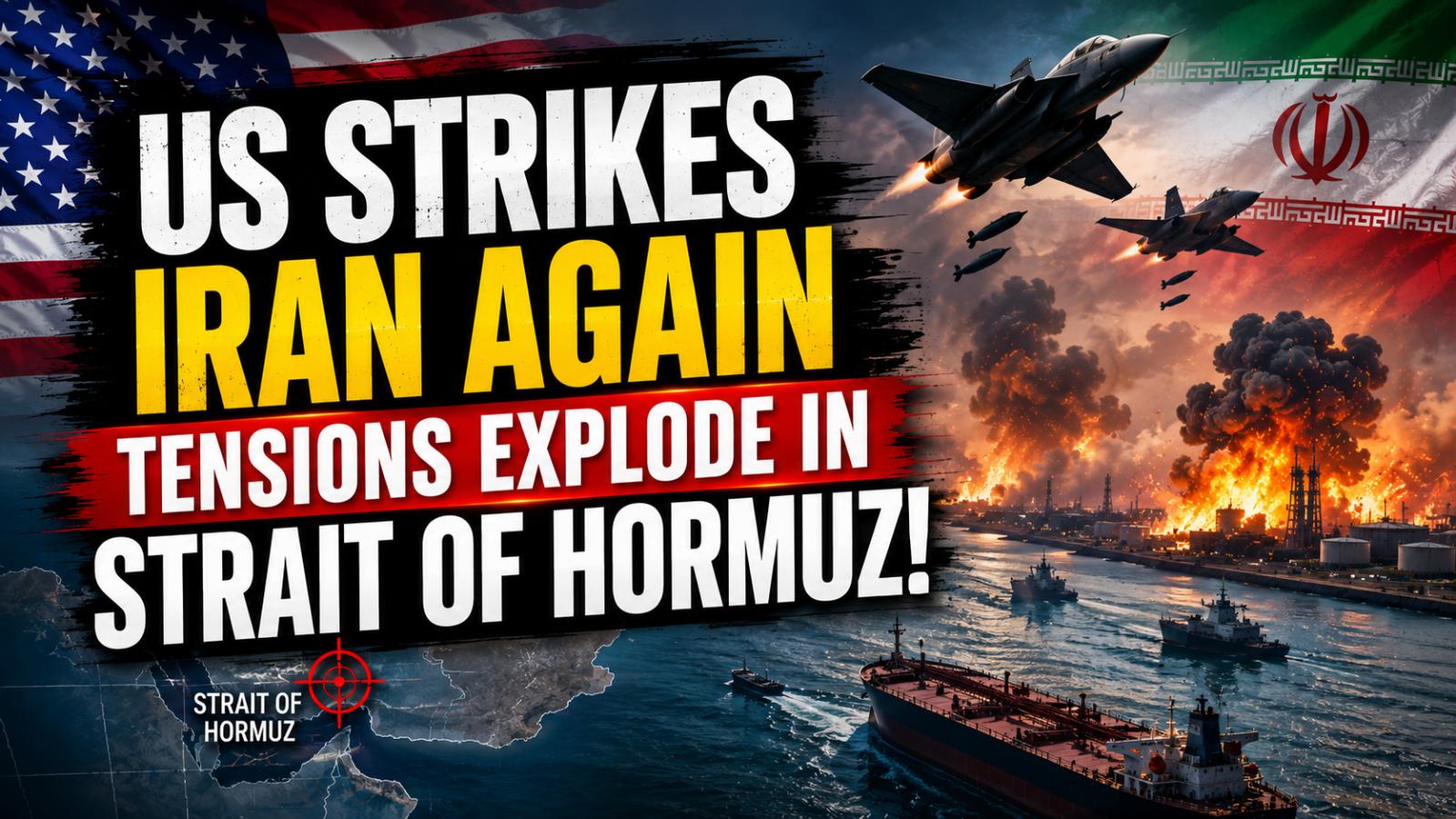
The United States launched a fresh wave of military strikes against Iran on Sunday,June 13,2026 after accusing Tehran of threatening commercial shipping in the Strait of Hormuz. US Central Command said the operation targeted Iran’s military capabilities, while Tehran condemned the attacks as violations of international law and warned of possible retaliation. The latest exchange marks another sharp escalation in the ongoing US-Iran conflict and raises fresh concerns about regional stability and global energy security.
CENTCOM launches new military operation
US Central Command (CENTCOM) announced that the latest strikes began at approximately 5 p.m. Eastern Time under orders from President Donald Trump. According to the command, the operation aims to reduce Iran's ability to attack civilian mariners and commercial vessels using one of the world's busiest maritime trade routes.
CENTCOM stated that the strikes focused on military assets connected to Iran's ability to threaten shipping. The command said the action followed earlier operations that targeted missile launch facilities, drone infrastructure, naval capabilities, ammunition depots, communication systems and coastal surveillance sites.
US officials argued that the campaign was designed to preserve freedom of navigation through the Strait of Hormuz, where nearly one-fifth of the world's oil supply passes each day.
Iran condemns attacks and reports explosions
Iran's Ministry of Foreign Affairs strongly condemned the strikes, calling them a flagrant violation of the United Nations Charter and accusing Washington of undermining regional stability.
Iranian media reported explosions in Bandar Abbas, Jask and Sirik shortly after the American operation began. Authorities did not immediately provide casualty figures or a detailed assessment of damage.
In an official statement, the Foreign Ministry warned that any country allowing its territory or military facilities to be used for attacks against Iran could itself become a legitimate target under what Tehran described as its right to self-defense.
Iran also urged the United Nations to hold the United States accountable for what it characterized as acts of aggression.
Strait of Hormuz dispute deepens
The latest confrontation came after Iran announced restrictions affecting navigation through the Strait of Hormuz following attacks on commercial shipping.
President Trump disputed claims that the waterway had been effectively closed. During an interview, he stated that commercial traffic remained open while confirming that US forces had carried out overnight strikes against Iranian targets.
Iran rejected Trump's description of recent diplomatic discussions in Muscat. The Foreign Ministry said the talks had focused on maritime security and management of the Strait of Hormuz rather than the broader political agreement described by the US President.
These differing accounts highlight the continuing breakdown in communication between Washington and Tehran as military operations intensify.
Regional tensions continue to rise
The renewed military campaign increases concerns across the Gulf region, where shipping companies, energy markets and neighboring countries remain on high alert.
Bandar Abbas and nearby coastal areas play a critical role in Iran's naval operations, while the Strait of Hormuz remains one of the world's most strategically important maritime corridors.
Although both governments continue issuing public statements defending their actions, diplomatic efforts appear increasingly strained. With military operations continuing and both sides exchanging warnings, regional security analysts are closely watching whether the conflict expands beyond current targets.