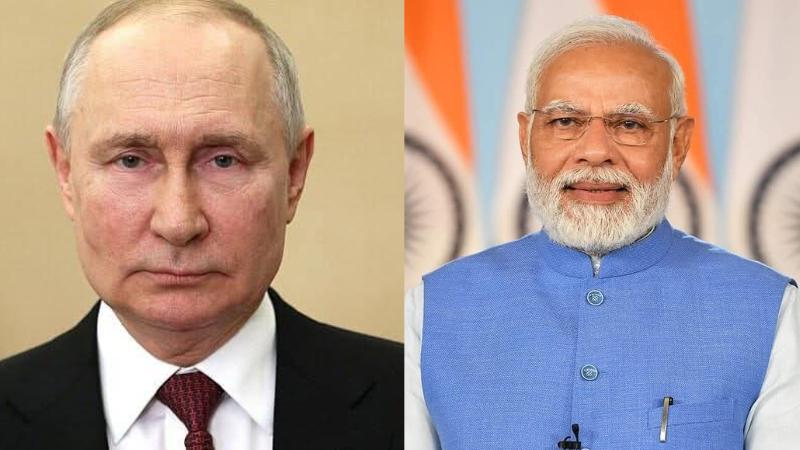
The Russian Foreign Ministry has praised India for firmly resisting ongoing pressure from the United States and Nato countries to halt oil imports from Russia. Moscow highlighted that India has continued honoring its commitments despite mounting threats and new trade restrictions, underlining that any attempts to undermine the partnership between the two nations are destined to fail. In a strongly worded statement, the ministry emphasized that ties between Moscow and Delhi are steadily advancing, describing them as reliable, predictable, and rooted in decades of trust and shared interests.
Officials stated that India’s approach reflects the traditions of long-standing friendship and embodies a commitment to strategic autonomy in international affairs. By prioritizing sovereignty and national interest, India has positioned itself as a reliable partner that values cooperation on equal terms rather than yielding to external coercion. According to Moscow, this perspective ensures that bilateral relations remain strategic in nature and are immune to short-term political disruptions. The ministry commended India for standing firm despite strong external criticism and reiterated that the partnership would continue to grow stronger across multiple sectors.
Russia also underlined the depth of joint initiatives, ranging from civilian and military production projects to cooperation in nuclear energy, manned space missions, and oil exploration. Indian investments in Russian energy projects remain a central pillar of economic engagement, demonstrating the long-term confidence both sides share. Beyond energy and defense, the two nations are actively working to expand financial cooperation through the development of new payment systems, the increased use of national currencies, and the strengthening of transport and logistics networks that bypass traditional routes vulnerable to political interference.
These comments came against the backdrop of heightened trade tensions between Washington and Delhi. Last month, the United States imposed steep duties on a wide range of Indian products. These included a 25 percent base tariff and an additional 25 percent penalty tied directly to India’s continued purchases of Russian oil and defense equipment. The Trump administration has accused India of indirectly fueling the Ukraine conflict, a charge that Indian officials have categorically dismissed as unfair, unjustified, and unreasonable. New Delhi has repeatedly underscored that its energy trade with Russia is based on economic necessity and national interest rather than geopolitical alignments.
The imposition of tariffs has added strain to already complicated trade relations between the United States and India. Negotiations on a bilateral trade deal have stalled repeatedly, with disputes centering on sensitive areas such as agriculture and dairy. India has refused to make concessions in these sectors, calling them very big red lines. While reports suggest that talks may eventually resume, the recent wave of penalties has deepened mistrust and reinforced India’s determination to defend its policy independence. Analysts believe that Washington’s pressure tactics may only push Delhi closer to Moscow, strengthening an alliance that is already rooted in decades of trust and cooperation.
For Russia, India’s steadfast stance serves as proof that its strategic partnerships remain strong even under global scrutiny. Moscow’s insistence that any attempts to weaken its ties with Delhi will fail underscores the importance it places on maintaining a close relationship with one of Asia’s largest economies. The foreign ministry’s remarks reflect growing confidence that the partnership is resilient enough to withstand external shocks and political disputes.
India, on its part, continues to pursue a careful balancing act in global politics. By maintaining diversified partnerships with Russia, the United States, and other key players, it seeks to uphold its tradition of non-alignment while ensuring its energy and security needs are met. However, recent developments show that India is not willing to compromise its sovereignty or bow to pressure, whether from Washington or other quarters. The emphasis on strategic autonomy signals a continuation of policies designed to safeguard national interests while keeping open channels for cooperation with multiple global powers.
In this evolving landscape, the Russia-India partnership appears set to expand further, with both sides committed to strengthening cooperation across defense, energy, space, and financial systems. The message from Moscow is clear: the relationship with India is not only time-tested but also a cornerstone of its broader strategy in Asia. For India, the alliance provides both economic stability and a counterweight to international pressures, ensuring that its sovereignty and strategic autonomy remain at the forefront of policy decisions.