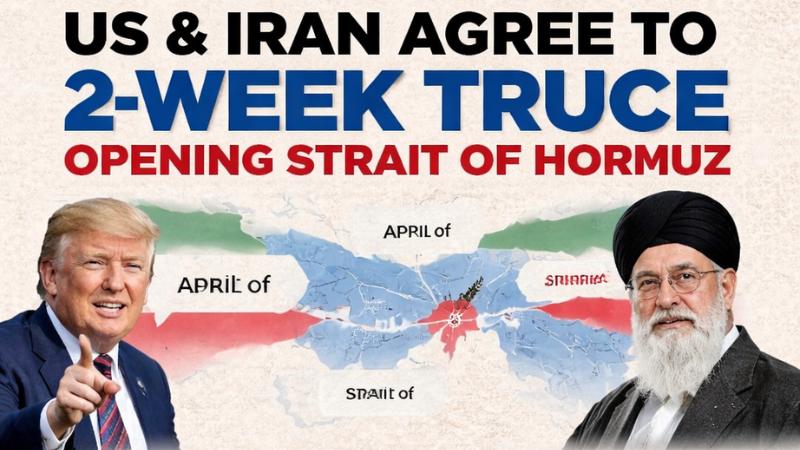
In a dramatic turn of events, US President Donald Trump has agreed to a two-week ceasefire with Iran, pulling back from the brink of escalating military conflict. The decision was made just hours before a self-imposed deadline for Tehran to reopen the vital Strait of Hormuz, a strategic waterway for global oil shipments, or face devastating US military strikes on Iranian civilian infrastructure.
The truce, which is aimed at providing a diplomatic window to de-escalate the ongoing 40-day conflict, sees Iran agreeing to a conditional reopening of the Strait of Hormuz. According to a statement from Trump, the US will hold off on targeting Iran's bridges, power plants, and other civilian structures, in exchange for Iran's commitment to the safe and immediate reopening of the Strait of Hormuz for a period of two weeks. The US and Iran are scheduled to continue peace talks in Islamabad on April 10, 2026.
Iran, in turn, accepted the ceasefire framework but laid out conditions for the agreement. Tehran insisted on the withdrawal of US combat forces from the region, the lifting of sanctions, and the release of its frozen assets. Additionally, Iran has proposed charging transit fees for ships passing through the Strait of Hormuz, with the revenue going toward reconstruction efforts in the country. While Iran claims this as a victory for Tehran, the White House contends that the US military's power forced Iran to agree to reopen the strategic waterway.
Despite the announcement of the ceasefire, tensions remain high on the ground. Missile alerts continued to sound across the Gulf in countries like Saudi Arabia, Bahrain, and Kuwait, as Iranian missiles were intercepted. Israeli military officials have confirmed that while the ceasefire was agreed to, attacks on Iran are still ongoing, although an official statement from Israel is awaited.
The truce also includes a call for Israel and Hezbollah to halt their fighting in Lebanon, with Pakistan's Prime Minister Shehbaz Sharif playing a key role in the negotiations. Sharif has invited both Iranian and US delegations to meet in Islamabad, aiming for a lasting and sustainable peace in the region.
The announcement of the ceasefire and the reopening of the Strait of Hormuz caused a significant impact on global markets. Oil prices plummeted below USD 100 per barrel, with Brent Crude falling by 13.3% to USD 94.74, and US crude sinking by 14.3% to USD 96.83. This marks a major shift in the geopolitical landscape, with markets reacting positively to the potential de-escalation of tensions in the Middle East.
The war, now in its sixth week, has already claimed more than 5,000 lives across nearly a dozen countries, with over 1,600 civilian casualties in Iran alone. High-profile figures, including Iran's Supreme Leader Ayatollah Ali Khamenei and security chief Ali Larijani, have been killed in US strikes, which have also devastated Iran's critical infrastructure. The ceasefire represents a significant turning point, but the path to long-term peace in the region remains uncertain.