Homeland Security Secretary Kristi Noem confirmed on Sunday that the Trump administration is moving forward with plans to expand Immigration and Customs Enforcement operations in Chicago as well as other major American cities. Her comments came as residents and local officials gathered to denounce the administration’s latest immigration crackdown, underscoring the deepening tension between the federal government and city leaders who have declared Chicago a sanctuary for immigrant communities.
Speaking in an interview, Noem explained that immigration enforcement efforts were already underway in Chicago and across Illinois but stressed that additional resources and manpower will soon be deployed. According to her, the administration’s goal is to ensure that immigration laws are being upheld and that violent criminals are being targeted for arrest. However, in practice, the expansion of enforcement efforts has sparked widespread concern among immigrant families and advocates who fear that peaceful residents who contribute to their communities may also be caught up in the sweep.
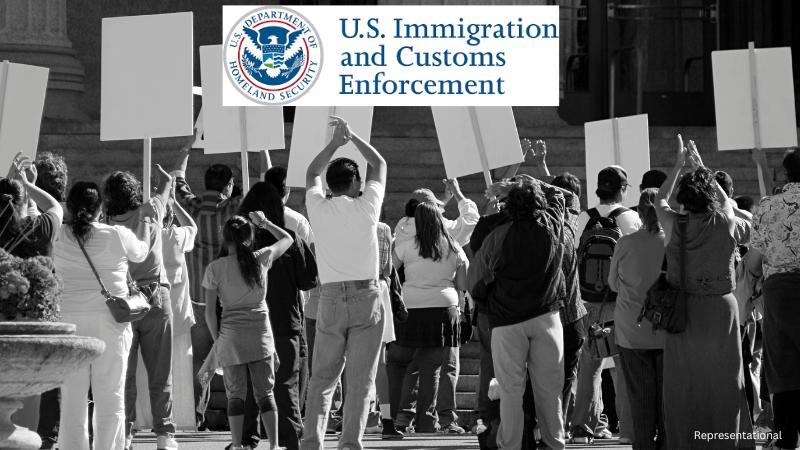
Federal agencies have already secured Naval Station Great Lakes, located about 35 miles north of Chicago, to serve as an office hub and command center for the expanded operations. Reports suggest that a significant increase in personnel will be directed to the Chicago region beginning next week. This has alarmed local residents, many of whom worry that the influx of federal agents will lead to broader detentions that affect families, workers, and lawful residents seeking citizenship. On Sunday, a group of community members marched to the naval base to pray for compassion and protection for their neighbors, emphasizing that those facing possible detention are not criminals but hardworking individuals who contribute to the social and economic fabric of the city.
Chicago Mayor Brandon Johnson responded swiftly to these developments, signing an executive order that prohibits Chicago police from collaborating with federal military forces in immigration enforcement. Johnson stressed that the city had received credible reports suggesting some type of militarized activity could unfold in the coming days and warned that it remained unclear exactly how the federal government planned to proceed. He stated that Chicago would pursue both legal and legislative measures to prevent violations of residents’ rights and reaffirmed the city’s commitment to protecting vulnerable communities from aggressive immigration actions.
Meanwhile, questions continue to swirl around whether the National Guard will be deployed alongside ICE agents. Trump has previously stated that military involvement would help restore law and order in Chicago, which he has often described as plagued by crime. On social media, he warned Illinois Governor J.B. Pritzker to resolve the situation quickly or risk federal intervention. This statement fueled further anxiety about the possibility of troops being sent into an American city, something Governor Pritzker strongly opposed.
Governor Pritzker also appeared in an interview to reject the notion that troops should be deployed in Chicago. He pointed out that military forces on city streets have no place unless there is an insurrection or a true emergency, conditions which he insisted do not currently exist in Illinois. His remarks highlighted the sharp divide between state and federal authorities on how to handle immigration enforcement and urban crime, with the governor emphasizing a more measured approach focused on rights and lawful process rather than militarization.
Despite Trump’s dire warnings, the most recent statistics released by the city show that crime trends are moving in the opposite direction. Data revealed that homicides have fallen by 31 percent while shooting incidents have declined by nearly 37.4 percent compared to the previous year. These improvements in public safety figures contradict the administration’s justification that federal troops and expanded ICE operations are needed to combat an urgent crime wave. Instead, local leaders argue that Chicago is making progress through community-led initiatives, targeted policing, and partnerships that do not rely on heavy-handed federal involvement.
The controversy over expanded ICE operations in Chicago reflects a broader national debate about immigration policy, executive authority, and the balance between federal and local control. For supporters of Trump, the crackdown represents a necessary assertion of law and order, one that prioritizes national security and the enforcement of immigration laws. For critics, it is seen as an overreach that undermines community trust, threatens families, and disregards the progress cities like Chicago are making in reducing violence without federal intervention.
As federal agents prepare to expand their presence and city leaders mobilize to resist, the coming weeks are likely to test not only the resilience of immigrant communities in Chicago but also the limits of federal power in imposing sweeping enforcement measures on unwilling cities. Whether or not the Supreme Court or Congress eventually weighs in, the immediate clash between the Trump administration and Chicago underscores the enduring and often divisive role of immigration in American politics.