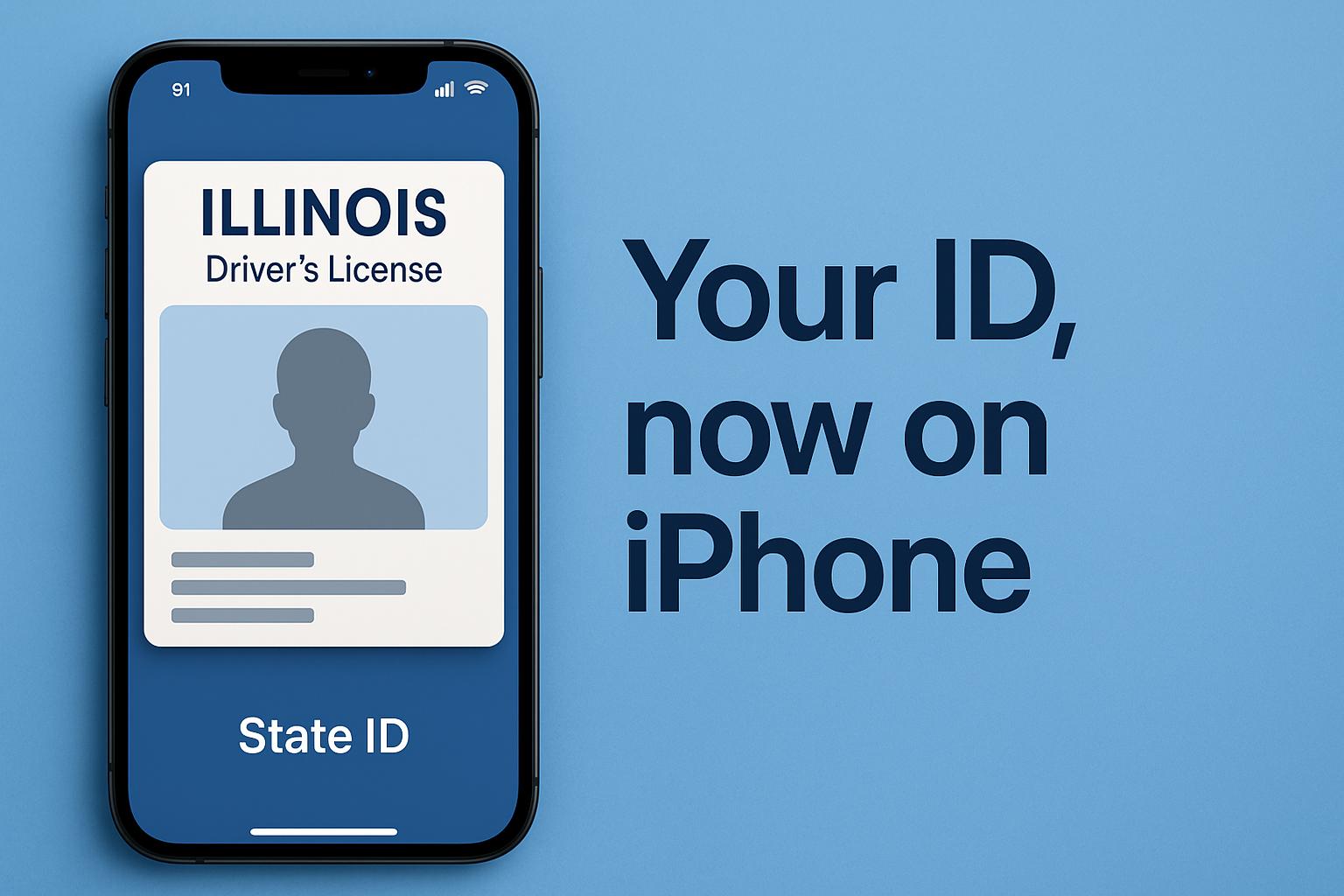
Illinois residents can now use digital driver’s licenses and state identification cards on their iPhones, marking a significant technological shift in how individuals verify their identity at airports, bars, restaurants, and select venues across the state. The program officially began Tuesday morning following the implementation of a new state law that authorizes digital IDs and enables their integration into mobile devices. Illinois Secretary of State Alexi Giannoulias announced the launch during a press conference, emphasizing the convenience and security benefits that accompany the new system. Behind him, a screen displayed the message “Your ID, now on iPhone,” signaling the beginning of what the state describes as a modernized identification era.
The rollout applies initially to Apple users, who can now add their driver’s license or state ID to the Apple Wallet app starting at 7 a.m. Tuesday. Instructions on the Secretary of State’s website guide residents through the process, noting that the digital ID can also be synced to any paired Apple Watch. The feature is expected to expand early next year to Google and Samsung devices, widening access to millions of additional users. Giannoulias stated that the transition represents a major step toward convenience and digital modernization, with the intention of creating a secure and streamlined experience for everyday identity verification.
Despite the convenience, state officials stressed that digital IDs do not replace traditional physical cards. Law enforcement will not accept mobile IDs during traffic stops, meaning residents must continue carrying plastic identification for official legal purposes. Airport travelers may use the digital ID at Transportation Security Administration checkpoints at Chicago’s O’Hare and Midway airports, but TSA still recommends bringing a physical Real ID or passport in case the digital version cannot be verified. Officials explained that digital IDs are meant to complement existing documents rather than eliminate them, offering added ease during certain transactions.
Adding an ID to Apple Wallet requires users to scan their physical card and complete a verification process that includes a selfie and a series of facial movements. The state receives only the necessary information to confirm identity and does not gain access to a person’s device or personal data. Once approved, the ID is encrypted on the device and cannot be viewed by Apple, the state, or other parties unless the user chooses to present it. The digital format allows residents to selectively share specific details, such as proof of age when purchasing alcohol or cannabis, while withholding other sensitive information like their home address.
Digital IDs can be presented in person by holding an iPhone or Apple Watch near a compatible identity reader, where users will be prompted to authenticate with Face ID or Touch ID. Online and in-app verification is also supported through designated buttons that allow secure confirmation of identity without revealing unnecessary data. According to the Secretary of State’s Office, the system incorporates advanced privacy protections and encryption features already present in Apple devices. Officials noted that neither Apple nor the state can track when or where a person uses their digital ID, as the verification history remains encrypted and stored only on the user’s device.
The introduction of mobile identification has drawn attention from privacy advocates in the past, particularly regarding concerns that police could request access to a person’s phone during an ID check. Illinois lawmakers addressed this issue directly in the legislation authorizing digital IDs, explicitly prohibiting law enforcement officers from searching a phone after viewing a mobile identification card. State officials said the rule was designed to safeguard civil liberties while still allowing users to benefit from the convenience of a digital format.
As Illinois embraces this new phase of digital identity management, Giannoulias emphasized that the state’s focus remains on security, privacy, and accessibility. He expressed confidence that mobile IDs will simplify everyday interactions and reduce the need for physical cards in many settings while maintaining strict standards of data protection. The program’s expansion to additional platforms in the coming months is expected to further increase adoption and set the stage for broader digital verification options in the future.