The United States has welcomed India’s newly enacted legislation on nuclear energy, describing it as a significant move toward strengthening bilateral cooperation in the civil nuclear and energy sectors. The response follows President Draupadi Murmu’s assent to the Sustainable Harnessing and Advancement of Nuclear Energy for Transforming India Bill, widely known as the SHANTI Bill, 2025, which introduces far-reaching changes to the country’s nuclear governance framework.
In a statement shared on social media, the US Embassy in India said it viewed the new law as an important step toward a stronger energy security partnership and enhanced peaceful civil nuclear cooperation. The embassy added that the United States was prepared to engage with India on joint innovation and research and development initiatives across the energy sector, underscoring the strategic importance Washington places on collaboration in advanced and clean energy technologies.
The SHANTI Act marks a decisive shift in India’s approach to civil nuclear power by replacing the Atomic Energy Act of 1962, a law that had remained largely unchanged for more than six decades. The updated framework seeks to modernize regulatory oversight, expand participation, and align India’s nuclear sector with contemporary global practices, while maintaining safety and security as central priorities.
Among the most consequential reforms introduced by the new legislation is the opening of India’s civil nuclear sector to private participation for the first time. Until now, nuclear power generation and related activities were almost exclusively handled by state-owned enterprises. The move is expected to attract fresh investment, encourage innovation, and accelerate capacity building in a sector considered critical to India’s long-term energy security and climate commitments.
The Act also grants statutory backing to the Atomic Energy Regulatory Board, strengthening its authority and independence. In addition, it outlines a structured licensing regime designed to bring clarity and predictability to approvals and compliance. To address disputes more efficiently, the legislation proposes the establishment of a specialized nuclear tribunal with jurisdiction over matters arising from the sector.
Under the provisions of the SHANTI Act, licenses may be issued to a wide range of entities, including government departments, public sector bodies, government-controlled corporations, government companies, joint ventures involving such entities, as well as other companies or individuals expressly permitted by the central government through notification. This broader eligibility is intended to create a more inclusive and competitive ecosystem while retaining oversight through regulation.
The US response to the legislation must also be seen in the context of the broader India–US civil nuclear relationship, which began nearly two decades ago with the announcement of a landmark cooperation initiative. That agreement ended India’s prolonged nuclear isolation and enabled civilian nuclear engagement despite New Delhi remaining outside the Nuclear Non-Proliferation Treaty, marking a major shift in bilateral relations and US policy.
While the agreement reshaped strategic ties, its implementation faced delays over the years due to regulatory and legal complexities. Momentum picked up earlier this year when the US Department of Energy granted regulatory clearance to an American company to design and build nuclear reactors in India, a development widely seen as a breakthrough.
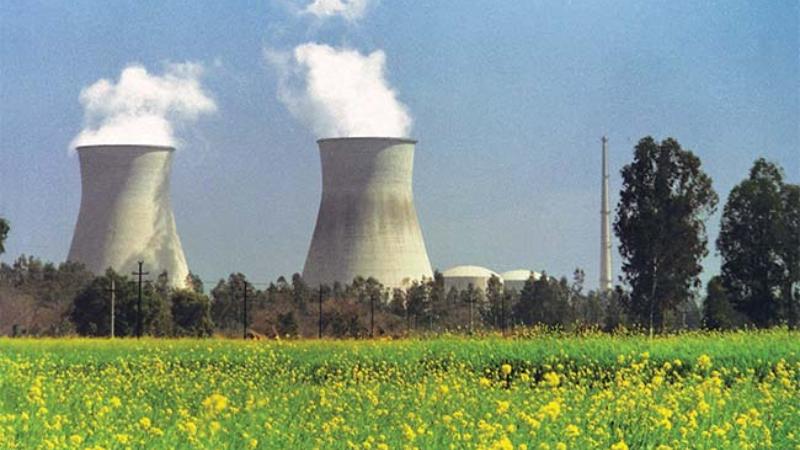
With the enactment of the SHANTI Bill, both sides appear poised to build on that progress. The legislation provides a clearer regulatory pathway and signals India’s intent to expand its nuclear energy program, creating new opportunities for collaboration, investment, and technology exchange between the two countries in the years ahead.


 Joyful
0%
Joyful
0%
 Cool
0%
Cool
0%
 Thrilled
0%
Thrilled
0%
 Upset
0%
Upset
0%
 Unhappy
0%
Unhappy
0%