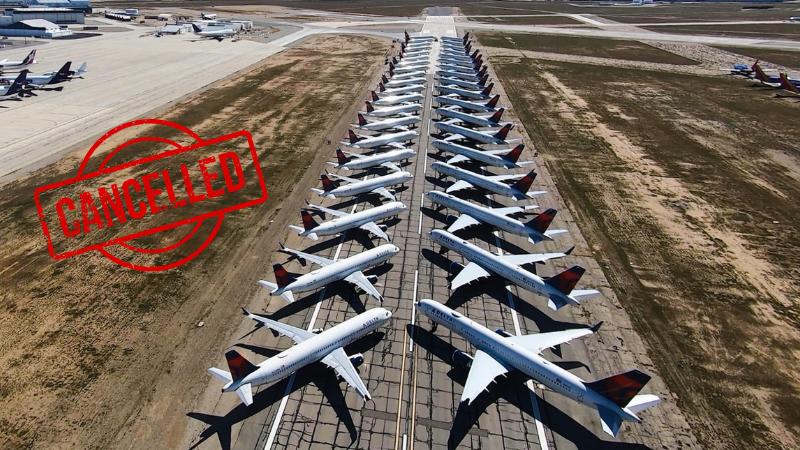
Several airlines operating from the United Arab Emirates, Turkey and Qatar suspended flights to Iran on Friday as widespread protests and communication disruptions continued to affect the country, leading to growing uncertainty across the regional aviation sector. The cancellations affected key routes linking major Gulf and Turkish hubs with Iranian cities, underscoring the broader impact of the unrest on international travel.
According to information published on the Dubai Airports website, at least 17 flydubai flights scheduled to operate between Dubai and the Iranian cities of Tehran, Shiraz and Mashhad were cancelled. A spokesperson for flydubai confirmed that all flights to Iran planned for Friday had been suspended, adding that the airline was closely monitoring developments on the ground and would adjust its schedule based on the evolving situation. The airline did not provide details on when services might fully resume.
Disruptions were also reported in Qatar, where airport data showed that at least two flights scheduled to operate between Doha and Tehran were cancelled on Friday. Flight information indicated that services were expected to return to normal on Saturday, suggesting that the suspensions were being treated as temporary measures rather than long-term route closures.
In Turkey, multiple carriers took similar steps. Turkish media reported that Turkish Airlines cancelled 17 flights to Iran, while AJet suspended six services. Budget carrier Pegasus Airlines also cancelled flights to several Iranian destinations on Friday. These actions reflected a broader regional response as airlines assessed operational risks linked to the unrest and the challenges posed by limited communications with Iran.
Despite the widespread suspensions by foreign carriers, flights operated by Iranian airlines continued largely as normal. Iran Air, Mahan Air and Qeshm Air maintained their scheduled services, according to available flight data, even as international carriers reduced or halted operations.
The flight cancellations come amid ongoing nationwide protests in Iran that began in late December, driven largely by worsening economic conditions and rising public dissatisfaction. The unrest has led to clashes in several cities and prompted heightened security measures by Iranian authorities.
Industry observers noted that the current situation mirrors previous periods of instability in Iran, during which international airlines temporarily scaled back operations. In past cases, carriers cited security concerns, operational uncertainty and disruptions to communications as key factors influencing their decisions. Aviation sources said airlines were continuing to monitor conditions closely and remained prepared to revise flight schedules at short notice.
While no official reasons were cited for the latest cancellations, they coincided with a significant digital blackout imposed by Iranian authorities. Internet access across much of the country has been restricted since Thursday, with mobile data services limited in an effort to curb the spread of protest-related information. The blackout extended into Friday, complicating travel operations and making it difficult for airlines to maintain routine communications.
The communications shutdown also affected international connectivity, with phone calls reportedly failing to connect to Iran and local news websites updating only intermittently. The lack of reliable information added to the operational challenges faced by airlines and travelers alike.
According to the US-based Human Rights Activists News Agency, at least 50 people have been killed in violence linked to the protests so far. State television in Iran aired images overnight showing burning buses, cars and motorbikes, along with fires at metro stations and banks, as authorities sought to highlight the scale of the unrest.
Iranian officials have accused the People’s Mujahedin Organisation, also known as the MKO, of orchestrating the protests. The opposition group split following the 1979 Islamic Revolution and has long been blamed by authorities for acts of unrest. As the situation continues to develop, airlines across the region are expected to remain cautious, balancing passenger demand with safety and operational considerations.