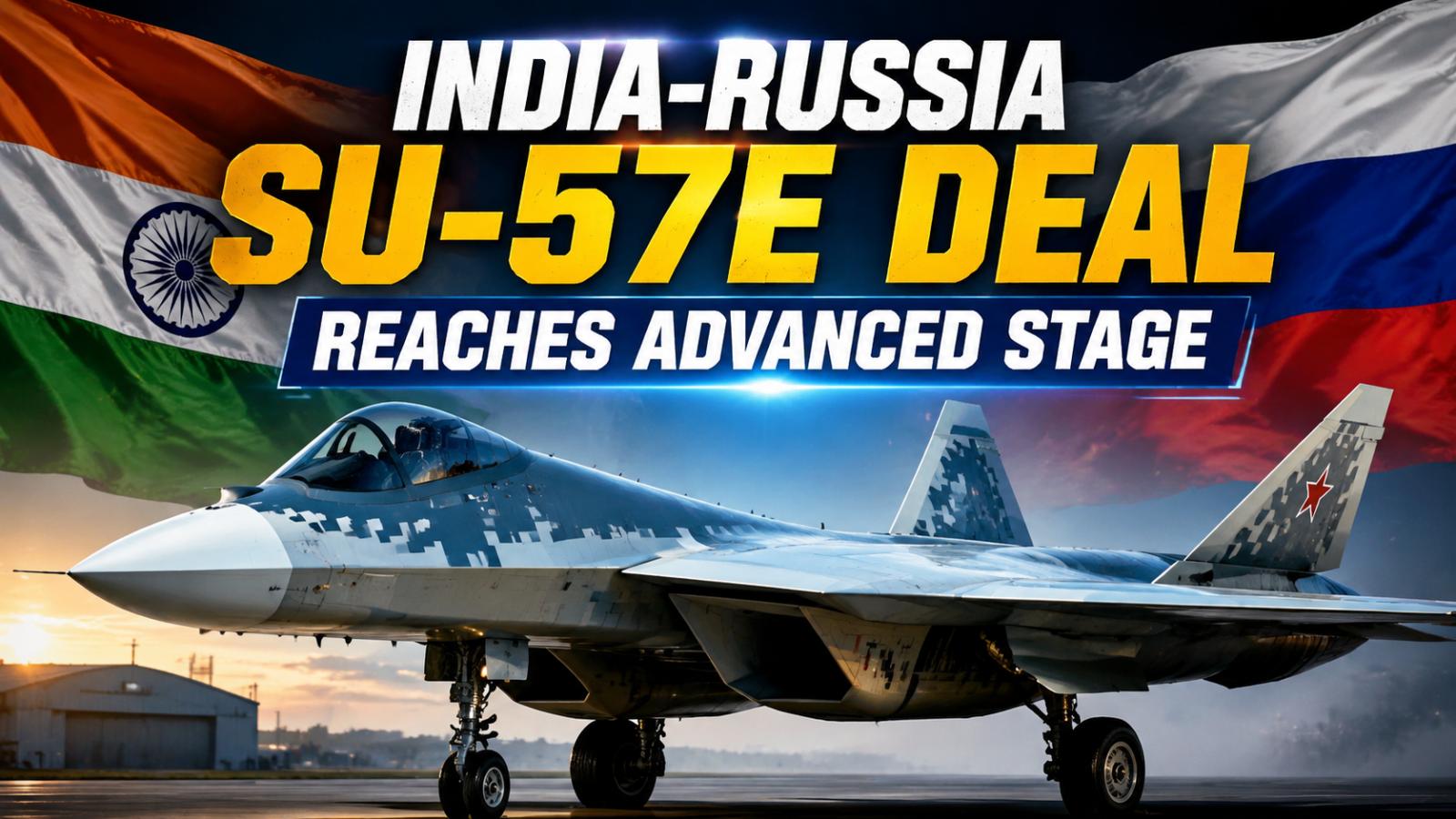
Negotiations between India and Russia for the Su-57E fighter jet have reached a critical stage. The agreement envisions a combination of ready-to-fly aircraft and licensed local production at Hindustan Aeronautics Limited (HAL). A customized two-seater version for India is included, alongside integration of Indian-made systems and local production of Russian aerial weapons. This deal aims to modernize the Indian Air Force and strengthen domestic aerospace capabilities.
Technical Features of Su-57E
The Su-57E is a fifth-generation stealth fighter designed with advanced AESA radar, multi-channel weapons systems, and a comprehensive electronic warfare suite. Its low radar signature is achieved through specialized airframe design, internal weapon bays, and radar-absorbing coatings. The aircraft incorporates AI-assisted systems to optimize mission performance and carries versatile payloads in large internal bays. Russian combat experience underscores its superiority in air-to-air and ground-attack operations compared to fourth-generation jets.
HAL Facilities and Local Production
HAL, currently producing the Su-30MKI, has undergone inspections by Russian experts in preparation for Su-57E manufacturing. Once the contract is finalized, HAL will begin licensed production, supporting technology transfer and India’s self-reliance in defense technology. Local manufacturing also strengthens the domestic aerospace sector and ensures operational readiness.
Strategic Context and Regional Security
This deal comes amid regional security challenges. Pakistan is expected to acquire up to 40 Shenyang J-35 stealth fighters from China, marking its first fifth-generation acquisition. The Su-57E program helps India maintain air superiority, balance regional threats, and achieve cost-effective fifth-generation capabilities for both air-to-air and ground missions.