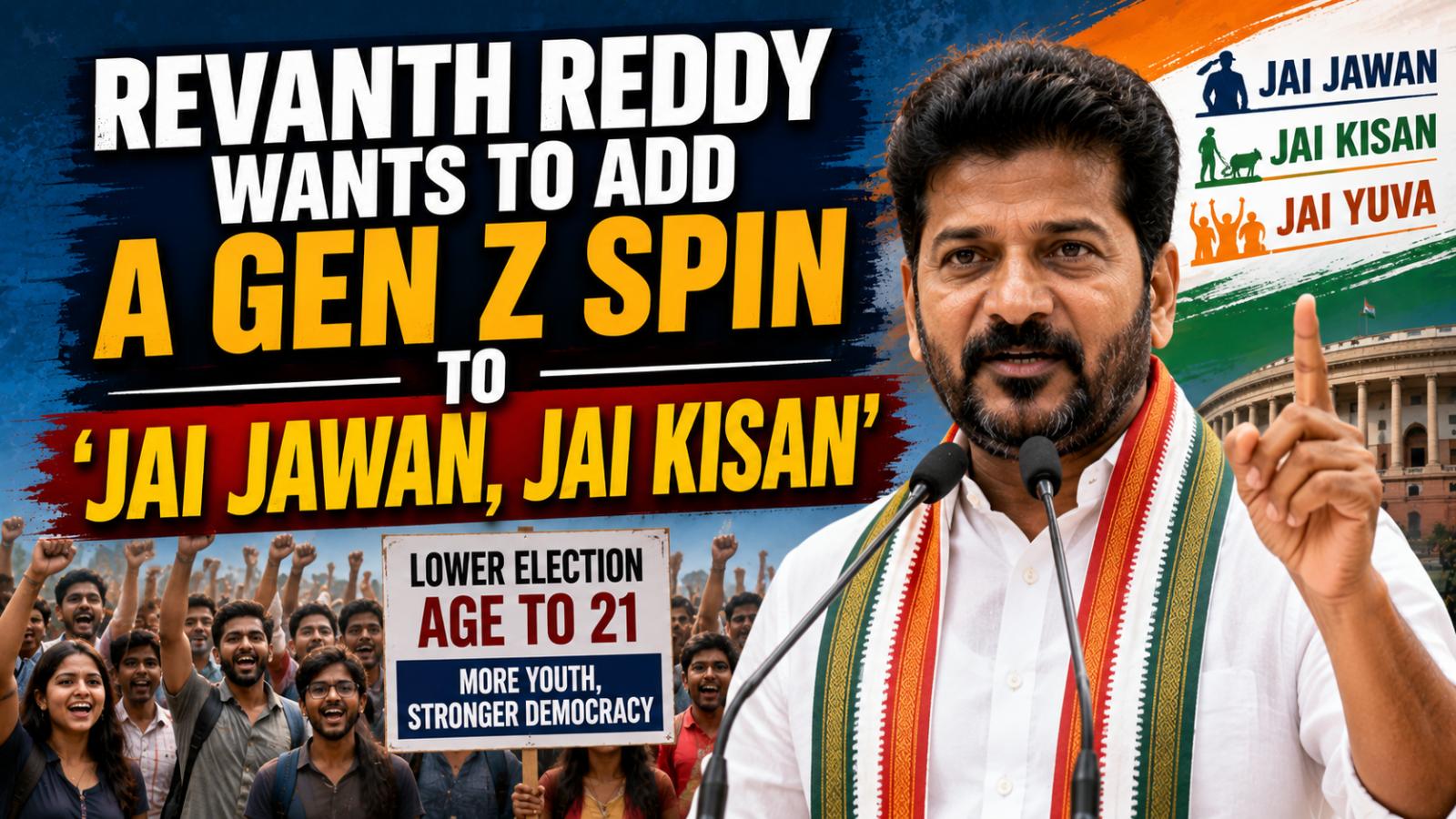
Chief Minister A. Revanth Reddy has urged the Centre to lower the minimum age for contesting Lok Sabha and Assembly elections from 25 to 21.
Revanth Reddy Election Age Proposal Targets Gen Z
Telangana Chief Minister A. Revanth Reddy has called for reducing the minimum age for contesting Lok Sabha and Legislative Assembly elections from 25 to 21, positioning the proposal as a major opportunity to bring Gen Z into mainstream politics.
Reddy also introduced the slogan “Jai Jawan, Jai Kisan, Jai Yuva”, adding youth representation to the well-known national call honouring soldiers and farmers. He said young Indians have demonstrated leadership potential and should be allowed to participate directly in law-making and decisions that shape the country’s future.
Telangana Special Session Planned for Youth Resolution
The Telangana government plans to convene a special session of the Legislative Assembly and Legislative Council during the first week of August. Reddy said the legislature would discuss the proposal, adopt a resolution and send it to the Prime Minister and Union government.
The Chief Minister is also expected to present the proposal to Congress leaders Rahul Gandhi and Mallikarjun Kharge before seeking wider support from INDIA bloc parties. He suggested that Parliament could discuss the reform alongside delimitation, an increase in Lok Sabha seats and the implementation of women’s reservation.
A resolution passed by the Telangana legislature would serve as a political recommendation. Changing the eligibility age nationally would require parliamentary action because Articles 84 and 173 of the Constitution currently prescribe a minimum age of 25 for Lok Sabha and Legislative Assembly candidates.
Youth Political Participation Drives ‘Jai Yuva’ Campaign
Reddy’s proposal attempts to address the gap between the voting age and the age required to contest major elections. Indian citizens can register as voters after turning 18, but they must wait until 25 to contest a Lok Sabha or Assembly seat.
Supporters of reducing the age may argue that younger candidates understand student welfare, digital employment, education, entrepreneurship and emerging social concerns more directly. Critics may question whether lowering the threshold alone would ensure meaningful representation without stronger internal democracy and candidate-selection reforms within political parties.
Reddy said the proposal could be examined by a Joint Parliamentary Committee if broader consultation is required. He urged the Prime Minister to “open the doors of Parliament to the youth” and allow younger citizens to participate directly in national law-making.
Revanth Reddy Links Reform Push to Student Concerns
The Chief Minister also raised concerns about the administration of national examinations, including NEET, NET and examinations conducted by the CBSE. He called for stronger mechanisms that protect students and restore confidence in competitive testing.
Reddy urged the Centre to withdraw cases registered against students during protests at Jantar Mantar. He also sought compensation for families of NEET aspirants who reportedly died by suicide following the paper-leak controversy.
By linking election reform with examination accountability, Reddy is presenting his “Jai Yuva” message as more than a slogan. The campaign places youth representation, student welfare and political access at the centre of a wider national debate over how India’s democratic institutions should respond to a younger generation.