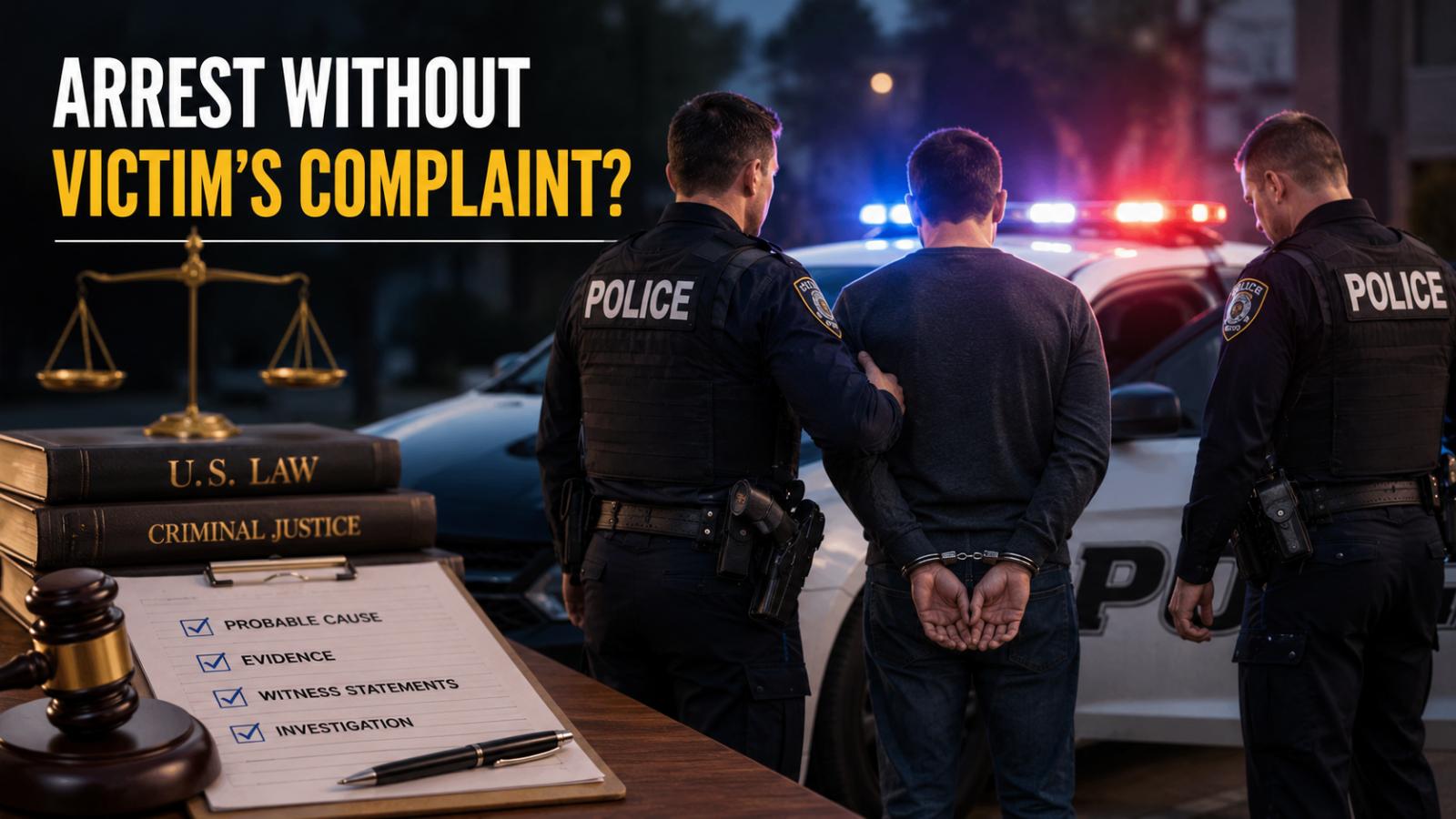
Can police arrest someone without the victim pressing charges in the US? In many situations, officers may make an arrest if they have probable cause that a crime occurred. The decision to pursue criminal charges is generally made by prosecutors based on the available evidence.
Can Police Make an Arrest Without the Victim's Request?
In the United States, police officers do not always need a victim to request an arrest before taking action. If officers have probable cause to believe a crime has been committed, they may arrest a suspect in accordance with the laws of the state where the incident occurred. The legal standard and procedures vary by jurisdiction.
What happens if 911 is called during a domestic argument in the US?
What Is Probable Cause?
Probable cause is a legal standard that allows officers to take enforcement action when the facts and circumstances reasonably indicate that a crime may have occurred. Officers evaluate the situation using available evidence rather than relying on a single statement.
Evidence may include visible injuries, damaged property, witness accounts, photographs, body-worn camera footage, emergency call recordings, or other information gathered during the investigation.
Who Decides Whether Charges Are Filed?
What happens after a domestic violence arrest in the US?
A common misunderstanding is that victims decide whether criminal charges are filed. In most criminal cases, prosecutors review the evidence submitted by law enforcement and determine whether to file or continue criminal charges under applicable law.
A victim's wishes may be considered, but they are not always the deciding factor. The final decision generally rests with the prosecuting authority.
Why Domestic Violence Cases Are Different
Domestic violence laws in Texas
Domestic violence allegations often receive additional attention because officers must consider the immediate safety of everyone involved. If investigators believe there is sufficient evidence that an offense occurred, legal action may continue even if the alleged victim later decides not to participate or changes their statement.
The exact process differs among states, and courts ultimately determine the outcome of each case.
What Happens After an Arrest?
Following an arrest, the accused person is informed of the legal process, may appear before a judge, and has the right to legal representation. Prosecutors evaluate the available evidence before deciding how the case should proceed. Every person charged with a crime is presumed innocent unless proven guilty in court.
What should you do if police arrive during a domestic dispute?
An arrest and the filing of criminal charges are separate steps in the U.S. criminal justice system. While a victim's statement can be important, police officers and prosecutors also consider physical evidence, witness testimony, and applicable state laws before deciding how a case moves forward. Understanding this distinction helps explain why some investigations continue even when a victim does not seek prosecution.