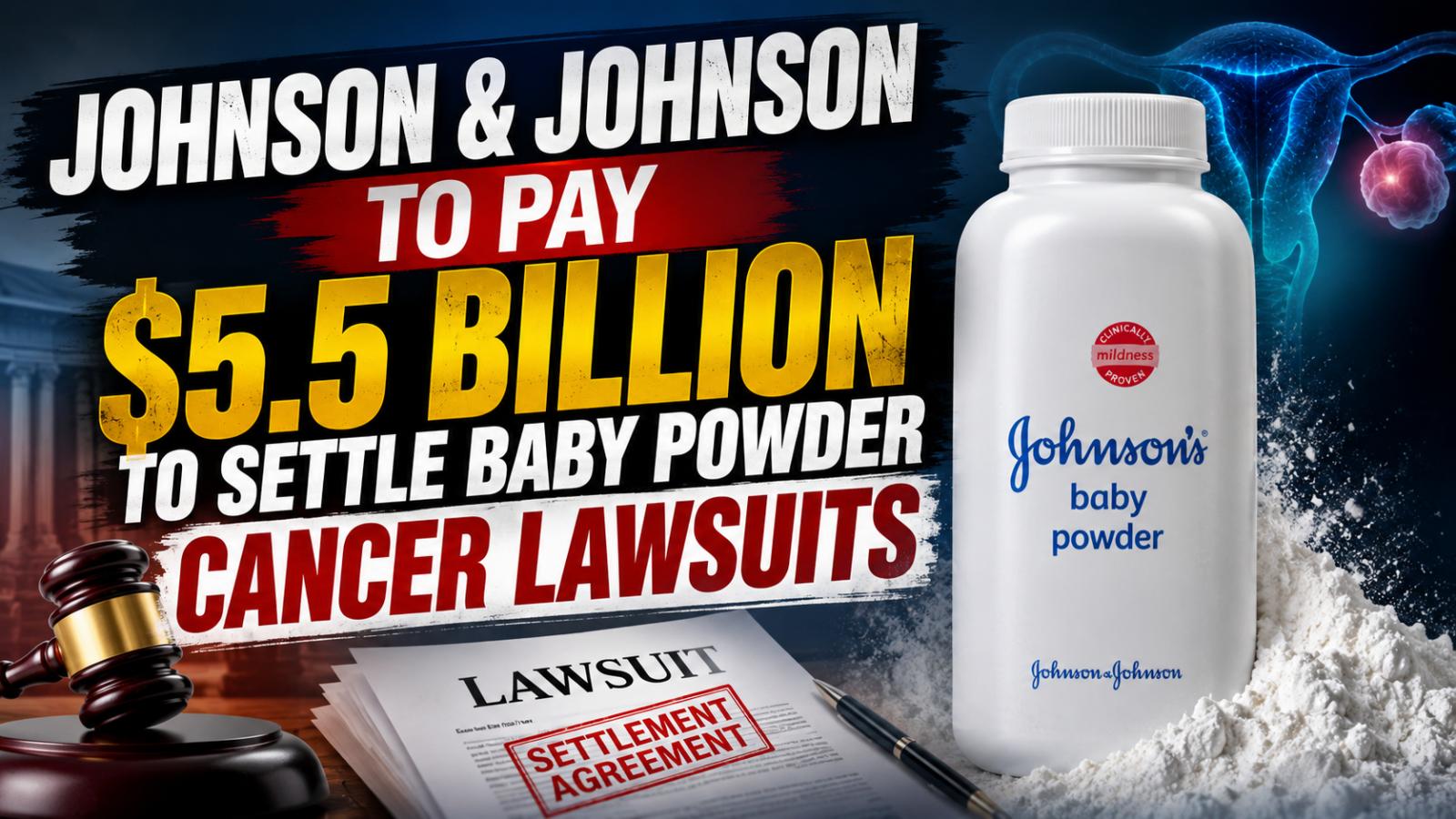
Johnson & Johnson proposed a $5.5 billion settlement covering about 76,000 existing lawsuits alleging its talc products caused ovarian cancer.
Johnson & Johnson Talc Settlement Covers About 76,000 Claims
Johnson & Johnson has agreed to a proposed $5.5 billion settlement aimed at resolving nearly all remaining US lawsuits alleging that its talc-based baby powder and other cosmetic products caused ovarian cancer.
The agreement covers about 76,000 existing claims filed in federal and state courts. It will take effect only if at least 95% of eligible claimants accept its terms, meaning the proposal is not yet a completed or court-approved resolution.
The deal could conclude more than a decade of trials, appeals and settlement negotiations surrounding one of the largest product-liability disputes faced by the healthcare company. It does not cover possible future lawsuits from people who have not yet filed claims.
Johnson & Johnson Talc Settlement Requires Strong Approval
Under the proposed arrangement, Johnson & Johnson expects to pay approximately $3 billion during 2027, with the remaining amount scheduled to be paid from 2028. The eventual total could reportedly exceed $7 billion depending on the number and eligibility of participating claimants.
Lawyers representing plaintiffs said excluding future claims would allow more compensation to be distributed among existing claimants and could result in payments being completed much faster than under J&J’s earlier bankruptcy proposals.
The company said it chose to settle to end prolonged and expensive litigation, while maintaining that it would have ultimately succeeded in defending the cases. A settlement does not amount to an admission that the products caused cancer.
Johnson & Johnson Rejects Talc Cancer Allegations
The lawsuits were filed by women and their families who alleged that prolonged use of talc-based products contributed to ovarian cancer. Some plaintiffs also claimed that the talc contained asbestos, a substance known to cause cancer.
Johnson & Johnson has consistently denied the allegations, maintaining that its cosmetic talc products were safe, did not contain asbestos and were not responsible for ovarian cancer. The company stopped selling talc-based Johnson’s Baby Powder in the United States in 2020 and later shifted to a cornstarch-based formulation.
The litigation has produced mixed outcomes. Some juries awarded substantial damages to plaintiffs, while J&J won other trials or succeeded in having verdicts reduced or overturned. A federal judge recently questioned whether individual plaintiffs could present sufficient expert evidence proving that talc specifically caused their cancer.
Johnson & Johnson Talc Deal Follows Failed Bankruptcy Plans
J&J previously attempted to resolve the claims through a controversial restructuring strategy commonly known as the “Texas two-step.” The company transferred talc liabilities to a subsidiary that then sought bankruptcy protection and proposed a collective settlement.
Courts rejected three bankruptcy efforts, with critics arguing that a financially stable corporation should not use bankruptcy proceedings to limit its exposure to civil lawsuits. The most recent plan was dismissed after a judge found problems with the claimant voting and solicitation process.
The new settlement instead relies on direct participation by existing claimants. Should the 95% acceptance threshold be reached, Johnson & Johnson could resolve almost all remaining ovarian cancer claims. Failure to secure the required support could send thousands of cases back into courts across the United States.