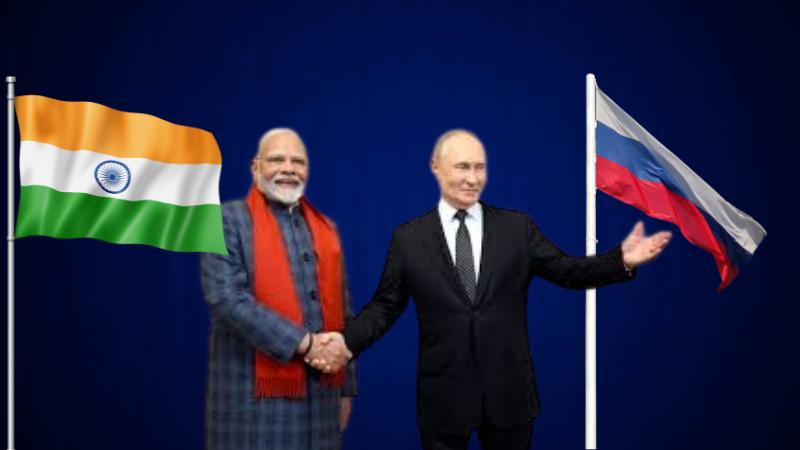
It was confirmed that President Putin had accepted Prime Minister Modi’s invitation to visit India later this year, emphasizing that bilateral ties remain unaffected by external pressures. The leaders also acknowledged the dynamic growth in India-Russia relations, a bond that has continued to strengthen in the face of global geopolitical changes.
The Russian President expressed his deepest condolences to the families of the victims and conveyed unequivocal support for India's efforts to bring the perpetrators to justice. Putin called the attack a heinous act of terror and reaffirmed that Russia stands with India in its fight against terrorism. This diplomatic backing serves as a notable counterpoint to recent remarks from Pakistan calling for a global probe into the Kashmir incident.
Just days before Putin’s call, Pakistan’s Defence Minister Khawaja Asif had suggested that Russia, China, or Western nations could facilitate a neutral investigation into the attack. He implied that a foreign-led team could determine whether India was being truthful in its claims about the origin of the attack and who was responsible. He also claimed that Pakistan’s Prime Minister Shehbaz Sharif supported the idea of an international team leading the probe.
Asif argued that only an independent investigation could clarify the situation, as, according to him, India had not provided any concrete evidence linking Pakistan to the attack. He dismissed Indian statements implicating Pakistan as baseless and accused New Delhi of making empty claims without proof. However, Pakistan’s position on involving outside powers in a domestic security investigation has raised concerns in India and among its allies, particularly given the sensitivity of terrorism-related incidents in Kashmir.
The April 22 attack was claimed by The Resistance Front, a known proxy of the Pakistan-based Lashkar-e-Taiba, a banned terrorist organization with a long history of violent activity in the region. Indian authorities have consistently held Pakistan responsible for harboring such groups and enabling their operations across the border. The acknowledgment of the attack by a group linked to Lashkar further reinforces India’s claims, undermining Pakistan’s attempt to deflect blame or seek international involvement.
This incident and the resulting diplomatic discourse once again highlight the complexities of South Asian geopolitics. India’s relationship with Russia, especially during global crises like the ongoing war in Ukraine, has demonstrated remarkable resilience. While many countries imposed sanctions on Moscow and sought to isolate it diplomatically, India maintained a pragmatic stance, continuing trade relations including substantial oil imports. This steadfast partnership is rooted in decades of defense, energy, and strategic cooperation.
President Putin and Prime Minister Modi share a rapport that extends beyond formal diplomacy. During Modi’s visit to Russia last year, Putin had remarked that their understanding was so strong that no translation was needed between them. Such camaraderie is rare in international politics and reflects the trust both leaders place in each other. It also signals the commitment from both countries to shield their bilateral relationship from outside influences.
The recent phone conversation further demonstrates that Russia values its ties with India and sees no role for other powers in matters concerning India's internal security. Putin’s explicit condemnation of the Pahalgam attack and his call for justice sends a clear message to those seeking to internationalize the Kashmir issue. It also reassures India of continued support from one of its closest allies at a time of heightened tension and global scrutiny.
India and Russia are expected to build on this momentum during the upcoming Annual Summit later this year, where discussions are likely to span defense, energy, space, and counterterrorism cooperation. For now, Putin’s call stands as a testament to the unwavering bond between the two nations and a powerful diplomatic rebuttal to those attempting to complicate the narrative around terrorism in Kashmir.