A powerful human-interest story is gaining attention for its emotional depth and its reflection on empathy, intention, and the importance of understanding real needs. Centered on a middle-class individual managing a chronic health condition, the narrative highlights how even well-meaning actions can fall short when awareness is missing.
The story begins in a modest household where financial limitations shape daily priorities. With only a small amount of money available, the man is reminded by his wife to use it carefully to purchase his essential diabetes medication. The moment underscores a quiet but urgent reality—health needs that cannot be postponed.
Later, the man encounters an old friend who now lives a far more comfortable lifestyle. Their reunion is warm, reflecting enduring personal bonds despite changing circumstances. During a casual interaction, the friend requests a small amount of money to complete a purchase, unaware of its significance. After a brief hesitation, the man chooses to help, sacrificing the only money he had set aside for his medication.
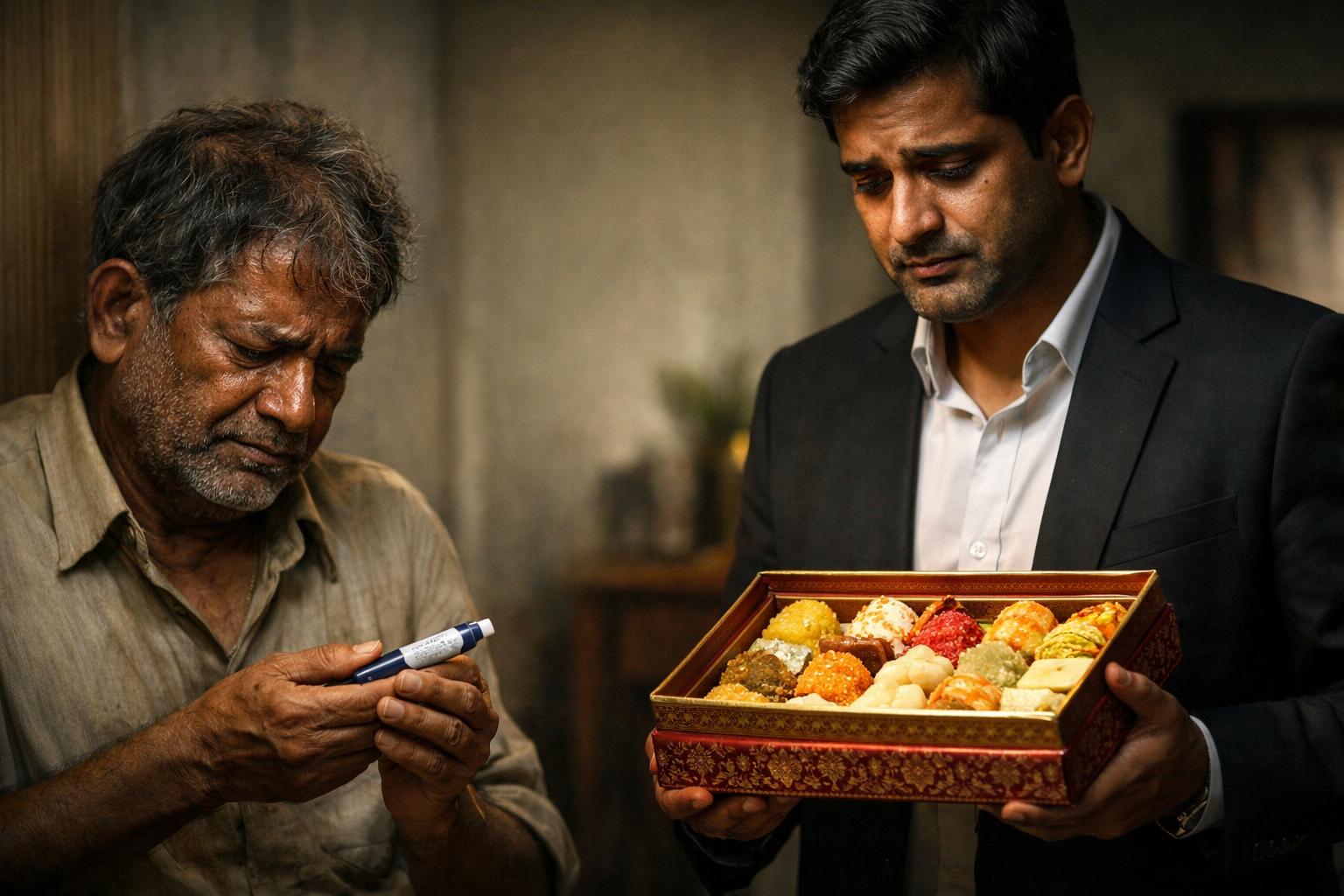
The following day, the friend returns with what he believes is a generous gesture—a large, expensive box of sweets meant to repay the amount he borrowed. However, this act unintentionally reveals a striking irony: while the man had been struggling to afford his diabetes medicine, he is instead given sweets he cannot safely consume. The contrast highlights a deeper issue, where value is measured in cost rather than relevance.
The situation becomes more poignant when the friend overhears a private conversation inside the home. The man, now without his medication, expresses distress, questioning how such a gift can help when his most basic health need remains unmet. This moment underscores the emotional weight of misunderstanding, even in acts of kindness.
Ultimately, the story serves as a reminder that meaningful help requires more than generosity—it demands awareness, empathy, and a genuine understanding of what others truly need.