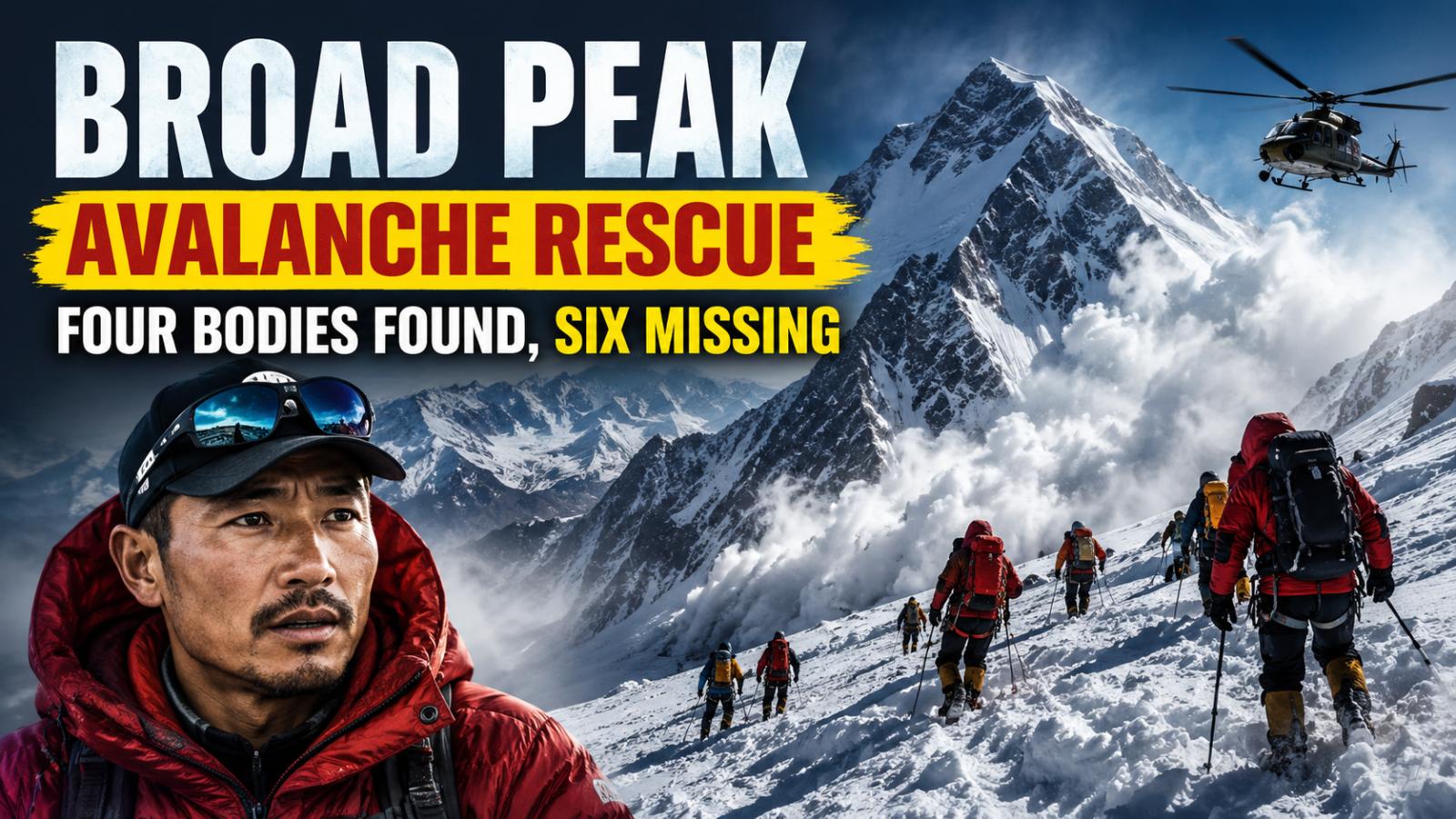
Four bodies have been located after an avalanche struck an international climbing team on Broad Peak in Pakistan’s Karakoram range. Six climbers remain missing, including renowned mountaineer Nirmal “Nims Dai” Purja, as difficult weather and remote terrain complicate rescue efforts.
The avalanche reportedly hit the team around midday on Thursday near an altitude of 6,600 metres. Ten climbers initially lost contact with base camp, according to information shared by Pakistani officials and the Alpine Club of Pakistan. The identities of the four people found have not yet been officially confirmed.
Purja Search Continues on Broad Peak
Purja was leading an international group that included climbers and guides from Nepal, Pakistan, Oman, the United States and China. The Nepal-born British mountaineer is among the six people who remain unaccounted for following the Broad Peak avalanche.
Authorities have urged the public to avoid speculation while families await verified information. With communication from the expedition cut off since Thursday, officials are relying on search teams, aircraft observations and the climbers’ last known positions.
Bodies Found During Ground Operation
Ground rescuers located four bodies near the lower section of the avalanche path. Early reports indicated that two bodies had been found, but the number later increased as teams continued searching the debris field.
The recovery does not confirm the condition or location of every missing climber. Officials are working to identify those found before releasing names. The search is focused on a remote and technically difficult section of the mountain, according to Gilgit-Baltistan tourism authorities.
Weather Delay Slows Helicopter Rescue
Poor visibility, snowfall and unstable weather have limited helicopter access to the mountain. Two Pakistan Army helicopters were assigned to the Broad Peak avalanche rescue, but flights depend on safe operating conditions.
Ground teams began searching on foot while waiting for an aerial rescue window. Broad Peak’s steep terrain and high altitude make overland movement slow, particularly when rescuers must cross snowfields exposed to further avalanches.
The Alpine Club of Pakistan said it was coordinating with the relevant authorities to mobilise available resources. Helicopters are expected to operate from Skardu whenever the weather permits safe flights.
Tracker Data Provides Limited Hope
A tracking device associated with Purja reportedly registered changes in location after the avalanche. His business partner, Mingma Gyabu Sherpa, said the tracker first appeared to show movement downhill before later displaying another shift.
Tracker data can indicate that a device has moved, but it cannot establish whether its carrier is conscious, injured or alive. Search teams must physically reach the transmitted location before drawing conclusions. The signal therefore offers a possible search lead rather than confirmation of Purja’s condition.
Rescue Odds Decline With Time
The chances of survival after a high-altitude avalanche generally decrease as exposure continues. Rescuers also face the threat of cold, limited oxygen, falling snow and additional slides while attempting to reach the missing team.
Broad Peak rises more than 8,000 metres near K2 and is recognised as the world’s 12th-highest mountain. Purja gained international recognition in 2019 after completing all 14 mountains above 8,000 metres in six months and six days, a record-breaking project later featured in the documentary “14 Peaks: Nothing Is Impossible.”
The rescue operation remains active, and authorities have not issued a final list of casualties. Confirmed announcements from the Alpine Club of Pakistan and Gilgit-Baltistan officials should be treated as the primary sources for further updates.