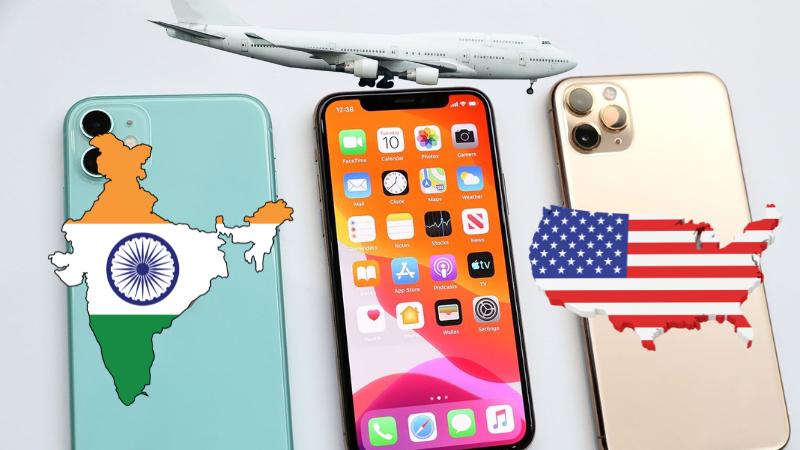
The broader supply chain realignment also includes sourcing other Apple products from Vietnam, another country that enjoys favorable tariff terms with the US. This diversification effort is part of Apple’s ongoing strategy to optimize production costs and reduce its dependence on any single nation, especially in light of recent geopolitical and economic tensions. Despite these changes, China still accounts for the majority of Apple’s manufacturing due to its well-established infrastructure and skilled workforce, which have supported Apple for nearly two decades.
Tim Cook emphasized that India will now serve as the official country of origin for a large number of iPhones destined for US consumers. This adjustment comes in the wake of the United States government's implementation of reciprocal tariffs, announced by former President Donald Trump. Though the full impact of these policy shifts is still unfolding, Cook noted that the effect on Apple’s March quarter results was limited, attributing this to the company’s ability to rapidly optimize its supply chain.
An analysis cited in an India Dispatch report, referencing insights from JPMorgan, suggests that Apple could maintain nearly stable pricing even after relocating final production stages to India. The cost of an iPhone assembled in China currently stands at approximately $938. If the production shifts entirely to India, the cost is estimated to rise to about $1,008—a modest 2 percent increase. This is significantly more economical than producing the devices in the United States, which would raise costs by nearly 30 percent. This price stability is critical for Apple, as it helps protect its competitive edge in a market where even slight pricing variations can influence consumer behavior.
Further backing this move is a long-term plan, reportedly targeting the year 2026, by which Apple aims to complete the transition of all iPhone assembly for the US market to India. This timeline reflects the scale of change required, including the need to increase production capacity and secure reliable local partners. Key collaborators in this transition include Foxconn and Tata, both of whom have already begun importing pre-assembled component kits from China to support India's manufacturing efforts.
Apple’s second-quarter financial results for the fiscal year reinforce the brand’s ongoing strength, despite geopolitical uncertainties. For the quarter ending in March, the company reported revenue of $95.4 billion, an increase from $90.75 billion in the same period the previous year. The iPhone remains the company’s flagship product, contributing $46.84 billion in revenue. Other product lines also performed solidly, with Mac and iPad revenues coming in at $7.95 billion and $6.4 billion, respectively.
Looking ahead to the June quarter, Tim Cook projected revenue growth in the low to mid-single digits on a year-over-year basis. However, he acknowledged that projections beyond that point remain unclear, reflecting the unpredictable nature of the global trade environment. Apple follows a fiscal calendar that begins in October and ends in September, with the first fiscal quarter spanning October to December.
The broader backdrop to this strategic shift is the global trade environment, especially the ongoing tariff battle between the United States and China. On April 2, Trump introduced a sweeping plan for reciprocal tariffs impacting more than 100 countries, including India and China. A temporary 90-day pause on these tariffs was announced a week later, as the US entered negotiations with several countries. China, however, was notably absent from that list and retaliated with its own set of tariffs. The United States currently levies a staggering 145 percent tariff on Chinese imports, while China imposes a 125 percent rate on US goods.
This tariff war has prompted companies like Apple to reevaluate their supply chains, looking for ways to reduce exposure to unpredictable trade policies and high production costs. For Apple, moving part of its production to India appears not only to be an economic decision but also a strategic one, potentially opening up access to one of the world’s fastest-growing smartphone markets while also reducing geopolitical risk. As Apple adjusts to a new global manufacturing landscape, its ability to manage cost, quality, and supply chain agility will be critical in maintaining its leadership in the tech sector.