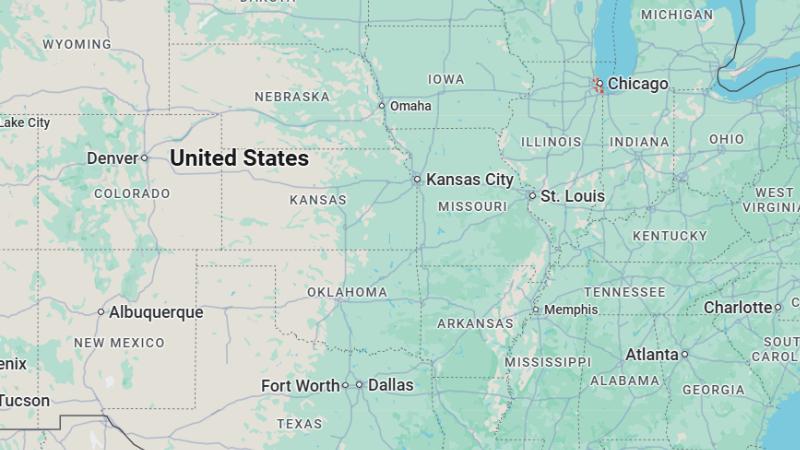
Democratic lawmakers from Texas have traveled to Illinois to prevent the Republican-led Legislature in their home state from advancing a controversial plan to redraw congressional districts. This dramatic move marks the latest chapter in the long-standing national debate over gerrymandering, the practice of manipulating electoral district boundaries to favor one political party. Their arrival in Illinois has intensified political discussions, particularly as Illinois itself faces criticism for heavily gerrymandered maps that favor Democrats.
Gerrymandering, a term with roots dating back over 200 years, refers to the strategic drawing of district lines to give one party a distinct advantage. The word originated in 1812 when Massachusetts Governor Elbridge Gerry approved a district shaped so oddly that critics compared it to a salamander. Over time, the term came to describe any politically motivated redistricting. In states like Texas and Illinois, where legislatures have the power to redraw maps, this practice has been a persistent and contentious feature of politics.
Texas Democrats argue that the new maps proposed by Republicans would dilute the power of their voters, consolidating GOP control and further skewing representation. In response, they left the state to deny Republicans the quorum necessary to hold a vote. Under Texas law, two-thirds of lawmakers must be present for legislative business to proceed, and by crossing state lines, Democrats effectively halted the vote. Illinois Governor J.B. Pritzker has offered support to the Texas lawmakers, helping them coordinate logistics while criticizing the actions of Texas Republicans. He accused them of attempting to manipulate rules mid-decade to secure political gain ahead of future elections.
This situation comes against the backdrop of Illinois facing its own accusations of gerrymandering. After new maps were drawn in 2022, Democrats secured 14 of the state’s 17 congressional seats, a result critics say would not have occurred without partisan manipulation. Princeton’s Gerrymandering Project gave Illinois’ congressional maps an “F” grade, similar to the failing grades assigned to Texas and other states like Wisconsin, Florida, Georgia, and Nevada. While Democrats defend their control of Illinois by pointing to voter support, opponents highlight that both parties have exploited map-drawing to entrench their power whenever possible.
The Supreme Court has played a significant role in shaping the gerrymandering debate. In a 2019 ruling, the Court declared that federal judges do not have the authority to determine whether partisan gerrymandering is excessive, effectively leaving the issue to state governments and political processes. This has allowed legislatures with single-party control to aggressively redraw maps to their advantage. In Texas, where Republicans control both chambers and the governor’s office, new maps have been criticized for weakening the influence of Democratic-leaning districts, particularly those with large minority populations.
The Texas Democrats’ decision to flee has sparked sharp responses. Governor Greg Abbott has threatened to arrest them upon their return to Texas, though civil arrest warrants issued within Texas cannot be enforced in other states. Thus, lawmakers in Illinois face no legal risk while they remain outside Texas. Their stay in Illinois also recalls similar instances from the past, such as in 2011 when Wisconsin Senate Democrats fled to Illinois to block a controversial budget vote.
The current redistricting battle matters greatly for national politics. Republicans hold a slim majority in the U.S. House with 220 seats, and efforts to redraw maps in states like Texas aim to strengthen that position ahead of upcoming elections. Typically, maps are redrawn every ten years following the census, but the push for mid-decade redistricting represents a significant departure from tradition, driven by the desire to gain or preserve legislative dominance. Former President Donald Trump has encouraged aggressive redistricting tactics to avoid a repeat of 2018, when Republicans lost the House, hindering his agenda.
Illinois, while offering refuge to the Texas lawmakers, remains deeply entangled in its own redistricting controversies. Political experts note that Illinois Democrats have consistently redrawn maps after each census to maintain strong legislative control, often resulting in veto-proof majorities. Critics argue that the maps fail to reflect the actual balance of voter preferences across the state, instead reinforcing partisan outcomes. Supporters counter that Illinois voters continue to choose Democratic candidates because they align with the state’s values and priorities.
The current situation highlights a broader national struggle over the fairness of electoral systems. As both parties exploit redistricting when given the chance, questions about the integrity of representation and the influence of voters versus political mapmakers grow more urgent. Some states, such as Arizona, have implemented independent commissions to draw district boundaries, receiving higher marks for fairness. However, the majority of states still rely on partisan legislatures to control redistricting, ensuring that the gerrymandering debate will persist.
With the Texas lawmakers’ stay in Illinois, the fight over maps is far from over. Republicans in Texas are expected to continue pushing for the new districts, while Democrats plan to use every tool available to delay or block them. Meanwhile, the press conference scheduled with Illinois leaders and Democratic officials signals that the political drama surrounding this issue will remain in the spotlight. The battle over gerrymandering is not only shaping the current political landscape but will also have lasting implications for future elections and the balance of power in the United States.