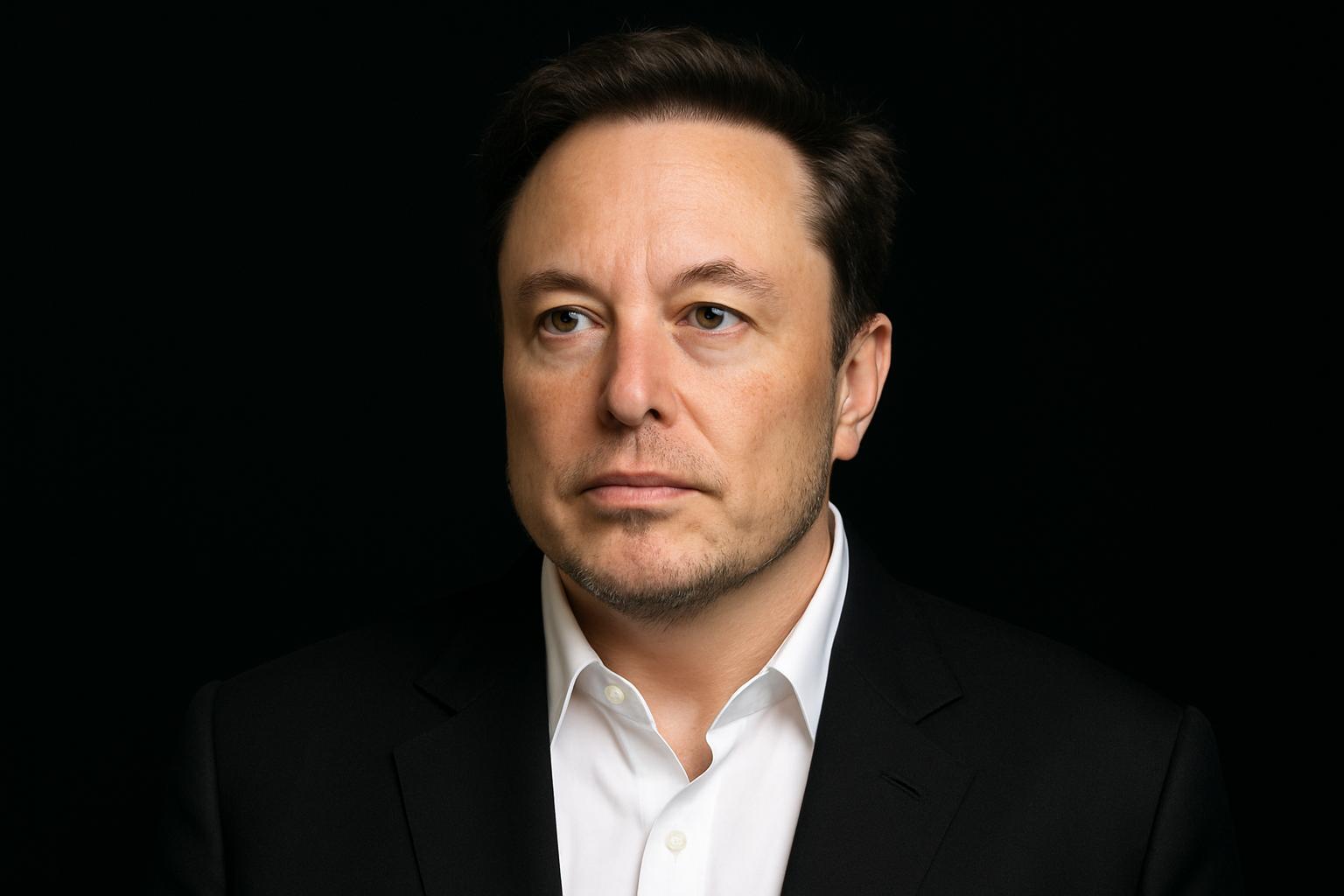
Elon Musk has suggested that traditional employment may become largely optional within the next decade or two, predicting a dramatic shift in how societies function as artificial intelligence and robotics expand across industries. Speaking at an investment forum in Washington, DC, he said the future of work could resemble a hobby rather than an economic necessity, comparing it to the decision to grow vegetables for personal satisfaction even when they can be purchased easily at a store. Musk argued that people may choose to work in the future much like they engage in sports or video games today, driven by interest rather than survival.
According to Musk, the accelerating development of automated systems and advanced robots will be the primary force behind this transformation. He said millions of robots could enter the global workforce, boosting productivity and reducing reliance on human labour. The entrepreneur has long maintained that Tesla’s long-term value lies not only in its electric vehicles but also in AI-driven robotics, especially its humanoid robot, Optimus. Musk has previously stated that Optimus could eventually represent most of Tesla’s economic value, though production and deployment continue to face delays.
The prospect of optional work has sparked debate among economists and labour experts, many of whom question whether such a future is realistic or universally beneficial. Analysts note that automation is already reshaping the labour market in ways that create anxiety, particularly for younger and lower-skilled workers. Early research indicates that AI adoption may be contributing to the displacement of entry-level jobs, intensifying challenges for younger generations who are dealing with inconsistent wage growth and competitive markets.
Musk, however, framed the potential shift as part of a broader move toward a post-scarcity world, citing science fiction writer Iain M. Banks and his Culture series, which imagines societies where intelligent machines manage production and traditional jobs disappear. He suggested that if AI and robotics continue to advance, money itself may lose relevance over time, fundamentally altering economic relationships and personal motivations.
Despite these predictions, researchers studying the future of AI caution that major hurdles remain. While AI software has become cheaper, robotics continues to require high investment, specialised materials, and complex manufacturing. Scholars argue that the cost and scalability of physical robots still limit their widespread adoption compared with digital AI tools, slowing the transition Musk envisions.
Other experts emphasize that the meaning of work extends beyond income. Decades of behavioural studies, including a long-running Harvard study that began in 1938, show that fulfilling relationships and social ties contribute significantly to long-term happiness. Workplaces often provide structures for such connections, raising questions about how future generations will develop purpose and community if employment becomes optional.
Musk has acknowledged these concerns in earlier appearances. At a technology conference last year, he reflected on whether human meaning could diminish in a world where machines outperform people in nearly every task. He suggested that humans may still play a role by shaping the values and direction of advanced AI, even if machines handle most functional responsibilities.
As discussions about automation intensify, the debate continues over how societies should prepare for a world where work may no longer be essential. Whether Musk’s prediction becomes reality or remains aspirational, the rapid expansion of AI and robotics ensures that the conversation about purpose, identity, and social structure will remain urgent for generations to come.