A fatal shooting during a federal immigration enforcement operation in Minneapolis has ignited political outrage, community protests, and renewed scrutiny of aggressive tactics being used by federal agents in major U.S. cities.
According to the Department of Homeland Security, Immigration and Customs Enforcement officers were conducting targeted enforcement actions when a 37-year-old woman allegedly attempted to strike officers with her vehicle. A DHS spokesperson said the woman “weaponized her vehicle” in what officials described as an effort to kill federal agents. During the confrontation, one agent fired what authorities characterized as defensive shots, killing the woman at the scene.
Homeland Security Secretary Kristi Noem said agents’ vehicles became stuck in snow, prompting officers to exit their cars and attempt to push them free. She alleged that the woman then attacked the agents with her vehicle, calling the incident an act of domestic terrorism. Officials stated that the agent who fired used his training to protect himself and fellow officers.
Minneapolis Mayor Jacob Frey strongly disputed that characterization, citing video footage that he said does not appear to show the vehicle being used as a weapon. Speaking at a press conference hours after the shooting, Frey blamed the federal operation for escalating tensions and accused ICE of recklessly exercising power. He argued that the presence of immigration agents was sowing fear, fracturing communities, and contributing to violence rather than improving public safety.
Frey demanded that ICE leave the city, stating that federal immigration actions were causing chaos and distrust while tearing families apart. He acknowledged the limits of his authority over federal agencies but delivered a blunt message that Minneapolis did not welcome the operation.
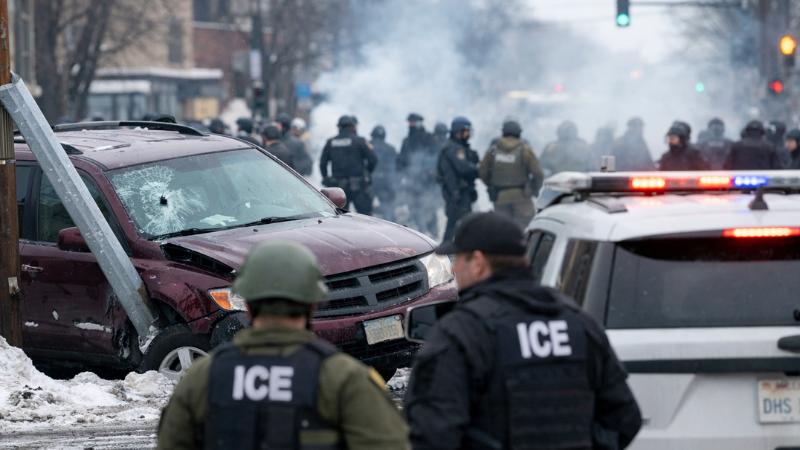
Video recorded near the scene showed a burgundy SUV with apparent damage to its windshield and front end after crashing into a light pole. It remains unclear who owned the vehicle or the precise trajectory of the bullet that struck it. Witnesses reported hearing multiple gunshots shortly before seeing the crash.
Residents gathered in the street following the shooting, chanting and throwing snowballs toward federal vehicles. Law enforcement responded by deploying pepper spray and tear gas to disperse the crowd. DHS said several ICE officers were injured during the incident but are expected to recover fully, without providing details about their injuries.
The shooting occurred amid a significant expansion of federal immigration enforcement in Minneapolis. DHS officials said ICE has arrested roughly 1,400 people in the city since early December, a sharp increase from earlier totals. Hundreds of additional federal officers and agents have been deployed, with total personnel expected to reach approximately 2,100, including enforcement officers and Homeland Security Investigations agents. Border Patrol agents are also scheduled to begin operations in the city.
The surge follows heightened political attention after allegations circulated online claiming fraud at Somali-run day care centers. Federal investigators reviewed the claims, while state inspections found most of the targeted facilities operating normally. Despite those findings, increased enforcement activity has heightened anxiety within Minneapolis’ Somali community, with many residents limiting public activity out of fear of being detained.
Minneapolis Police Chief Brian O’Hara, whose department does not participate in immigration enforcement, has warned that the scale and visibility of the federal operation could trigger broader unrest. The situation has further intensified national debate over immigration policy under President Donald Trump, whose administration has expanded enforcement efforts and used inflammatory rhetoric toward immigrant communities.
As investigations continue, the shooting has become a flashpoint in the ongoing conflict between local officials and federal authorities, raising questions about accountability, use of force, and the broader impact of immigration enforcement on community trust and public safety.