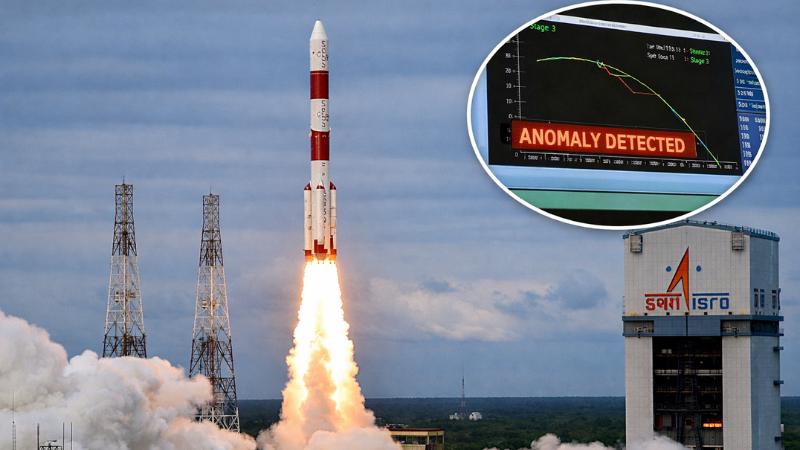
The Indian Space Research Organisation experienced a tense morning on Tuesday after the Polar Satellite Launch Vehicle C62 lifted off from the Satish Dhawan Space Centre in Sriharikota at 10.18 am carrying a total of 16 satellites. The mission initially appeared to progress as planned, with scientists closely monitoring each phase of the flight. However, around 30 minutes after liftoff, ISRO confirmed that the mission had encountered an anomaly during the third stage of the launch sequence, raising concerns about the outcome of the flight.
In a brief update shared shortly after the issue was detected, ISRO stated that a deviation had been observed in the third stage and that a detailed technical analysis had been initiated. ISRO Chairman Dr V Narayanan said the agency was examining the available data to understand the sequence of events and determine the precise cause of the anomaly. He stopped short of formally declaring the mission a failure, noting that a comprehensive review would be required before drawing conclusions.
The Polar Satellite Launch Vehicle is a four-stage rocket that has served as a reliable workhorse for India’s space programme for decades. According to ISRO, the first and second stages of the PSLV-C62 performed nominally, delivering the vehicle to the expected trajectory before the problem emerged in the third phase. Historically, issues during the third stage have often resulted in mission failure, as this segment plays a critical role in placing payloads into their intended orbit.
The latest launch was particularly significant as it marked a comeback attempt for the PSLV following a failed mission in 2025, which also suffered a third-stage malfunction. After that setback, ISRO had constituted an internal analysis committee, though its findings were not made public. The outcome of the current mission is therefore being watched closely, both within the space agency and by stakeholders across the space sector.
The PSLV has completed 64 missions to date, with four failures recorded prior to this launch. If the PSLV-C62 mission is eventually classified as unsuccessful, it would represent the fifth failure in the vehicle’s long operational history. While this still reflects a strong overall success rate, the timing of the setback is significant given India’s expanding ambitions in space exploration and commercial satellite launches.
The mission’s primary payload was Anvesha, an Earth observation and surveillance satellite developed by the Defence Research and Development Organisation. In addition to Anvesha, the rocket was carrying 15 other satellites belonging to international customers from countries including Brazil, Nepal, and the United Kingdom. With the anomaly occurring before successful orbital insertion, these satellites are now believed to be lost.
The incident also has implications for India’s growing private space ecosystem. Several start-ups had placed their payloads aboard PSLV-C62, including Hyderabad-based Dhruva Space, which had seven satellites on the mission. The setback may affect confidence and timelines for upcoming launches, particularly the industry-led PSLV mission planned for the first half of 2026. That mission is being developed by a consortium led by Hindustan Aeronautics Limited and Larsen and Toubro.
Rocket launches remain inherently complex and high-risk operations, with even minor deviations capable of cascading into major failures. ISRO is expected to conduct a thorough investigation into the third-stage anomaly, identify corrective measures, and implement necessary design or procedural changes. The agency has indicated that it will share more information once the analysis is complete, as it works to restore confidence in one of India’s most trusted launch vehicles.