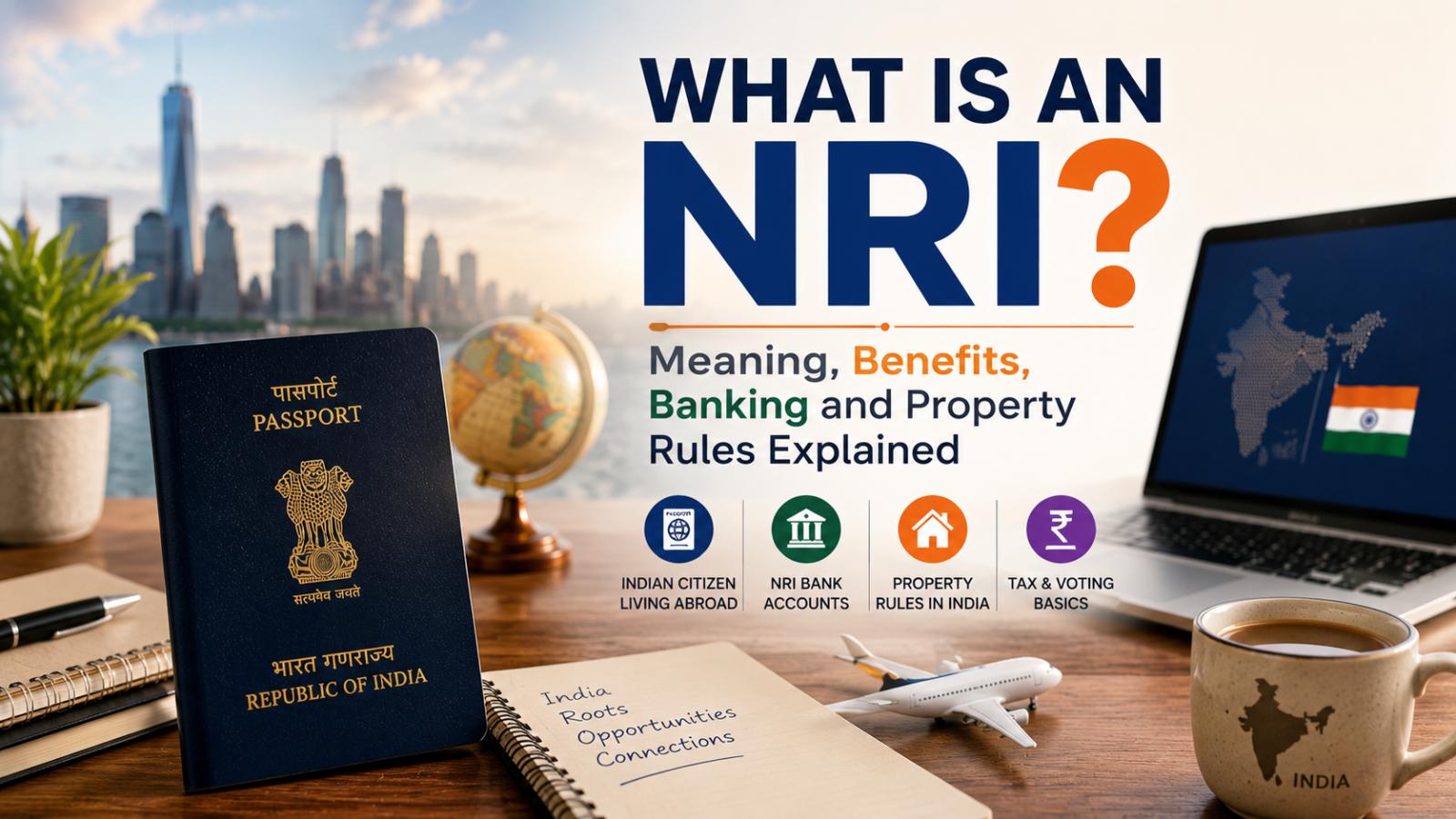
An NRI, or Non-Resident Indian, is an Indian citizen who lives outside India for work, education, business, family or long-term residence.
For Indian citizens living in the United States, NRI status is important because it affects India travel, bank accounts, property ownership, tax treatment, voting rights and long-term financial planning.
In simple terms, an NRI remains an Indian citizen while living abroad. This is why NRI status is closely linked to Indian passport rights, India-based banking, property rules and overseas voter eligibility.
The full form of NRI is Non-Resident Indian.
The term is generally used for Indian citizens who live outside India but continue to hold Indian citizenship. NRIs may live abroad for employment, education, business, family reasons or long-term settlement.
For example, an Indian citizen living in the United States on a work visa, student visa, green card or other long-term status may commonly be called an NRI if the person has not acquired U.S. citizenship.
NRI means an Indian citizen living outside India.
The person may be settled abroad, but legally remains an Indian citizen. This is why NRIs can hold Indian passports, enter India without a visa and may remain eligible for certain citizen-linked rights.
However, the meaning of NRI can vary slightly depending on the context. Banking rules, tax rules, property rules and voting rules may apply different conditions.
If you are comparing NRI status with OCI, read our full guide: NRI vs OCI Difference: Citizenship, Voting, Passport and Property Rules Explained.
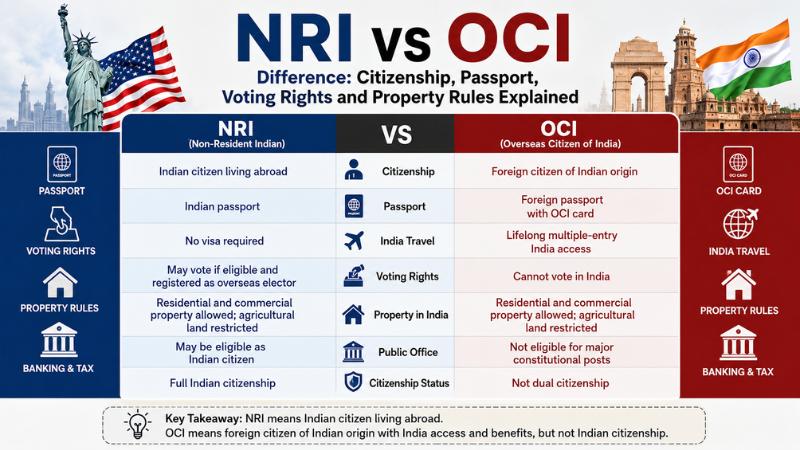
A person is generally considered an NRI when the person is an Indian citizen living outside India.
This may include Indian citizens living abroad for employment, education, business, professional assignments, family reasons or long-term residence.
For Indian-origin Americans, citizenship is the key point. If a person still holds an Indian passport while living in the United States, the person may generally fall under NRI status depending on the legal, tax or banking context.
If the person later acquires U.S. citizenship, their Indian citizenship status changes. In that case, they should check the applicable passport, OCI and legal requirements before making travel, banking or property decisions.
The biggest benefit of NRI status is that the person remains an Indian citizen while living abroad.
This means an NRI can hold an Indian passport and enter India without a visa. NRIs may also access specific banking options, buy permitted property in India, inherit family property and register as overseas voters if eligible.
Main NRI benefits include Indian passport rights, no visa requirement for India travel, NRE, NRO and FCNR banking options, ability to buy residential and commercial property in India, eligibility to inherit property, possible overseas voter registration and continued citizenship connection with India.
For Indian citizens living in the United States, these benefits help maintain family, financial and legal ties with India.
NRIs commonly use special India-linked bank accounts to manage income, savings, investments and family expenses in India.
An NRE account, or Non-Resident External account, is generally used to hold foreign income in India in Indian rupees. It is commonly used by NRIs who earn money abroad and want to send or keep funds in India.
An NRO account, or Non-Resident Ordinary account, is generally used to manage income earned or received in India. This may include rent from property, pension income, dividends, interest income or sale proceeds from Indian assets.
An FCNR account, or Foreign Currency Non-Resident account, allows eligible NRIs to hold fixed deposits in approved foreign currency. This may help reduce currency conversion risk.
The right account depends on income source, tax treatment, repatriation needs and banking rules.
NRIs can generally buy residential and commercial property in India, subject to applicable rules.
This means NRIs may buy apartments, houses, villas, shops, office spaces and other permitted residential or commercial properties.
However, NRIs are generally restricted from buying agricultural land, farmhouse or plantation property in India.
Inheritance rules may differ from purchase rules. An NRI may inherit certain property in India, but inherited agricultural land or ancestral property can involve additional legal and documentation requirements.
NRIs dealing with family property, inherited homes, farmland, sale proceeds or title transfers should check the latest official rules or consult a qualified legal professional.
NRI tax treatment is not decided only by the word NRI.
Indian tax rules usually depend on residential status, number of days stayed in India, income source and whether income is earned, received or accrued in India.
In general, income earned or received in India may be taxable in India. This can include rent, capital gains, bank interest, business income or income from Indian investments.
Foreign income earned and received outside India may be treated differently for non-residents, depending on residential status and applicable law.
Indian citizens living in the United States should also consider U.S. tax rules, foreign income reporting and double taxation issues where applicable.
Yes, eligible NRIs may register as overseas electors.
An overseas elector is generally an Indian citizen who lives outside India, has not acquired citizenship of another country and is otherwise eligible to vote.
This is an important citizen-linked right because NRIs remain Indian citizens while living abroad.
Before an election, NRIs should check the Election Commission of India process for overseas voter registration.
NRIs should avoid assuming that all Indian rules remain the same after moving abroad.
Common mistakes include confusing NRI status with other Indian-origin categories, keeping only a regular resident savings account after becoming NRI, not updating bank KYC details, buying restricted agricultural land without checking rules, ignoring Indian tax filing requirements, not checking tax rules before selling property and failing to register as an overseas elector before elections.
Avoiding these mistakes can help reduce future banking, tax, property and legal complications.
For Indian citizens in the United States, NRI status matters because it affects passport rights, India travel, banking, property, taxes, voting and long-term financial planning.
The most important point is citizenship. As long as a person remains an Indian citizen living abroad, NRI status may apply depending on the context.
Before making decisions related to tax, banking, property or legal status, NRIs should check the latest official rules or consult qualified professionals.
What is an NRI?
An NRI, or Non-Resident Indian, is generally an Indian citizen who lives outside India for work, education, business, family or long-term residence.
What is the full form of NRI?
The full form of NRI is Non-Resident Indian.
Is an NRI an Indian citizen?
Yes. An NRI remains an Indian citizen while living outside India.
Can an NRI hold an Indian passport?
Yes. NRIs can hold Indian passports because they remain Indian citizens.
Can an NRI vote in India?
Yes, an eligible NRI may register as an overseas elector if the person is an Indian citizen, has not acquired foreign citizenship and meets voter registration requirements.
Can NRIs buy property in India?
NRIs can generally buy residential and commercial property in India, subject to applicable rules. Agricultural land, farmhouse and plantation property are generally restricted.
Can NRIs buy agricultural land in India?
NRIs generally cannot buy agricultural land, farmhouse or plantation property in India under the usual permission route. Inheritance rules may differ from purchase rules.
What bank accounts can NRIs open?
NRIs commonly use NRE, NRO and FCNR accounts, depending on income source, currency needs, repatriation rules and banking requirements.
Do NRIs need a visa to visit India?
No. NRIs do not need a visa to visit India because they remain Indian citizens and hold Indian passports.
Are NRIs taxed in India?
NRIs may be taxed in India on income earned, received or accrued in India, depending on residential status, income source and applicable tax rules.
For Indian citizens living in the United States, NRI status is important because it affects India travel, bank accounts, property ownership, tax treatment, voting rights and long-term financial planning.
In simple terms, an NRI remains an Indian citizen while living abroad. This is why NRI status is closely linked to Indian passport rights, India-based banking, property rules and overseas voter eligibility.
What Is the Full Form of NRI?
The full form of NRI is Non-Resident Indian.
The term is generally used for Indian citizens who live outside India but continue to hold Indian citizenship. NRIs may live abroad for employment, education, business, family reasons or long-term settlement.
For example, an Indian citizen living in the United States on a work visa, student visa, green card or other long-term status may commonly be called an NRI if the person has not acquired U.S. citizenship.
NRI Meaning in Simple Words
NRI means an Indian citizen living outside India.
The person may be settled abroad, but legally remains an Indian citizen. This is why NRIs can hold Indian passports, enter India without a visa and may remain eligible for certain citizen-linked rights.
However, the meaning of NRI can vary slightly depending on the context. Banking rules, tax rules, property rules and voting rules may apply different conditions.
If you are comparing NRI status with OCI, read our full guide: NRI vs OCI Difference: Citizenship, Voting, Passport and Property Rules Explained.
Who Is Considered an NRI?
A person is generally considered an NRI when the person is an Indian citizen living outside India.
This may include Indian citizens living abroad for employment, education, business, professional assignments, family reasons or long-term residence.
For Indian-origin Americans, citizenship is the key point. If a person still holds an Indian passport while living in the United States, the person may generally fall under NRI status depending on the legal, tax or banking context.
If the person later acquires U.S. citizenship, their Indian citizenship status changes. In that case, they should check the applicable passport, OCI and legal requirements before making travel, banking or property decisions.
Main Benefits of NRI Status
The biggest benefit of NRI status is that the person remains an Indian citizen while living abroad.
This means an NRI can hold an Indian passport and enter India without a visa. NRIs may also access specific banking options, buy permitted property in India, inherit family property and register as overseas voters if eligible.
Main NRI benefits include Indian passport rights, no visa requirement for India travel, NRE, NRO and FCNR banking options, ability to buy residential and commercial property in India, eligibility to inherit property, possible overseas voter registration and continued citizenship connection with India.
For Indian citizens living in the United States, these benefits help maintain family, financial and legal ties with India.
NRI Bank Accounts: NRE, NRO and FCNR Explained
NRIs commonly use special India-linked bank accounts to manage income, savings, investments and family expenses in India.
The three common NRI banking options are NRE, NRO and FCNR accounts.
An NRE account, or Non-Resident External account, is generally used to hold foreign income in India in Indian rupees. It is commonly used by NRIs who earn money abroad and want to send or keep funds in India.
An NRO account, or Non-Resident Ordinary account, is generally used to manage income earned or received in India. This may include rent from property, pension income, dividends, interest income or sale proceeds from Indian assets.
An FCNR account, or Foreign Currency Non-Resident account, allows eligible NRIs to hold fixed deposits in approved foreign currency. This may help reduce currency conversion risk.
The right account depends on income source, tax treatment, repatriation needs and banking rules.
NRI Property Rules in India
NRIs can generally buy residential and commercial property in India, subject to applicable rules.
This means NRIs may buy apartments, houses, villas, shops, office spaces and other permitted residential or commercial properties.
However, NRIs are generally restricted from buying agricultural land, farmhouse or plantation property in India.
Inheritance rules may differ from purchase rules. An NRI may inherit certain property in India, but inherited agricultural land or ancestral property can involve additional legal and documentation requirements.
NRIs dealing with family property, inherited homes, farmland, sale proceeds or title transfers should check the latest official rules or consult a qualified legal professional.
NRI Tax Basics
NRI tax treatment is not decided only by the word NRI.
Indian tax rules usually depend on residential status, number of days stayed in India, income source and whether income is earned, received or accrued in India.
In general, income earned or received in India may be taxable in India. This can include rent, capital gains, bank interest, business income or income from Indian investments.
Foreign income earned and received outside India may be treated differently for non-residents, depending on residential status and applicable law.
Indian citizens living in the United States should also consider U.S. tax rules, foreign income reporting and double taxation issues where applicable.
Can NRIs Vote in India?
Yes, eligible NRIs may register as overseas electors.
An overseas elector is generally an Indian citizen who lives outside India, has not acquired citizenship of another country and is otherwise eligible to vote.
This is an important citizen-linked right because NRIs remain Indian citizens while living abroad.
Before an election, NRIs should check the Election Commission of India process for overseas voter registration.
Common Mistakes NRIs Should Avoid
NRIs should avoid assuming that all Indian rules remain the same after moving abroad.
Common mistakes include confusing NRI status with other Indian-origin categories, keeping only a regular resident savings account after becoming NRI, not updating bank KYC details, buying restricted agricultural land without checking rules, ignoring Indian tax filing requirements, not checking tax rules before selling property and failing to register as an overseas elector before elections.
Avoiding these mistakes can help reduce future banking, tax, property and legal complications.
An NRI is an Indian citizen living outside India.
For Indian citizens in the United States, NRI status matters because it affects passport rights, India travel, banking, property, taxes, voting and long-term financial planning.
The most important point is citizenship. As long as a person remains an Indian citizen living abroad, NRI status may apply depending on the context.
Before making decisions related to tax, banking, property or legal status, NRIs should check the latest official rules or consult qualified professionals.
NRI FAQs
What is an NRI?
An NRI, or Non-Resident Indian, is generally an Indian citizen who lives outside India for work, education, business, family or long-term residence.
What is the full form of NRI?
The full form of NRI is Non-Resident Indian.
Is an NRI an Indian citizen?
Yes. An NRI remains an Indian citizen while living outside India.
Can an NRI hold an Indian passport?
Yes. NRIs can hold Indian passports because they remain Indian citizens.
Can an NRI vote in India?
Yes, an eligible NRI may register as an overseas elector if the person is an Indian citizen, has not acquired foreign citizenship and meets voter registration requirements.
Can NRIs buy property in India?
NRIs can generally buy residential and commercial property in India, subject to applicable rules. Agricultural land, farmhouse and plantation property are generally restricted.
Can NRIs buy agricultural land in India?
NRIs generally cannot buy agricultural land, farmhouse or plantation property in India under the usual permission route. Inheritance rules may differ from purchase rules.
What bank accounts can NRIs open?
NRIs commonly use NRE, NRO and FCNR accounts, depending on income source, currency needs, repatriation rules and banking requirements.
Do NRIs need a visa to visit India?
No. NRIs do not need a visa to visit India because they remain Indian citizens and hold Indian passports.
Are NRIs taxed in India?
NRIs may be taxed in India on income earned, received or accrued in India, depending on residential status, income source and applicable tax rules.