






















#nribanking
RBI FCNR Swap: What US-Based NRIs Should Know
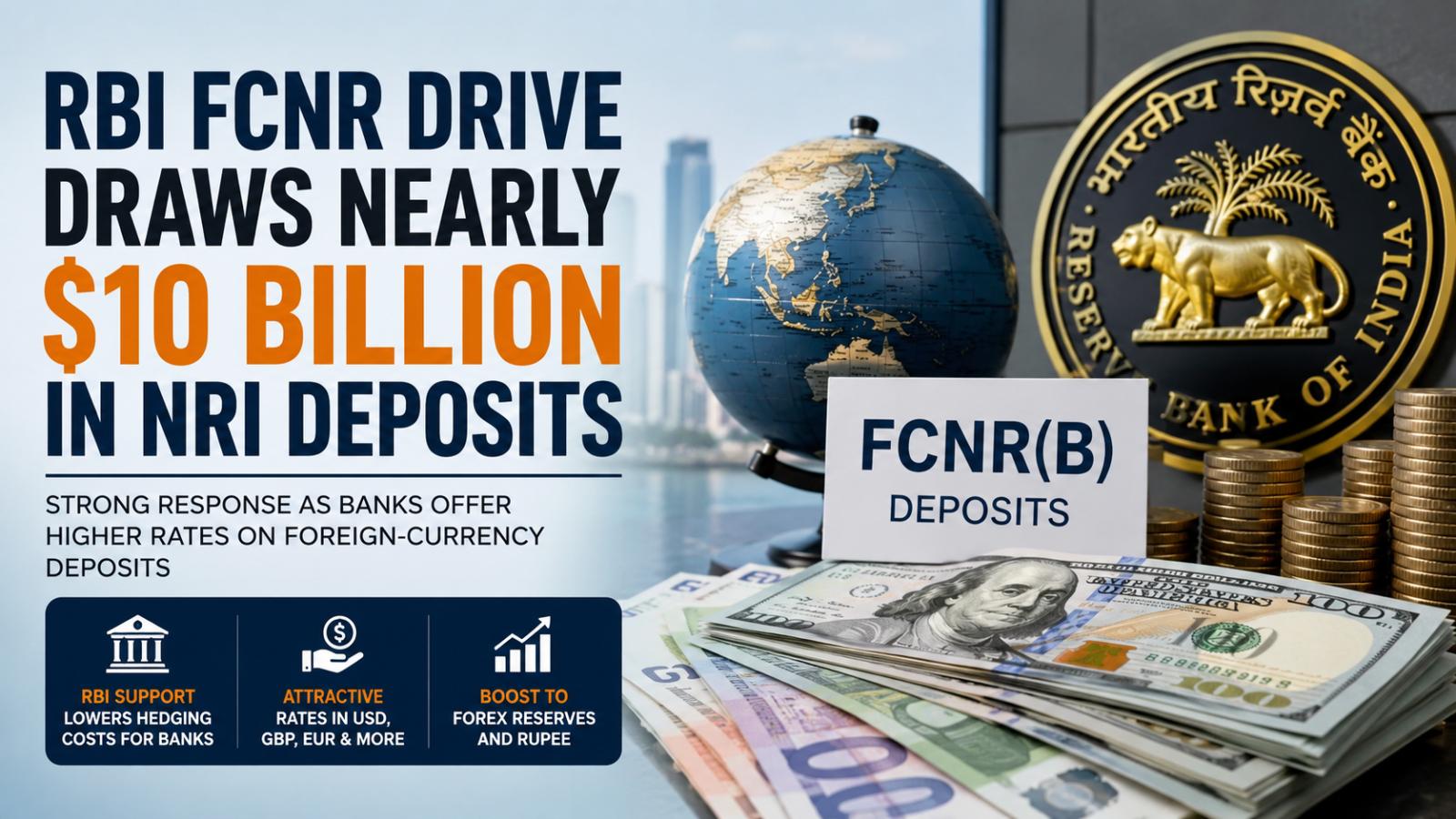
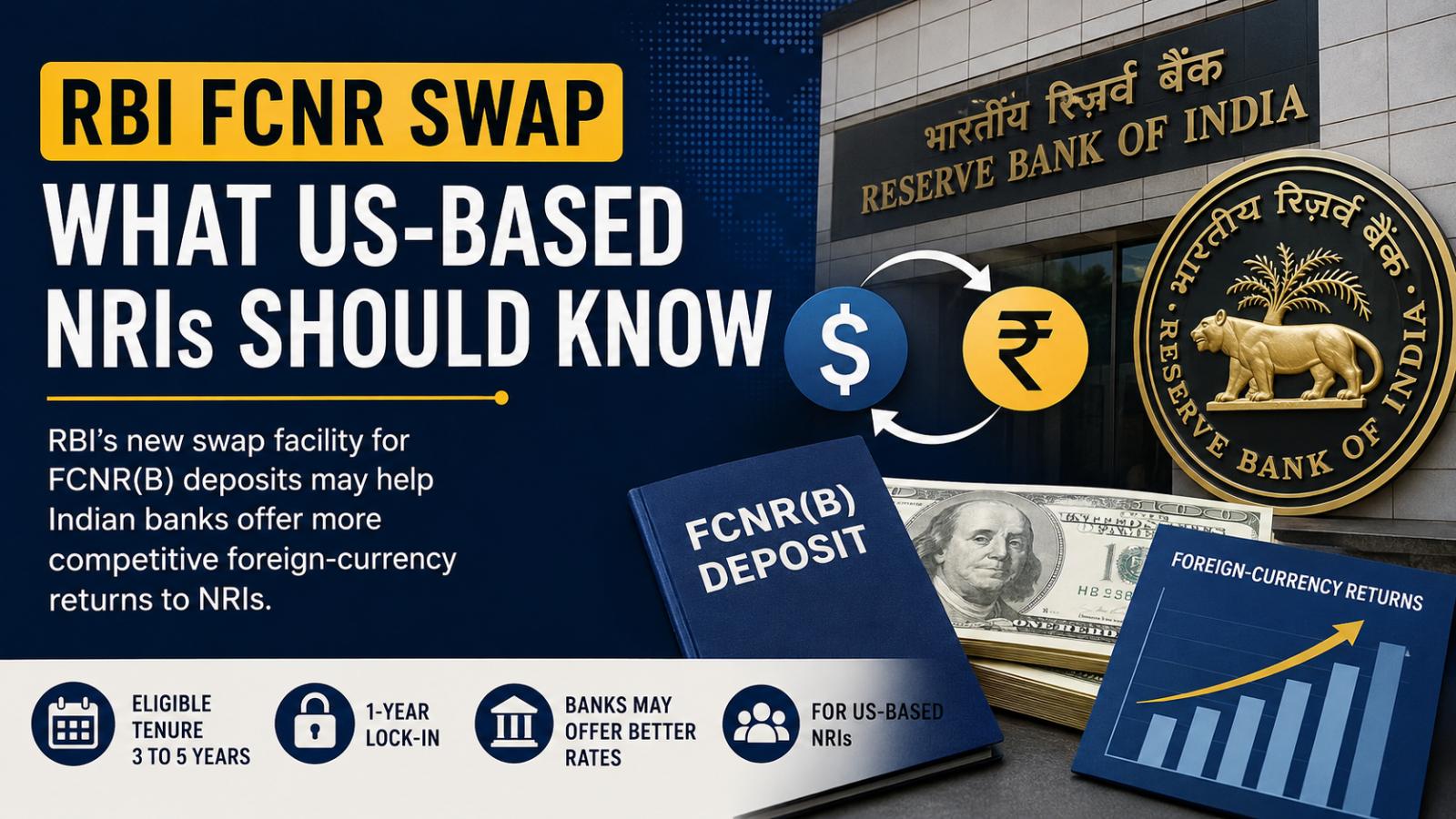
The RBI introduced the US dollar-rupee swap facility on Monday, June 8, 2026. It applies to eligible fresh FCNR(B) deposits, including deposits renewed at maturity, with an original tenure of at least three years and no more than five years. Deposits must be mobilized between Monday, June 8, 2026, and Wednesday, September 30, 2026. Banks may use the RBI swap window through Friday, October 16, 2026. The swap
RBI FCNR Swap: What US-Based NRIs Should Know
The RBI introduced the US dollar-rupee swap facility on Monday, June 8, 2026. It applies to eligible fresh FCNR(B) deposits, including deposits renewed at maturity, with an original tenure of at least three years and no more than five years. Deposits must be mobilized between Monday, June 8, 2026, and Wednesday, September 30, 2026. Banks may use the RBI swap window through Friday, October 16, 2026. The swap
FCNR Deposits vs U.S. CDs: Which Is Better for NRIs?
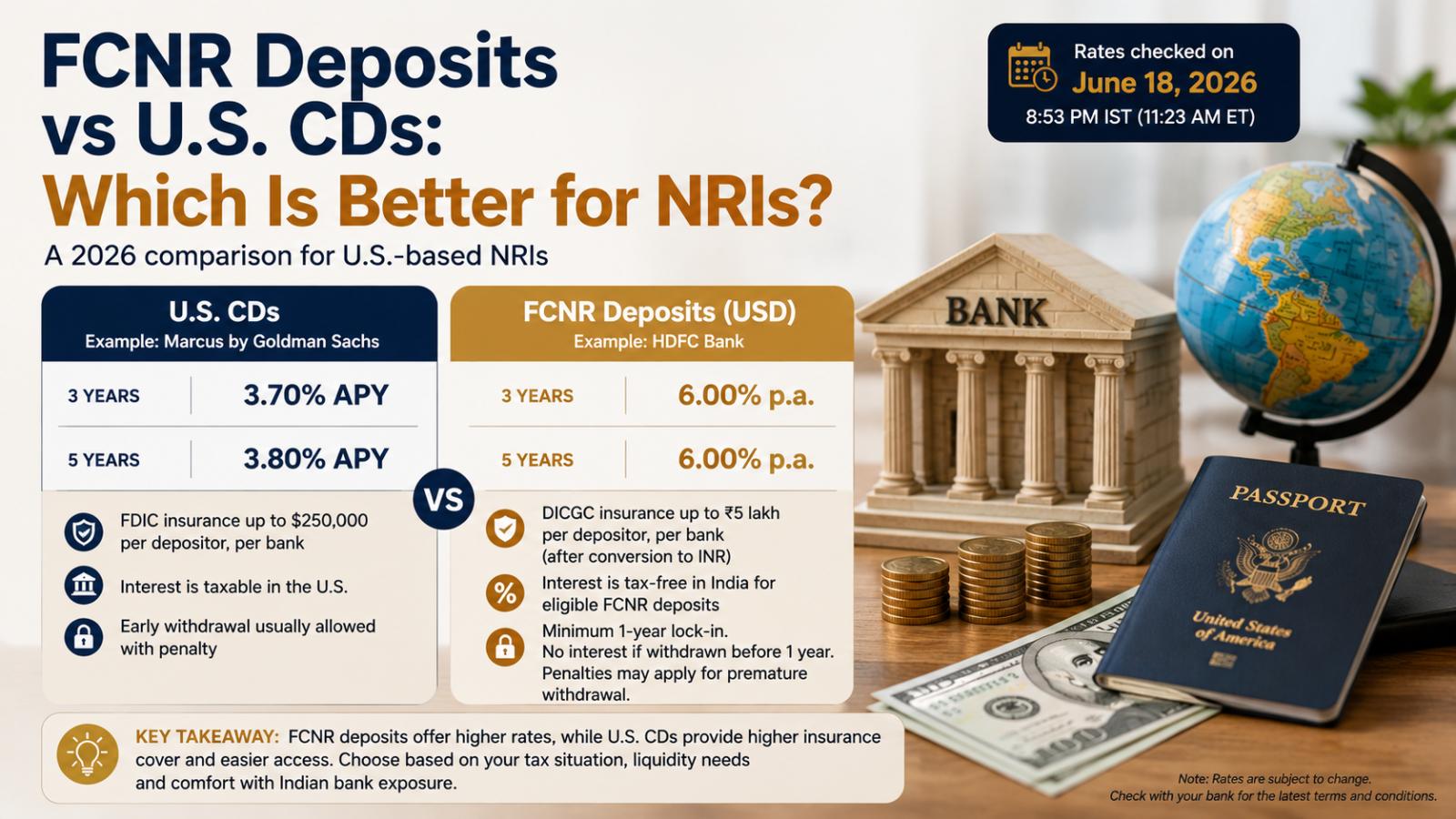
Updated Thursday, June 18, 2026 FCNR deposits vs U.S. CDs can both provide fixed returns on dollar savings, but the higher advertised rate does not automatically make one the better choice for every NRI. As of Thursday, June 18, 2026, HDFC Bank listed 6.00% annually on eligible three- to five-year U.S. dollar FCNR deposits. Marcus by Goldman Sachs listed 3.70% APY on a three-year CD and 3.80
FCNR Deposits vs U.S. CDs: Which Is Better for NRIs?
Updated Thursday, June 18, 2026 FCNR deposits vs U.S. CDs can both provide fixed returns on dollar savings, but the higher advertised rate does not automatically make one the better choice for every NRI. As of Thursday, June 18, 2026, HDFC Bank listed 6.00% annually on eligible three- to five-year U.S. dollar FCNR deposits. Marcus by Goldman Sachs listed 3.70% APY on a three-year CD and 3.80
FCNR vs NRE vs NRO Accounts: Which Is Better for NRIs?
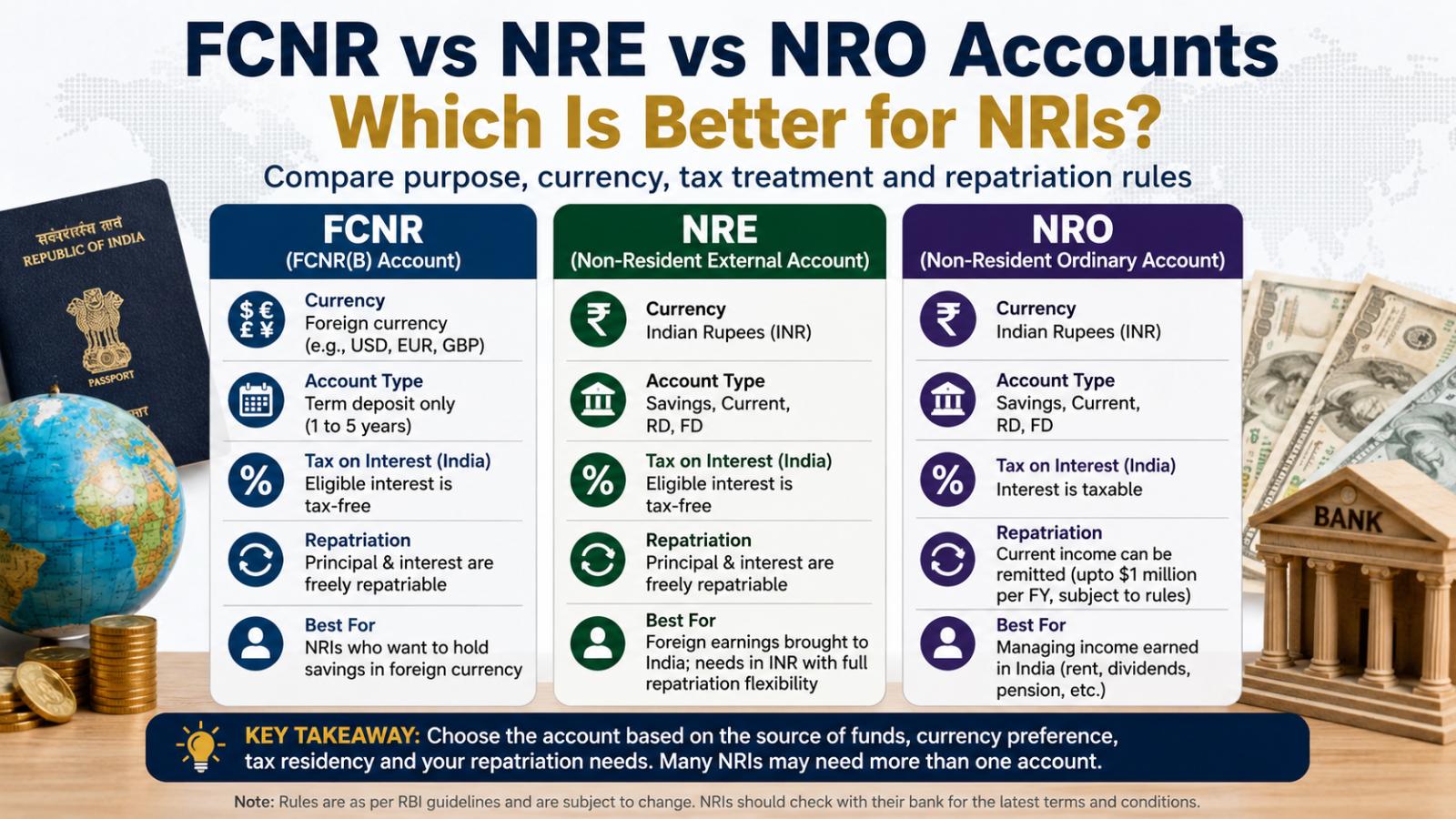
FCNR vs NRE vs NRO accounts serve different purposes. The right choice generally depends on where the money was earned, which currency the depositor wants to hold and how easily the funds must move outside India. There is no single account that is best for every NRI. The RBI is encouraging banks to attract more foreign-currency deposits, although most NRI bank money in India remains in rupee-denominated accounts. Read ou
FCNR vs NRE vs NRO Accounts: Which Is Better for NRIs?
FCNR vs NRE vs NRO accounts serve different purposes. The right choice generally depends on where the money was earned, which currency the depositor wants to hold and how easily the funds must move outside India. There is no single account that is best for every NRI. The RBI is encouraging banks to attract more foreign-currency deposits, although most NRI bank money in India remains in rupee-denominated accounts. Read ou
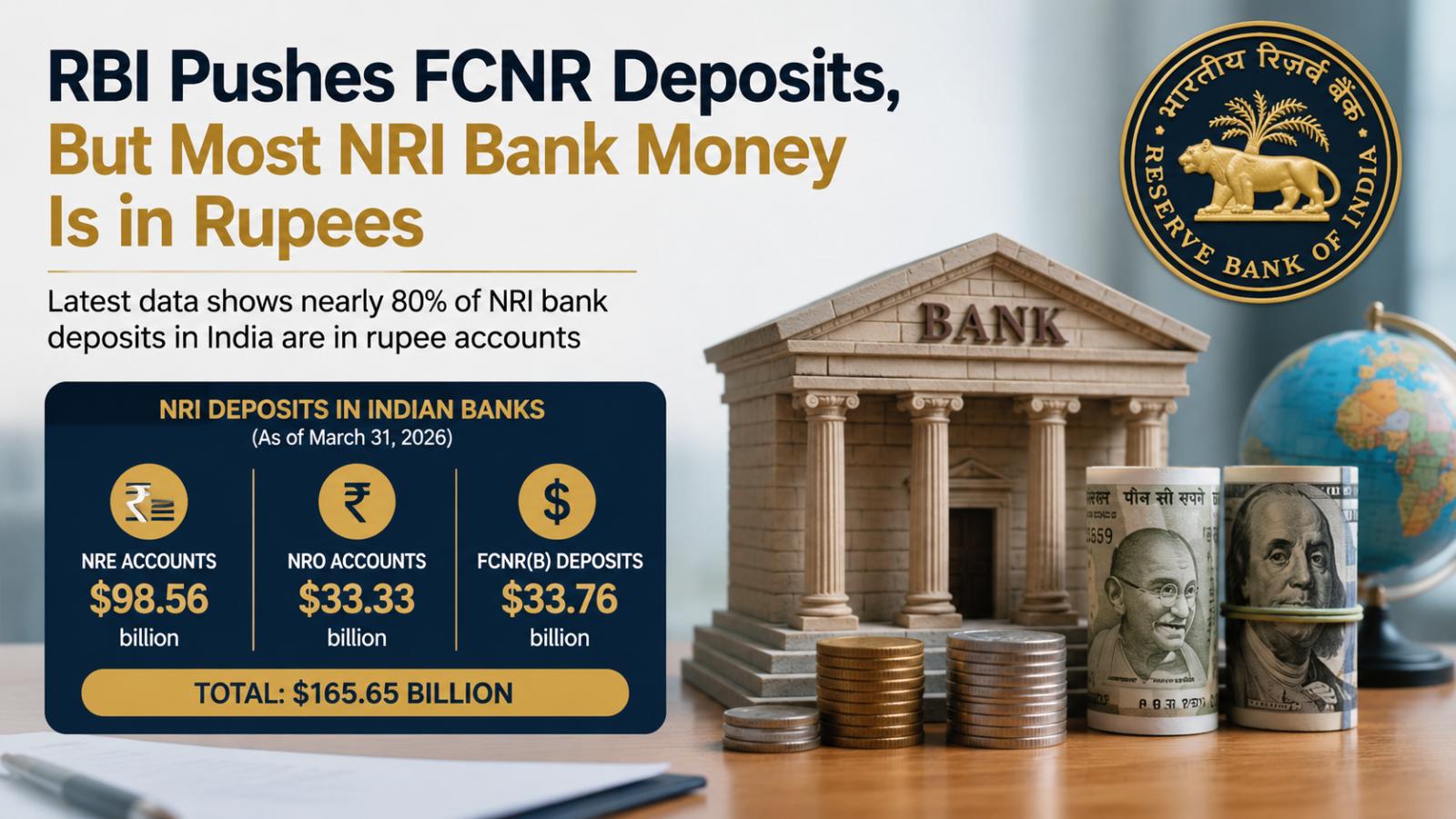
RBI Pushes FCNR Deposits, but Most NRI Bank Money Is in Rupees
RBI’s push for FCNR deposits is designed to bring more foreign currency into India. But the latest available data show that most NRI bank money in India remains in rupee-denominated accounts. Where NRI Bank Deposits Were Held
RBI Pushes FCNR Deposits, but Most NRI Bank Money Is in Rupees
RBI’s push for FCNR deposits is designed to bring more foreign currency into India. But the latest available data show that most NRI bank money in India remains in rupee-denominated accounts. Where NRI Bank Deposits Were Held
What Is an NRI? Meaning, Benefits, Banking and Property Rules Explained
An NRI, or Non-Resident Indian, is an Indian citizen who lives outside India for work, education, business, family or long-term residence. For Indian citizens living in the United States, NRI status is important because it affects India travel, bank accounts, property ownership, tax treatment, voting rights and long-term financial planning. In simple terms, an NRI remains an Indian citizen while living abroad. This is why NRI status is closely linked to Indian passport righ
What Is an NRI? Meaning, Benefits, Banking and Property Rules Explained
An NRI, or Non-Resident Indian, is an Indian citizen who lives outside India for work, education, business, family or long-term residence. For Indian citizens living in the United States, NRI status is important because it affects India travel, bank accounts, property ownership, tax treatment, voting rights and long-term financial planning. In simple terms, an NRI remains an Indian citizen while living abroad. This is why NRI status is closely linked to Indian passport righ
Pravasi Sampark NRI meet highlights Bank of India’s global banking focus
Bank of India’s Mumbai North Zone recently organised an NRI Meet titled “Pravasi Sampark” as part of its ongoing efforts to deepen engagement with Non-Resident Indian customers and better understand their evolving banking, investment, and remittance requirements. The initiative reflects the bank’s focus on strengthening long-term relationships with the global Indian diaspora by offering customer-centric and technology-driven financial solutions. The event was attended by sen
Pravasi Sampark NRI meet highlights Bank of India’s global banking focus
Bank of India’s Mumbai North Zone recently organised an NRI Meet titled “Pravasi Sampark” as part of its ongoing efforts to deepen engagement with Non-Resident Indian customers and better understand their evolving banking, investment, and remittance requirements. The initiative reflects the bank’s focus on strengthening long-term relationships with the global Indian diaspora by offering customer-centric and technology-driven financial solutions. The event was attended by sen


